
Canada
The better America. The land of maple syrup and crystal-clear streams. Where nature seems endless, stretching across green valleys, millions of lakes, and snow-capped mountain peaks. A country that spans the Great Lakes of North America all the way up to the icy north, ending just a few kilometers from Greenland. Towns that can only be reached by seaplane and aren’t immune to snow squalls even in the height of summer.
That is Canada. A country on an XXL scale – it could be the twin brother of the U.S. And yet it feels completely different. There are the people and a culture that strikes us as almost European. Bilingualism. A robust social welfare system. Less religious and political fanaticism. A different conception of freedom. Close – and yet worlds apart.
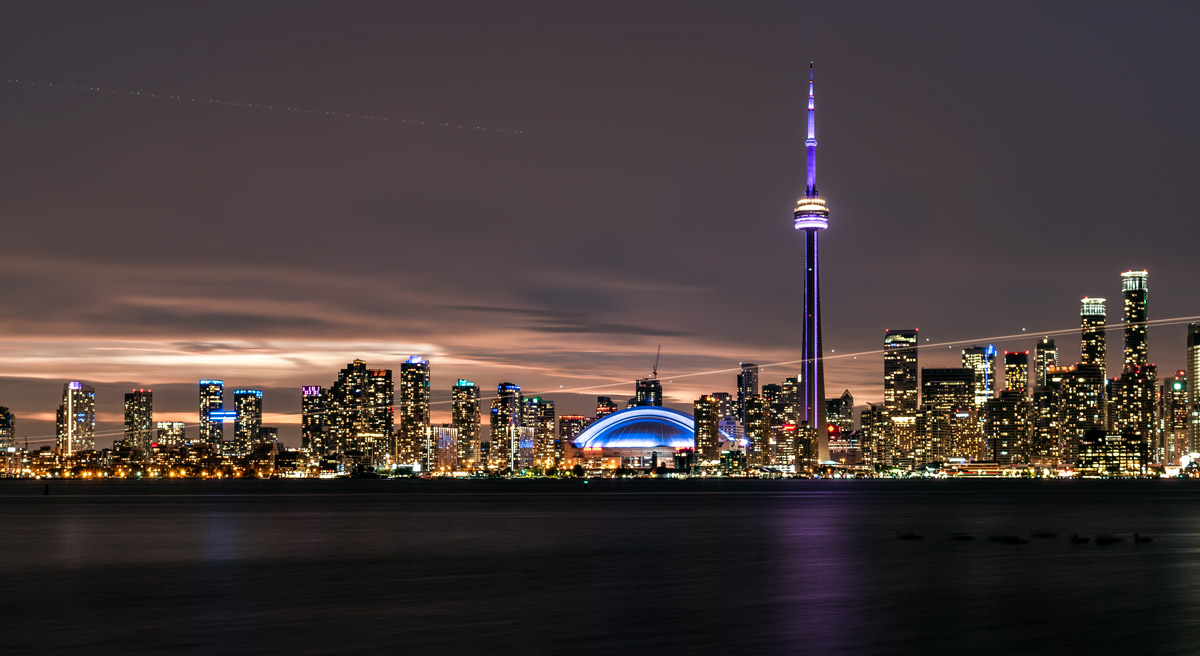
Toronto. It’s arguably the most American of all Canadian cities. Situated on Lake Ontario and surrounded by sprawling suburbs, a network of miles of dead-straight streets stretches through the city and its metropolitan area. Toronto sits at the center of this web like a giant spider. And in every way, this city feels quintessentially American: buildings of steel and glass reach toward the sky. A television tower of superlatives, which was the world’s tallest freestanding structure until 2007.
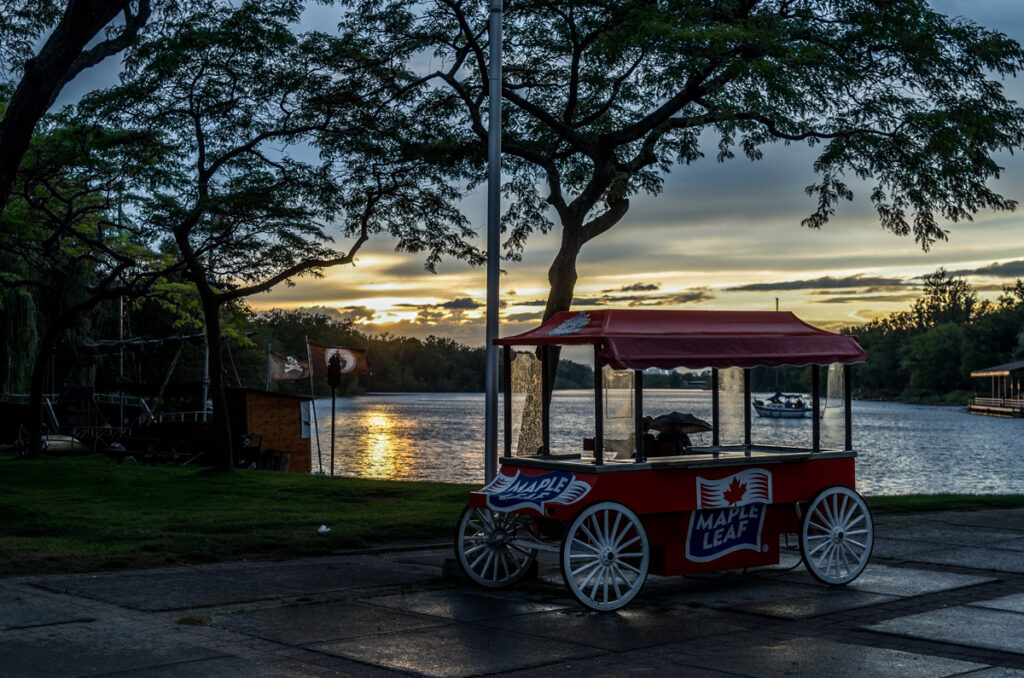
Everything about this city seems to be made of gold as we arrive in Toronto in the late-summer afternoon light. The facades reflect the low-hanging sun. We refuel with sandwiches and root beer. The next morning, we take the ferry to Toronto Island while a summer thunderstorm brews over the city. Luckily for us, it drives most of the day-trippers off the island. So we stroll past deserted recreational facilities, lonely popcorn stands, silent amusement rides, and empty lookouts.
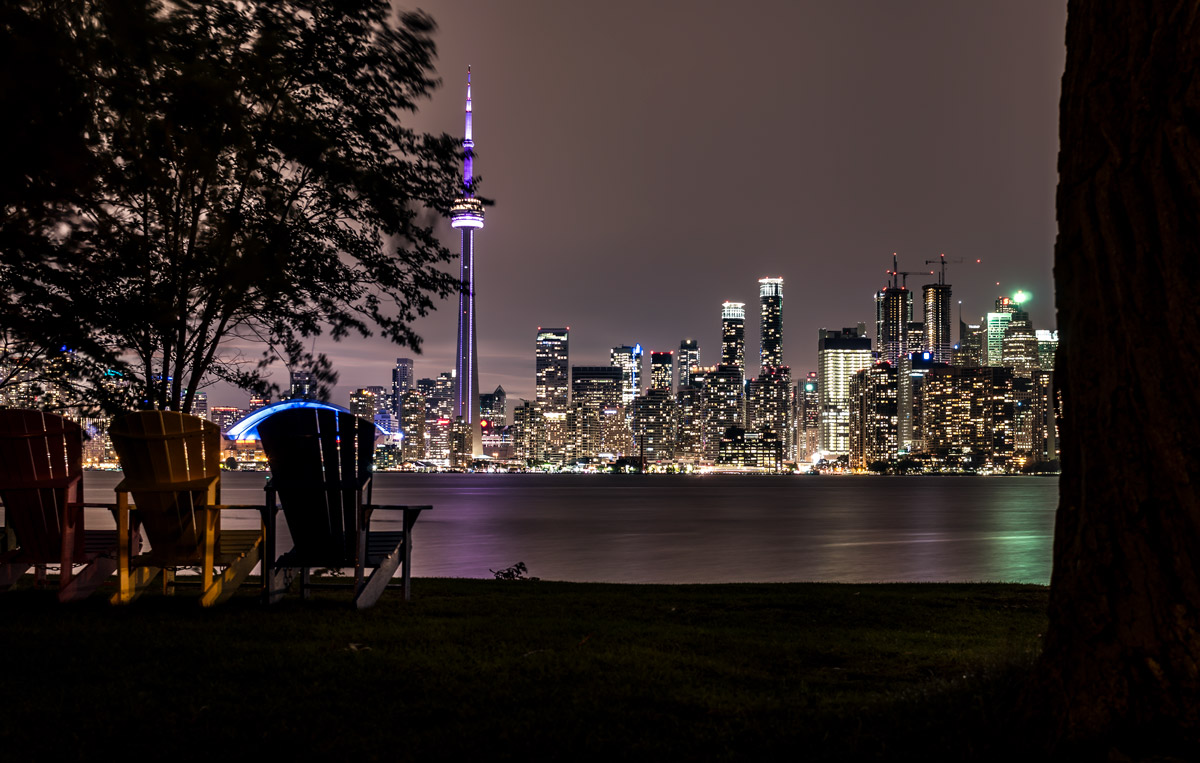
By evening, the thunderstorm has passed. The view from the island across to the skyline is one of a kind. Toronto seems to glow, as if the lightning had charged the city. A sparkling silver nugget – a true treasure.

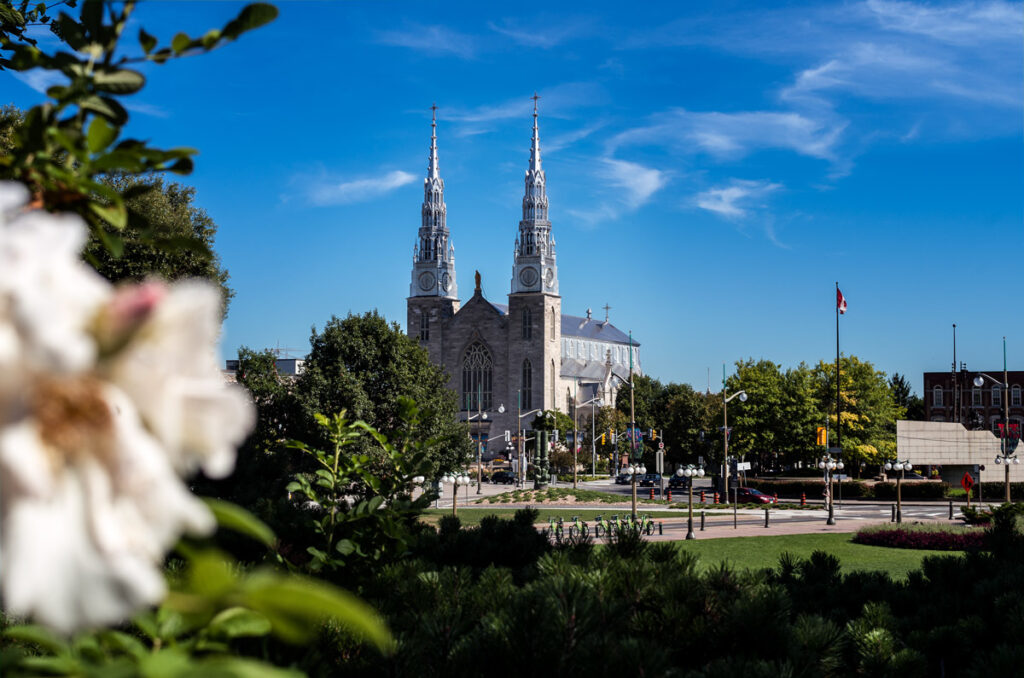
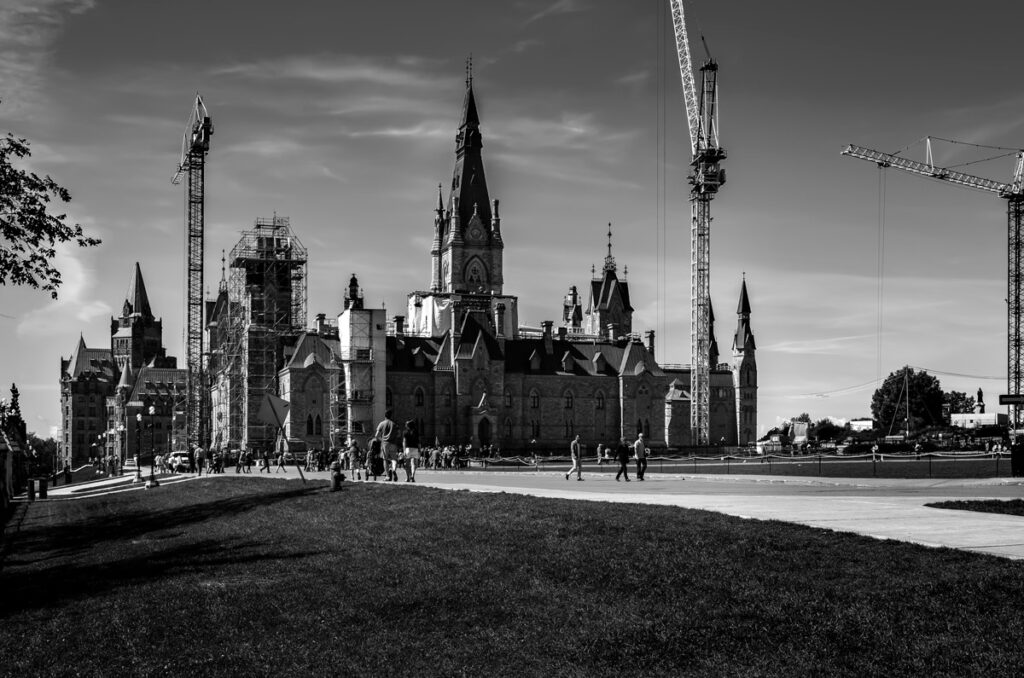
A change of scenery. From the modern metropolis of Toronto to the tranquil provincial capital of Ottawa. Although more than a million people live here as well, the city feels much more provincial. There are no skyscrapers, traffic jams, crowds, or glass facades. Instead, a neo-Gothic parliament building and an iconic church dominate the cityscape. The Ottawa River flows right through the middle of the city, separating not only the capital from the municipality of Gatineau but also the provinces of Ontario and Quebec – and thus the English-speaking from the French-speaking parts of the country.
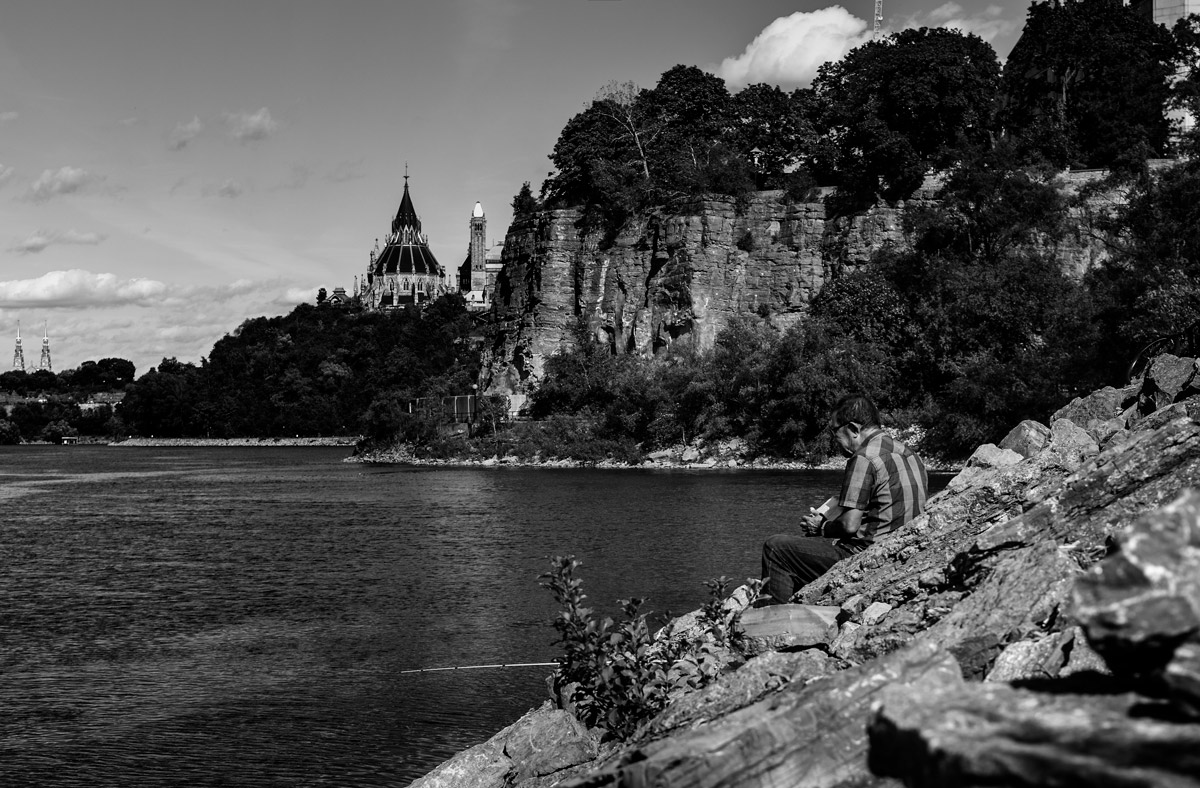
We wander leisurely through the streets. A first hint of fall drifts our way; the temperatures are noticeably milder than they were in Toronto. It’s a Monday morning, and there are only a few people out and about in the parks and public squares. A couple of fishermen sit on the banks of the Ottawa River. But they seem more captivated by the tranquility and the steady flow of the river than truly interested in their potential catch.
We take the Greyhound bus deeper into Quebec, the French-speaking part of Canada. And we feel more lost than ever. To our surprise, the host of our Airbnb doesn’t speak a word of English – and we’re just as clueless when it comes to French. Many other people we meet also speak only broken English, if any at all.
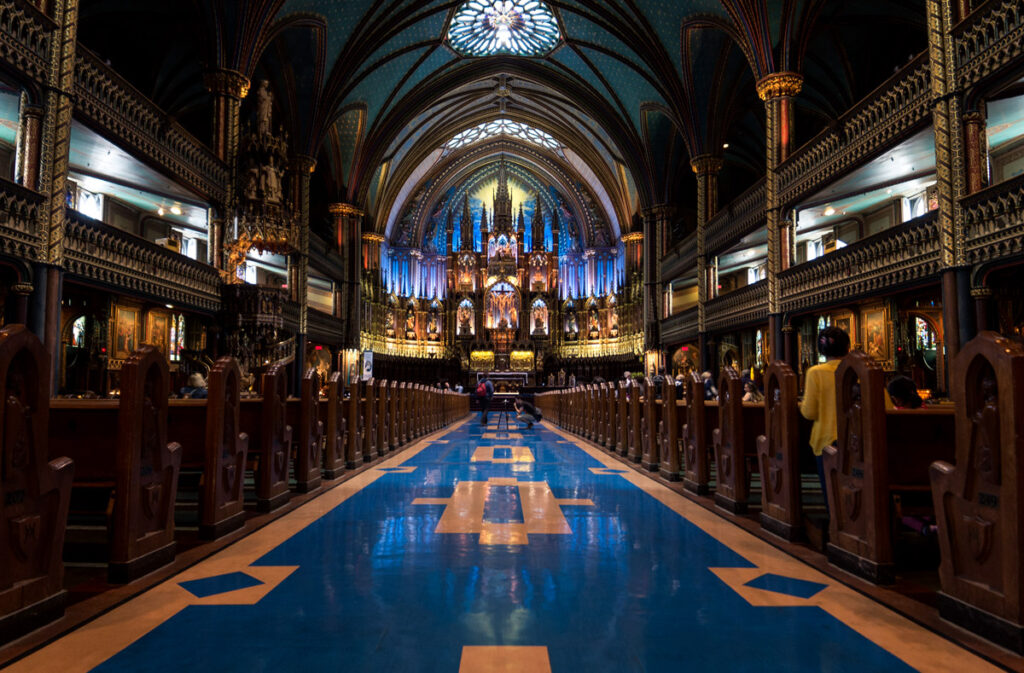
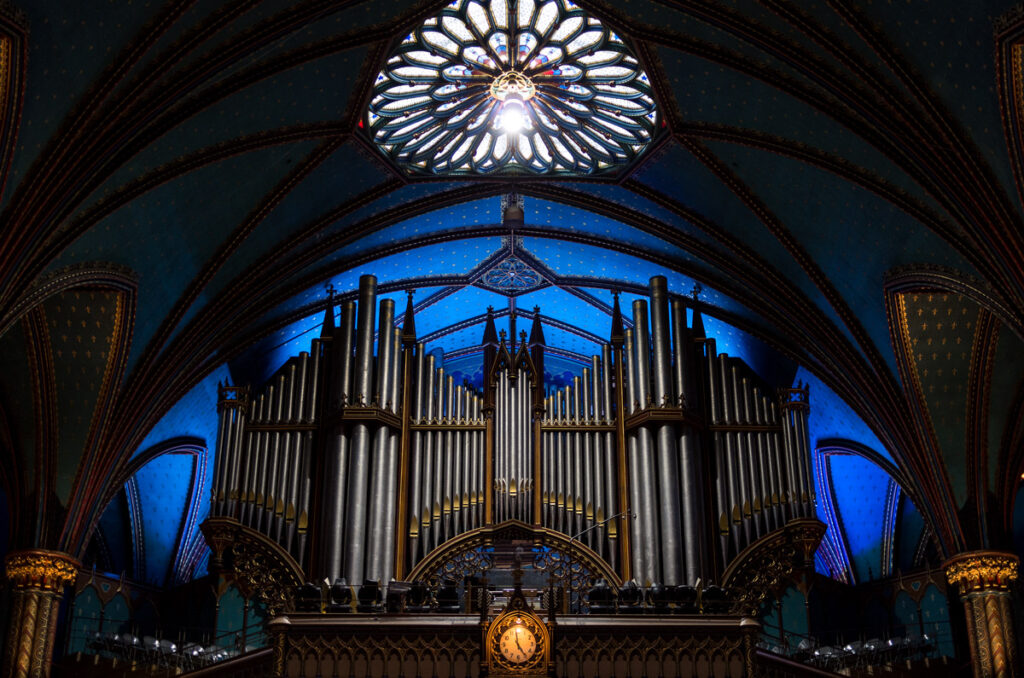
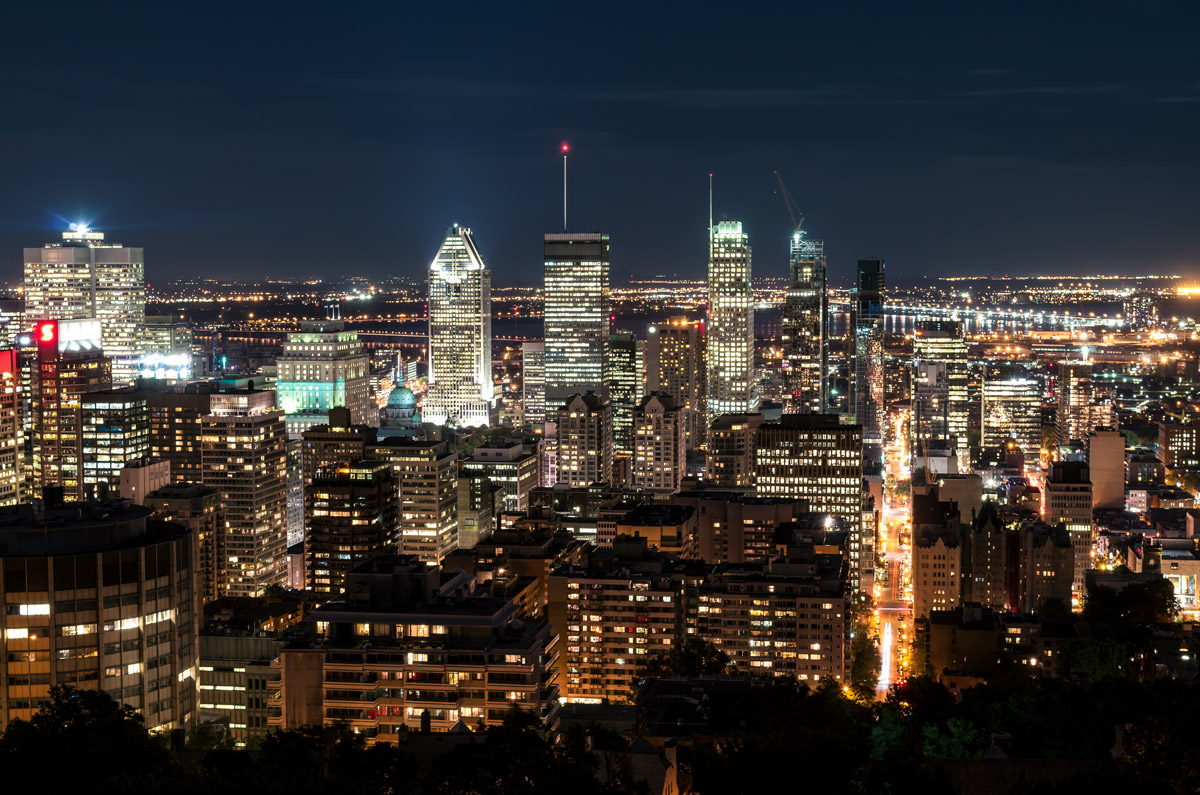
Temperatures have dropped further as September has progressed. Sunshine and brief rain showers keep alternating. Montreal strikes us as a mix of tranquil Ottawa and urban Toronto. There are skyscrapers and the beginnings of a skyline, but everything seems smaller and less imposing. At the same time, a large church rises here as well: Notre-Dame de Montréal. The distances are long, and unlike in Ottawa, the city is almost impossible to explore on foot. Yet somehow, Montreal doesn’t win our hearts. We don’t even know exactly why. It just doesn’t click.
In the evening, we climb Mont Royal. A city park with a mountain – or a mountain with a city park. There’s an observation deck and a piano anyone can play. Teenagers strum a few notes here and there; every so often, someone plays a song by Leonard Cohen, arguably the city’s most famous son. We watch as night falls over Montreal and a small sea of lights comes to life at our feet.
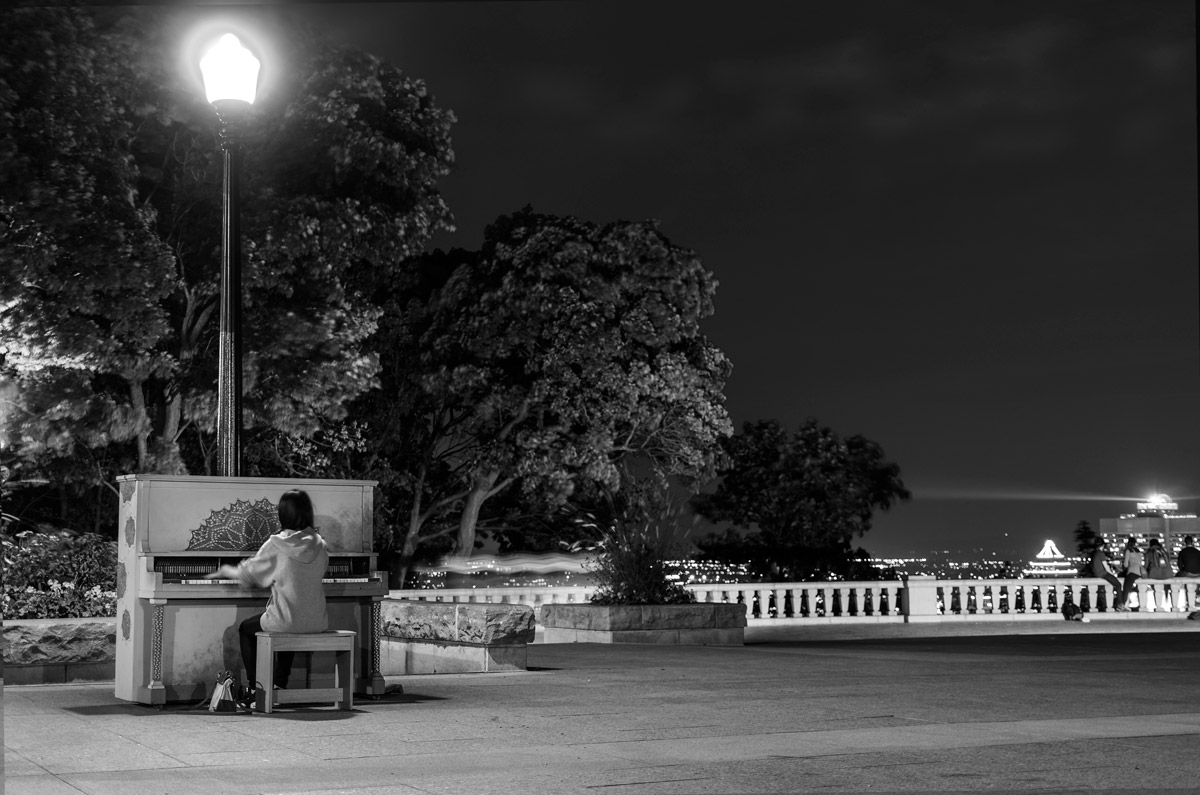



As the last notes of the piano fade, so does our journey through Canada’s major cities. A country this vast naturally calls for a sequel. The boundless North, highways stretching for hundreds of miles through endless coniferous forests, turquoise mountain lakes, and snow-capped peaks – there wasn’t time for any of that this trip.
Canada may be less diverse in terms of landscape than the U.S., but it captivates with its blend of North American urbanity and European culture, which is reflected in its architecture as well as in its language and people. Canada isn’t a “better America,” as is often claimed with a wink. It’s similar – and yet completely different.
There are the fast-food chains, the oversized cars, and the endless roads through uninhabited countryside. But there’s also a strong Francophone influence, a robust welfare state, and an entirely different mindset. Perhaps that’s why Canada isn’t an alternative to the U.S., but rather its calm brother – more laid-back, quieter, and fascinating in its own unique way.
Info about our trip
We didn’t see enough of Canada to really say much about the country. Toronto won us over at first sight, but Ottawa and especially Montreal failed to impress. Even though Vancouver is also said to be a great city, Canada’s appeal certainly doesn’t lie in its cities. On the contrary, it’s the bountiful nature – with its lakes, rivers, endless forests, and tranquil solitude – that truly captivates.
It’s easy to combine a trip through the northeastern U.S. with a city tour of Canada. We, too, entered Canada via the Rainbow Bridge at Niagara Falls and traveled by intercity bus from city to city, eventually making our way back from Montreal to Boston. The distances between these cities aren’t too long, and there are frequent connections.
The better option, however, is a road trip in a rental car – why not drive right across the entire country? From Montreal in the east all the way to Vancouver in the west, it’s just under 5,000 km as the crow flies. It’s ambitious, but definitely doable for a three-week – or better yet, four- to six-wee – road trip during summer vacation.
Canada is definitely not one of the cheapest travel destinations. Accommodations, in particular, can really add up, especially in the big cities and during peak season. Eating out can also get expensive quickly, though the quality is usually excellent. You can save money mainly by shopping at supermarkets, cooking your own meals, and – on longer trips – by camping. Gas is often cheaper than in Europe, but entrance fees for national parks, parking fees, and ferry rides can put an additional strain on your travel budget. Overall, we’d estimate the costs to be roughly on par with a trip through the U.S.
Culinary-wise, Canada is heavily influenced by its larger neighbor, the United States. Burgers, sandwiches, steaks, and fast food are just as much a part of everyday life as international cuisines from around the world. Especially in the major cities, the selection is outstanding and reflects the country’s cultural diversity. However, you’ll be hard-pressed to find a distinct, unique national cuisine. You should still try specialties like poutine, maple syrup, or – on the coasts – fresh salmon and seafood.
Accommodations are among the biggest expenses on a trip to Canada. Hotels are surprisingly expensive, especially in the major cities. That’s why we stayed exclusively in simple Airbnbs. It wasn’t always luxurious, but it was significantly cheaper than a hotel. In Toronto, you should expect to pay between 70 and 100 euros per night for a basic, privately rented room on the outskirts – sometimes even with a shared bathroom. A decent hotel room often costs 120 euros or significantly more. Outside the cities, however, you can reduce your budget considerably by staying at campgrounds or in an RV.
Canada is one of the safest travel destinations in the world. Violent crime is rarely an issue for tourists, and we always felt safe in the cities, even at night. The greatest safety risk actually comes from nature. Anyone traveling to national parks or remote regions should be aware of sudden weather changes, wildlife (especially bears and moose), and the long distances to the nearest town. Overall, as long as you use common sense and take the usual precautions, traveling in Canada is an extremely relaxing experience.
Canada is an excellent destination for traveling with children of all ages. The only potential drawback is the relatively high cost of lodging and dining out, which can put a strain on the family budget. That’s precisely why road trips with a tent or RV are a great option. If you have several weeks or even months to spare, you might even consider shipping your own car or RV to Halifax.
Keep in mind, however, that Canada is huge. Outside of metropolitan areas, the distances to the nearest town, gas station, or medical facility can be considerable. It’s best to plan slightly shorter daily legs and include plenty of breaks and interesting stops along the way. Then nothing will stand in the way of a relaxing family vacation in one of the world’s most beautiful natural landscapes.
Canada is a car country. If you really want to experience the country, you’ll find it hard to do without a rental car, an RV, or your own vehicle. While intercity buses and trains reliably connect the major cities, Canada’s true highlights lie away from the big cities – at secluded lakes, in national parks, and among forests and mountains. That’s exactly where a car really comes into its own.
It’s not uncommon to ship your German camper or even an off-road vehicle to Halifax. From there, you can explore Canada wonderfully on your own – or even tackle the legendary Pan-American Highway all the way to Panama (and, after a ship crossing over the Darién Gap, on to Tierra del Fuego). Buying a vehicle locally can also be worthwhile for longer trips. If you decide to rent a car, you should book as early as possible, especially for the summer months, since popular vehicle classes fill up quickly.
Especially in sparsely populated regions, your basic supplies should include plenty of drinking water, provisions, a first-aid kit, and enough fuel. Also, make sure to learn how to properly handle encounters with wildlife such as bears or moose – especially if you’re planning hikes or overnight stays in the wilderness.
In the German-language book market, Canada is often overshadowed by the United States. While there are countless works on American history, politics, and culture, the selection on Canada is much more limited. However, you’ll find a wide range of travel guides – from classic itinerary planners to hiking and camping guides, as well as specialized books on individual provinces or national parks. You’ll have no trouble finding what you need here, especially when it comes to planning your trip.
