
Niagara Falls
Around six in the morning, we get off the bus. Feeling a bit disoriented, we wander through the city until we find a Tim Hortons and enjoy a simple North American breakfast: donuts and hot black coffee. The former is sweet, the latter strong and bitter. Just the thing to quickly recharge our energy and shake off the tedious bus ride from the night before.
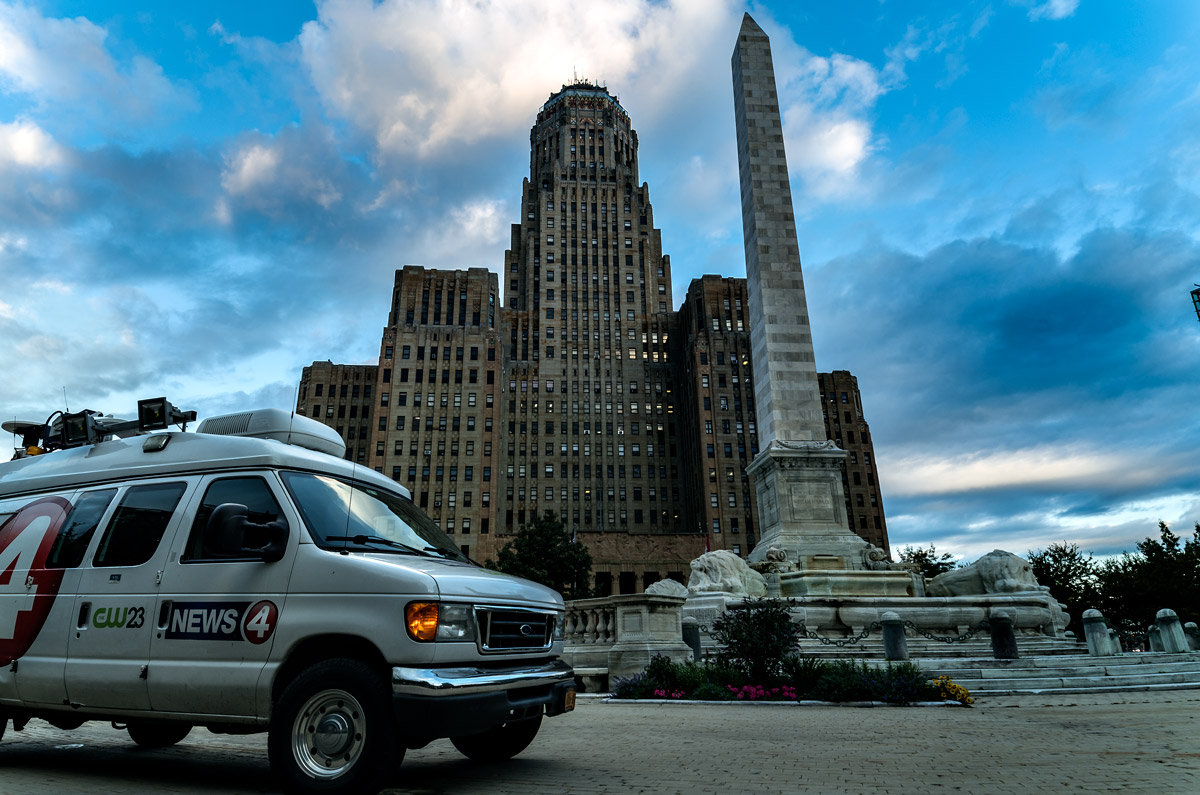
With a hot coffee in hand, we stroll toward Buffalo City Hall and sit down on a park bench next to well-tended flower beds. An old Ford van belonging to a news station is parked prominently in front of City Hall. As we sit there and the first rays of morning sun warm our faces, the van’s sliding door opens and a sleepy man looks at us with a friendly smile. What news is he waiting for here, we wonder?
After a while, the bus to Niagara Falls – the town of the same name by the falls – comes around the corner. We hoist our heavy backpacks onto the bus and use the short ride to close our eyes once more and doze off for a few minutes.
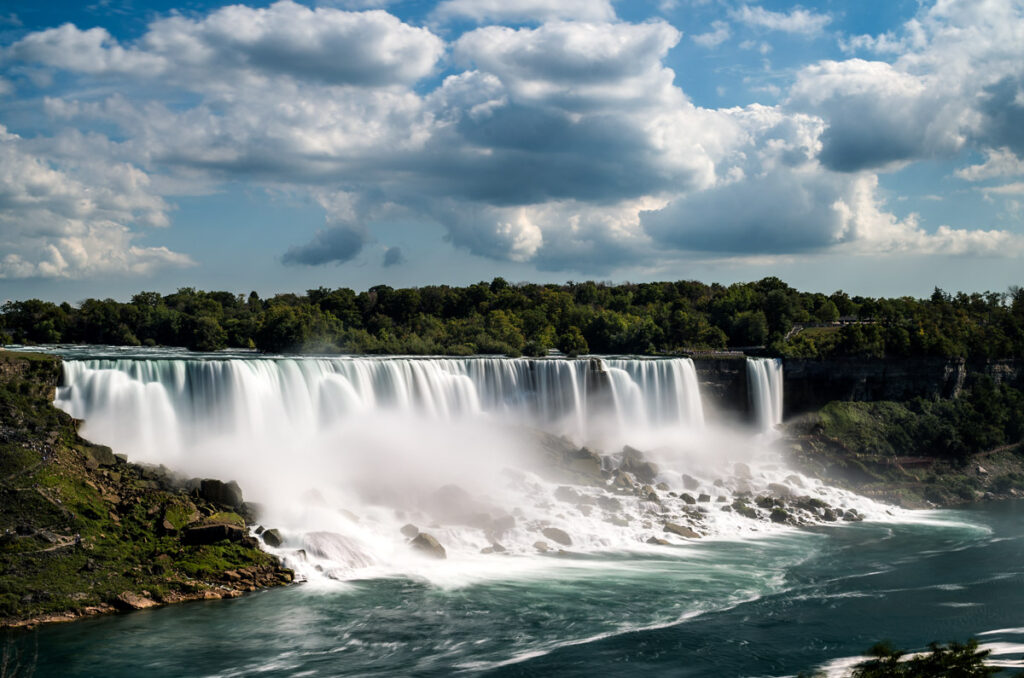
The roar of the waterfalls, the rushing and surging, the flowing and swirling, can be heard all the way into the town of Niagara Falls. It greets us the moment we step off the bus and stays with us throughout our entire visit.
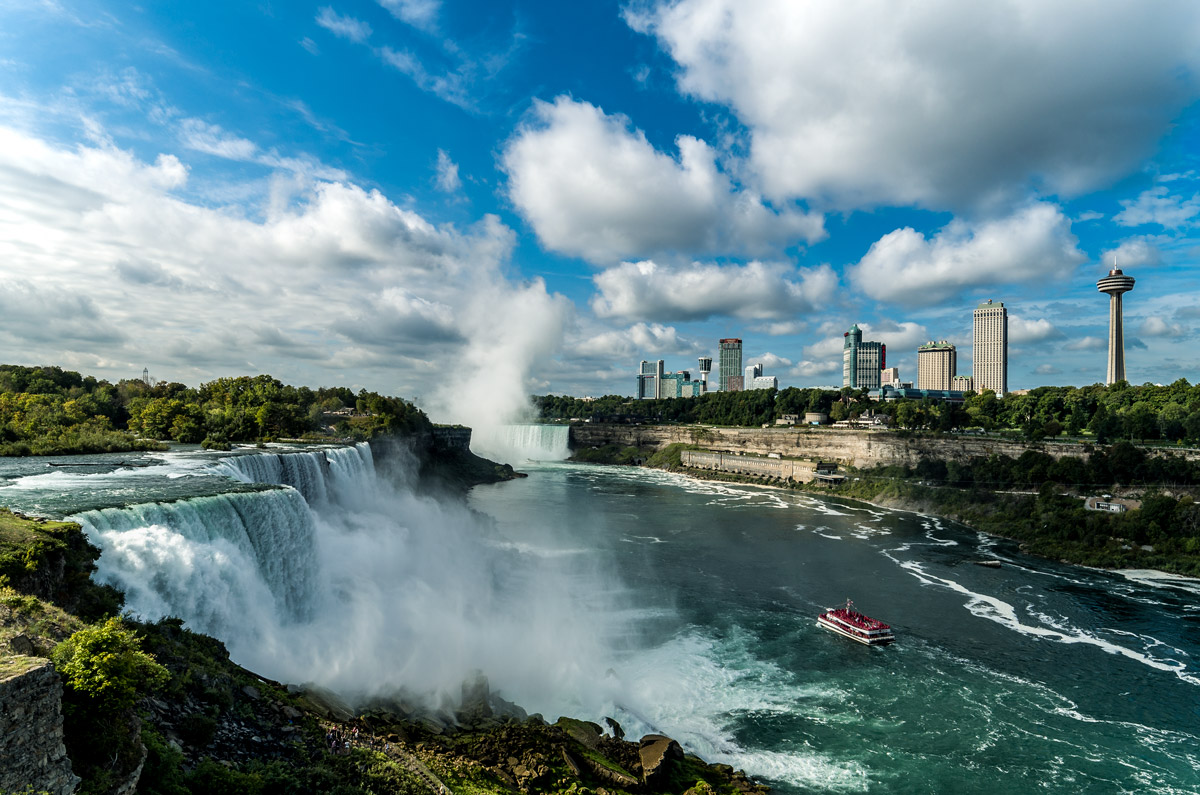
We stand at the railing and look down. What a tremendous force of nature reigns there. Where the plunging water hits the rocks, it explodes into a high-rising spray that shoots up into the sky like a column of steam. Tourist boats seem to head fearlessly toward the masses of water, people in orange-red life jackets crowding the decks.
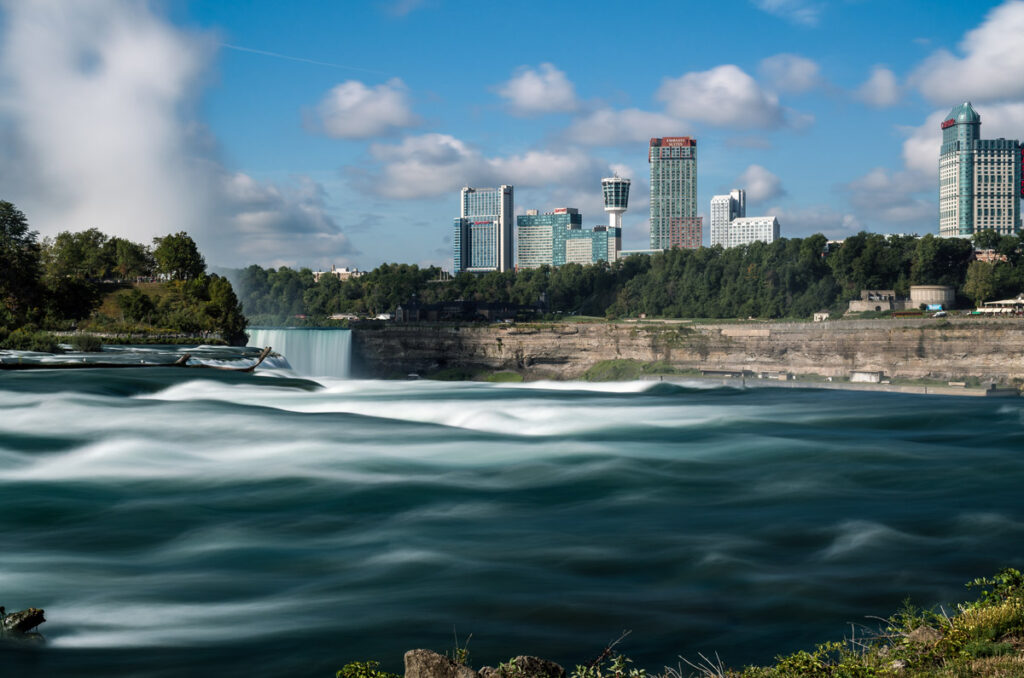
A gigantic and impressive spectacle of azure blue. Across from us: the skyline of the Canadian tourist town of Niagara Falls, consisting of the towers of hotels and casinos.
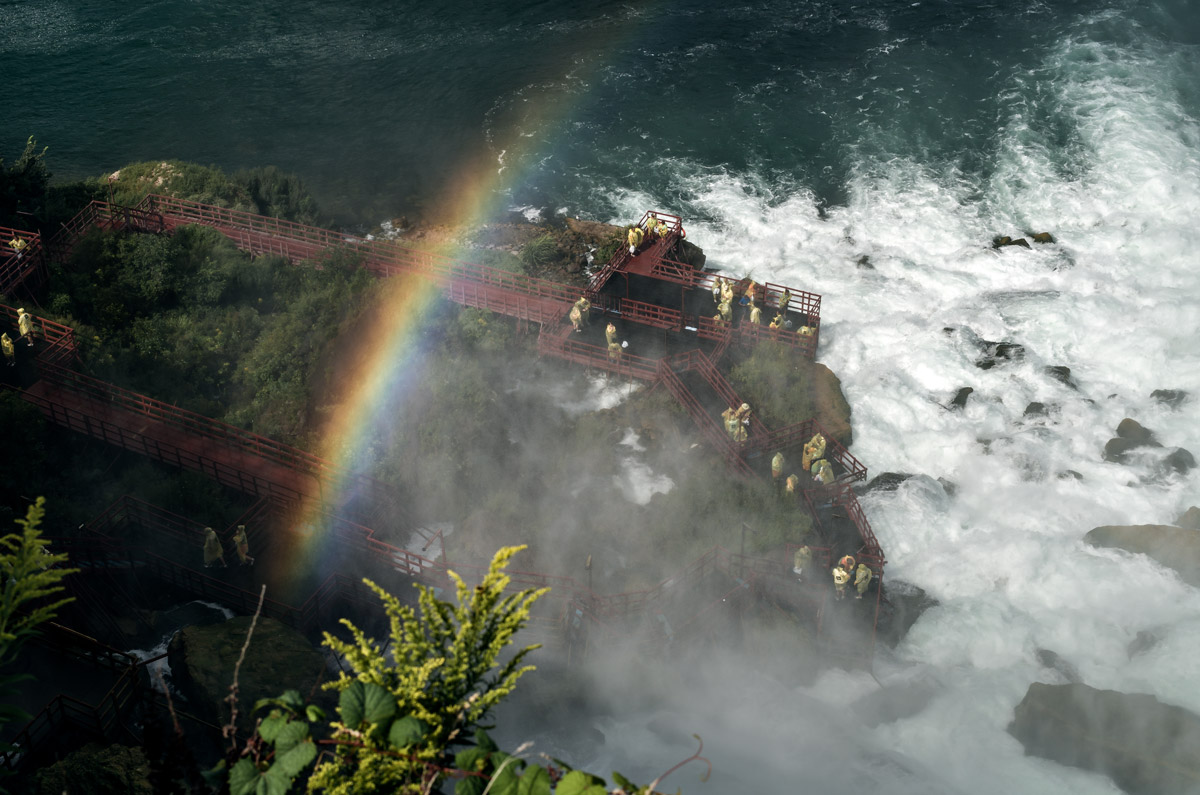
Wrapped in yellow rain capes, they walk at the base of Niagara Falls. Tiny droplets of water splash against their faces like tiny pinpricks. Their eyes are squinted shut, their lips pressed tightly together. They call out to each other, but their words are swallowed up by the roar. The roar envelops them and shields them from the world.
A bubbling hell, wet violence. Updrafts and wisps of mist, a raging torrent. Sunlight falls on vaporized water droplets, refracts within them – and a rainbow arches over their heads.
Gradually, the exhaustion from the last, far-too-short night catches up with us. The many impressions slowly blur into a single roar – almost as if the roar of Niagara Falls itself had taken hold of our thoughts. We eat sandwiches at a simple diner nearby and silently observe the other guests: families with children, groups of retirees with cameras around their necks, happy tourists with wet shoes and tousled hair.
Then we leave the U.S. via the Rainbow Bridge, which spans high above the Niagara River. This short river forms the border between Canada and the United States and connects Lake Erie with Lake Ontario.
As we cross the bridge, we glance back once more at the rising wisps of mist from the falls. Even from a distance, everything seems unrealistically vast. The water knows no borders, no nations, no barriers. It simply rushes on, unstoppable, as it has for millennia. Then we reach Canadian soil. Behind us lie the United States; ahead of us lies a new country. Yet the deep, muffled roar of the falls continues to accompany us for a long time.
