Tunisia
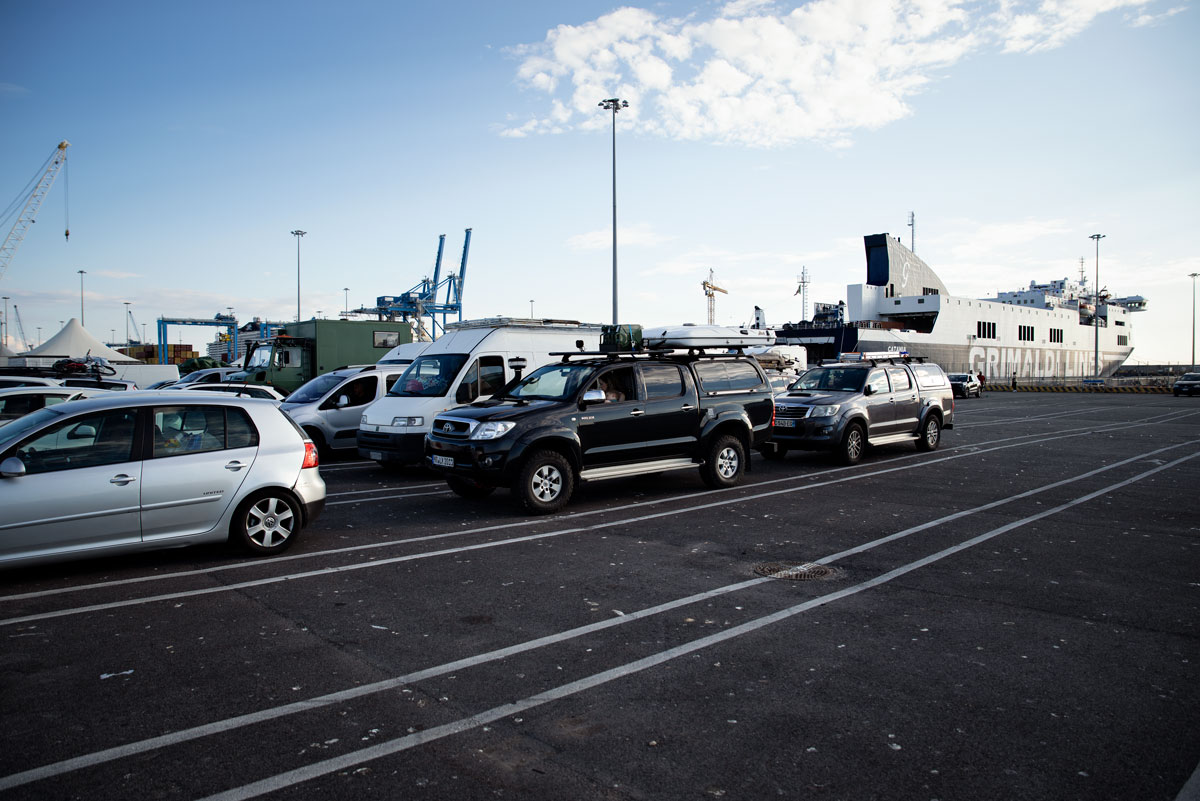
Slowly, the forecourt at the harbor fills up. Old French compact cars with Tunisian license plates. They are heavily loaded: tired men at the wheel, a large bag on each passenger seat. The back seats and trunks are crammed with goods that seem to be available only in Italy. On the roofs of the cars: washing machines or refrigerators – often secured with nothing more than thin ropes. In between, a few German SUVs and motorhomes. And us. Ready to breathe in the desert air. Ready to cross the Mediterranean to Africa. Ready for an adventure.
As darkness falls and the evening brings a cool breeze, we are finally allowed to board the ferry. Impenetrable chaos, honking horns, and the occasional bump as vehicles squeeze into the narrow belly of the ship. Then we set sail, leaving autumnal Europe behind and eagerly anticipating the warm sand beneath our feet.
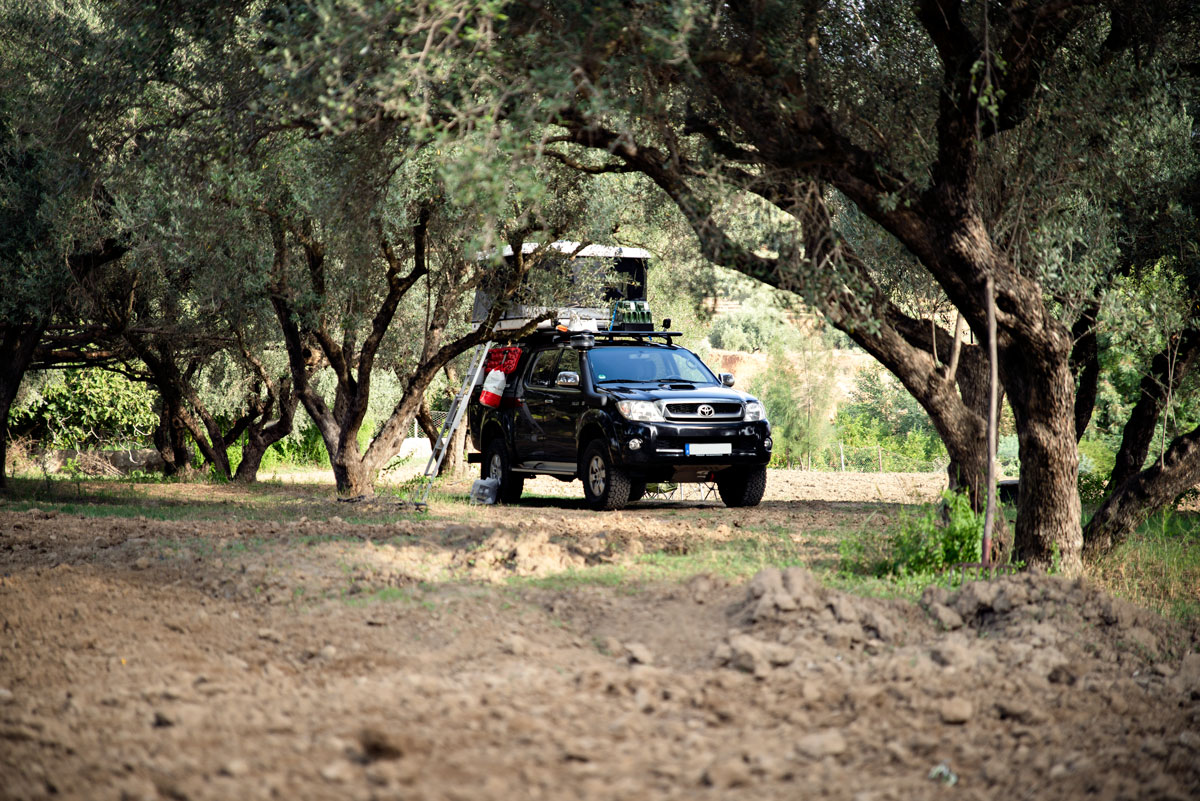
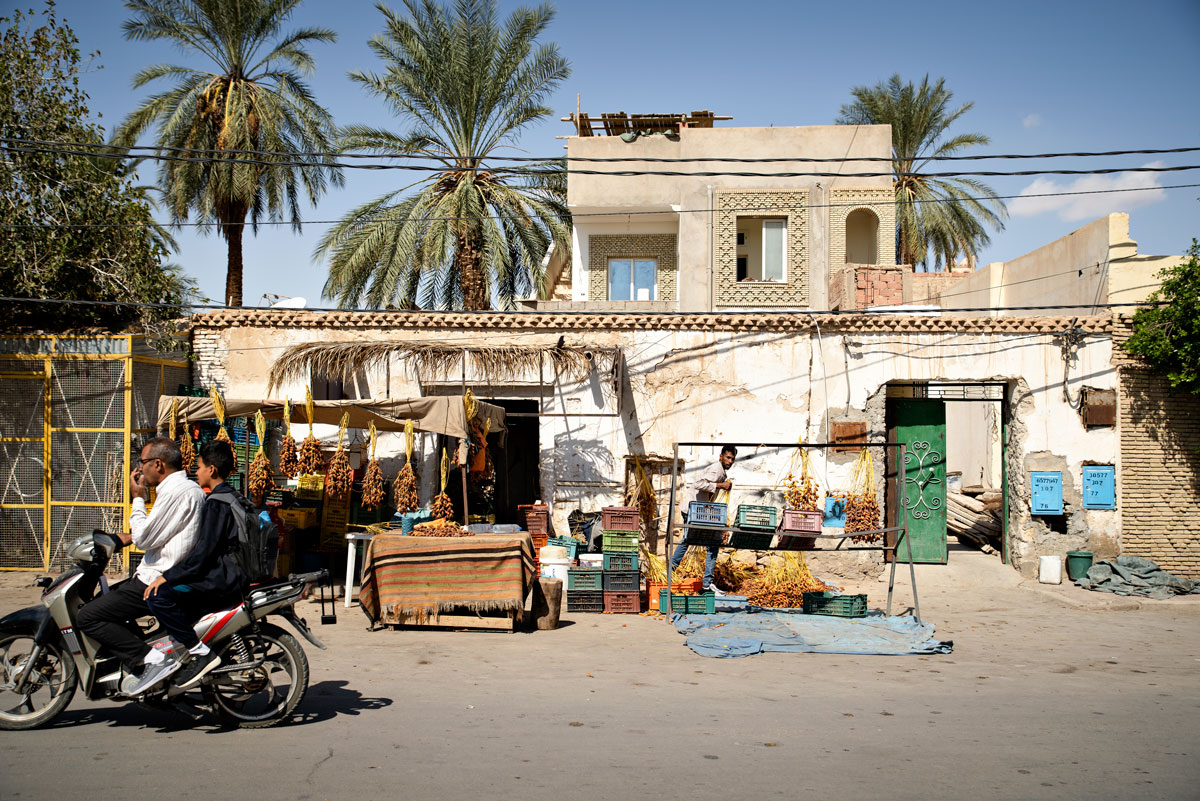
Pale sunlight falls between palm trees and olive branches onto our car. We hear chickens and the sleepy barking of guard dogs. In a distant kitchen, pots and pans clatter, somewhere a scooter misfires. In between, idyllic tranquility. We drink fresh Tunisian coffee and eat bread that is still warm. With it, cheese and dates, yogurt, and a kind of sweet jam. Tunisia welcomes us warmly.
In the early afternoon of the previous day, we disembarked in Tunis. The entry process, which we found to be disorganized, took two hours. Rush hour traffic and the haphazard search for SIM cards took even longer, so we left Tunis in the last light of day and drove southeast on the highway until we reached a campsite near Testour.
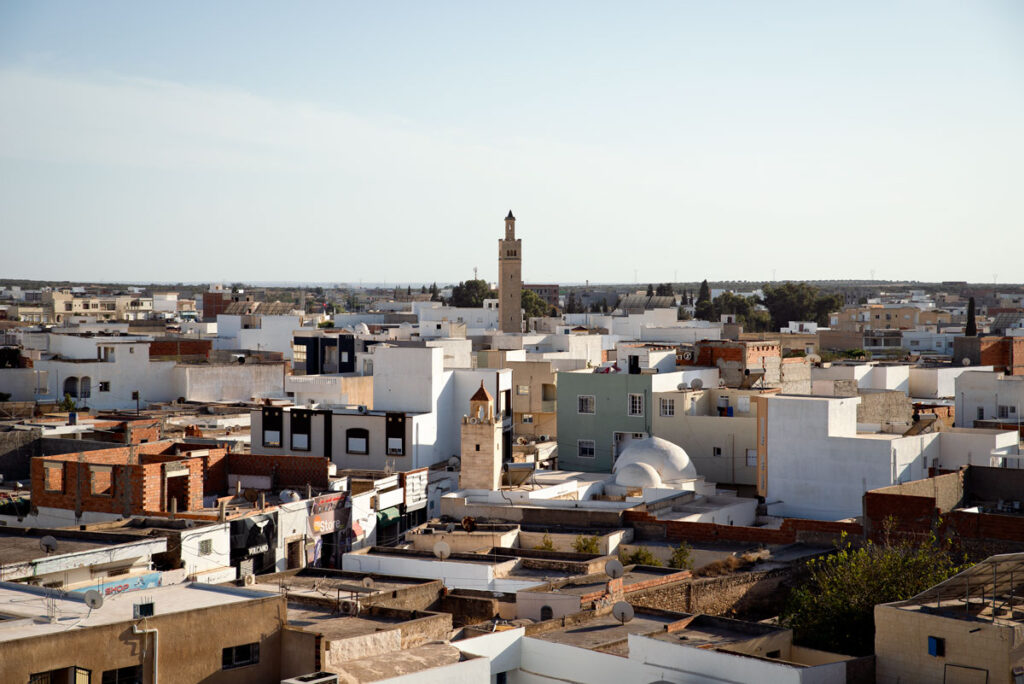
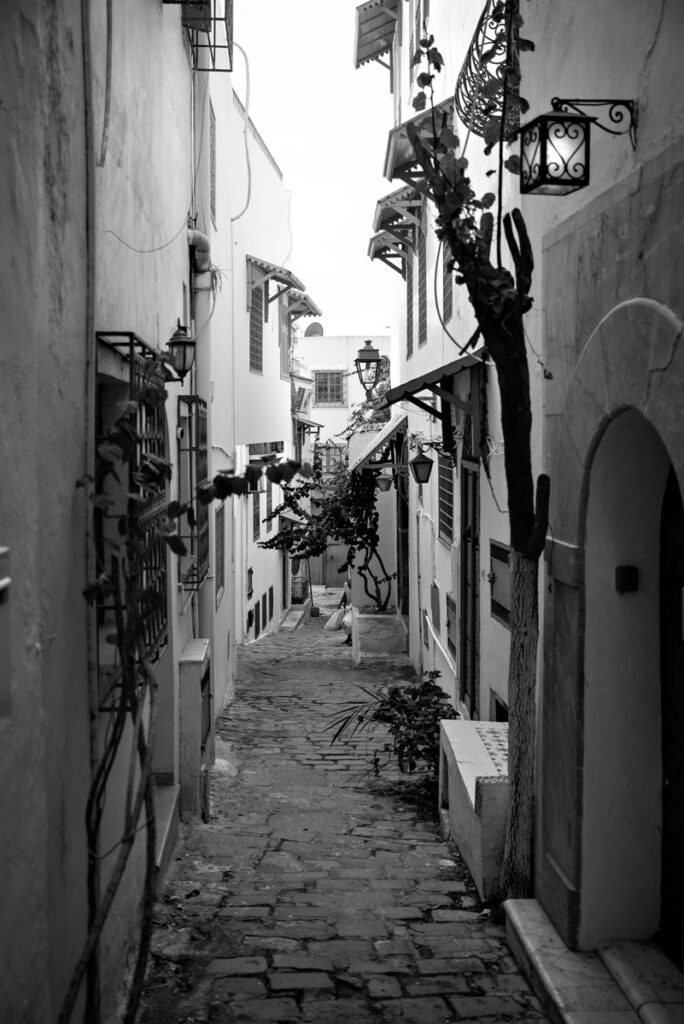
After breakfast, we drive through deserted and quiet alleys lined with houses – some so narrow that we have to maneuver with centimeter precision. We can’t make sense of the labyrinthine layout of the old town – Google Maps is just as disoriented as we are. But somehow we have to get through here to get back to the main road.
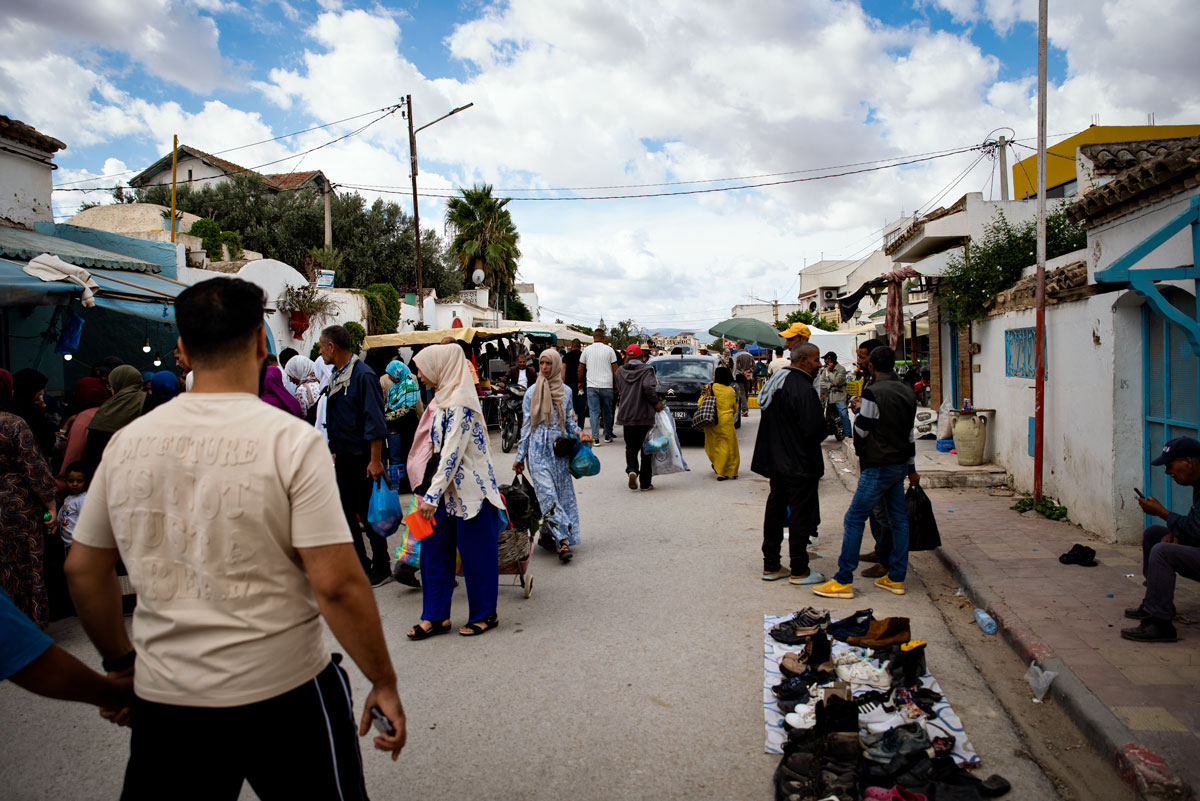
Suddenly, we are surrounded by a crowd of people. We can’t go back, the way forward is blocked by a truck, and market stalls are set up on the left and right, around which the entire population of this city seems to have gathered. Nothing helps – we follow a small Peugeot through the crowd. Without paying any attention to us, the people slowly move back just far enough from our car so that they are not touched by our side mirrors. Even when an oncoming car suddenly emerges from the crowd in front of us, the human flow gently takes us past it. Everything happens at walking pace; traffic and pedestrians have merged into one here.
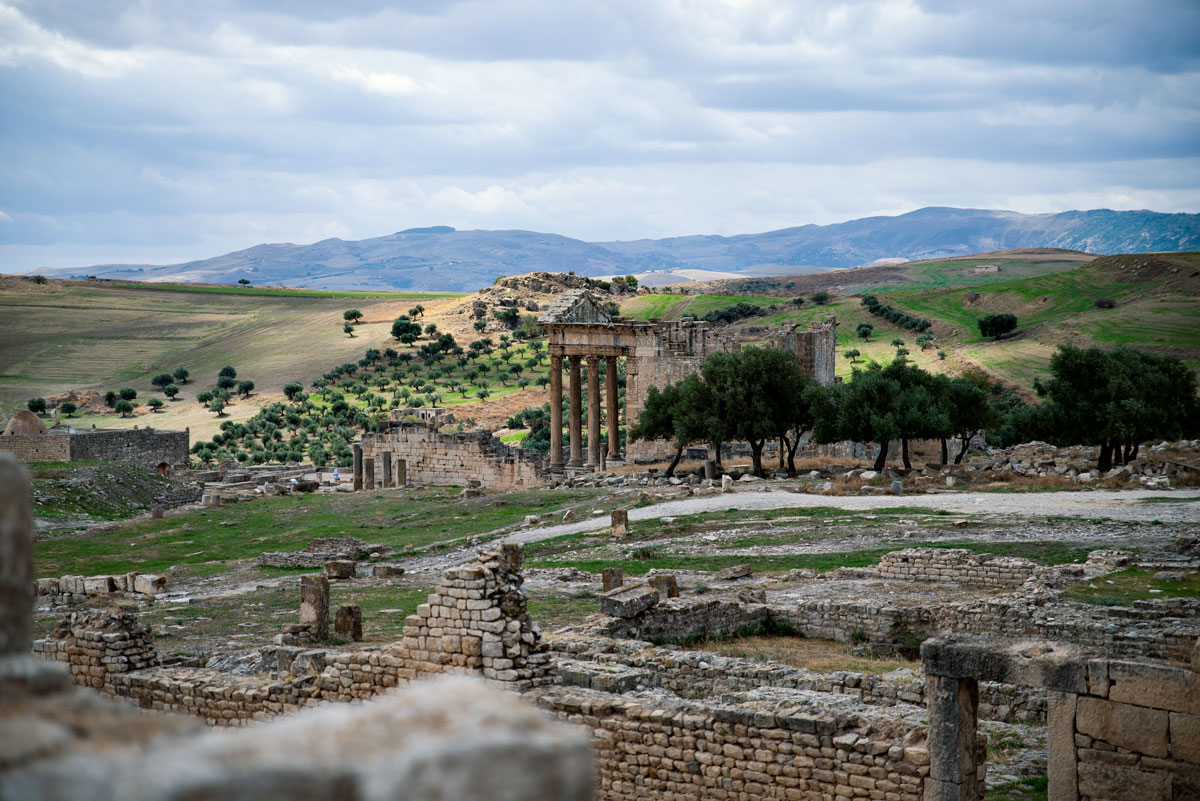
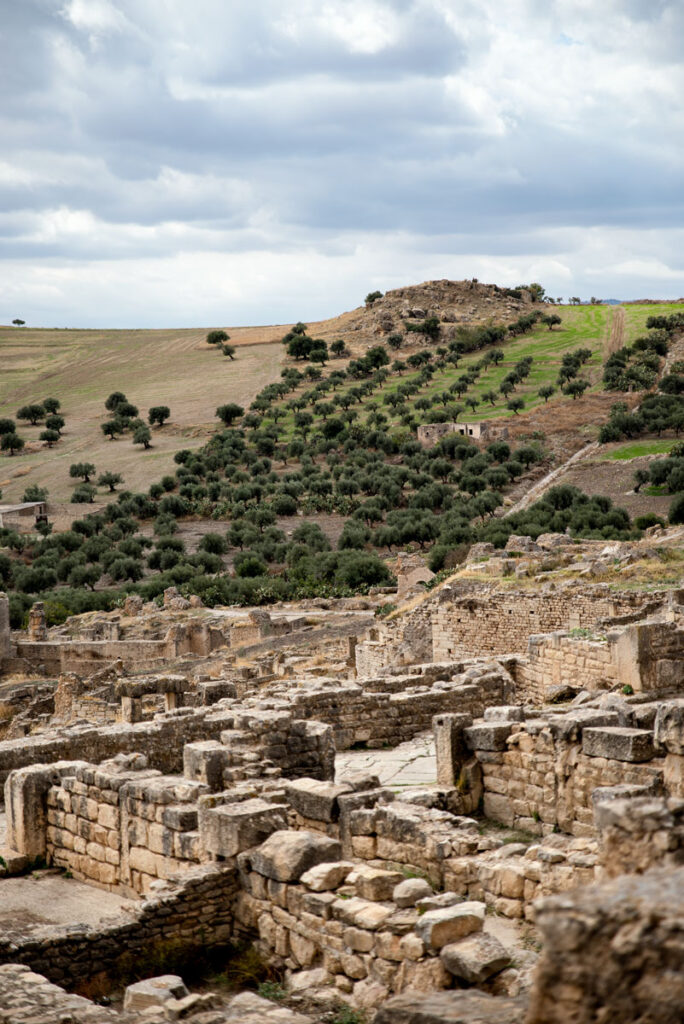
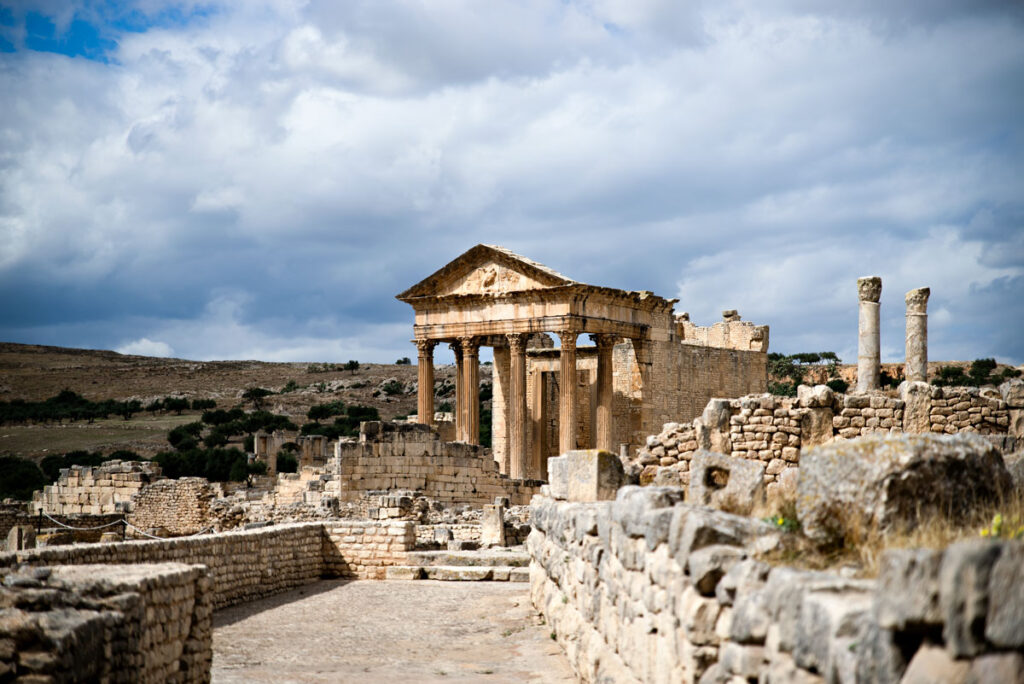
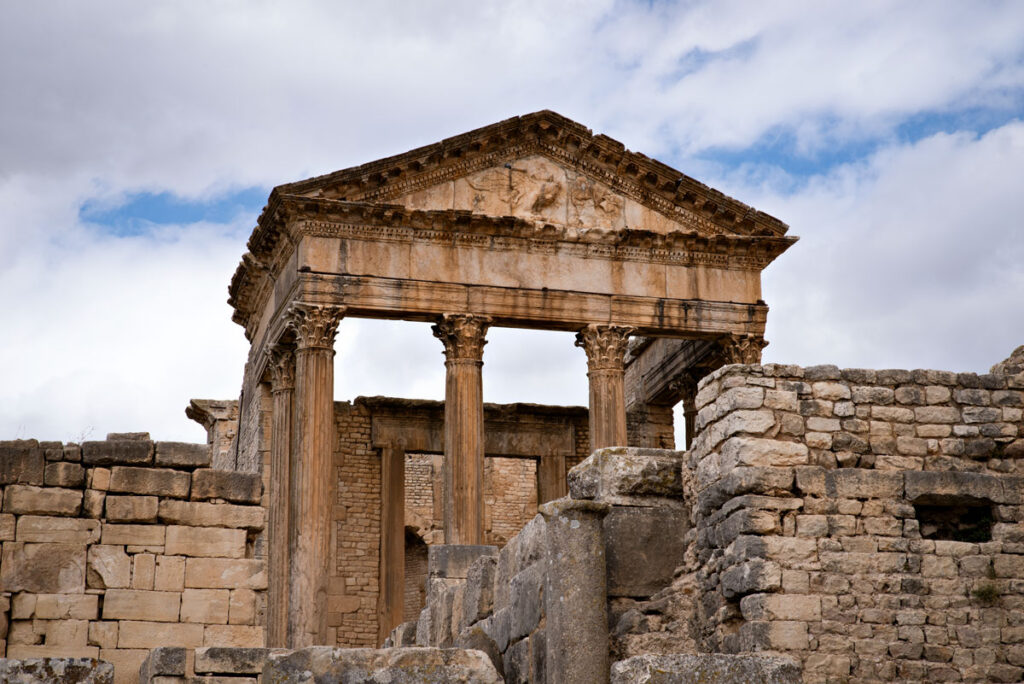
Straight country roads lead through barren landscapes. Through olive groves, through steppes. An endless, patchy sky. One desolate place after another, midday rest, perpetual silence. Up a mountain – then they lie before us: numerous ancient ruins. A once glorious city.
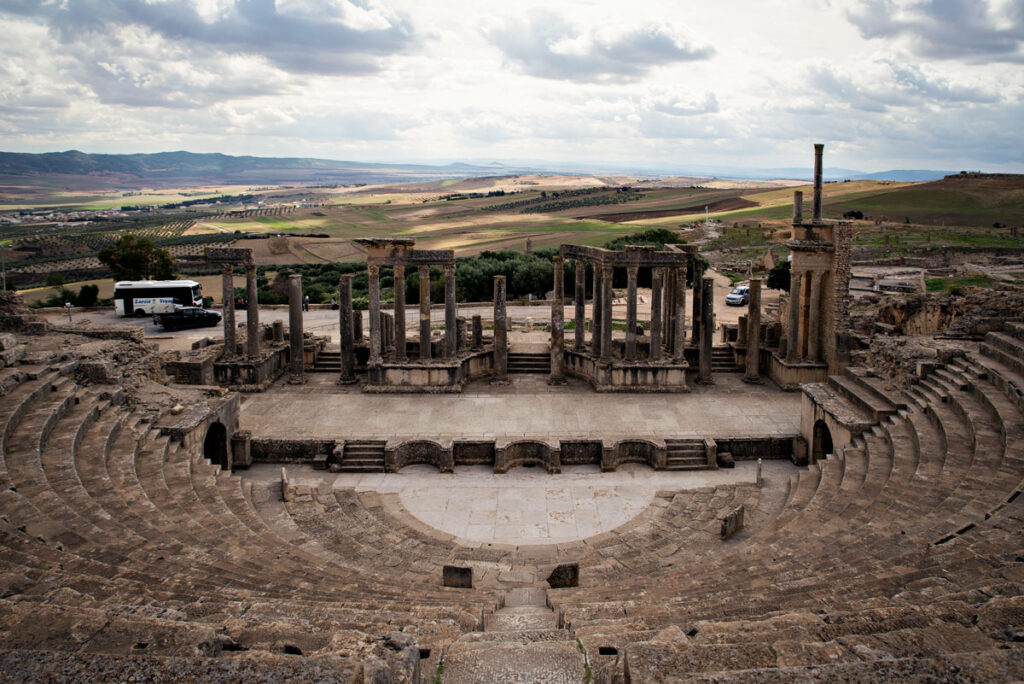
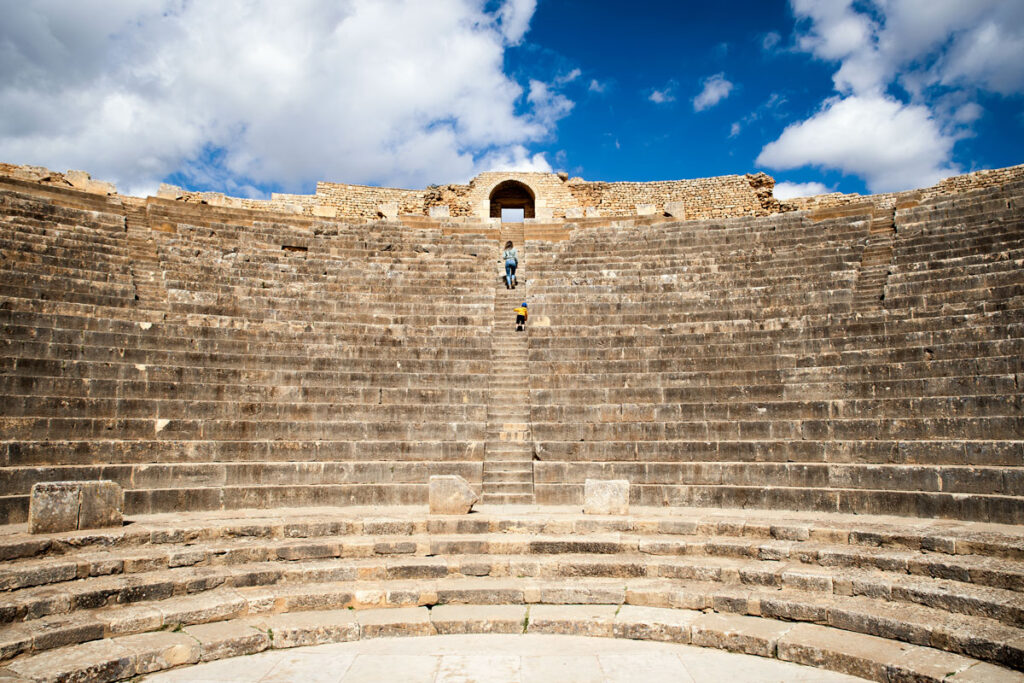
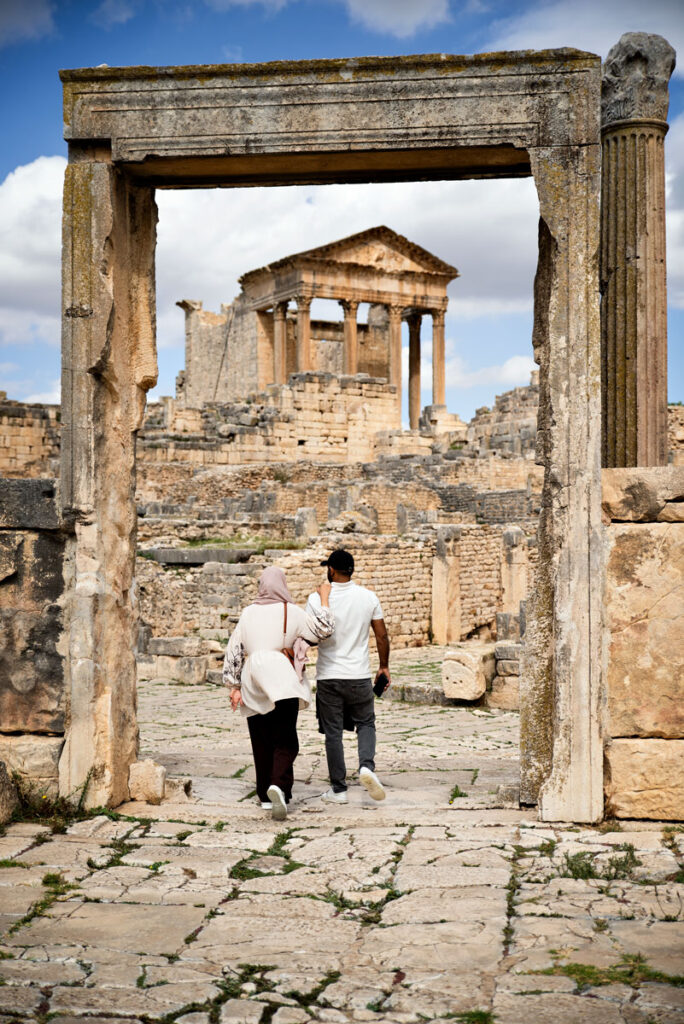
When the Roman Empire had reached its peak and expanded far beyond the Mediterranean, Thugga was an important city. There was a theater and a large forum. Temples to worship the holy gods. Baths and thermal springs, slave markets, and richly decorated villas.
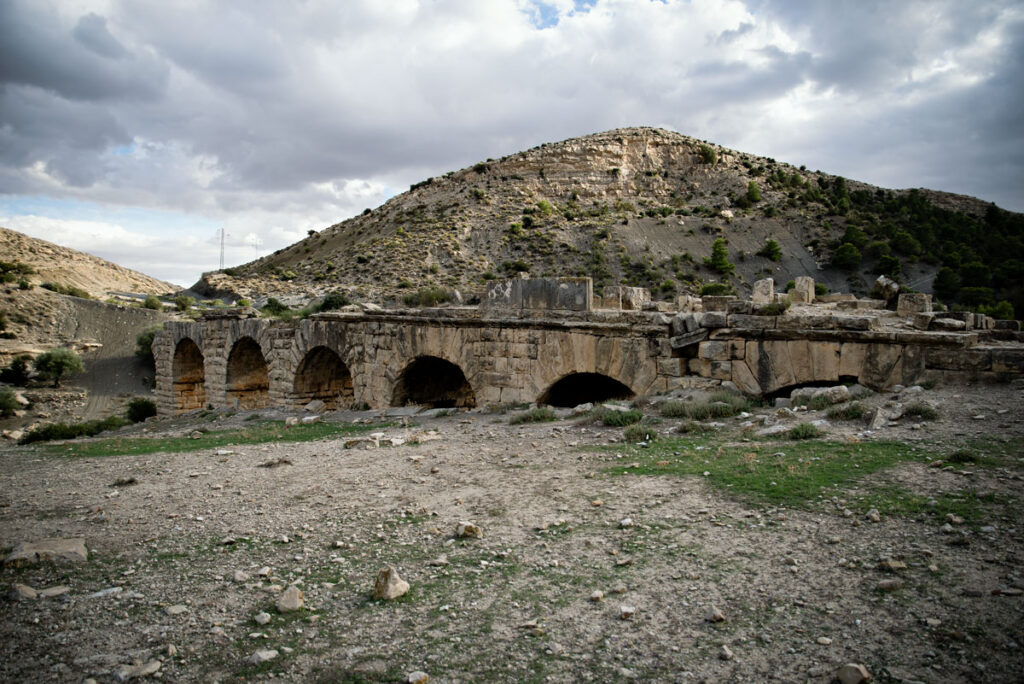
Never-ending roads lead us further south into the country – straight ahead, always toward the horizon. At some point, rolling hills, dried-up riverbeds, and barren steppe greenery appear beside us. We stop for a coffee break at the remains of what is probably an ancient bridge. The bridge itself turns out to be a meeting place for hazy hours in secret. Alcohol is not prohibited in Tunisia, but it is not necessarily easy to obtain. Yet here, next to the ancient bridge piers, hidden from the view of passing motorists, beer bottles pile up in dull green. It smells of fermentation and urine.
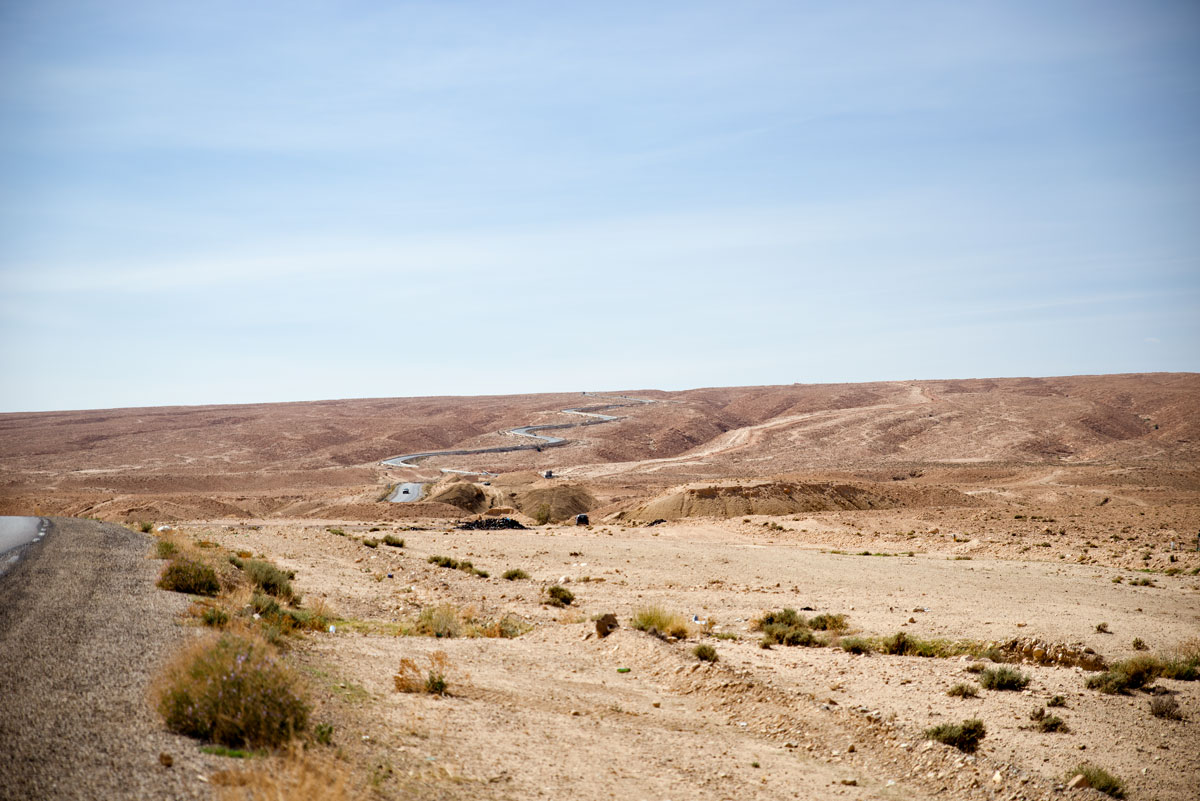
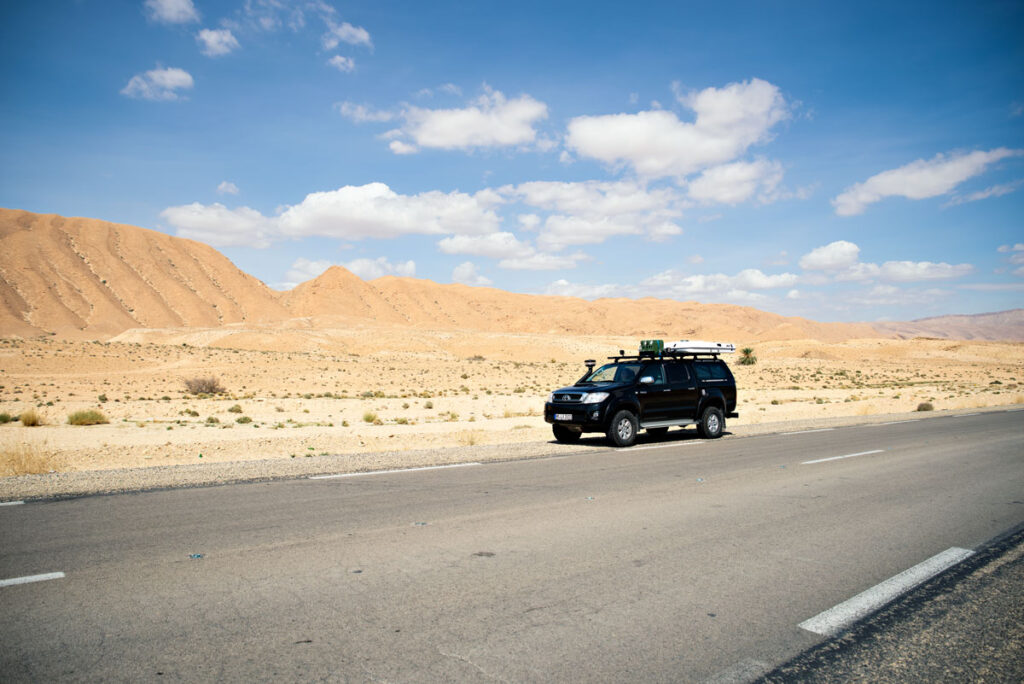
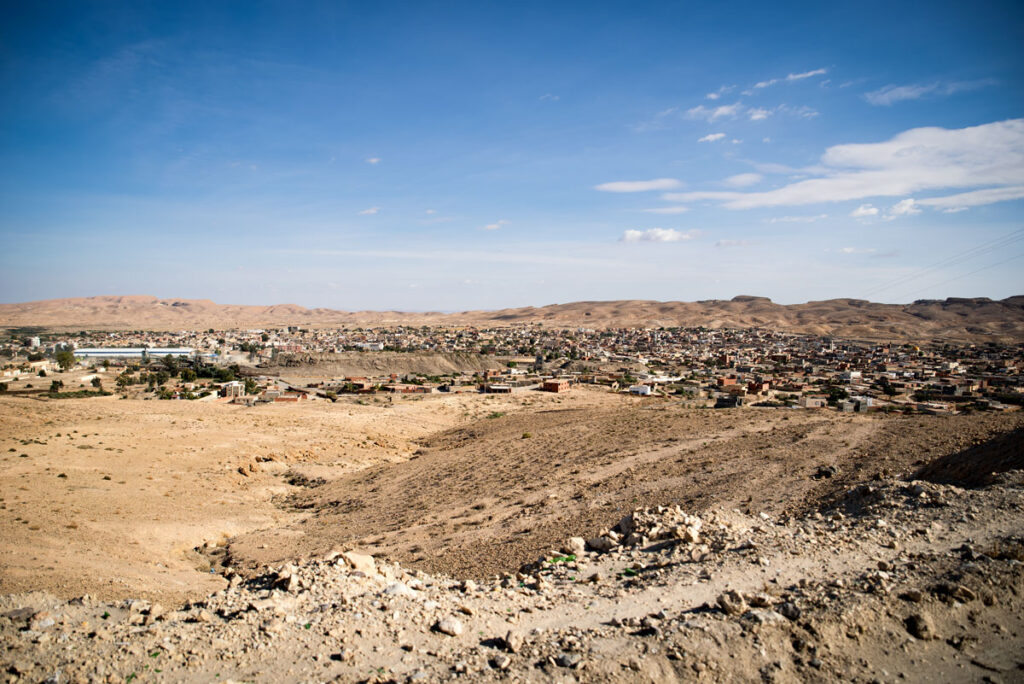
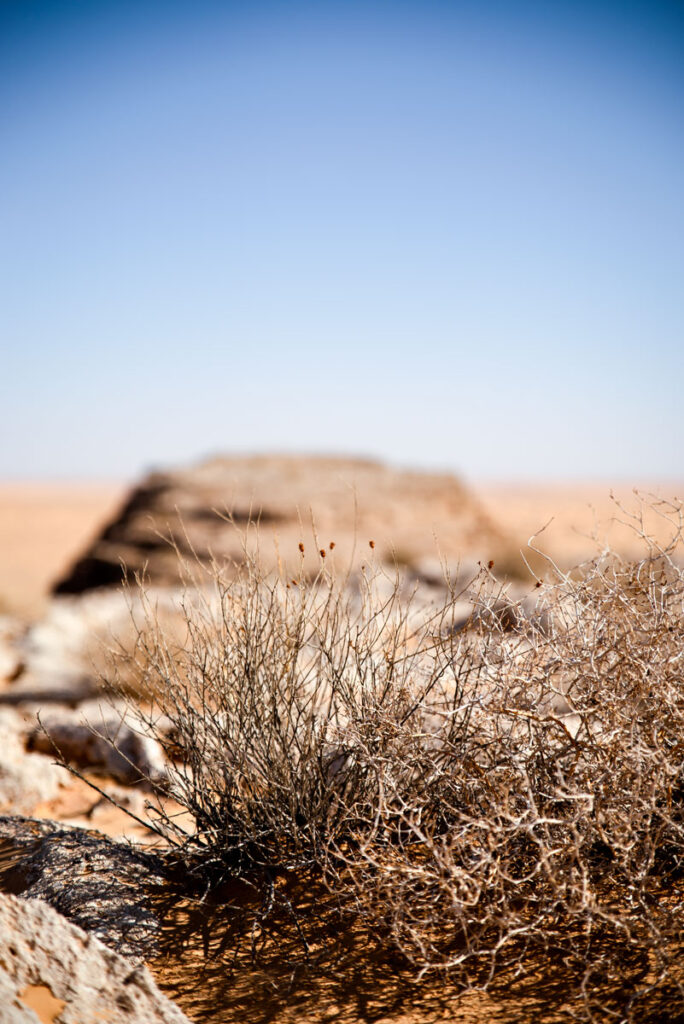
From about the middle of the country onwards, the landscape changes increasingly, metamorphosing into a desert of stone and dust. The roads remain straight lines through yellow and brown until they zigzag up and down mountain ranges and hills. There is very little traffic. But when a large truck does emerge from the wasteland, it sets the world humming and vibrating. Amidst all this nothingness lies the town of Redeyef. Its houses blend into the desert like a field of stones. The gas stations only have fuel sporadically, and the only restaurant that seems to be open at lunchtime sells greasy fried chicken.
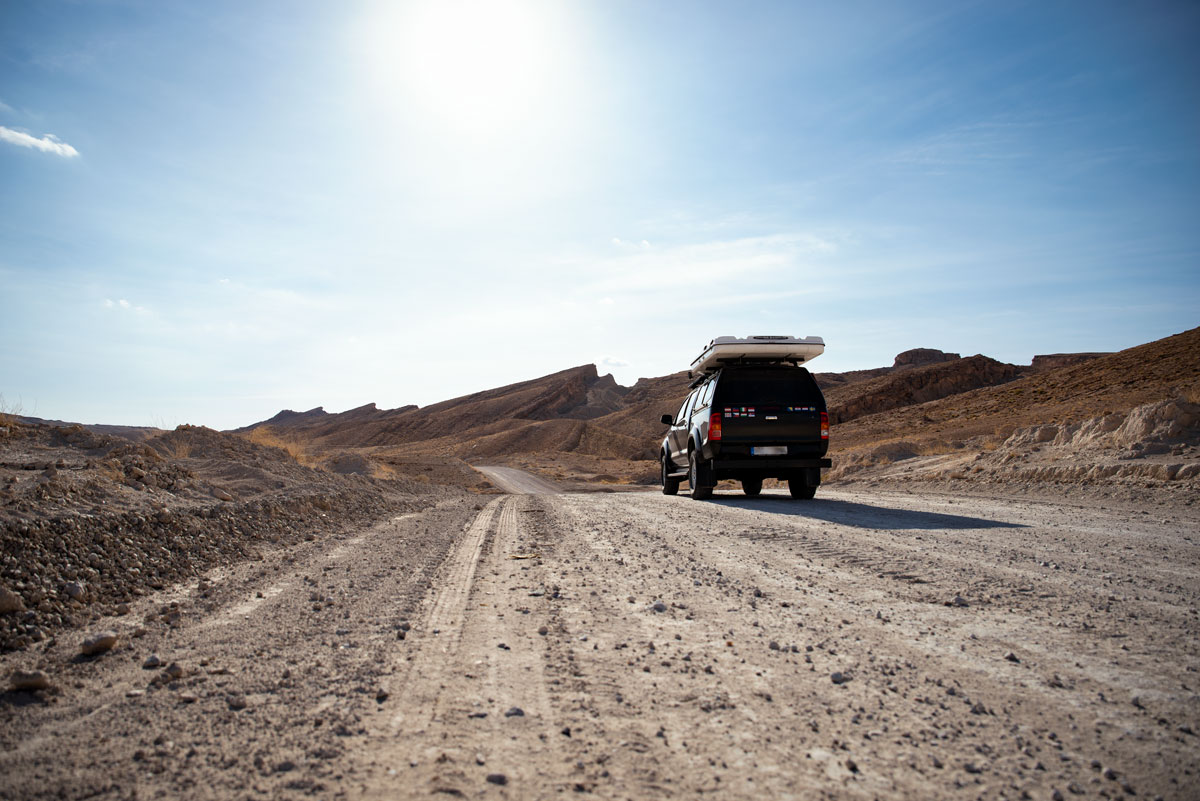
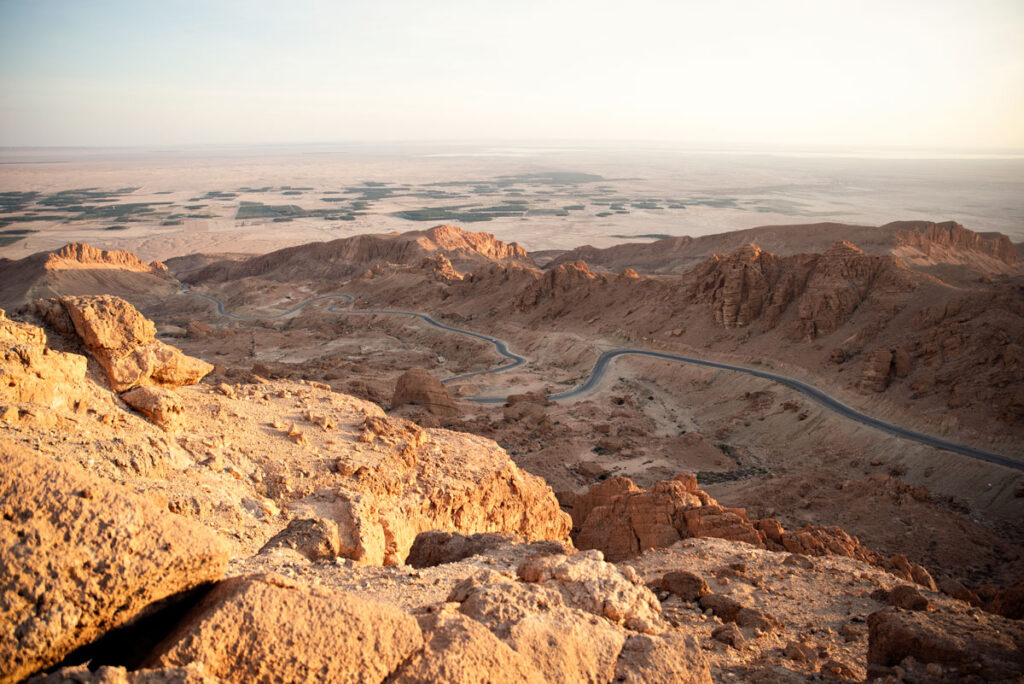
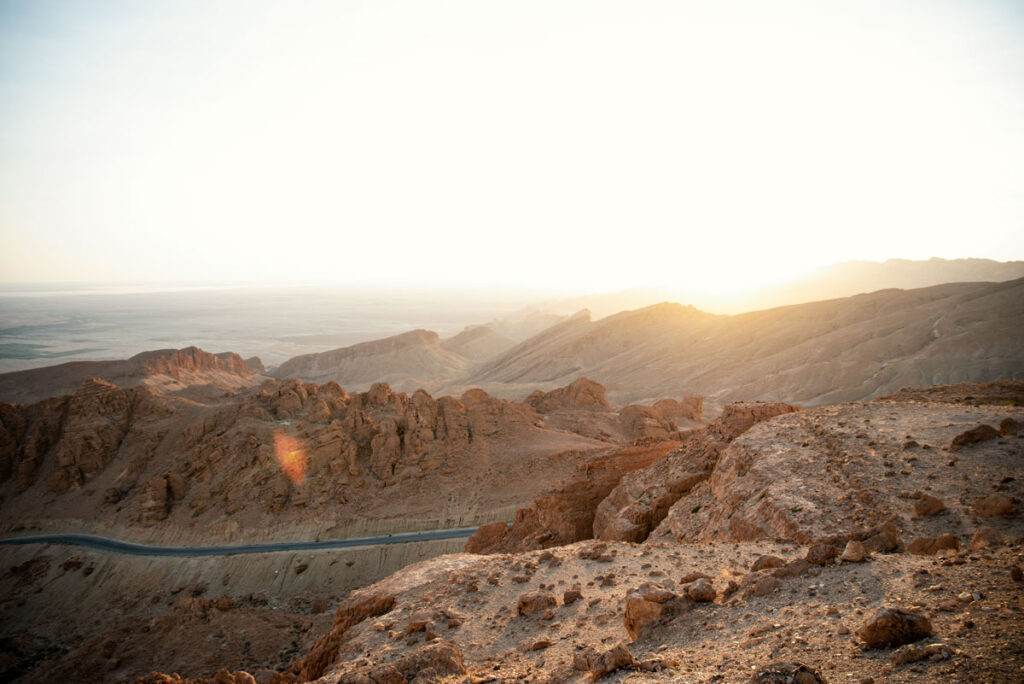
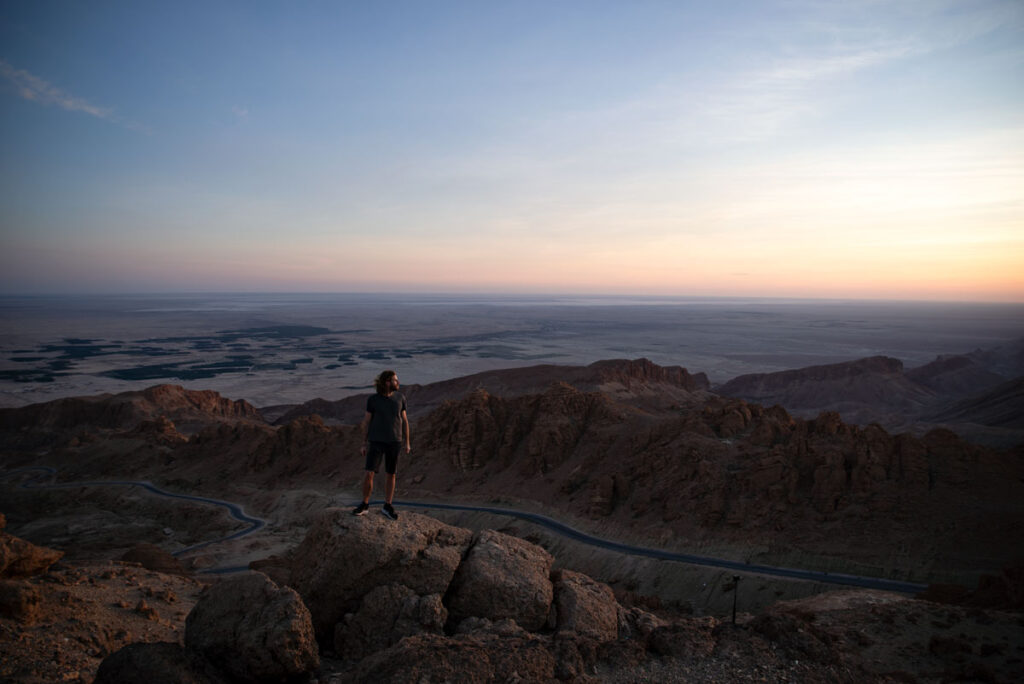
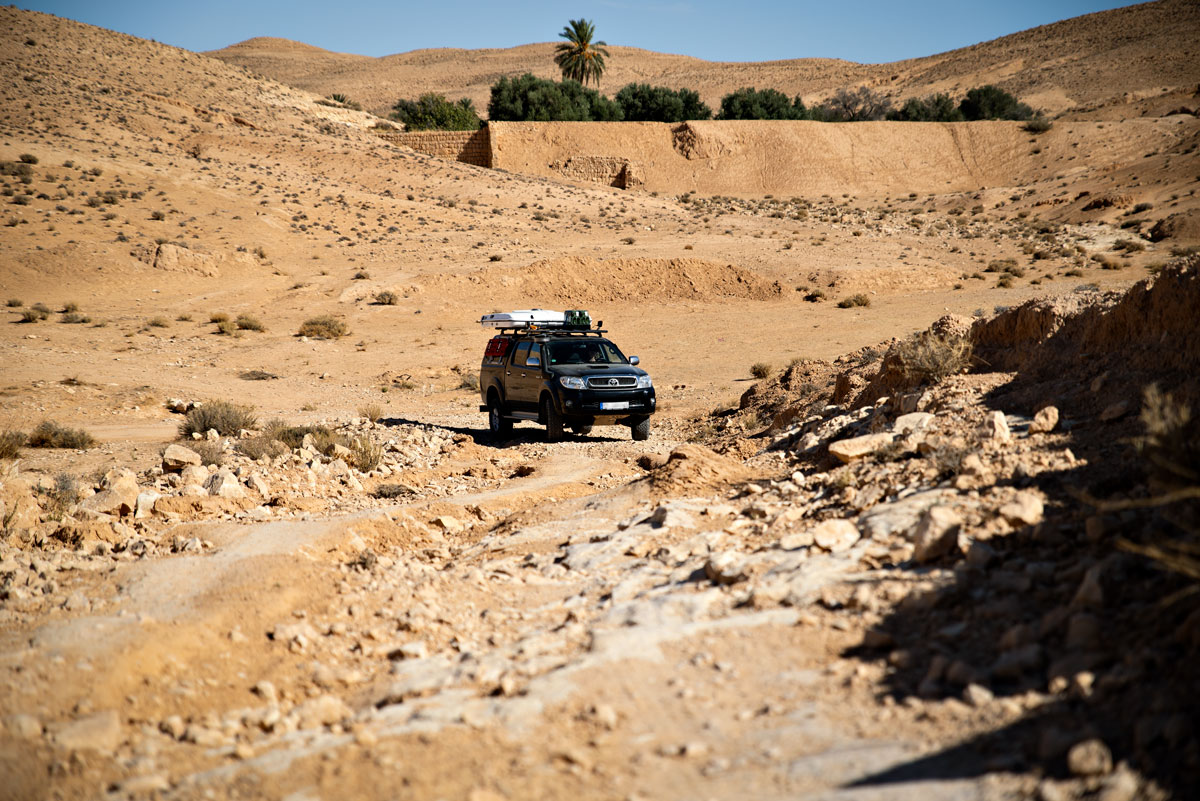
From the train station in Redeyef, a dusty track leads into the hills outside the town. Tracks on the road and the width of the route bear witness to huge machines. A few kilometers later, we encounter gigantic mining vehicles and excavators – phosphate mining is the largest and perhaps only source of income in this dusty, hot region. A wonderfully paved road takes us to the edge of a rocky plateau. The road leads down into the valley, winding its way through the stone, only to disappear somewhere behind it. It is the Rommel Trail – a popular passage among off-roaders for its views, built by the French military in the 1950s.
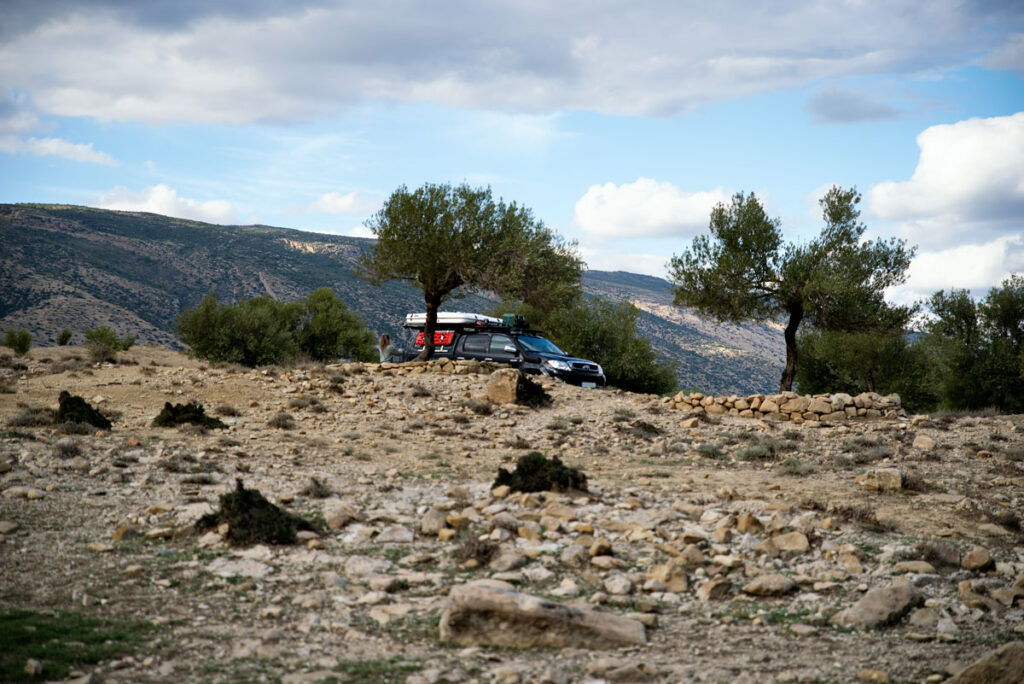
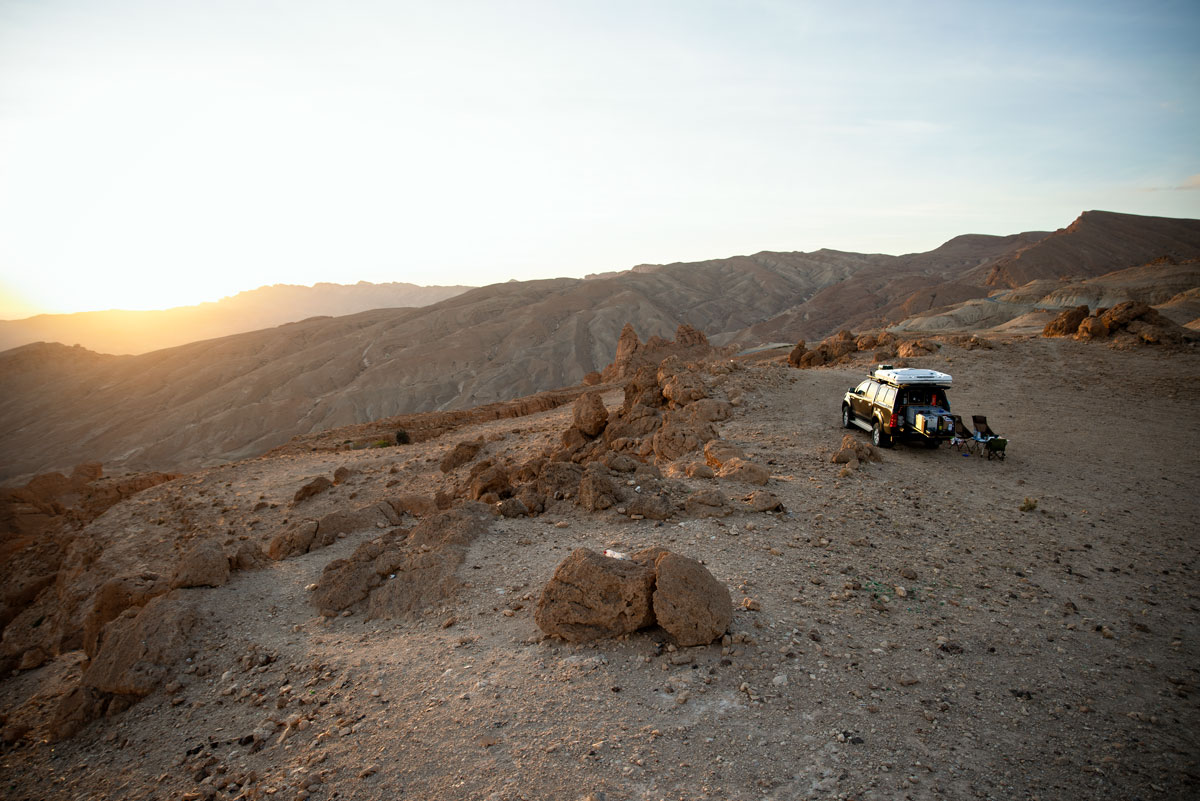
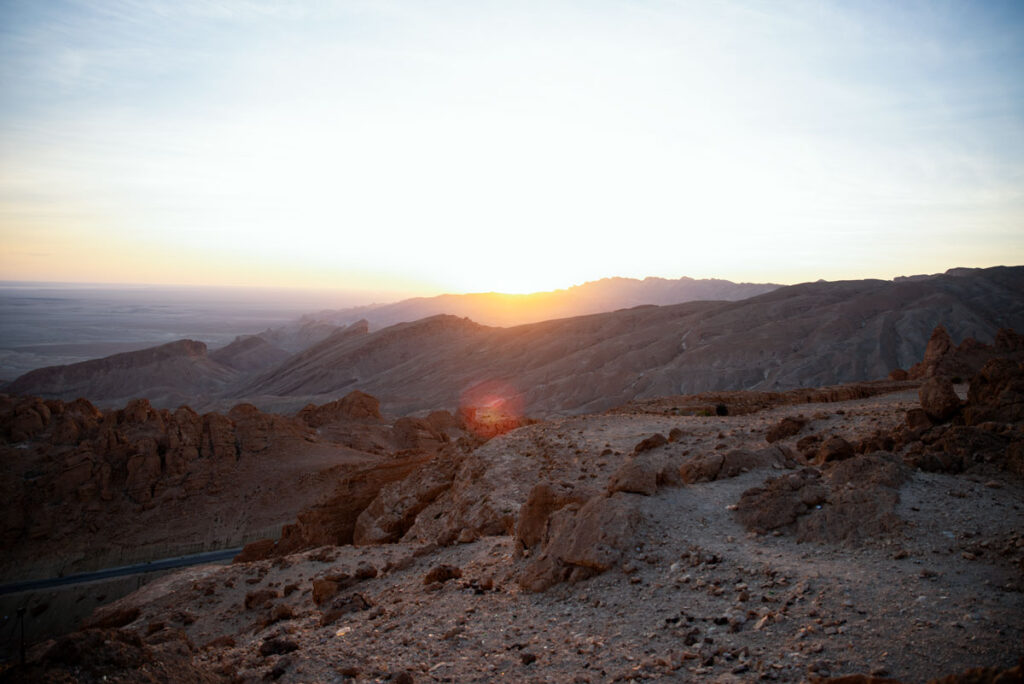
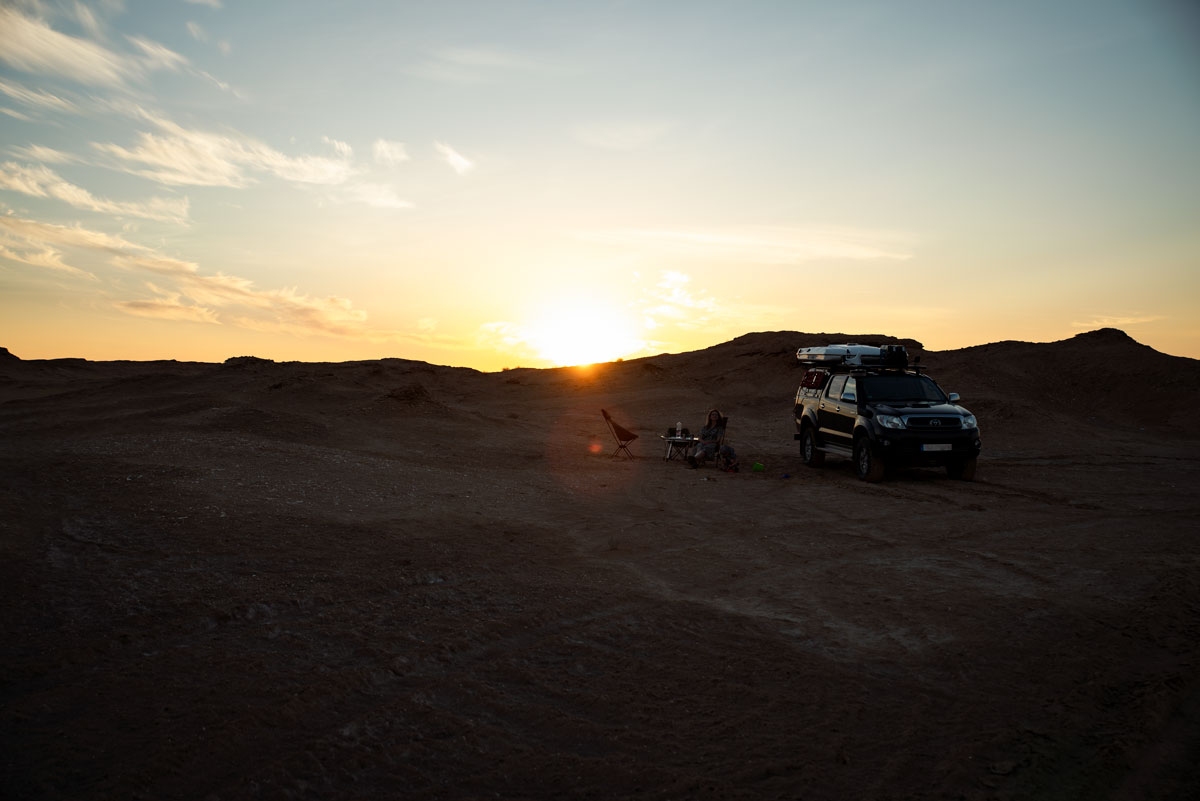
With the phenomenal view ahead of us, we no longer feel like following the track. Instead, we look for a sheltered spot for the night at the edge of the cliff. As the sun sinks golden and elicits the most beautiful colors from the evening, we lose ourselves in the magical moment. If there were no wind, the silence would be perfect. When a car struggles up the road below us, its headlights cast long beams of light into the approaching night. With the last ray of sunshine making it over the rock faces, we close our eyes in the roof tent.
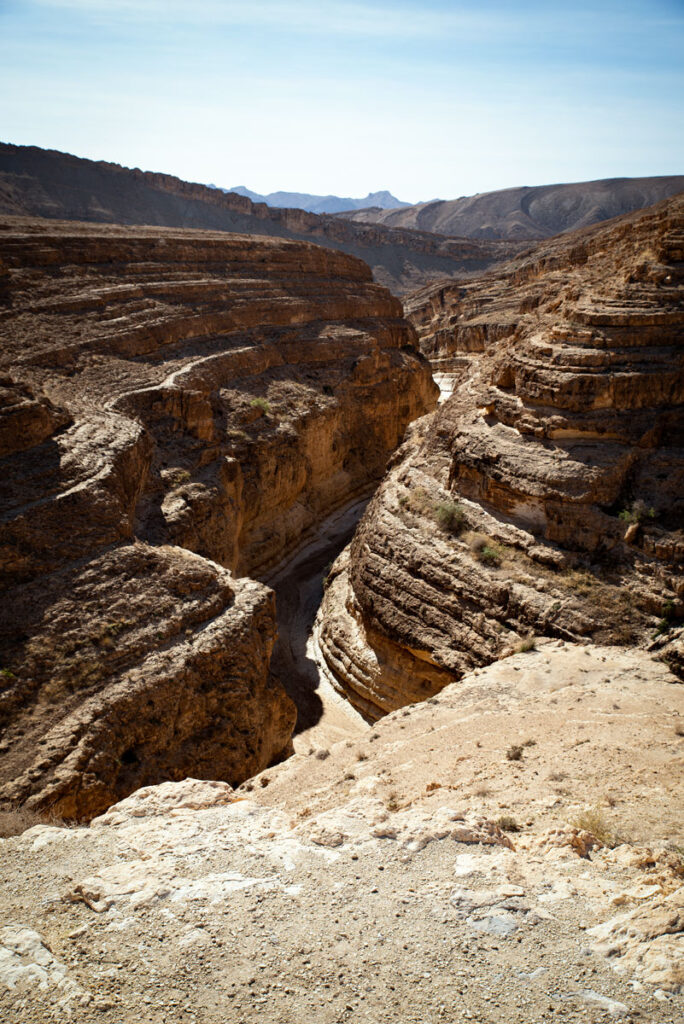
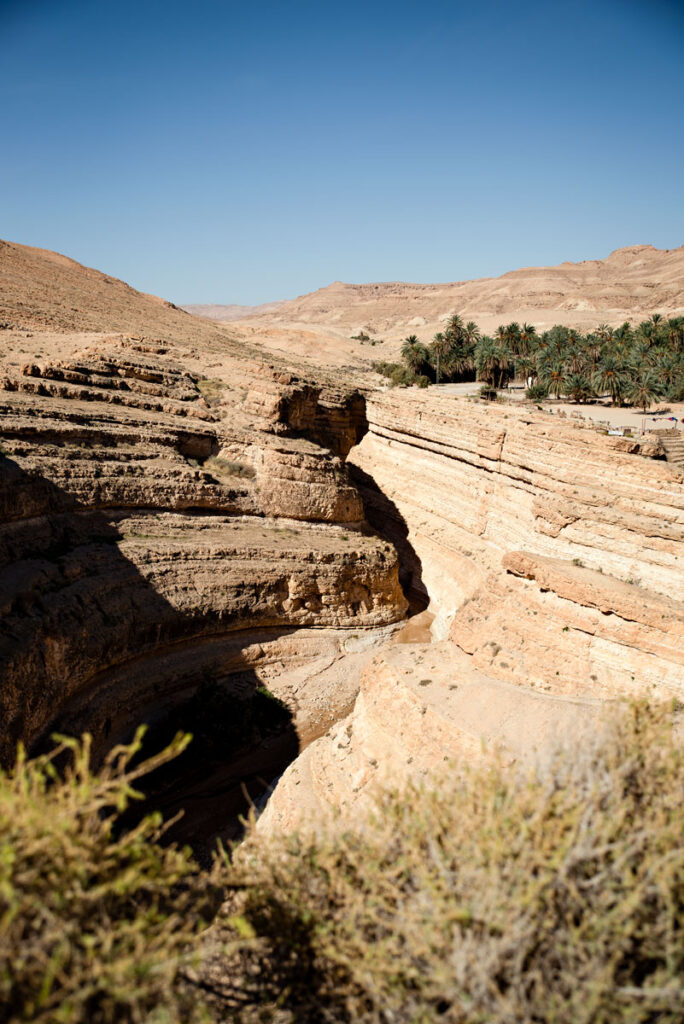
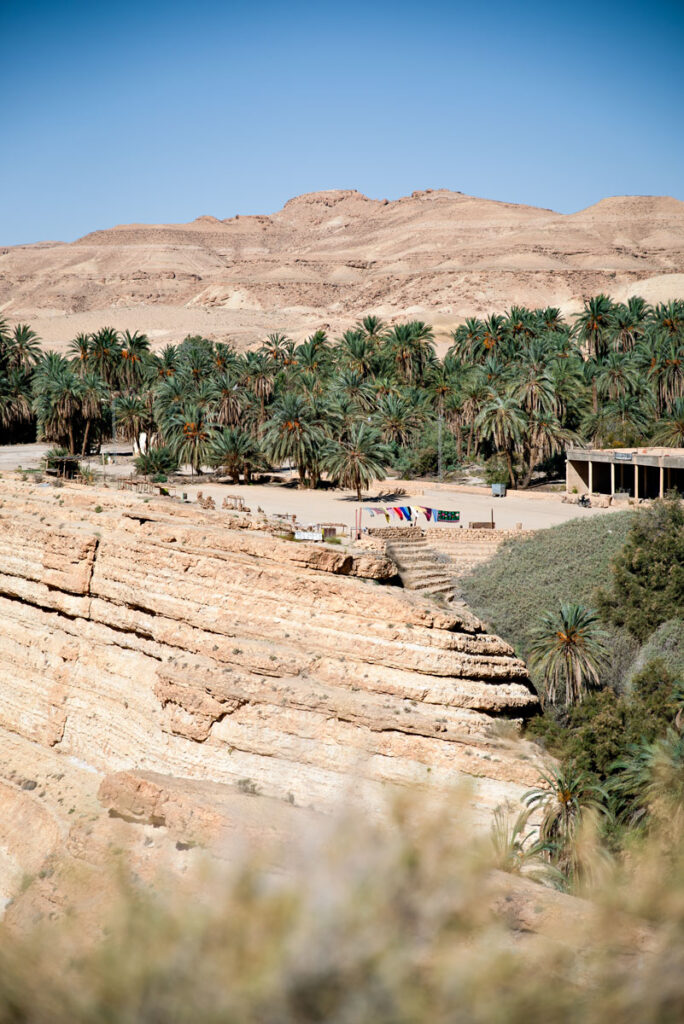
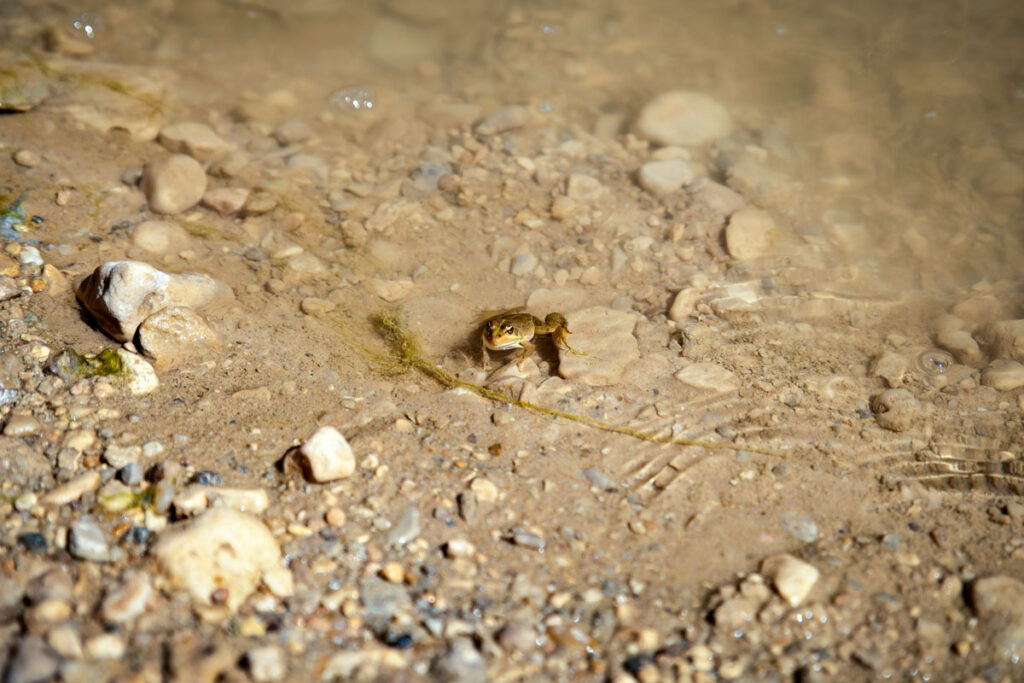
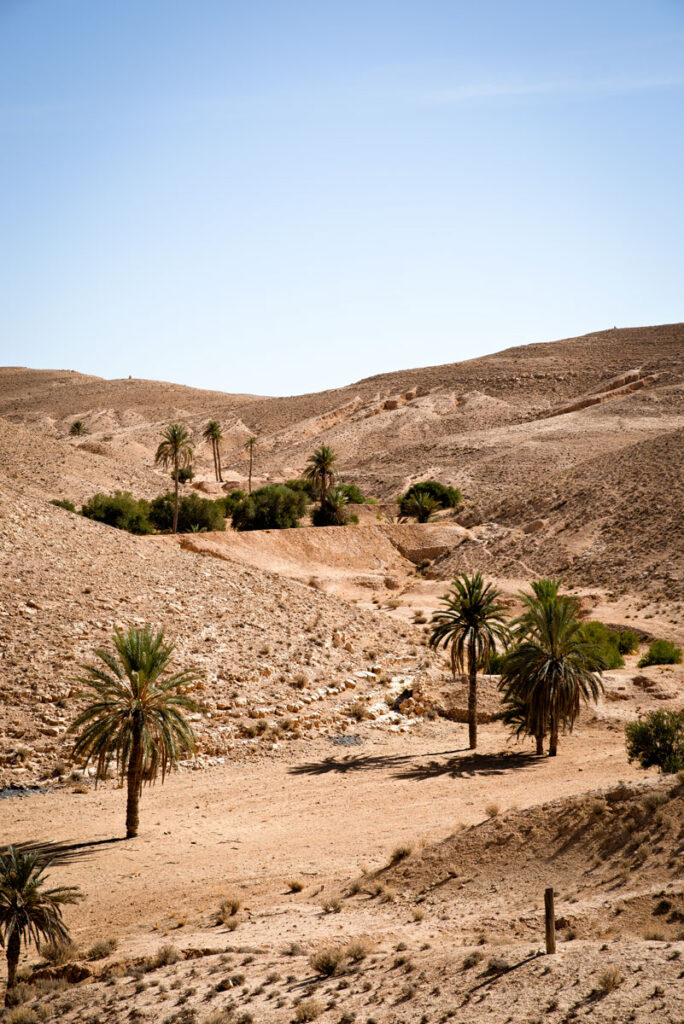
After a peaceful night in our rocky paradise, we visit a patch of green landscape in the middle of this barren desert. The Mides Oasis lies directly on the Algerian border. A deep canyon runs past it – when it rains in winter, flash floods ten or even twenty meters deep can rush through the rocky gorges.
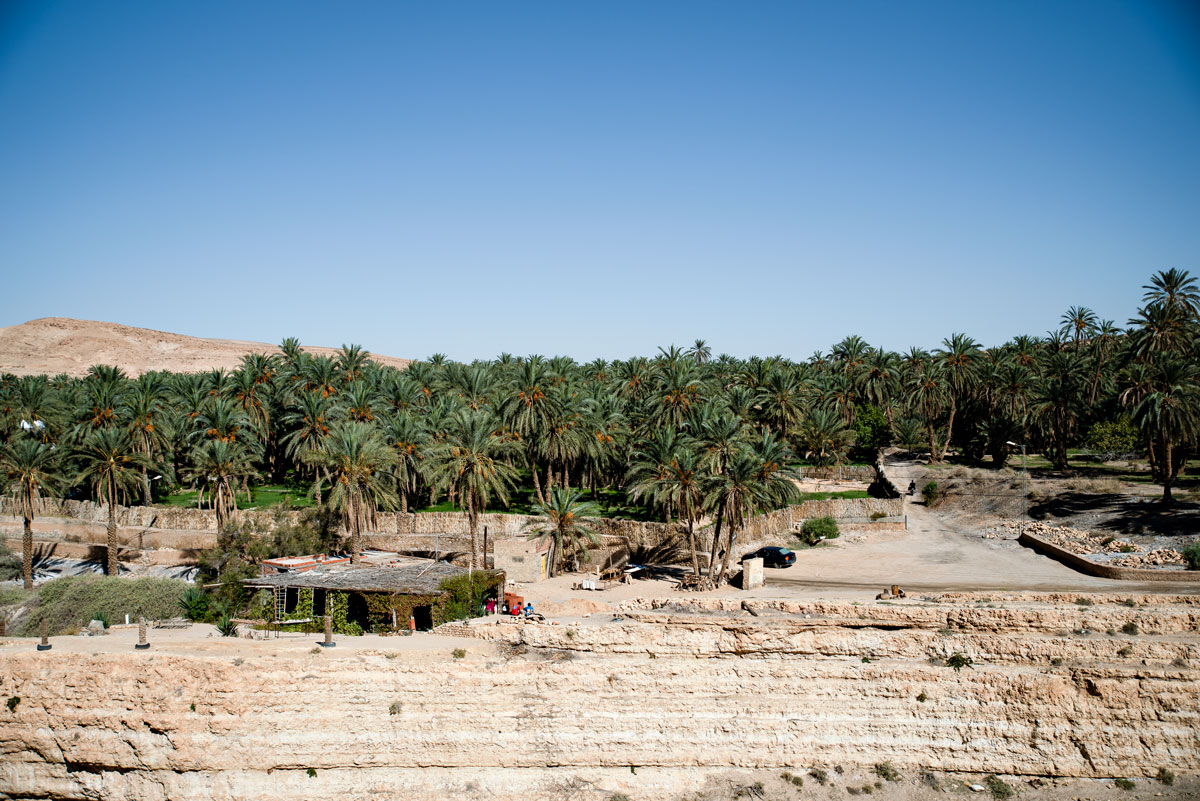
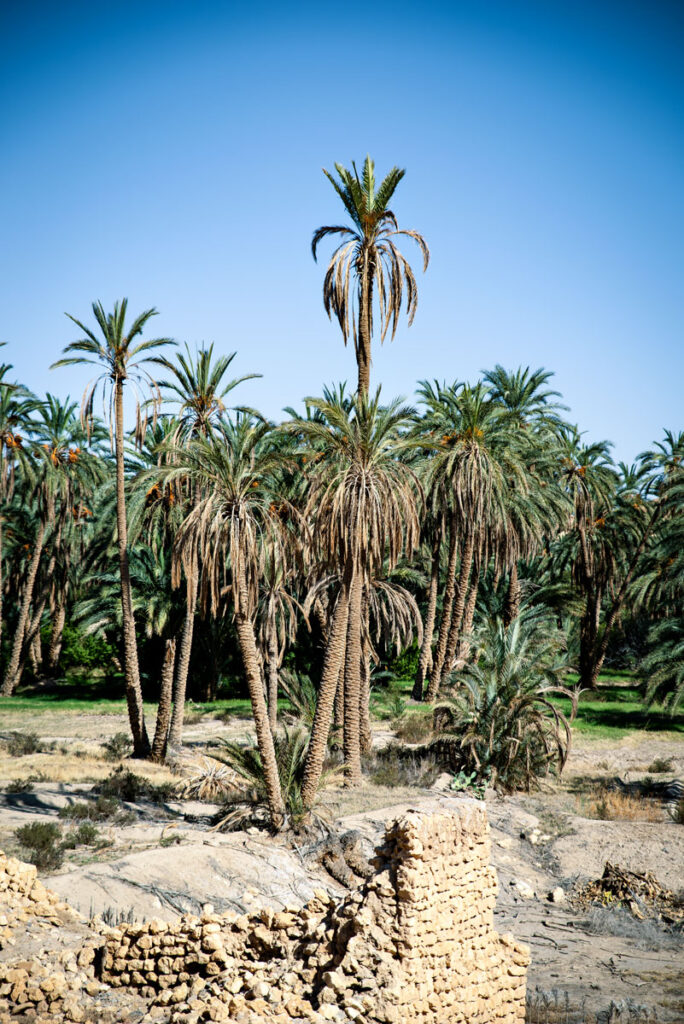
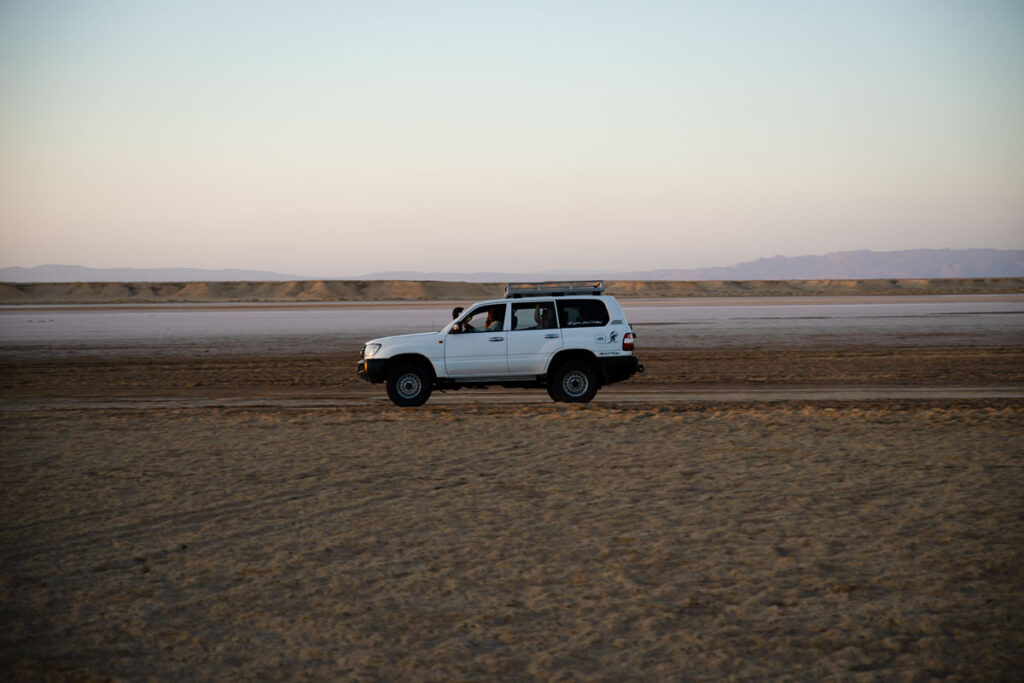
The oasis itself is a refuge. Dates and oranges thrive there. A village abandoned about fifty years ago is crumbling under the constant wind, the rare rain, the constant sun, the process of being forgotten. The state had resettled the few inhabitants of this old town to a newly created village about five hundred meters from here. A few tourists come here every day. As we drink sweet tea in the shade of a café and eat cheese and freshly picked dates, a group of French package tourists invade the silence of the oasis: they emerge from about a dozen white Toyota Land Cruisers, take their obligatory snapshots, and disappear again within a few minutes.
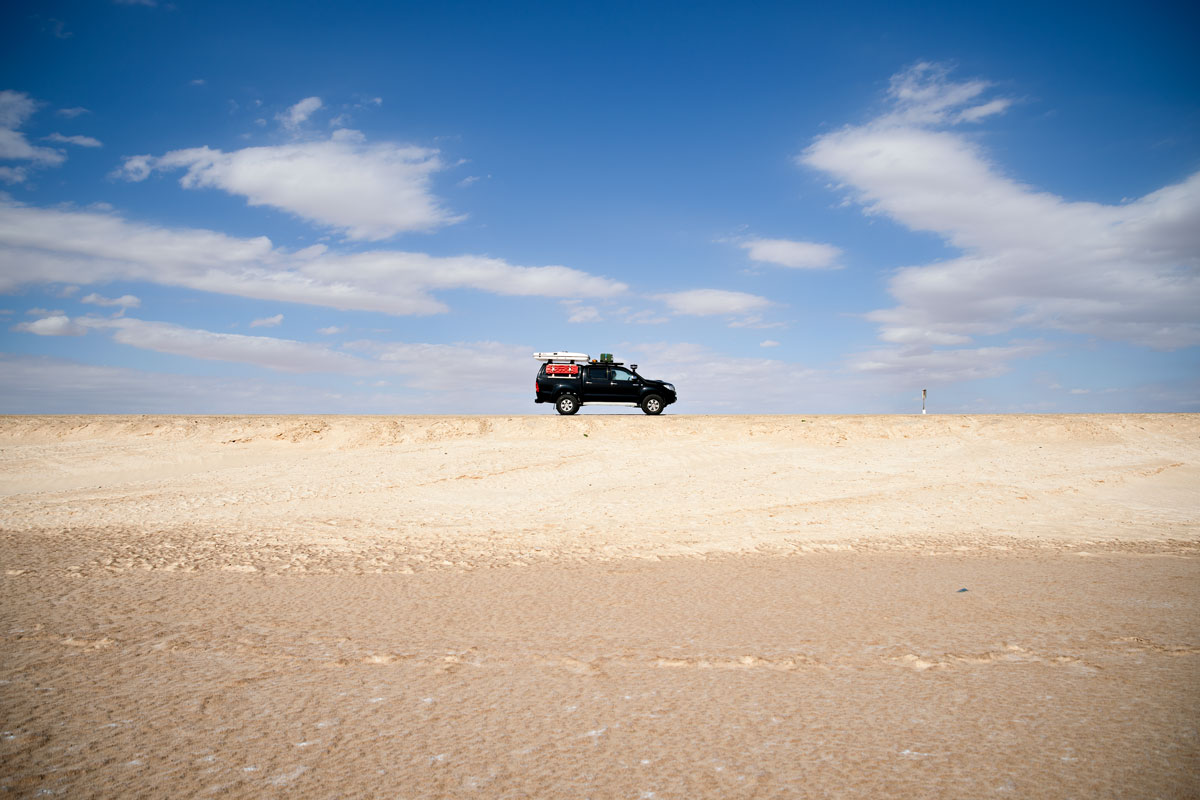
The road, which was just moments ago perfectly paved, suddenly disappears under sand drifts, reappears fifty meters further on, only to vanish again immediately. The dust remains, but stones and rubble have given way to sand. We seem to have crossed an invisible line, because now we are greeted by the precursors of the Sahara. Here, at the salt lake Chott el Rahim, the sand is not yet as fine and yellow as it is further south. It is coarse like fine granules and rather reddish.
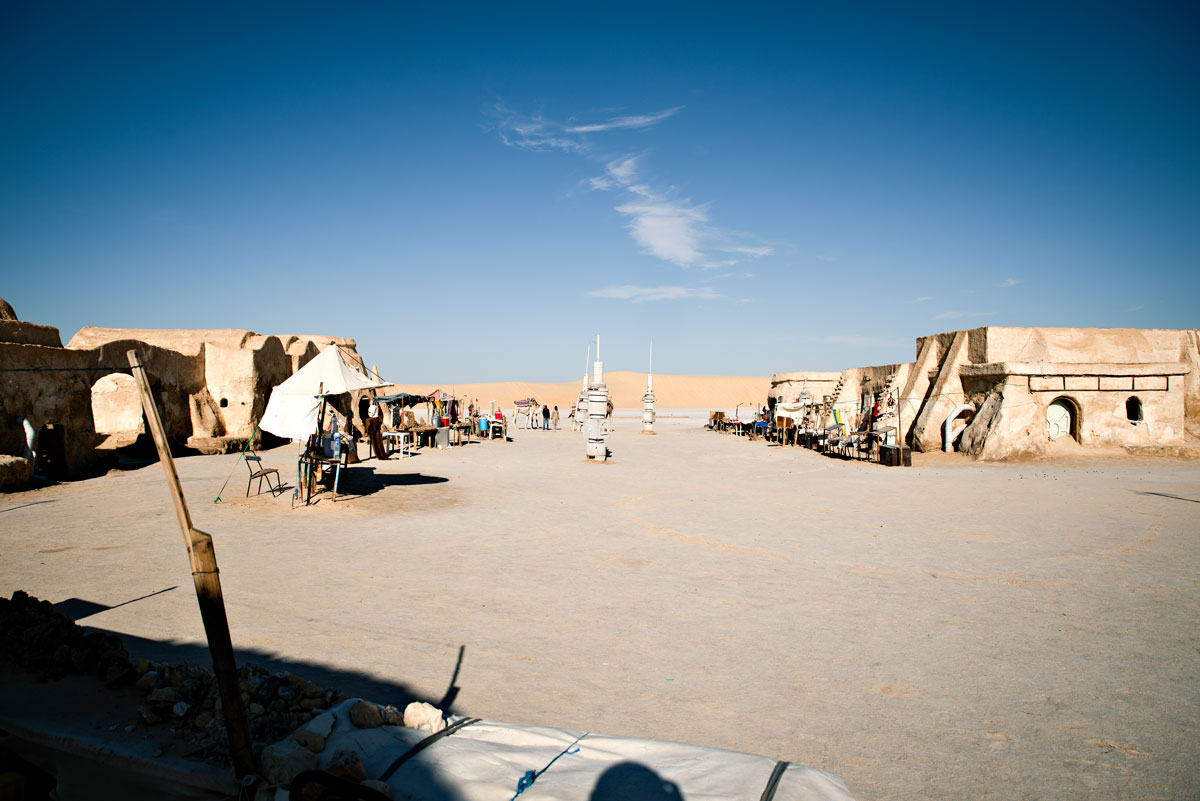
We pass a group of German motorhome travelers whom we had already met on our ferry. They are camping in the shade of a dune. Shortly afterwards, we reach Mos Espa, the former filming location and movie set of the fantasy town of the same name in Star Wars. But there is nothing here to remind us of the glamour of Hollywood. Exposed to the elements for decades, the sets have crumbled into sad clumps. Beggars and rock rose sellers, camel guides and children beg for money or at least for the purchase of their wares. They seem desperate, persistent, their clothes visibly tattered. While millions are being made elsewhere with trademark rights and amusement parks, this authentic backdrop is withering away into a depressing black hole.
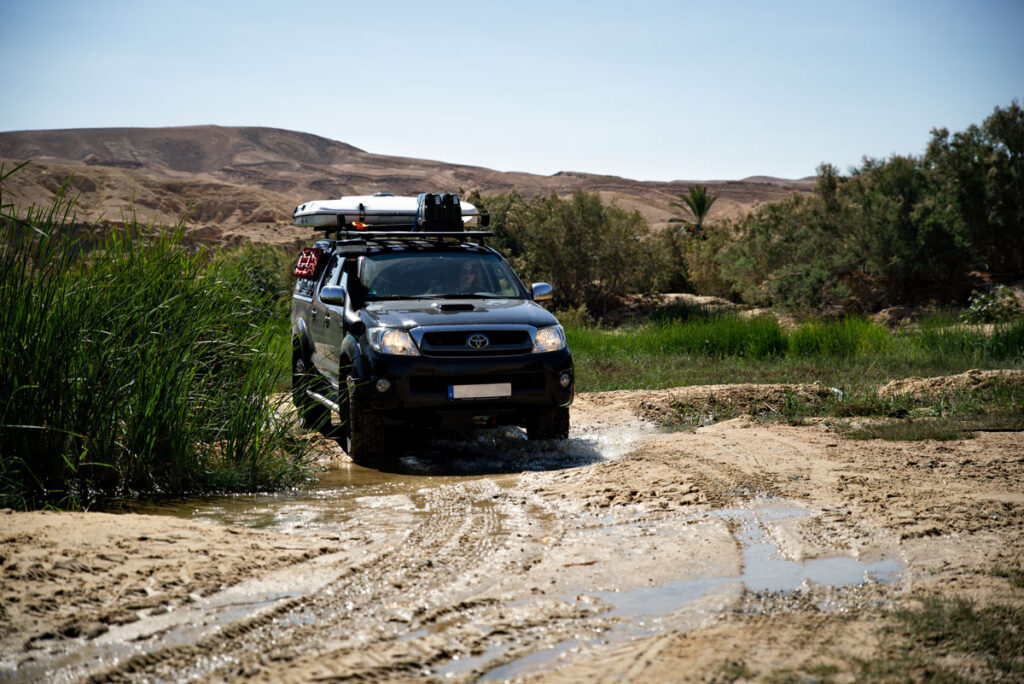
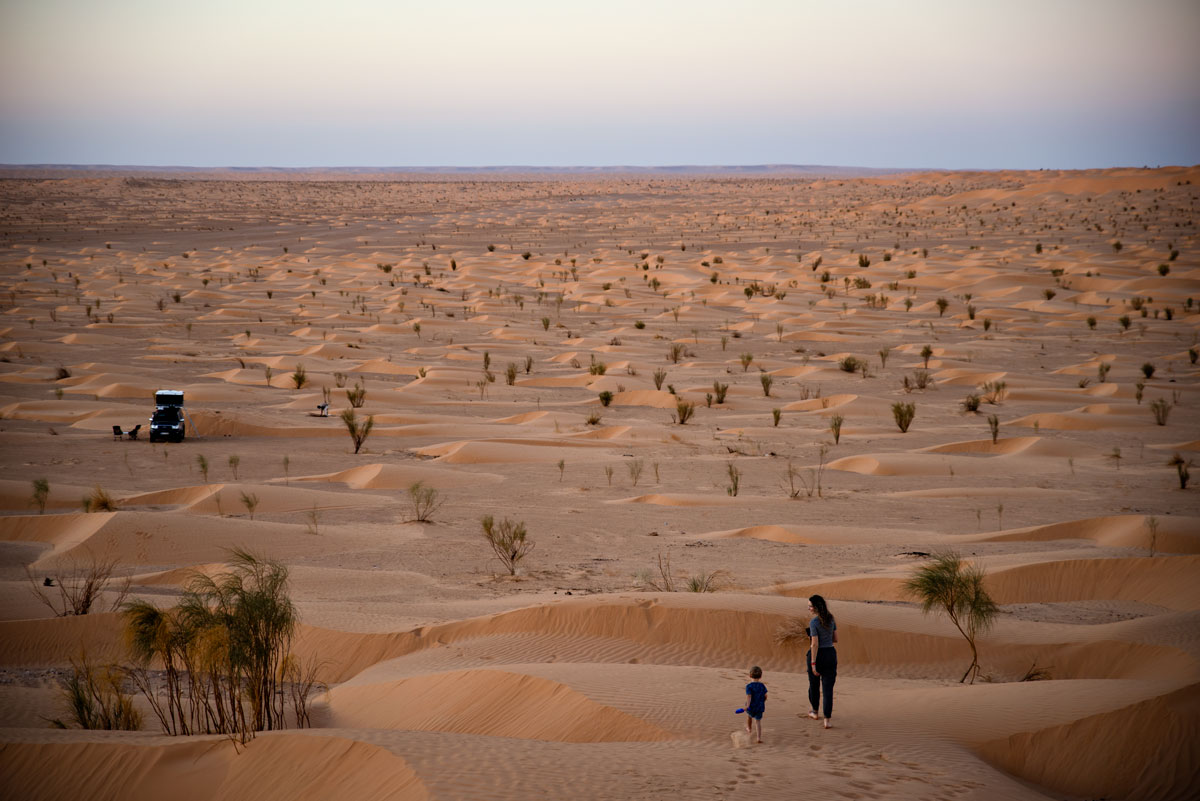
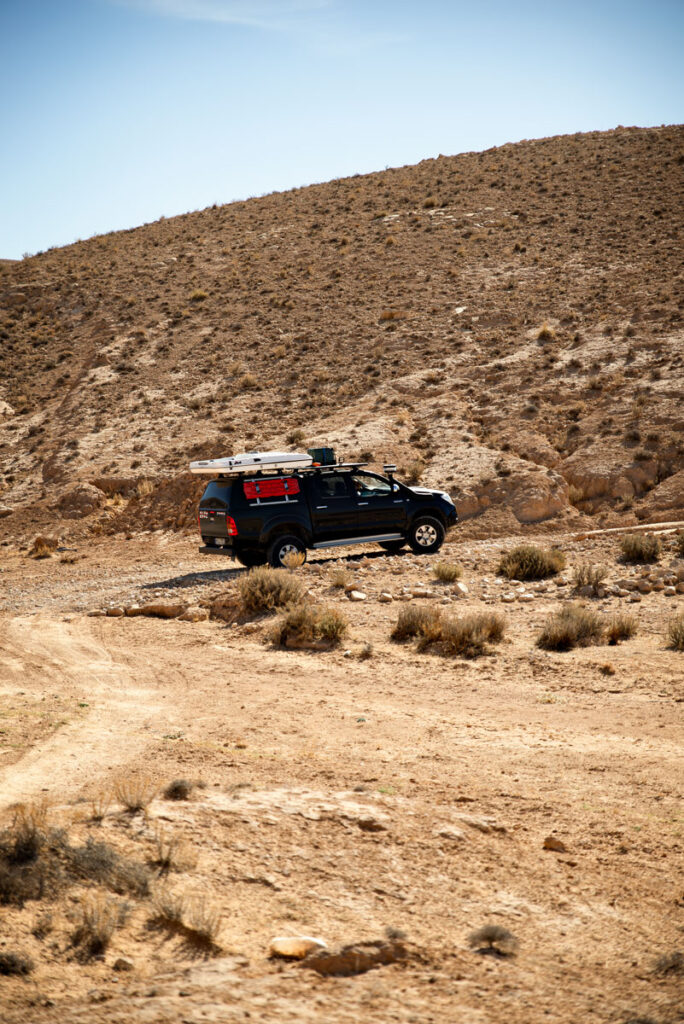
It’s time for our first little desert trip – out of necessity. The track leading to the small salt lake Chott Chtihatt Sghat turns out to be a barely passable corrugated track. So we steer our Hilux into the soft, reddish-brown sand. Dust swirls behind us, the sun is low, the tires fly over the ground.
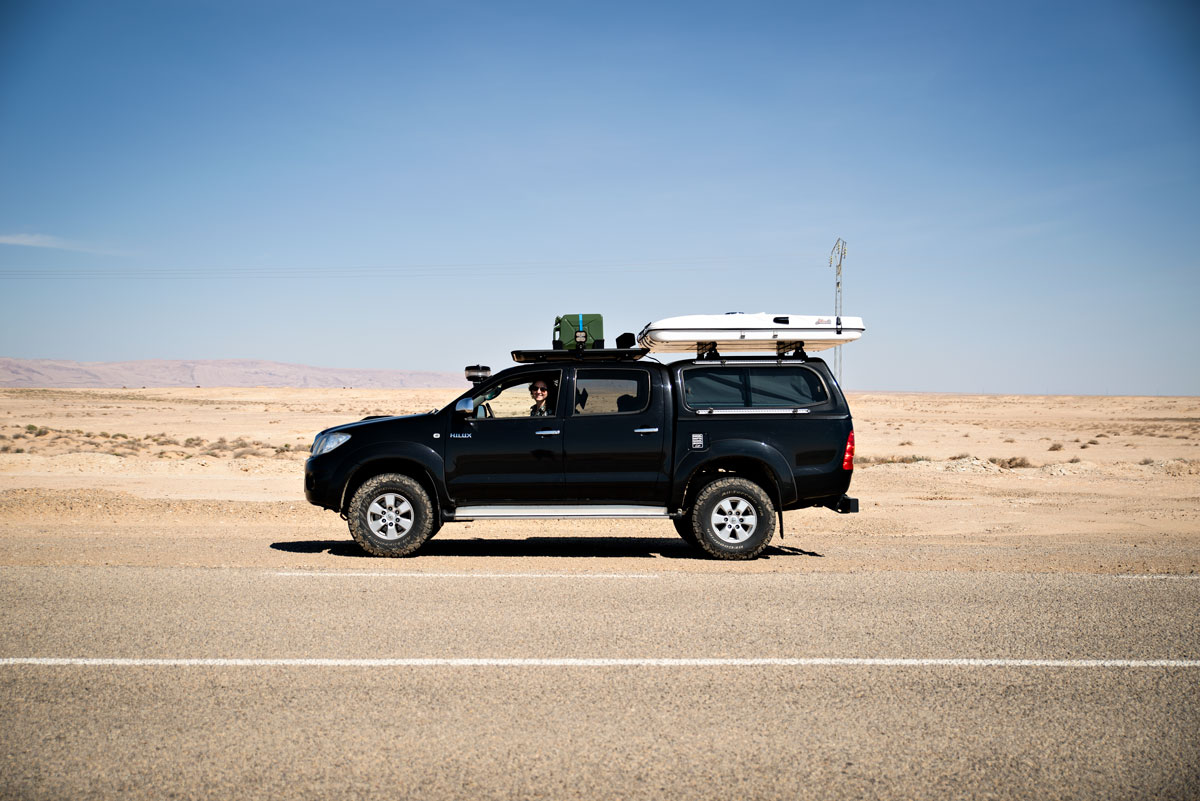
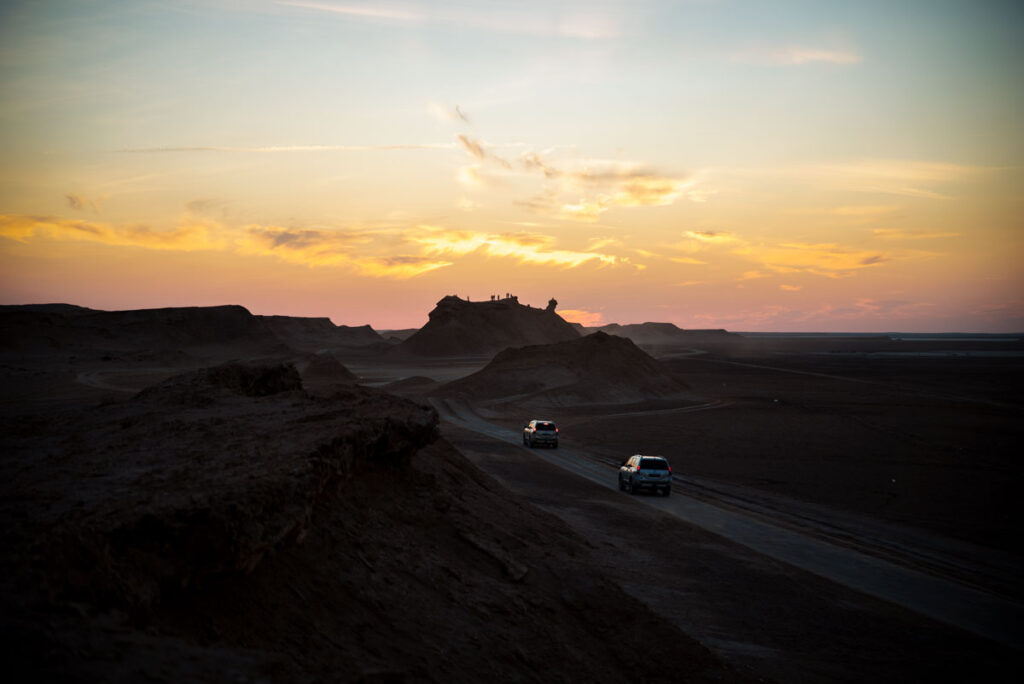
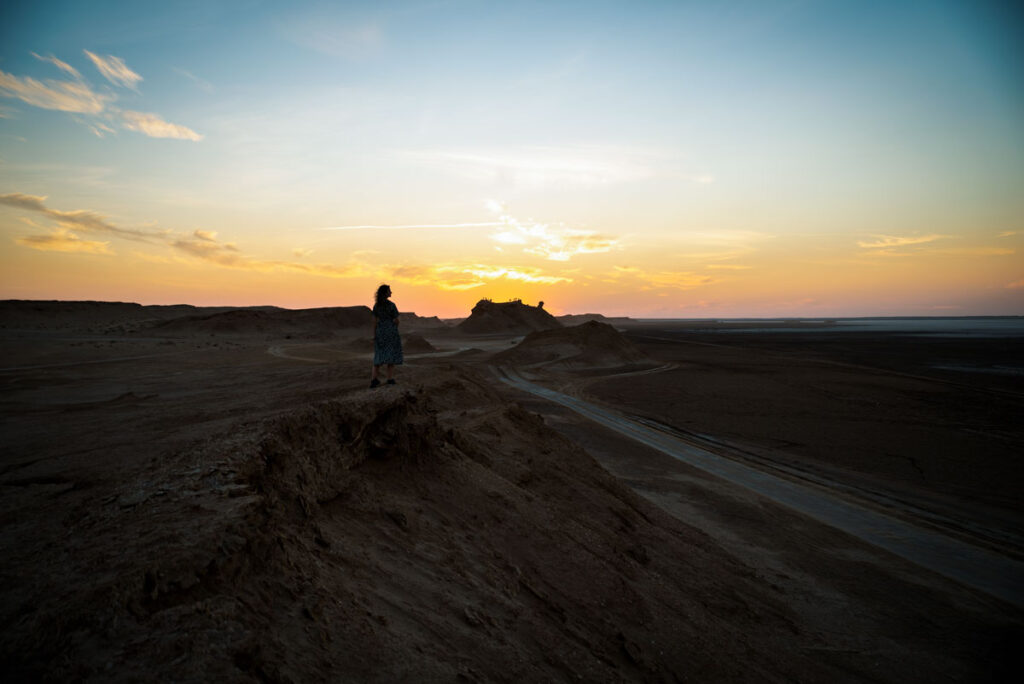
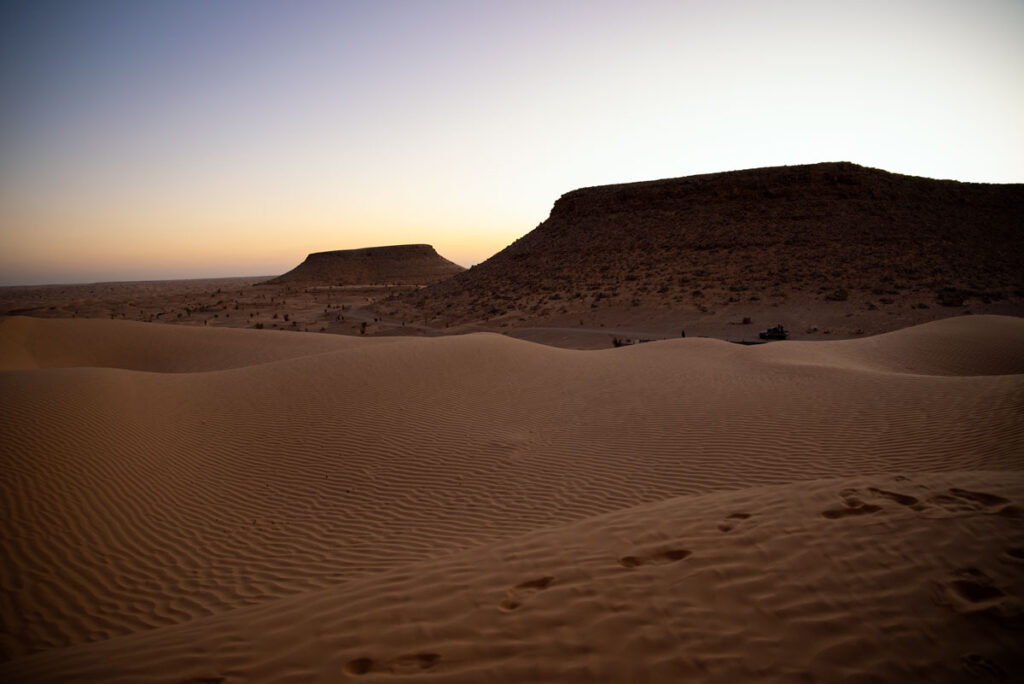
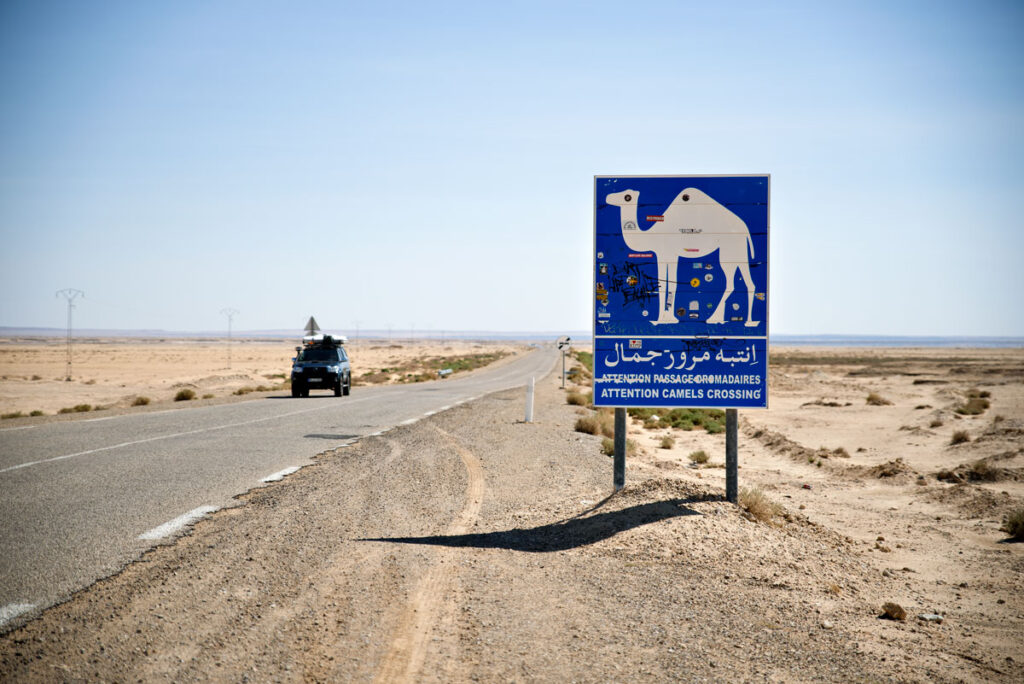
We set up camp for the night near the camel-shaped rock Ong Jmal. We climb the mountain in a moment of silence. As we come down, white Toyota Land Cruisers rush past us every minute. They are transporting tourists to watch the sunset. Tourists from the seaside resorts on the east coast, who leave their supposedly safe hotel fortresses for two or three days to get to know a little of the “real” Tunisia.
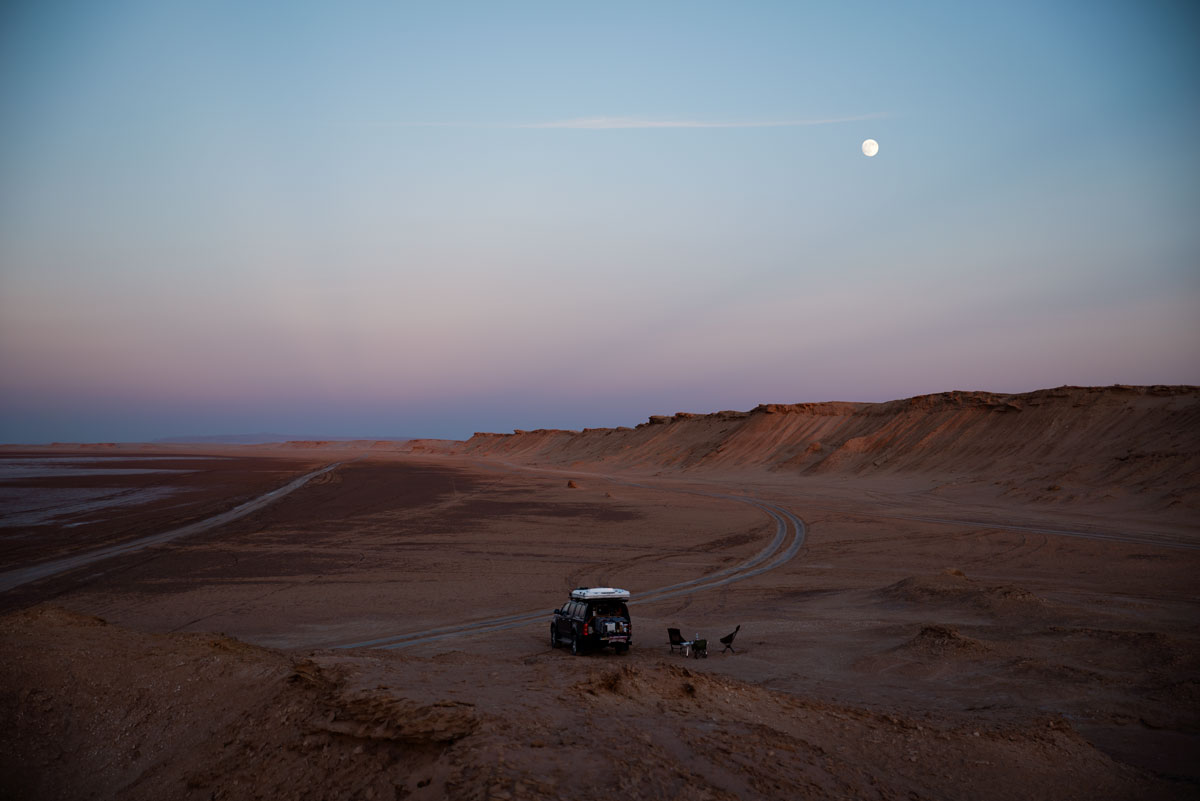
As the crescent moon hangs above us and the last gold of the day turns into the deep blue of night, calm returns to Camel Rock. We hear the conversations of two men about a kilometer away from us in a small snack bar that serves cold drinks to tourists during the day. The night remains peaceful.
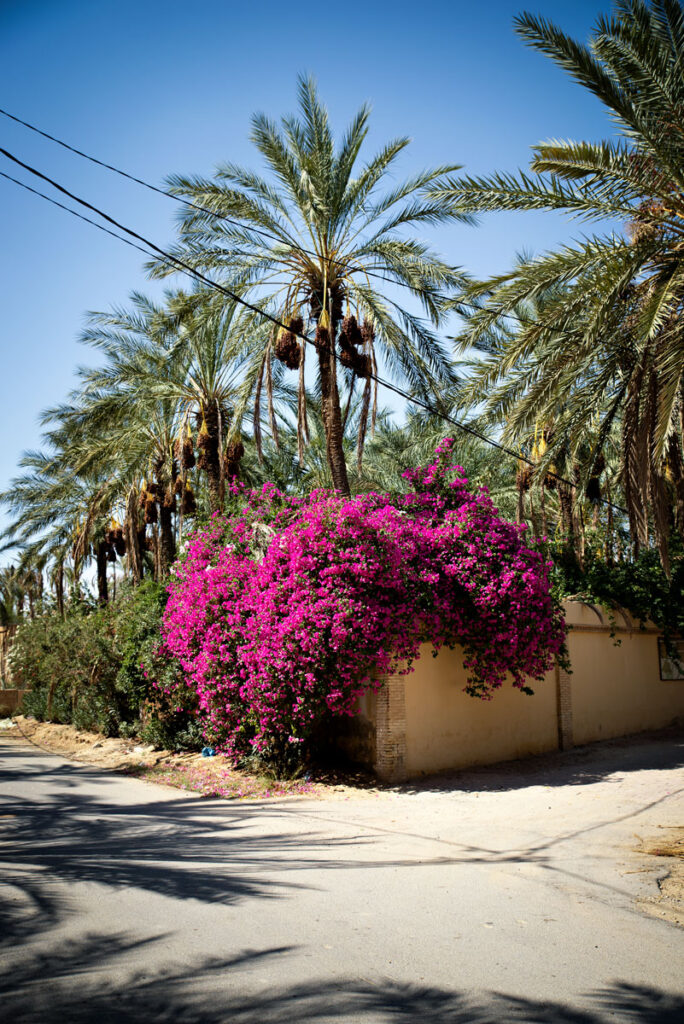
Countless date palms grow on plantations on the outskirts of Tozeur. It is a green oasis on the edge of the Sahara. Colorful flowers grow rampantly over walls and exude a light, sweet scent. In the medina, lovingly restored alleys alternate with dark, dilapidated ones. On the one hand, you can sense that the residents of Tozeur are working to spruce up their city for tourism; at the same time, however, they often lack money and resources. Wealth is extremely rare here in the east and south of the country. It is a poor middle class that lives here and waits for better days. Apart from tourism, sources of income are limited and the future prospects uncertain. Those who can, leave.
To our left and right lies an expanse of white, dried salt. I stick a finger into the hard crust, taste the salt, taste the soil of this land. Large mining vehicles dig through the surface and extract the salt. A straight road has been built through the Chott el-Jerid. In the past, trade caravans crossed the salt lake – time and again, people or camels broke through the thin crust and sank into the preservative swamp. A modern legend or historical fact? Nevertheless, we imagine all the corpses that may still lie beneath the surface. The white of the salt reflects the sunlight; it burns our eyes.
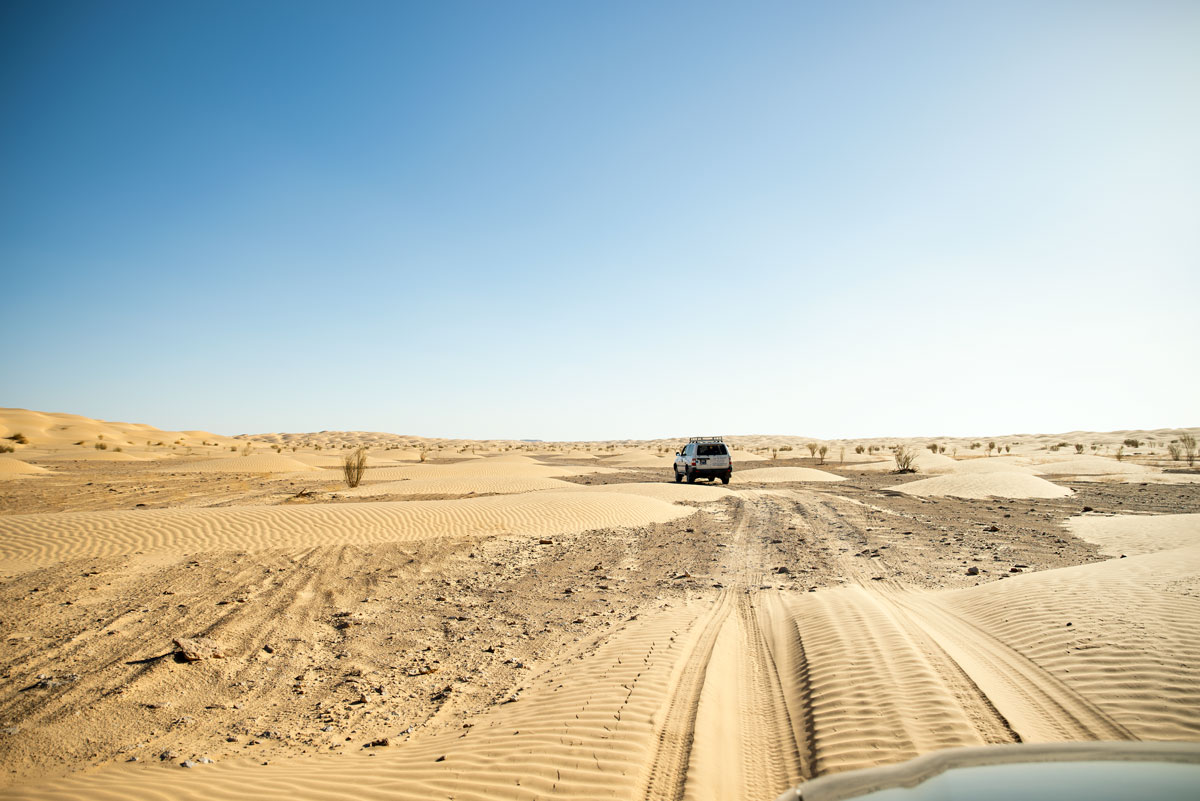
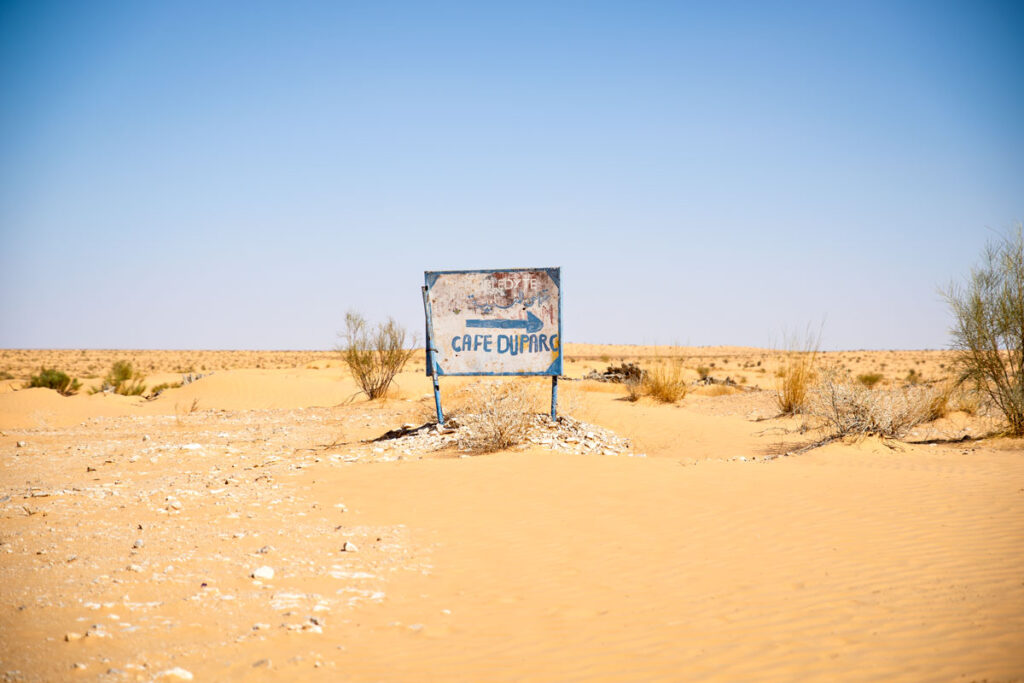
The next morning, we set off from Douz, the gateway to the Sahara, on our three-day desert journey. We follow a paved country road for about an hour. Again and again, it disappears under sand drifts, some larger, some smaller. Eventually, it disappears completely. Our tires make their first contact with the powdery, fine, white sand of the Sahara. The road reappears for a brief moment about a hundred meters to our left, then is swallowed up by a large dune. Every now and then, old road signs protrude from the sand, marking the approximate course of the road. It was probably not important enough to be defended against the desert sand.
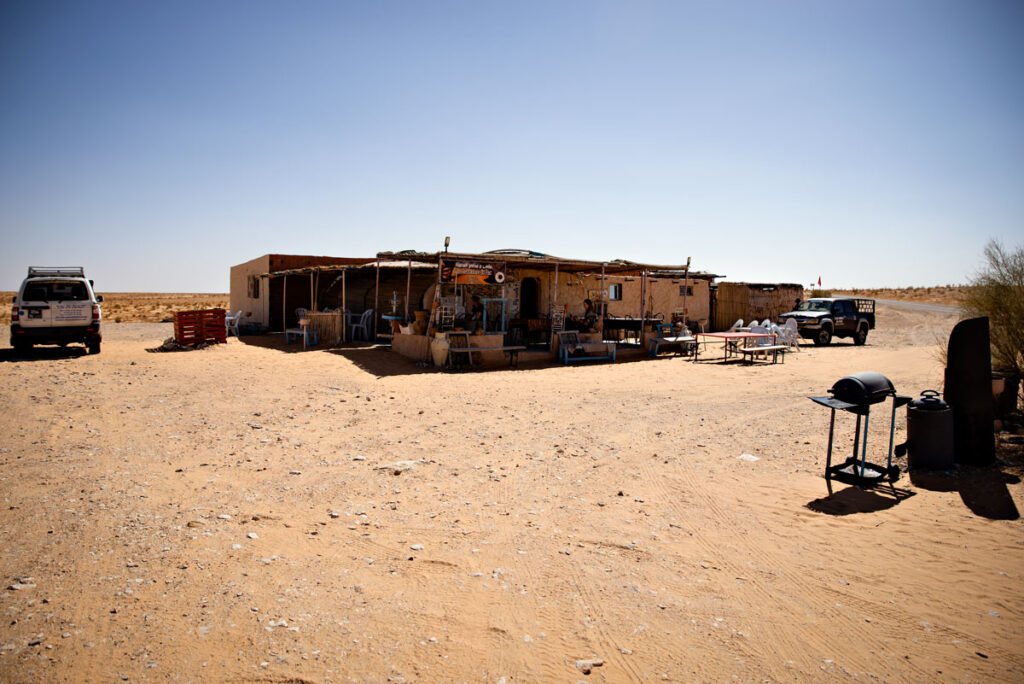
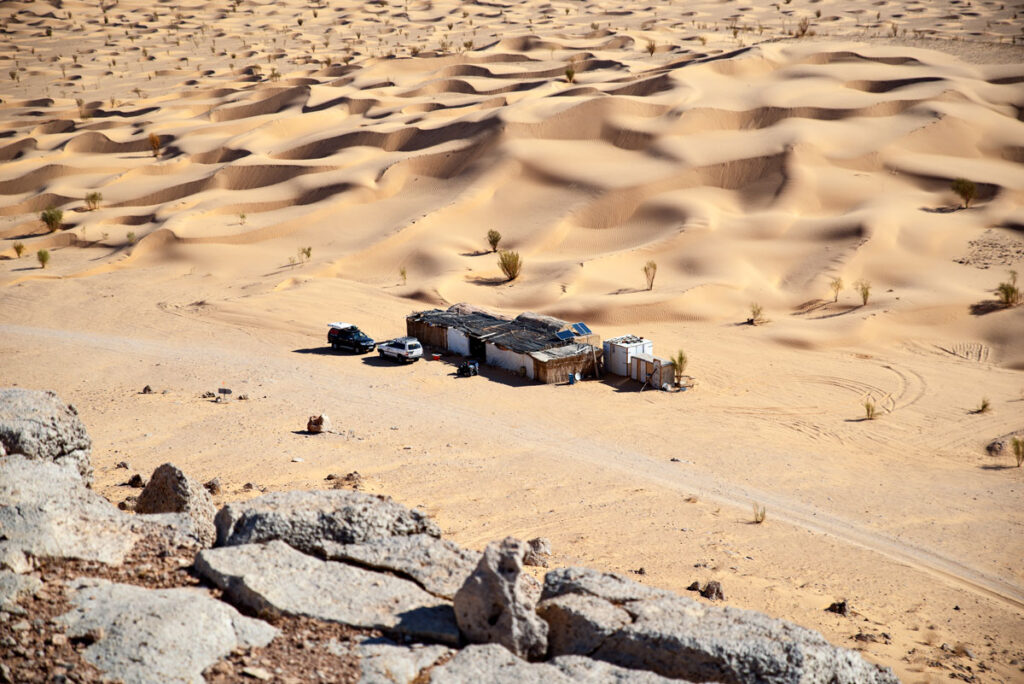
After a short drive over sand, stones, and sporadic patches of tar, we arrive at Café du Parc. It’s a simple, small snack bar on the edge of the desert and the starting point for many desert trips. We have a greasy lunch before embarking on our sand adventure.
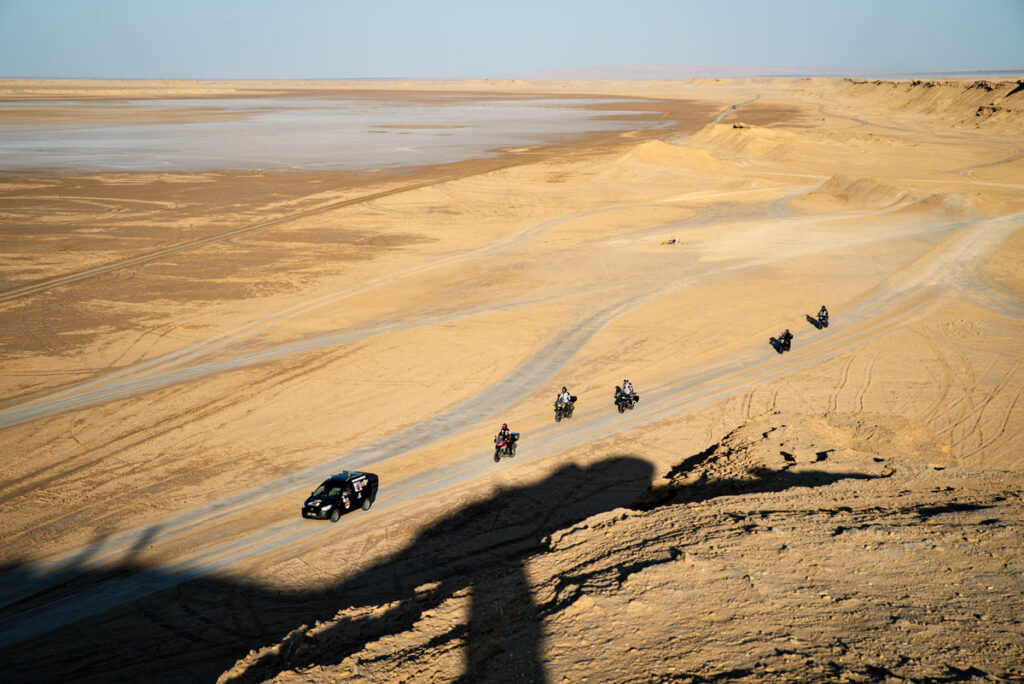
We spend the entire afternoon following rocky, sandy tracks, and the deeper we venture into the desert, the longer the stages through sandy fields become. But the desert here in Tunisia is not a lonely place. It is an adventure playground for adrenaline-hungry men. Again and again, we encounter groups of off-road vehicles. Almost without exception, they are male drivers with broad grins on their faces, their wives in the passenger seat. We are part of this experience. While we laugh and drive through the desert without risk thanks to our well-equipped guide, the Jebil National Park in which we find ourselves is also located on an important refugee route. People seeking refuge from all over Africa try to cross the Sahara and Tunisia to reach the Mediterranean and from there to Europe. There is a heavy police and military presence here. There are fences and identity checks.
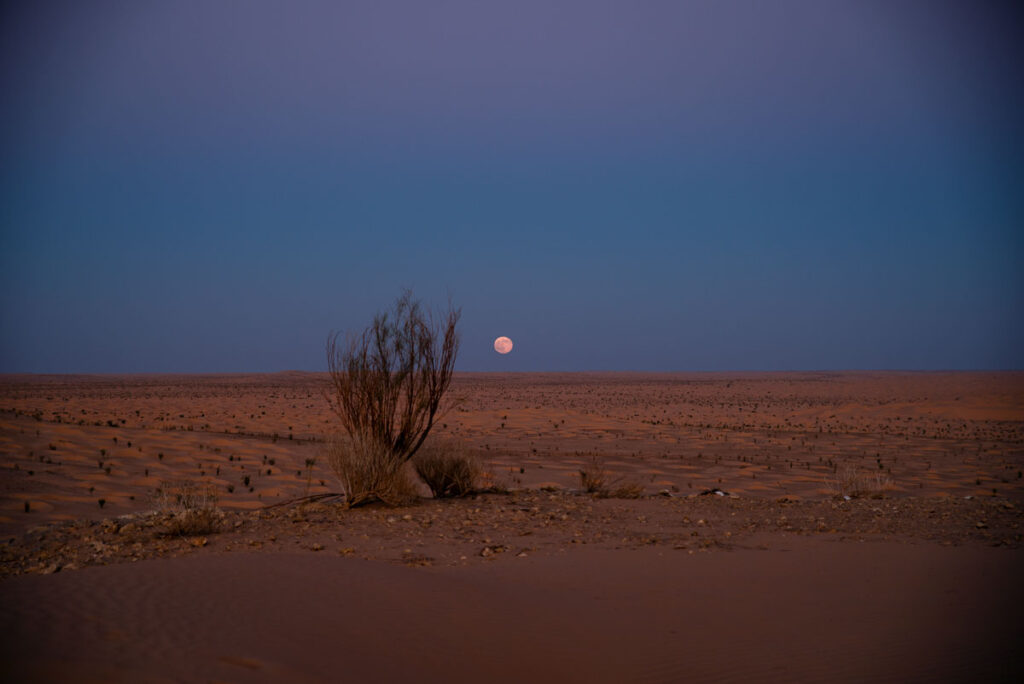
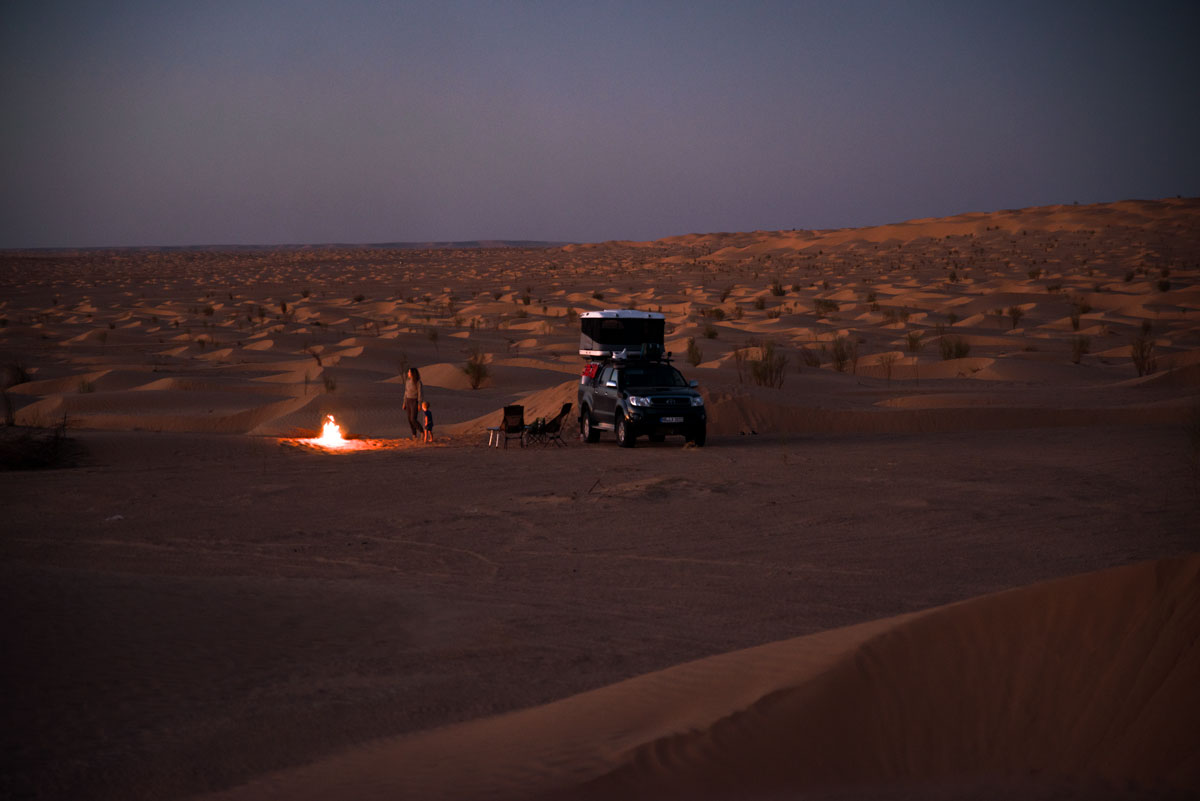
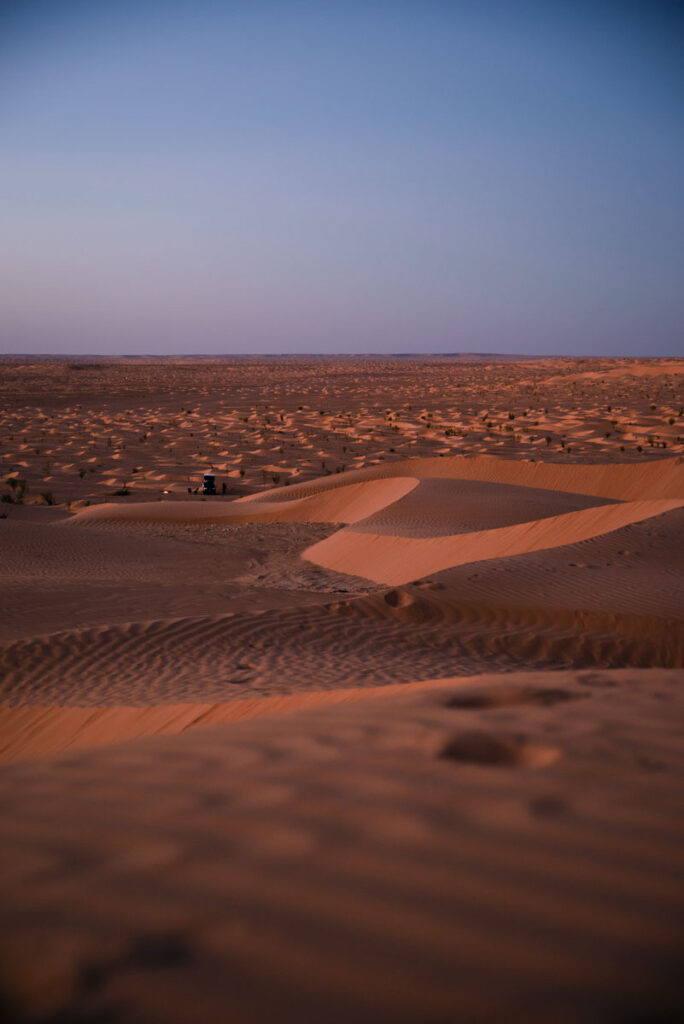
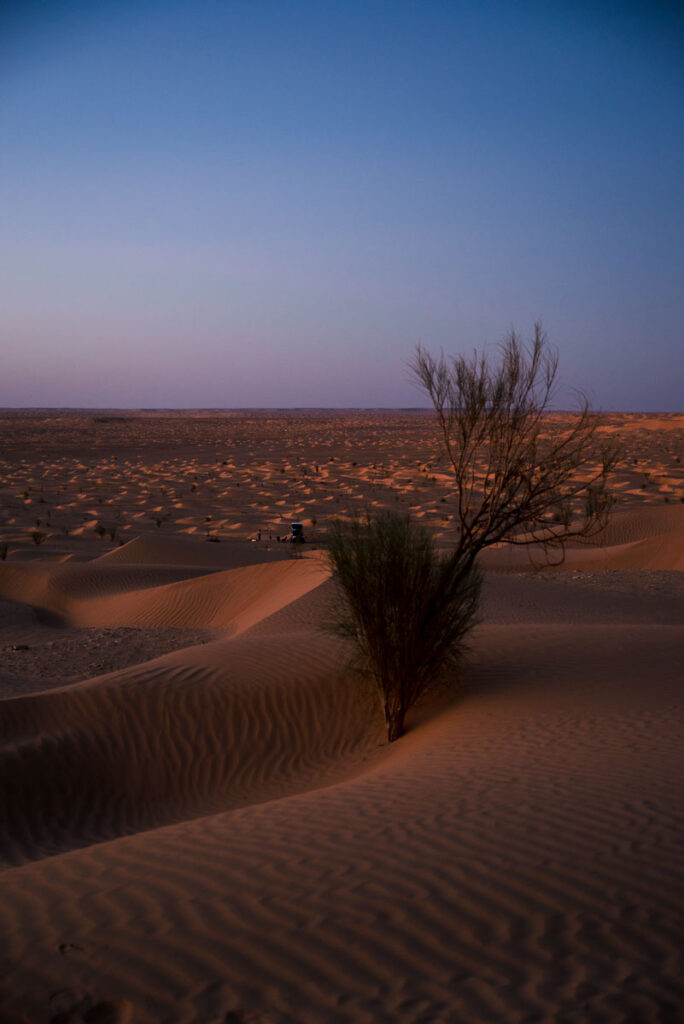
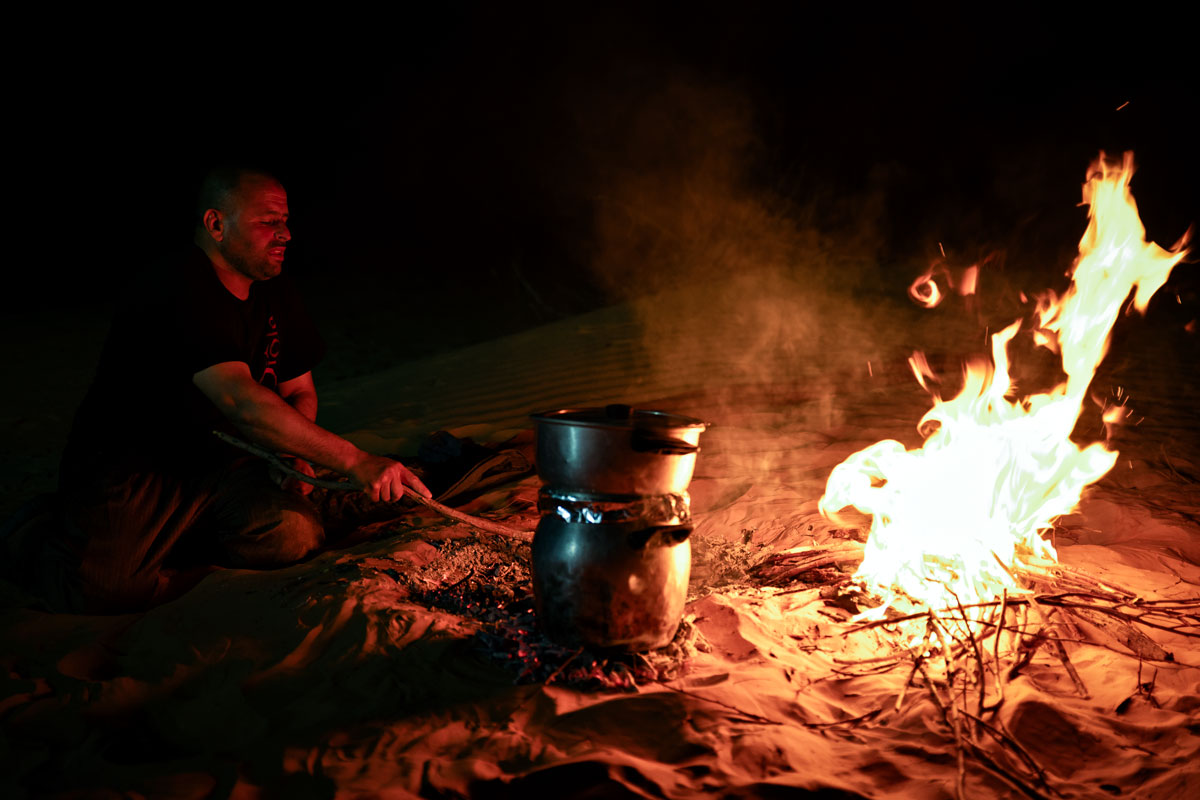
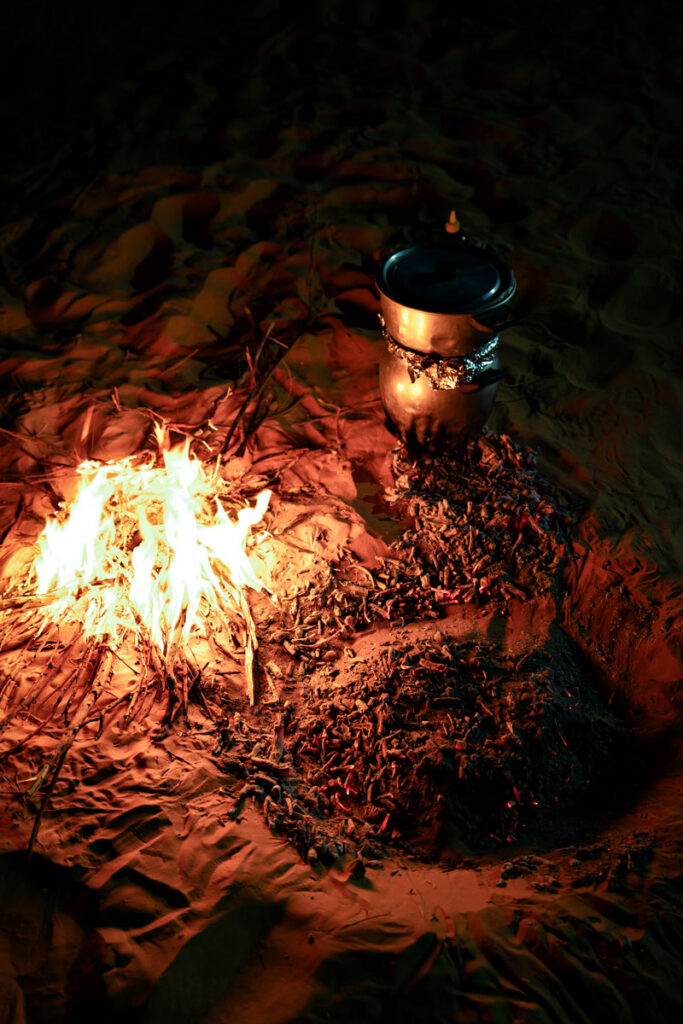
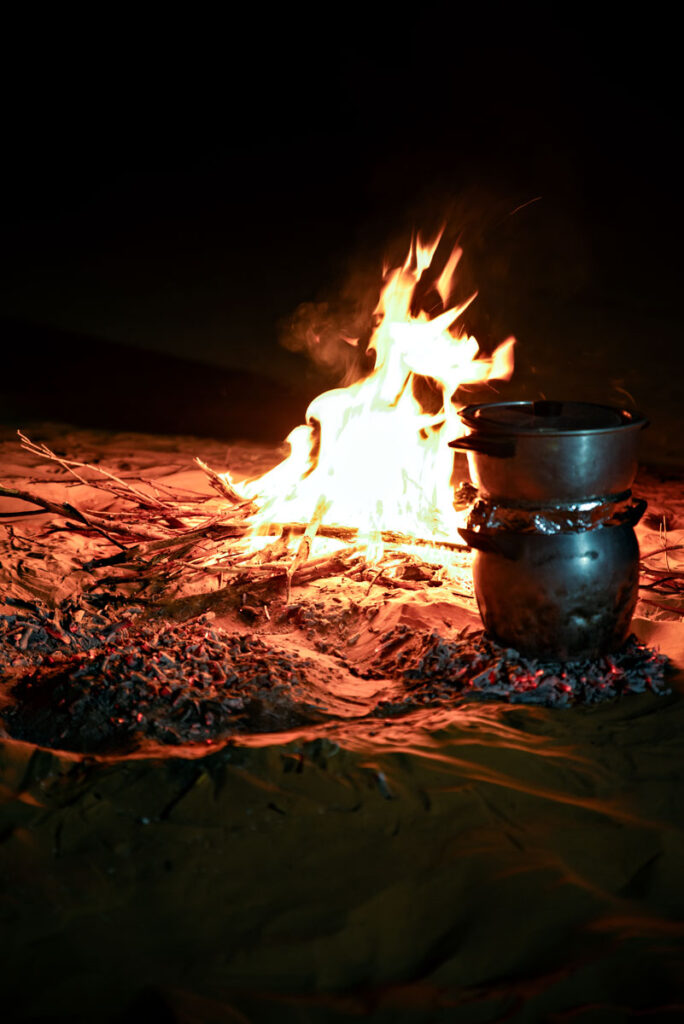
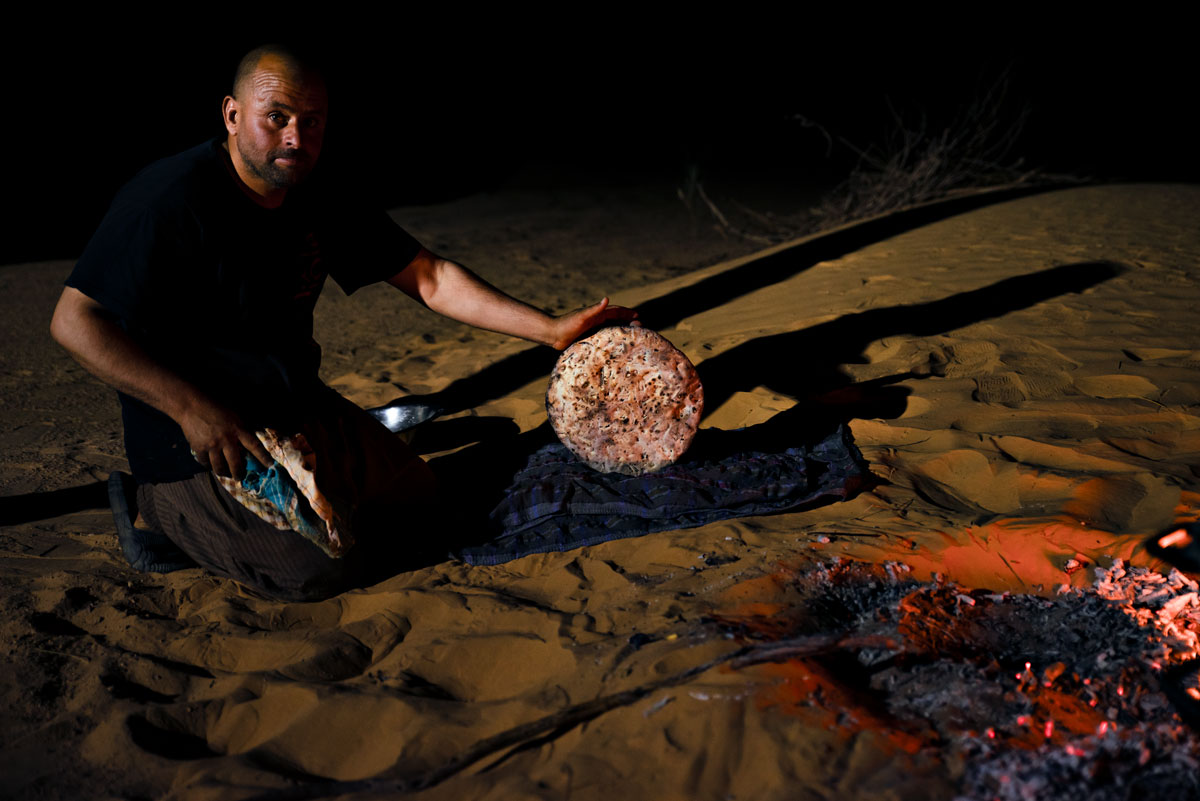
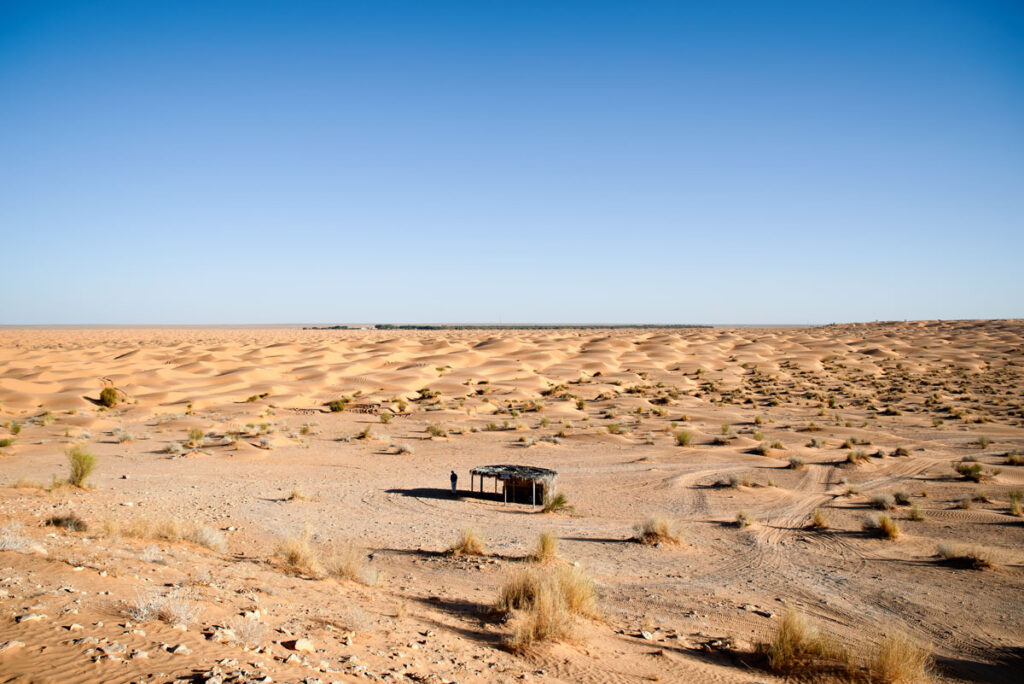
In the evening, we stand on a dune at the edge of the Tembaine. Around us: sand and dunes. The moon rises round and red behind the horizon. The darkness brings with it a pleasant breeze. The silence is broken only by the crackling of the campfire. Flatbread for dinner bakes in the embers. The dunes cast long shadows, then night throws its black cloak over us. A police checkpoint emerges from the dark nothingness, asks for our papers, and disappears as silently as it came.
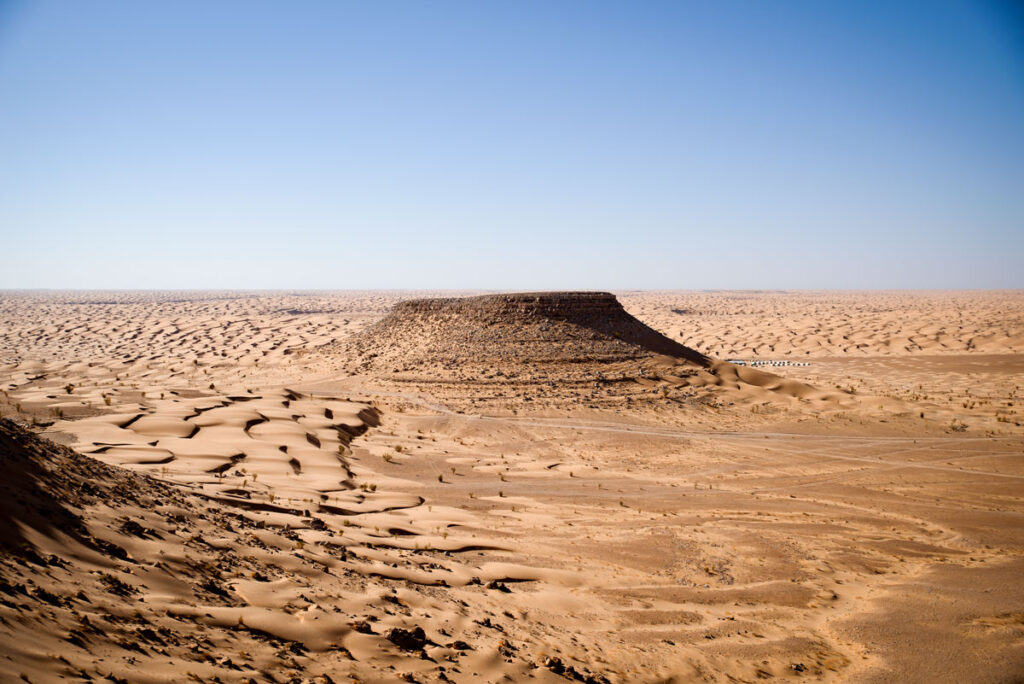
The desert sand reflects colors and light depending on the angle of view, so that it sometimes appears dark red, sometimes pastel yellow, and other times almost white. Sometimes the sand is as fine and soft as powdered sugar, sometimes it is hard and compacted. The thin sand desert turns into a bumpy stone track, then a barren bush landscape. Sometimes the land is flat as far as the eye can see, then suddenly hills and small mountains rise up from the landscape.
When we climb out of the roof tent in the morning, we see the tracks of dozens of animals on the ground. They are the tracks of birds, lizards, snakes, scorpions, desert mice, and certainly other animals. The desert is alive, even if it is hidden.
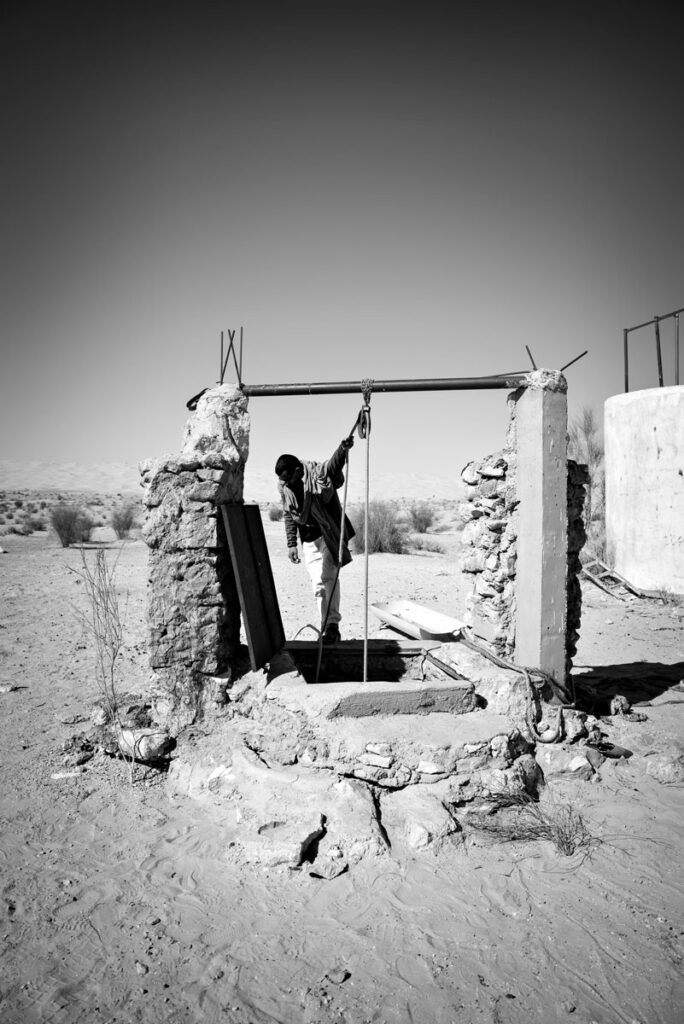
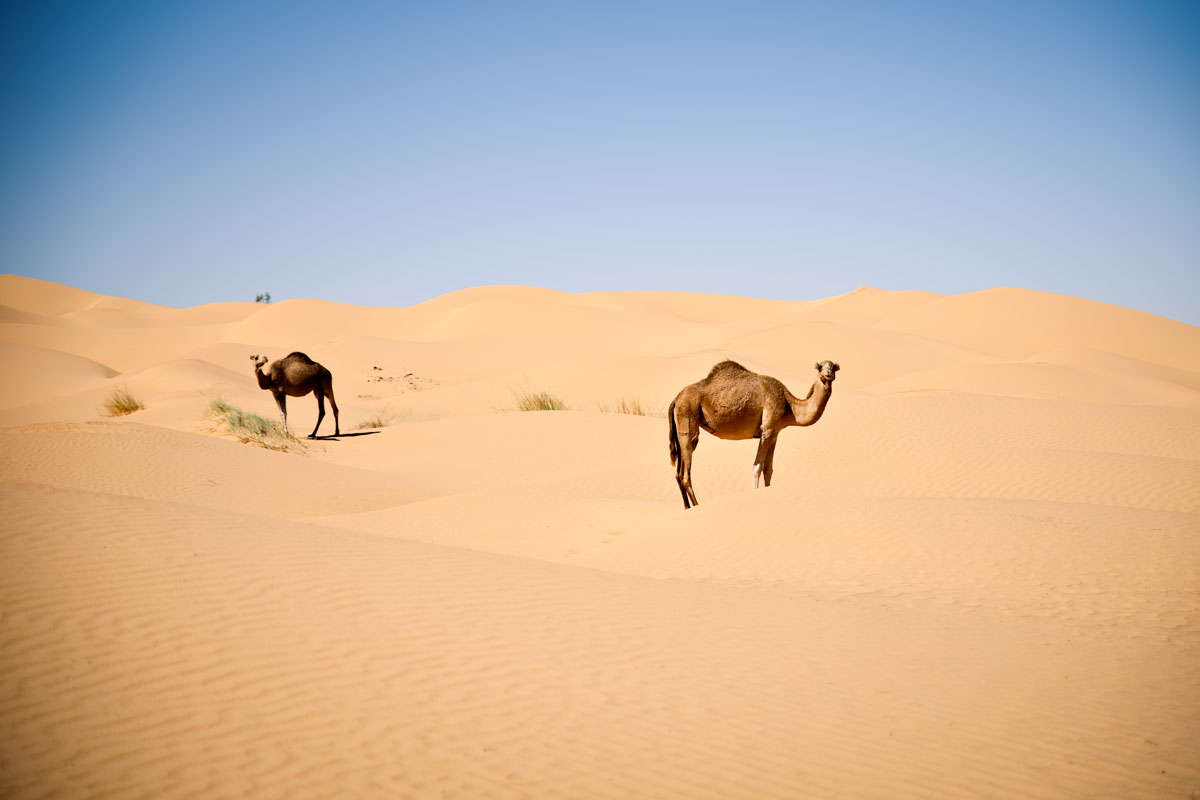
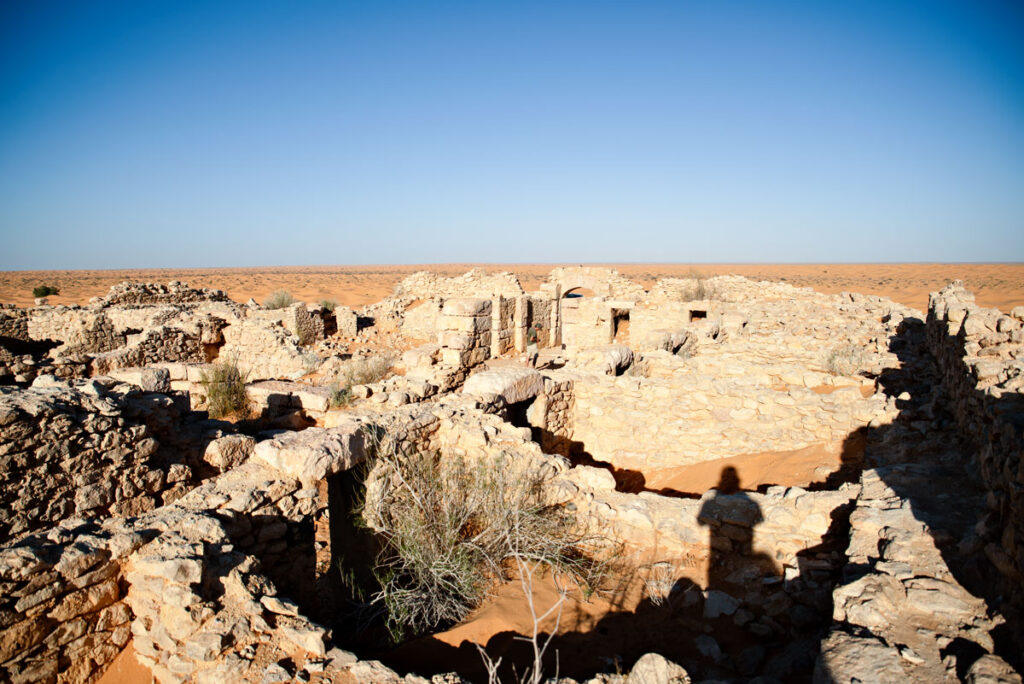
We hike up to Tembaine, where we see two desert camps and a small convoy of off-road vehicles far in the distance. Then we continue our journey. We taste the water from the depths of a well. We see wild camels roaming through the sandy dunes. A gigantic convoy of trucks passes us – the ground vibrates and the noise of the twenty or so diesel engines is deafening. We follow a small group of French off-road vehicles and stand in an old Roman fortress at the afternoon prayer hour. Below us, a Tunisian spreads out his prayer rug, and in front of us, within reach, lies the green oasis of Ksar Ghilane. Here, in a sand dune in front of the oasis, we will spend the night.
Ksar Ghilane is full of quad bikes, package tourists, and tour operators. It’s a small oasis of adventure, an amusement park, a luxury camp on the edge of the desert. A hot spring was probably the reason why more and more businesses settled around the oasis.
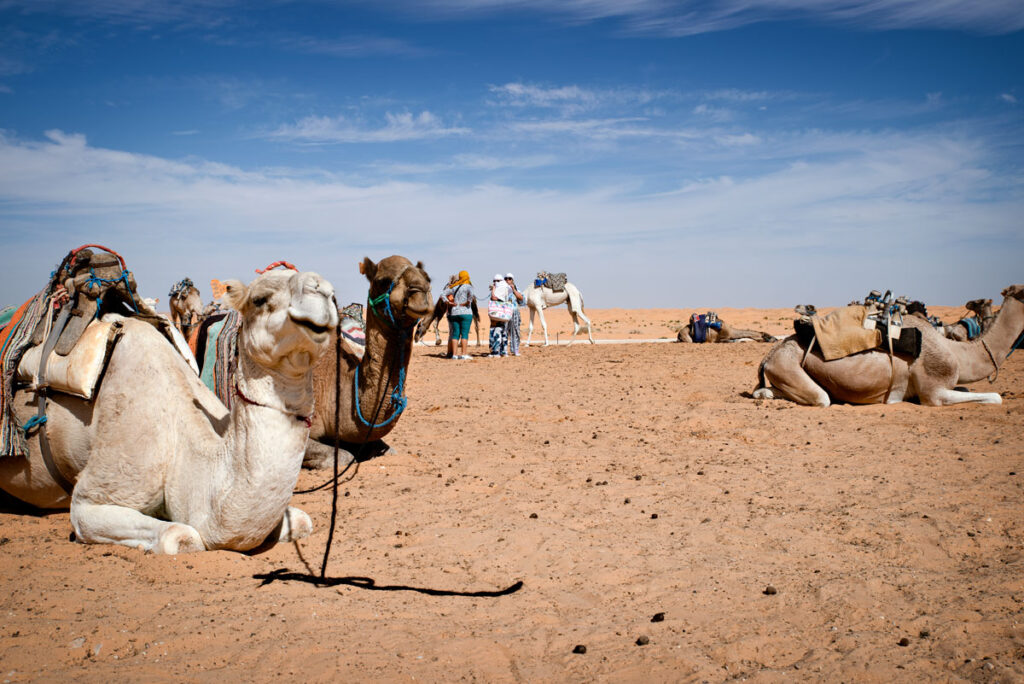
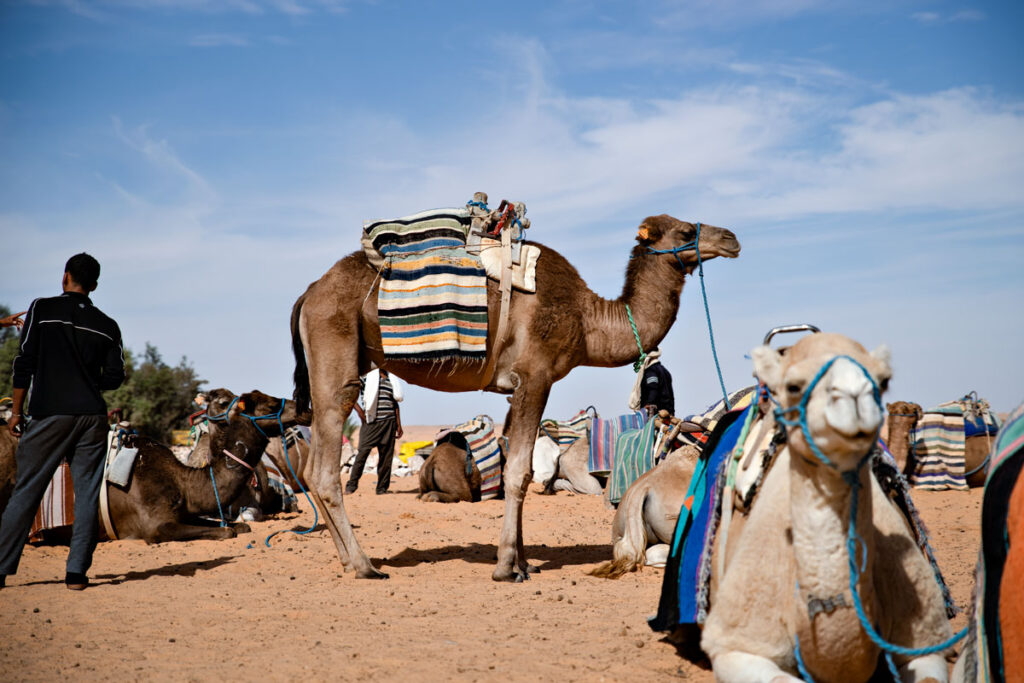
Before the sun reaches its zenith, we take a camel ride through the desert – a wish of our little man. Our small caravan trots leisurely over the steep dunes. Again and again, our mounts stretch their long necks toward the thorny undergrowth on the ground and crush it with relish as they carry us on their shaky backs.
Afterwards, we return to Douz, where we say goodbye to our desert guide. At the campsite, we shower off the dust and dirt of the last few days, sweep several pounds of sand out of our car, and then turn our backs on the desert.
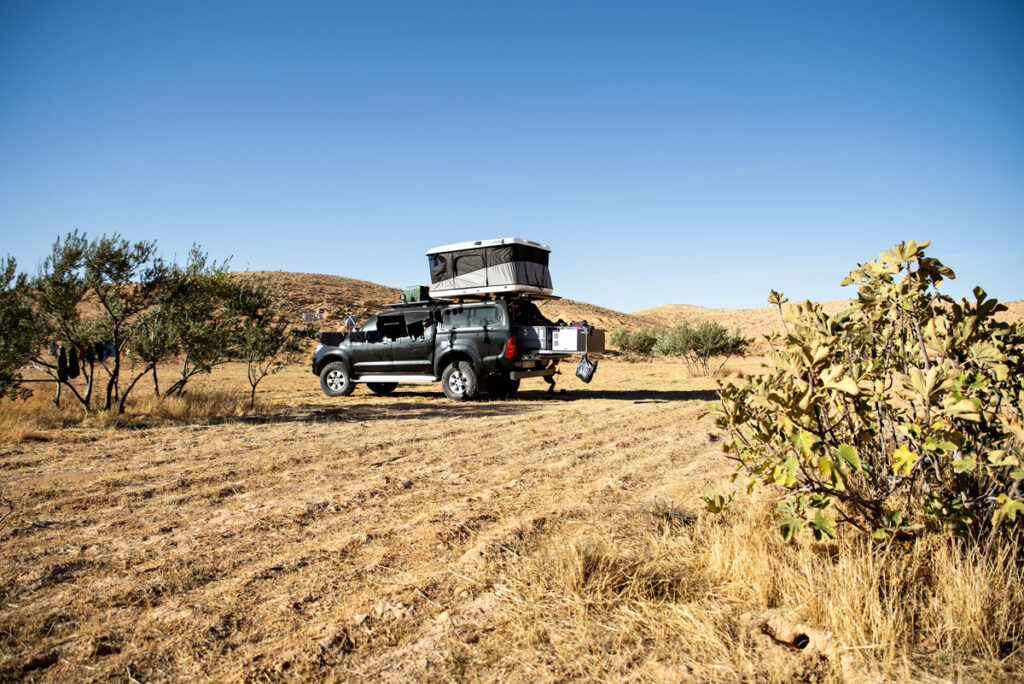
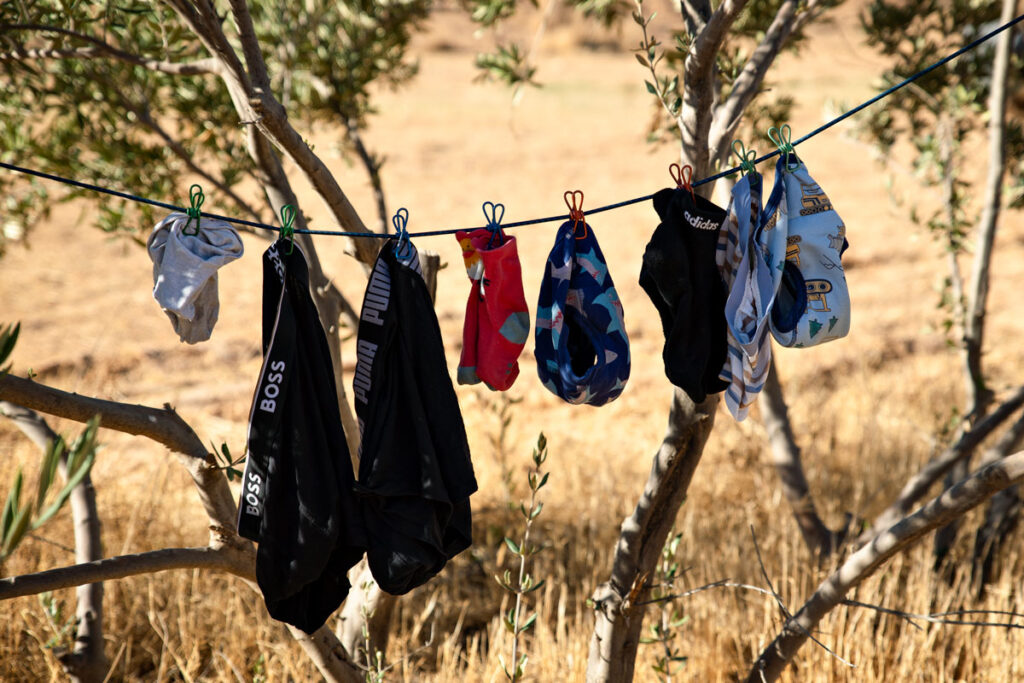
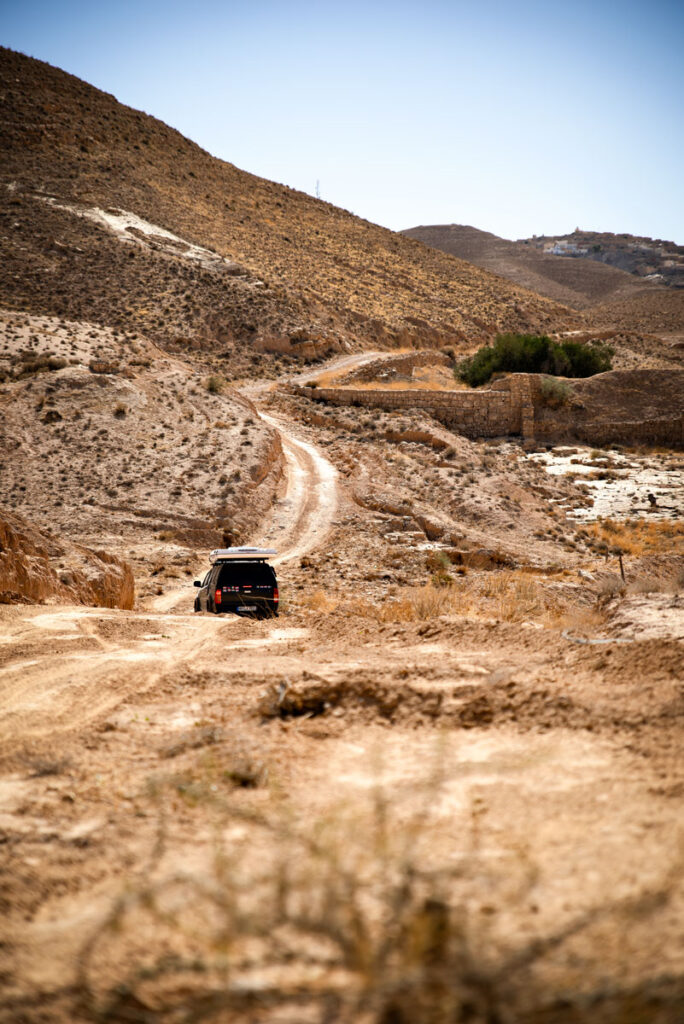
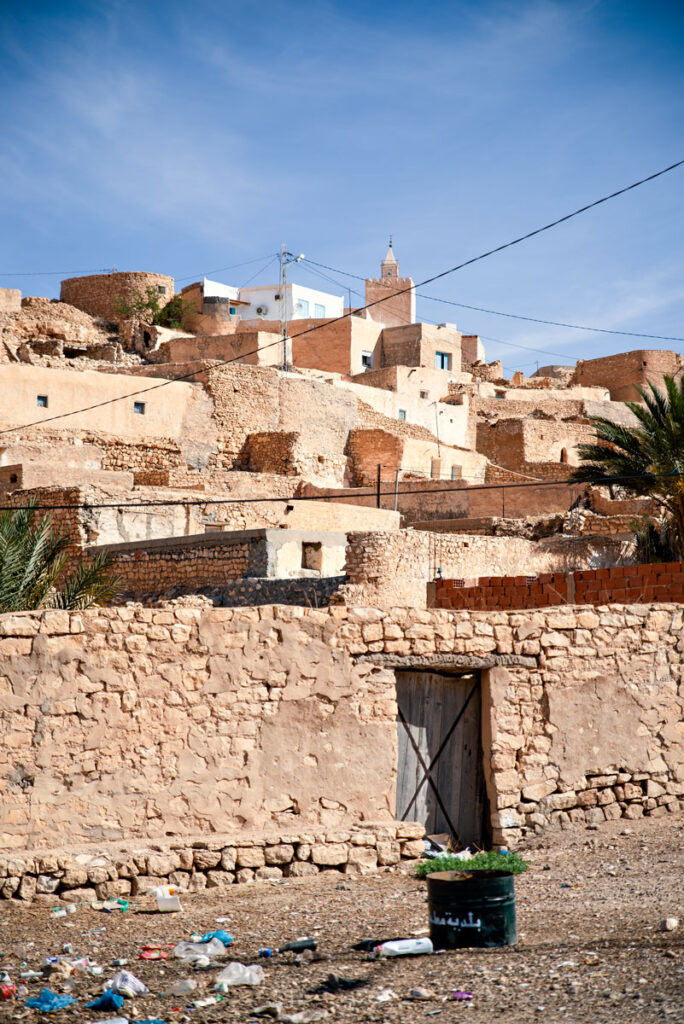
Near the Berber village of Azrou, we followed a washed-out track through the mountains the evening before. In the end, we camped on a harvested field. We would like to stay longer to explore the ruins of old settlements in the mountains on foot. But our supplies are running low. We need a town with a supermarket, we need water, and we’ll need diesel again in the foreseeable future. We let our freshly washed clothes dry in the warm rays of the morning sun. Then we trudge back to civilization along the stony path.
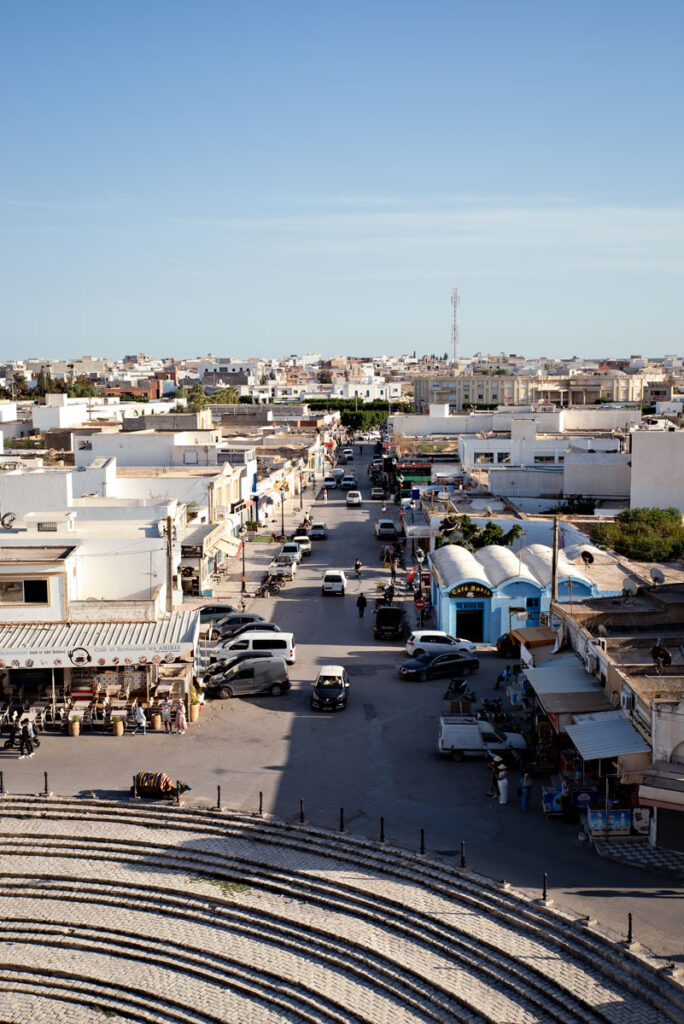
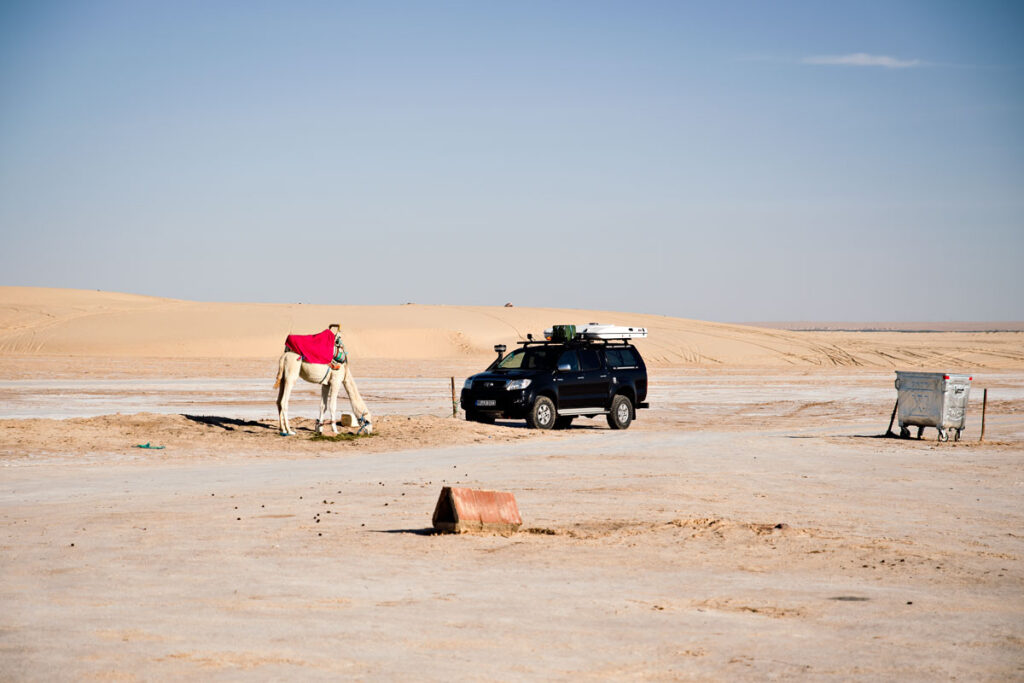
In the shadow of the colossus, we eat spicy peppers and vegetables fried in olive oil. A camel dozes by the side of the road while its owner haggles with two French women over a ride and a photo on the ship of the desert.
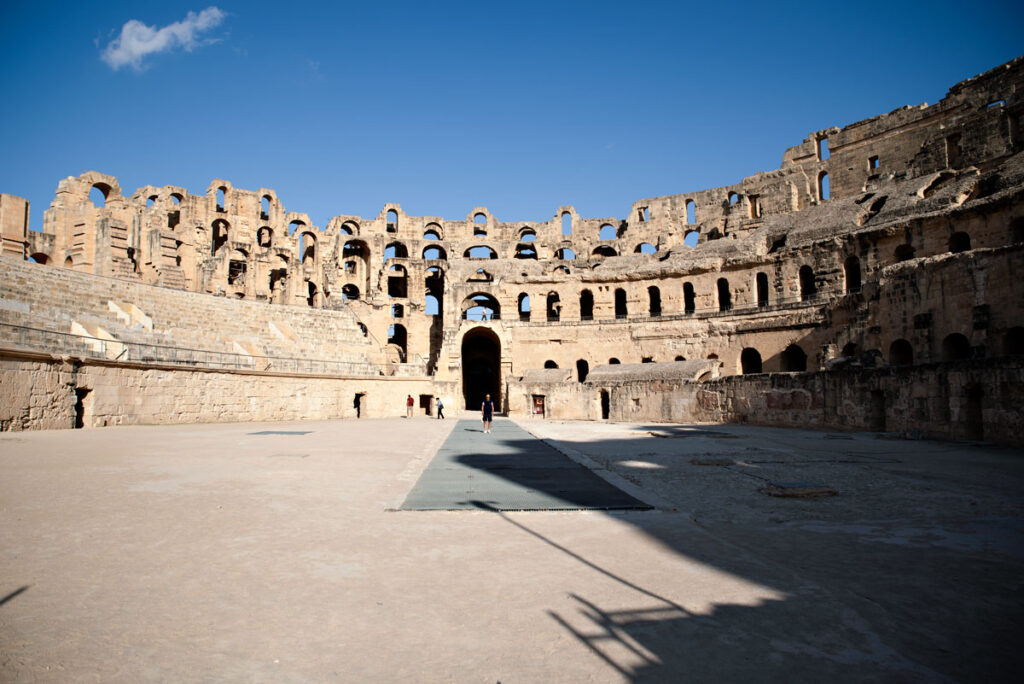
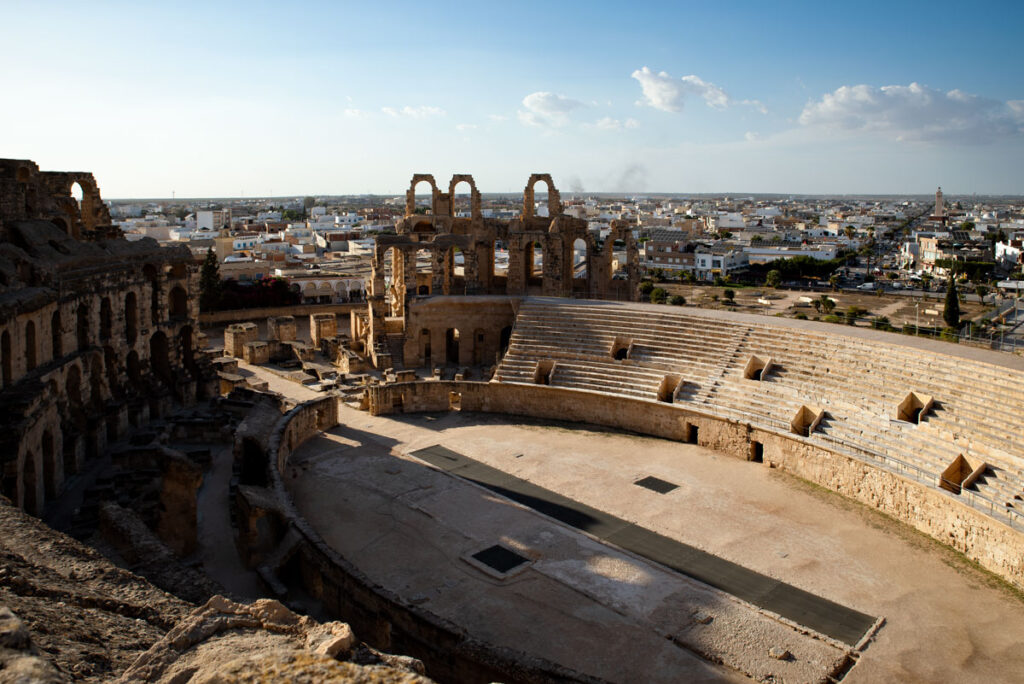
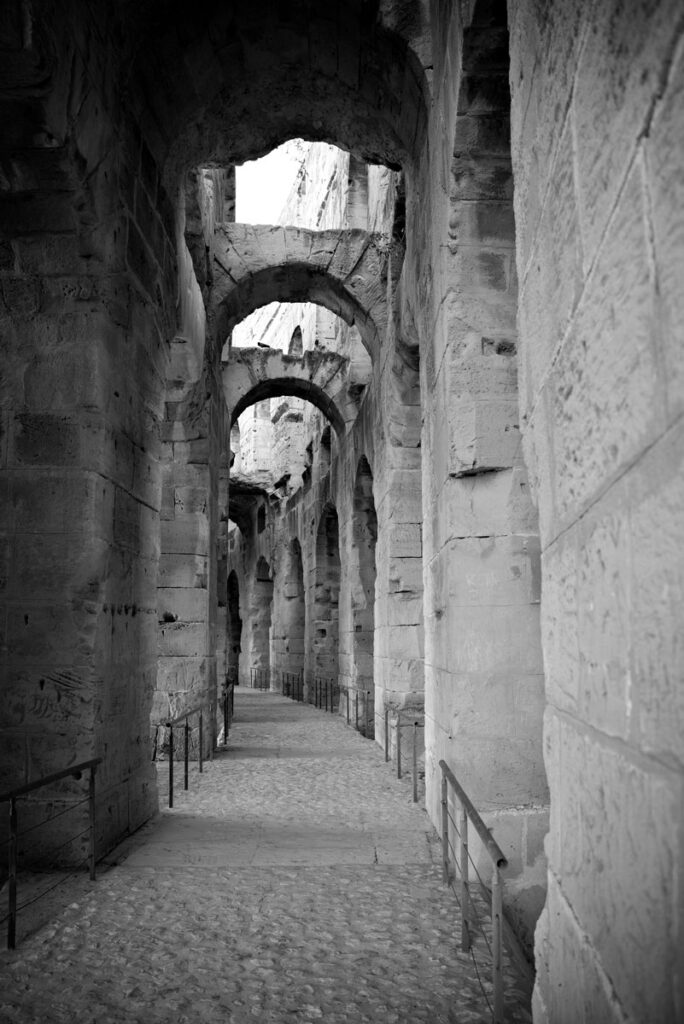
The amphitheater of El Djem is one of the largest and best preserved that the Roman Empire produced. Although it was never actually completed or used, it has survived the centuries in good condition. In the afternoon sun, the high tiers and arched windows cast long shadows. A few children climb in the cordoned-off areas above our heads. There are no guided tours, no information boards, no audio guides. Just bare, weathered stone and the images in our minds: what might it have looked like here, lit by torches and marble stands?
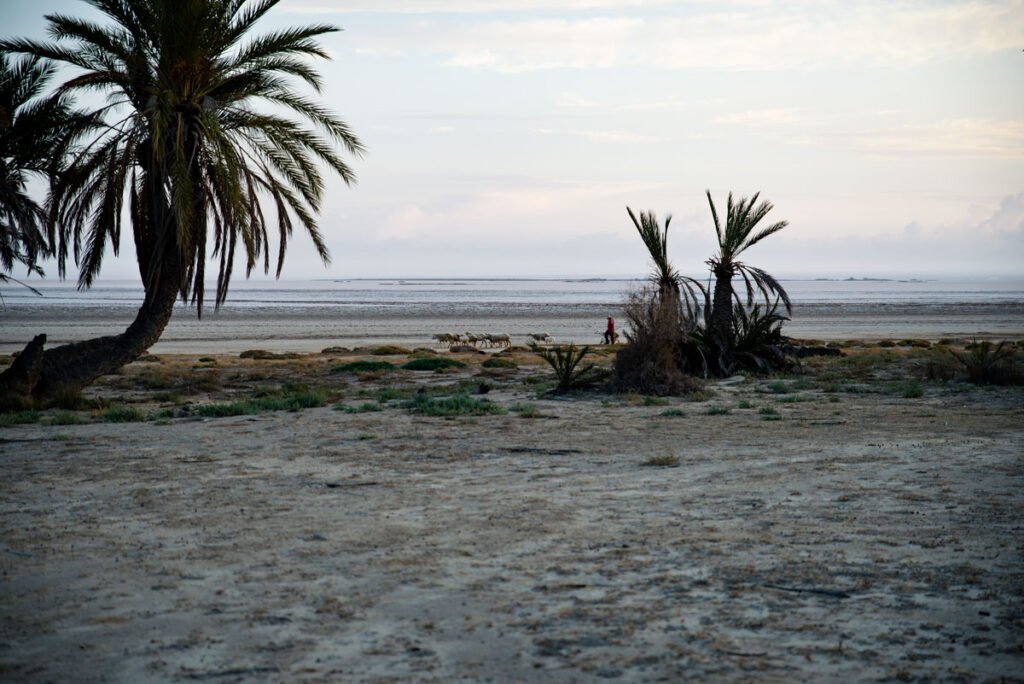
It’s our last night in the roof tent. Another salt lake, but this time we think we’re somewhere by the sea. Tall palm trees offer us protection from the wind and the nearby village. The shore consists of fine salt crystals and white dust. Dogs bark nearby. The next morning, the sky shines as brightly as a rainbow. It’s not even six o’clock when a curious shepherd wakes us up, wanting to know who or what is sleeping on the car. Soon after, more flocks of sheep pass by. Then peace and quiet returns.
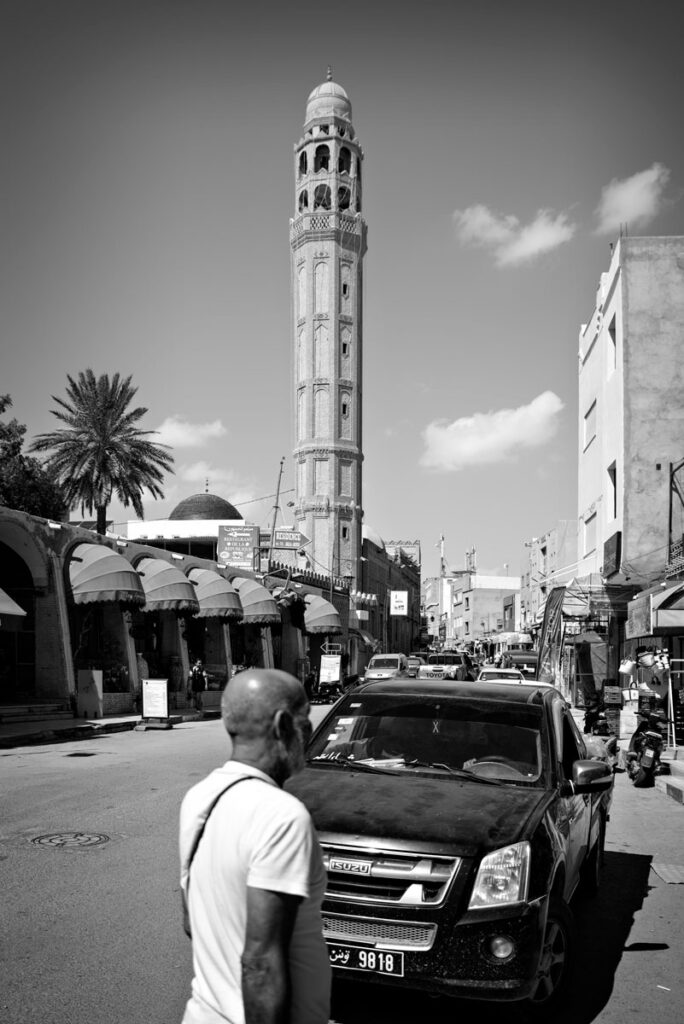
On the way to the coast lies one of Islam’s holiest sites: Kairouan. Seven visits to the main mosque there are worth as much as a pilgrimage to Mecca. Of course, we want to visit this city too.
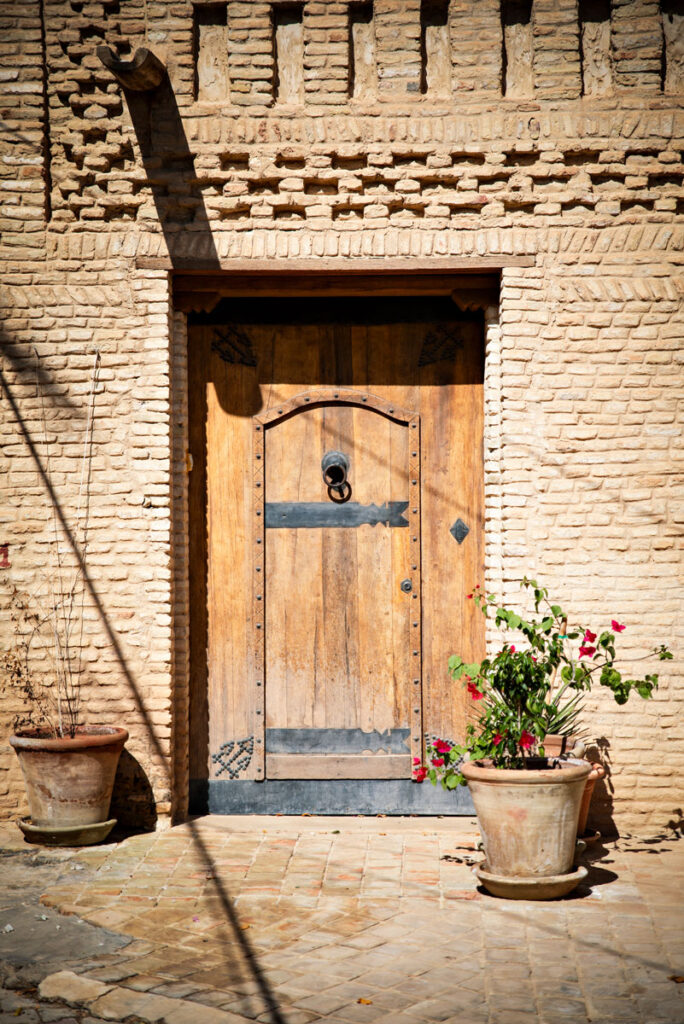
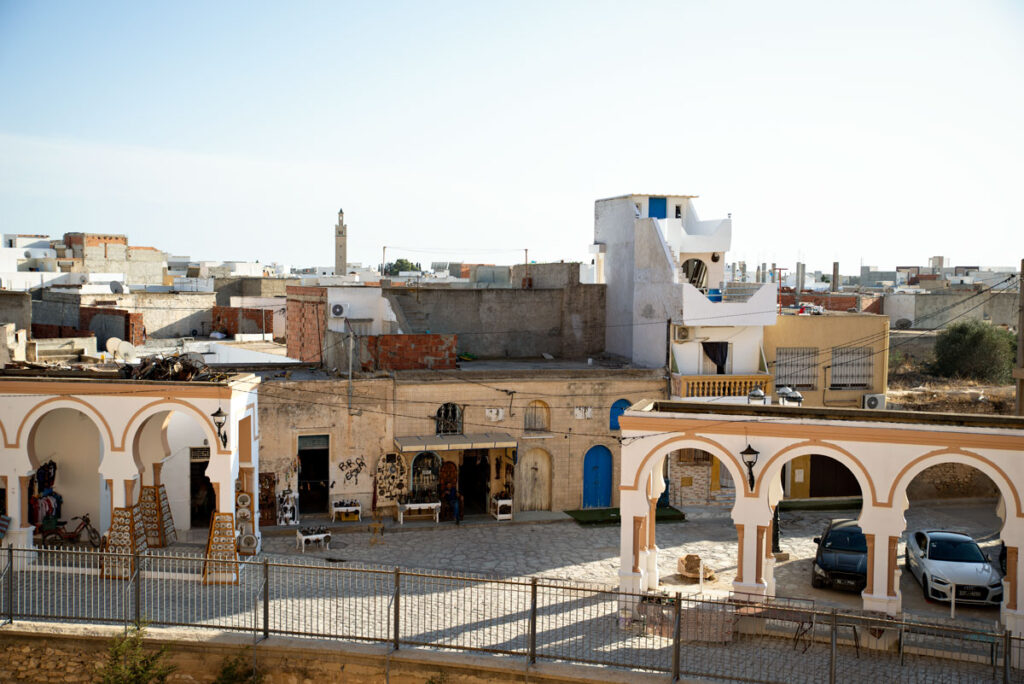
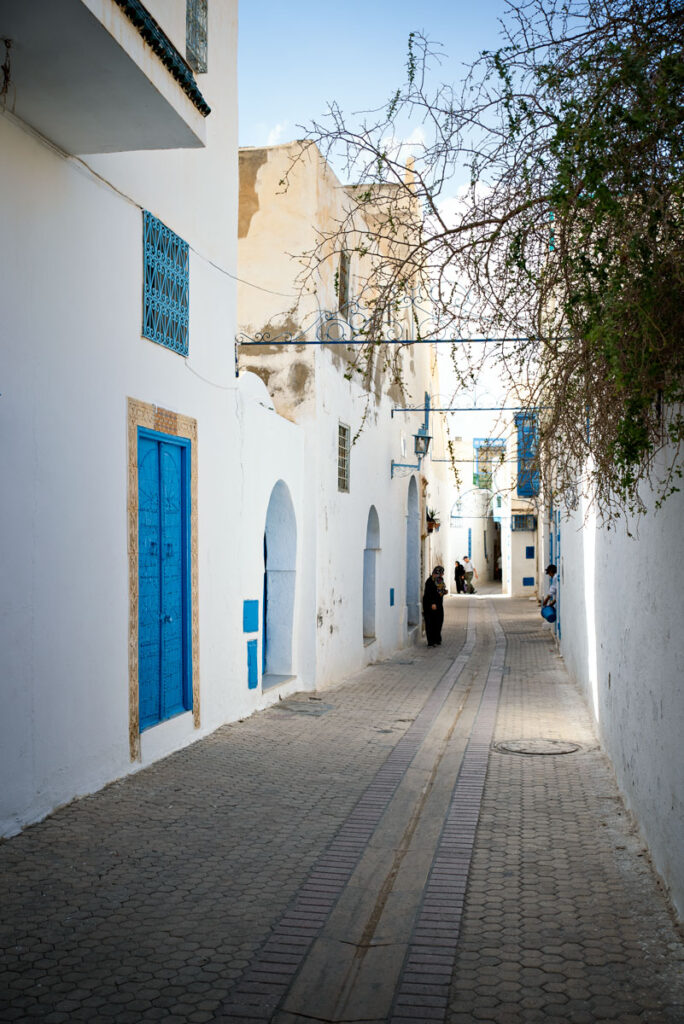
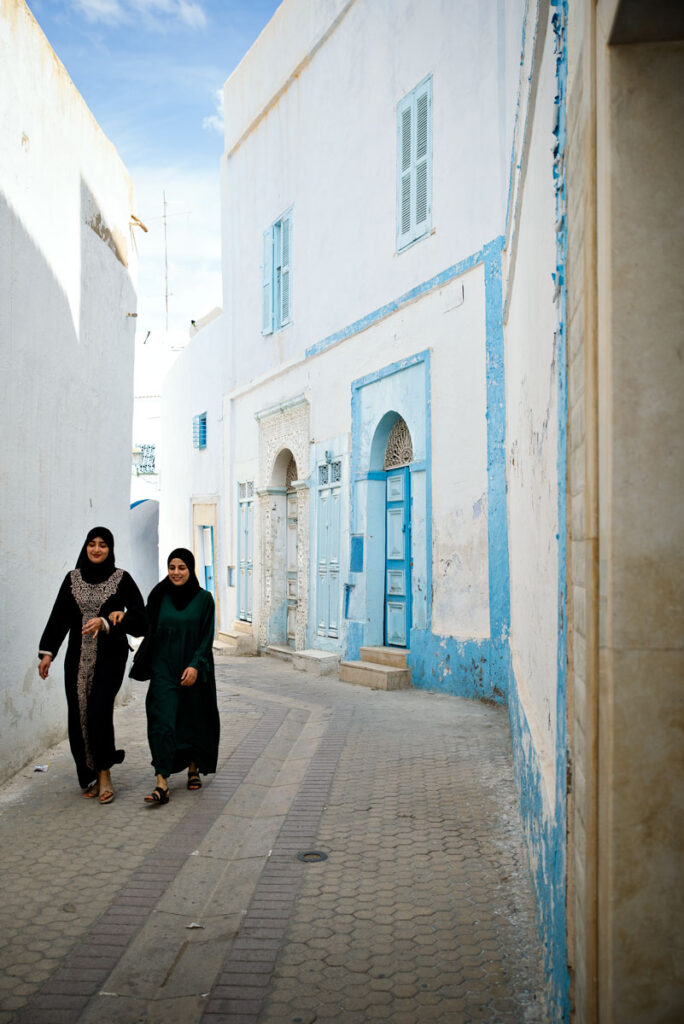
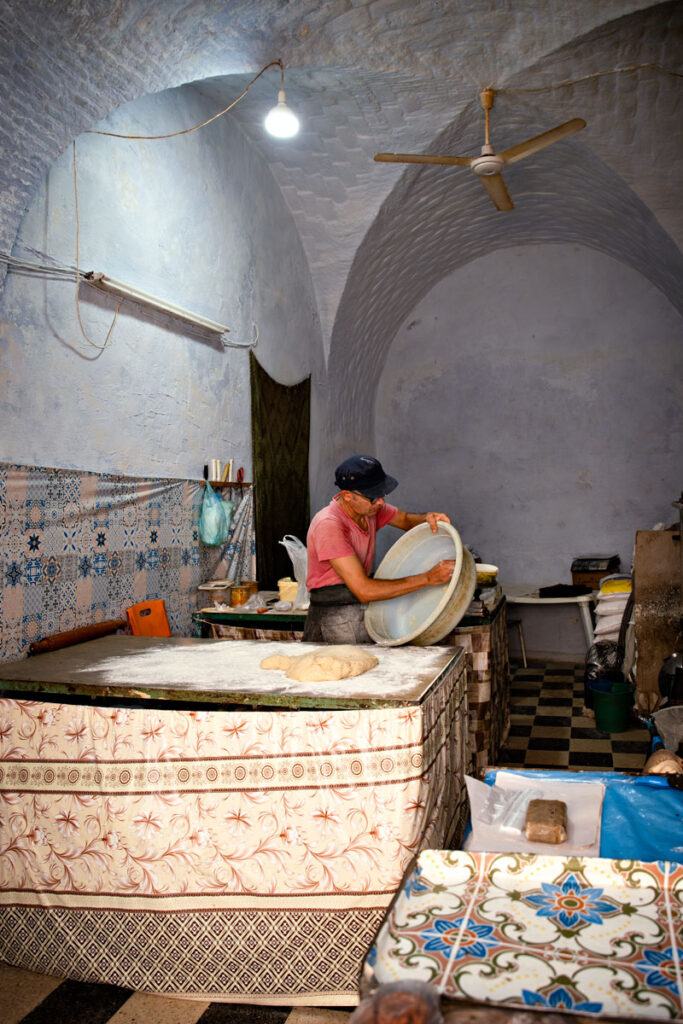
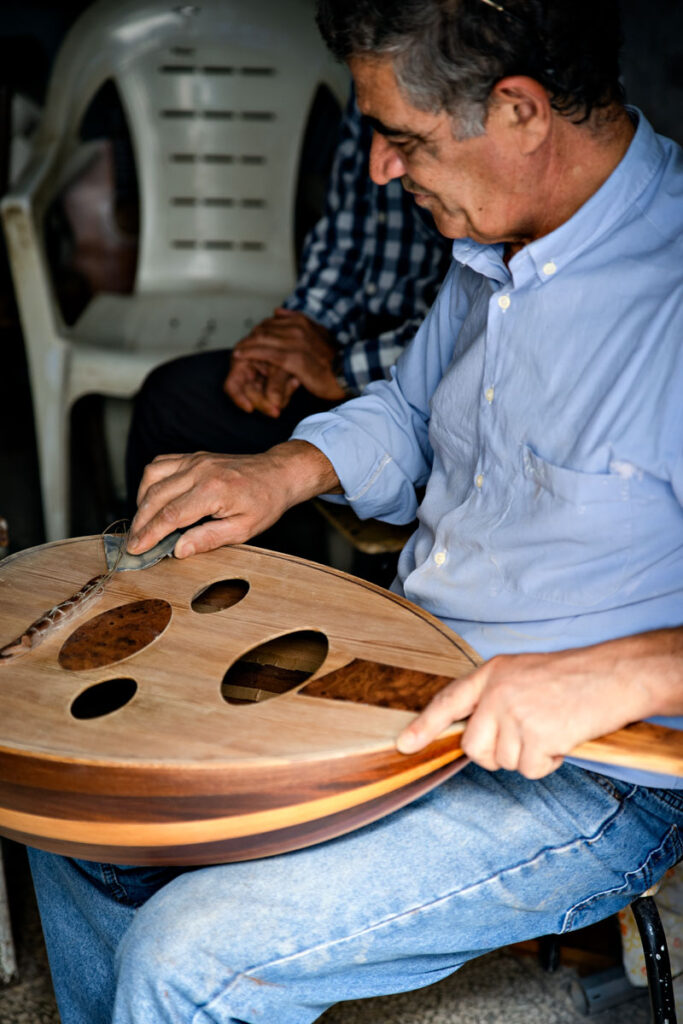
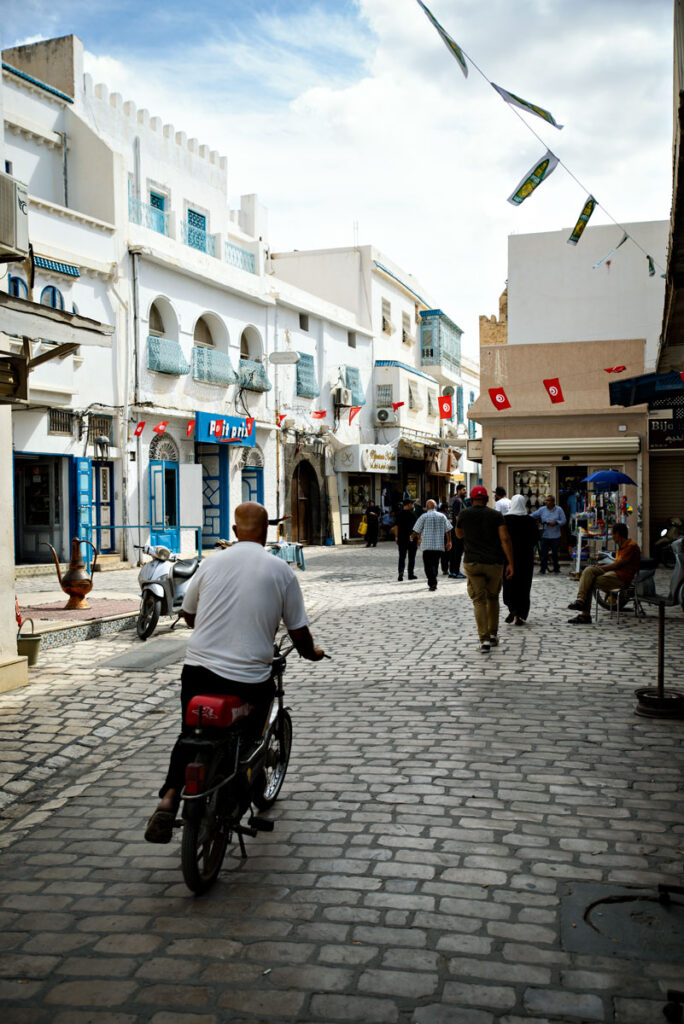
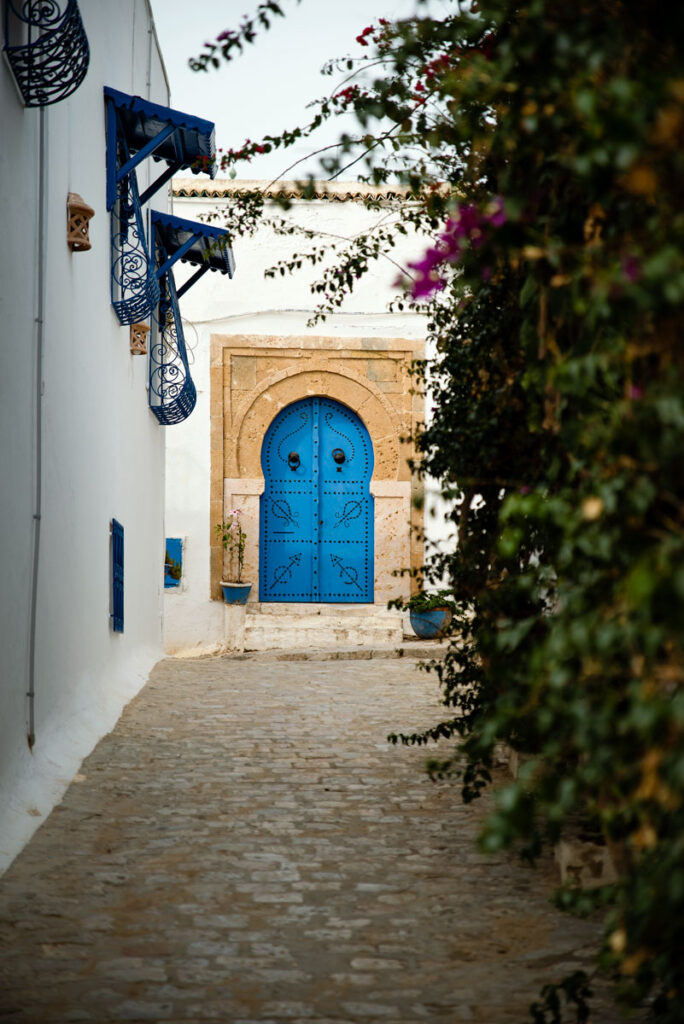
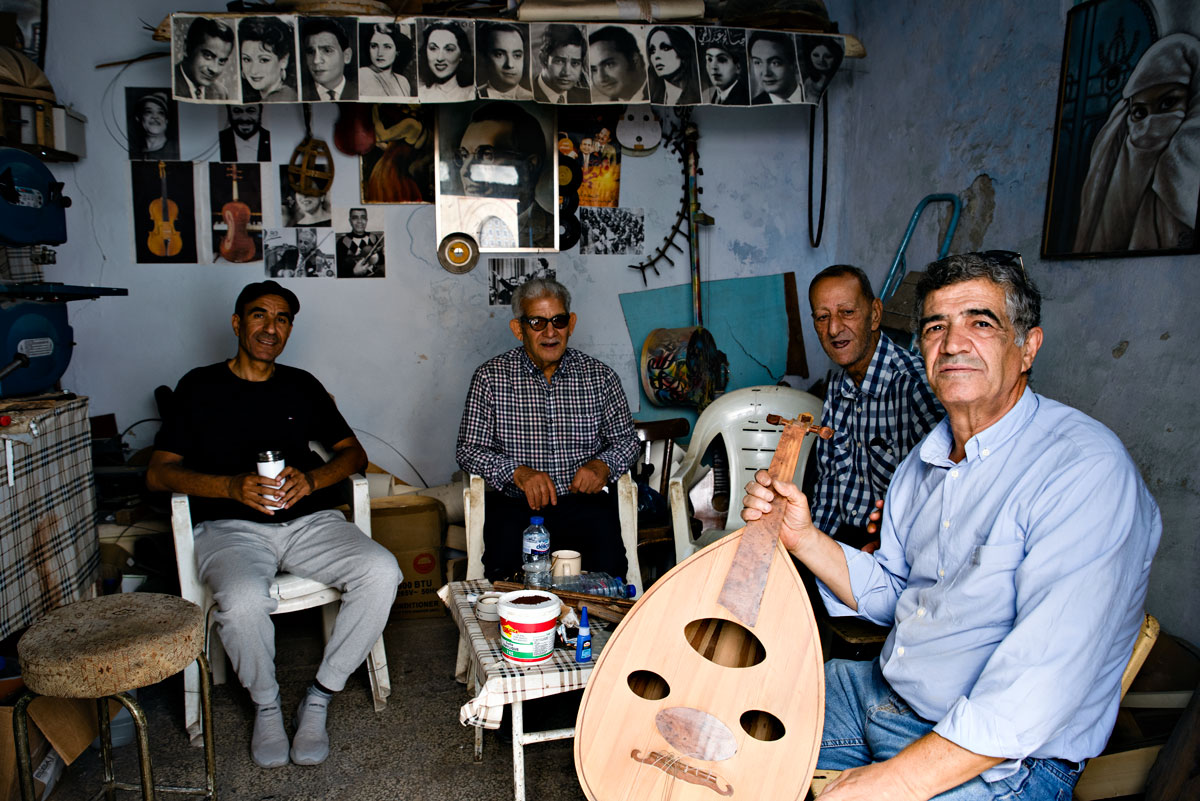
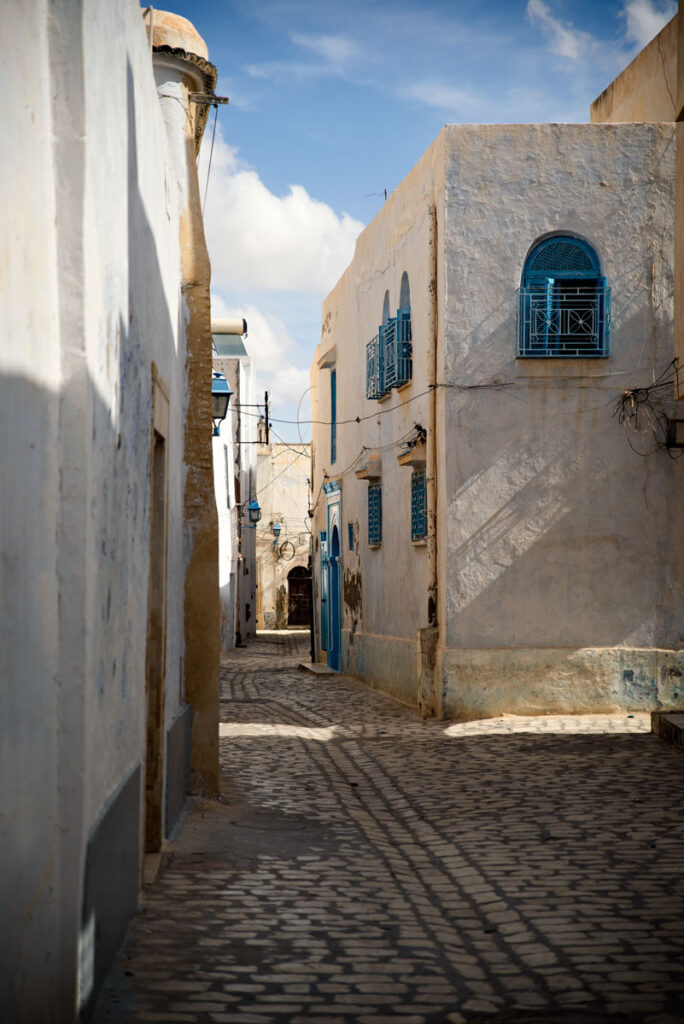
The old town is sleepy. In small shops with open doors, we gain deep insights into the everyday life of the people. We see a baker kneading the dough for his flatbread in a large bowl. We are waved into a shop by a group of old men with musical instruments. They point to photographs of long-gone Tunisian singers and oud players. A weaver explains his craft to us. In between, the whitewashed facades of the small, narrow buildings shine. Their doors and windows glow in bright blue.
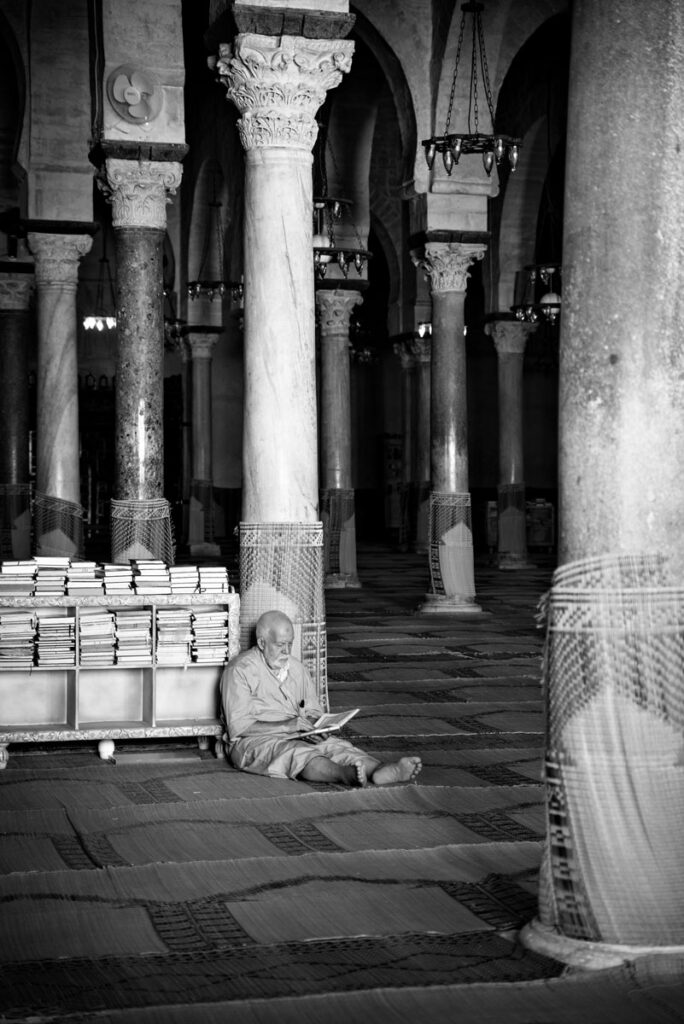
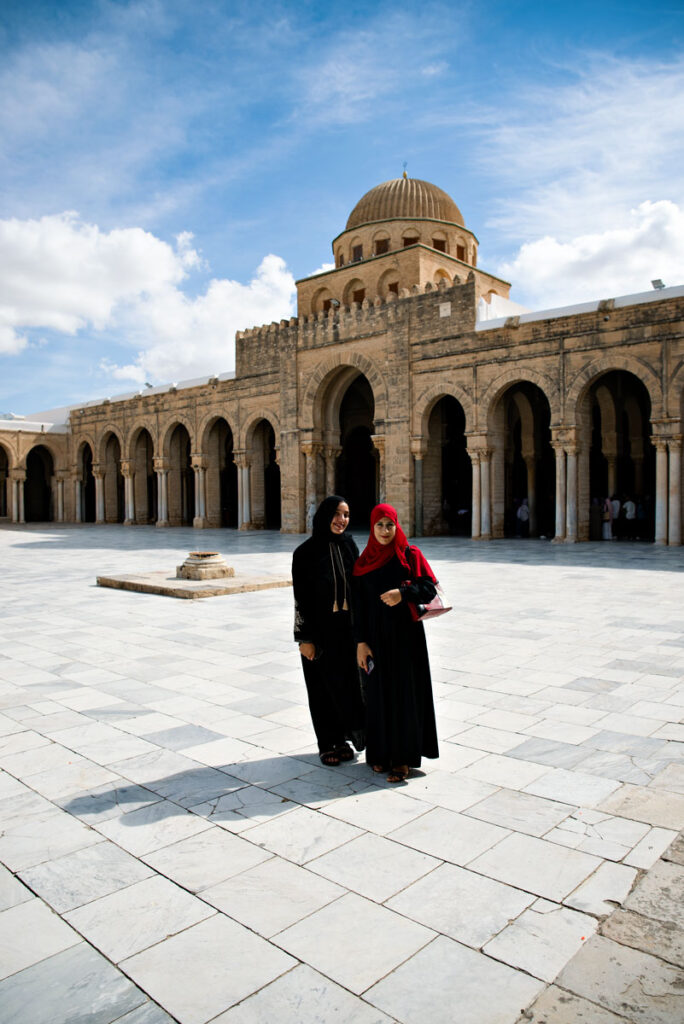
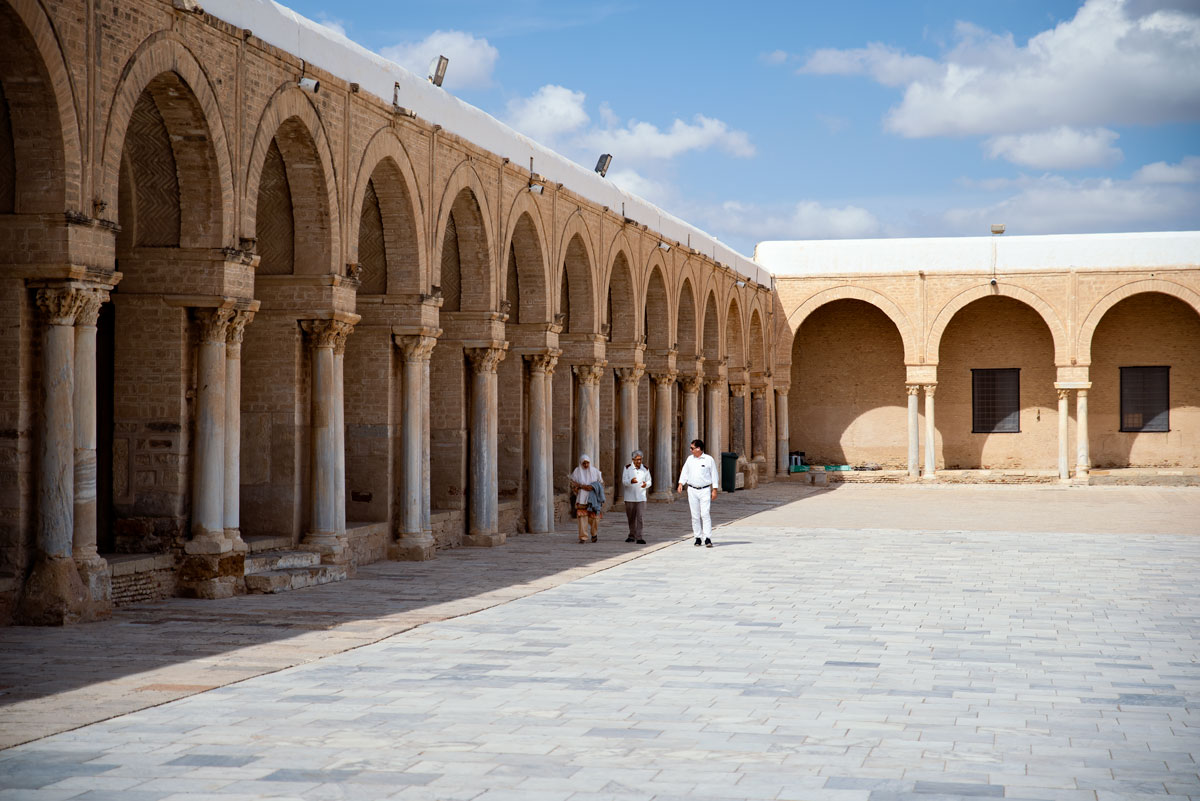
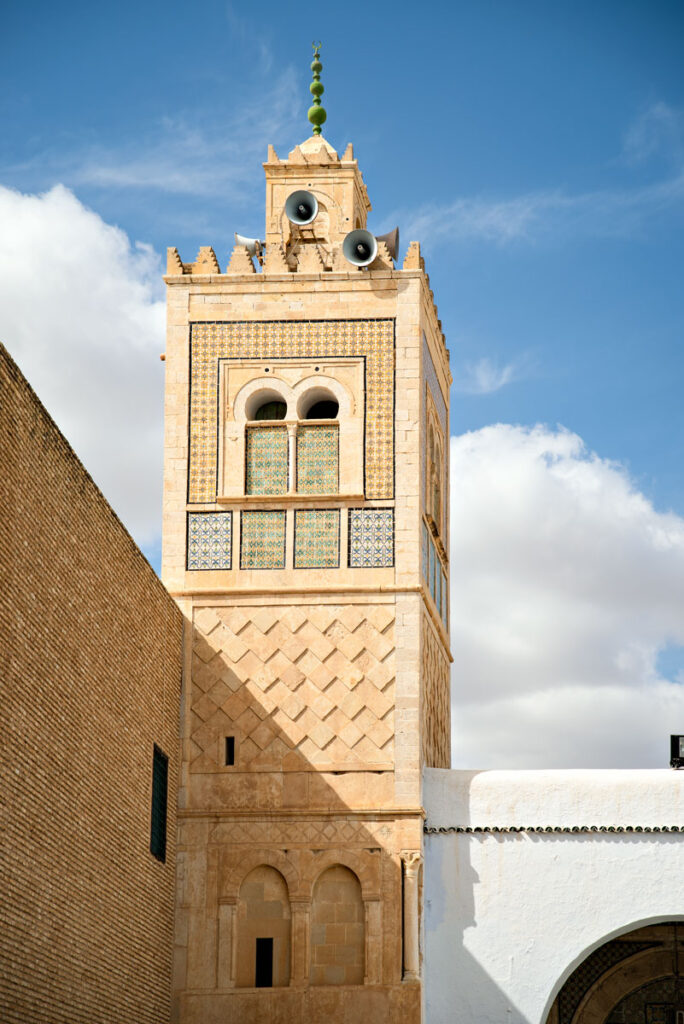
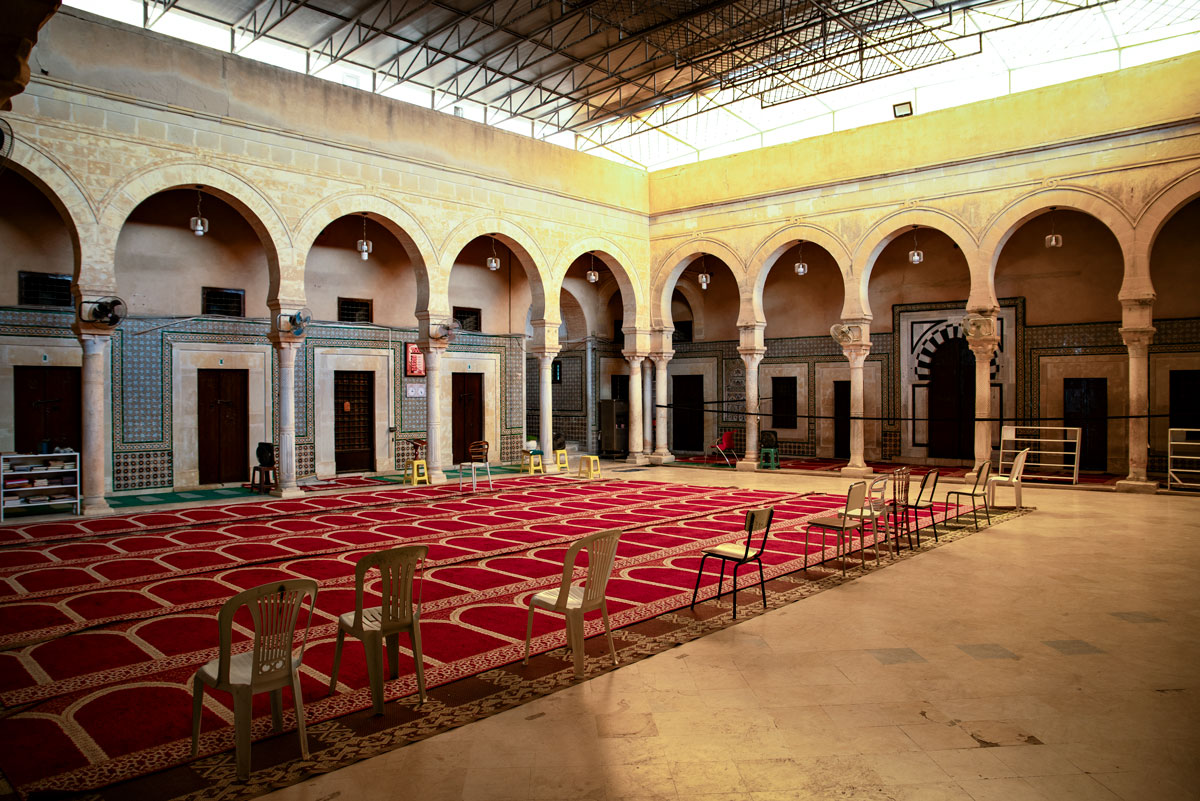
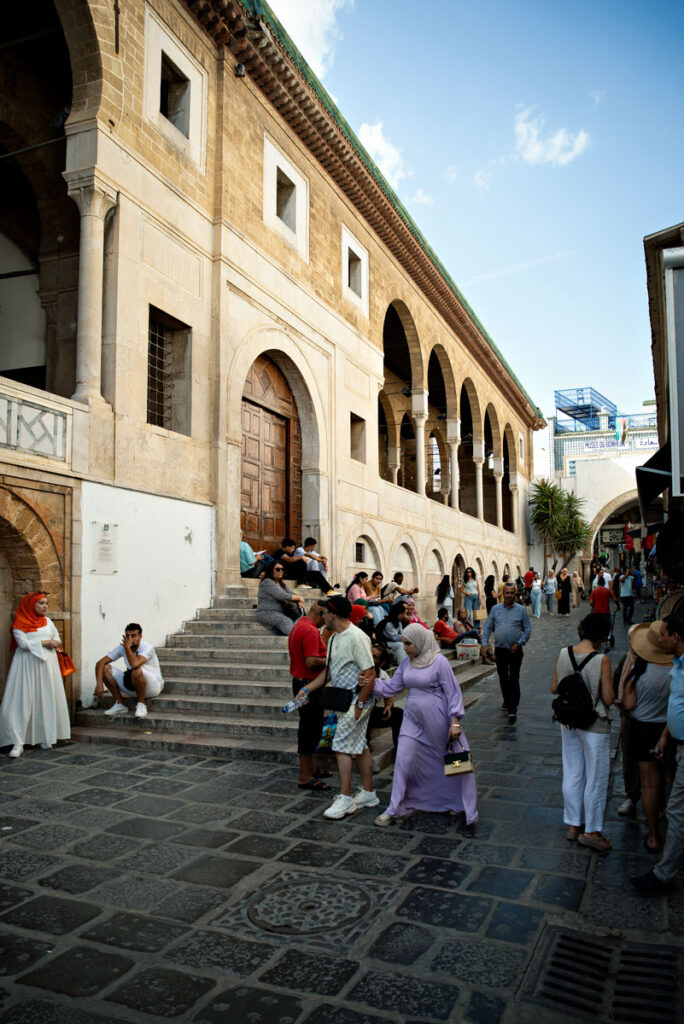
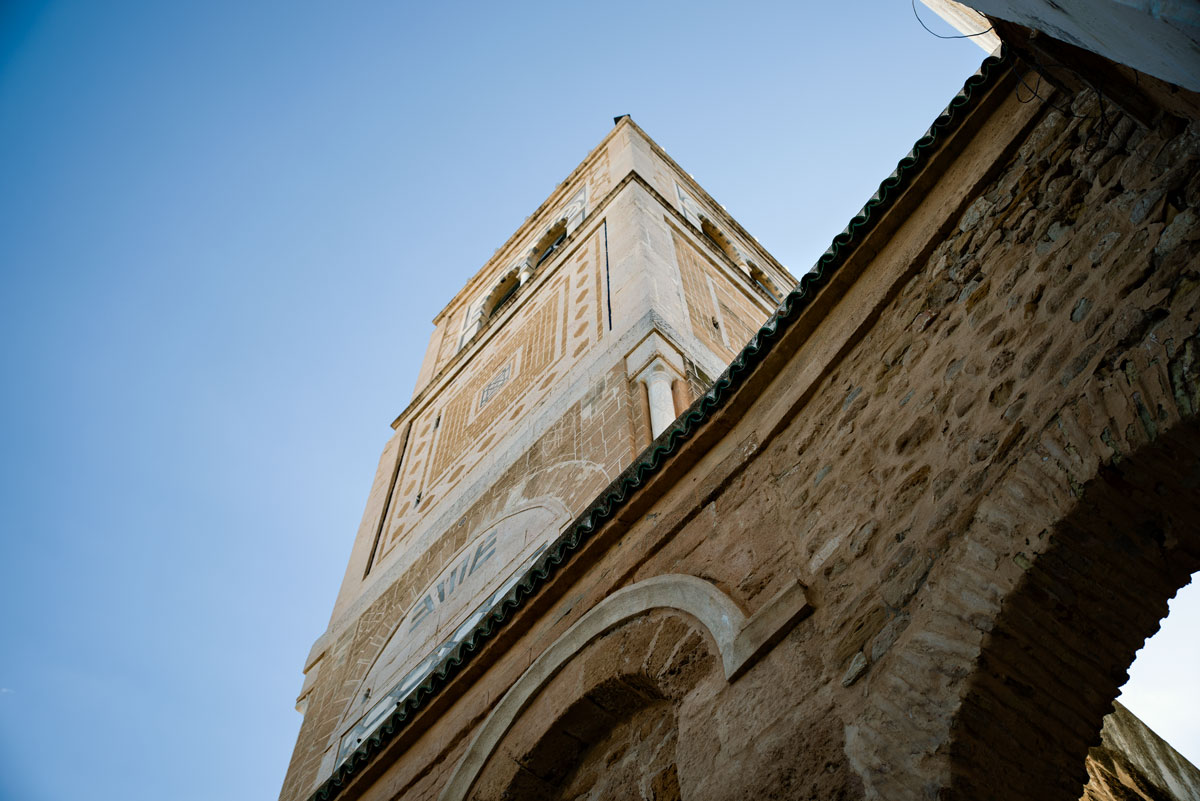
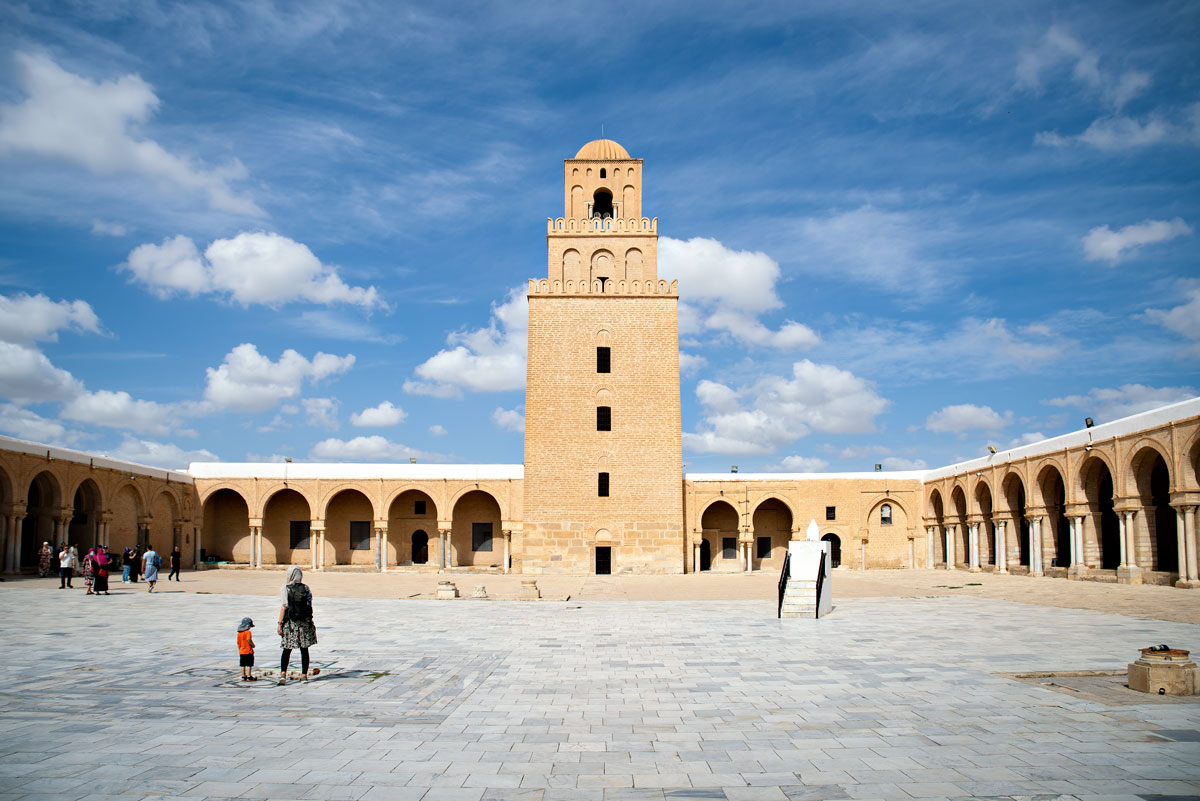
The Great Mosque of Kairouan is the city’s holy site. The expansive courtyard, symmetry, and colonnades are similar to Persian mosque architecture. Over the centuries, this place has been expanded, added to, enlarged, and beautified.
Two Tunisian students suddenly came up to us and asked to take a photo. I showed them the picture on my camera display, and they nodded with satisfaction. Then they asked if we spoke Arabic. They were clearly delighted that we were interested in the mosque, the city, its people, and Tunisia in general.
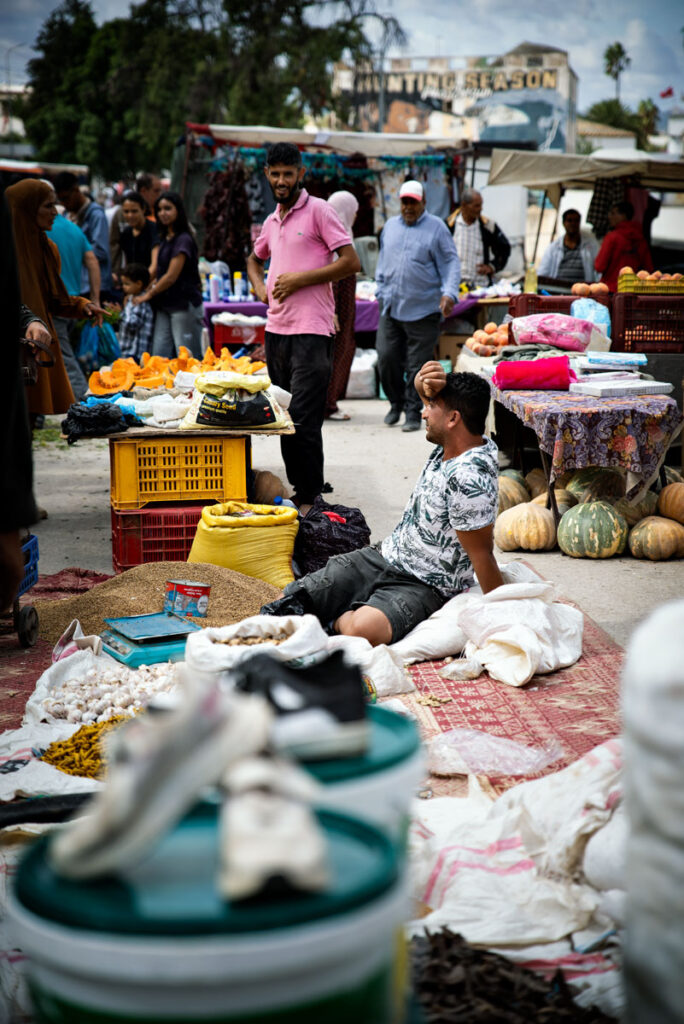
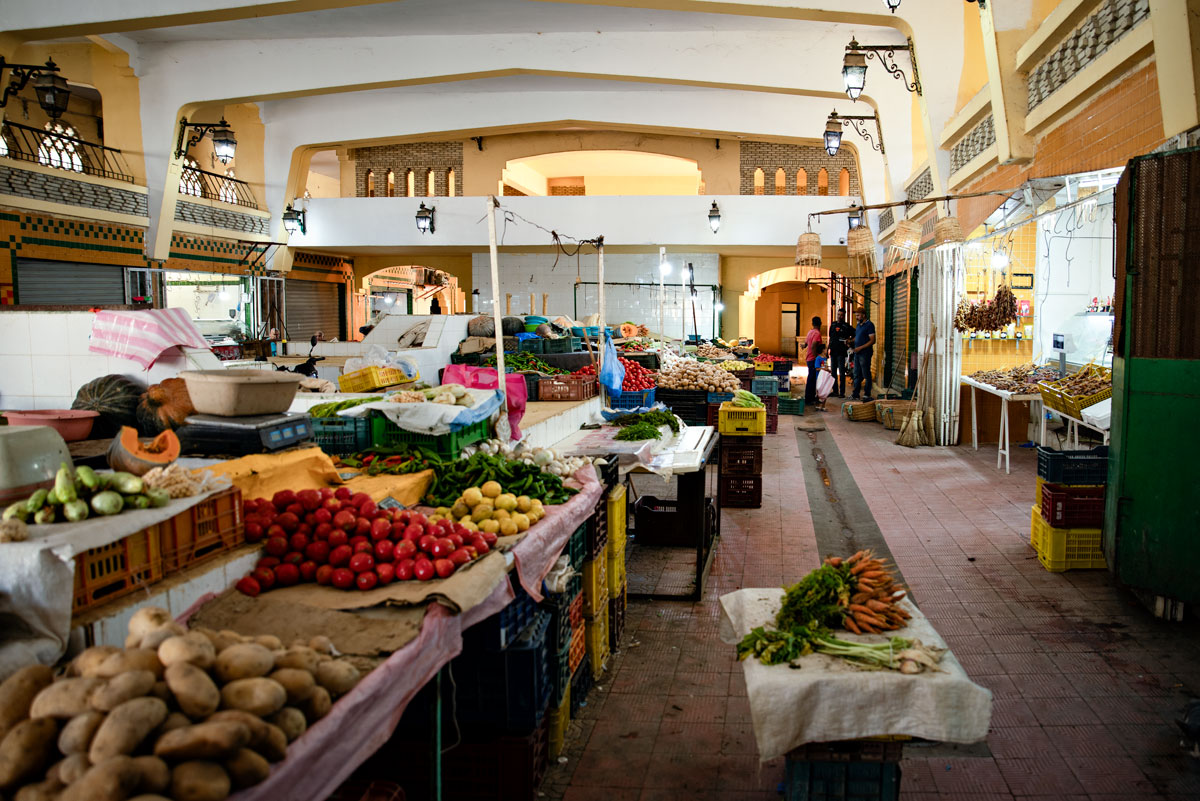
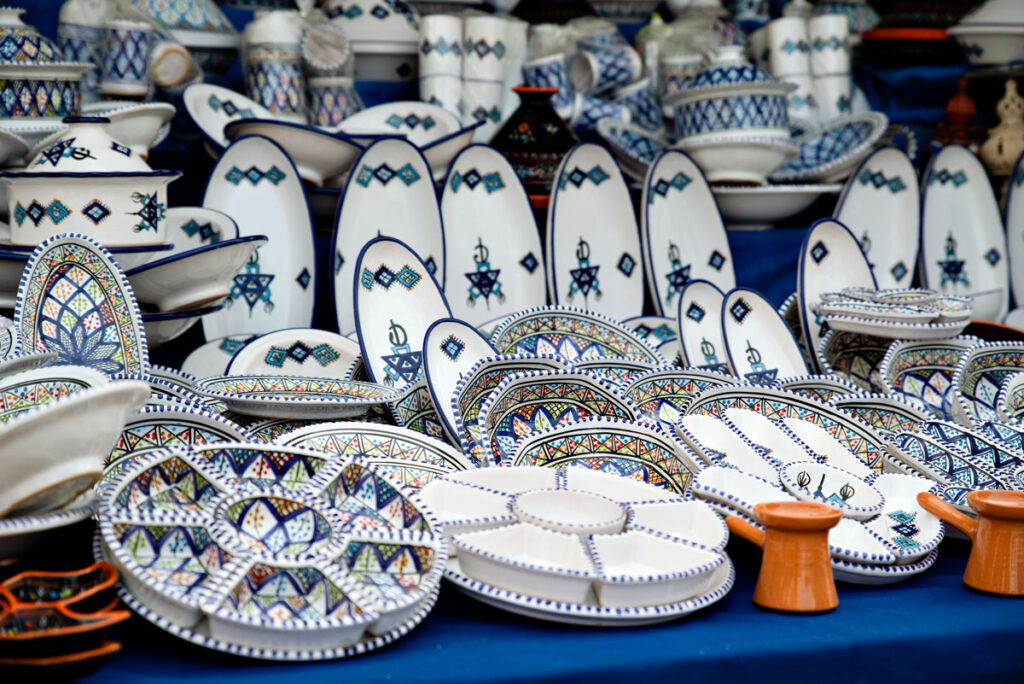
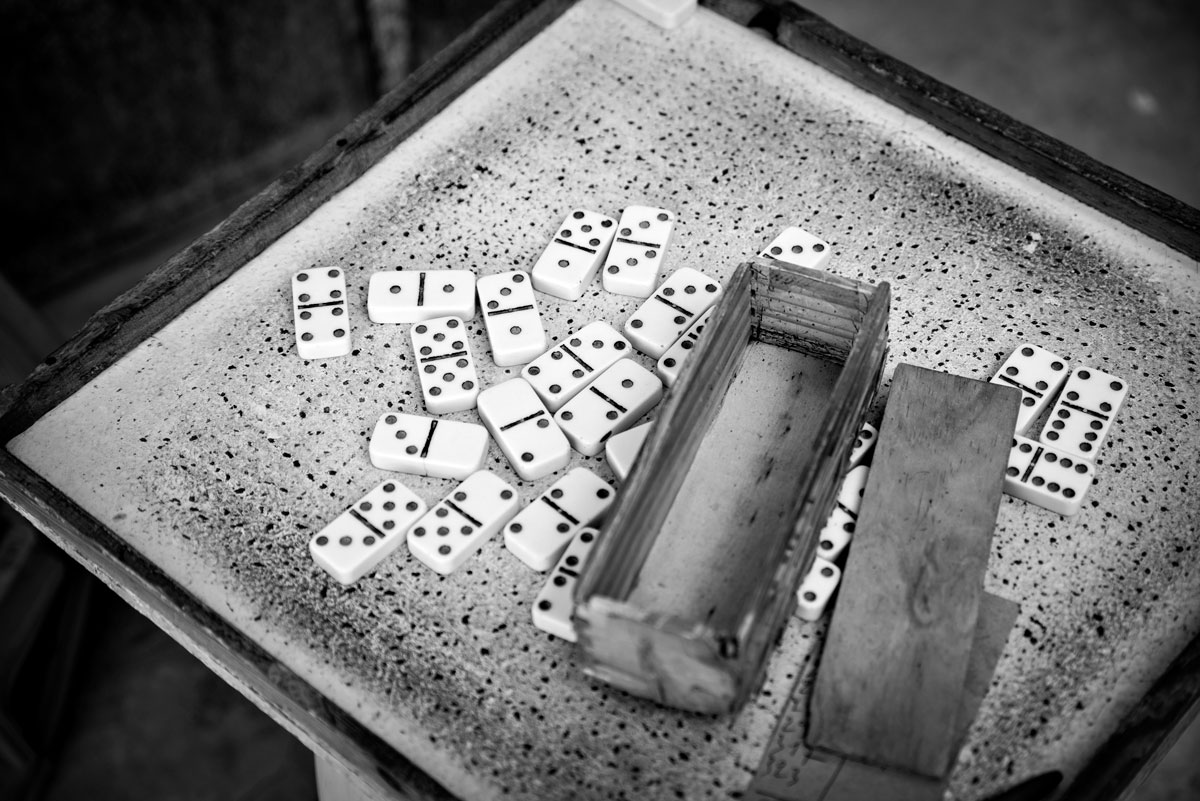
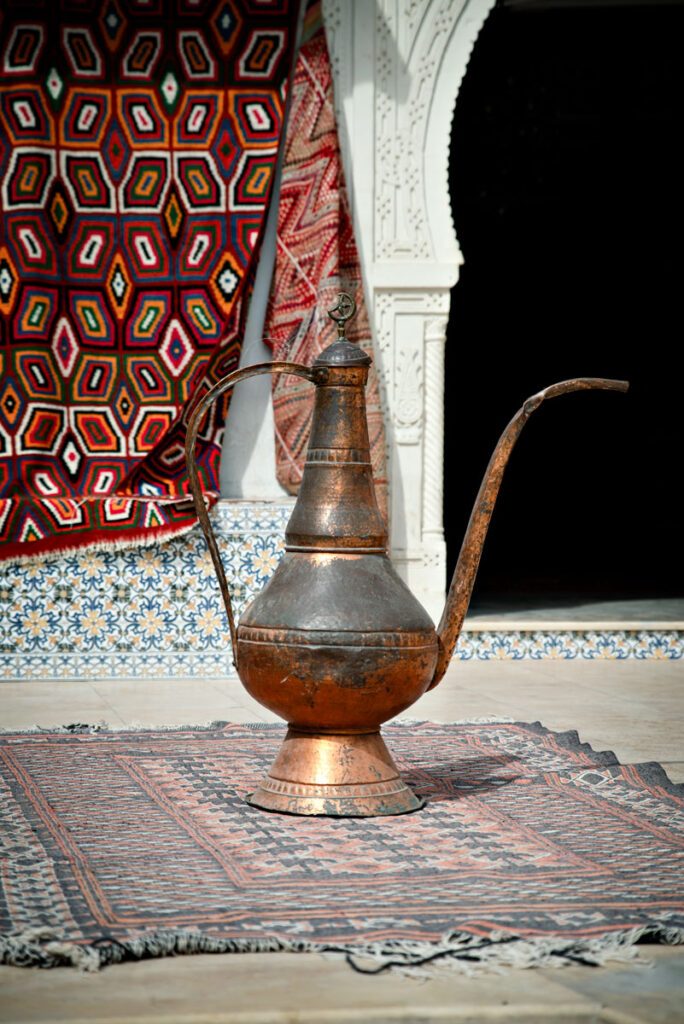
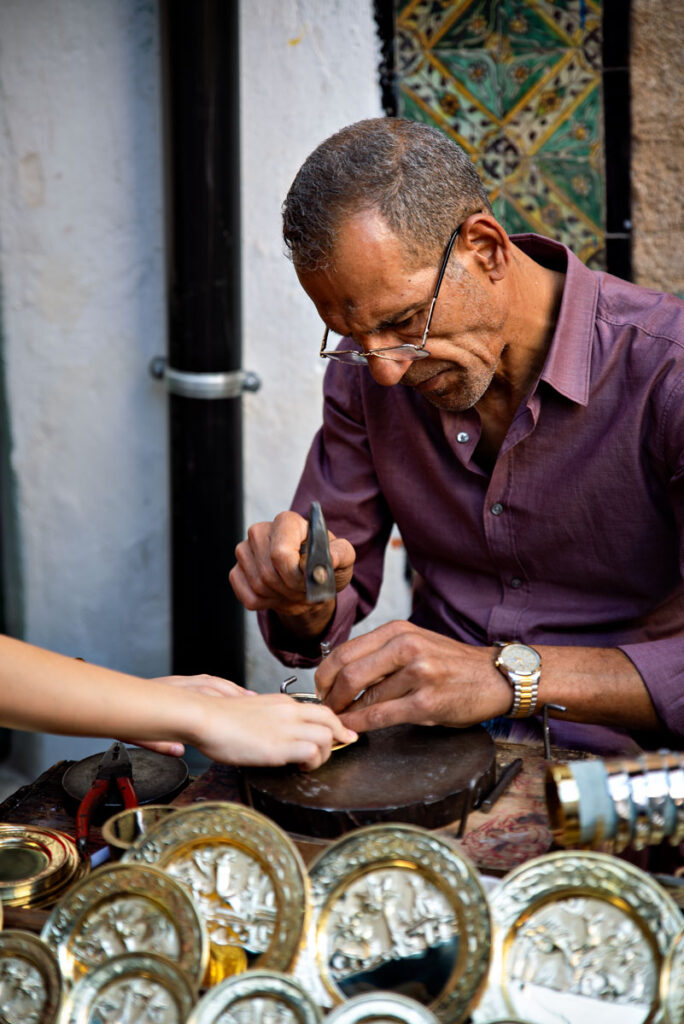
Compared to the small, local goods markets in the west of the country, the market in Kairouan has a pleasantly chaotic order. The goods on offer range from junk to magnificent handicrafts. Things you absolutely need and things you should never own. Old men sit among colorful carpets, of which you can never have enough here, and dull metal tableware. They smoke, drink coffee, and play checkers on worn game boards. They know their customers and know when a smile or a friendly “hello” is in order.
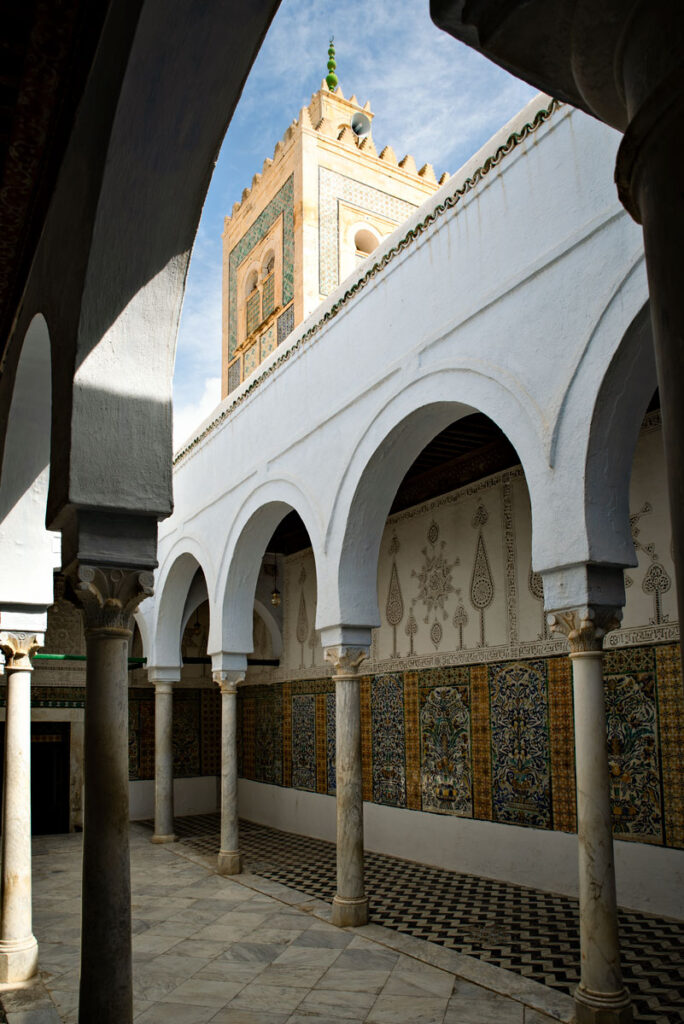
Before leaving the holy city of Kairouan, we stop at the Barber’s Mosque, which is also the mausoleum of Sidi Sahbi, a companion of the Prophet Muhammad. According to tradition, he always carried three hairs from the Prophet’s beard with him – hence the nickname of this place.
We quickly lose our way in the narrow maze of corridors and staircases and suddenly find ourselves in the prayer room, which is actually reserved for Muslims only. As non-Muslims, we are also denied access to the tomb of Sidi Sahbi; we can only take a quick look into the dark chamber before the security guard silently ushers us on. A strip of light falls through a narrow window onto the tiled walls – then we are back in the bright courtyard, blinded by the sun and, for a moment, quieter than before.
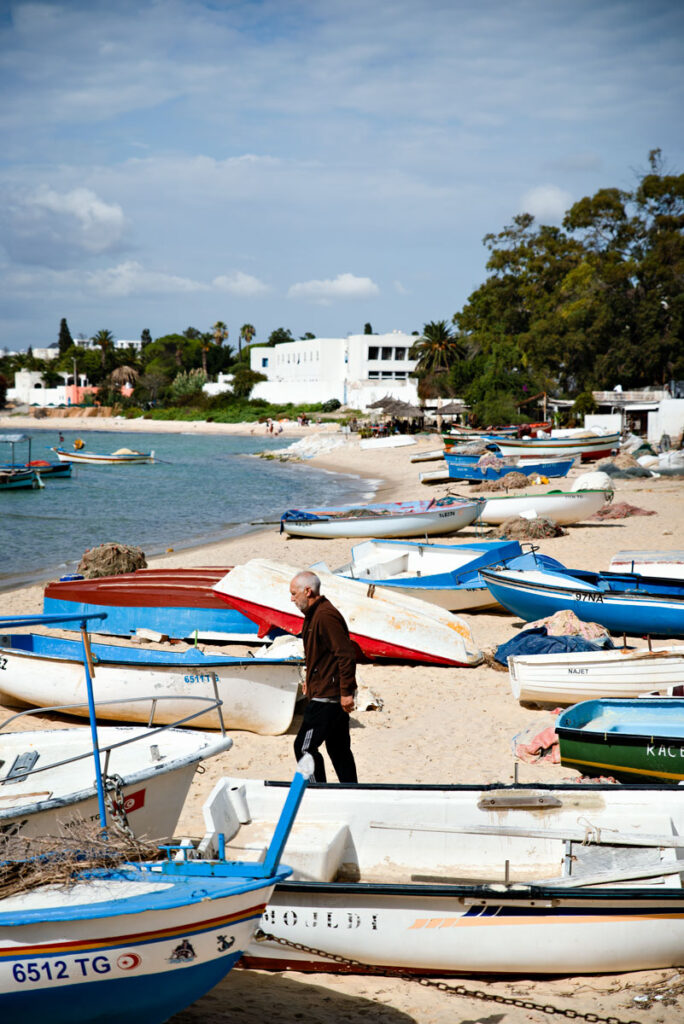
Change of scene. No more desert, no dust, no Berber villages, ancient ruins, or sacred mosques. Instead: a seaside resort like so many others around the world. Colorful fishing boats on the city beach, souvenir shops in the old town. Seafood restaurants lining wide promenades. A little too much traffic, a little too much red skin on the necks and noses of fair-skinned passers-by. Hotel complexes and oversized buffet halls. Out-of-fashion evening wear, the summer dress bought especially for this vacation. One drink too many, bawdy jokes, evening entertainment. Pool and sea, beauty treatments and day trips.
For two days, we immerse ourselves in this seemingly unreal parallel world. After traveling across the entire country, we are forced to conclude with resignation: we, too, are part of it. In our heavy off-road vehicle, we drive through ruined streets and past mountains of trash. We bring money, we take no interest, we keep our distance, we are lifeless ghosts. We try to immerse ourselves in cultures, but can only scratch the surface a little and ultimately understand nothing. Isn’t it more honest to come here just for relaxation? To spend a little more than you have. To make yourself a little freer than you are. To take on a role and pretend – just like the hotel staff does. To feign cheerfulness and amusement and admit that you’re not interested in the country. The deal is: relaxation and a little escape from everyday life in exchange for two carefree and perfect weeks.
We leave Hammamet with mixed feelings.
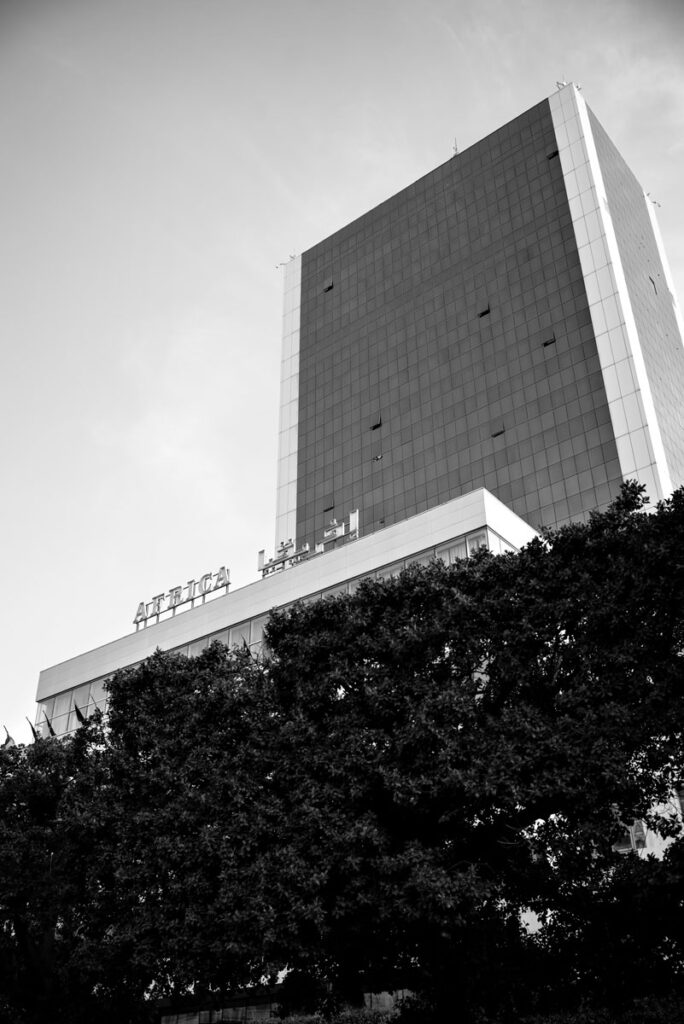
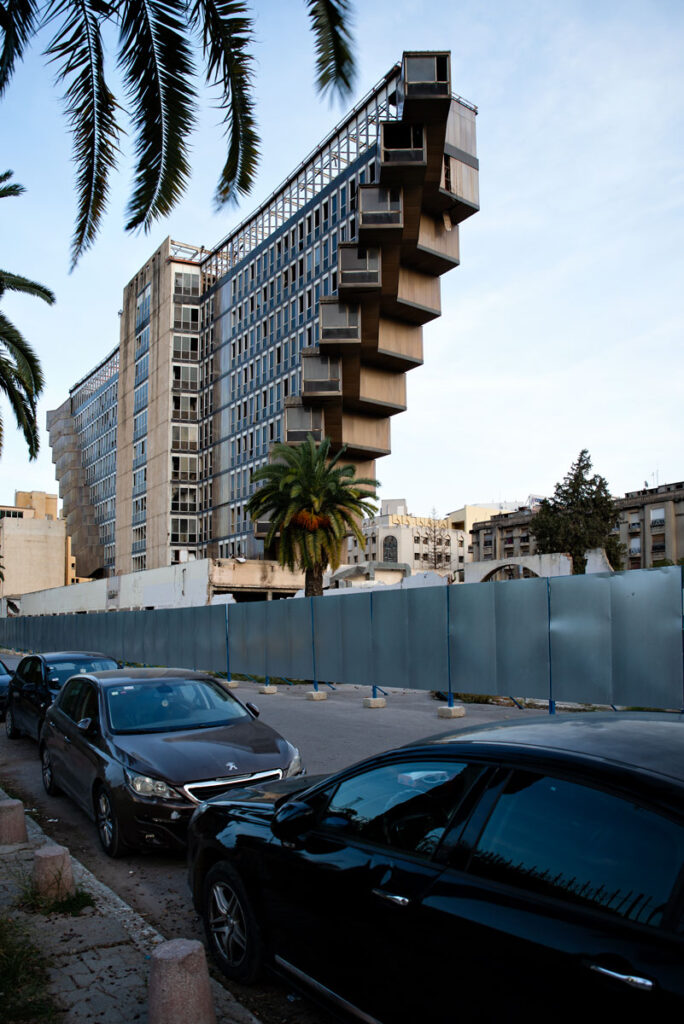
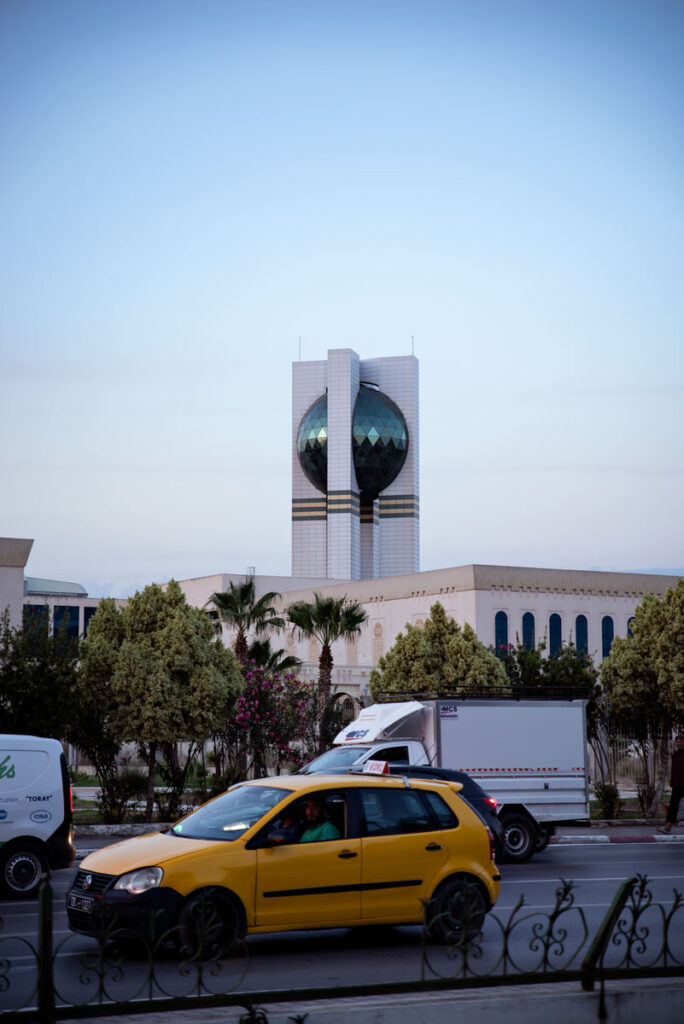
As is so often the case, the journey ends where it began. We took some time to explore the capital city of Tunis. From our hotel on the edge of the city center, we walk through boring but bustling residential neighborhoods. Here, the city exudes a little international charm – there is supposedly international cuisine (which often turns out to be Tunisian attempts at foreign cuisine) and a few international shops.
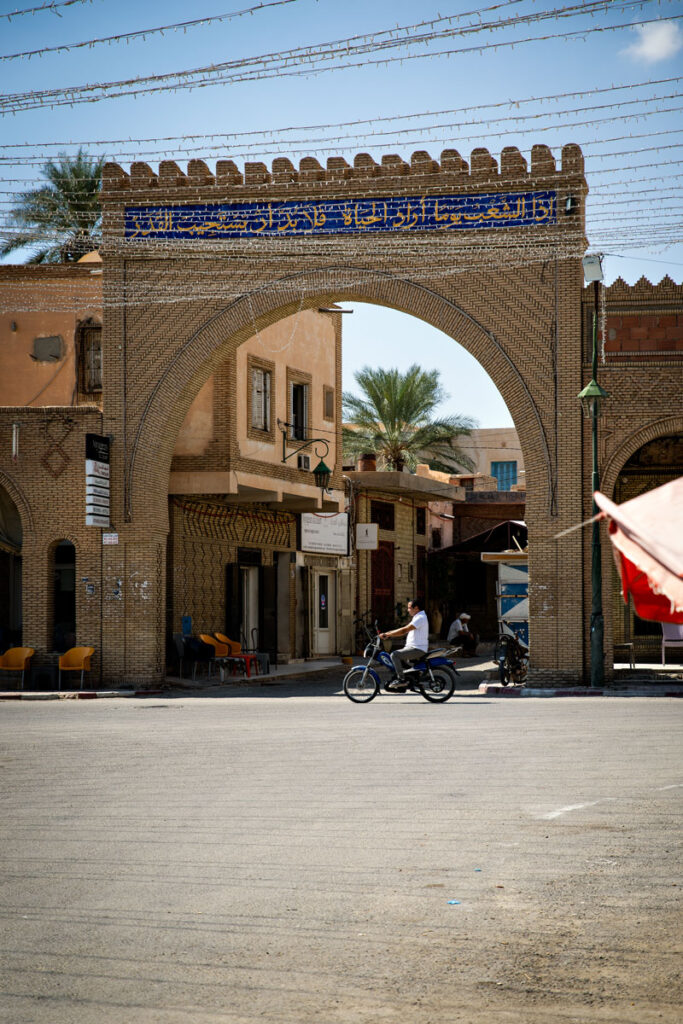
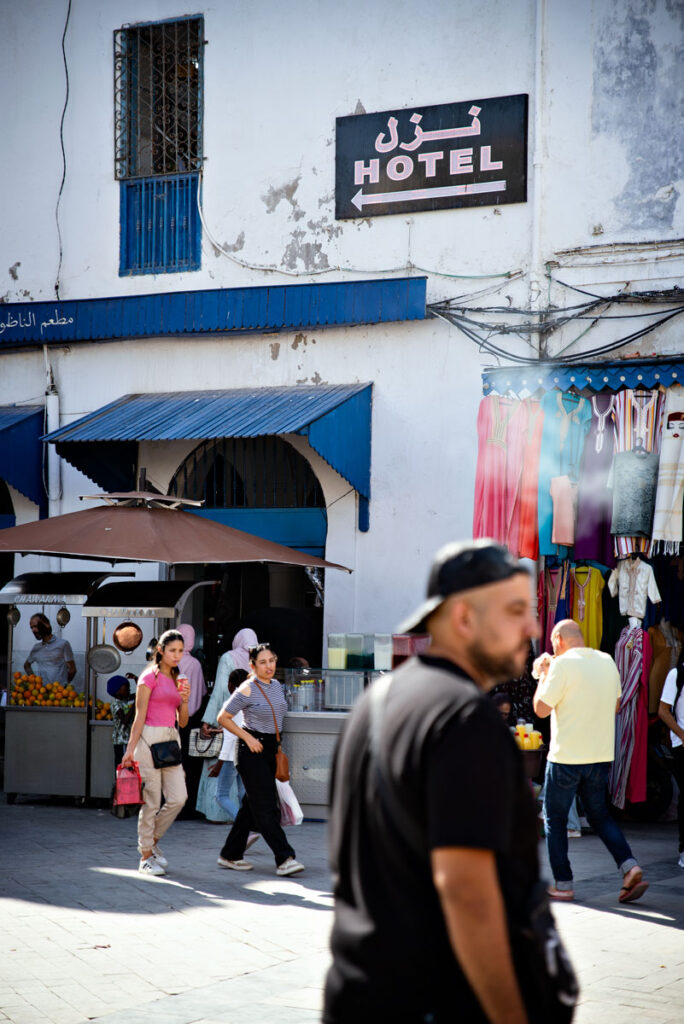
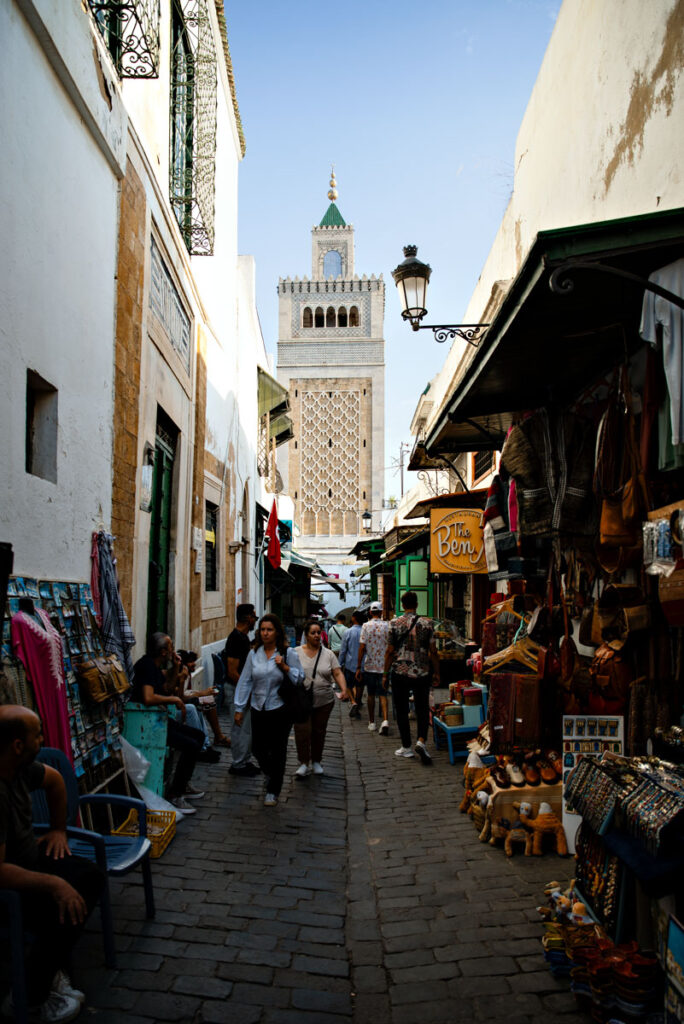
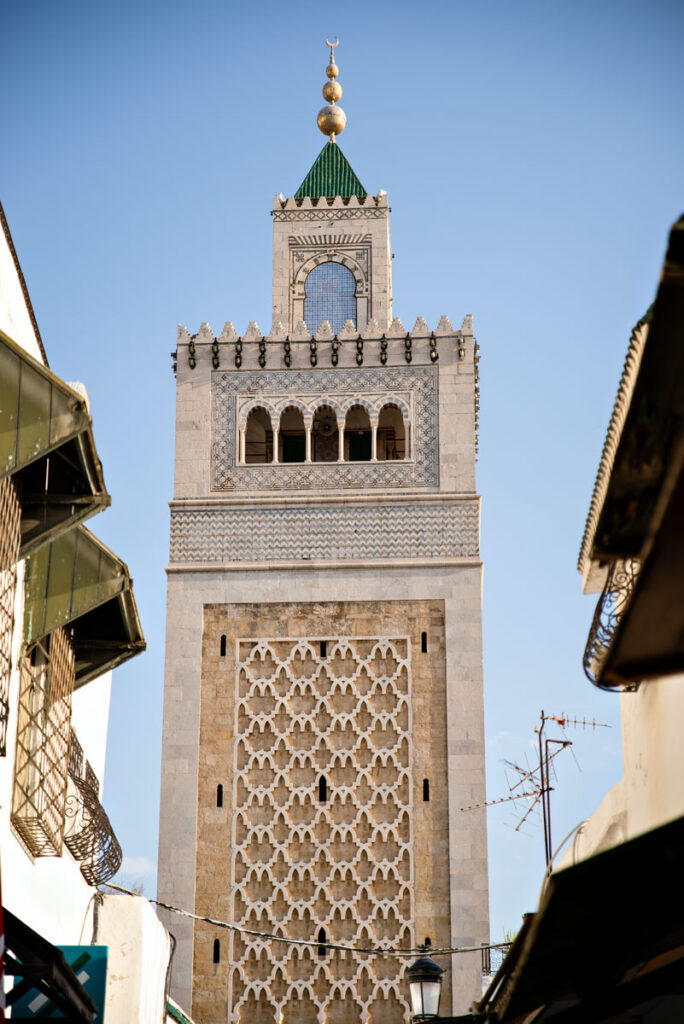
The souk in Tunis is an inextricable labyrinth of alleys, full of shops, street stalls, cafés, restaurants, and medieval fortifications. The merchants greet us with unobtrusive glances, and small groups of foreign visitors are scattered among the Tunisians.
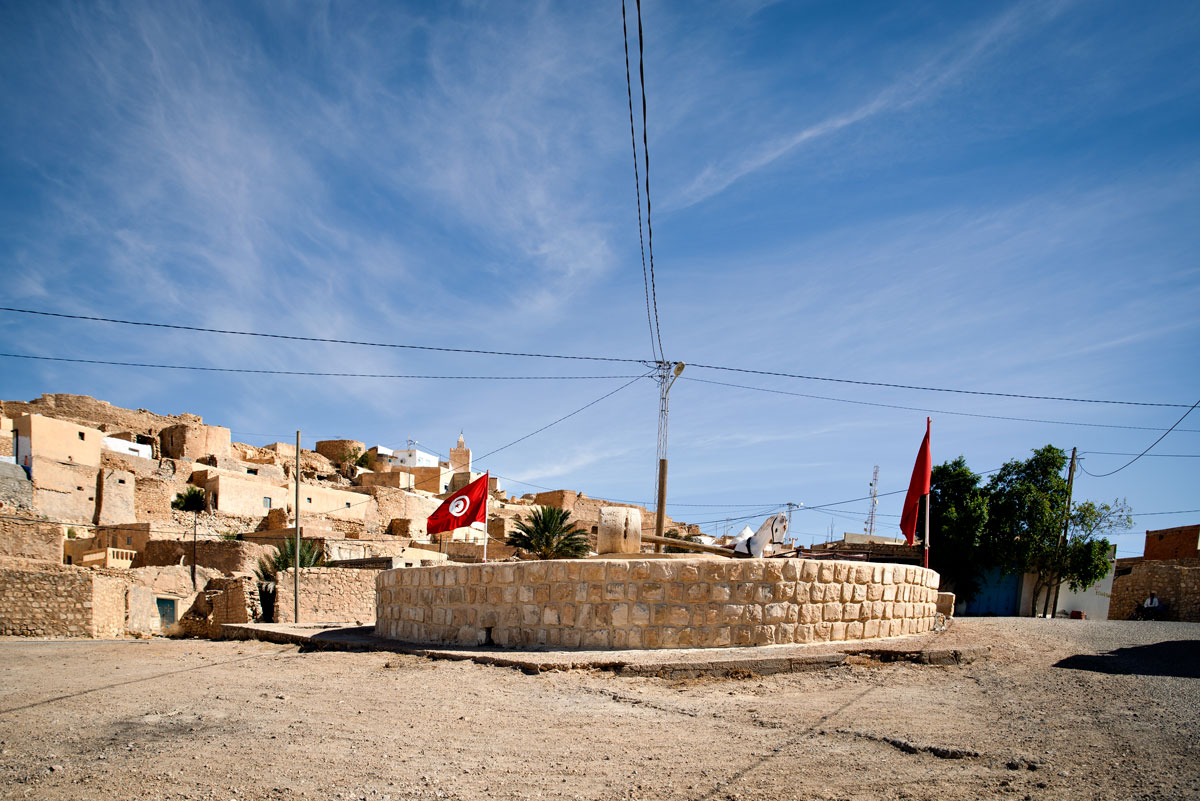
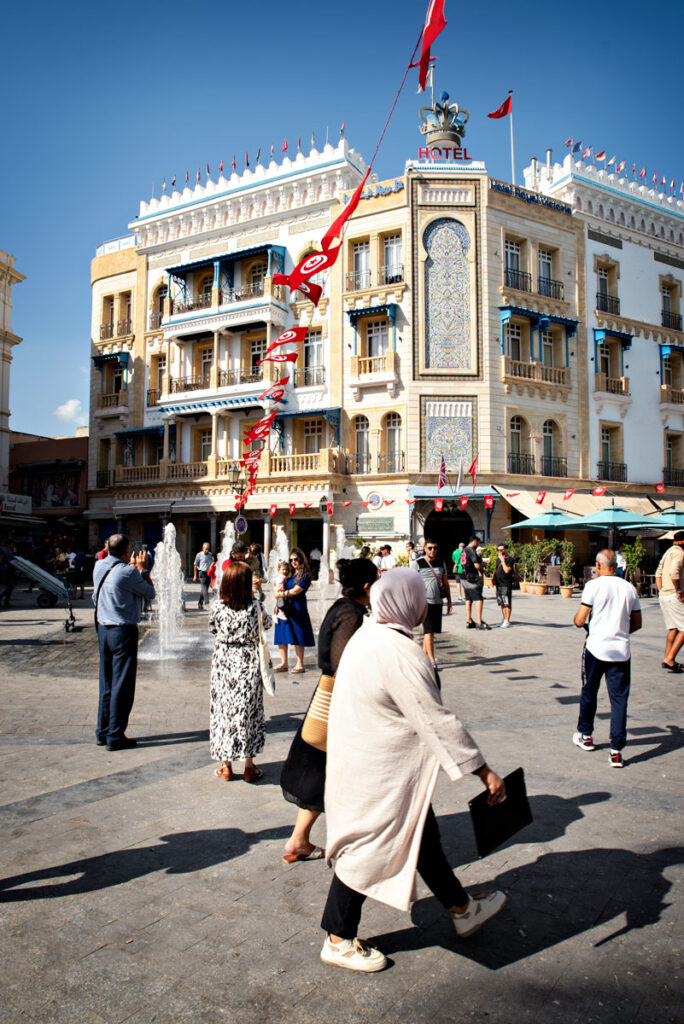
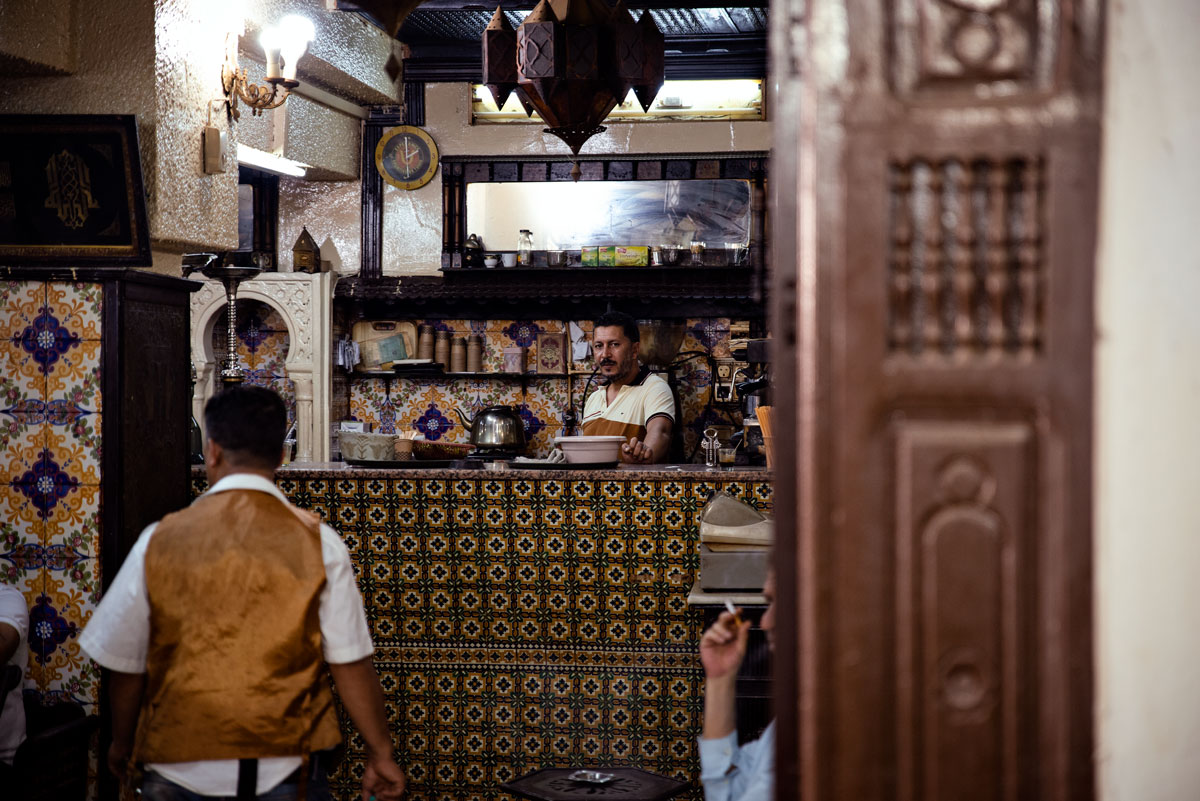
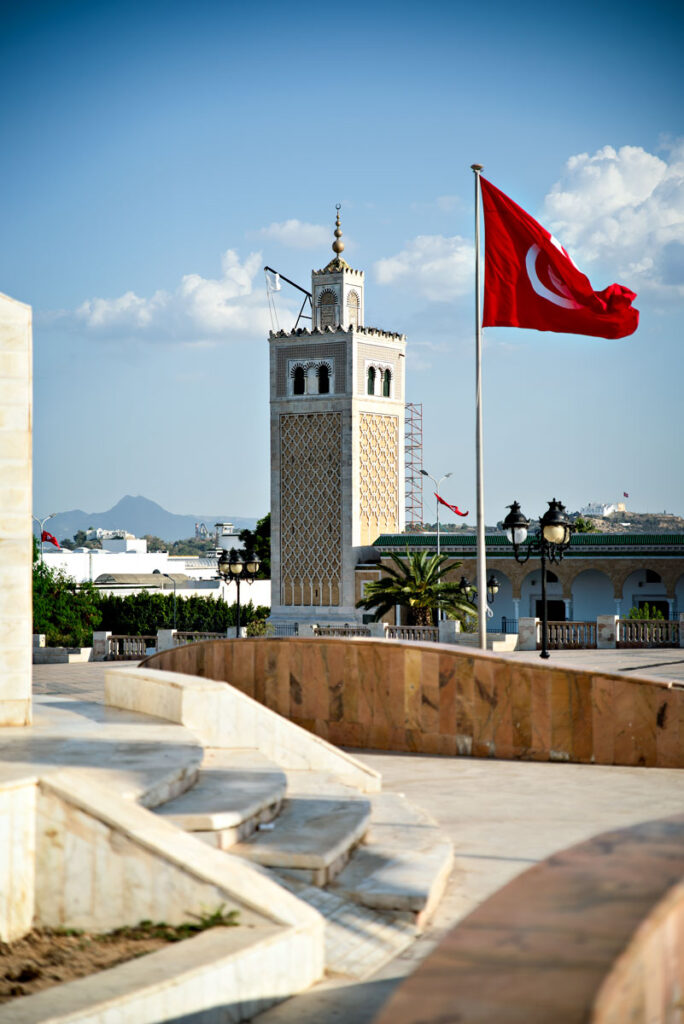
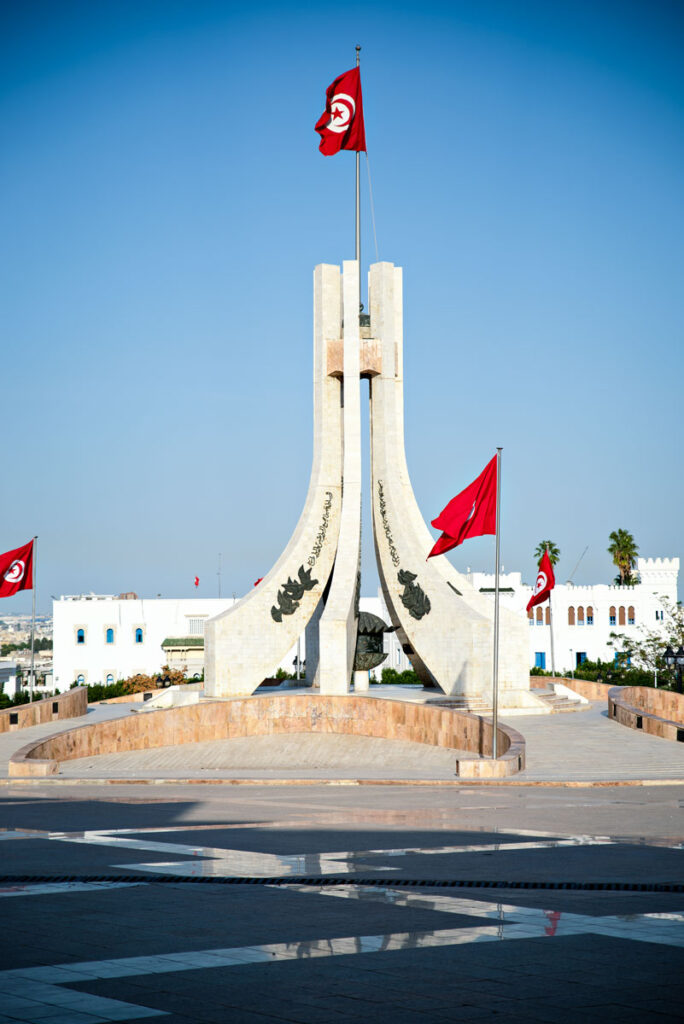
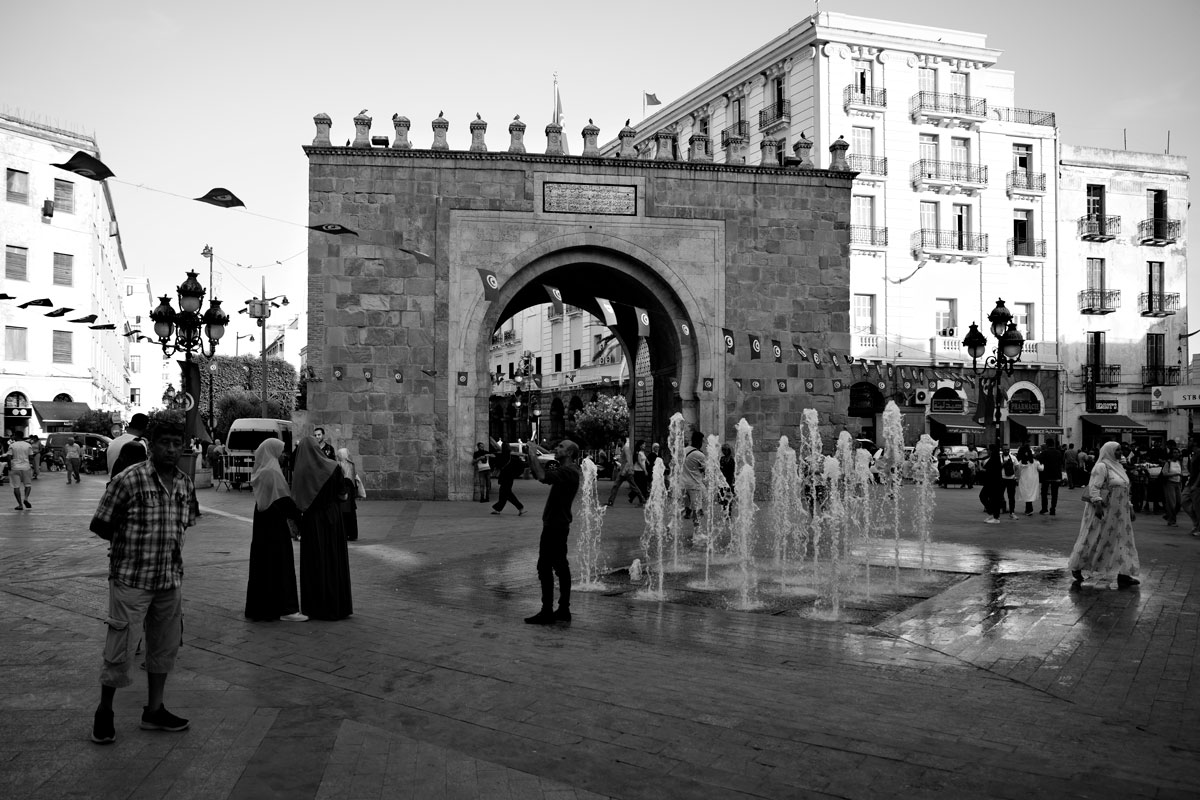
Above the rooftops of the market, we drink hot coffee and take a breather before searching for the exit from this maze. Eventually we find it, and before us lies the monumental Place de la Kasbah. It is the central square of the city, surrounded by government buildings, Tunisian flags, and monuments. It is deserted.
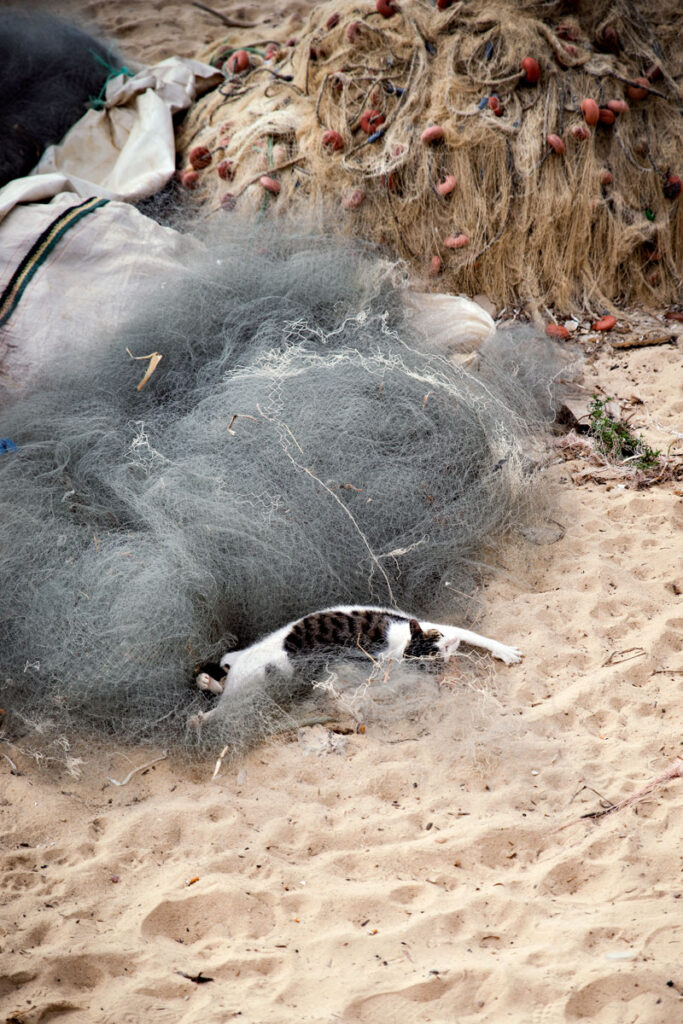
We dive back into the souk, are swallowed up by it, digested, and spat out again in a run-down residential neighborhood. Here, Tunis shows its dark side. The residents of the houses here are also friendly and reserved, but this place is not meant for the eyes of tourists. Garbage lies in the corners of the narrow alleys. It stinks of feces. Gangs of cats – lice-ridden and with bald patches in their fur – rule the streets. Children play in a huge, abandoned apartment block. Trees and bushes have reclaimed the building complex. The sun is approaching the horizon, and no rays of sunlight fall into these deep urban canyons. It’s time for us to leave.
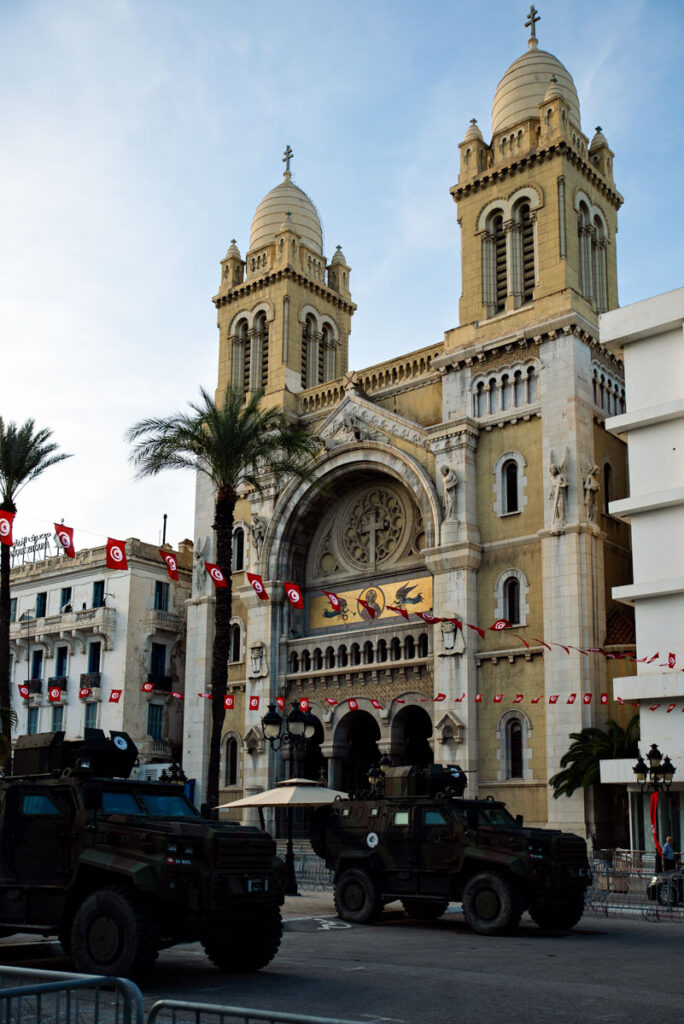
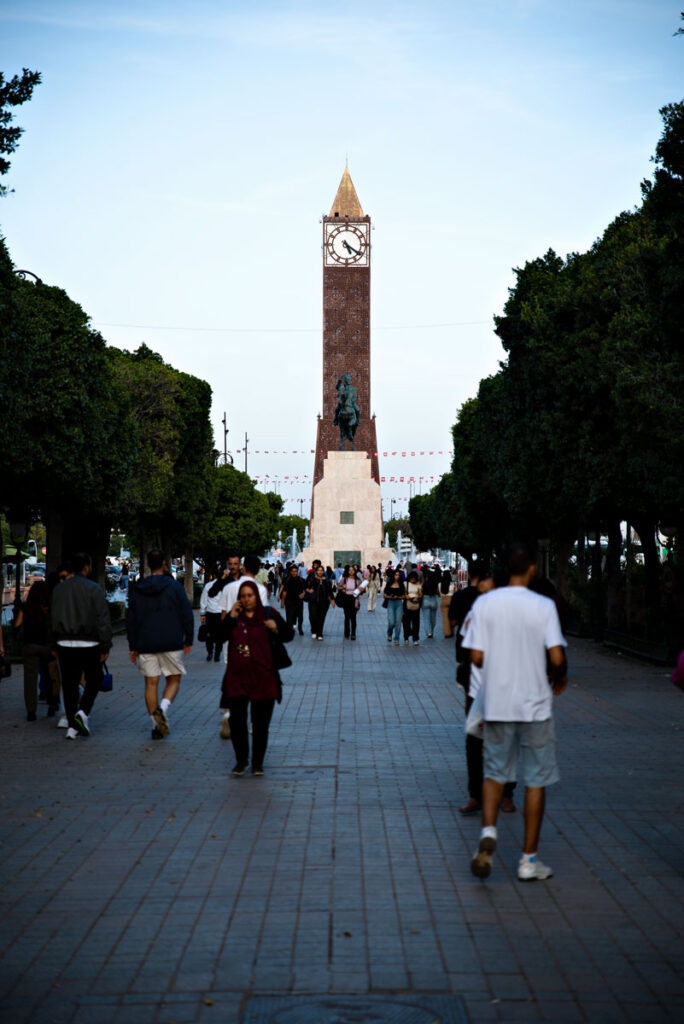
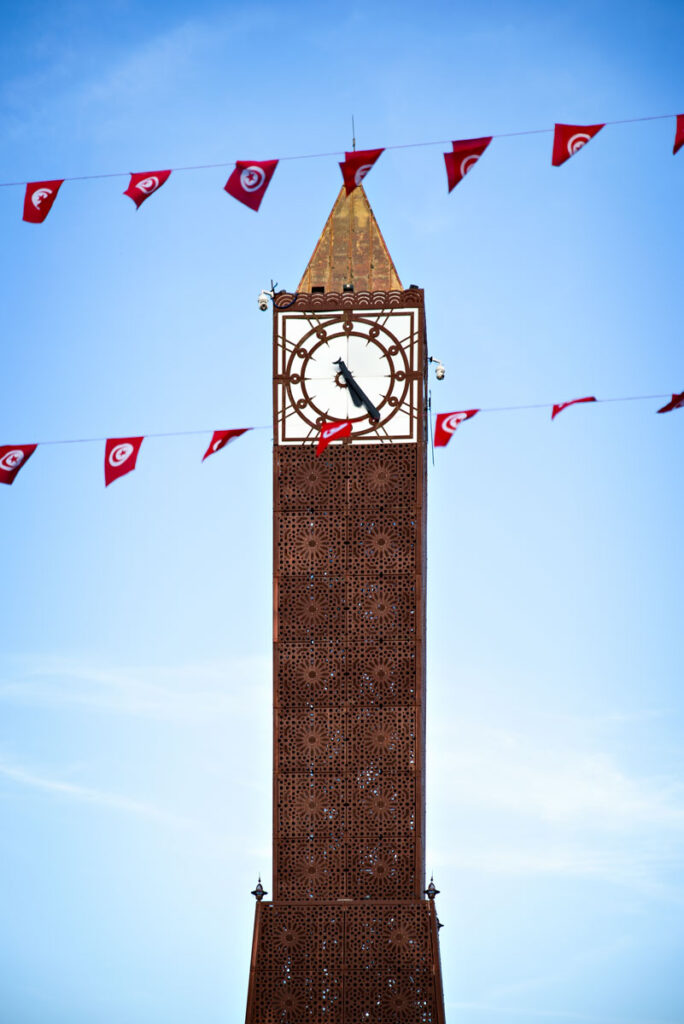
There is a strong police presence at Place de l’Indépendance. Heavily armored emergency vehicles stand behind metal barriers. At this urban hub, St. Vincent de Paul Cathedral and the French Embassy in Tunis face each other. Following the wide boulevard eastward, one comes to Place du 14 Janvier – a memorial to the self-immolation of Tunisian vegetable seller Mohamed Bouazizi and to January 14, 2011, the day that marked the beginning of the Arab Spring, which shortly thereafter shook the Arab world.
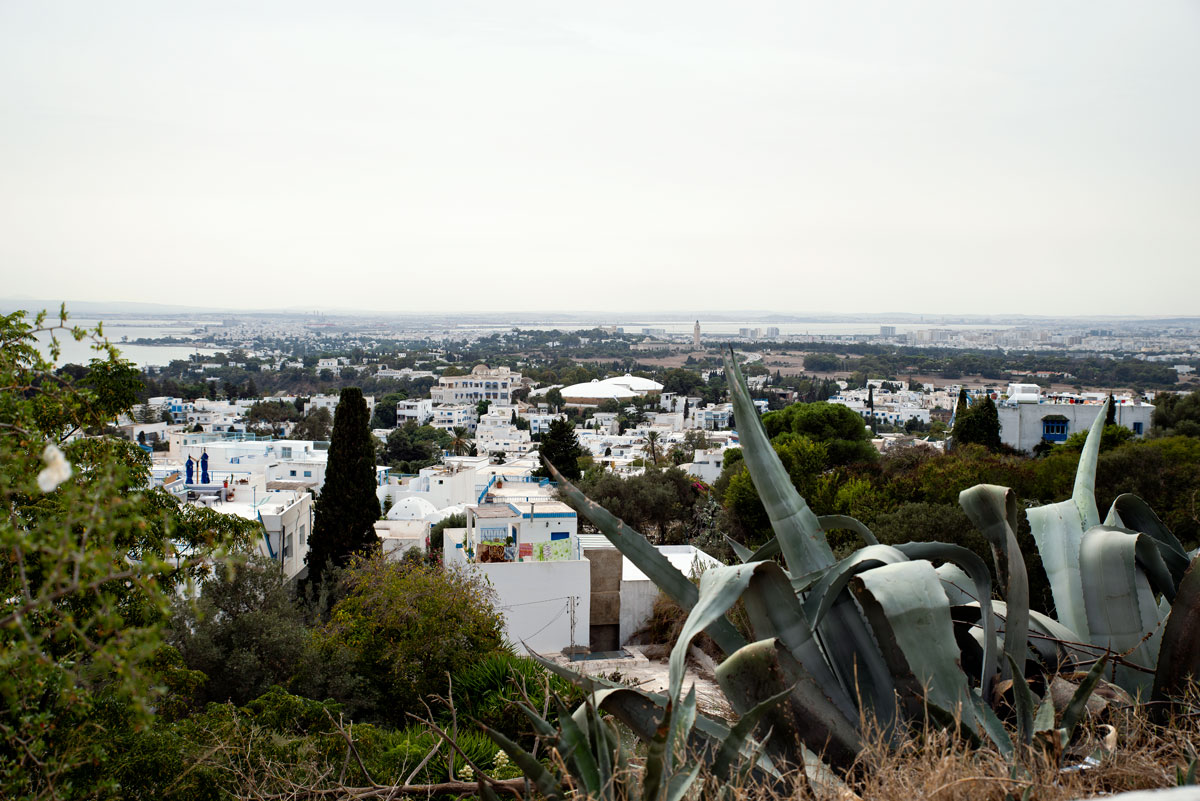
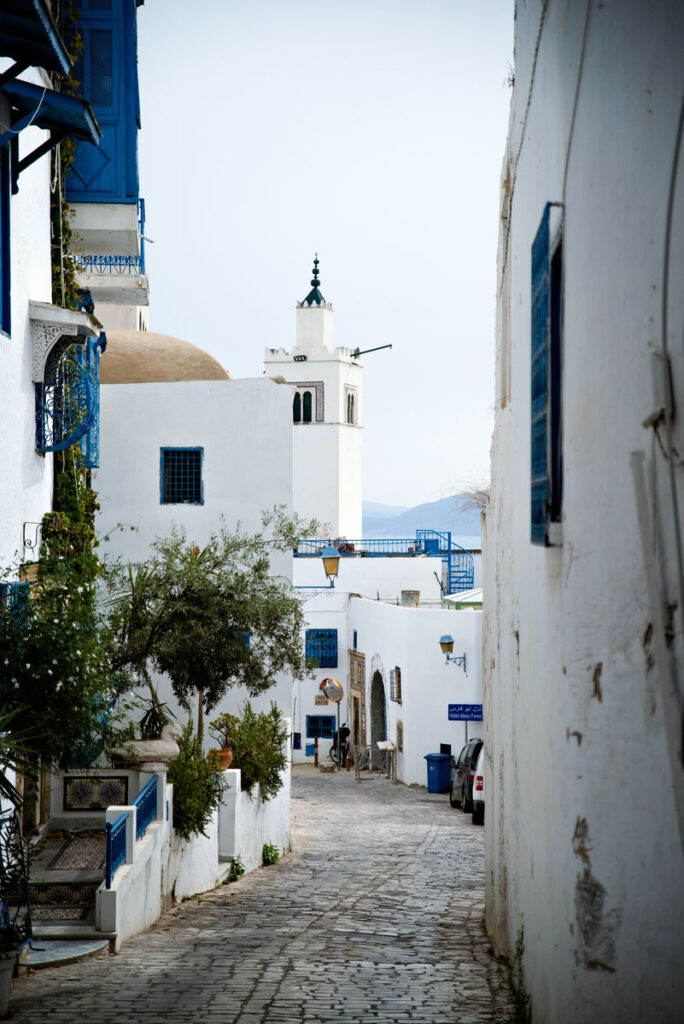
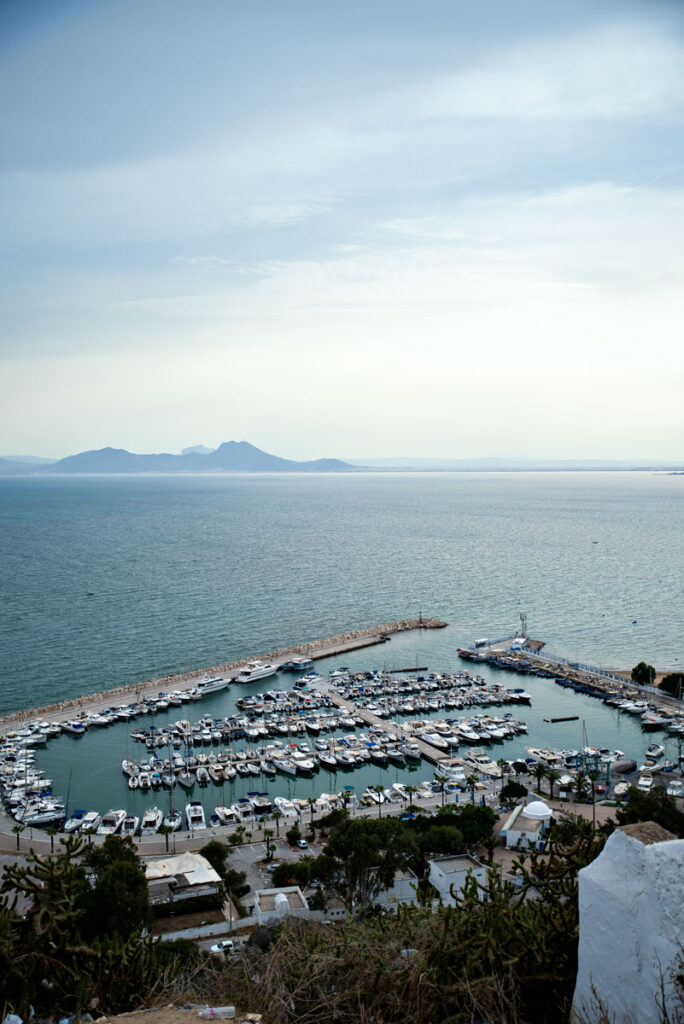
The last few weeks have been eventful. Tunisia has touched us deeply and shown itself in all its diversity. On the day of our departure, we seek a peaceful end to our trip. So we drive to Sidi Bou Saïd in the east of Tunis, located directly on the sea, on the rocks of Carthage. Influenced by Sufism and revered as a holy place, Moors settled in this area at the end of the Middle Ages and shaped its architecture and culture. In the 19th and 20th centuries, Sidi Bou Saïd became an artistic and cultural magnet: Gustave Flaubert, Simone de Beauvoir, Michel Foucault, and the painters August Macke, Paul Klee, and Albert Marquet traveled here or lived in the settlement for a time. They all found inspiration in the light, the colors, and the Mediterranean climate.
Even today, Sidi Bou Saïd has lost none of its charm and appeal. Hardly any other place on our trip through Tunisia was as touristy as this one. It is a good 200 kilometers from here to Sicily and a good 50 kilometers more to Sardinia. Europe is close by. Where, if not here, should cultures, thoughts, and ideas flourish into something new and better?
Passing the ruins of Carthage, we drive to the port in La Goulette. Dark clouds gather over the city. As we leave customs and join the long line of cars waiting to board the ship, a light drizzle falls on us – the first in weeks. The sky has turned purple, and lightning flashes through the clouds. The storm must be miles away behind Tunis, because we can’t hear the thunder.
As night falls, our ship sets sail and we pass Sicily on our way to Rome. Our Tunisian adventure is over, and we look back on the past few days. We still taste the sweetness of the freshly picked dates. We still feel the dust of the country on our clothes. We still carry sand in our hearts. Sand from the Sahara, sand and dust from the starless full moon nights in North Africa.
Info about our trip
We had a fantastic time in Tunisia. But that’s also because we traveled there in our own car, or more precisely, in an off-road vehicle. This not only gave us the opportunity to explore the country at our own pace, but also to venture into areas that are not frequented by tourists. There, Tunisia captivated us less with its cuisine and culture than with its bizarre, unique landscapes, which we had all to ourselves while wild camping. The lonely nights in the desert or on the dirt road, the sunrises and sunsets, and the unadulterated insights into the everyday life of the people made our trip special. There was no other way we could have experienced the country like this.
Conversely, this means that we do not recommend Tunisia if you just want to laze around on the beach for a few days or take a classic city break. In our opinion, Tunisia only works as a whole. If you are looking for different impressions and activities, have time to spare, and are open to new experiences, then this is the place for you. But be warned: you should definitely brush up on your French (or Arabic) beforehand – it will help you immensely.
Tunisia is an extremely affordable travel destination – especially for independent travelers. Fuel prices are significantly lower than in Europe: in fall 2025, a liter of gasoline cost around €0.70. Many staple foods are also inexpensive, especially local products such as bread, vegetables, dates, and olives.
A simple double room in a typical hotel or guesthouse usually costs between €40 and €70 per night. Prices can be significantly higher in tourist hotspots or during the high season, while smaller accommodations in the interior of the country are cheaper. Vacation apartments are often an inexpensive alternative, especially for longer stays.
Card payments are rarely possible, not even at gas stations. However, you will always find an ATM for withdrawing money in larger cities. You should also be prepared for the fact that many goods and fuel are not always available everywhere (this applies primarily to the west and south of the country). So always keep your supplies and cash reserves topped up.
Tunisian cuisine is characterized by simple ingredients and strong flavors. Many dishes are based on couscous, fresh flatbread (which can often be bought directly from roadside bakeries), olive oil, tomatoes, legumes, and seasonal vegetables. Fish and seafood dominate the coastal regions, while lamb or chicken are more commonly served inland.
A typical feature is the generous use of harissa – a hot chili paste that is almost always served separately. Also common are brik (stuffed, crispy fried pastry, often with egg and tuna), ojja (a spicy tomato and egg dish) and salade mechouia, a smoky salad made from grilled vegetables.
Culinary-wise, you shouldn’t expect highly complex gourmet cuisine. Especially outside tourist centers, the selection is often limited and repetitive. In the area around Douz, for example, we were always served brik. On the other hand, the food is fresh, down-to-earth, and very good value for money. If you are open to simple dishes and prefer local restaurants, you will eat well and cheaply in Tunisia.
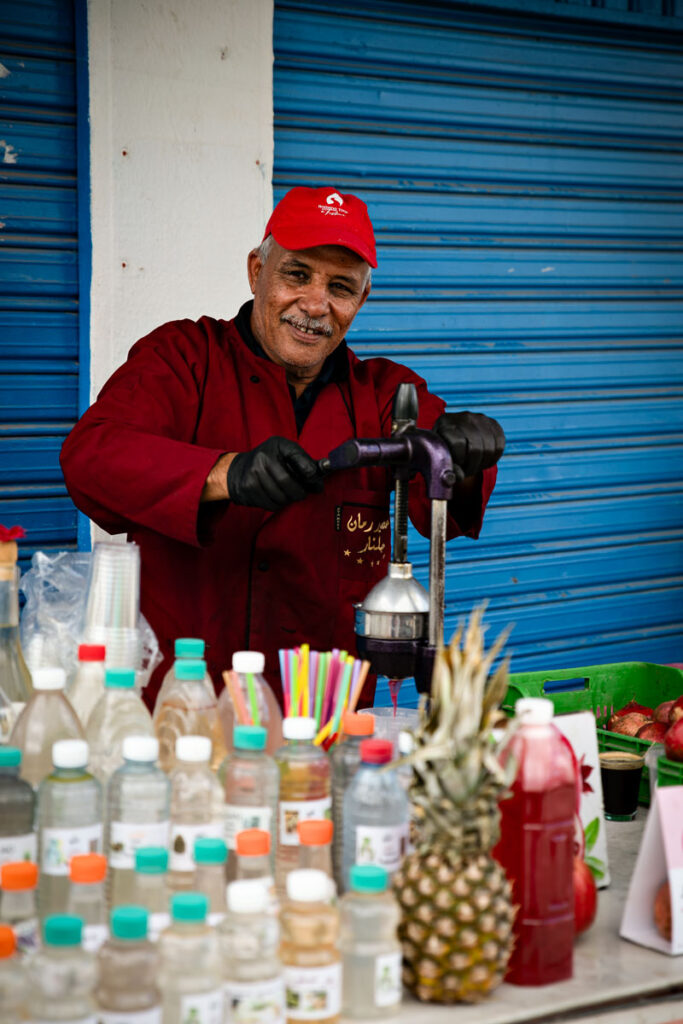
Alcohol is usually only available in large supermarkets in separate areas, but it is comparatively expensive. Mint tea, strong coffee, and freshly squeezed juices, on the other hand, are ubiquitous.
Accommodation in Tunisia is relatively inexpensive, but the service and standard offered are often rather basic. If you value stylish, individually designed rooms, you can expect to pay around 70 to 100 euros per night. The large hotel complexes along the Mediterranean coast sometimes offer cheaper deals with solid facilities, but often without any particular character.
We particularly recommend staying in so-called dars – small, often lovingly restored guesthouses, mostly located in the old towns. They offer atmosphere, personal service, and architectural charm.
The same applies to the few campsites in Tunisia: prices are low, but so are standards. Simple sanitary facilities and occasional pit toilets are part of the package. If you travel to Douz – the classic starting point for tours into the Sahara – you will probably end up at the Camping Club Desert. The French operator Sophie is very helpful, and the site has washing machines and simple sanitary facilities. It’s also easy to strike up conversations with other (off-road) travelers here. Overall, however, the campsite is getting on in years; for a similar budget, you can sometimes find permanent accommodation with a higher level of comfort.
Most of the time, however, we camped in the wild. We always felt safe and welcome. Although some travelers report being woken up by the police at night and sent to a hotel due to safety concerns, this did not happen to us. As always, it’s best to ask locally where you can safely park or ask a property owner directly for permission – this provides clarity and shows respect.
The police and military presence in Tunisia is visibly high. There is usually a police patrol at many major roundabouts, especially on important traffic routes and in border regions. However, we were never stopped or waved over in our German vehicle. Only on our first night in the Sahara were we surprised by a check; the officers wanted to see our travel permit for the desert area. The encounter was professional and friendly. Overall, we felt safe throughout the entire trip, both in the cities and in remote regions.
Regardless of our personal experiences, official bodies such as the State Department point out that in certain border areas (and currently also in the mountains around Sbeitla and Kasserine), especially near the Algerian and Libyan borders, there may be increased security risks due to Islamist threats. We deliberately avoided these regions. Before traveling, it is advisable to check the latest travel and safety information.
Our impression is that there are two main types of tourism in Tunisia: classic package tourists and independent overland travelers. The first group is well catered for in hotels and resorts along the coast, while the second usually brings everything they need in their own vehicle.
Those traveling with children should be aware that outside the tourist centers, public infrastructure is only partially geared towards families. In some regions, it was already challenging to obtain diesel or certain foods. Diapers, special baby food, or quick, well-equipped medical care are not a sure thing outside of larger cities. Realistic planning, sufficient supplies, and a certain amount of flexibility are therefore important.
One positive aspect worth mentioning is the attitude of the people: we found Tunisians to be friendly, respectful, and discreetly helpful. In many places, you will receive a particularly warm welcome with children.
Tunisia has a well-developed highway along the east coast (toll road), while the rest of the country is covered by a network of solid country roads. Road conditions are generally good, and longer journeys are possible without any problems. Traffic in cities, especially in Tunis, can seem chaotic, but is generally manageable. The dreaded roundabouts seem – in our opinion – much less problematic than comparable traffic situations in Spain or Morocco.
If you are entering the country with your own vehicle, you must take out liability insurance at the port, as most European car insurance policies do not provide cover for Tunisia.
Away from the roads, Tunisia is a real off-road paradise: there are countless tracks, challenging trails, and extensive sandy areas. Most routes are legally accessible. Officially, you are only allowed to enter the Sahara with a guide – a reasonable regulation that also supports local tour guides. In Douz, however, we also met a tour group that had obtained a driving permit without a guide. We would advise against this, both for safety reasons and out of consideration for the legal requirements.
- Reise Know-How Verlag offers a great travel guide for Tunisia – it provides excellent information about the country, culture, and food, as well as practical tips without focusing too much on restaurants and hotels
- German-Turkish author Necla Kelek has portrayed women who fought for freedom in their countries during the Arab Spring; she recounts their stories in her book Hurriya heißt Freiheit: Die arabische Revolte und die Frauen
- Ten years after the Arab Spring, television journalist Jörg Armbruster takes stock in his book Die Erben der Revolution: Was bleibt vom Arabischen Frühling? and asks himself what the future holds for the Arab world