The Mun River meanders through the north of Sisaket Province and joins the mighty Mekong River a little further on. In the south, the Dongrek Mountains forms the still disputed border with neighboring Cambodia, where bloody conflicts occur time and again. Between the south and north lie vast fields and dusty land, dotted with simple yet wonderfully idyllic villages. Pretty houses with banana trees and Indian laburnum sprouting from their front yards.
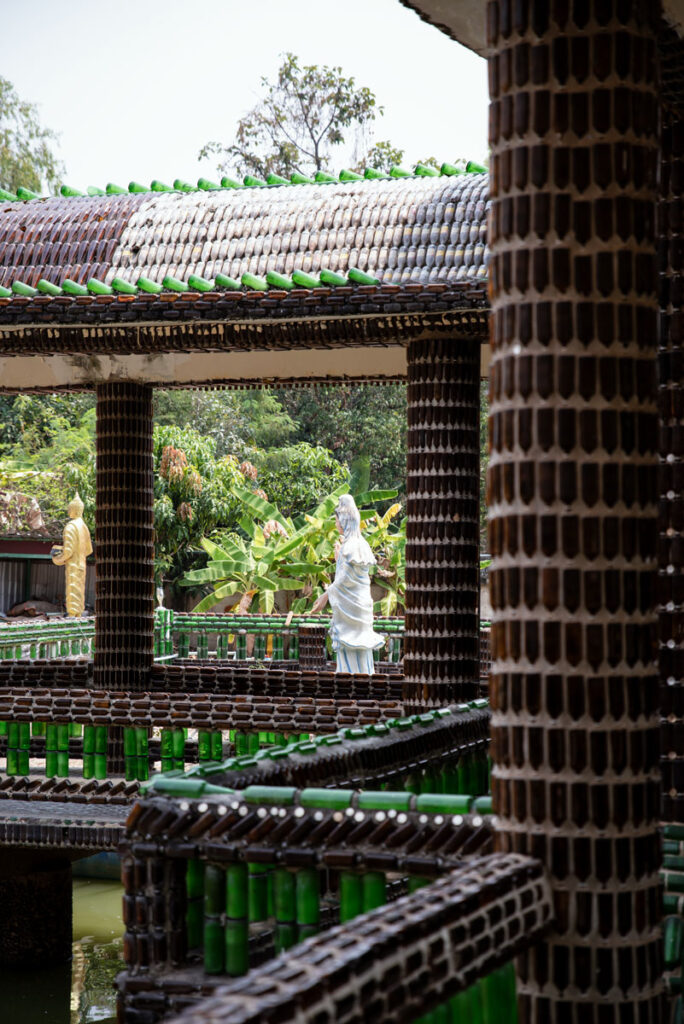
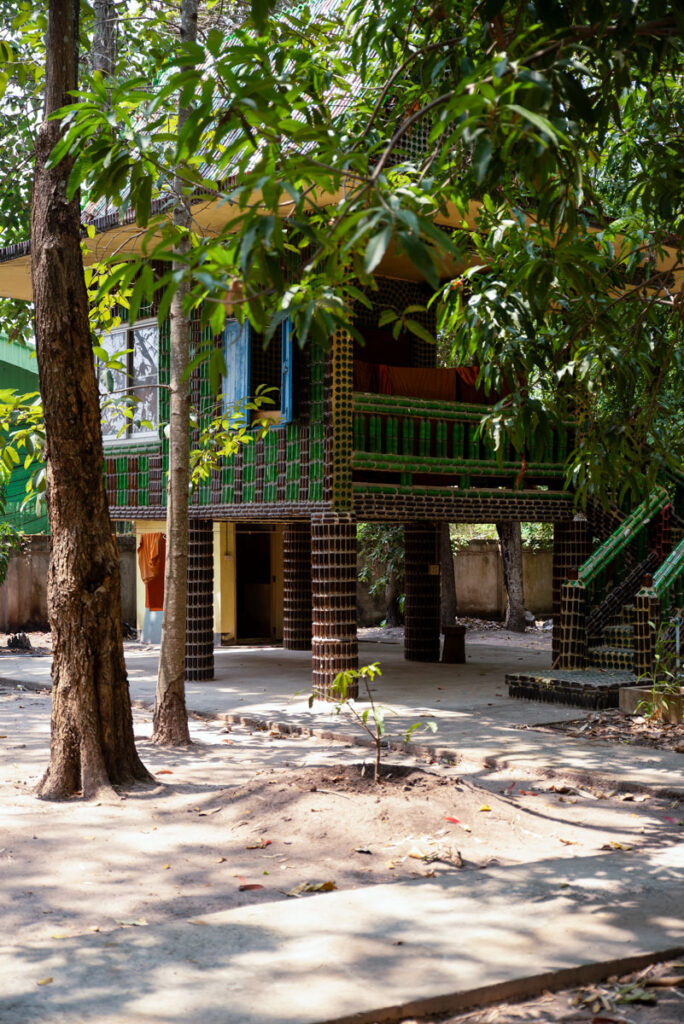
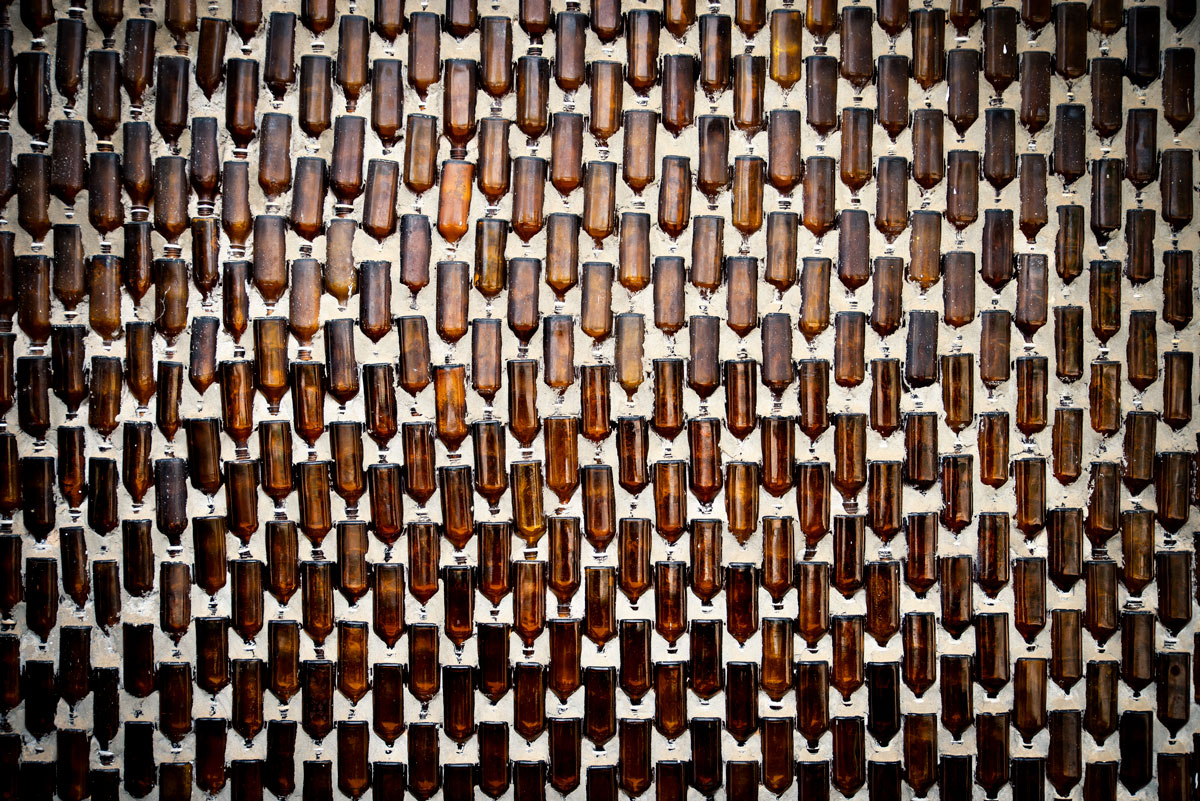
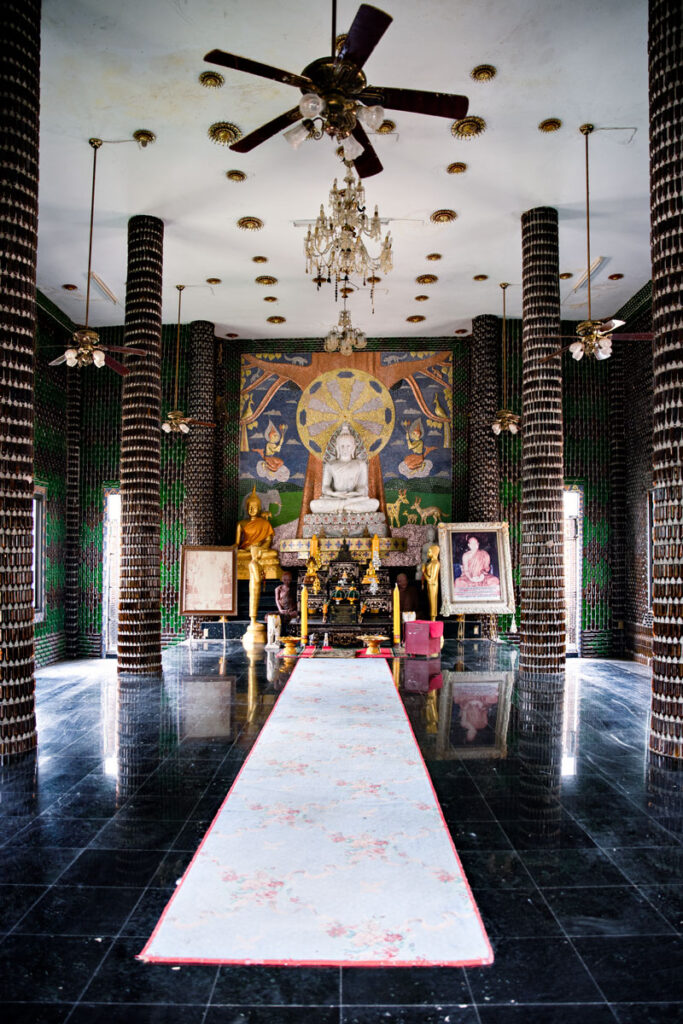
On the outskirts of Khun Han, surrounded by warehouses and corrugated iron huts, lies the bottle temple Wat Pa Maha Chedi Kaew. This temple was built from cement and mainly beer bottles. Its walls and floors shimmer in brown and green. How many liters of beer must have been drunk to create the base of this temple? What is impossible to imagine in other religions is a form of playful spiritualism in Thailand. Anything that pleases and attracts attention is allowed. Because attention brings temple visitors. Temple visitors bring money. Money finances the monks’ lives. In return, there is holy water and a blessing that keeps evil spirits away. A business model that works since centuries.
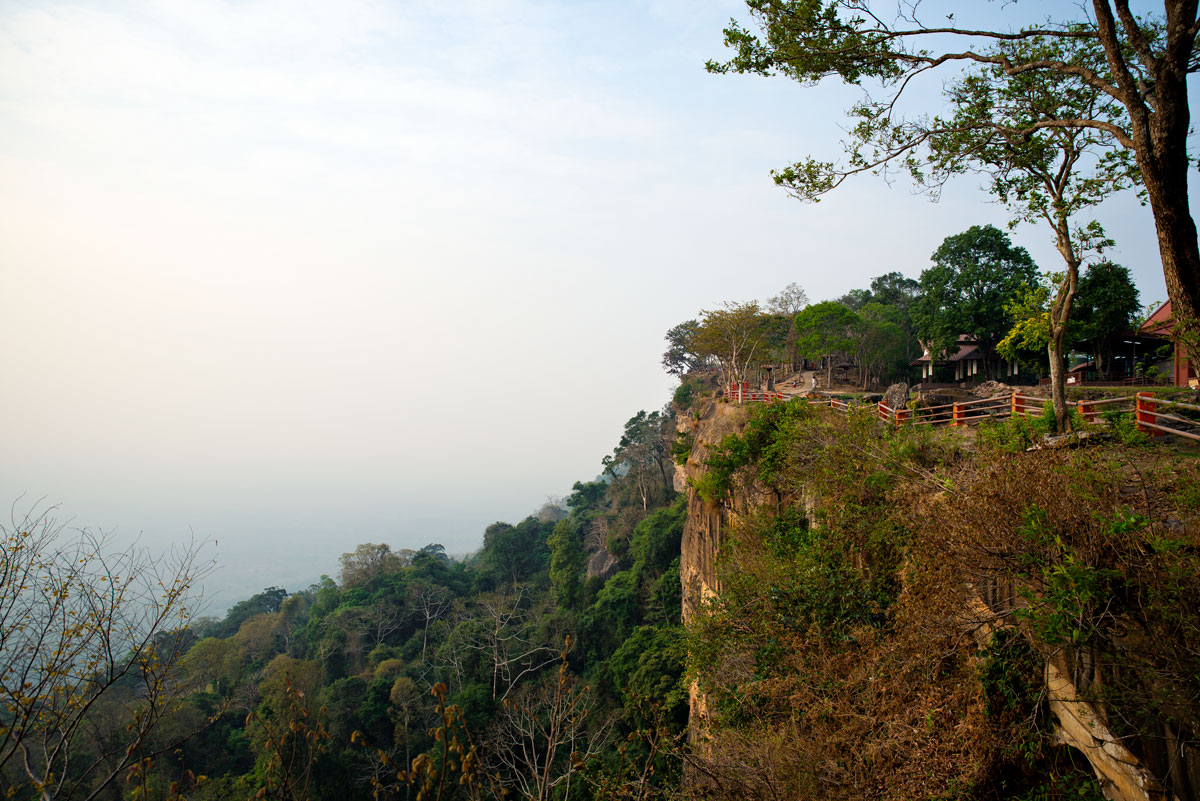
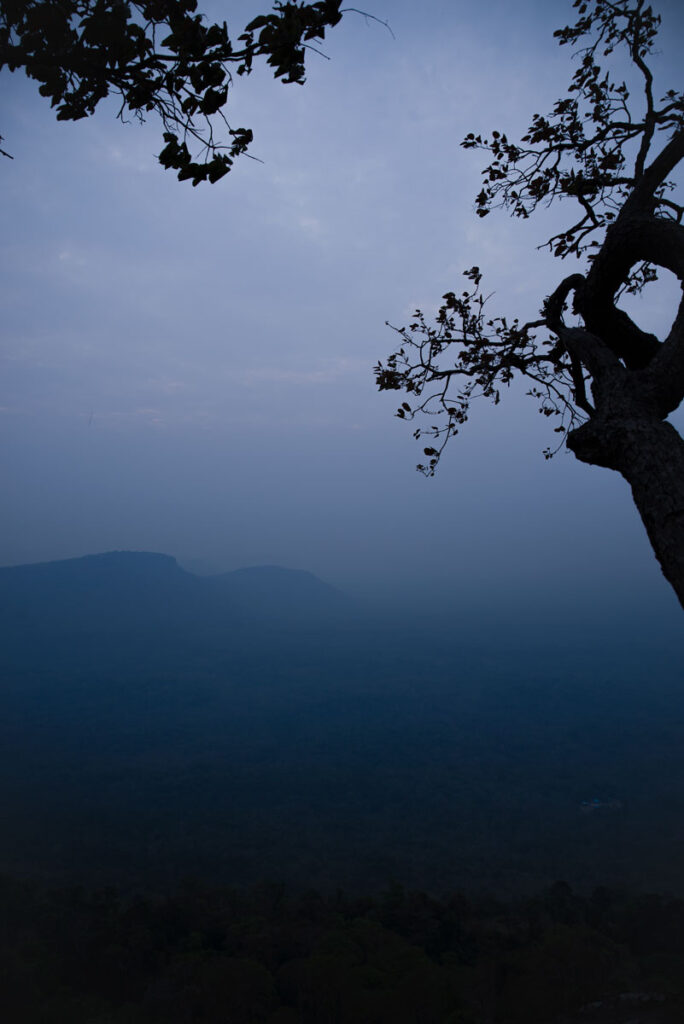
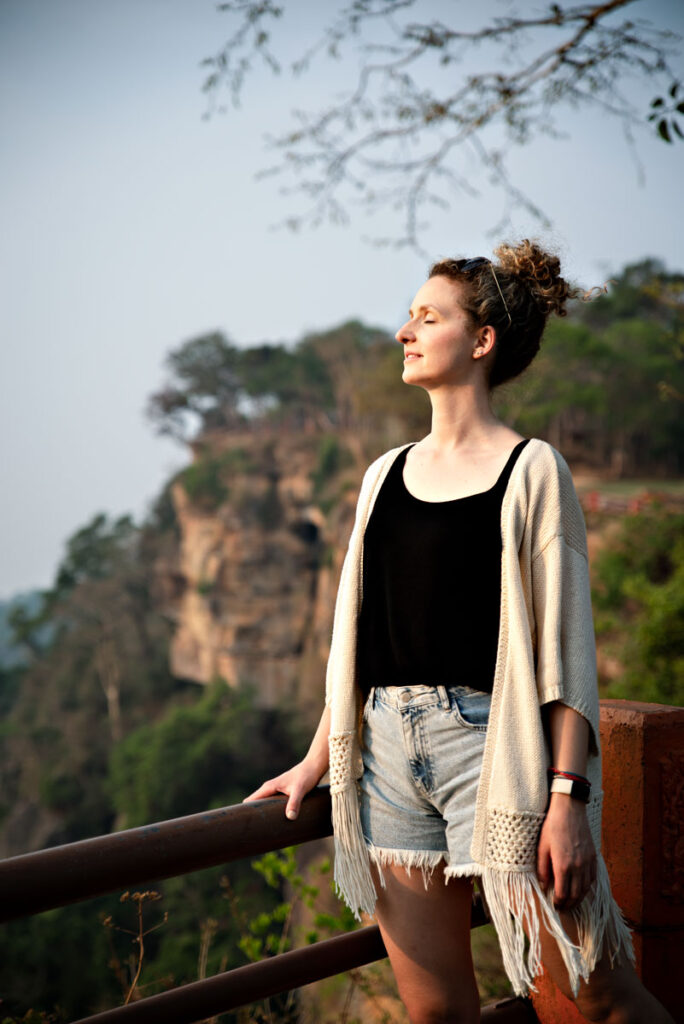
Shortly before six o’clock, the sun rises above Cambodia’s dense jungle. Its rays barely penetrate the hazy morning mist. At first, everything is blue, then the day dawns, bringing with it golden light and warmth. The mist recedes, revealing a view of the vast countryside. At our feet, the cliffs of the Dongrek Mountains plunge steeply downward. Here, a border runs, and at the same time, it does not.
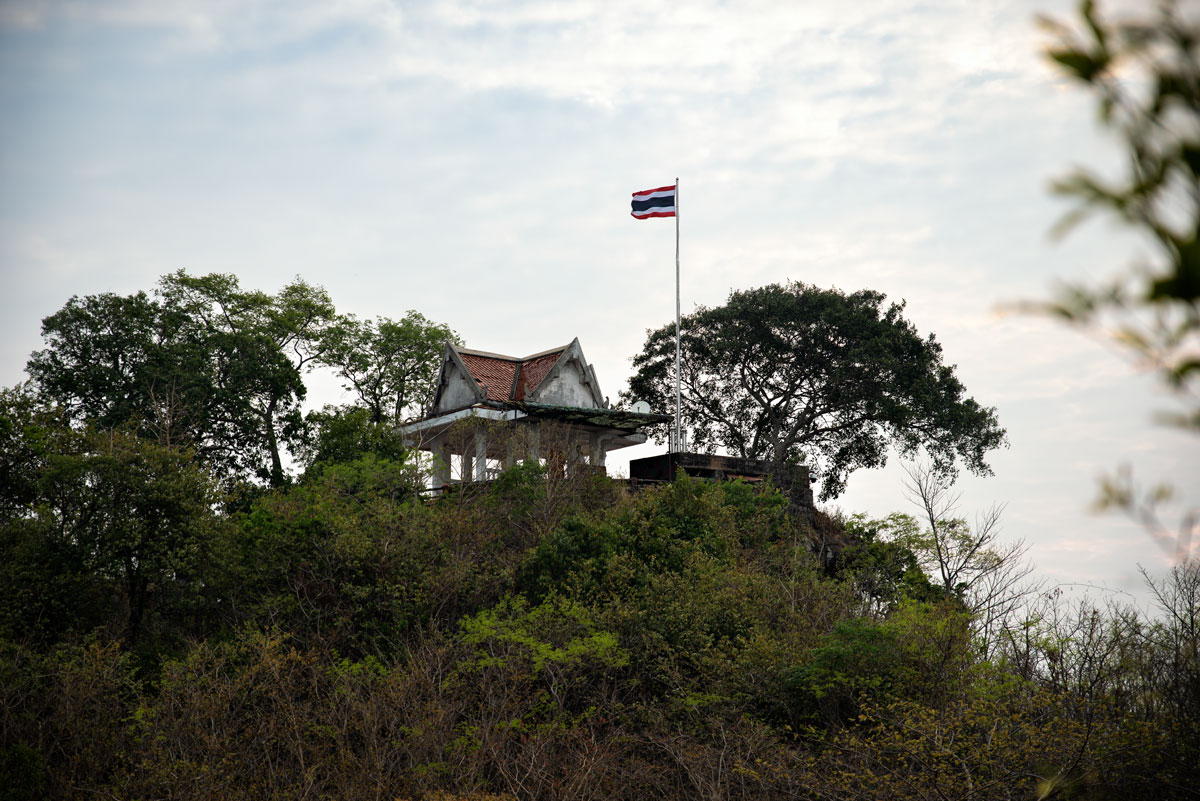
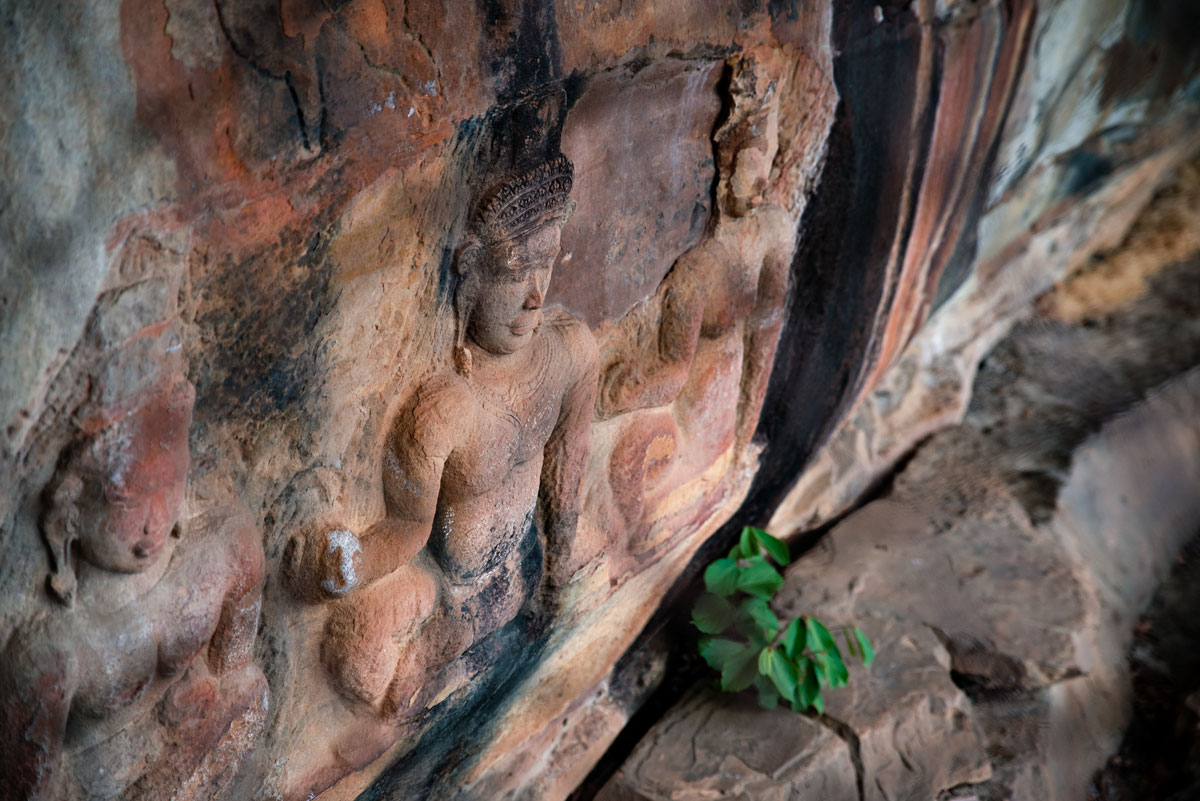
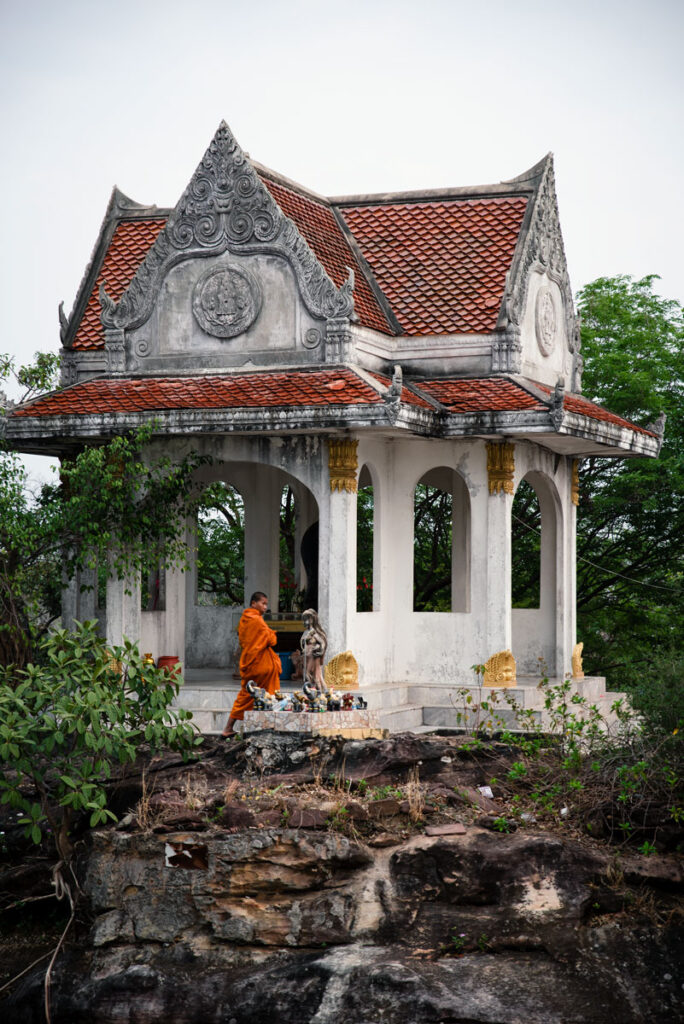
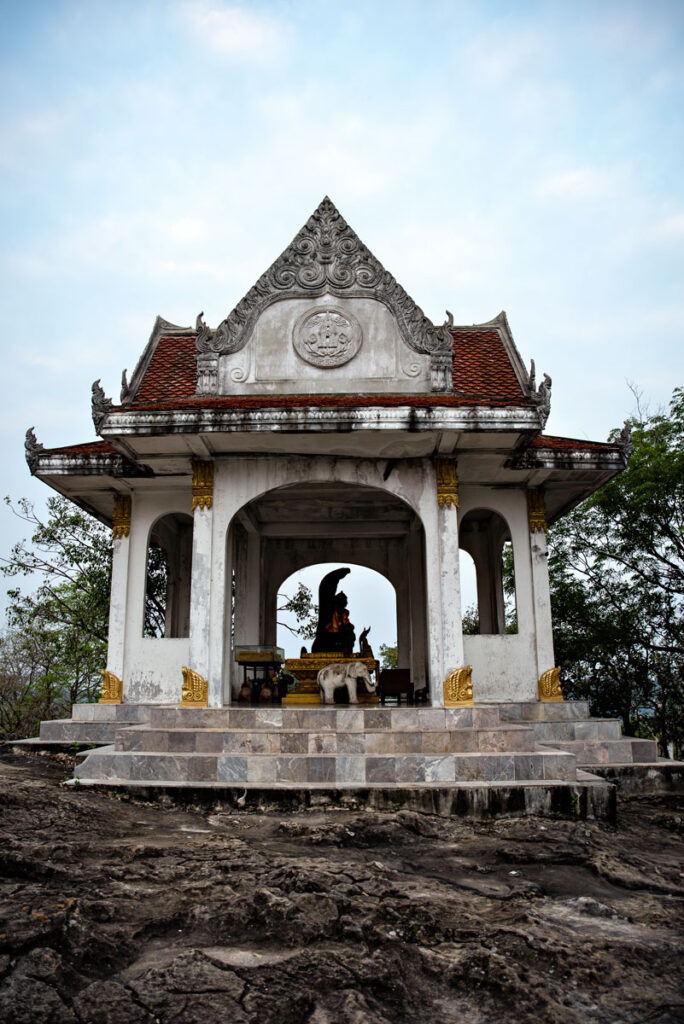
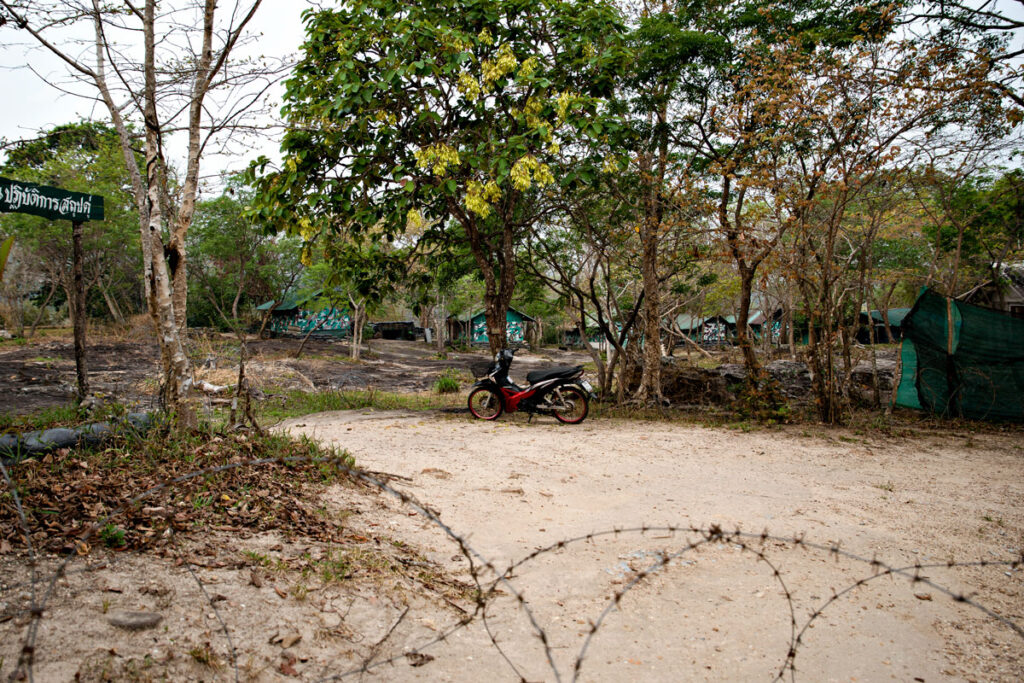
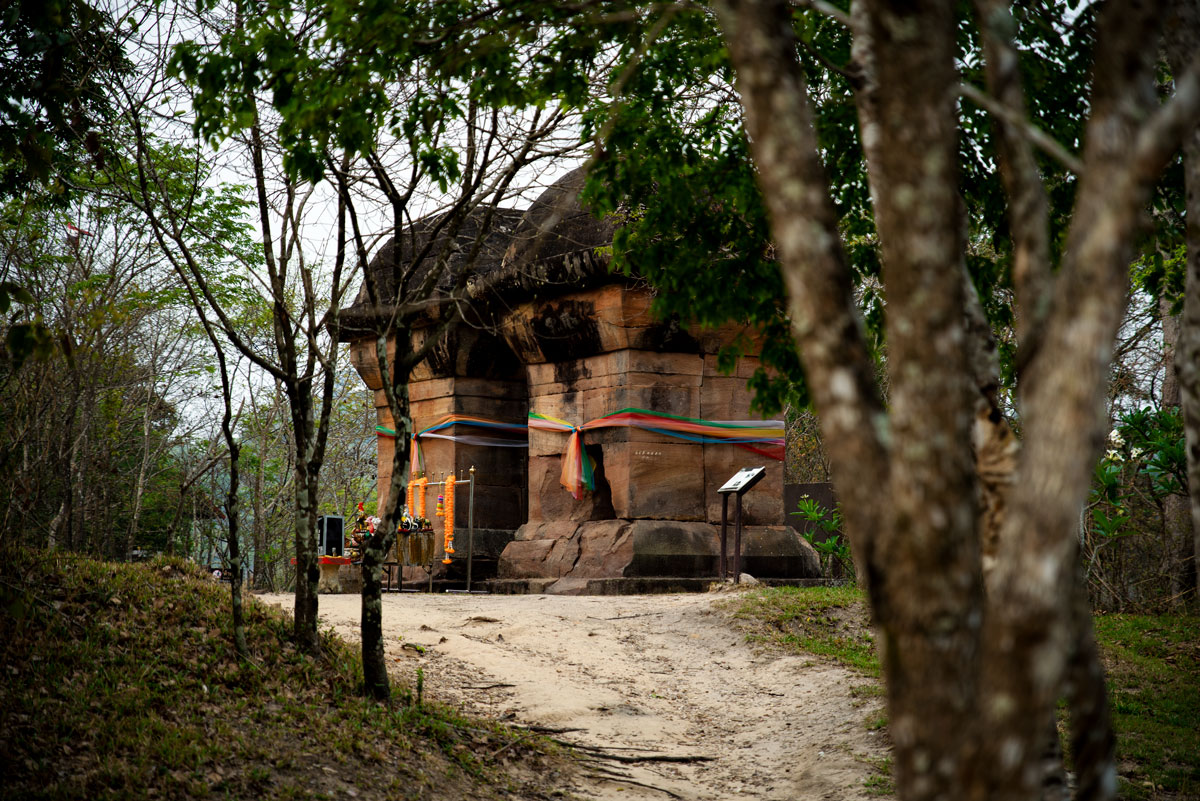
An overgrown path leads us past old stone carvings, a small pavilion, and finally over rocks and through bushes to two stupas. Then the path ends abruptly—blocked by barbed wire fencing. Military barracks and shooting ranges lie behind it, and a few hundred meters further on is the Prasat Preah Vihea temple. For many decades, the Thai and Cambodian governments have been arguing over ownership. Various maps from 1904 and 1907 and the borders depicted therein leave room for interpretation and ambiguity. Most recently, US President Donald Trump arranged a peace treaty between the two countries in October 2025, after armed conflicts broke out along the border region in the summer of the same year.
When the sun is high in the sky and has completely dispelled the early morning, we return to our car. We remain silent and lost in our thoughts. Borders are powerful. Especially when they are not natural. If a border is not a river, a sea, a gorge, or a mountain ridge, then it is man-made. Drawn by generals or diplomats with a ruler across landscapes, ethnic groups, or trade routes, invisible barriers suddenly appear where there were none before.
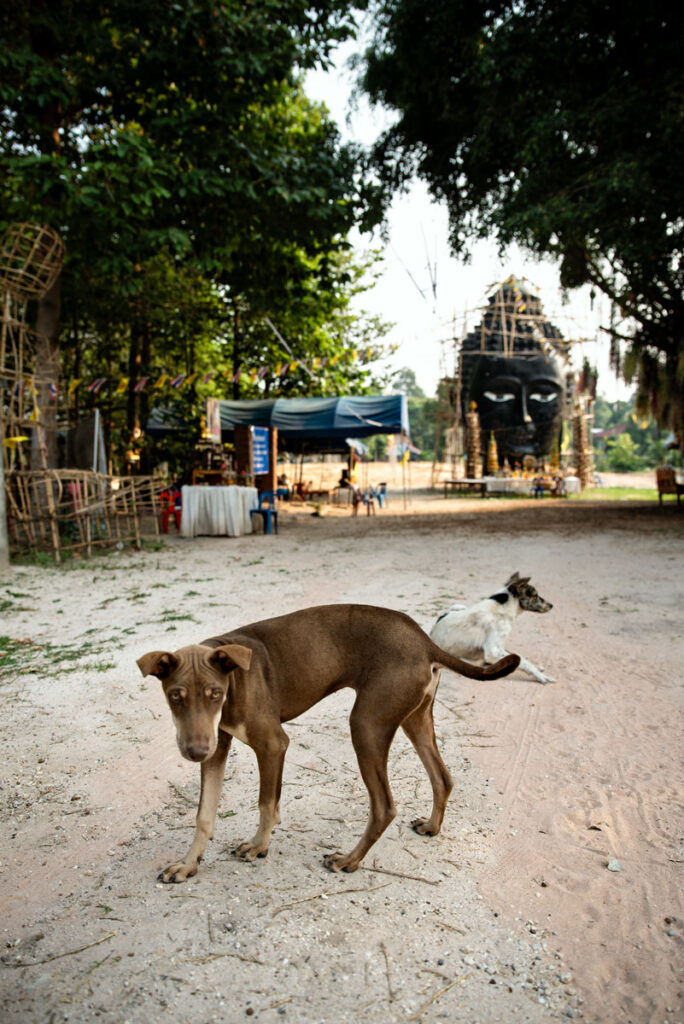
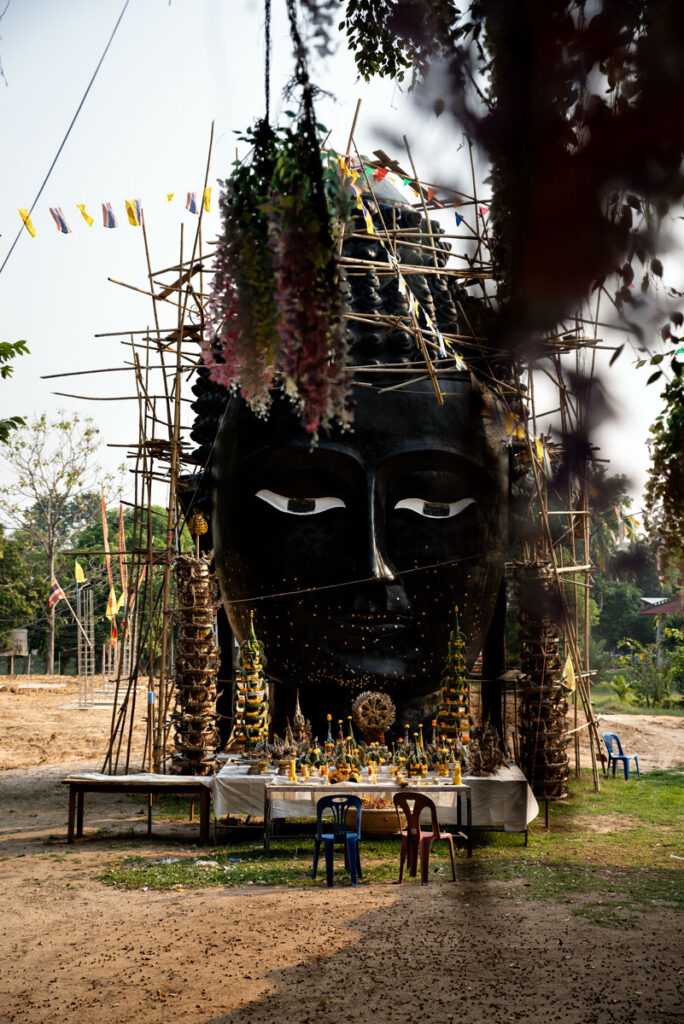
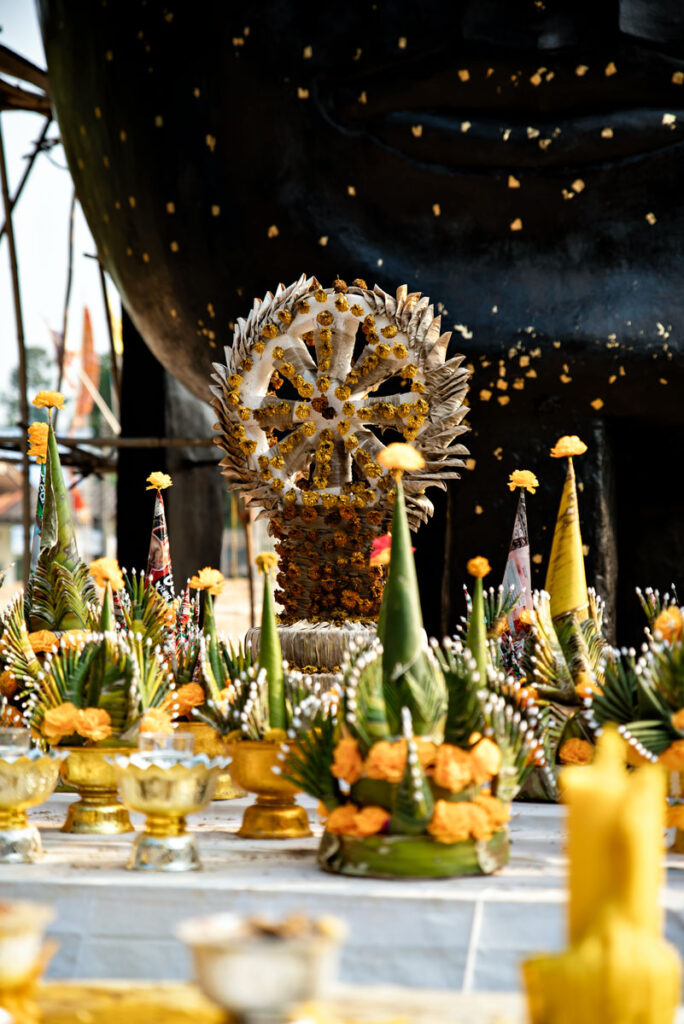
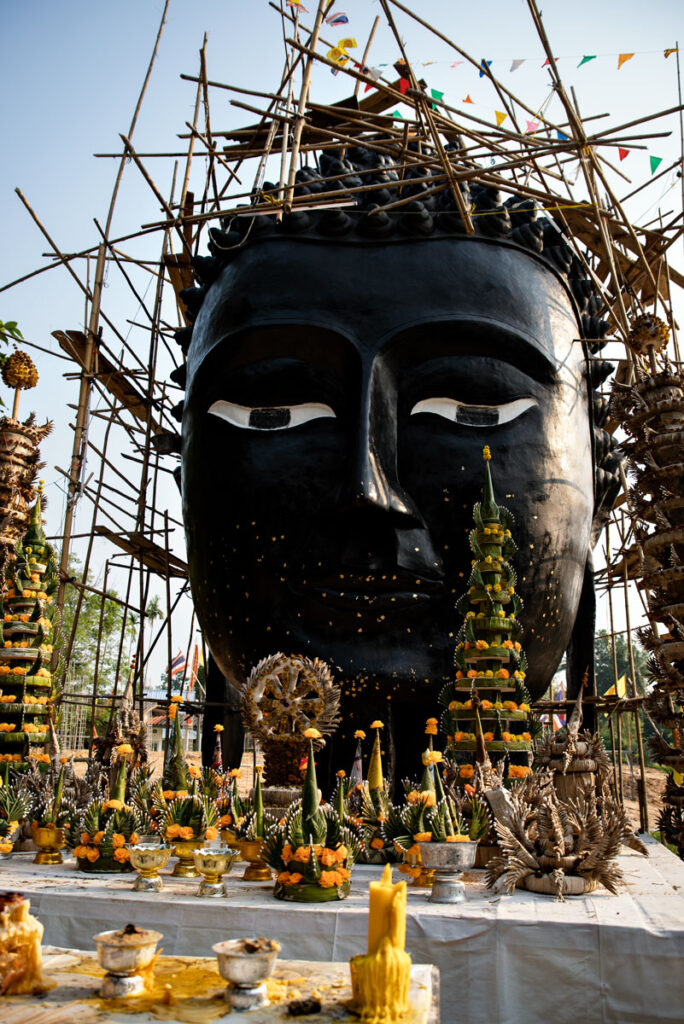
A Buddha head stands forlornly in the dusty driveway of a temple. It has been freshly painted and is still encased in bamboo scaffolding. Its cheeks and chin are covered in gold leaf. Its eyes are narrow slits, looking down humbly. Small offerings and gifts are arranged on a table. Shaggy dogs roam around and bark at us. There are no people to be seen. It is a beautiful, lonely moment. This Buddha head—a sanctuary without a body—is both rare and strange. A single Buddha head reminds the Thai people of the devastation wrought by the Burmese in the 18th century, including the decapitated Buddha statues in Ayutthaya.
Is this head part of a larger Buddha that may lie in ruins? Is it just the beginning of the construction of an entire statue? Or is it and will it remain merely the head of a Buddha?
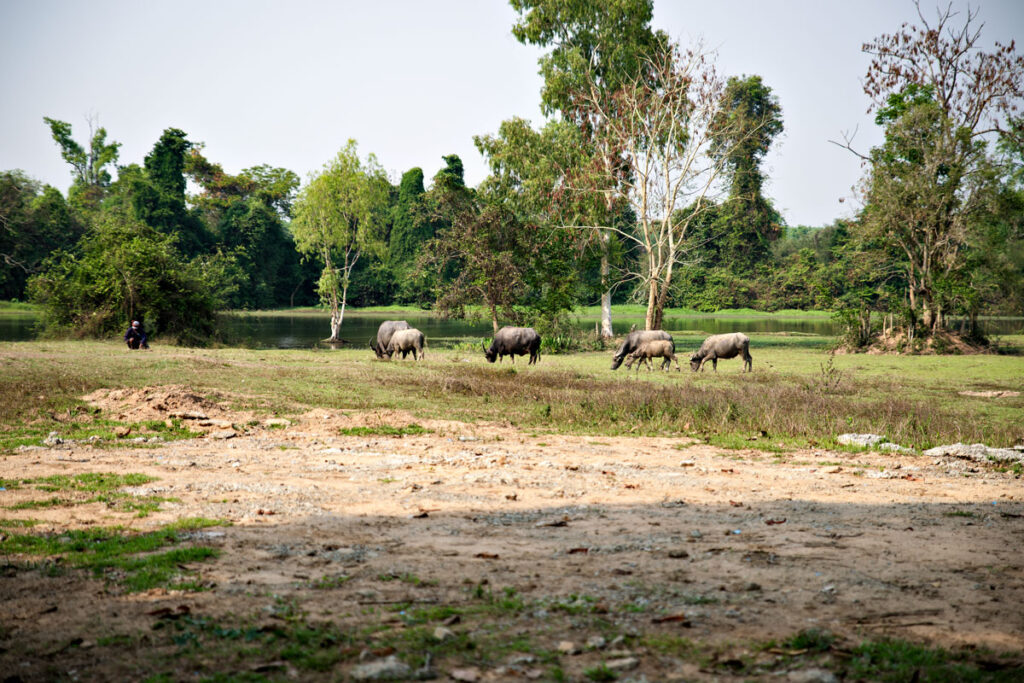
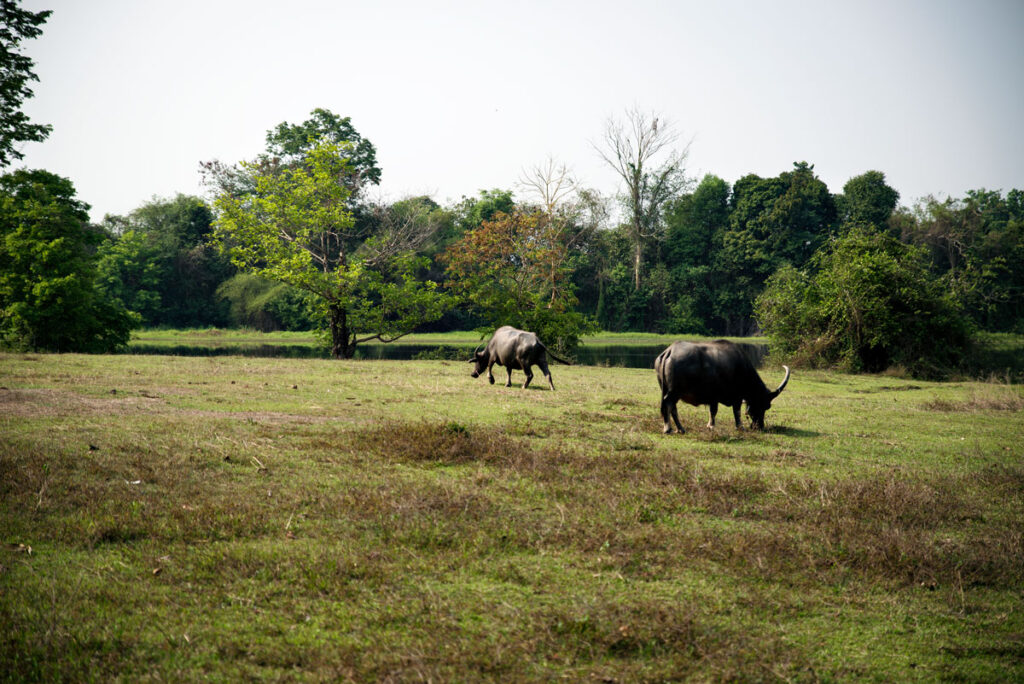
Tranquil landscapes and settlements pass by the side window of our car. Suddenly, a steep track branches off from the road. We follow it and end up in a green meadow. Water buffalo enjoy a swim in the lake. Before we have our camera ready and reach the buffalo, the herd has already come out of the water. They trot peacefully behind a shepherd. He casts curious glances at us before settling down in the shade of a tree.
The province of Sisaket is beautiful. It is like a softly played piano piece, the gentle interpretation of a pop song. Nothing overwhelming, nothing breathtaking, but in its simplicity, Sisaket ultimately wins you over and impresses you. The sunrise at the Dongrek Mountains will remain a highlight of our trip. The rural life, the dusty roads, the colorful houses along the way, and the herds of water buffalo—Sisaket is not a region for ticking off sights. Rather, Sisaket invites you to pause and stay.