
Singapore
Within just a few decades, the “Tiger Nation” of Singapore transformed itself from a small trading port into one of the wealthiest and most economically successful nations in the world. Smart investments in education, infrastructure, and the financial and service sectors laid the foundation for this success. Added to this was its strategically outstanding location on the Strait of Malacca – one of the world’s most important shipping routes. The British recognized this potential early on and developed Singapore into a major trading hub of their colonial empire in the 19th century.
Singapore also has an enormous amount to offer tourists and, thanks to its compact size, can be easily combined with nearly all travel destinations in Southeast Asia. Within a very small area, tropical mangrove forests meet futuristic architecture, lush green high-rises meet award-winning restaurants, and modern skyscrapers meet historic neighborhoods. Added to this is an extraordinary cultural diversity, shaped by Chinese, Malay, Indian, and European influences – a legacy of Singapore’s centuries-long significance as an international trade center.
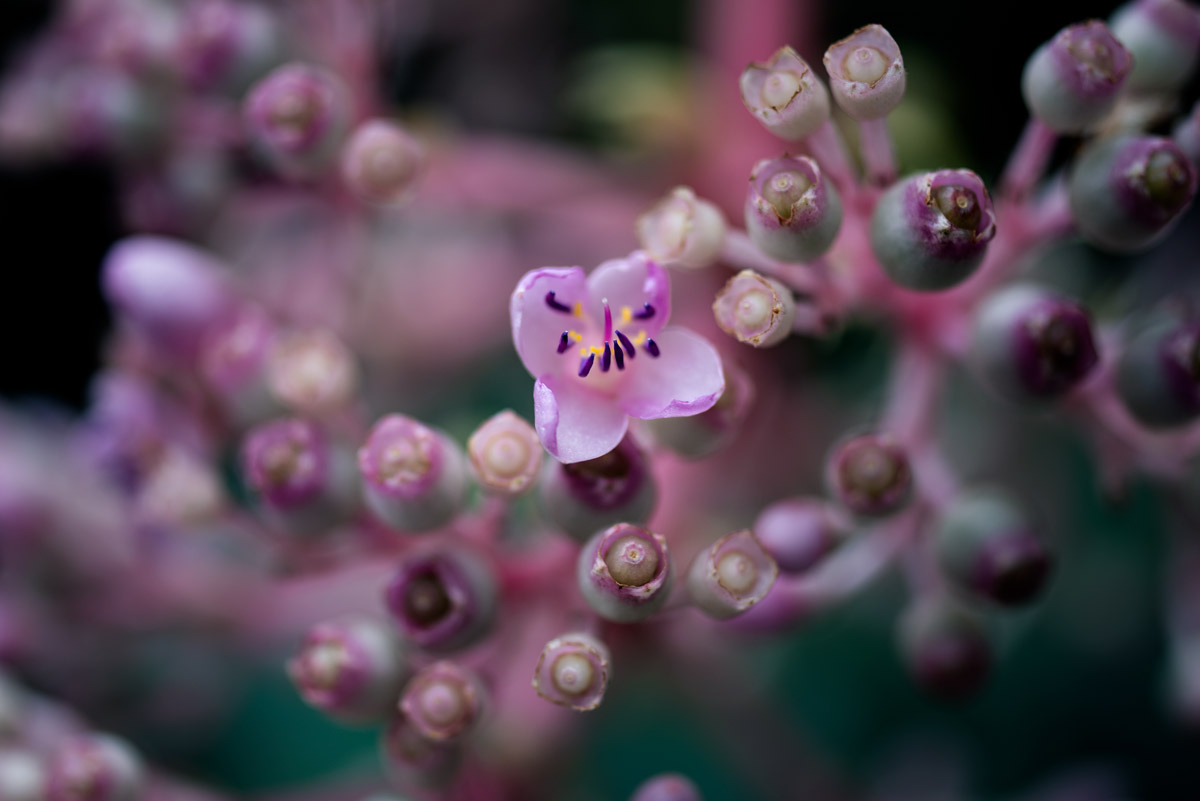
People come to Singapore to be amazed. It starts right at the airport. Hardly any lines, no hustle and bustle, friendly staff. Automation wherever it makes sense. It takes us less than thirty minutes from stepping off the plane to reaching the airport exit – including immigration and baggage claim. The taxi glides silently along flawlessly paved roads. No potholes, hardly any traffic jams. At the hotel, almost everything is digital; even a small service robot takes us right to our room door. Shortly afterward, we take our first stroll through downtown and drift along on a boat ride down the Singapore River.
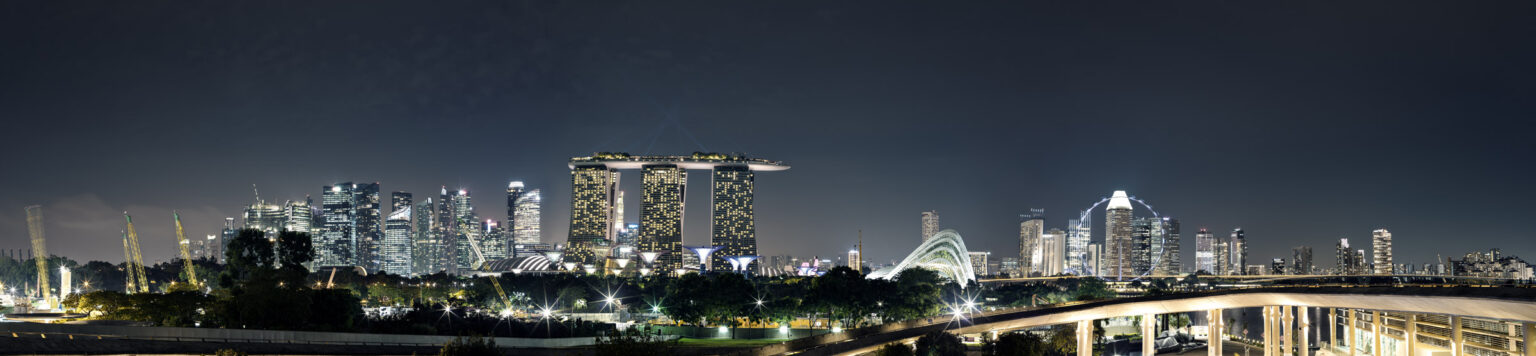
There’s hardly any trash floating in the water. There are neither cigarette butts nor pieces of gum on the sidewalks. Skyscrapers rise up all around us, looking like futuristic space stations. Palm trees and tropical gardens thrive amid the steel, glass, and concrete. The air is warm and humid, and cheerful music drifts over from the roof of Marina Bay Sands.
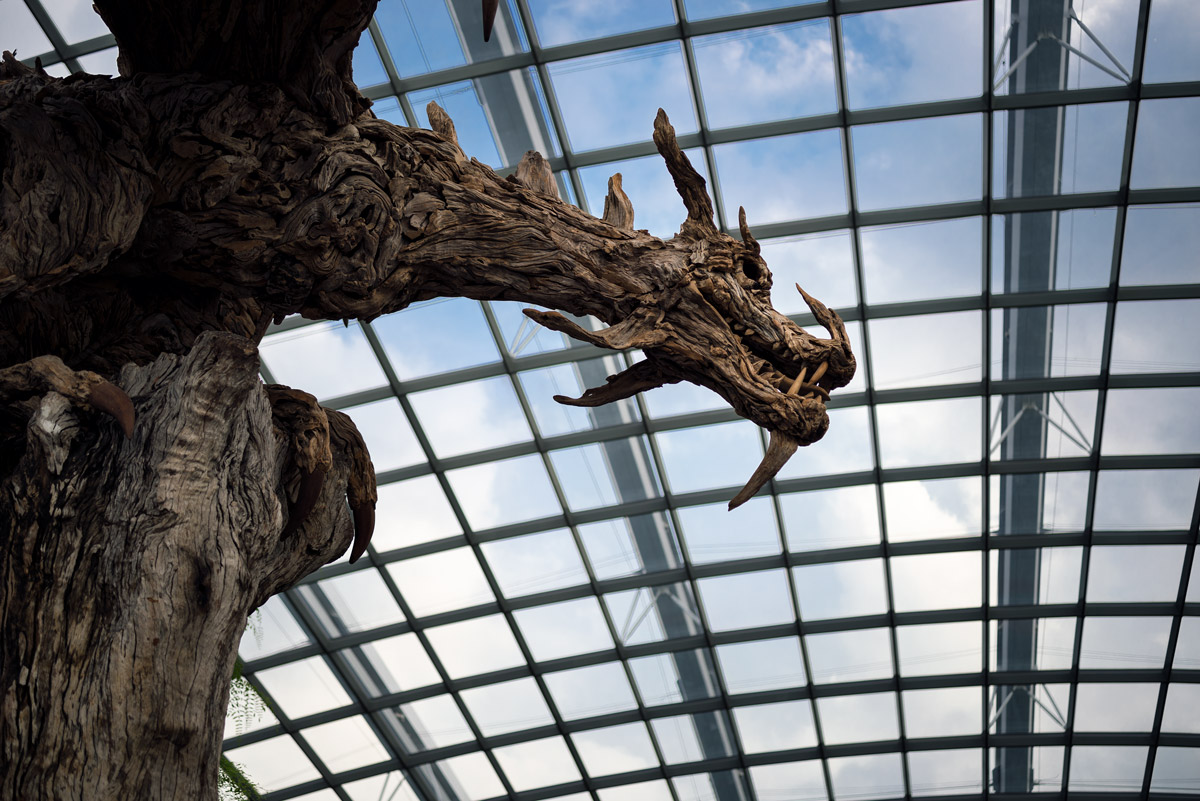
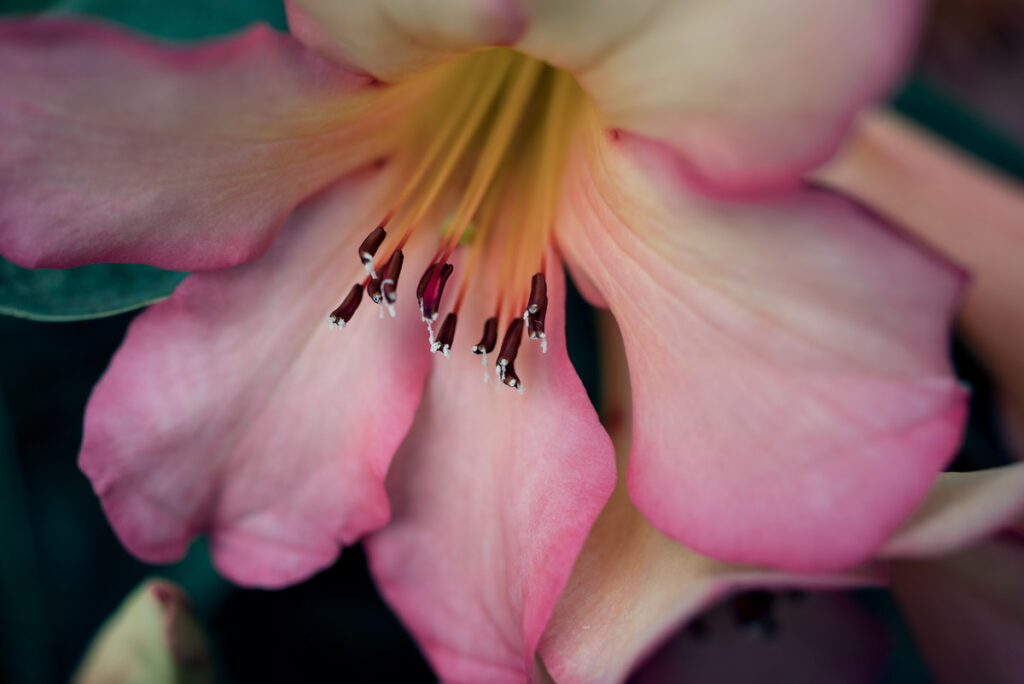
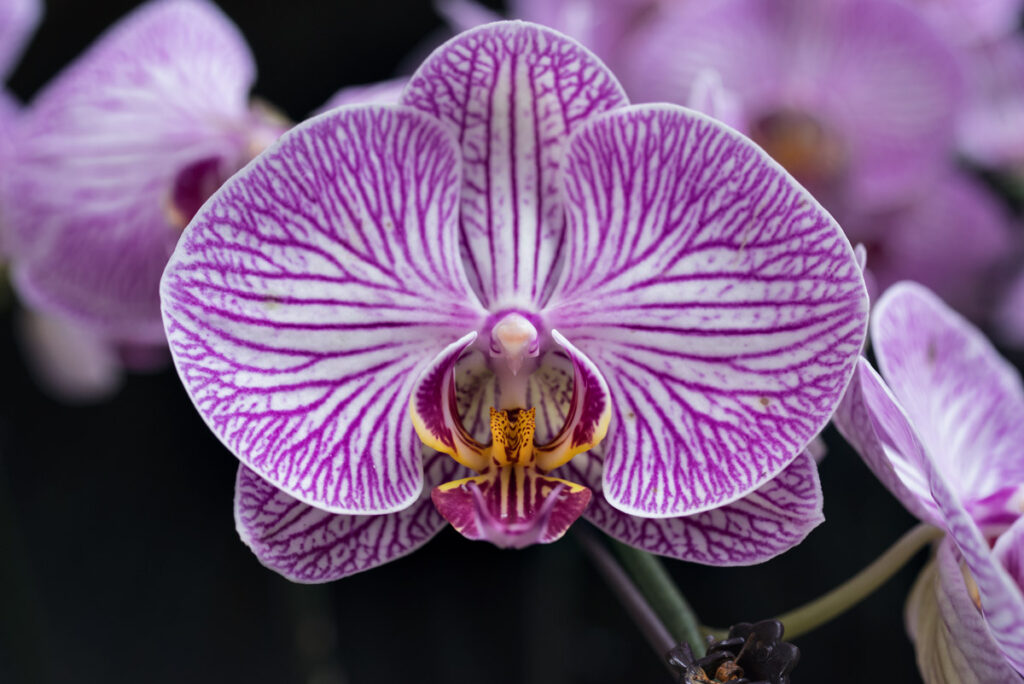
The Flower Dome at Gardens by the Bay is a massive glass dome that houses flora from a wide variety of climate zones. Orchids and sweet-smelling tulips. Majestic baobabs alongside prickly cacti. Here, the continents seem to be just a few steps apart. Sculptures and lovingly designed scenes are arranged among all the colorful flowers and lush greenery. The air is pleasantly cool and slightly humid – a soothing contrast to the tropical heat outside.
We make our way through downtown. We walk along the streets, into a mall, take the elevator to the top floor, and finally step out into the open air. Suddenly, we’re surrounded by trees and climbing plants. The city spreads out below us. Nearly every roof is covered in greenery; even plants are growing up the facades of the skyscrapers, giving the skyline a surprisingly green touch.
A short while later, we reach Chinatown. It smells of smoke. Every morning, worshippers burn paper and joss paper in fire pits in front of their shops or in the temples. The spirits are meant to be favorably disposed and bring good luck for the new day. A huge rooster statue still stands on a traffic island between two major streets. The Chinese New Year was just a few weeks ago.
Walking through Singapore means constantly stumbling upon ancient traditions and, at the same time, state-of-the-art architecture. Hardly any other city combines the past and the future in such a small space.
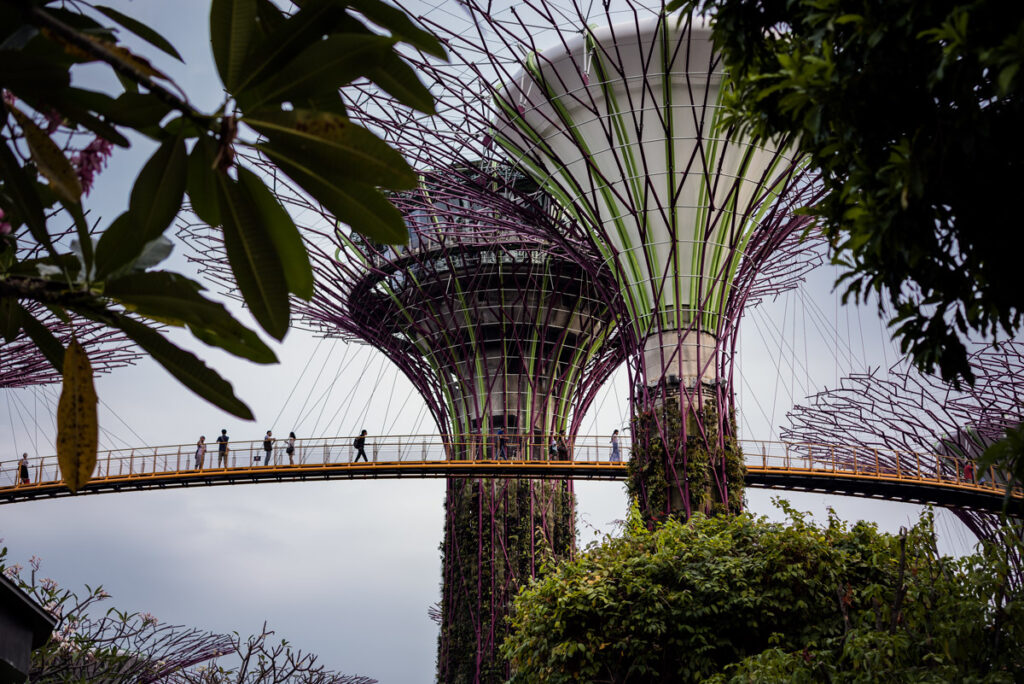
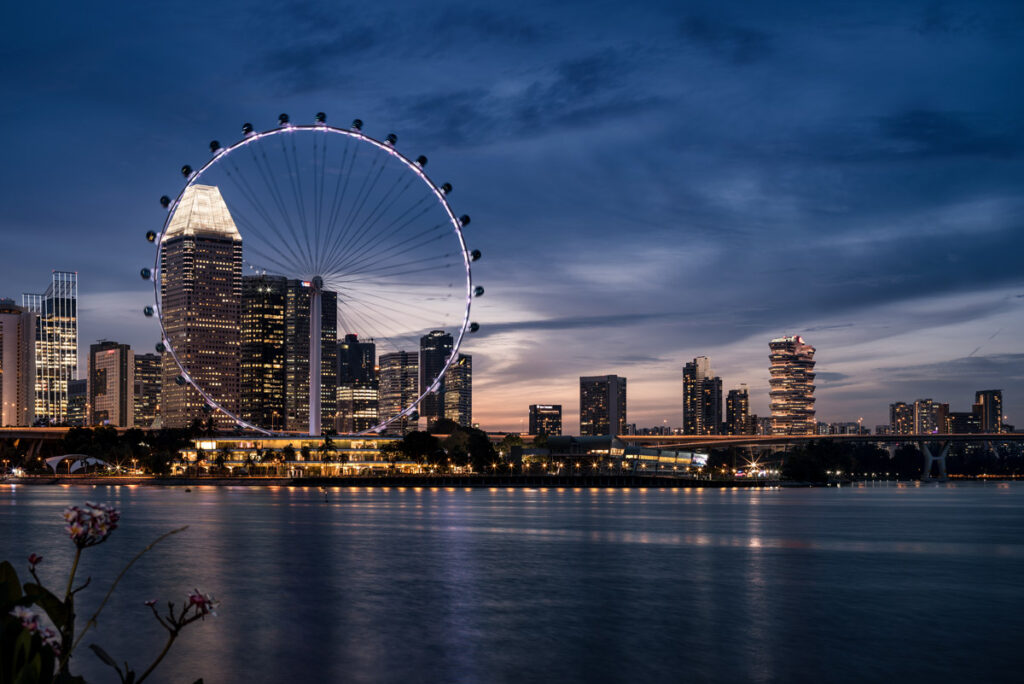
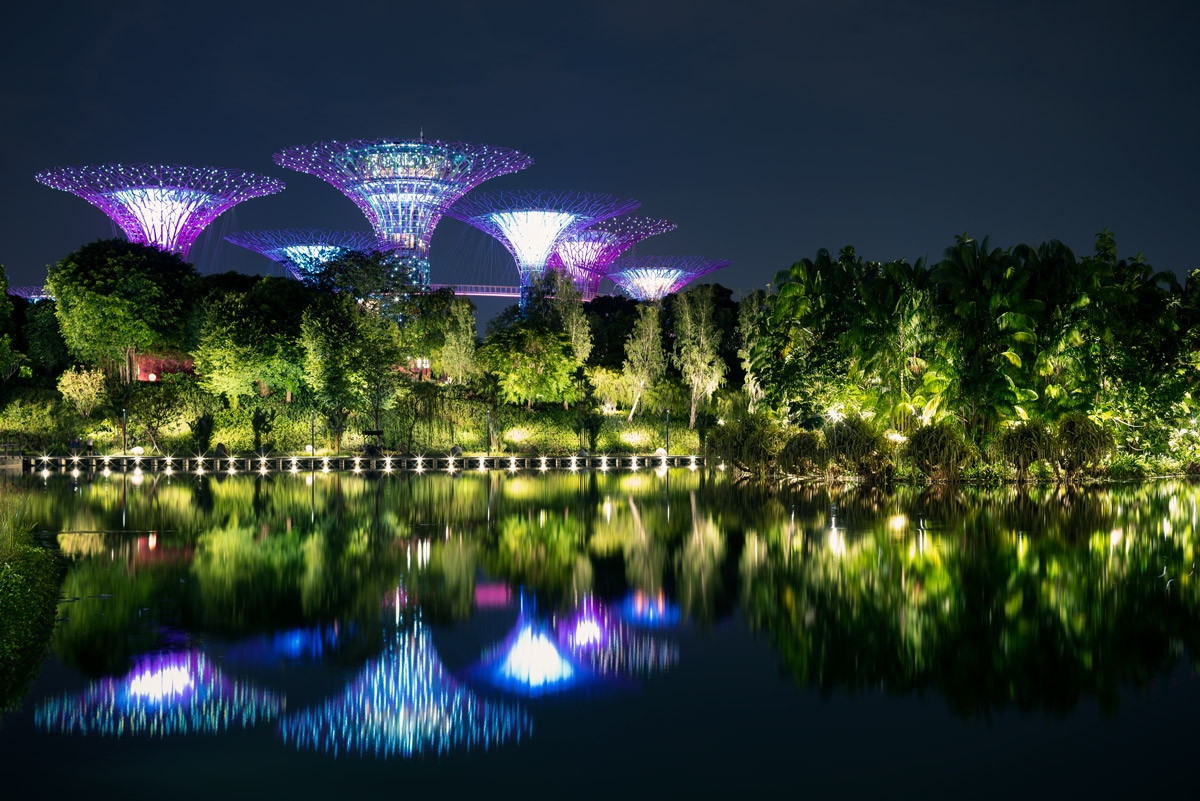
At Gardens by the Bay, too, we feel like explorers on a distant planet. The Supertrees tower amid lush vegetation – massive, man-made tree structures that combine plants, modern technology, and sustainability. At night, they glow in vibrant colors. All the splendor and colorful lights are reflected in the small lakes. Narrow paths wind their way through the futuristic trees. On the opposite shore, the Ferris wheel turns leisurely, while Singapore’s skyline lights up the night. The air is filled with magic and the heavy humidity of the tropics.
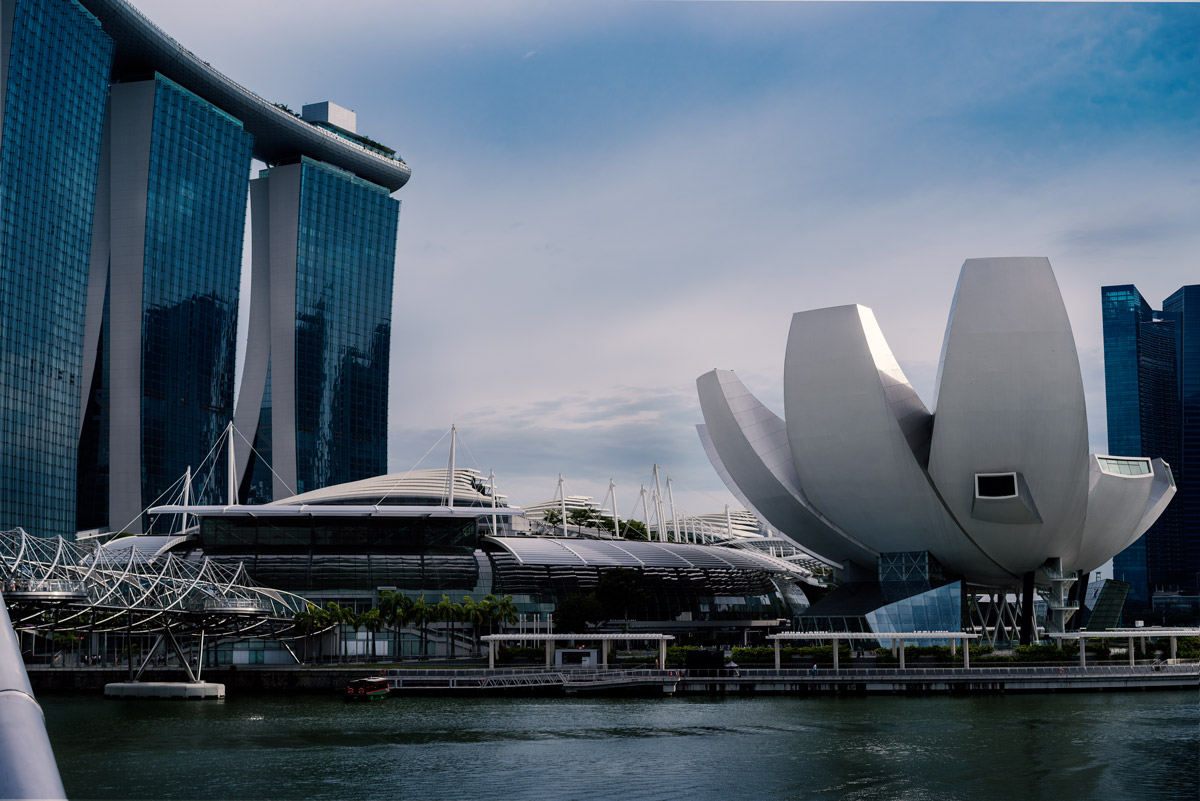
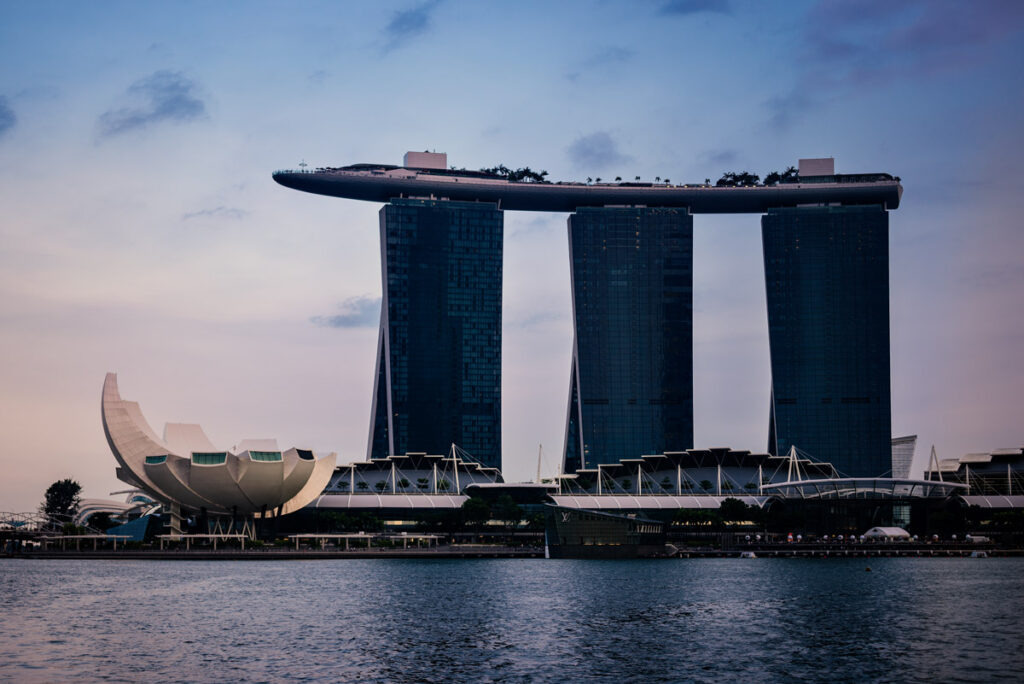
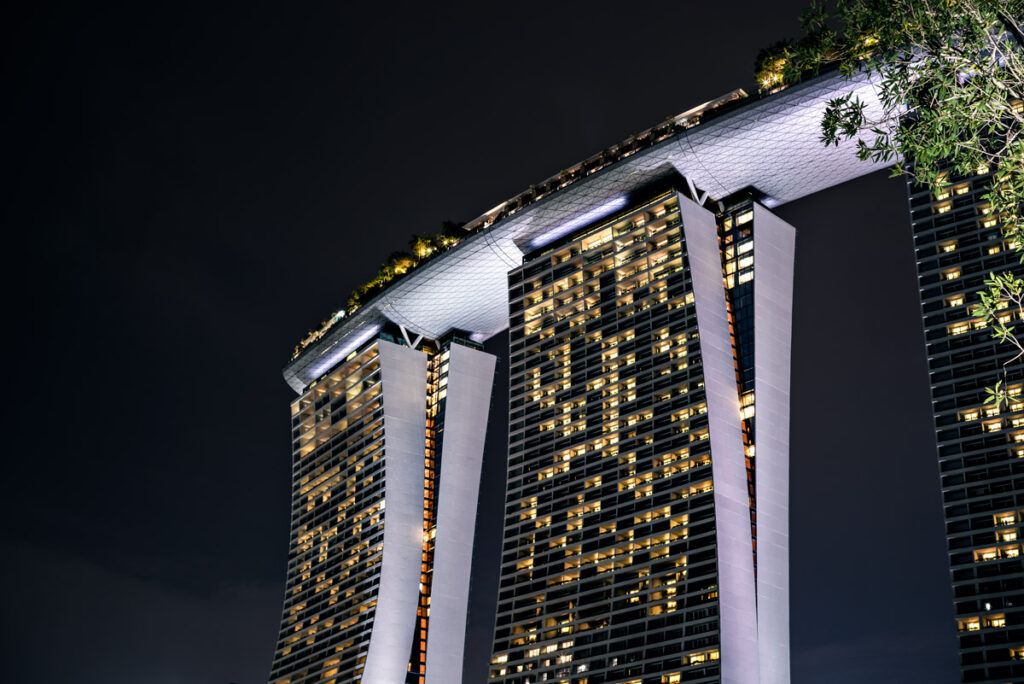
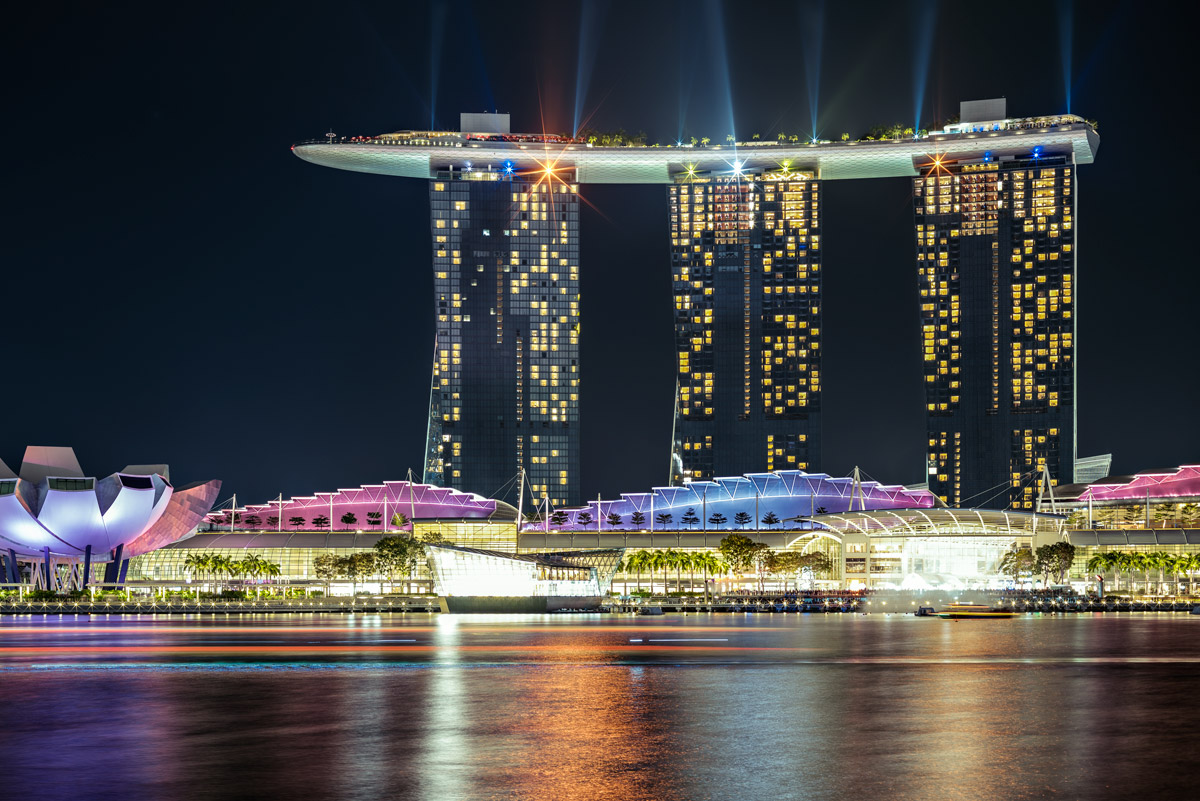
Arguably the most impressive building complex in Singapore is the Marina Bay Sands: three skyscrapers connected at the top by a curved, ship-like platform. A monument to modern consumerism – for the three towers house nearly everything a lavish heart could desire: hotels, nightclubs, a casino, shopping malls, boutiques, restaurants, and theaters. And right at the top, on the rooftop terrace, lies the famous Infinity Pool, offering one of the most spectacular views of the city.
Together with the curved Helix Bridge and the flower-shaped ArtScience Museum, Marina Bay Sands has long since become an unmistakable icon of Singapore. Hardly any other structure symbolizes the futuristic aspirations of this small island nation quite as well.
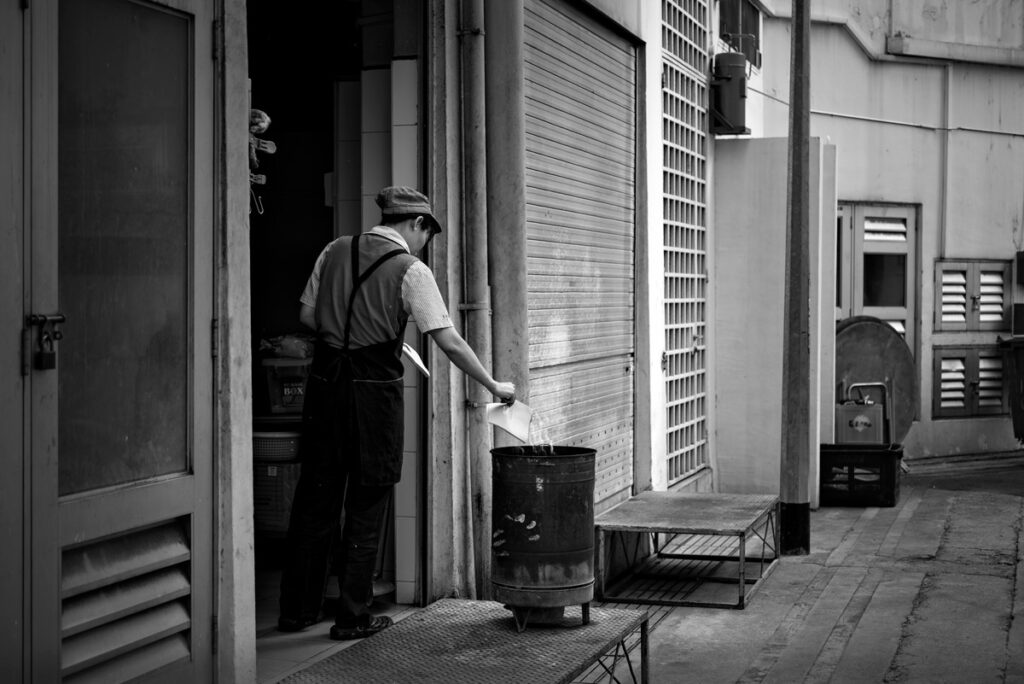
Dinner at an Indian food court in a rather unassuming neighborhood. Because amid all the glamour, Singapore also possesses a simple modesty and small oases of tranquility. They aren’t always easy to find, and sometimes the city may seem like an Asian Dubai: perfectly staged, almost too beautiful to be true. But behind the glittering facade of this financial and economic metropolis, behind all the expats, investors, and suits, there’s another Singapore. Streets and rows of houses that reveal people’s everyday lives. Alleys that are quiet and, in places, a little grimy – and don’t fit the city’s immaculate image at all. And food courts like this one, where simple, authentic, and excellent food is served for very little money.
It’s worth taking the time to explore Singapore. Because only when you step away from the glittering surface can you discover the true character of this extraordinary city.
Info about our trip
Singapore is undoubtedly one of Asia’s most exciting travel destinations. The best part is that this small island nation can be easily combined with almost any destination in Southeast Asia. You should plan to spend at least three to five days in Singapore. This makes it a great way to combine a beach vacation in Thailand with a city break. A tour of Malaysia is also a great option – after all, Kuala Lumpur is only about 300 kilometers away. Or you can take a ferry to the Indonesian islands of Batam or Bintan, which are also popular weekend getaways for Singaporeans.
Singapore is also an excellent stopover on the way to Australia or New Zealand. Despite its comparatively high prices, a trip here doesn’t have to be unaffordable: At the numerous hawker centers and food courts, you can get excellent food for surprisingly little money. Thanks to the excellent public transportation system, you can also explore nearly the entire city comfortably without renting a car.
So as you can see, there are many ways to get to know this extraordinary country.
Singapore is one of the most expensive travel destinations in Southeast Asia, but prices are still significantly lower than in cities like Zurich, London, or New York. Accommodations and alcoholic beverages, in particular, drive up travel costs. A basic hotel room typically costs between 80 and 150 euros per night, while upscale hotels cost significantly more.
You can save the most on food. At the famous hawker centers and food courts, you can often get excellent meals for as little as 4 to 8 euros. Public transportation is also relatively inexpensive and very well developed, so you can easily do without taxis or a rental car. If you skip the luxury and deliberately choose affordable restaurants, you can experience Singapore much more affordably than its reputation might suggest.
Singapore is a paradise for food lovers. Over the centuries, Chinese, Malay, Indian, and European influences have blended here to create a unique cuisine. Whether it’s Hainanese chicken rice, laksa, satay skewers, dim sum, or spicy curries – hardly any other city offers such culinary diversity in such a small area.
The heart of Singapore’s food culture beats in the hawker centers. These covered food courts, which are even listed as part of UNESCO’s Intangible Cultural Heritage, bring together dozens of small food stalls under one roof. Here, businesspeople dine alongside students, and families alongside tourists – often at surprisingly affordable prices. Alcohol, on the other hand, is significantly more expensive. Due to high taxes, beer, wine, and spirits are among the most expensive in all of Asia. Another myth concerns chewing gum: It isn’t strictly prohibited in Singapore, but its sale is heavily regulated. This explains why the city’s streets appear exceptionally clean.
Accommodations are among the biggest expenses on a trip to Singapore. For a simple but decent hotel, you should generally budget 80 to 150 euros per night; there’s virtually no upper limit – especially at luxury hotels. If you want to save some money, you can find hostels or capsule hotels, but you’ll usually have to compromise on comfort.
We especially recommend accommodations around Marina Bay or Clarke Quay. From there, you can easily reach many attractions on foot or by MRT. For a slightly more affordable option with a unique atmosphere, consider staying in Chinatown or Little India, where you’ll also have a wide selection of restaurants and hawker centers right on your doorstep.
Singapore is one of the safest travel destinations in the world. Violent crime is extremely rare, and pickpocketing is also much less common than in many other major cities.
Also keep in mind that Singapore strictly enforces numerous laws. Certain violations – such as smoking in prohibited areas, littering, or vandalism – can result in hefty fines. However, if you follow the rules, you can travel through Singapore with complete peace of mind.
Kids will love Singapore! The city is clean, safe, and surprisingly green. There are parks, playgrounds, and little oases everywhere for kids to run around and explore. There are also plenty of family-friendly attractions, such as the SEA Aquarium, Gardens by the Bay, rainforest trails, nature reserves, and large indoor playgrounds.
Traveling with kids is a lot of fun even in everyday life. Restaurants and hawker centers are subject to strict hygiene standards, the excellent MRT and bus network gets you quickly and comfortably throughout the city, and thanks to the short distances, there’s plenty of time for relaxing breaks – even with younger children. For us, Singapore is one of the most family-friendly destinations in Asia.
Thanks to its excellent public transportation system, Singapore is easy to explore without a rental car. The MRT network connects nearly all the attractions and is supplemented by a dense bus network. Fares are affordable, and the vehicles are clean, air-conditioned, and extremely reliable. The rechargeable EZ-Link Card is particularly convenient, allowing you to easily use buses and the MRT.
Many attractions around Marina Bay, the Singapore River, and Chinatown are also just a few minutes’ walk from one another. Taxis and ride-hailing services like Grab are also readily available and, by international standards, generally still affordable. We also recommend taking a boat ride on the Singapore River: it’s not particularly expensive and offers a whole new perspective on the skyline and the historic waterfront promenade. Renting a car, on the other hand, is not worth it at all for tourists.
- C. M. Turnbull has produced the standard work in historical scholarship – though, unfortunately, it is somewhat dated – with A History of Modern Singapore: 1819-2005.
- In his autobiography, From Third World to First: A Statesman’s Powerful Story of Transformation from Poverty to National Leadership, Singapore’s founding father, Lee Kuan Yew, recounts how he succeeded in leading the small city-state out of colonial rule and into the 21st century.
- Crazy Rich Asians is an entertaining novel by Singapore-born author Kevin Kwan—at first glance, a lighthearted social comedy, but amid luxury mansions, weddings, and family intrigues, Kwan offers interesting insights into the Chinese-Singaporean diaspora and social class differences.
