India

Tired from the flight, we rub our eyes. Is this really the India we expected? New Delhi welcomes us gently – almost reservedly. It opens the door just a crack. At first, we see nothing more than the familiar hustle and bustle of a major Asian city. But just a little later, that door is flung open. We lose our footing and plunge into the depths. The roller-coaster ride begins. And we’re sitting in the front row.

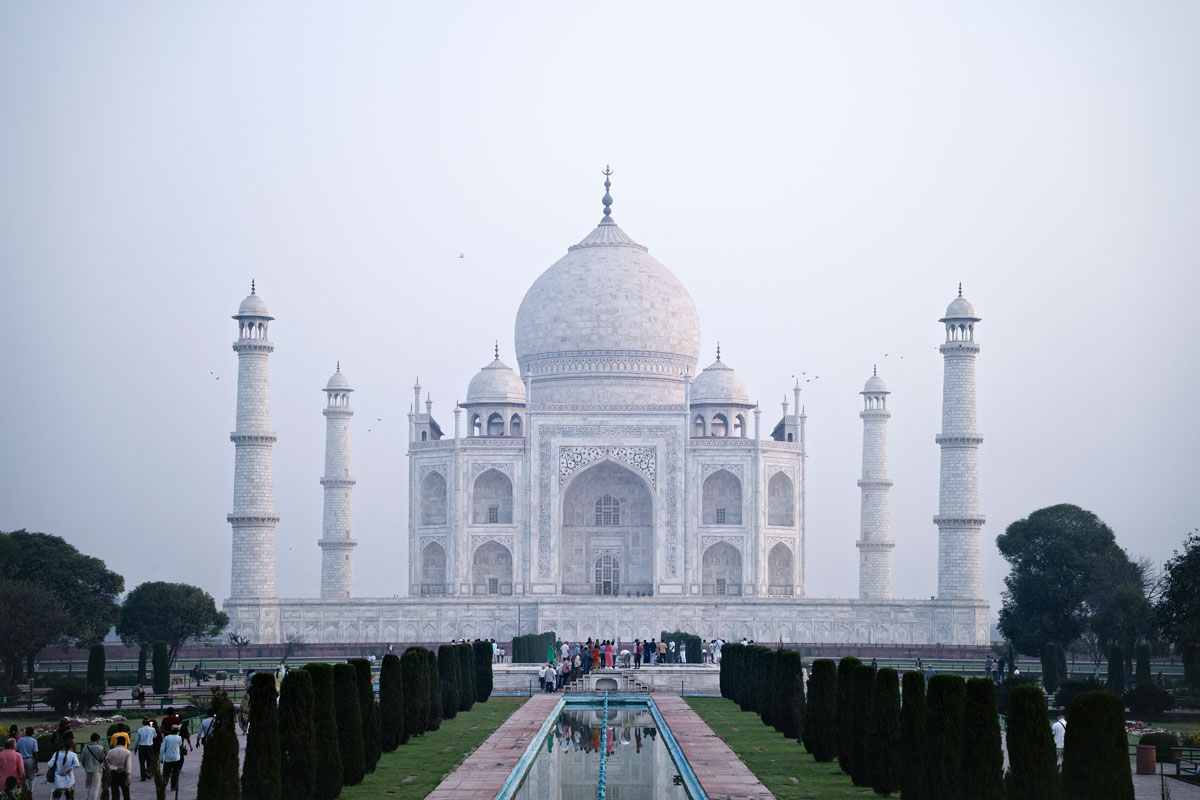
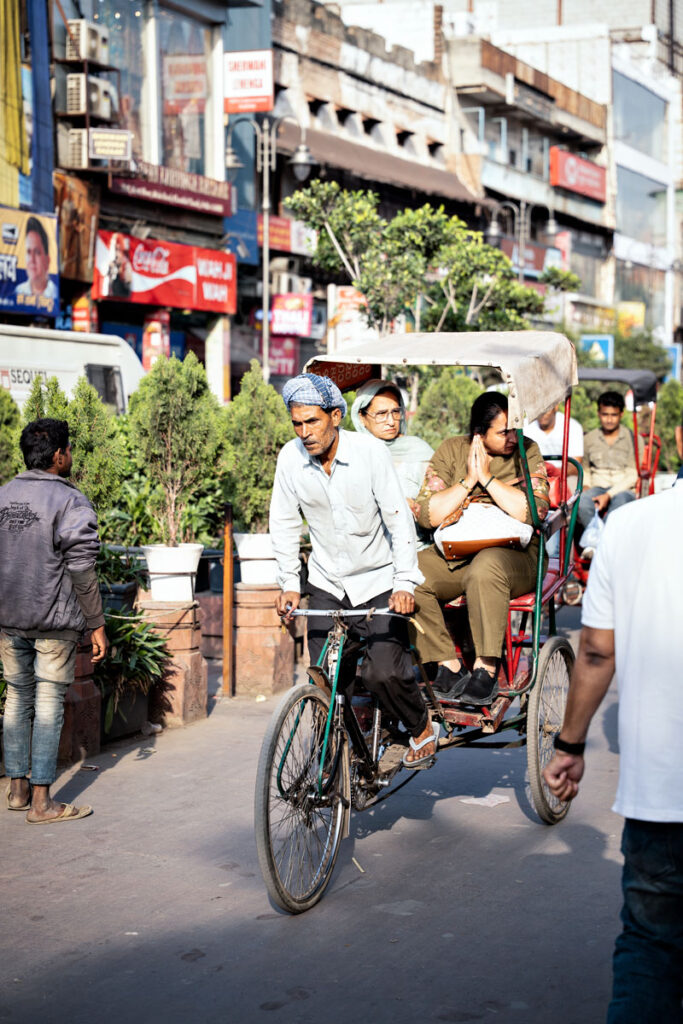
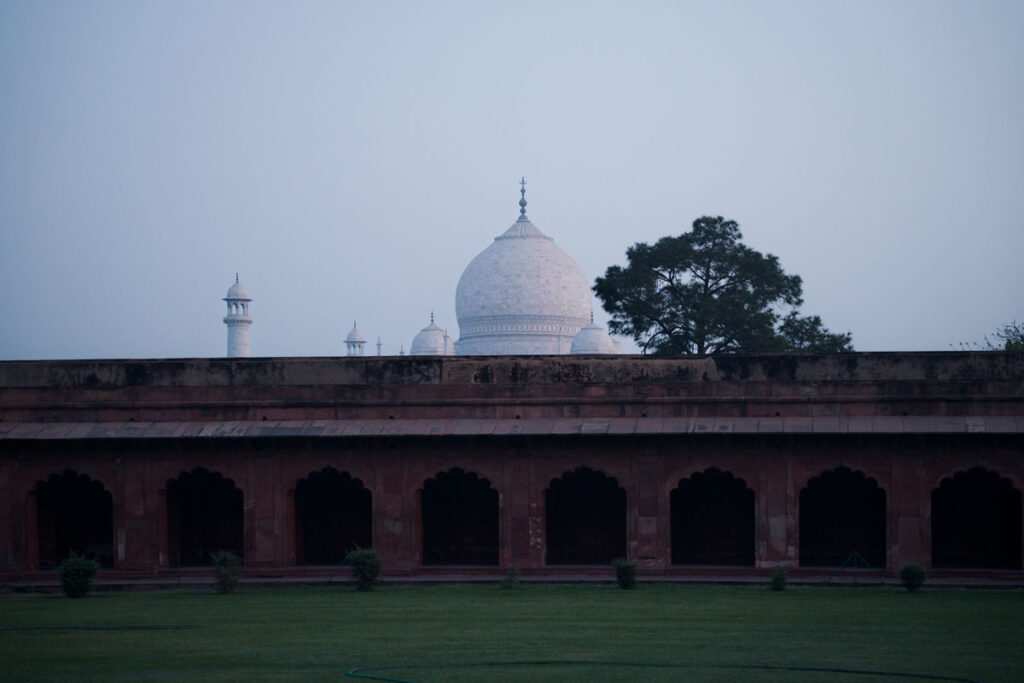
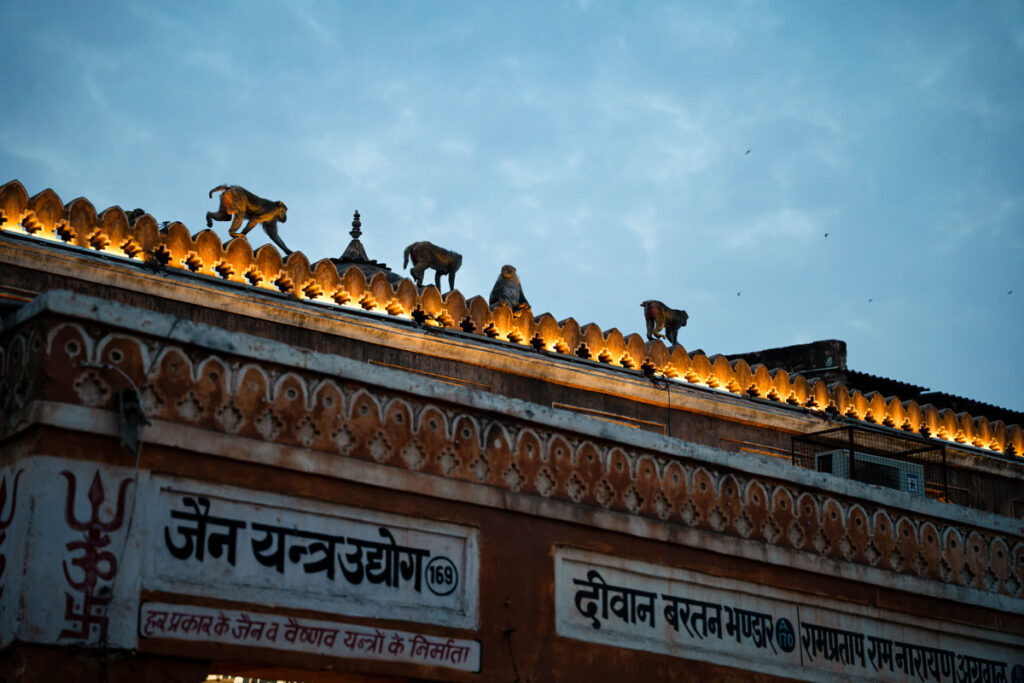
Peacocks sleep in the crowns of the Malabar lac trees. Rickshaws push their way past us. Begging children disappear through holes in rusty fences. In the morning mist, the dome of the Taj Mahal emerges from the soft pastel hues of the sunrise. Muslims gather to break their fast. An old Brahmin sits in the dimly lit basement of his forgotten temple. Monkeys rule the rooftops of Jaipur, this venerable royal city. Elephants and camels, colorfully painted and sacred, make their way through the streets. Men shoulder rifles. Sabers rattle. A war dance.

Fragrant rice is served to us from heavy golden vessels. Butter melts on hot garlic bread. A mild spiciness settles on our lips. Music everywhere. Dancing everywhere.

India is not a journey. India is not a country.

India is a thrill.

Taj Mahal

On the very day of our arrival, we find ourselves caught up in Delhi’s evening rush hour. Right in front of us, two cars crash into each other. A few hundred meters further on, an ambulance with its siren blaring gets stuck among honking vehicles. The closer we get to Connaught Place – the historic heart of the city – the denser the sea of people around us becomes. As soon as we stop to take a photo or get a closer look, a crowd of curious Indians gathers around us. Hands are shaken. Selfies are taken. Questions are asked. We are strangers and, at the same time, for a brief moment, part of this city.

We take refuge in a park. Immediately, a young musician takes us under his wing. He guides us through the grounds, tells us about his life, and laughs a lot. Then he disappears again into the flow of people. Over the next few days, we’ll run into him again and again.

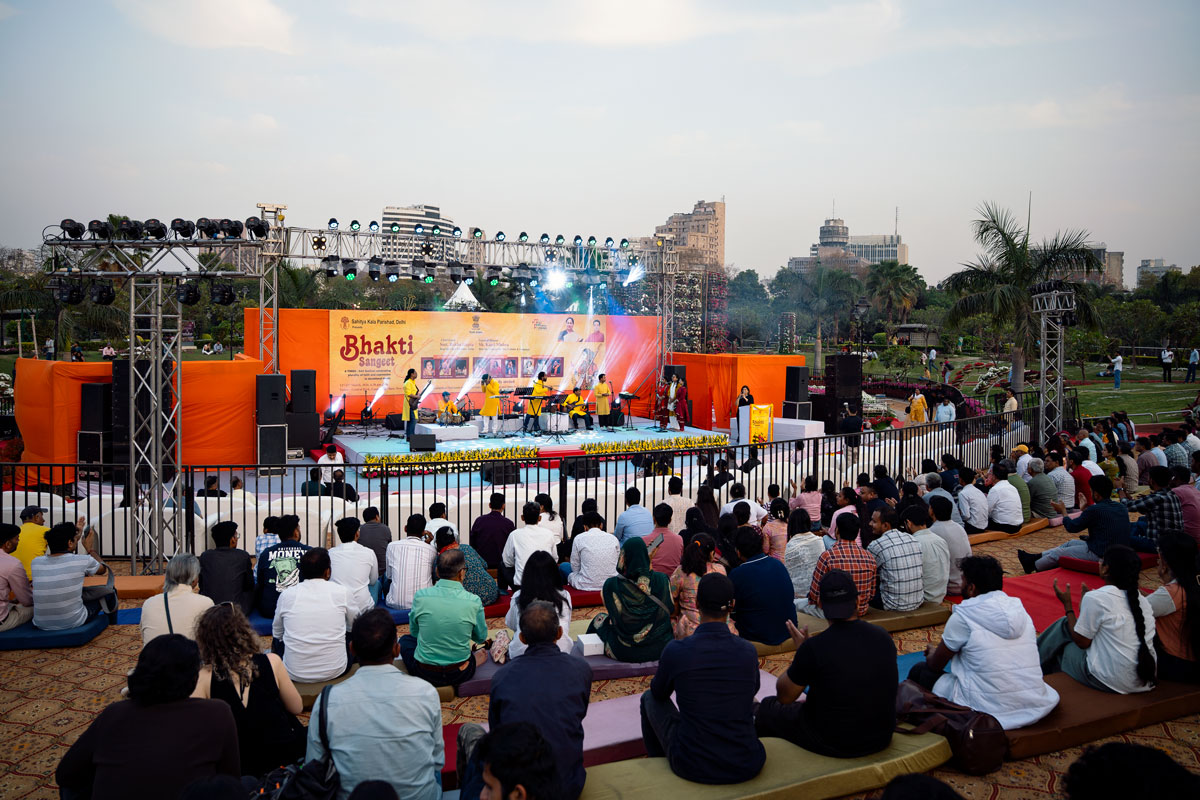
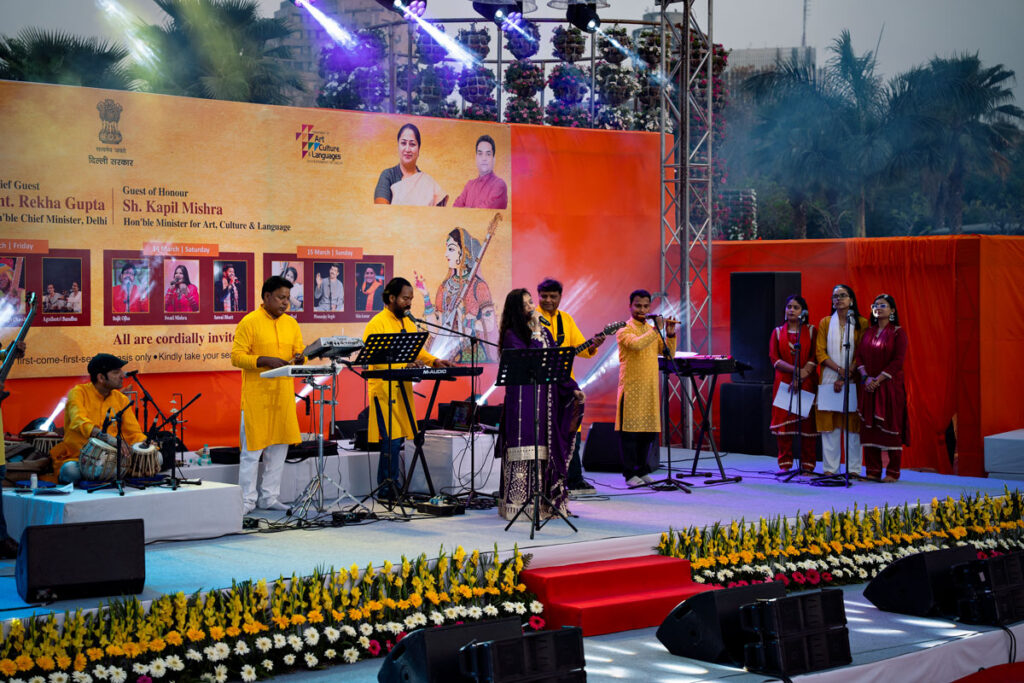
Choppy snippets of music and screeching microphone tests pique our curiosity. We follow the cacophony. Noise turns into melodies. Distorted sounds give rise to music. The highs find the lows, voices take shape, and suddenly everything sounds like a single, cohesive whole.

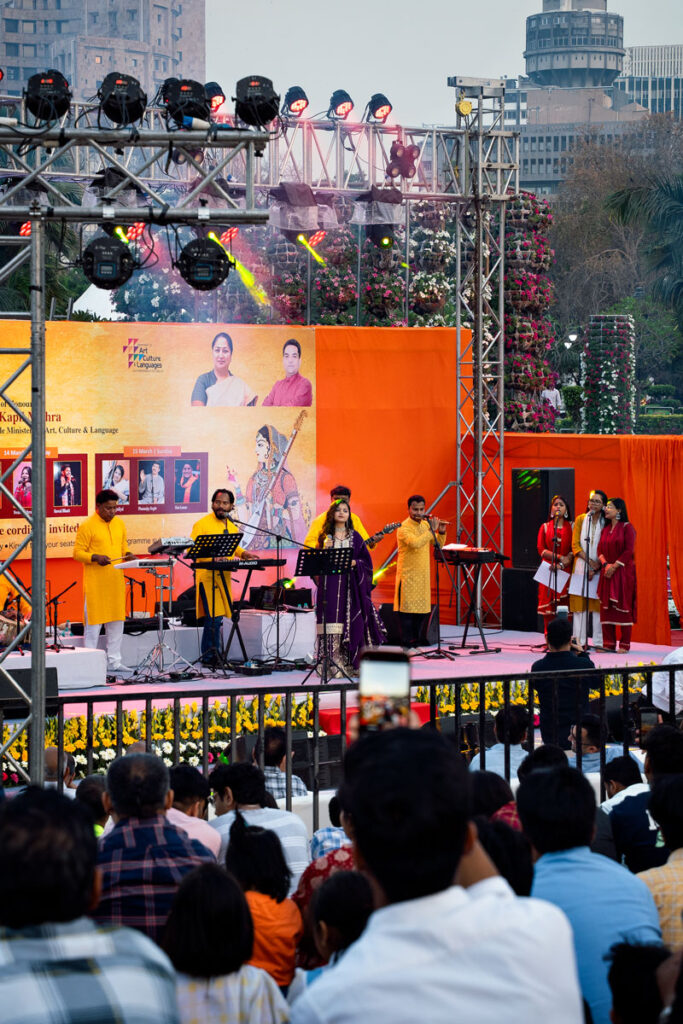
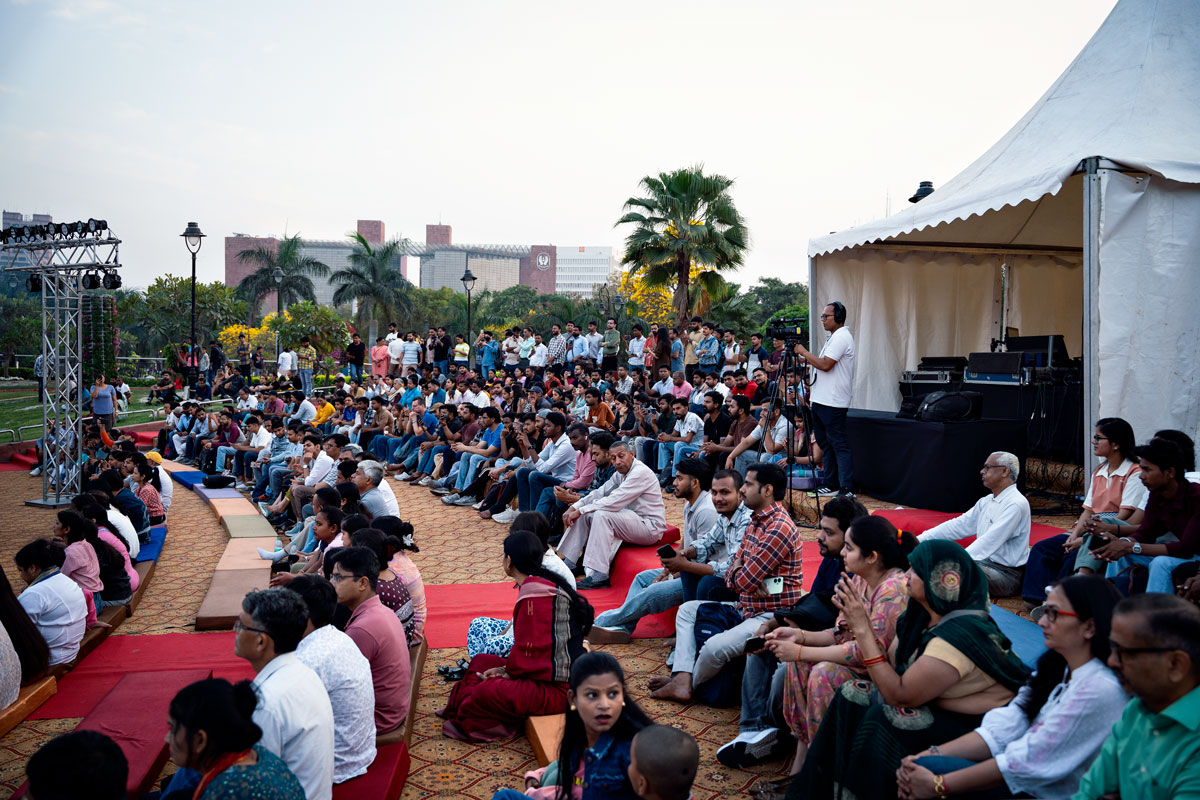
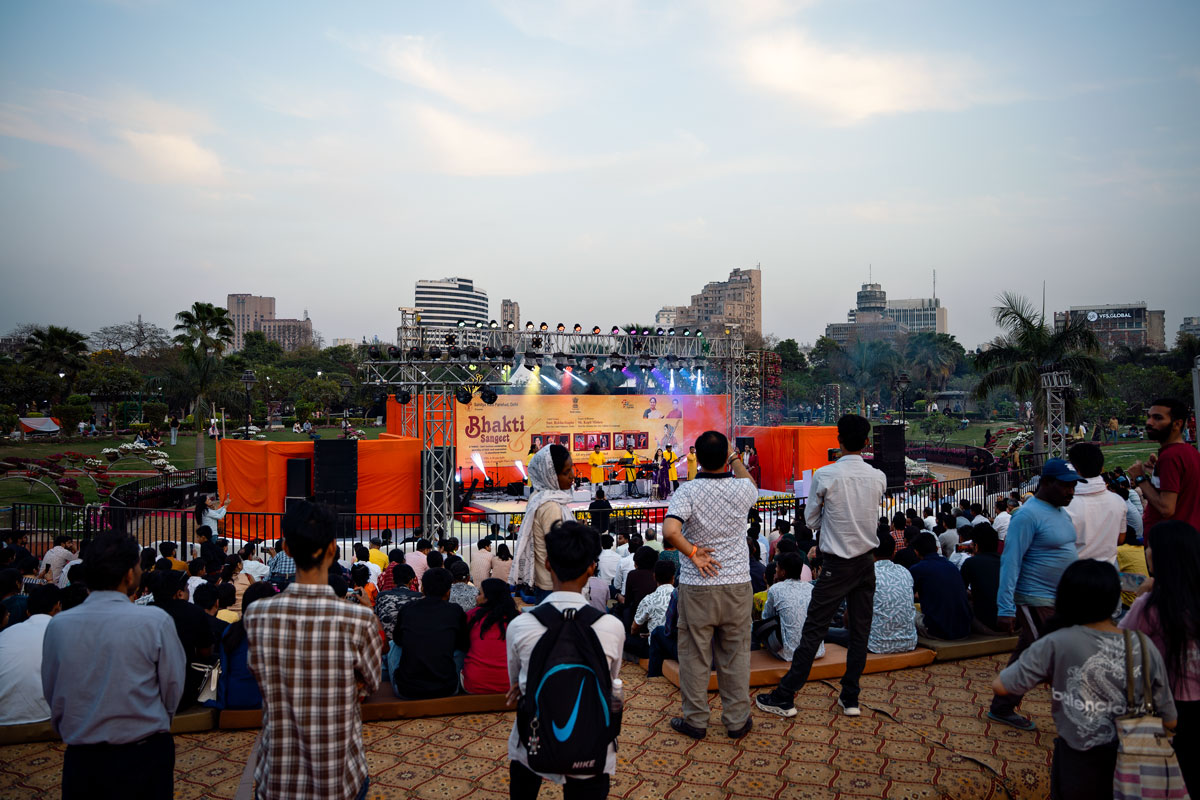
A square opens up before us. Police officers secure the entrances. TV cameras stand at the ready. On a stage, musicians warm up. Then the bass kicks in. Deep. Powerful. Laser beams slice through the warm evening sky. People dance. People cheer. And above it all lies the pulse of this mighty city.

Connaught Place Park
Music Festival in New Delhi

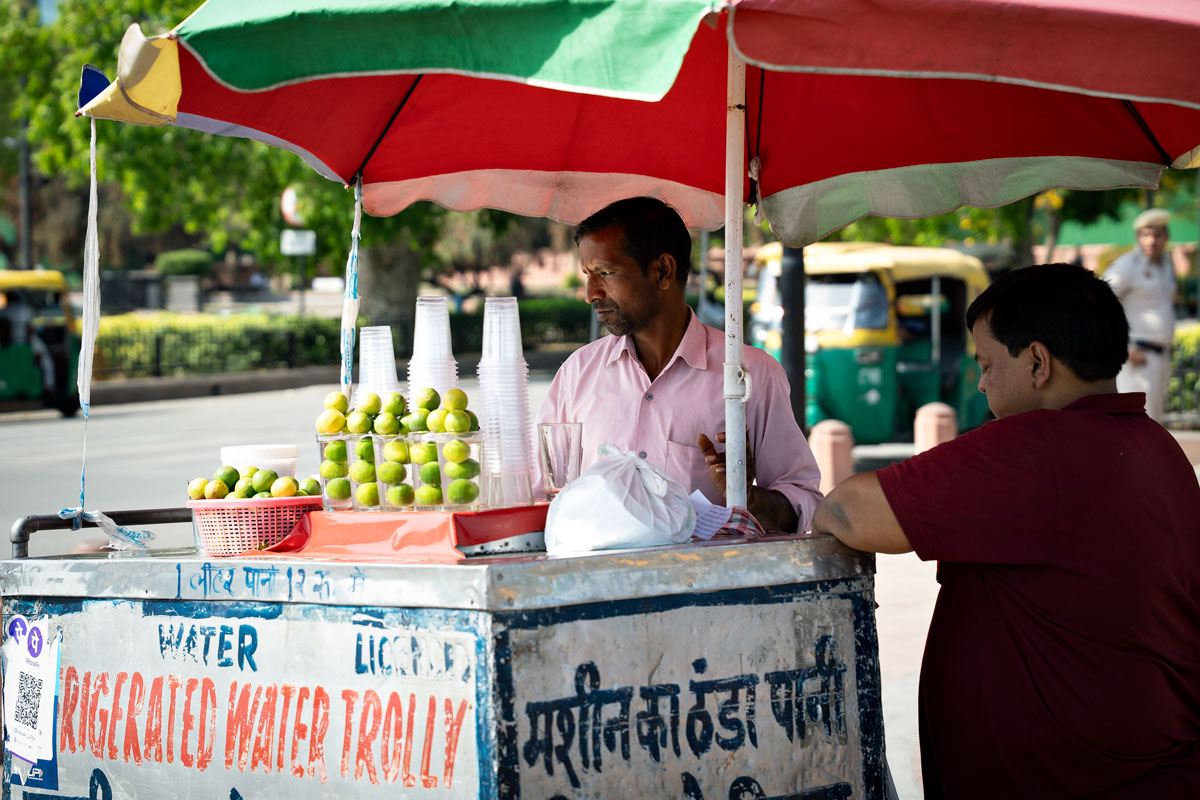
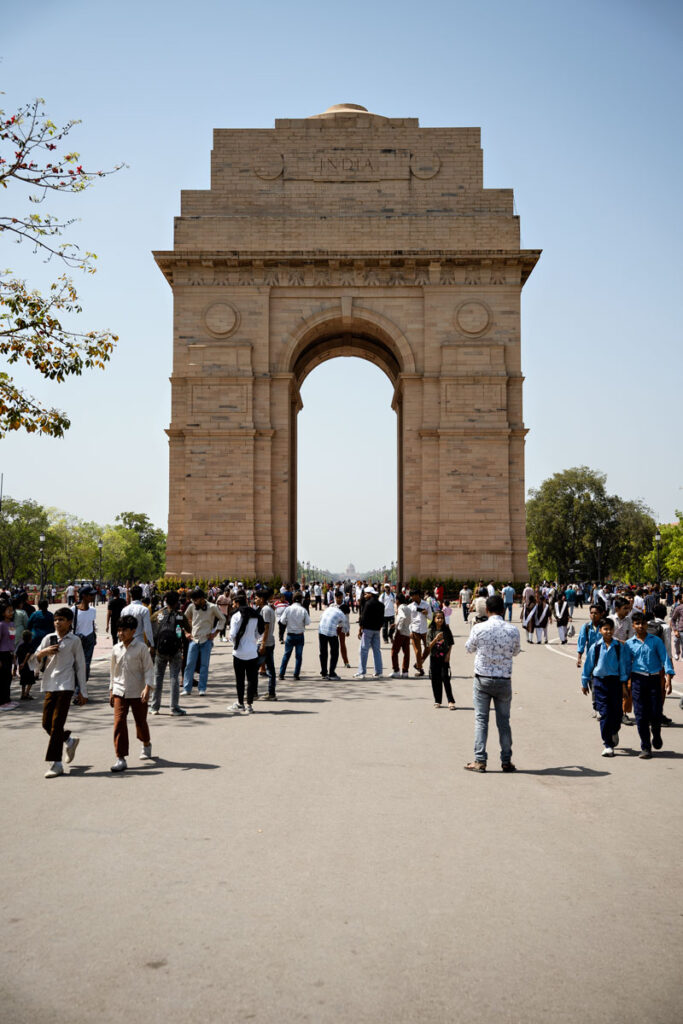
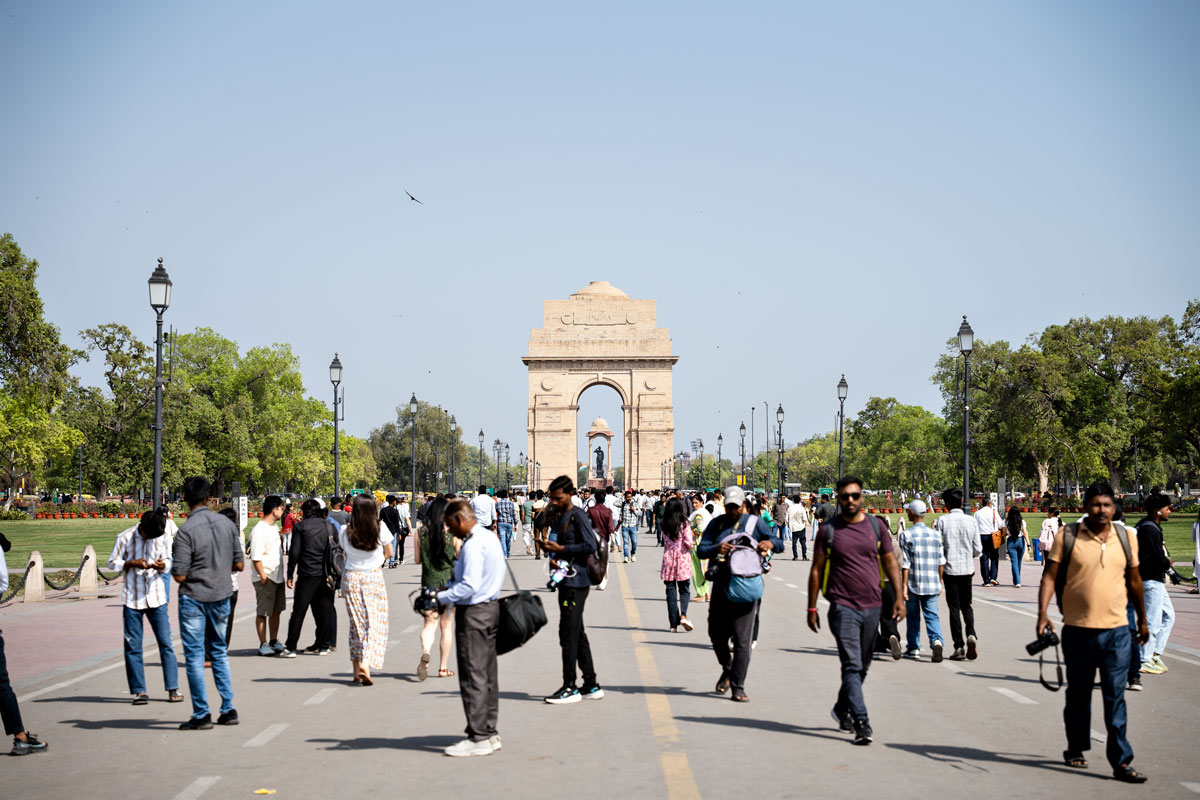
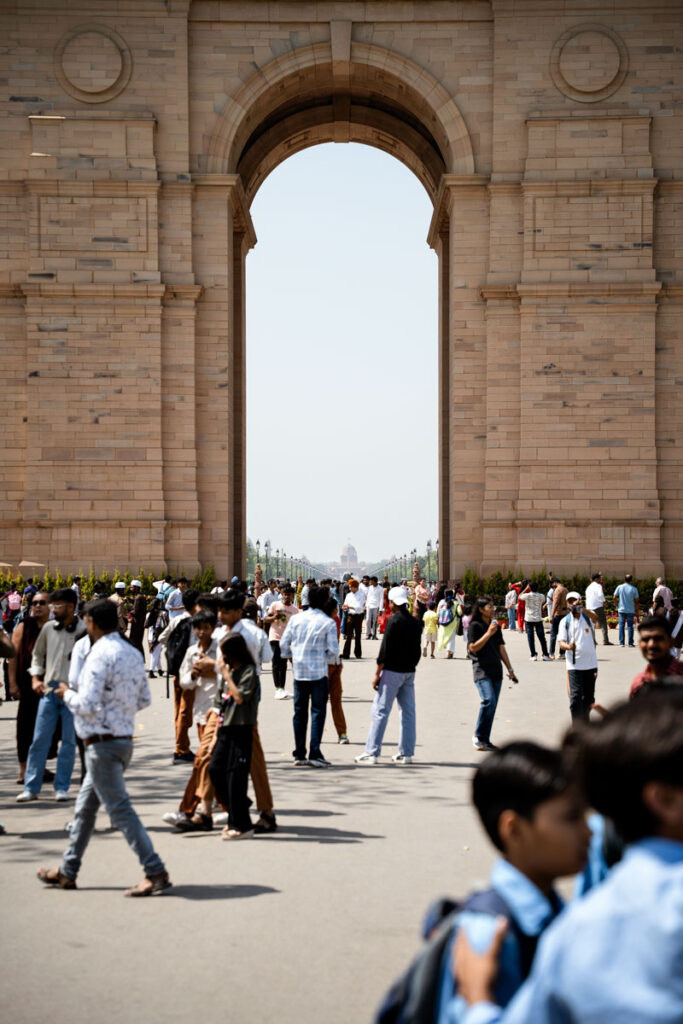
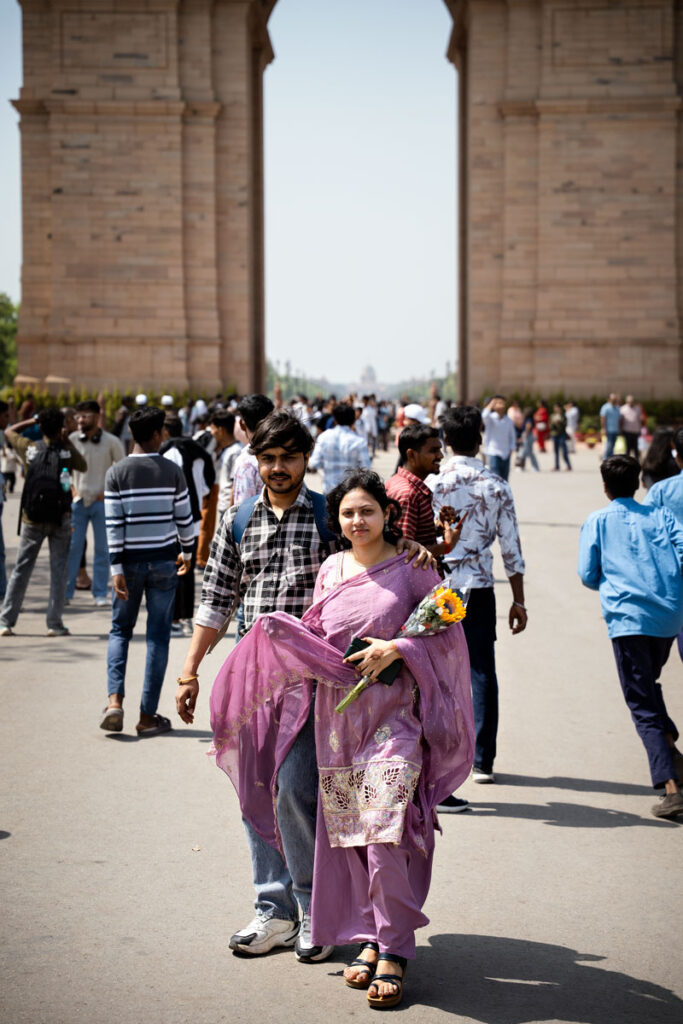
Our first full day takes us to India Gate. After a long winter, we finally feel the warmth of the sun on our skin again. School groups pass us by, laughing. A young couple holding a bouquet of flowers asks us to take their picture. Families – children, parents, cousins, and grandparents – surround us, openly showing their curiosity. On street corners, vendors squeeze fresh lemons or sell colorfully wrapped candies. And there are people everywhere.

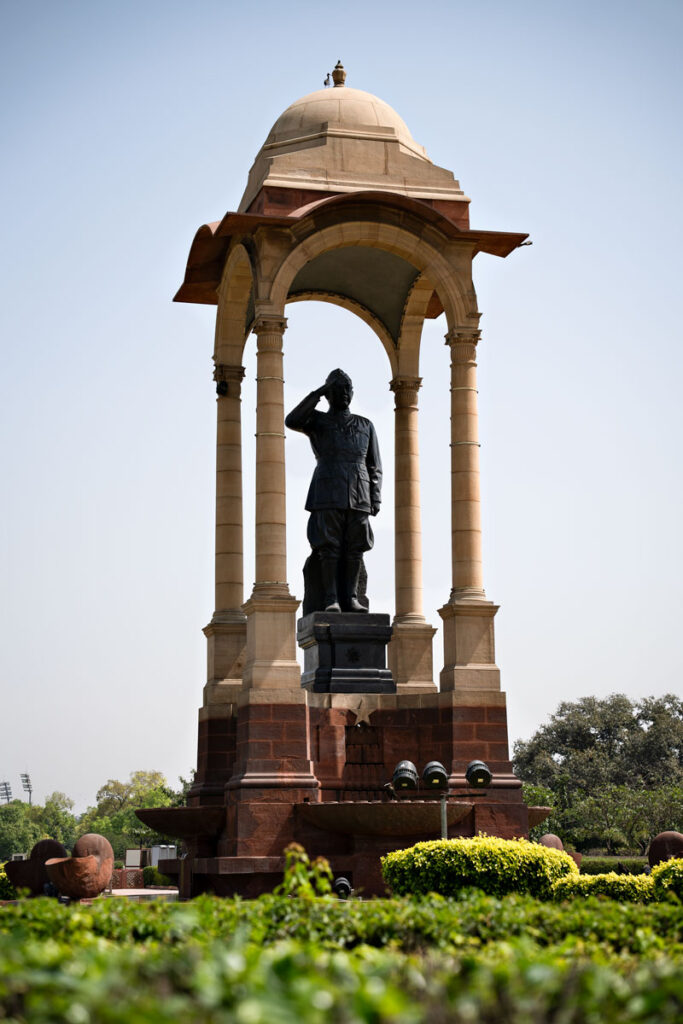
A vast park stretches out around India Gate. Playgrounds and museums. Gardens and war memorials. In between, government buildings in the refined style of the British colonial era. Like a green ribbon, the complex stretches for kilometers through the city all the way to Rashtrapati Bhavan, the presidential residence. Here, Delhi seems orderly and spacious. Almost as if the city wants to reach out to us after that initial culture shock.

Indian Lemon Juice Vendor
India Gate in New Delhi
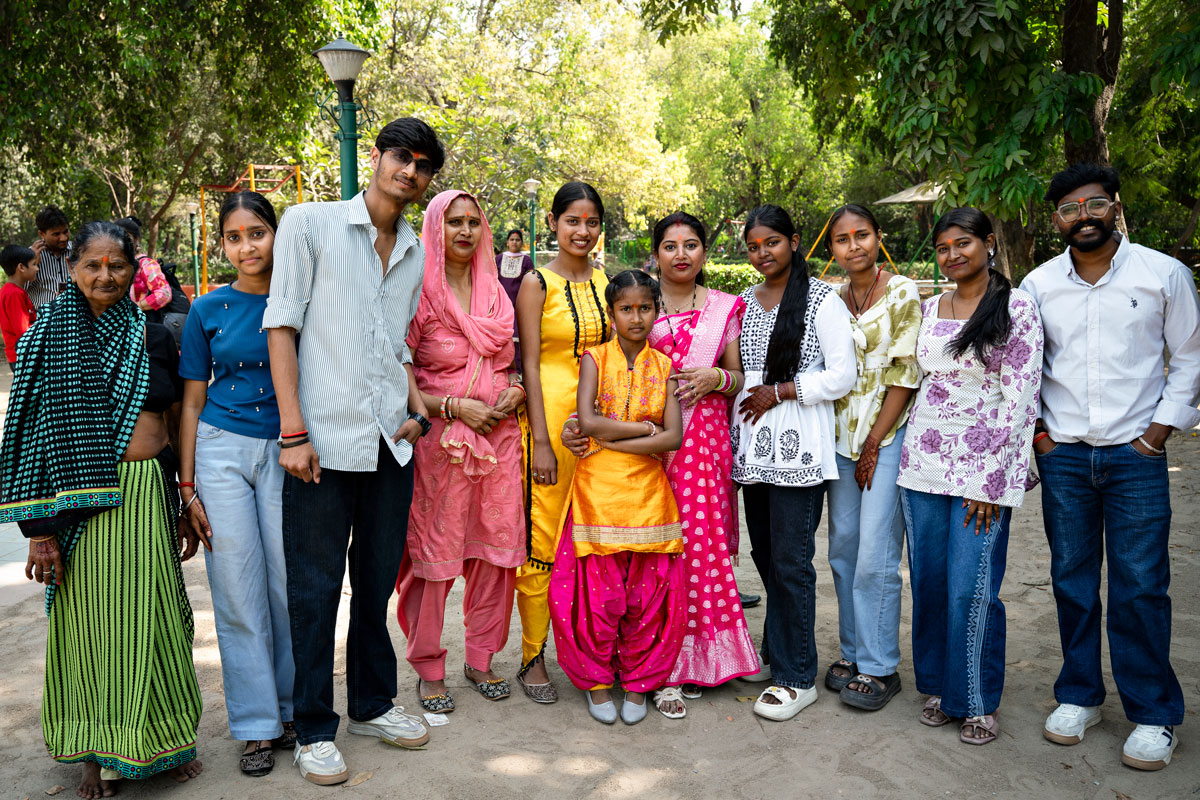
Family at the India Gate in New Delhi

We walk past barbers who trim men’s beards right on the street with nothing more than a straight razor and some soap lather. Children, barely older than ten, kneel in front of businesspeople and polish their shoes. On a busy main street, a boy in ragged clothes contorts his body into acrobatic yoga poses while cars and rickshaws race past him at close range.

Slowly, it dawns on us that our first impression of India may have been a mirage. The friendly facade is cracking. Behind it lie poverty, contradictions, and a world that defies our familiar standards. We have no idea yet just how forcefully India is about to strike. We don’t yet know that this journey will soon catapult us into a completely different dimension.

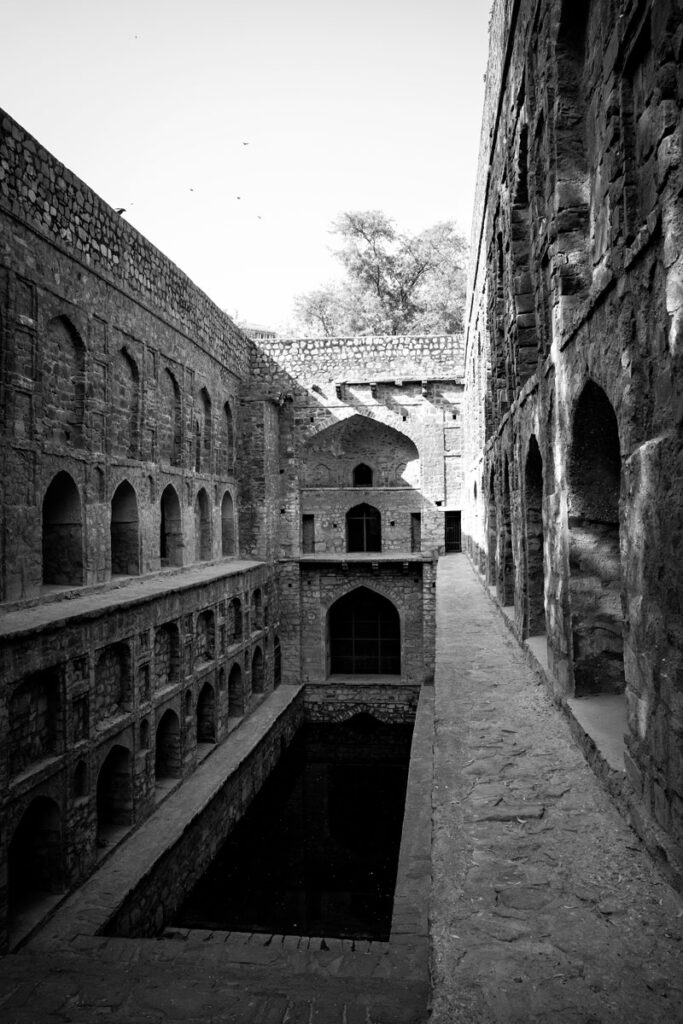
Agrasen ki Baoli, a centuries-old stepwell, feels like a gateway to another time. Pigeons and birds of prey circle above the ancient ruins. It’s a popular spot for selfies and an almost meditative place to escape the midday heat in the shade of the high walls and sparse trees. Despite the many people sitting on the steps, the well is an oasis of calm. We, too, take a seat and watch the birds come and go as we try to process our first impressions of Delhi.

Cow in Indian Main Street
Agrasen ki Baoli

The subway carries us across the Yamuna. In the afternoon light, the Indian tricolor flutters over the city – saffron, white, and green – symbolizing courage, peace, and faith for the world’s largest democracy.

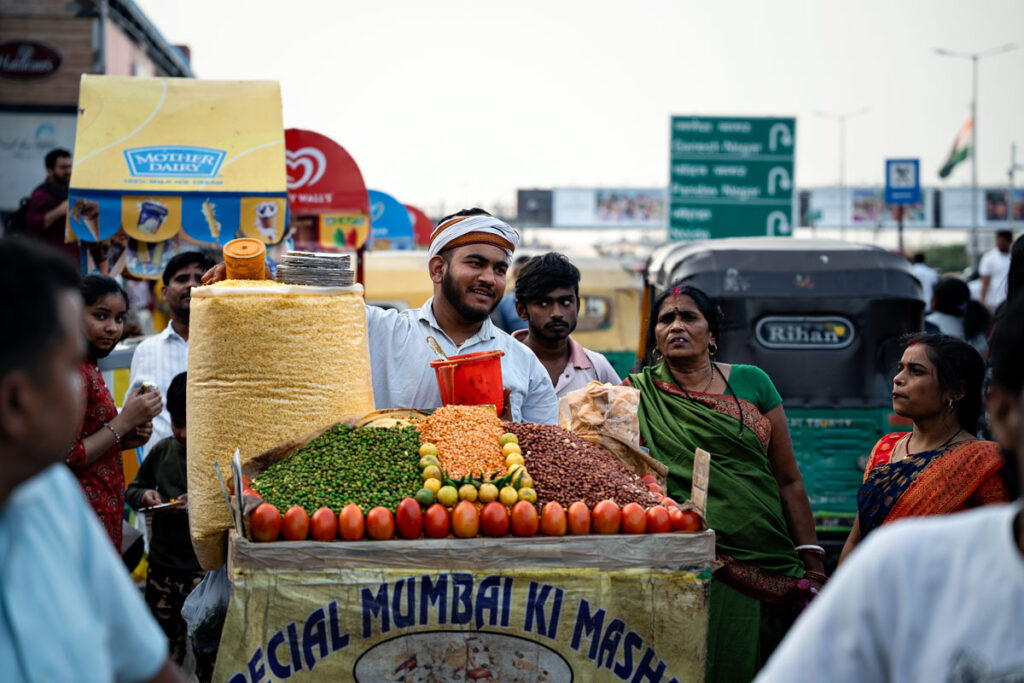
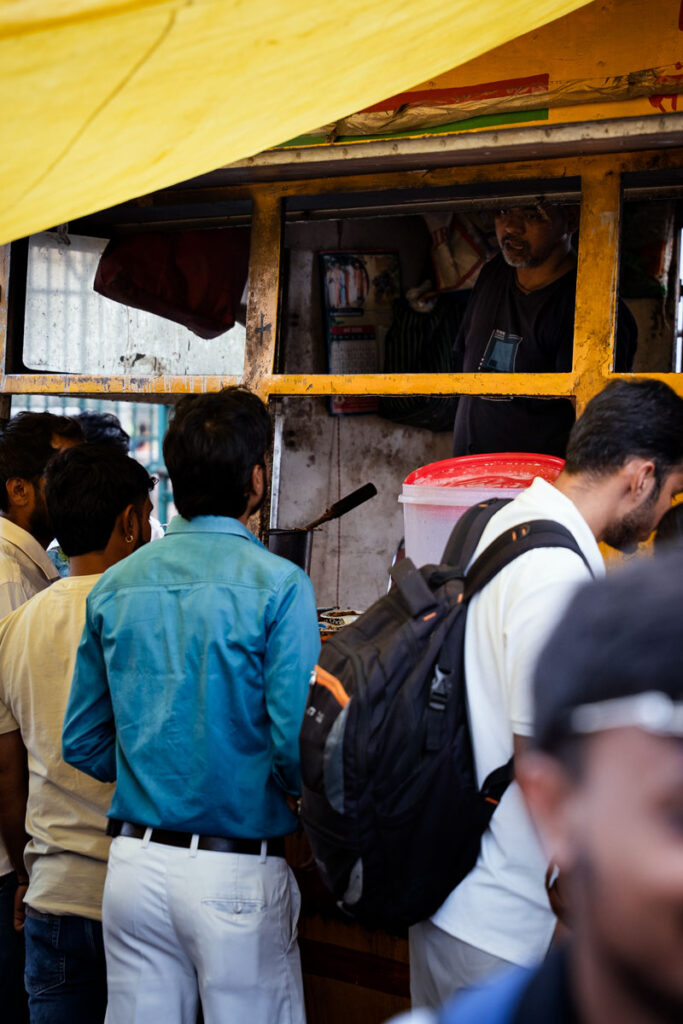
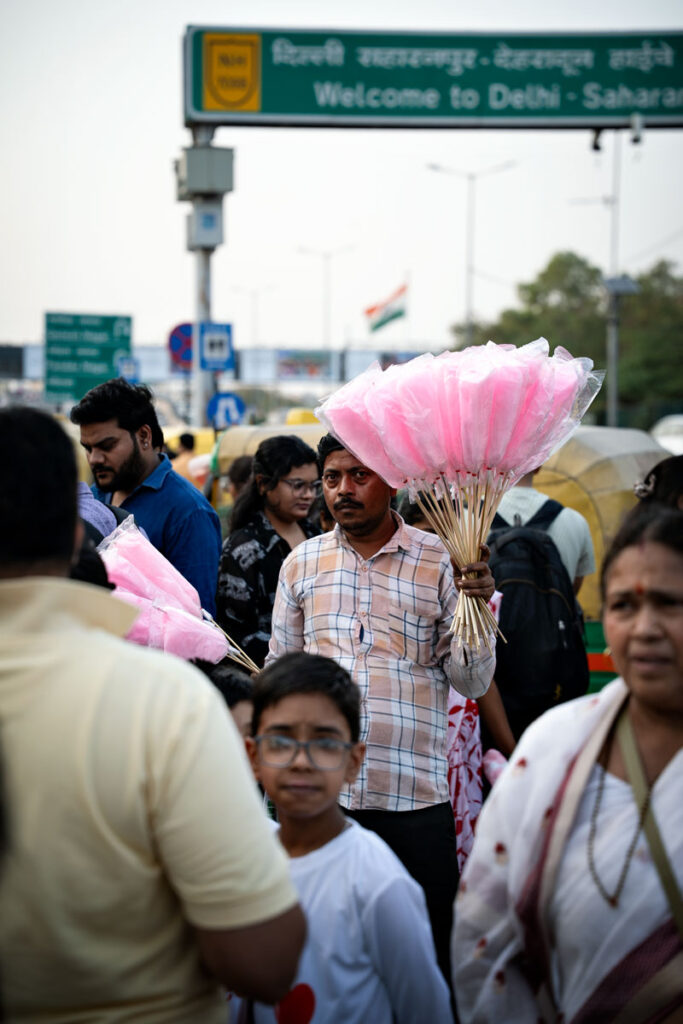
We exit the Akshardham station and immediately realize we’ve found ourselves in a different neighborhood of Delhi. A river of people in the evening rush hour sweeps us along. Rickshaw drivers whistle and call out for customers. The air smells of hot oil, roasted nuts, and spices.

Those who stand still get left behind. Those who remain silent are not heard. Those who don’t push forward fall behind.

We observe and learn – if you want to survive on India’s streets, or even just get through your daily life, you have to fight. There are too many people, all wanting the same thing at the same time. Strength, resourcefulness, and self-confidence aren’t virtues here. They’re prerequisites. The street tolerates no hesitation.

At the Akshardham Metro Station
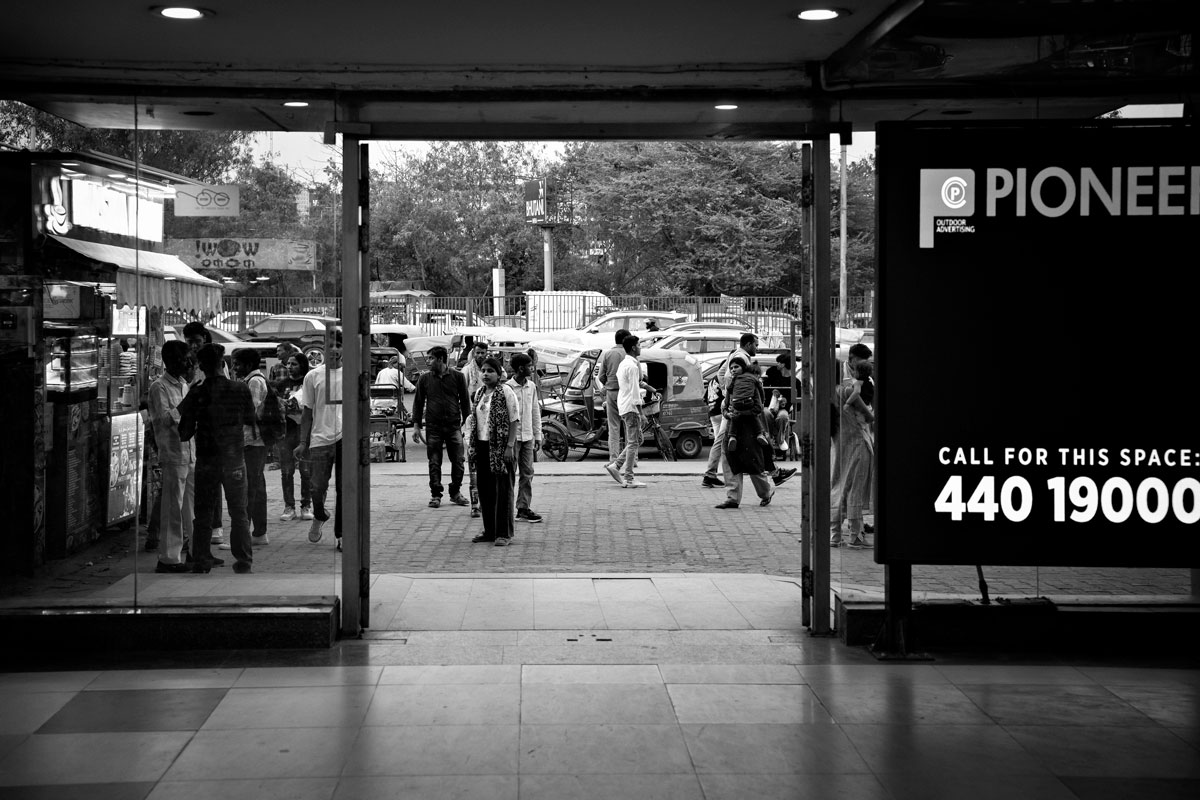
Street Photography in Delhi
At the Akshardham Metro Station

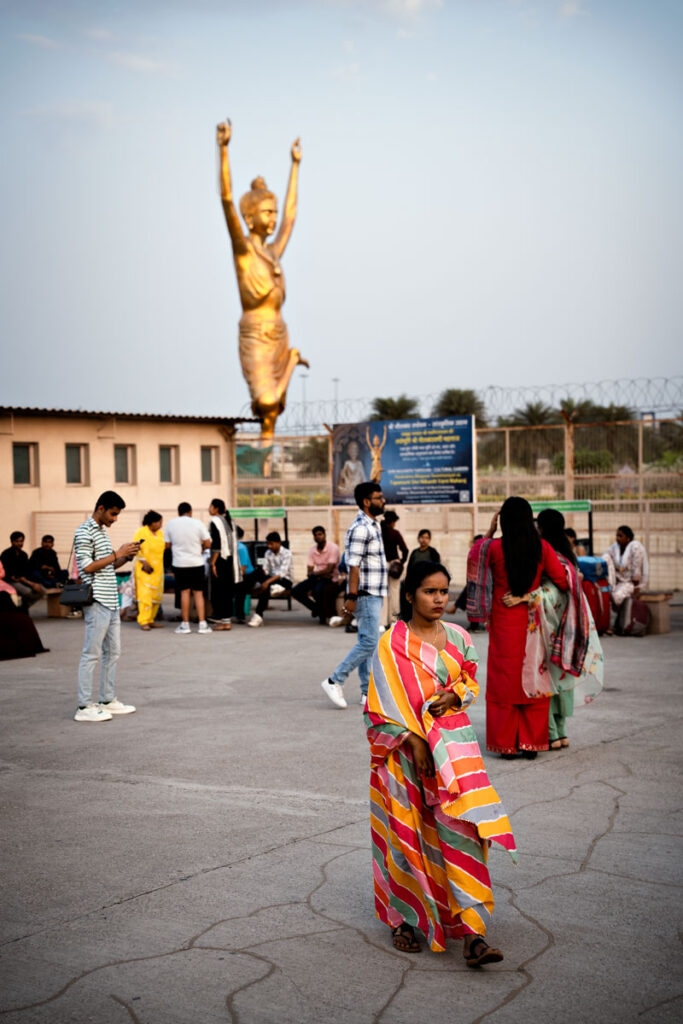
Hundreds, if not thousands, of people are streaming toward the Akshardham Temple on the Yamuna alongside us. This temple was once considered the largest Hindu temple complex in the world, and everything about it is designed to provide crowds of visitors with a spiritual experience.

Long lines form in front of the entrances. Bags, cameras, and phones must be checked in. Photography and filming are strictly prohibited. The crowd is enormous, and the it is already late. So we finally come to a stop at the gates, watch the endless coming and going of worshippers and visitors, and move on.

Akshardham-Temple
Akshardham-Temple
Akshardham-Temple

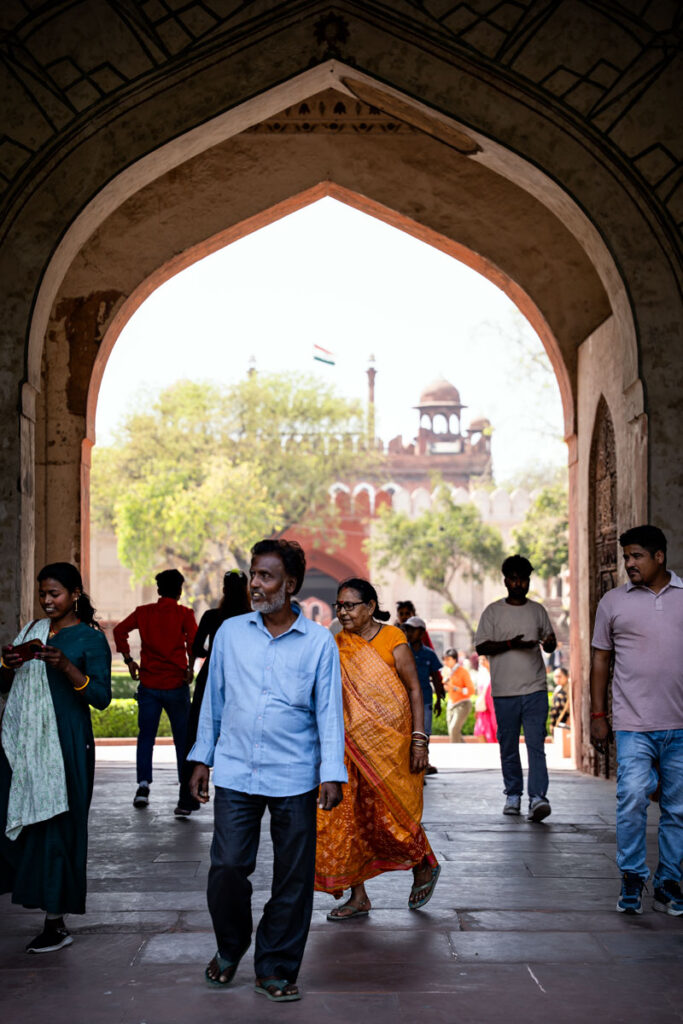
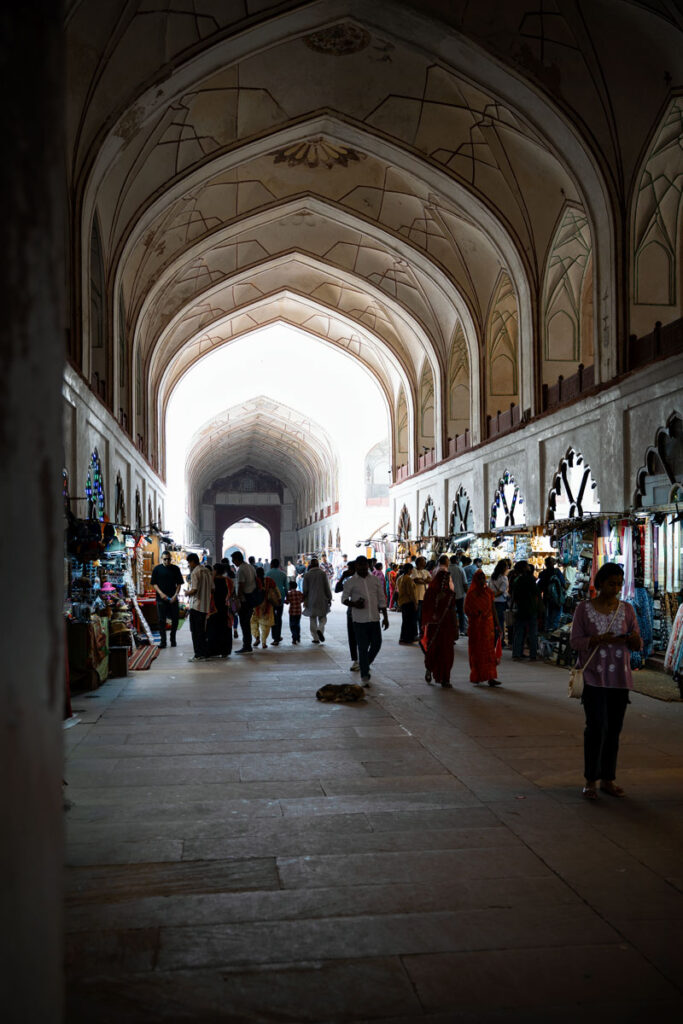
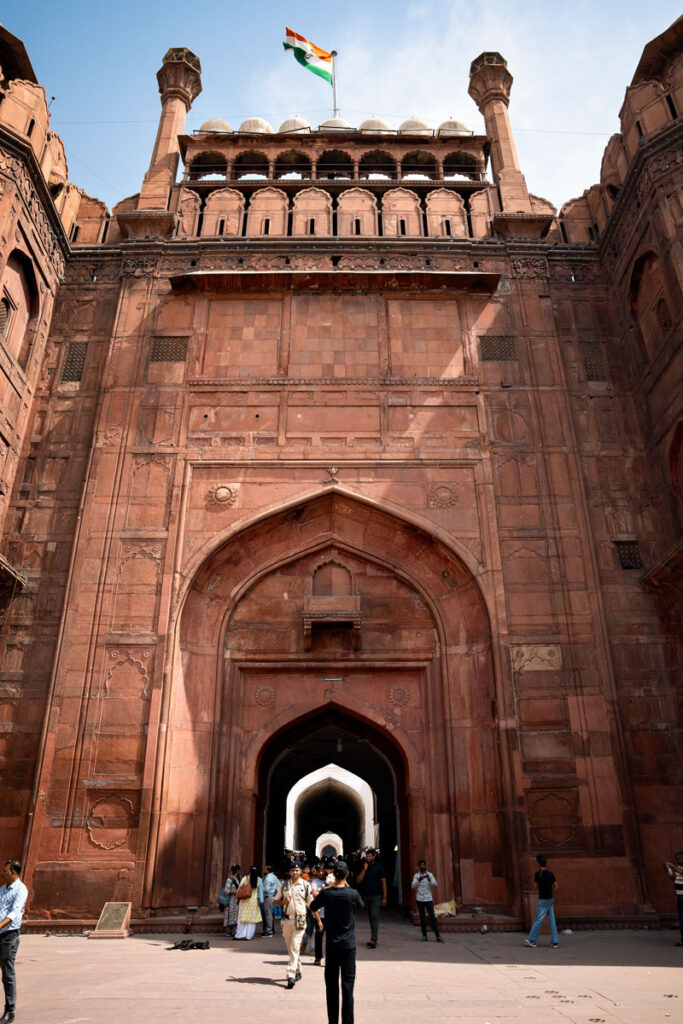
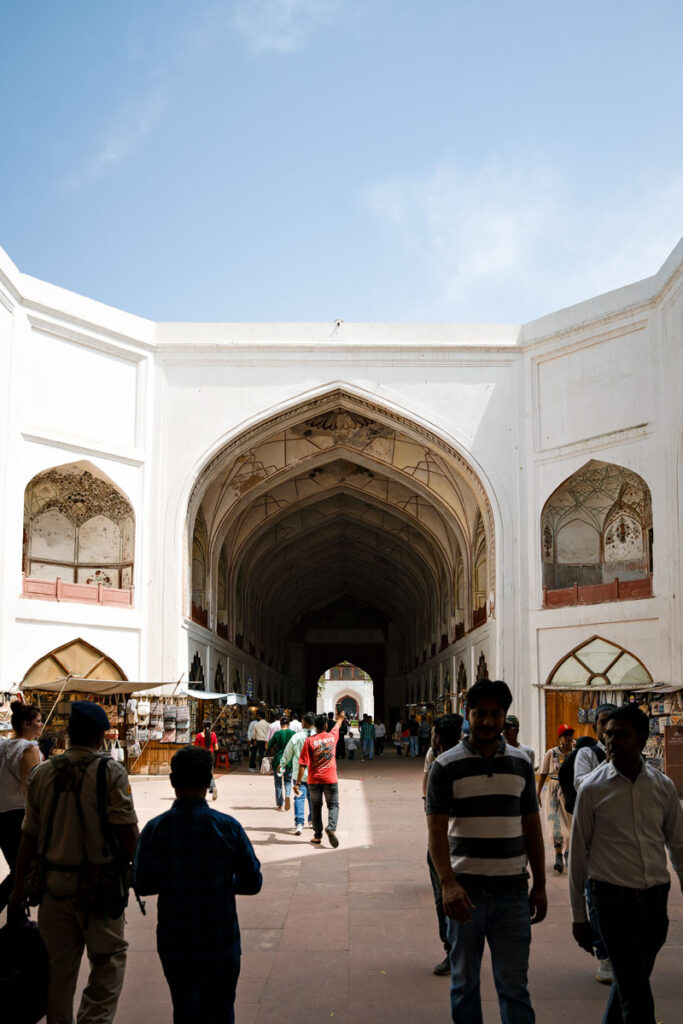
Shah Jahan, ruler of the Indian Mughal Empire and builder of the Taj Mahal, had the Red Fort constructed in the first half of the 17th century to serve as his imperial seat in his newly established capital. Today, the fortress is one of Delhi’s most significant landmarks. Sandwiched between the Yamuna River and the chaotic Old Delhi neighborhood, the thick, reddish-brown stone walls rise up. A long, dark corridor lined with shops and street vendors leads us from the main gate into the complex. After the hectic traffic on the main street, we enjoy the peace and quiet and the vastness that now opens up before us.

Red Fort Delhi
Red Fort Delhi
Red Fort Delhi
Red Fort Delhi
Red Fort Delhi
Red Fort Delhi

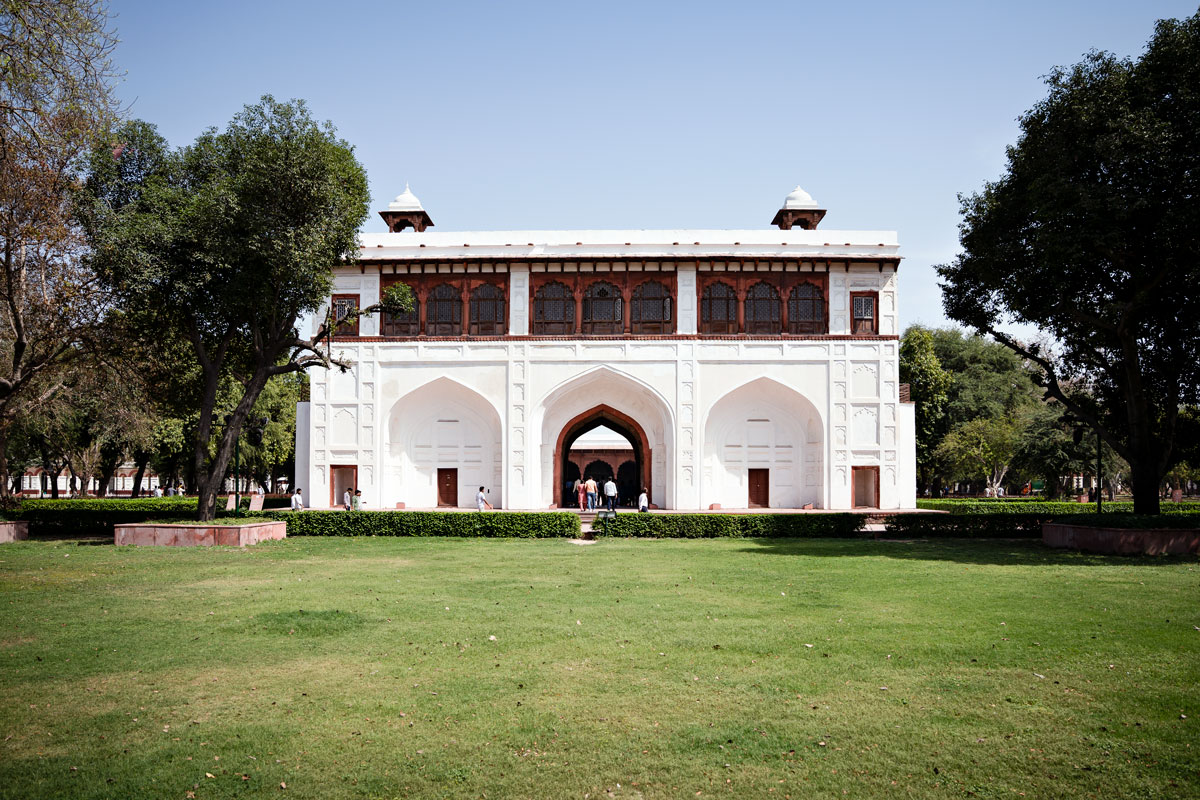
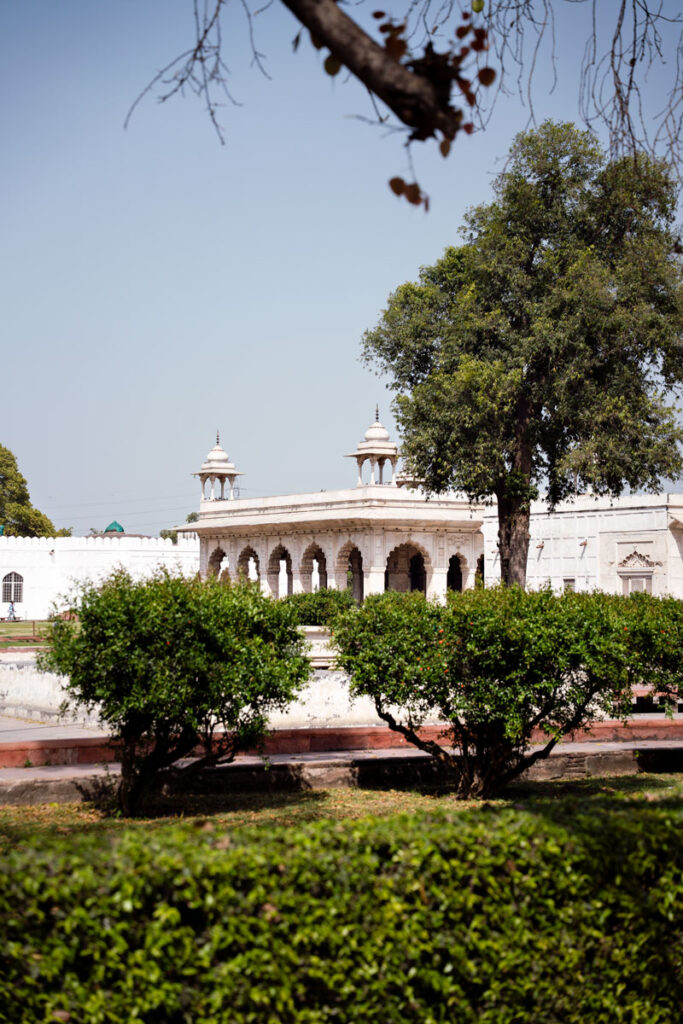
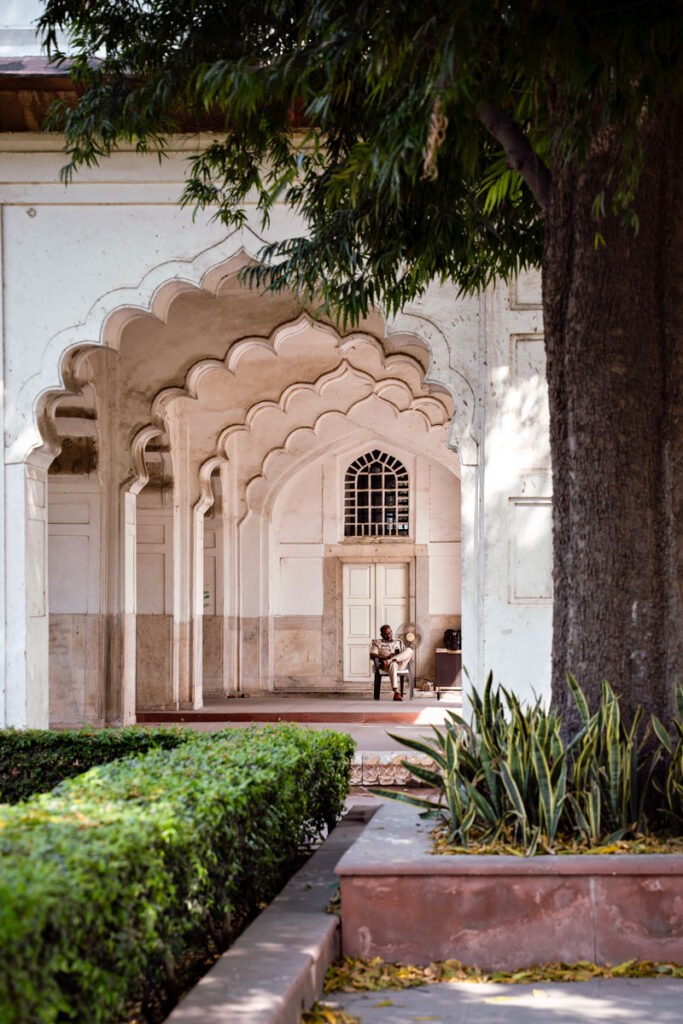
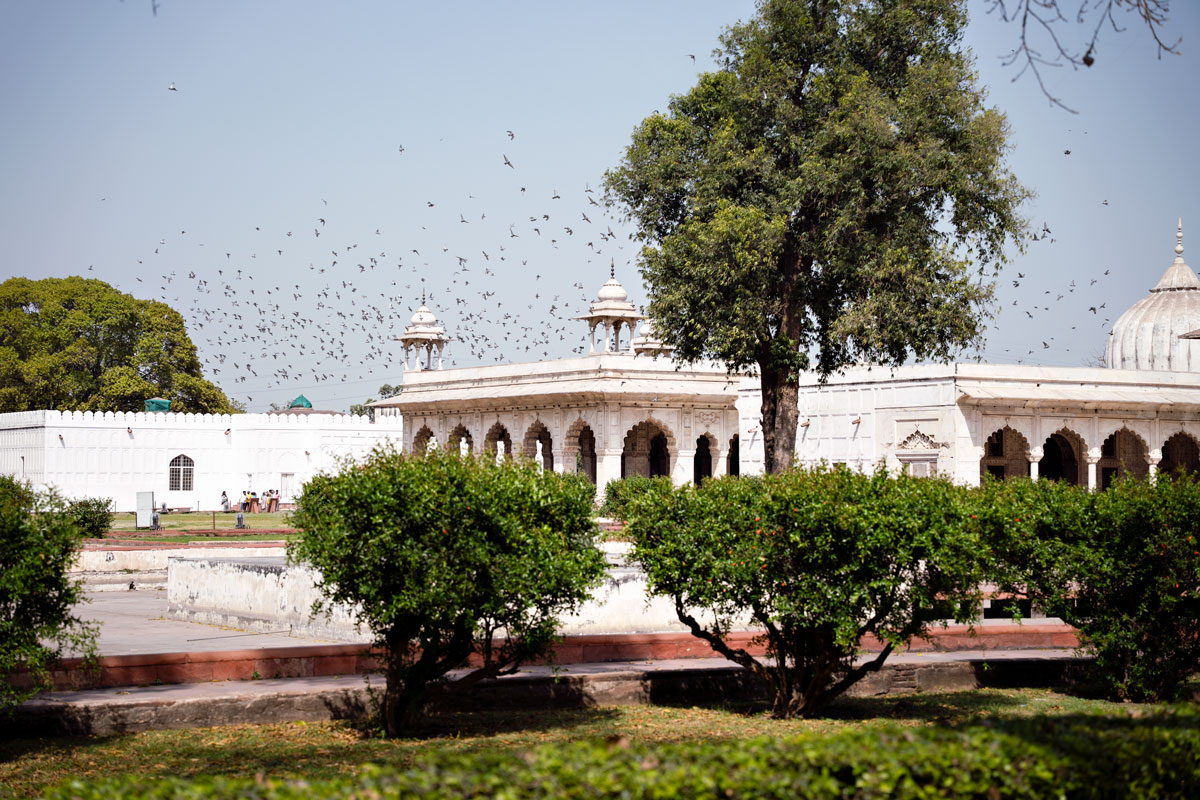
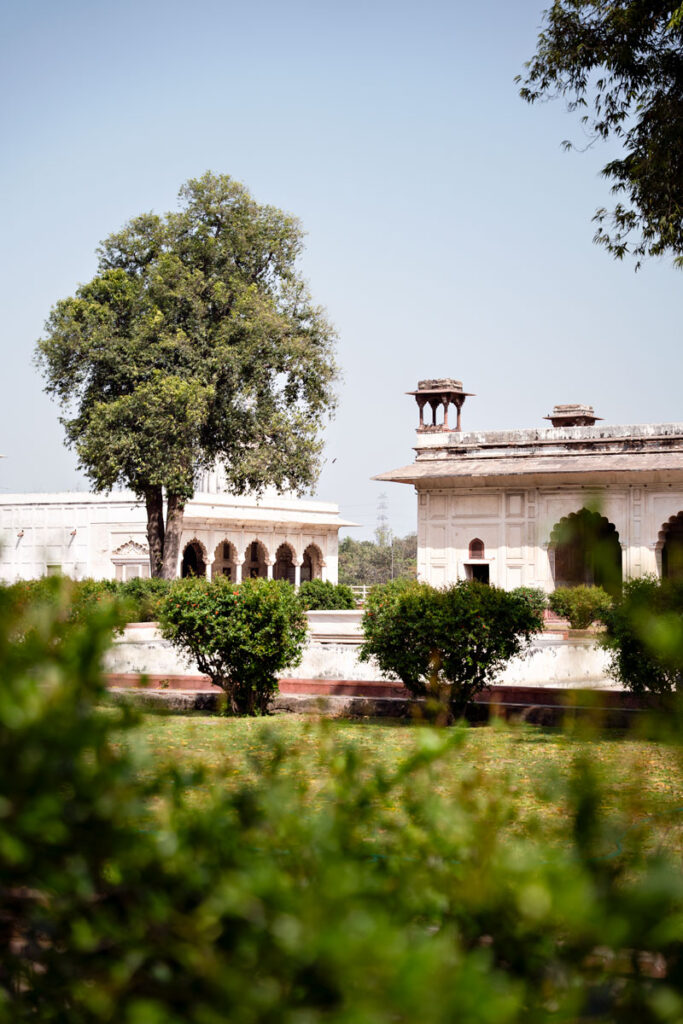
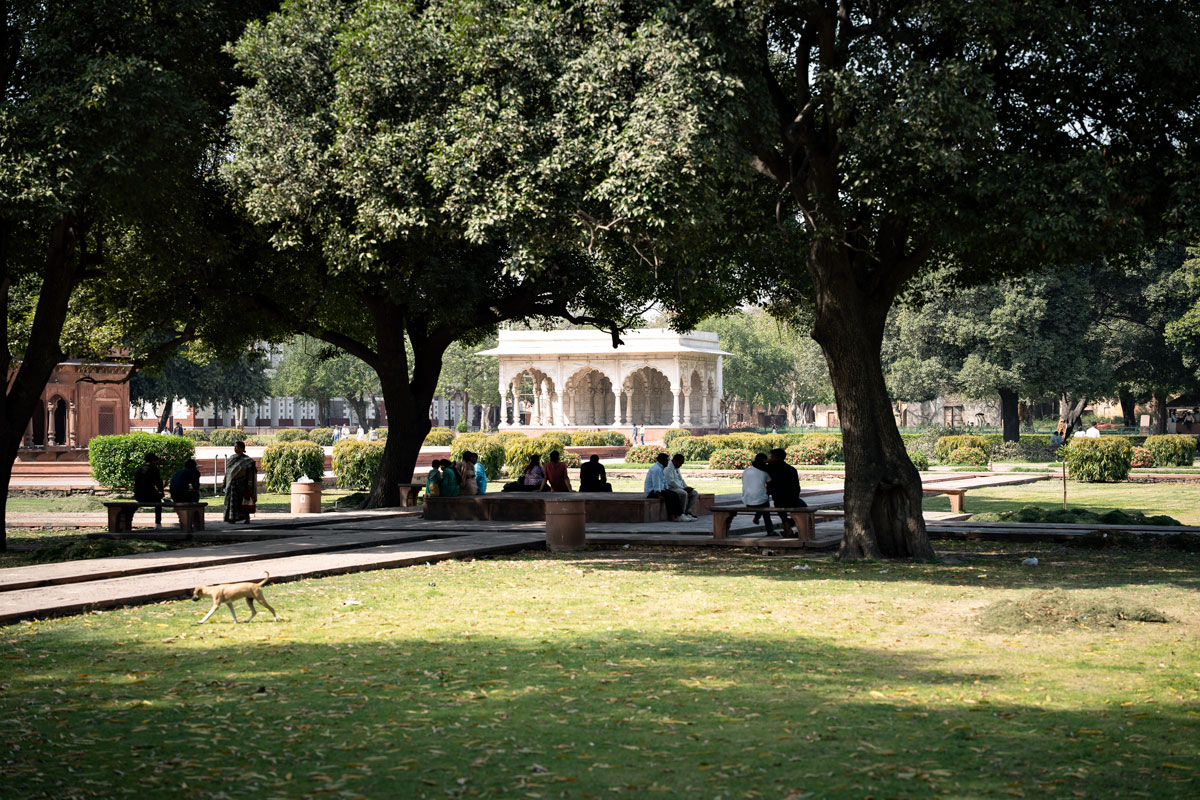
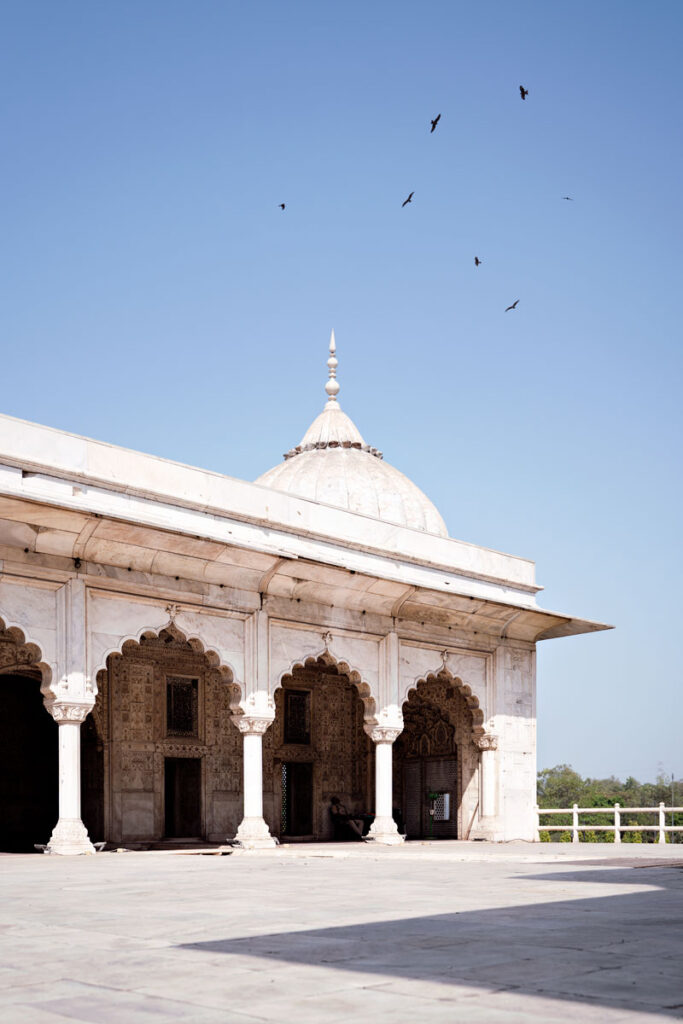
Arched gateways and shaded walkways. Small pavilions and tree-lined meadows. Beautifully landscaped flower beds and whimsical waterways winding between the footpaths. Symmetrical architecture that defines the lines of sight and guides visitors’ attention. Flocks of birds circle repeatedly or take flight all at once. A guard sits motionless in front of the cooling breeze from his fan. A group of young women walks by, laughing.

The vast gardens of the Red Fort invite you to enjoy the silence and coolness away from the chaos of Old Delhi, savoring every last moment. Because outside, on the other side of the red walls, a traffic nightmare of metal, smog, and noise awaits, along with a sea of people.

Red Fort Delhi
Red Fort Delhi
Red Fort Delhi
Red Fort Delhi
Red Fort Delhi
Red Fort Delhi

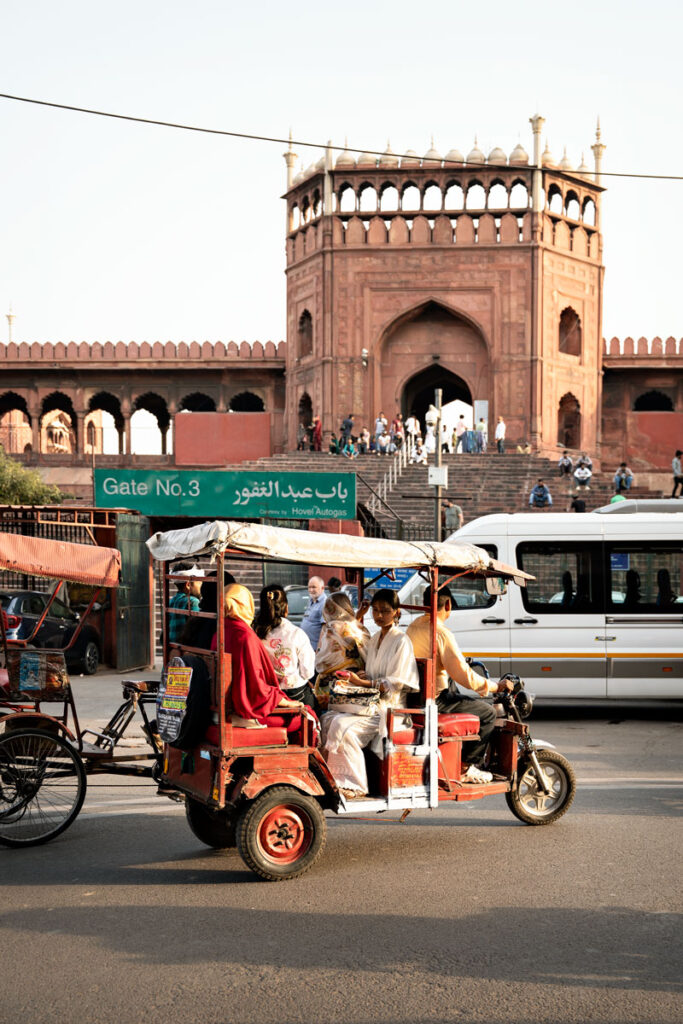
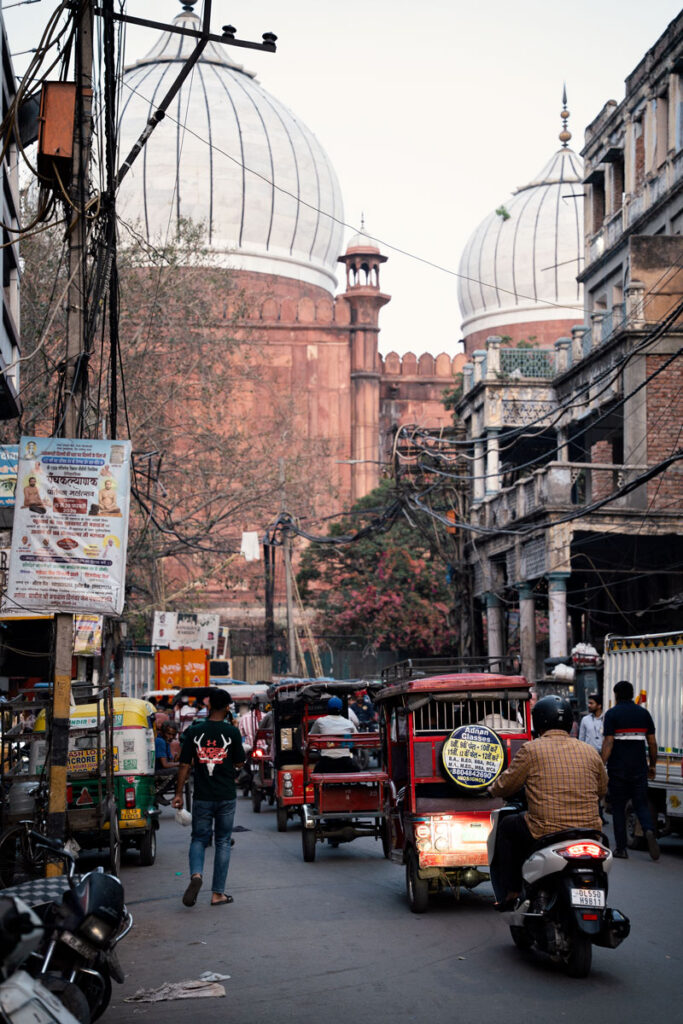
Old Delhi. Reality catches up with us and hits us like a punch right in the face. We squeeze through a gate and step onto Chandni Chowk Road. More than that: now we’ve truly arrived in India.

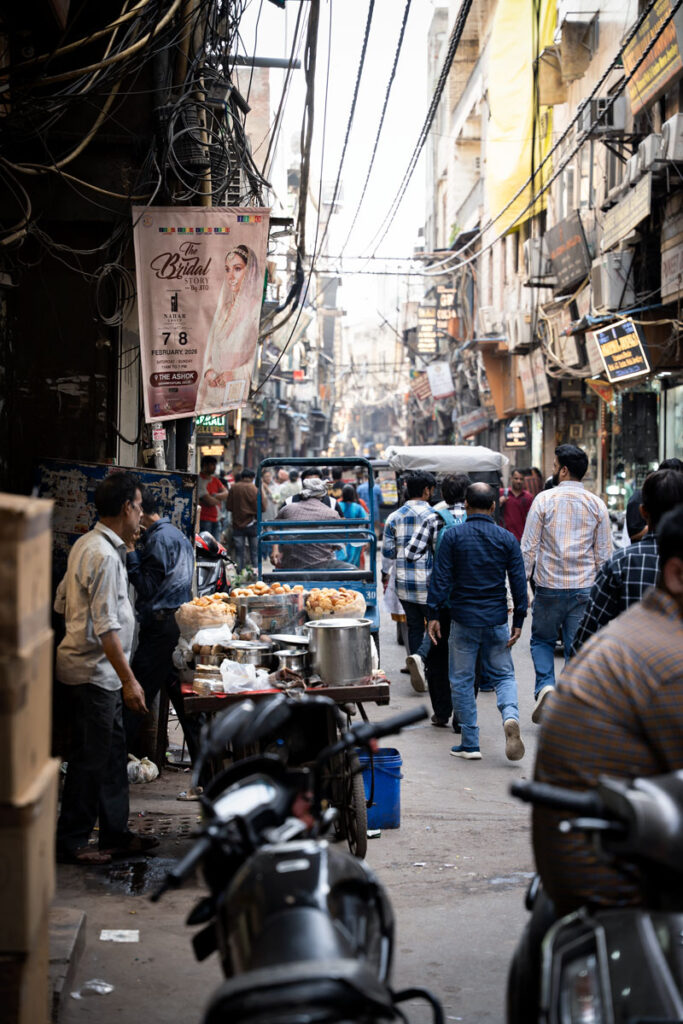
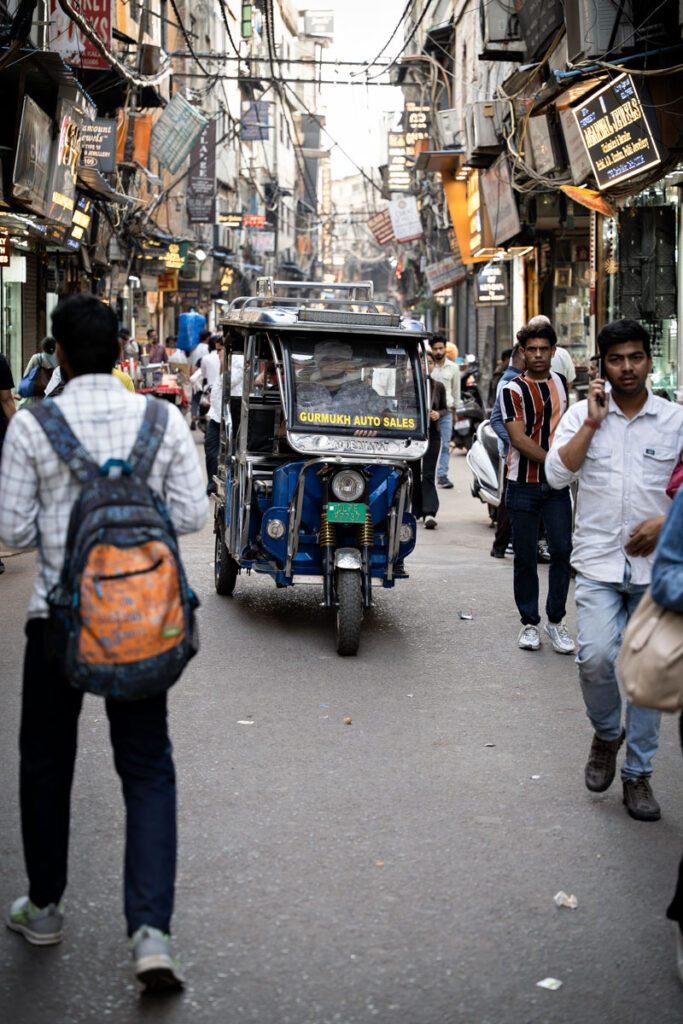
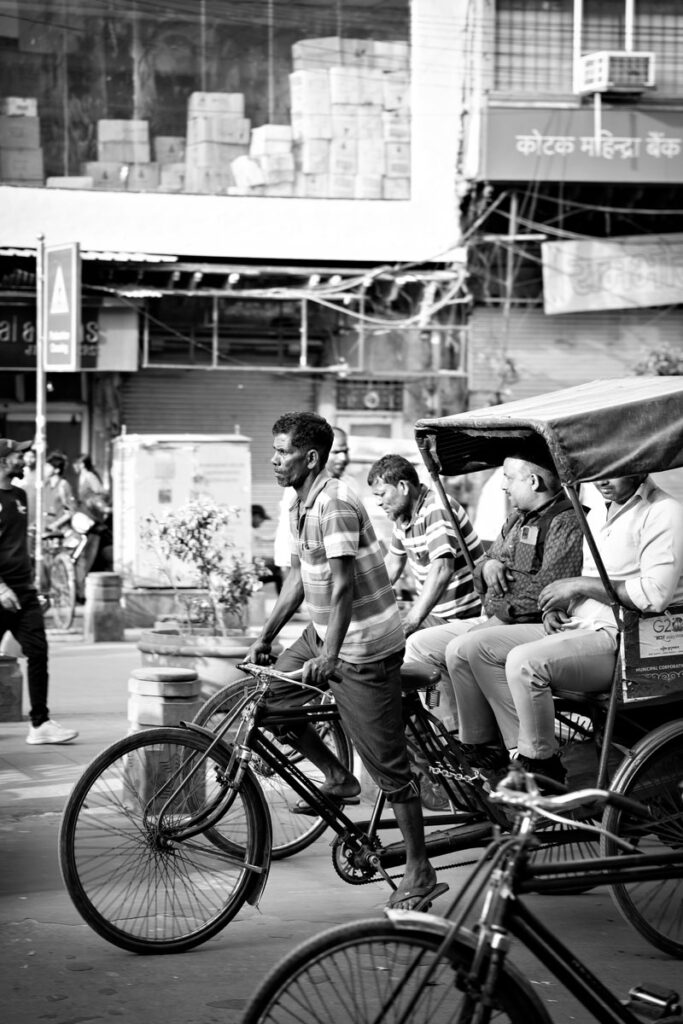
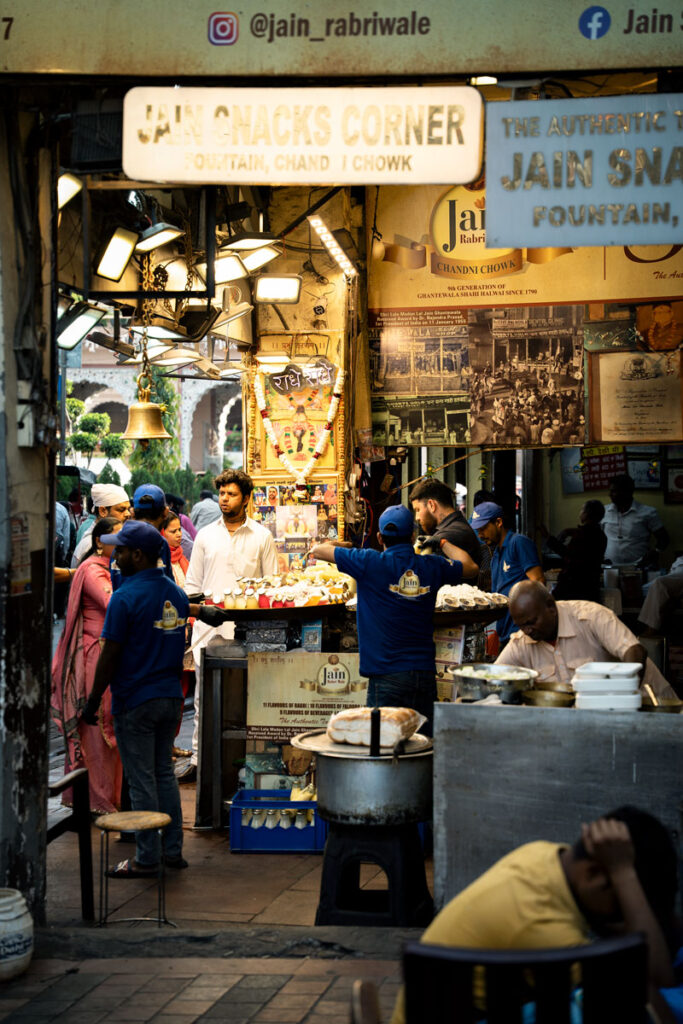
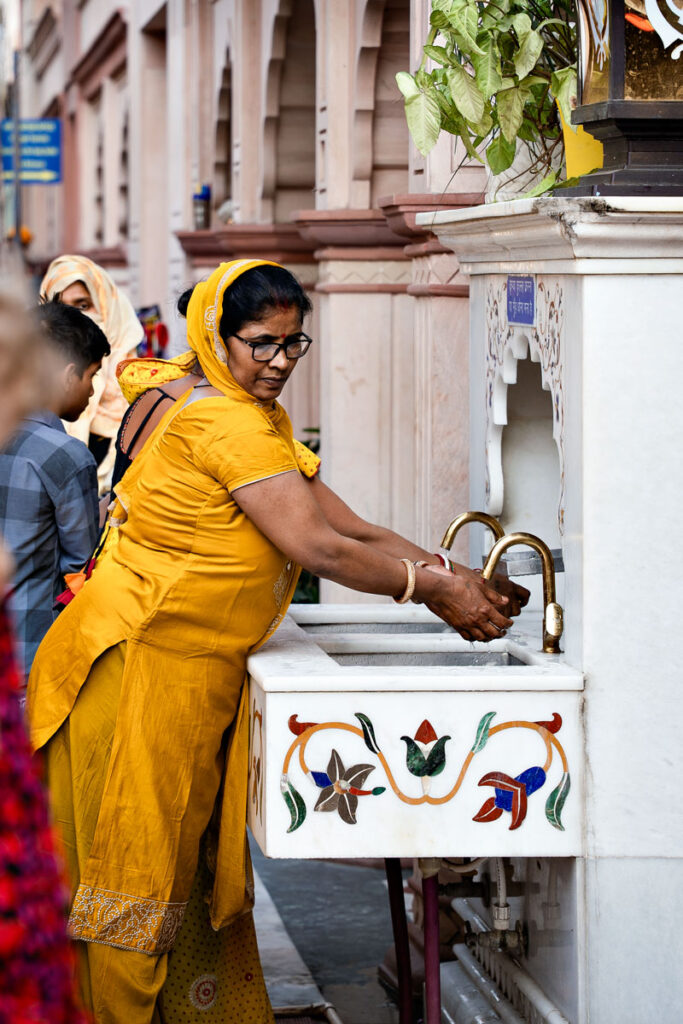
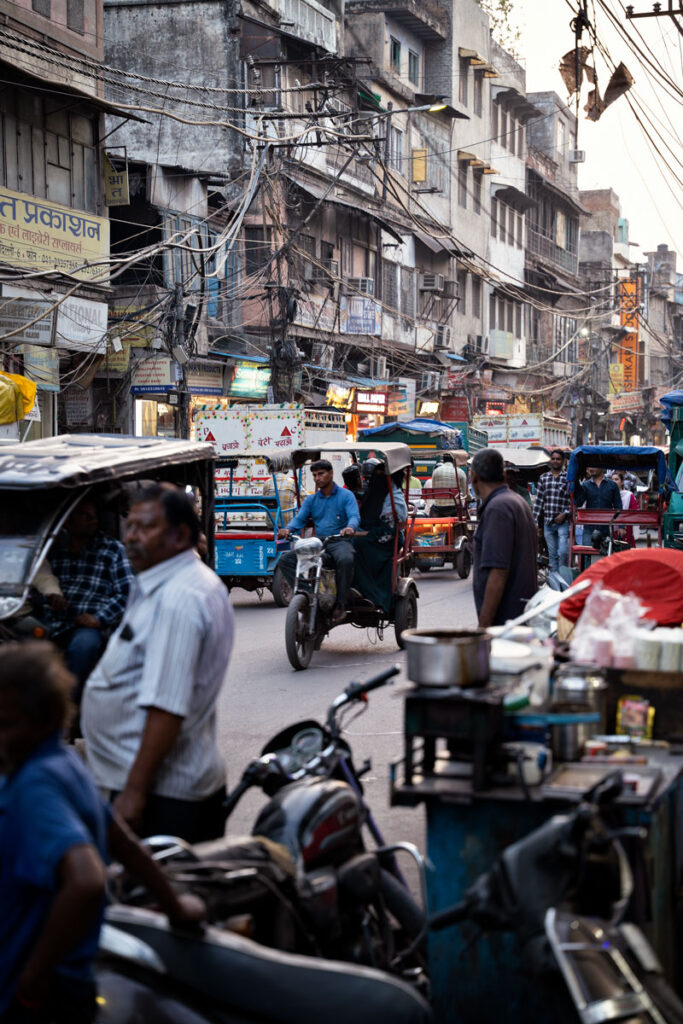
The people, the smells, the noise – all these sensations wash over us and envelop us. Rickshaw drivers, lined up like pearls on an endless string, crowd the street. Scooters, carts, and bicycles buzz around them like flies. The sidewalks are impassable. People stand, walk, lie down, sit, sleep, and run there. Some calmly smoke a cigarette between mountains of trash, while others wash themselves before entering a temple. A line of men has formed in front of a public urinal by the roadside. Beggars hold out their hands to us. Porters and women carrying heavy baskets bump against us. Time and again, someone appears beside us asking for money for some service or other. Above our heads, broken neon signs flicker, and tangled bundles of electrical cables hang between the buildings.

We take refuge in a side alley. But even here there are just as many people; there’s simply less space. So back to the main street to go with the flow. And so we let ourselves be carried along – first to a café, then to a Sikh temple, and finally to the Grand Friday Mosque.

On the Streets of Old Delhi

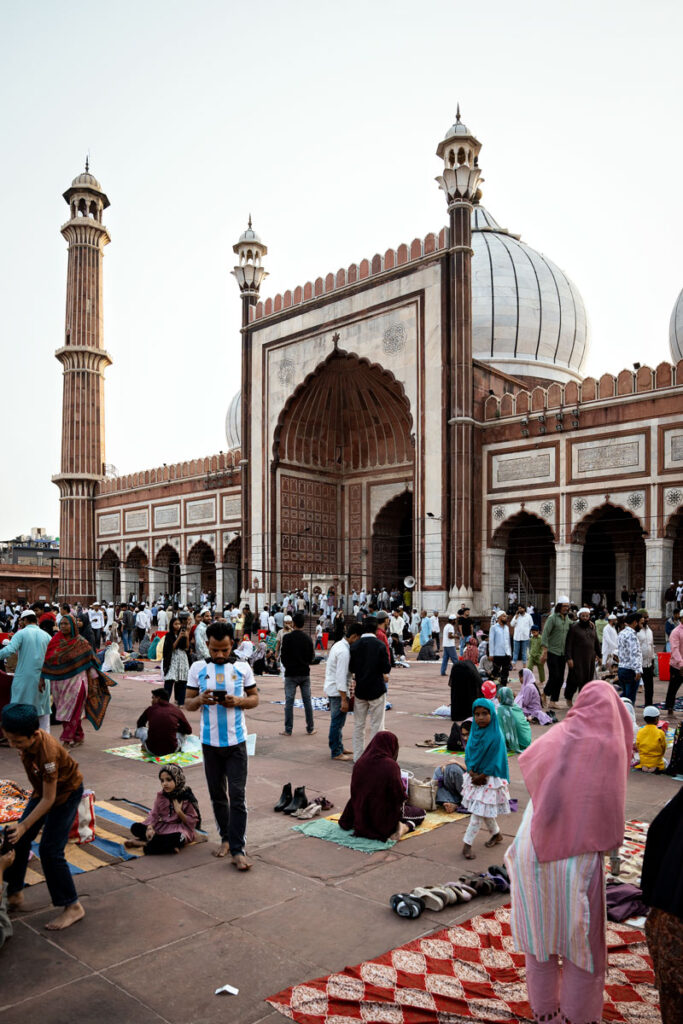
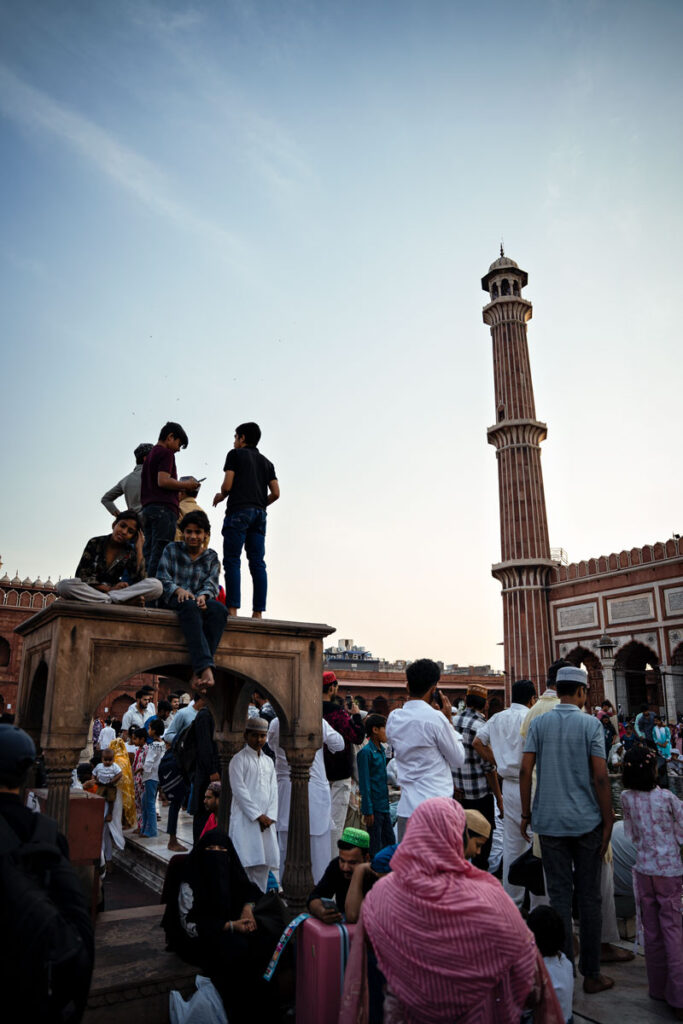
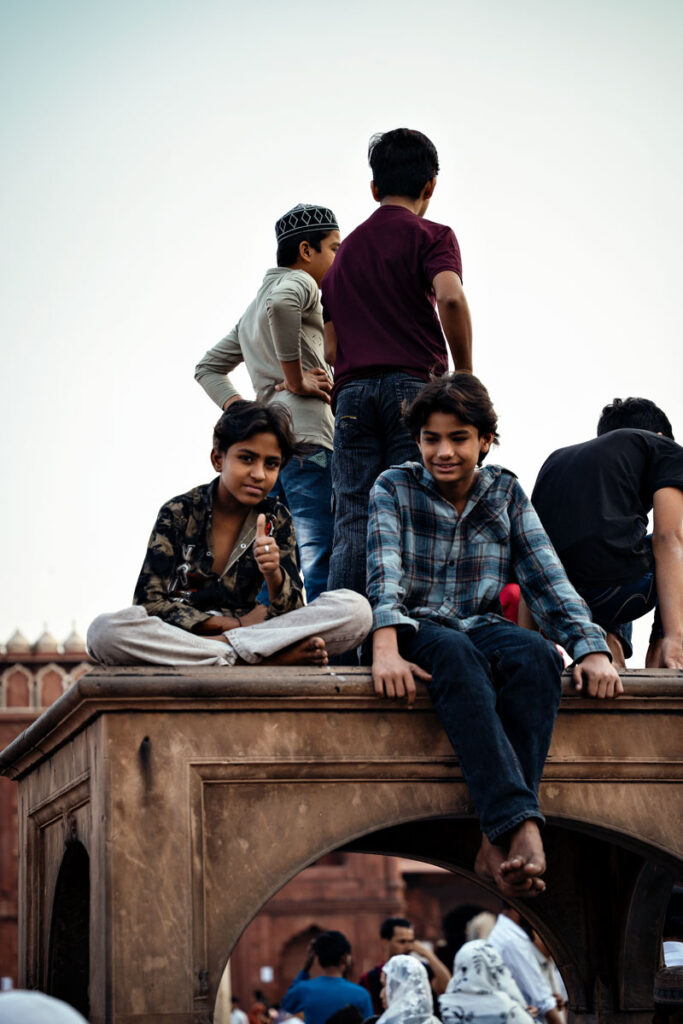
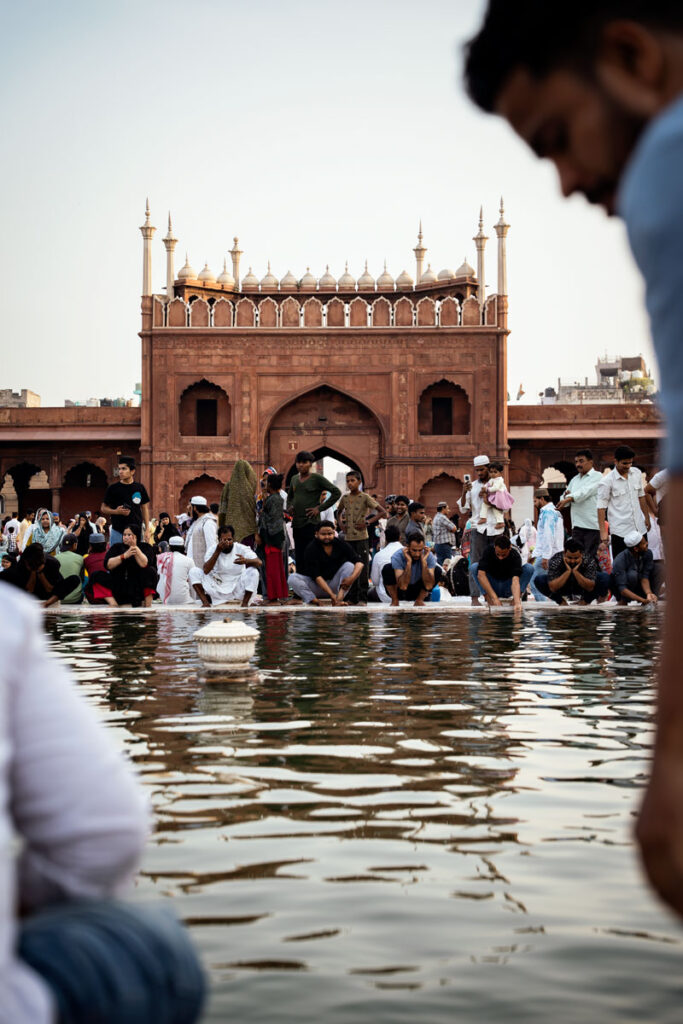
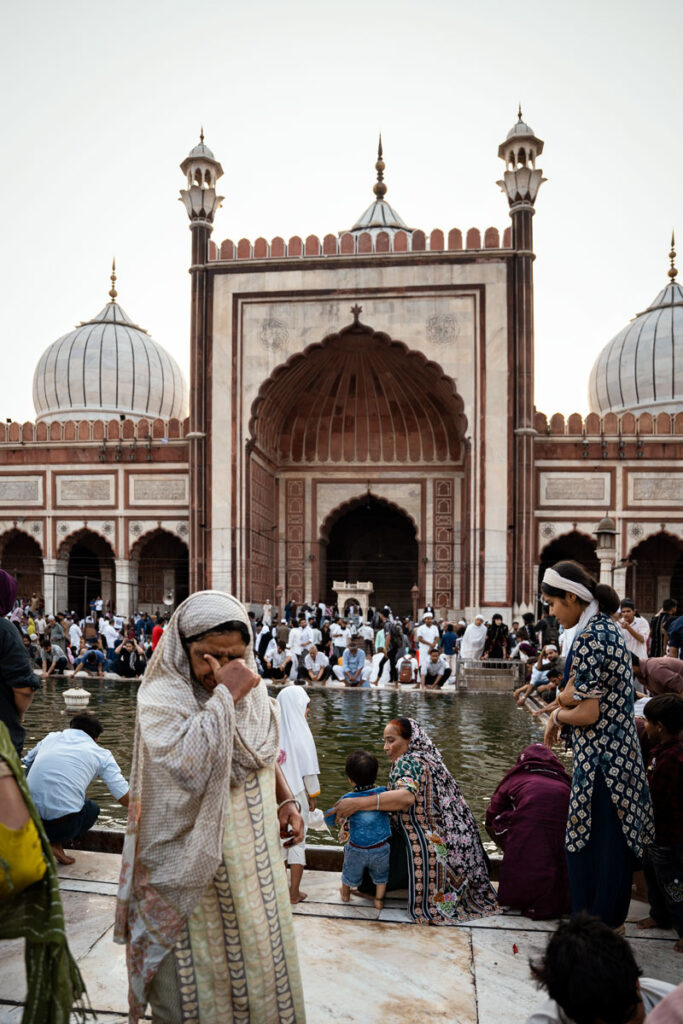
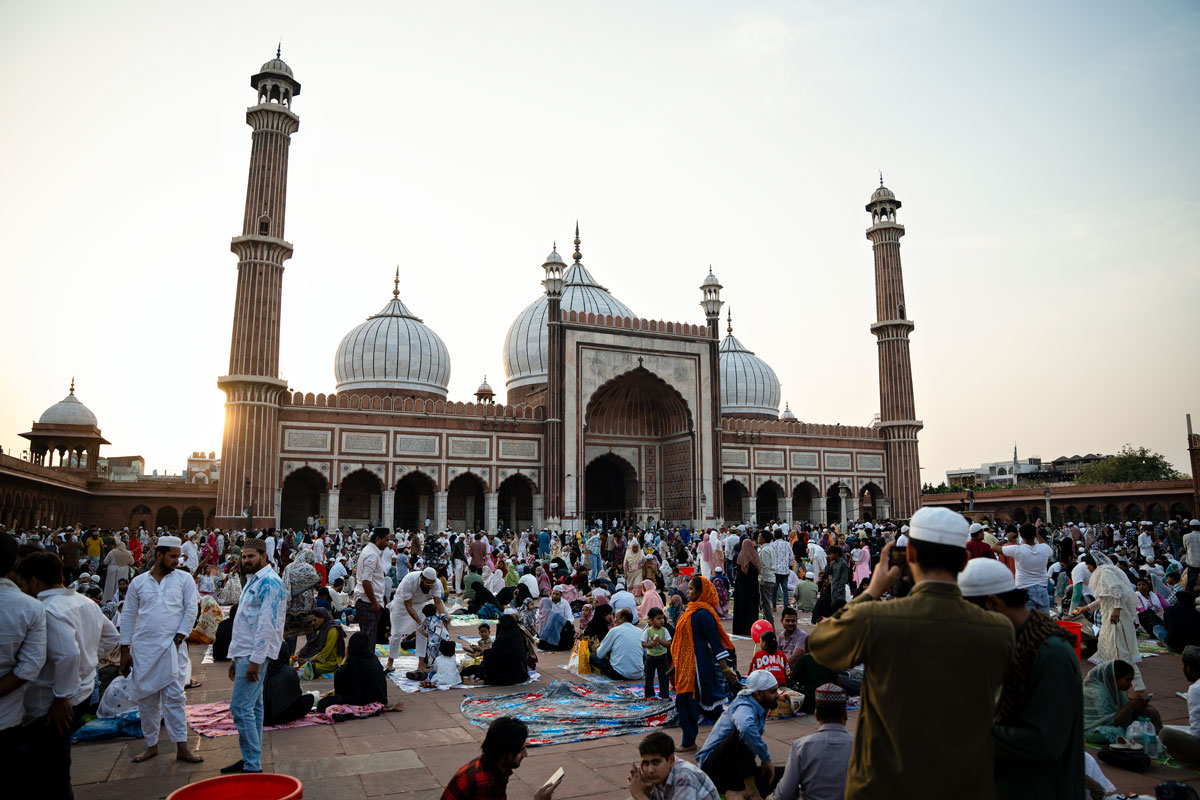
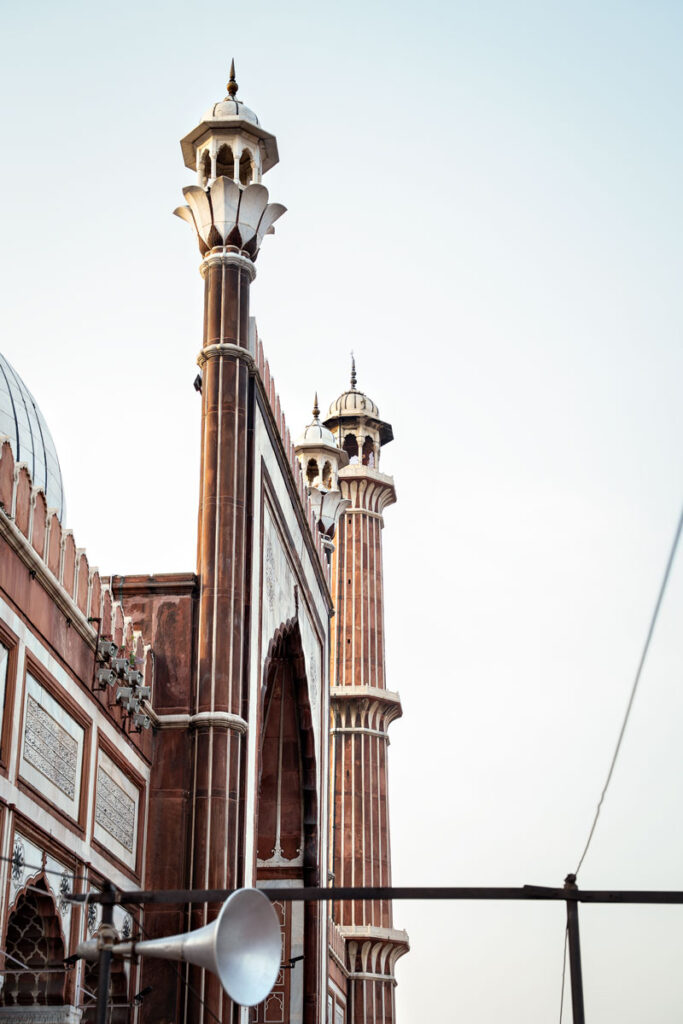
The late afternoon sun casts its golden light on the minaret of the Jama Masjid on the outskirts of Old Delhi. The courtyard is already full of people, yet more and more worshippers continue to stream through the entrance gates. Today is Eid al-Fitr, the festival marking the end of fasting and the conclusion of Ramadan.

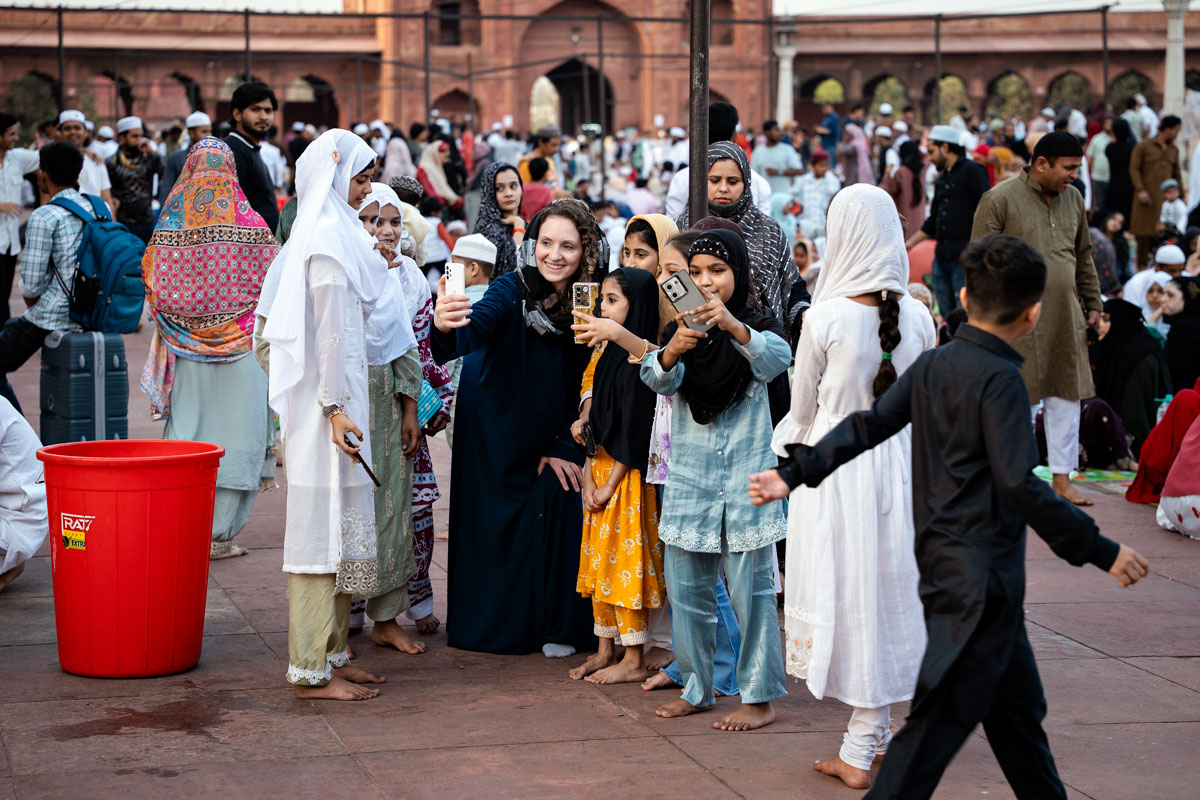
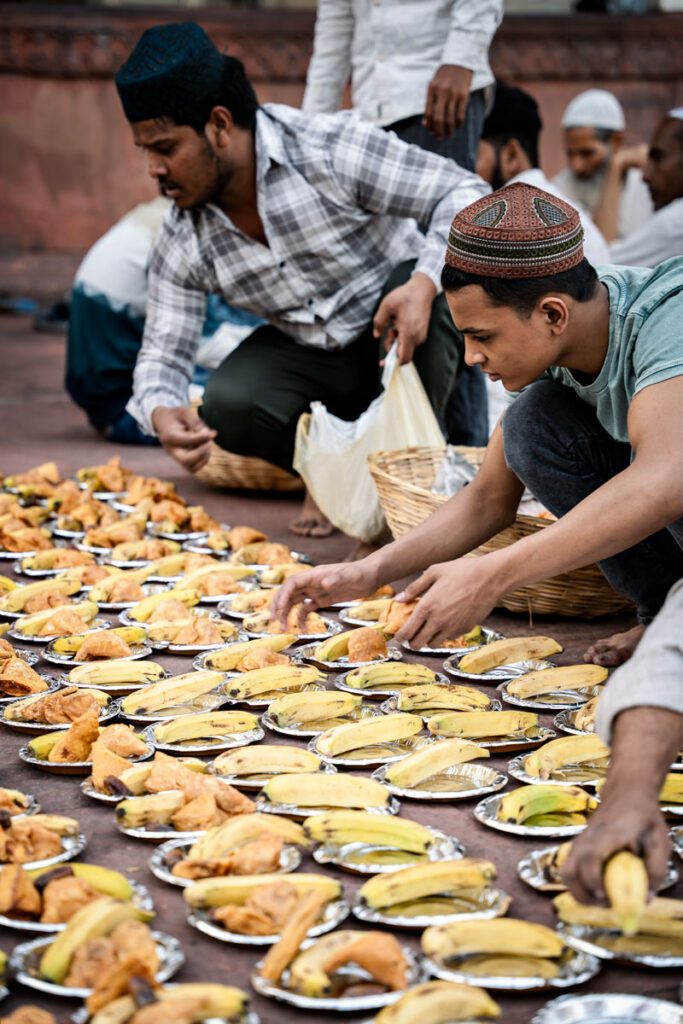
As night falls, families and friends gather to eat together. Women spread picnic blankets on the ground and set out large bowls of food: fresh pastries and sweet tea; watermelons and bananas; bread and desserts. Before prayer, the worshippers wash their feet at the central water basin. Photos are taken, there is plenty of laughter, and people chat with one another. The atmosphere is exuberant and full of anticipation.

When the sun finally sets, the forecourt is filled to capacity. Water and small plates of simple meals are distributed. There is a scramble for the free offerings, and once again it becomes clear just how stark the contrasts in India can be. Here, poverty and unimaginable wealth are often just a few steps apart.

Jama Masjid in Old Delhi

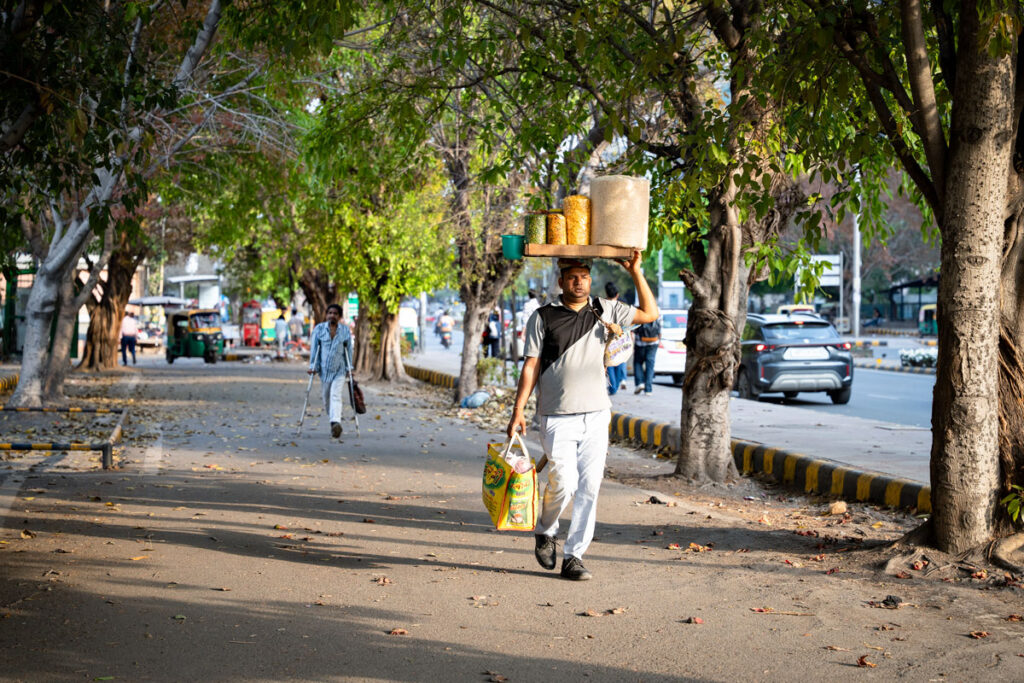
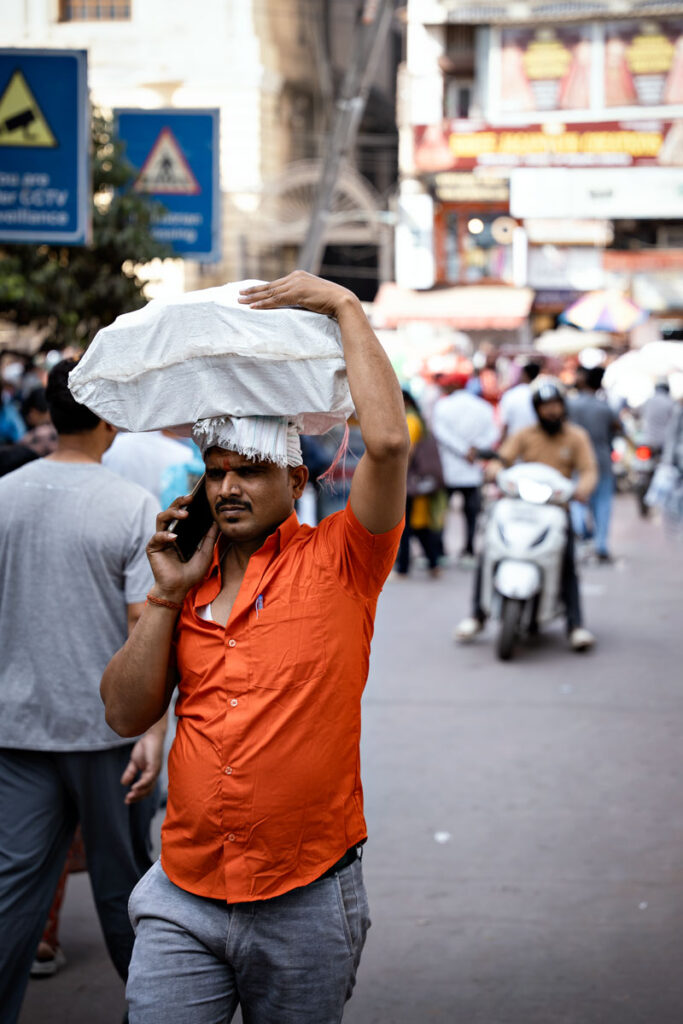
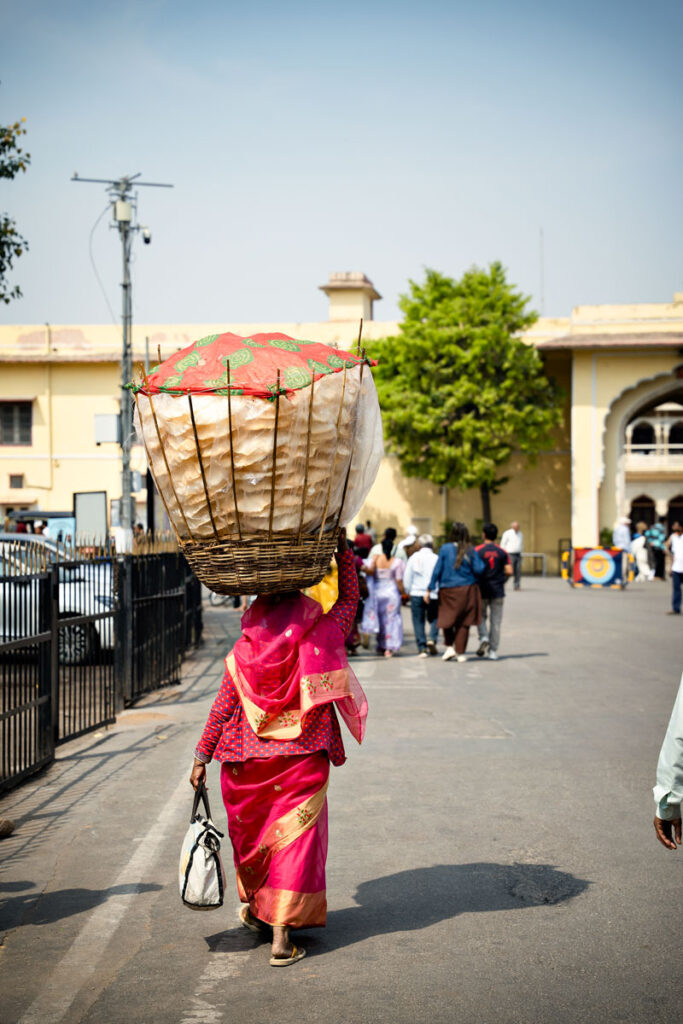
Dizzy, exhausted, and overwhelmed by all the sights, we stroll down a small street through Old Delhi back to the nearest subway station. The same hustle and bustle as during the day is in full swing. Vendors carry large packages and rolls of fabric several meters long on their heads and shoulders through the maze of stalls and alleys. Amid the trash and crowds, barbers and shoe shiners go about their laborious work. The air is filled with the scent of curry, exhaust fumes, and the smell of motor oil.

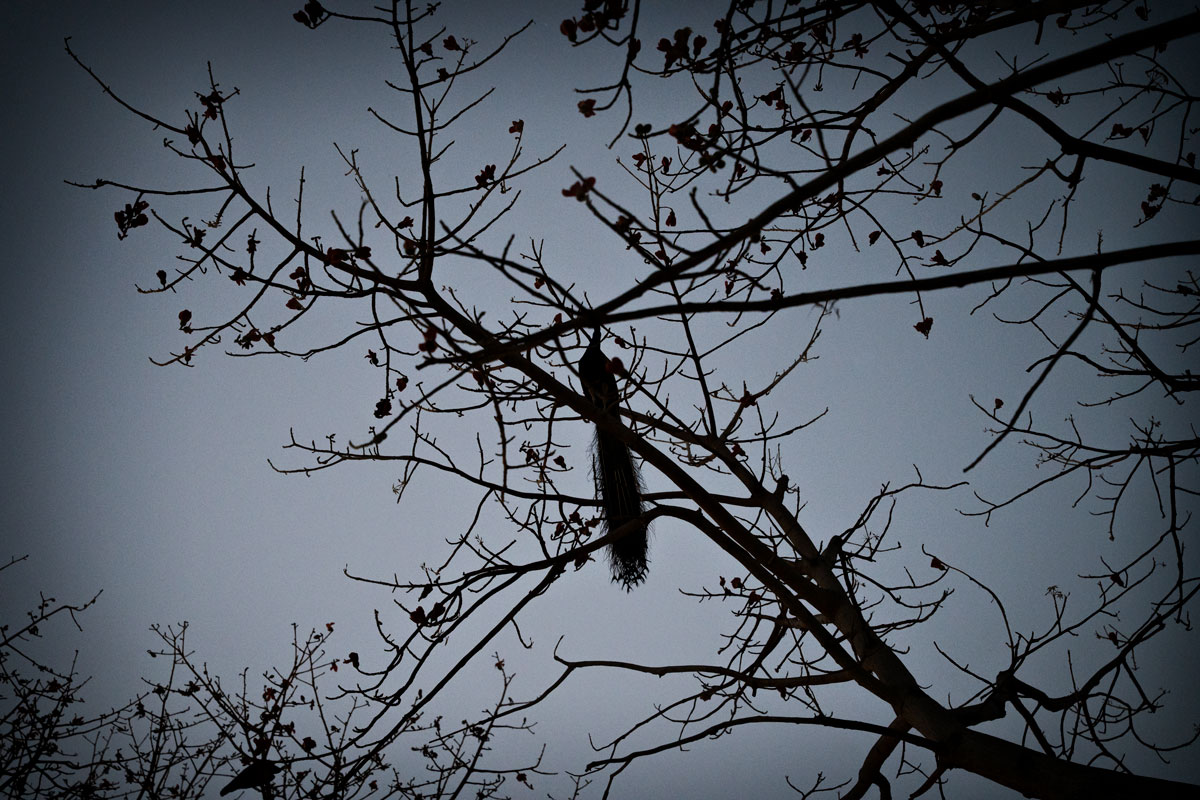
The subway takes us back to our lodging in the Gole Market neighborhood. Here, in the side streets, it is surprisingly quiet for India. In the trees, whose branches stretch like charred fingers into the twilight sky, the peacocks sleep.

Streets of Old Delhi
Peacocks in Indian Trees

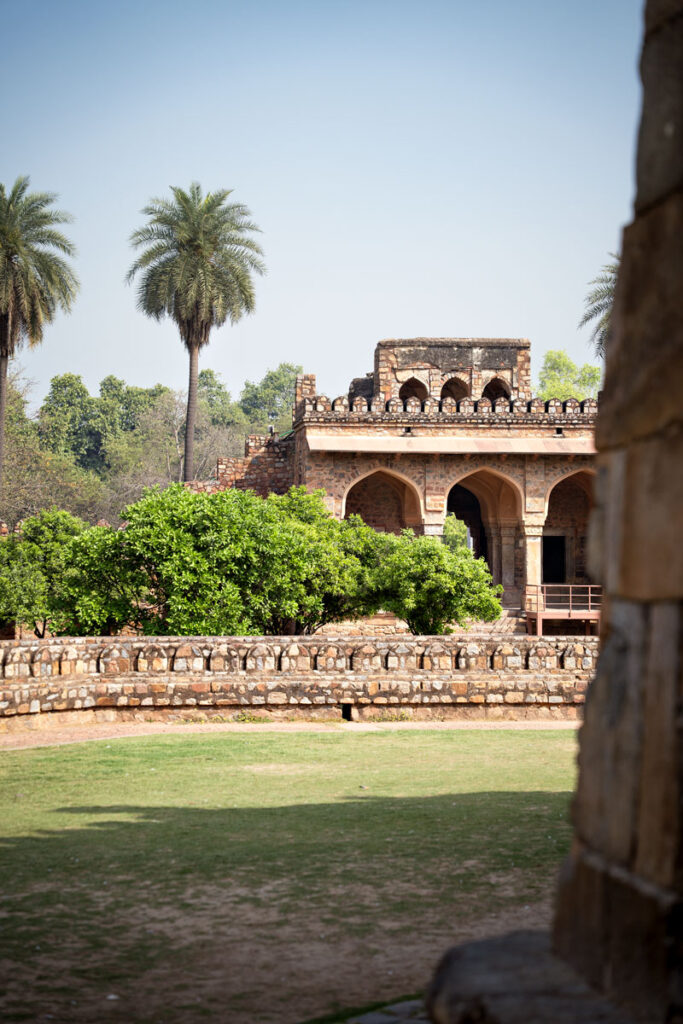
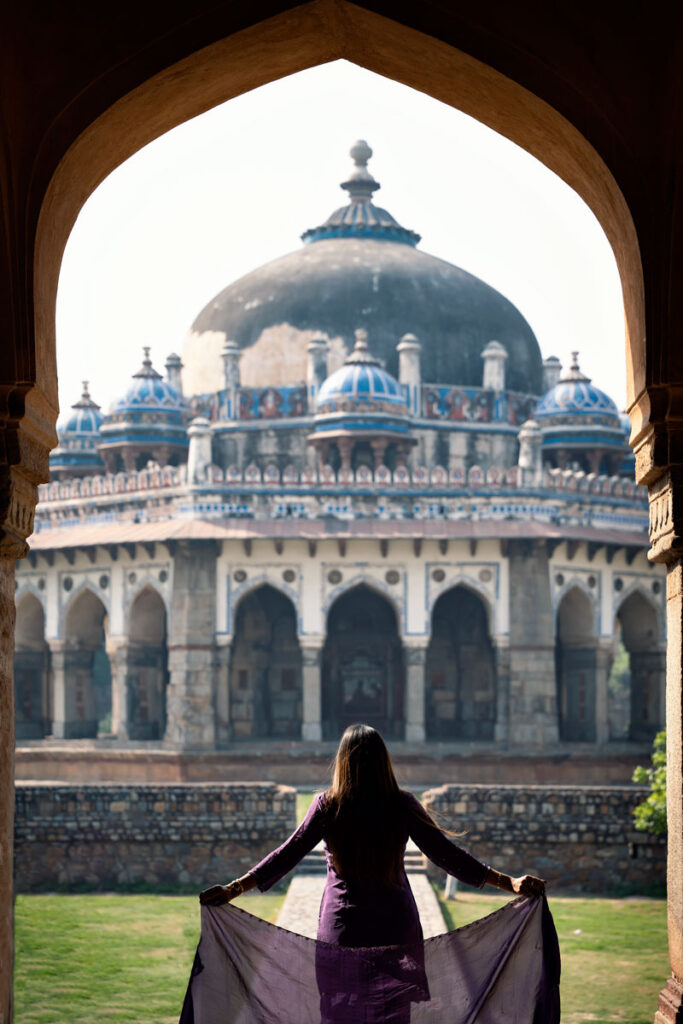
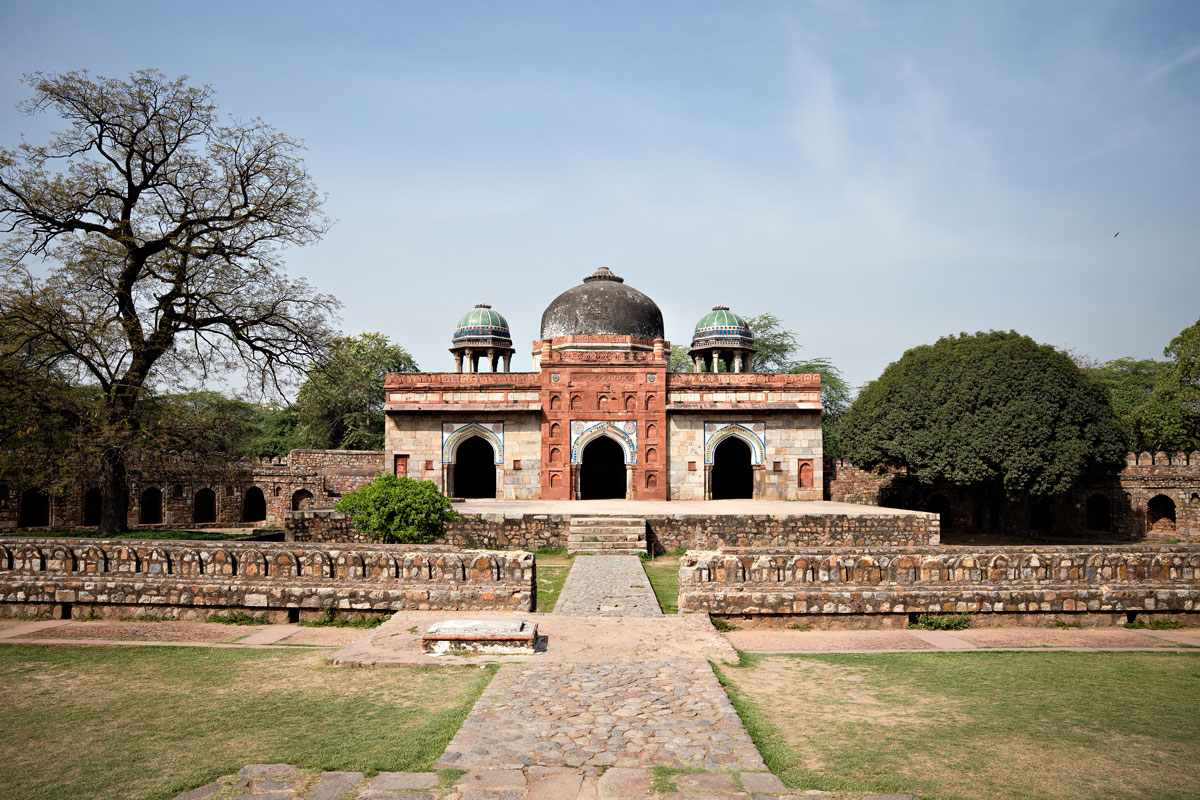
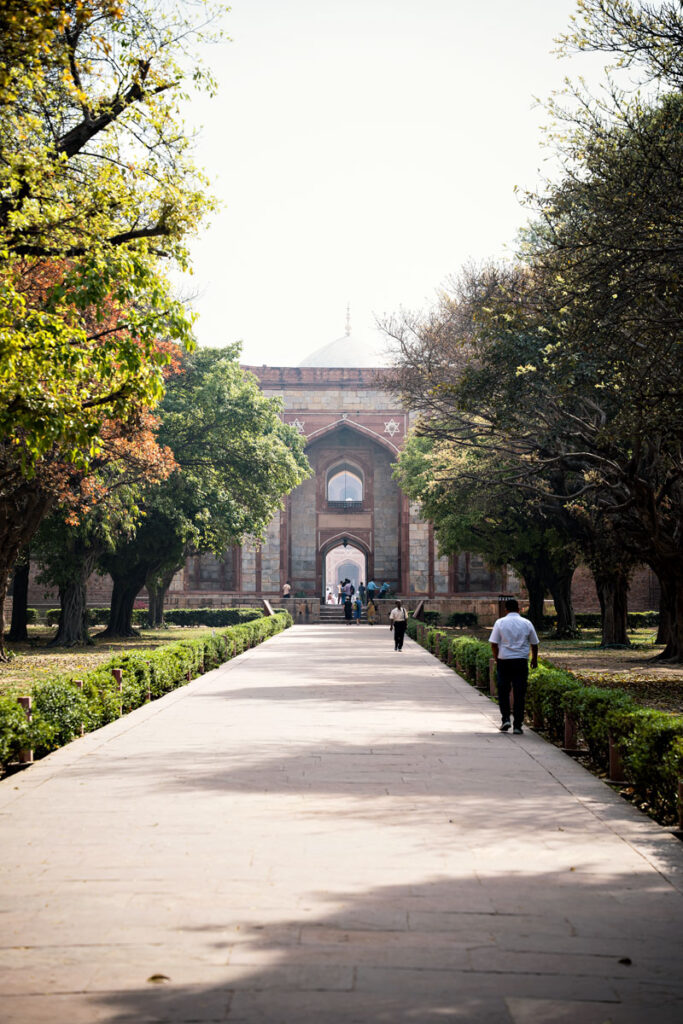
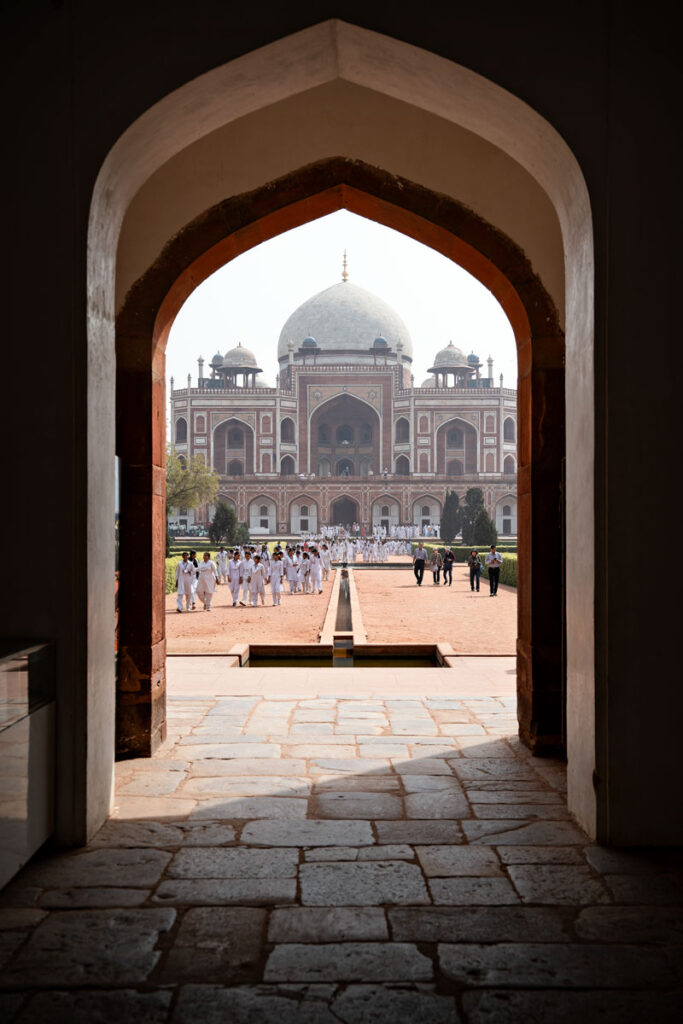
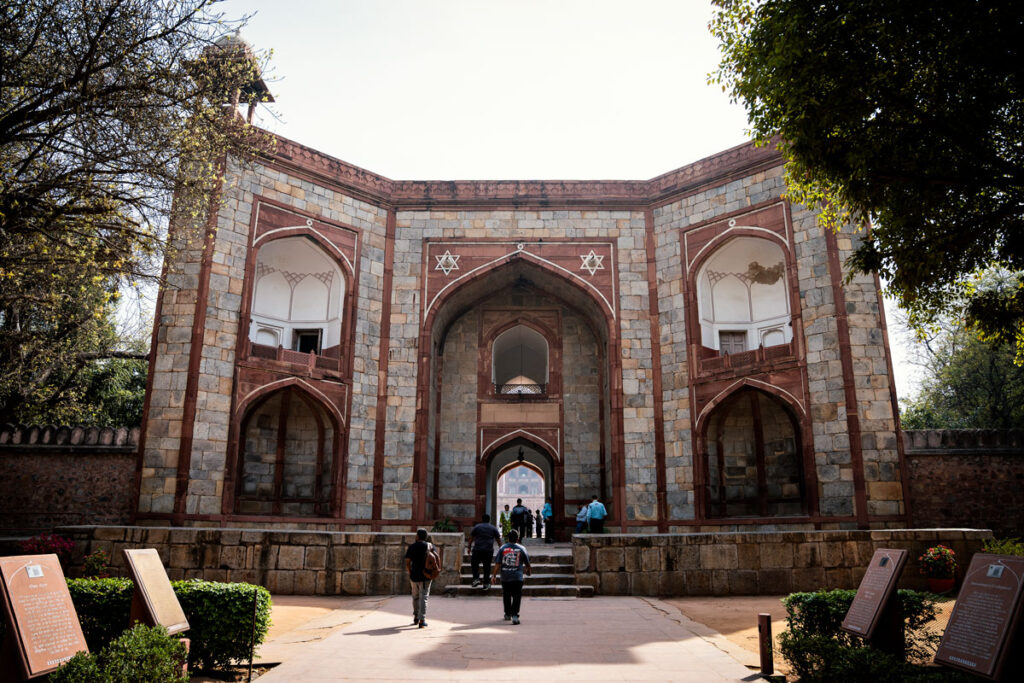
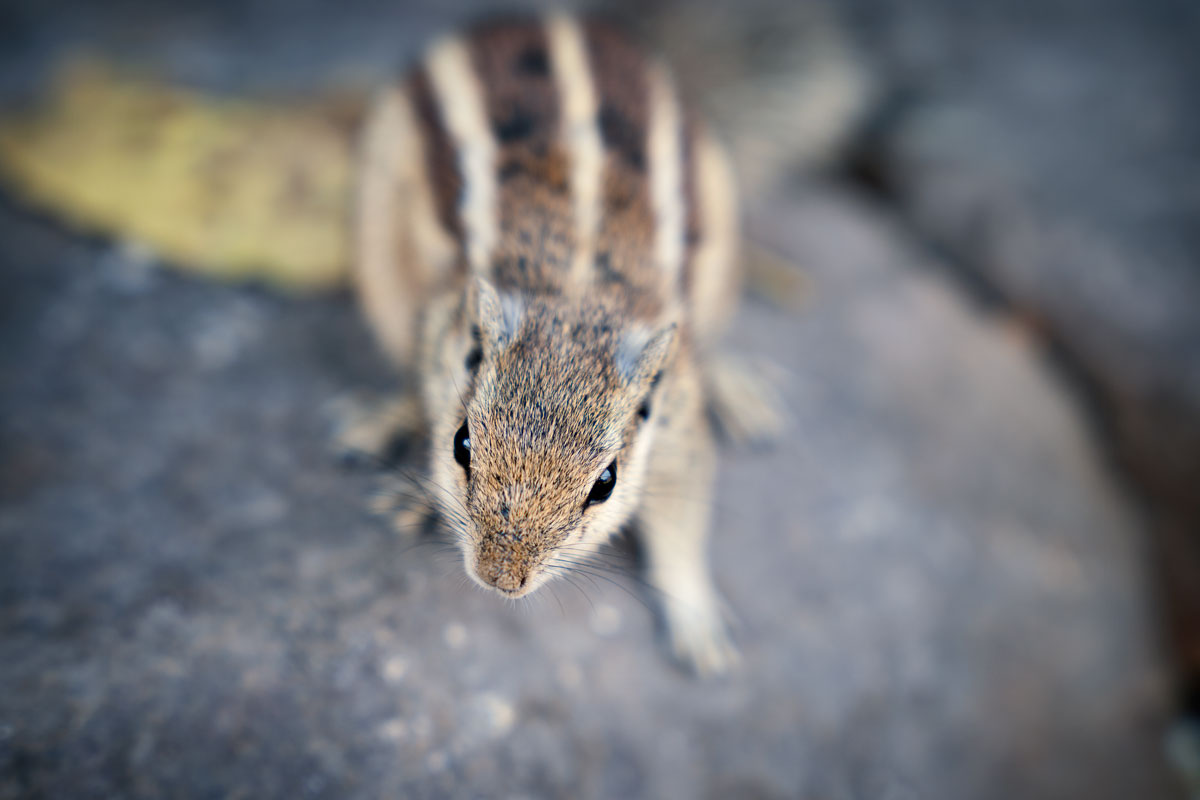
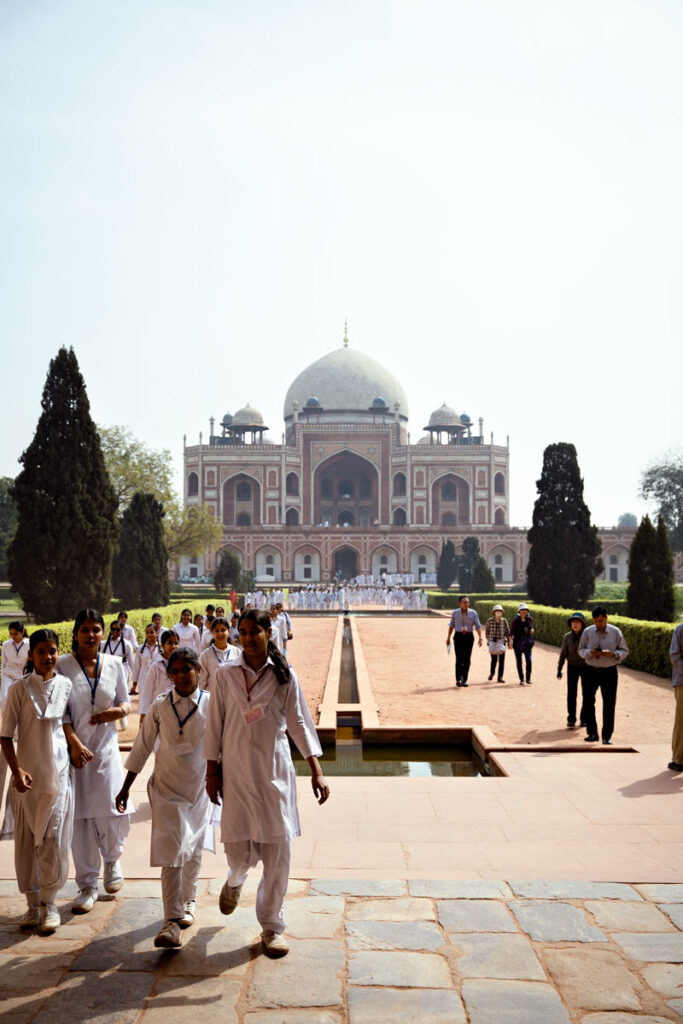
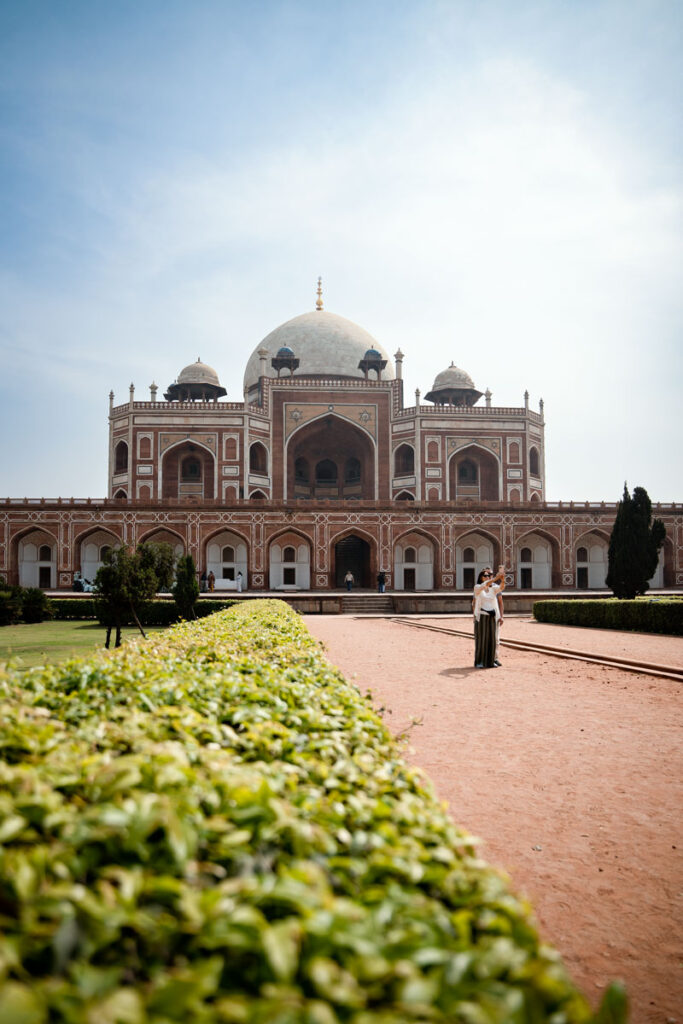
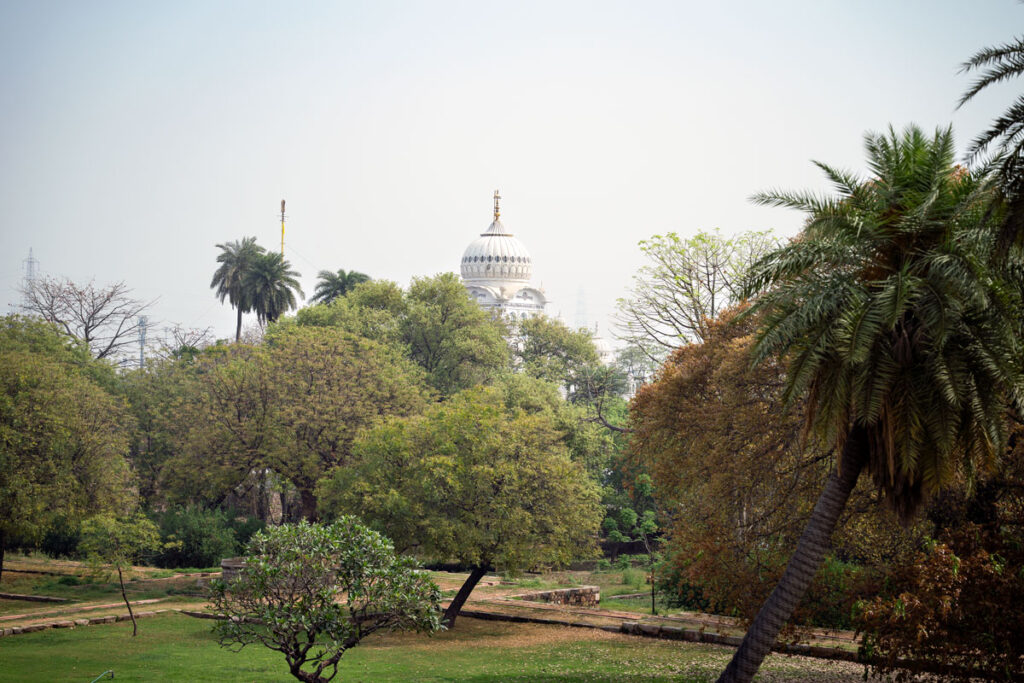
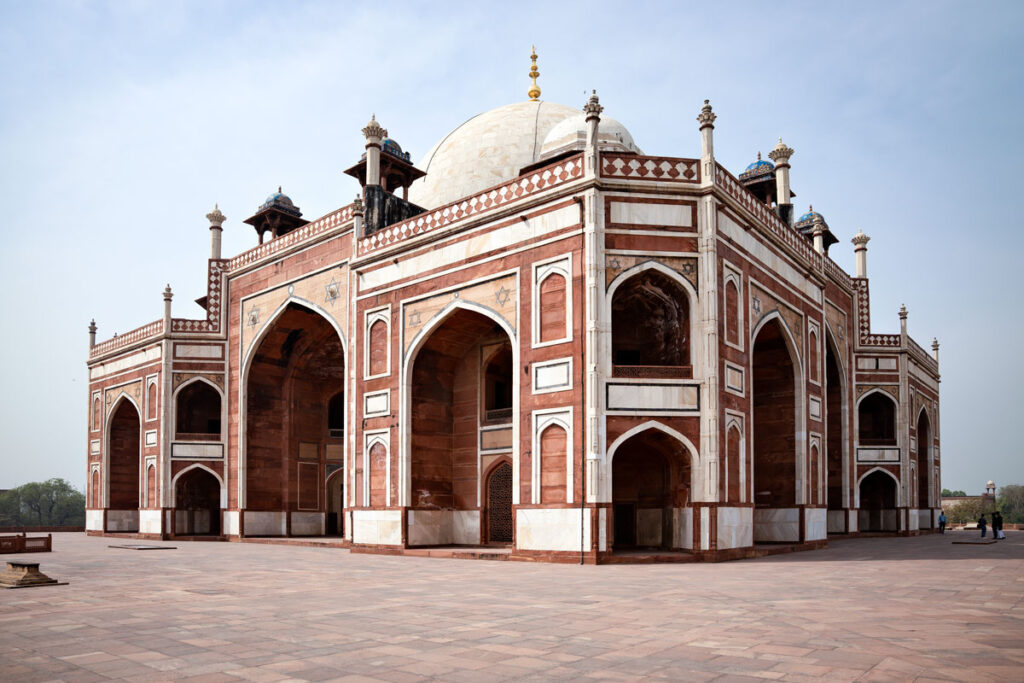
Located in southeast Delhi is the Humayun’s Tomb, the burial site of a 16th-century Mughal ruler. Nestled among palm trees and meandering waterways, the sprawling complex is an oasis in the urban jungle. Beneath the arched gateways of the ancient walls, there are numerous shady spots to rest and linger. Chipmunks dart across the lawns and are so accustomed to people that they even climb onto our shoulders in search of food.

School classes in white uniforms stream out of the main building. They giggle and point at us pale-faced Westerners. Once they’ve passed by, a peaceful idyll settles over the grounds.

Humayun-Mausoleum
Humayun-Mausoleum
Humayun-Mausoleum
Humayun-Mausoleum
Humayun-Mausoleum
Humayun-Mausoleum
Humayun-Mausoleum
Humayun-Mausoleum
Humayun-Mausoleum
Humayun-Mausoleum
Humayun-Mausoleum
Humayun-Mausoleum

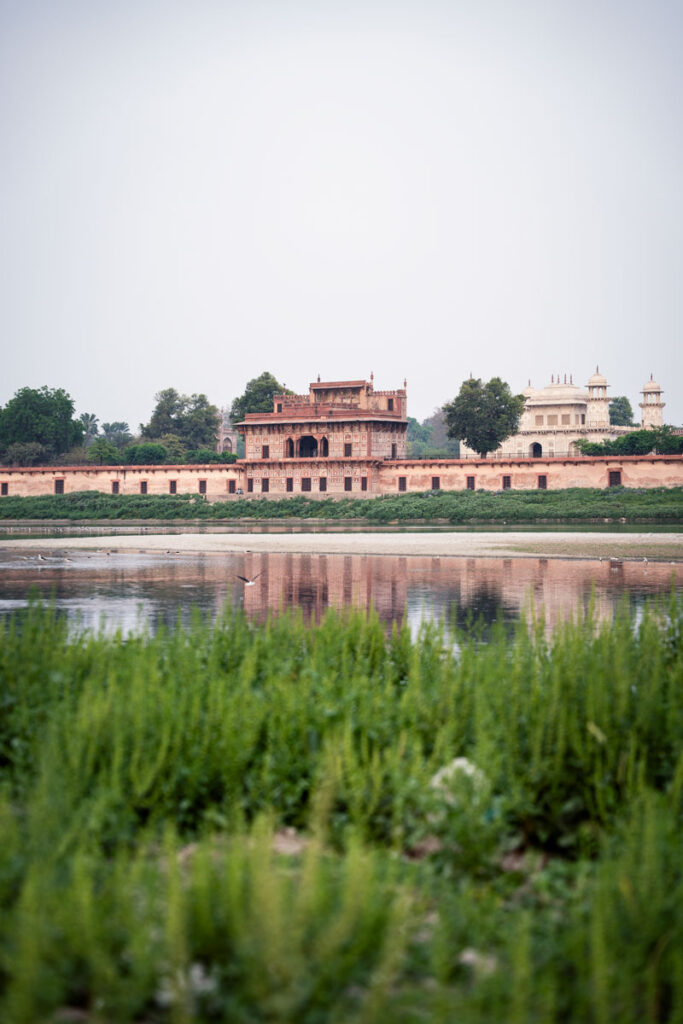
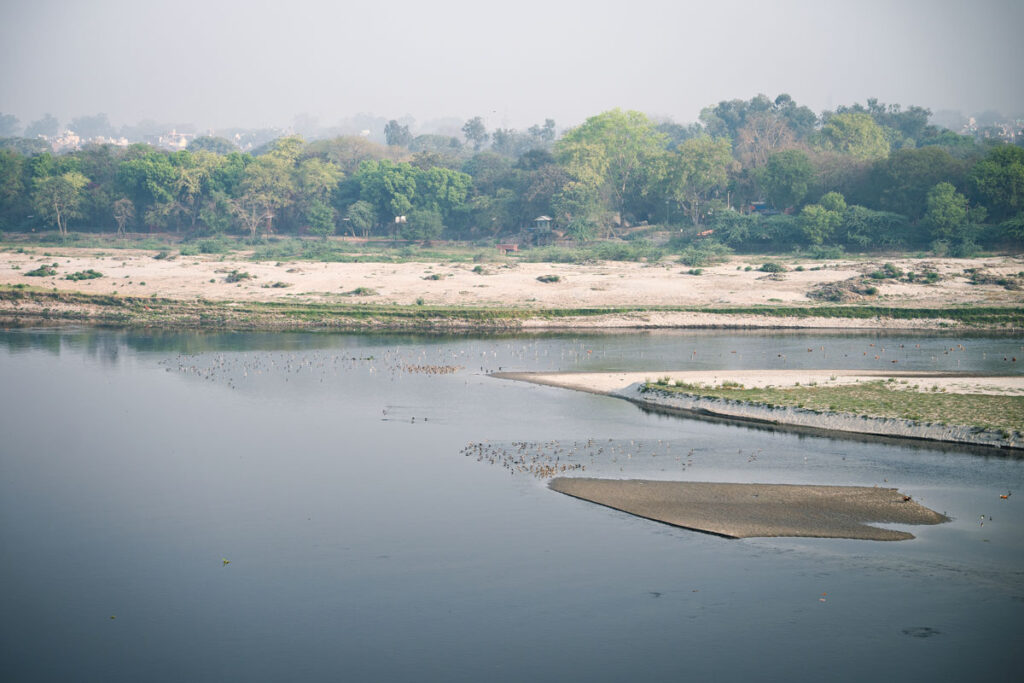
Evening falls over the metropolis of Agra. Flocks of birds circle above the Yamuna River, snatching at fish and flies. The sand on the riverbank is colored by the vibrant hues of Holi powder. The dome of the Taj Mahal is visible from here. On the other side of the river lies another Mughal mausoleum, the Itmad-ud-Daula.

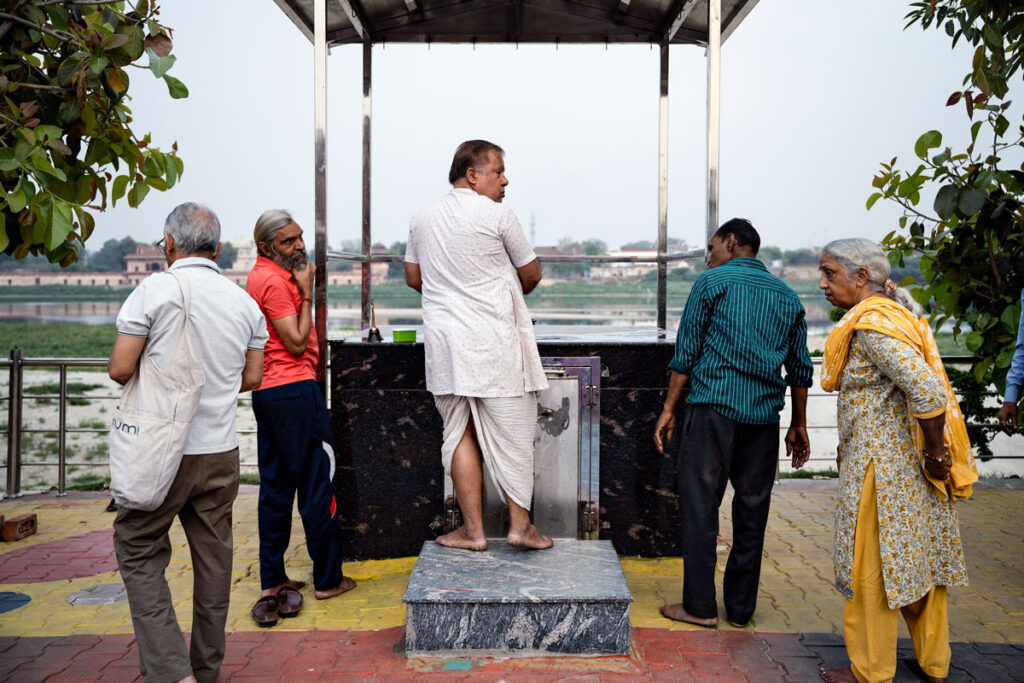
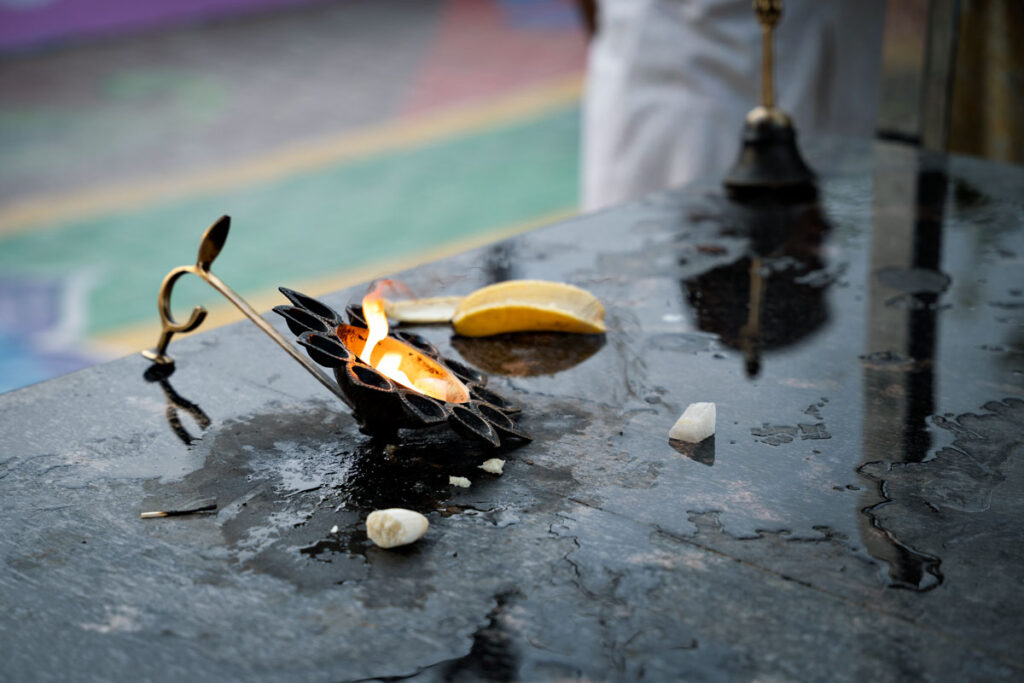
We have come to witness a small ritual – the Aarti. At sunset, a handful of people gather on the riverbank. A fire is lit and passed from hand to hand. Quiet prayers are murmured, and blessings are spoken. After just a few minutes, the ceremony is already over.

Afterward, we strike up a conversation with the Hindus. They tell us that with the aarti, they pay homage to the river, the water, and thus to life itself. Water, they say, is the foundation of all growth and all life. They see themselves as protectors of the Yamuna, pray for it, collect donations, and organize cleanup efforts.

Yamuna Aarti Point in Agra
Taj Mahal in the Evening

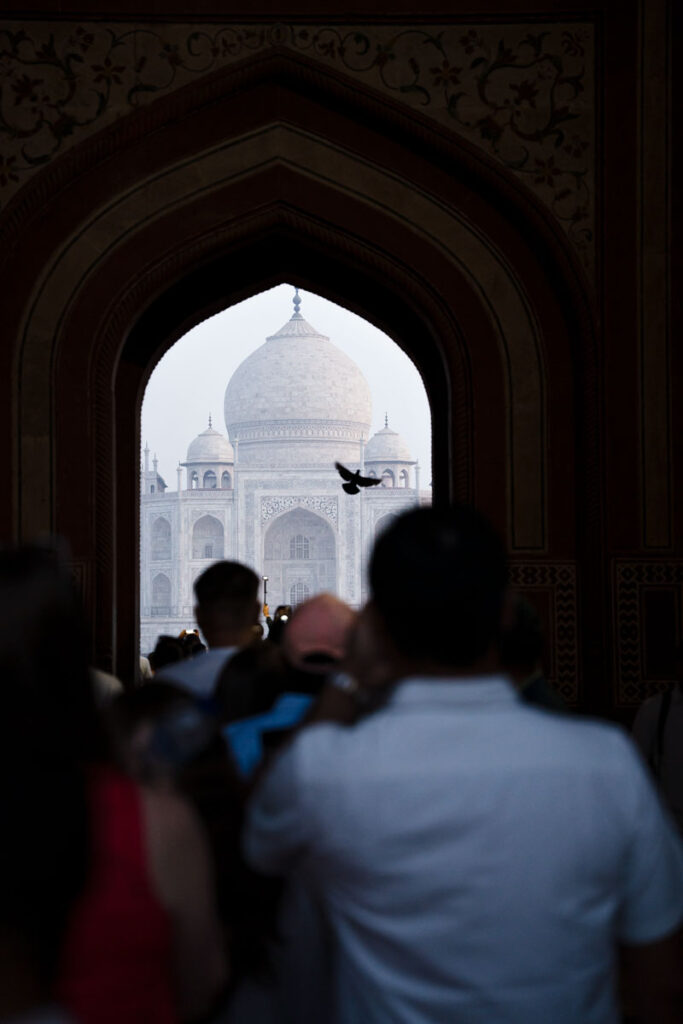
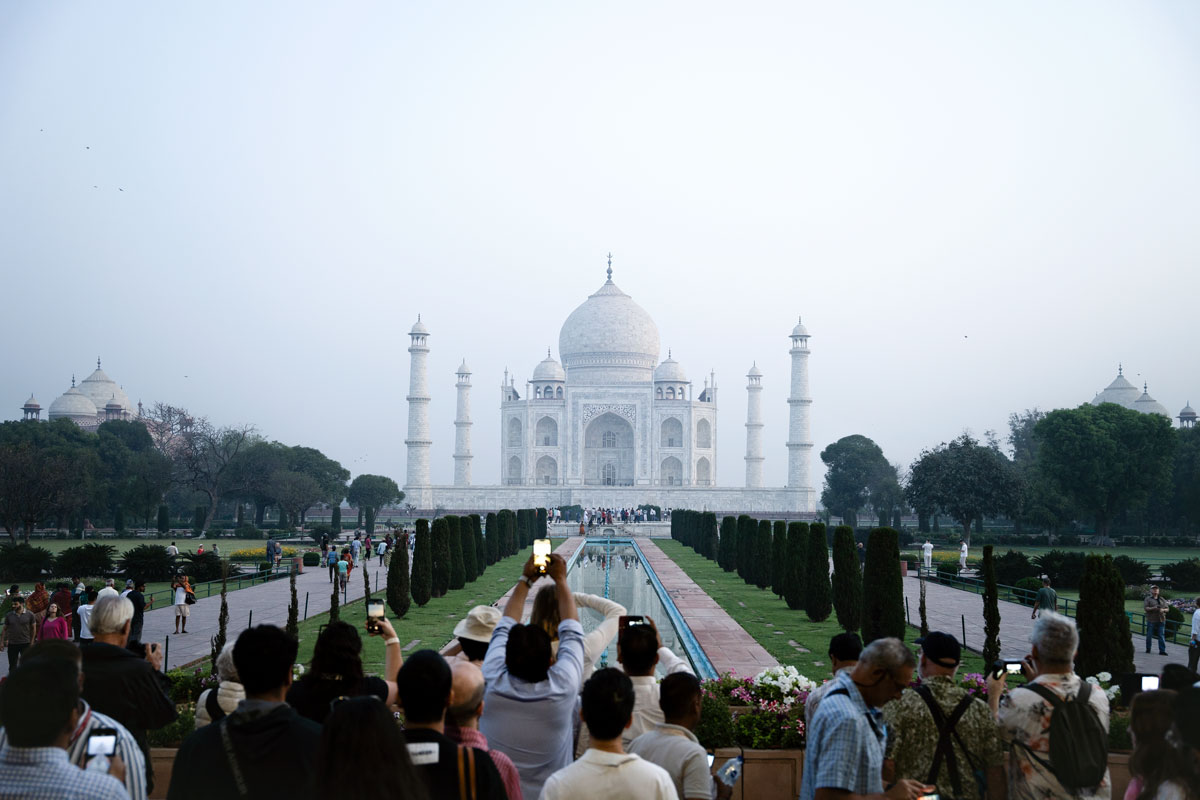
The next morning dawns as gently as a lotus blossom. A gray-blue sky heralds the day. We push our way through the security checks amid a crowd of people. Suddenly, some visitors start running. They want to be the first to catch an unobstructed view of this modern-day wonder of the world before the stream of visitors fills the space.

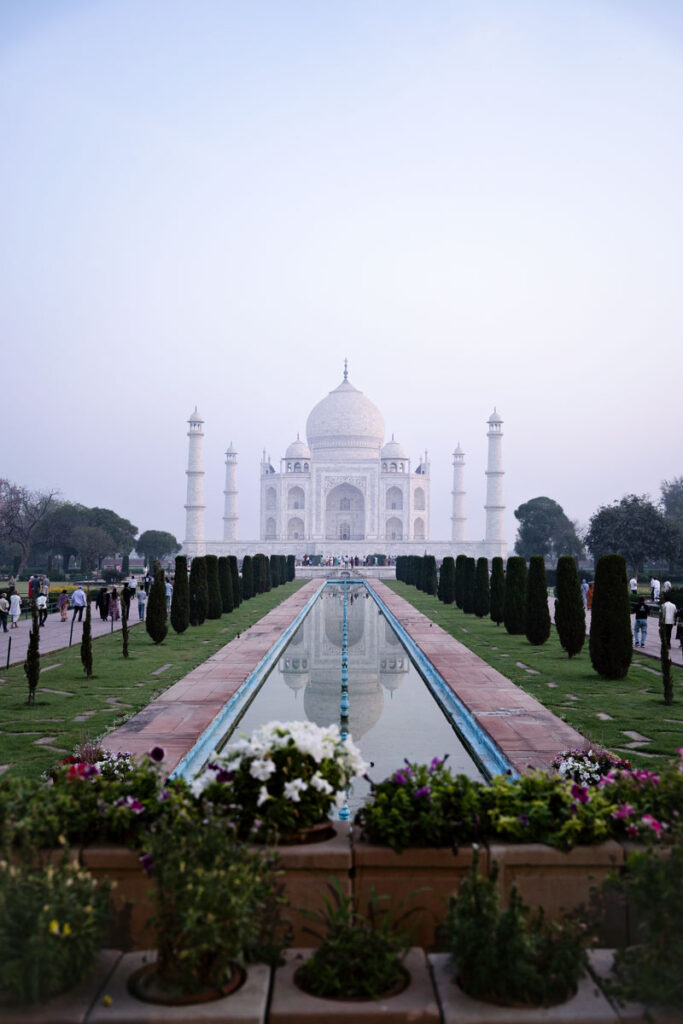
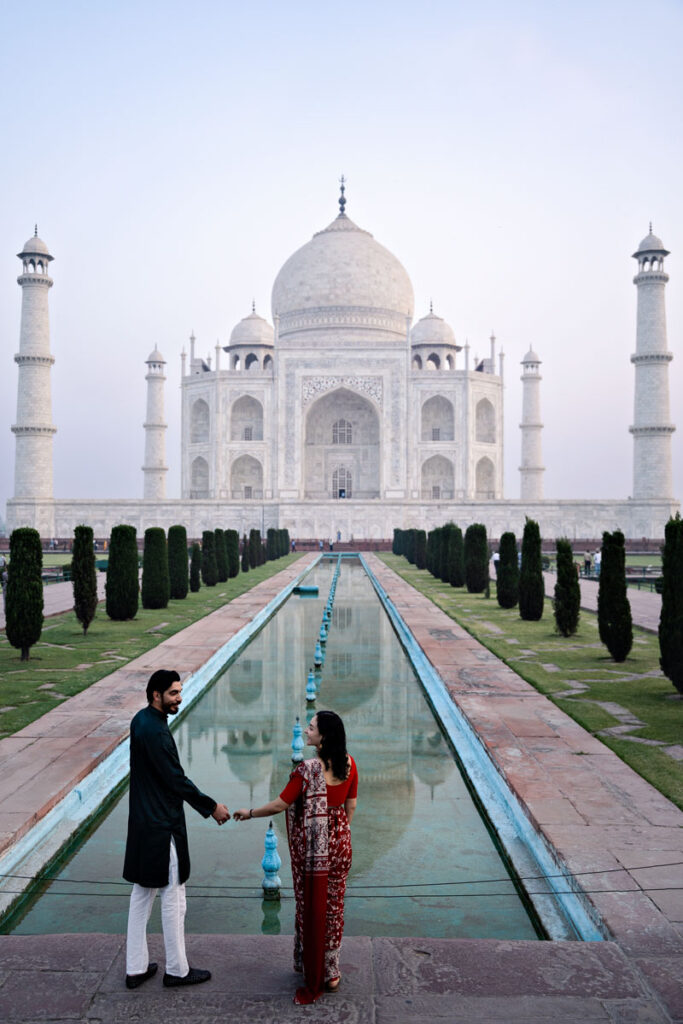
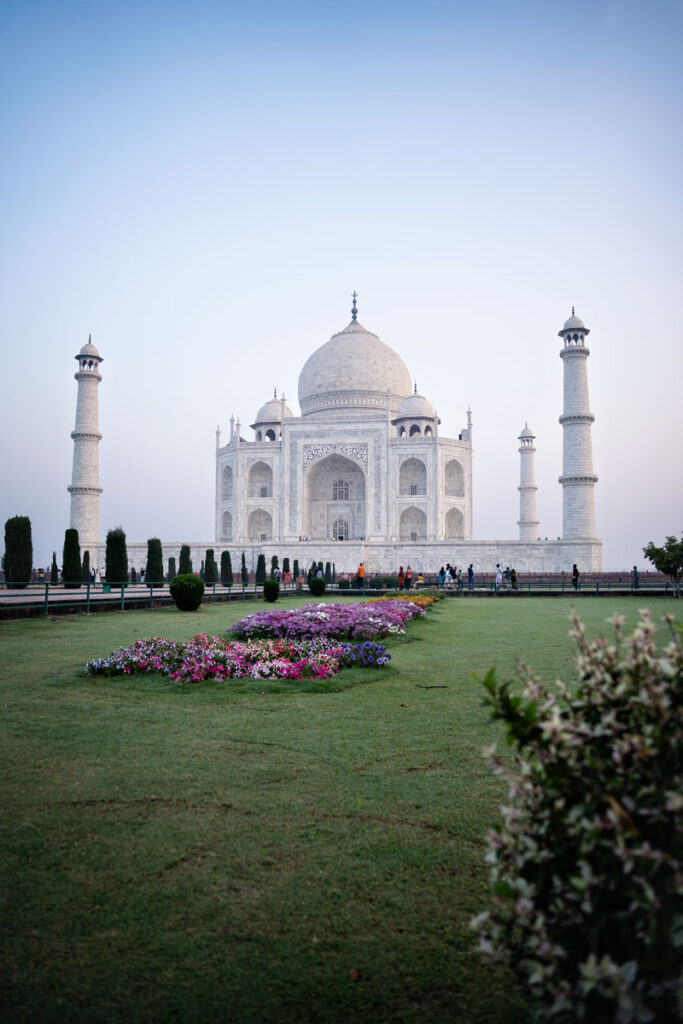
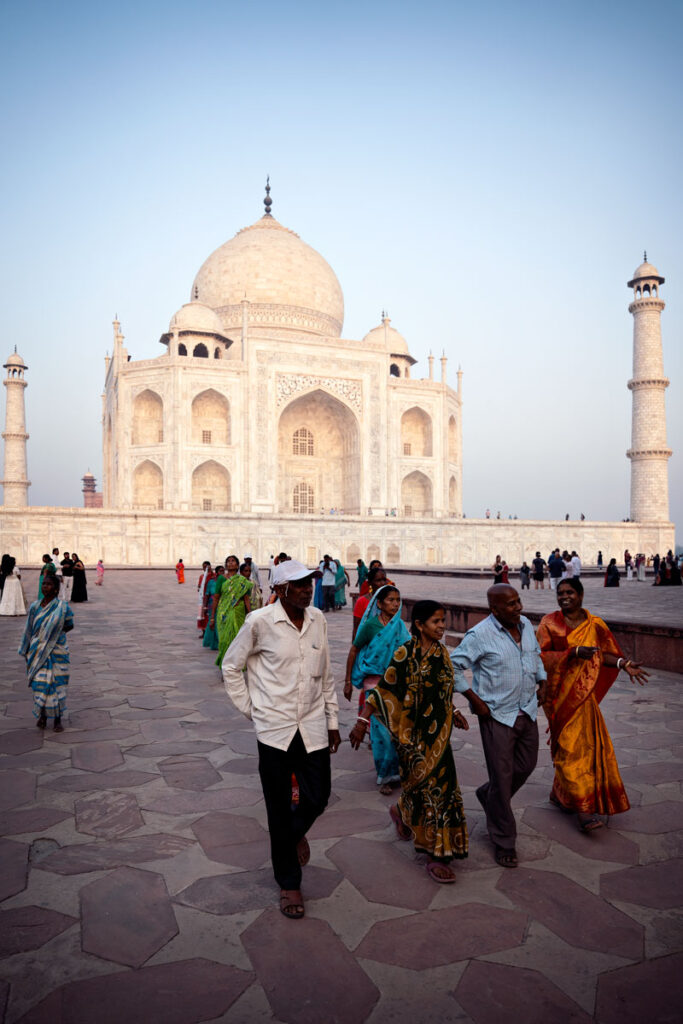
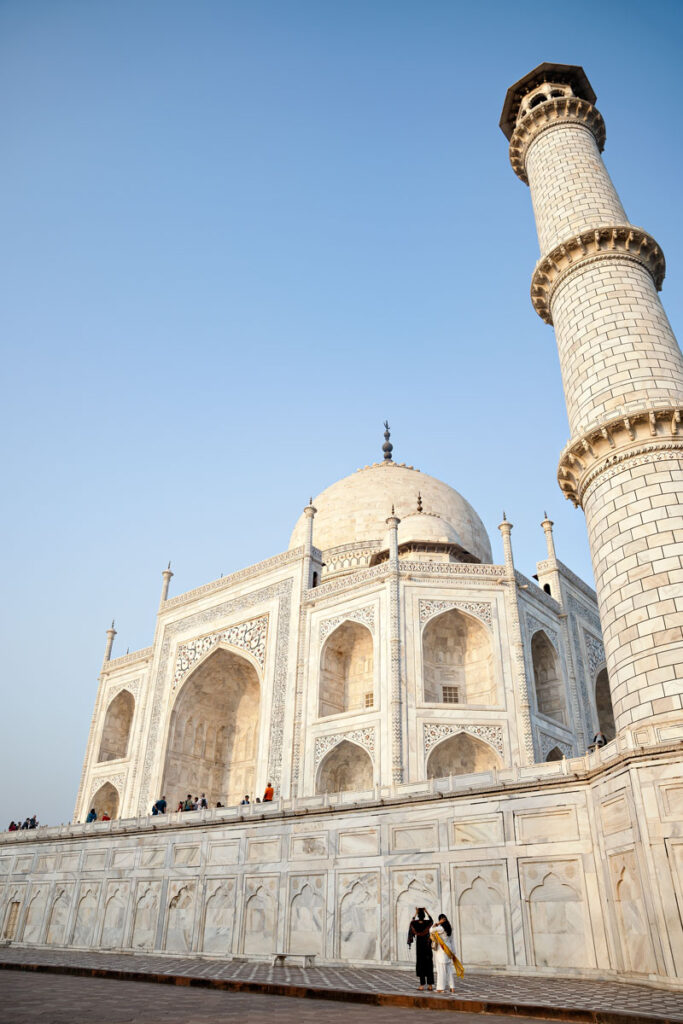
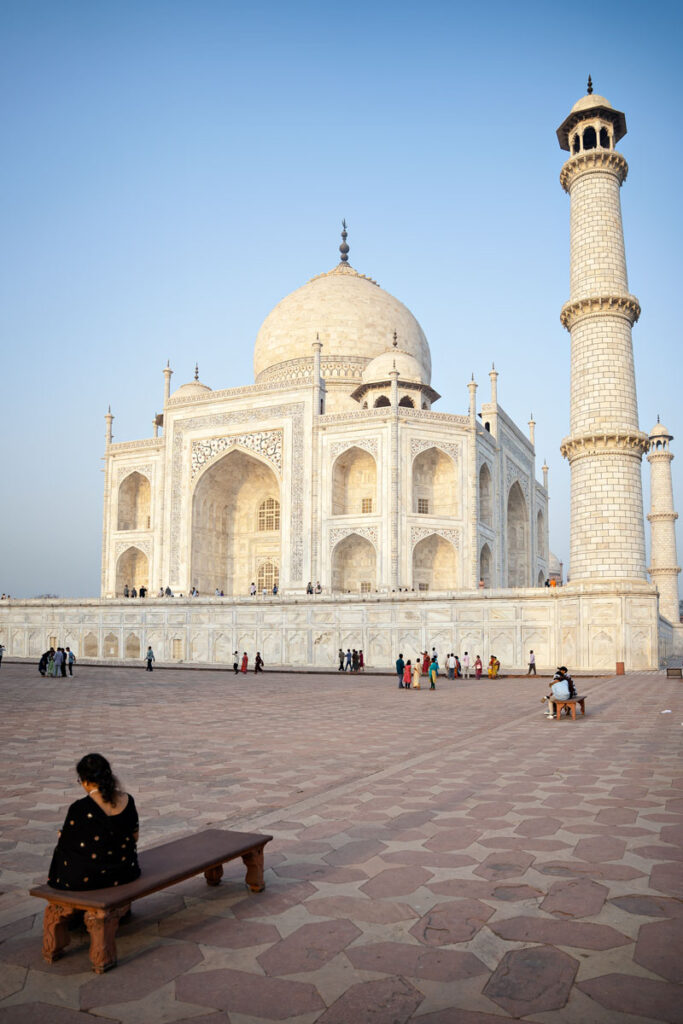
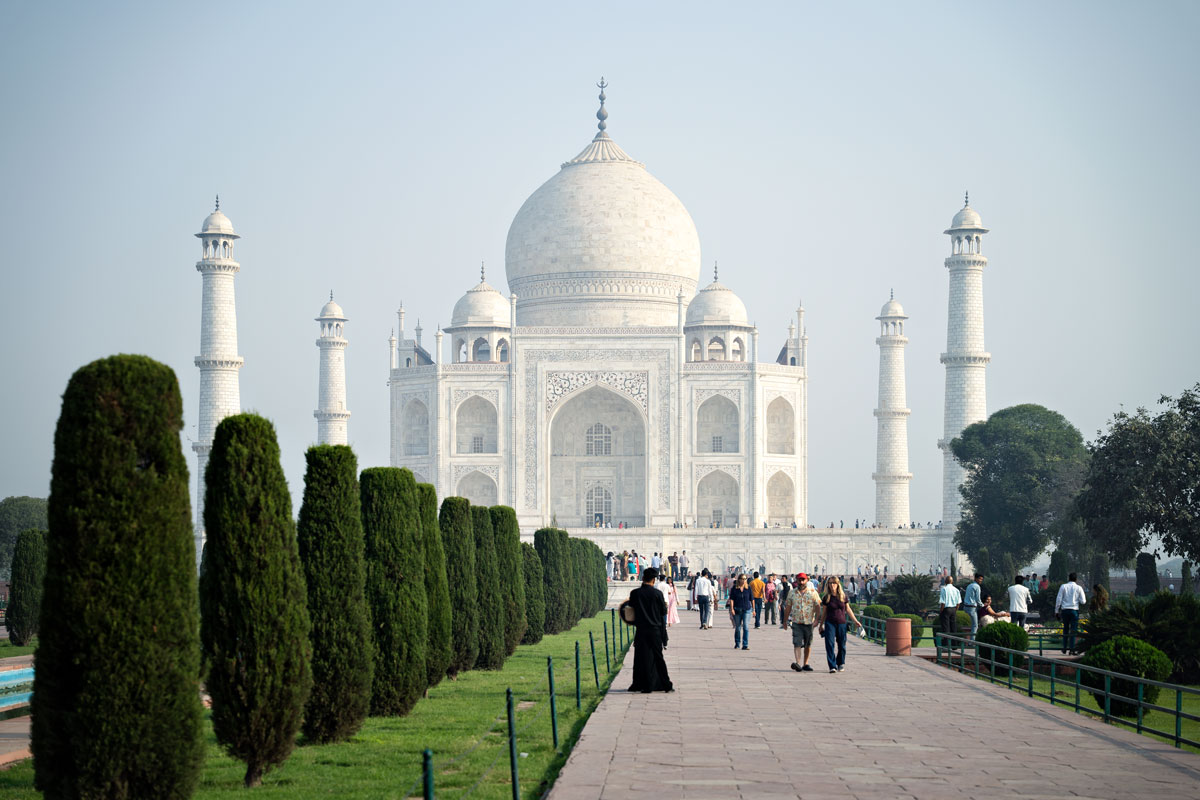
First we see its dome. Then we step through the massive entrance gate and stand before the Taj Mahal. Perfect architecture. Ivory-colored marble. Soft shades. Reflections in the water. Flawless symmetry. Wordlessly, we make our way through the crowd. For a moment, we take in nothing but this masterpiece before us.

A touch of pink. A touch of blue. Finally, a hint of gold. The morning fades. The Taj Mahal does not. It rises from the night like a colossus, soaking up the colors of the sunrise and seeming to grow brighter with every passing minute.

Taj Mahal in the Morning

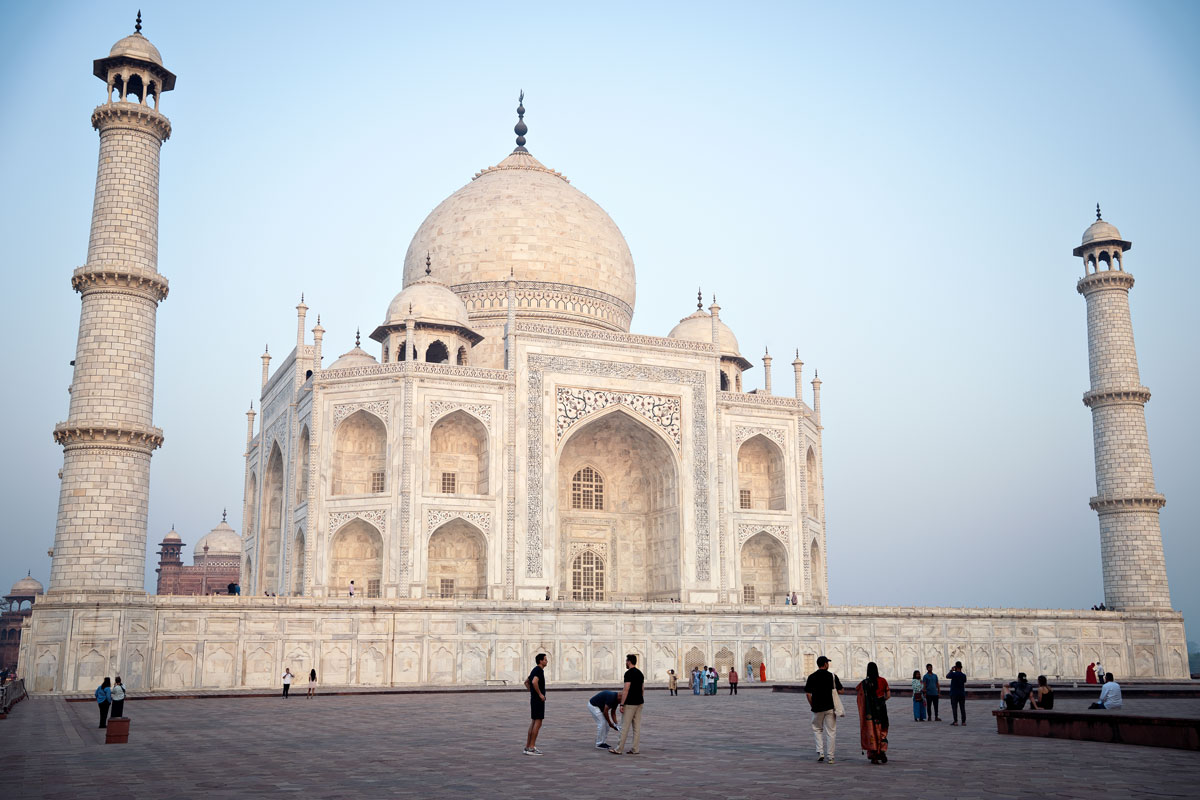
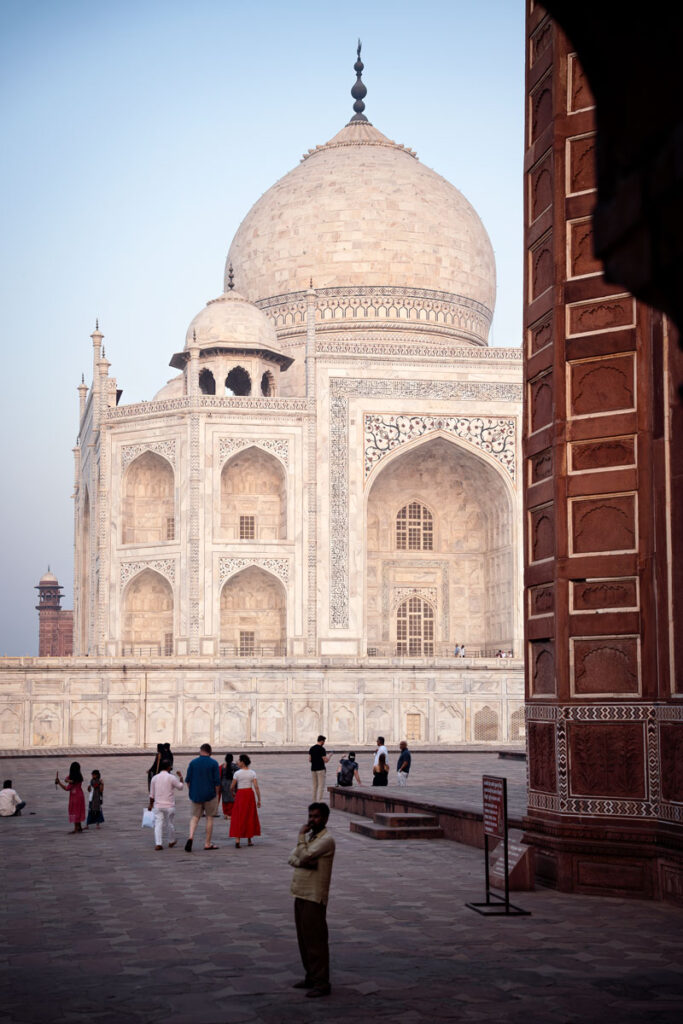
Day has arrived and the marble of the Taj Mahal glows in a delicate white. Sometimes an Indian woman in a colorful sari steps in front of Chris’s camera lens. Sometimes a bird spreads its wings and takes off from a wall. Sometimes a ray of sunlight brushes the great dome, bathing it in warm light. The camera’s shutter clicks incessantly. One scene seems more beautiful than the next.

We still can hardly believe the impact this famous mausoleum has on us. The Great Mughal Shah Jahan had the Taj Mahal built as a tomb for his favorite wife, Mumtaz Mahal, who had died while giving birth to their fourteenth child.

In the end, however, this monumental structure cost him his freedom. The enormous expenses threatened to devour the ruling family’s wealth. Eventually, his son took power over the Mughal Empire and had Shah Jahan imprisoned in the Agra Fort. From there, the deposed ruler is said to have gazed upon the tomb of his beloved wife until his death.

Taj Mahal
Taj Mahal
Taj Mahal
Taj Mahal
View from Taj Mahal
Taj Mahal
Taj Mahal
Taj Mahal

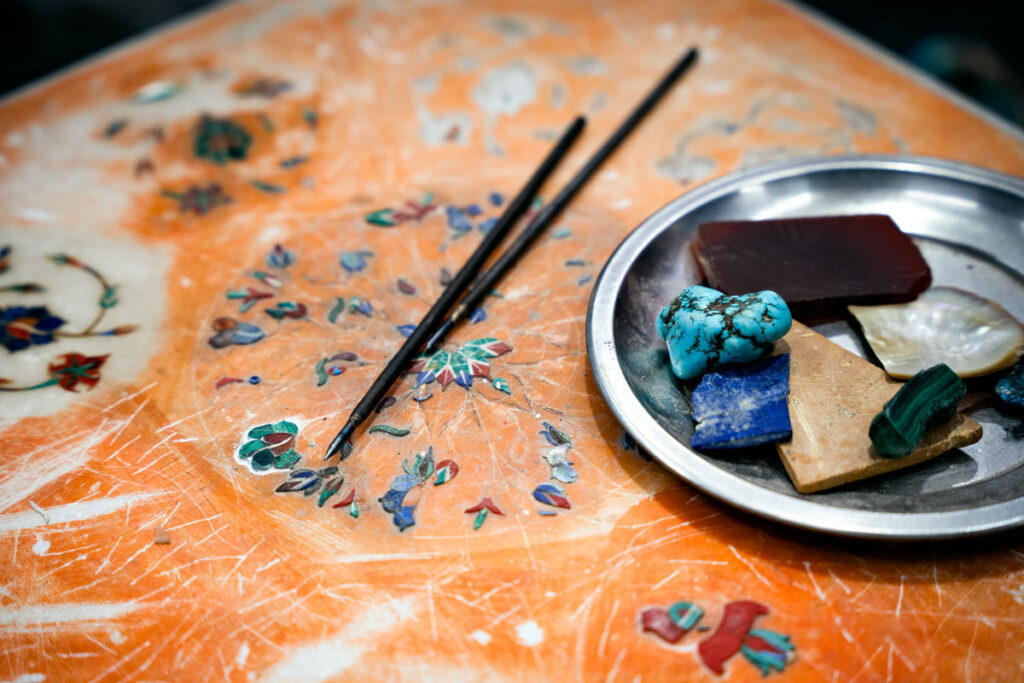
A quick stop on the way out of Agra. In the basement of an unassuming building are the showrooms of a stonemason who skillfully capitalizes on the fame of the marble Taj Mahal to promote his wares. His master craftsman, we’re told, comes from the same family of artisans that was involved in the construction of the famous mausoleum as far back as the 17th century.

Once again, it becomes clear just how resourceful and business-savvy Indians are. Hardly anyone simply asks for a dollar. No, most people want to at least give the impression that they’ve provided a service or done something for you. And so it happens that complete strangers open our car doors, carry our luggage, or give us directions without being asked. Every piece of information, every smile, every small favor can serve as the prelude to a request for payment.

We receive a brief introduction to the craft of Agra’s marble stonemasons and watch their intricate work with fascination. In the end, we actually buy a decorative marble plaque. Storytelling sells.

Marble Craving
Marble Craving

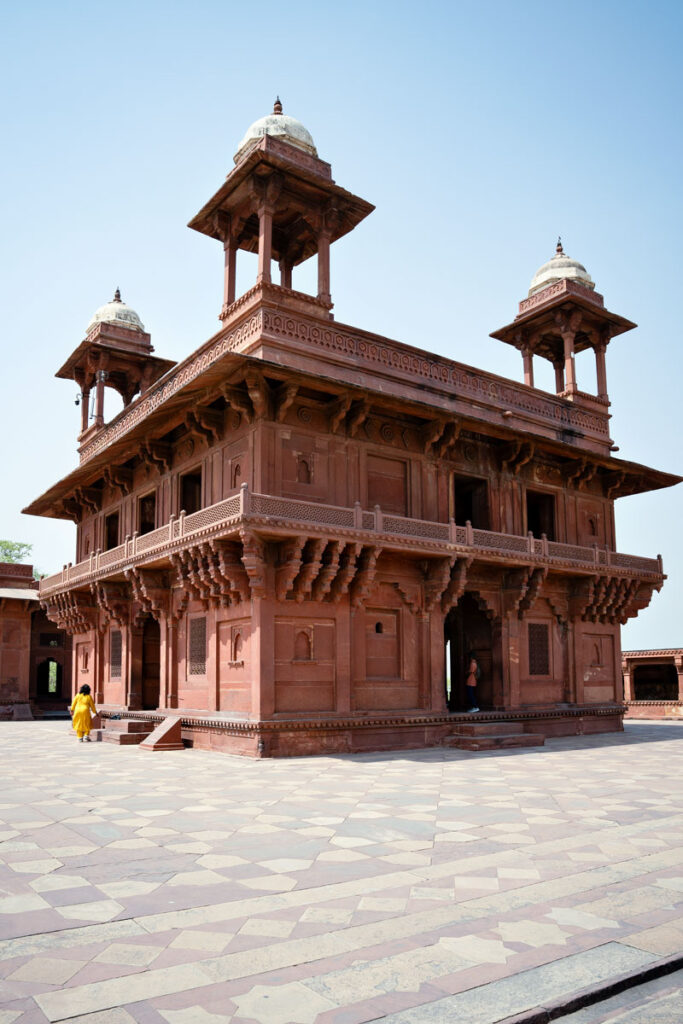
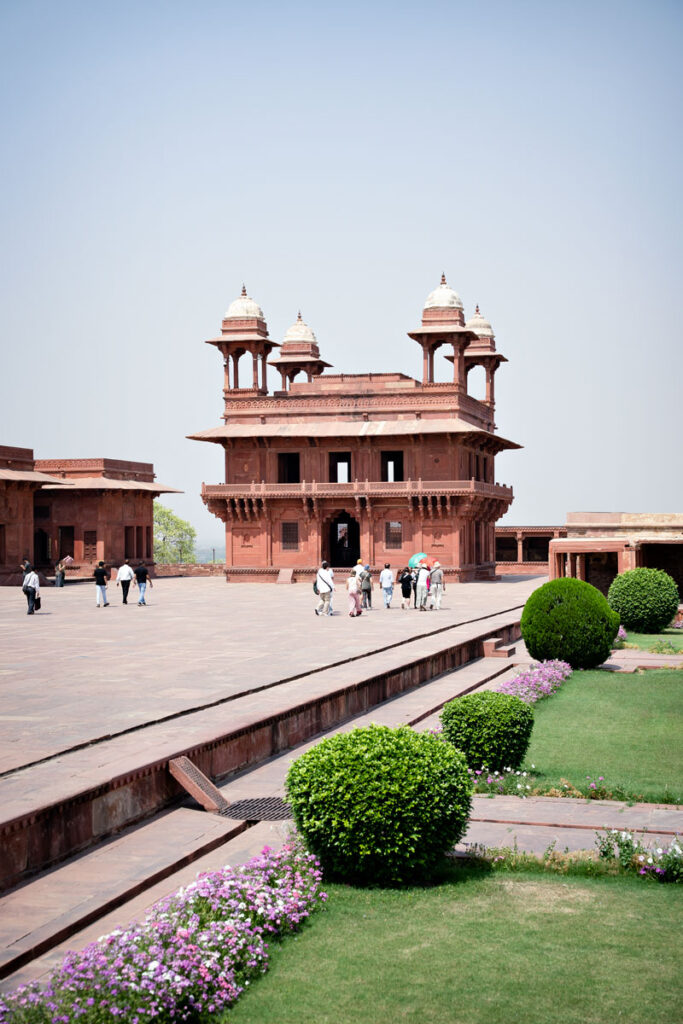
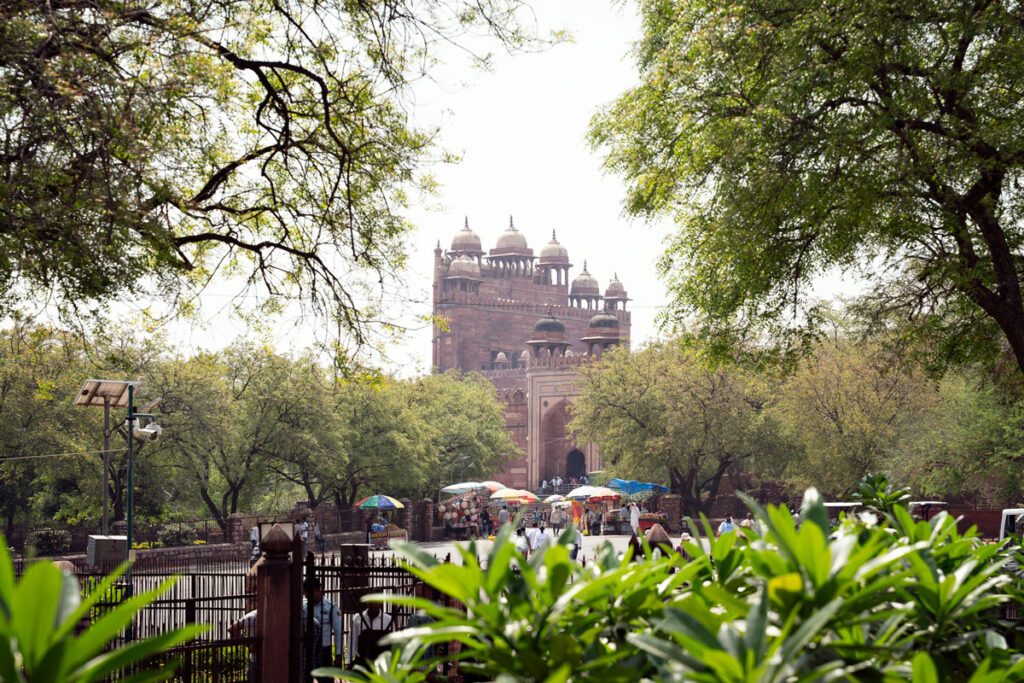
On the way from Agra to Ranthambore National Park lies Fatehpur Sikri, the former capital of a Great Mughal. The sprawling fortress complex lies in the shimmering midday heat. The sun is directly overhead. An official guide takes us under his wing and leads us through the shaded chambers and courtyards of the former royal residence. But what interests us far more than the history of the walls is the story of our guide.

He tells us that, in his mid-thirties, he is not yet married. His parents, however, have already chosen a suitable wife for him. He has seen her once, but has never actually spoken to her. Nevertheless, he is looking forward to the wedding. It sounds neither like resignation nor doubt. It is simply the way things are.

And that, too, is India. While the country presents itself on the international stage as modern, digital, and technologically advanced, ancient traditions still shape daily life in many places. The caste system has been officially abolished, but its traces are far from gone. Hundreds of gods watch over people’s destinies. A wheel of death and rebirth that spins on for all eternity. And above it, the immutable natural law of karma.

Fatehpur Sikri Fort
Fatehpur Sikri Fort
Fatehpur Sikri Fort
Fatehpur Sikri Fort

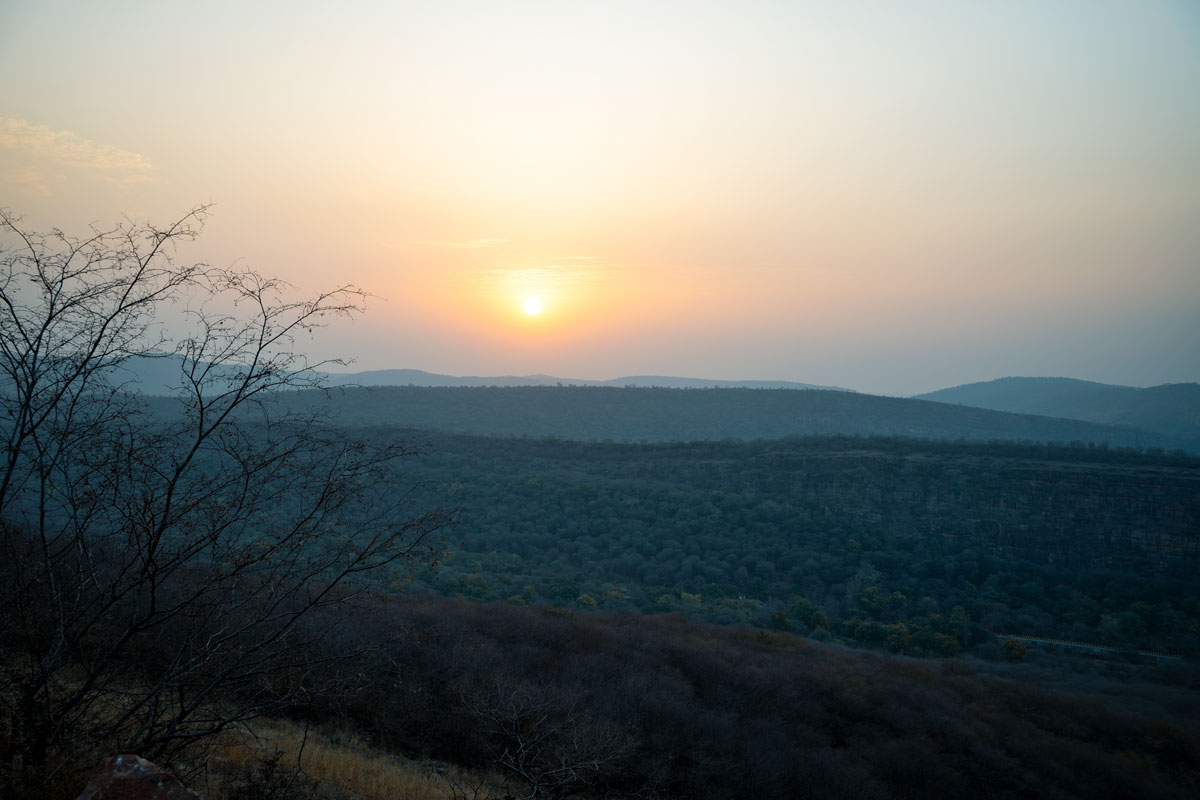
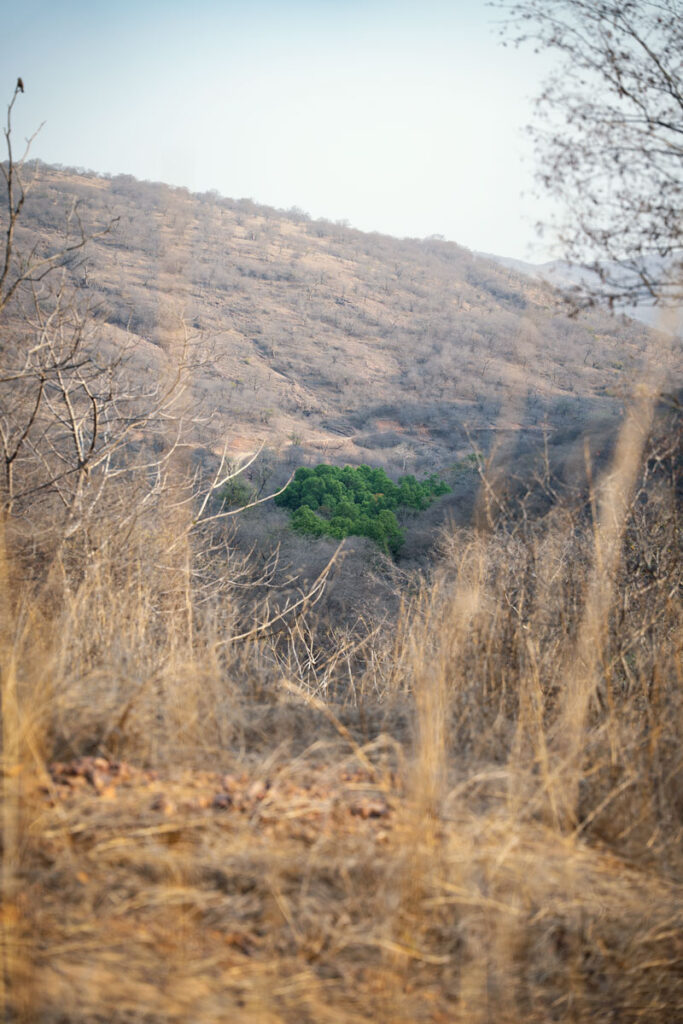
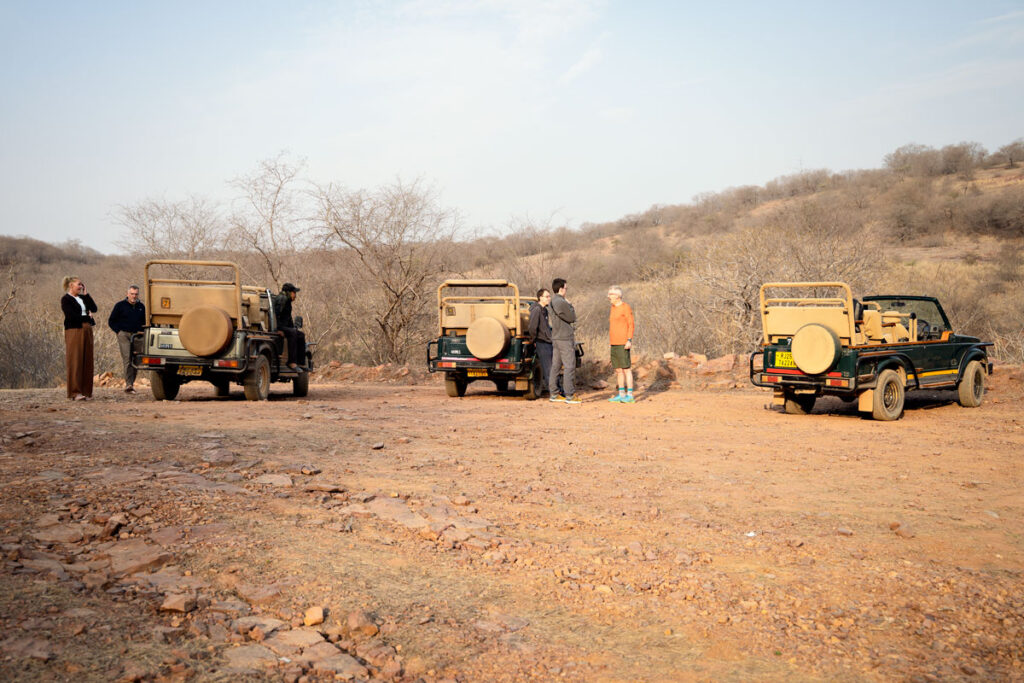
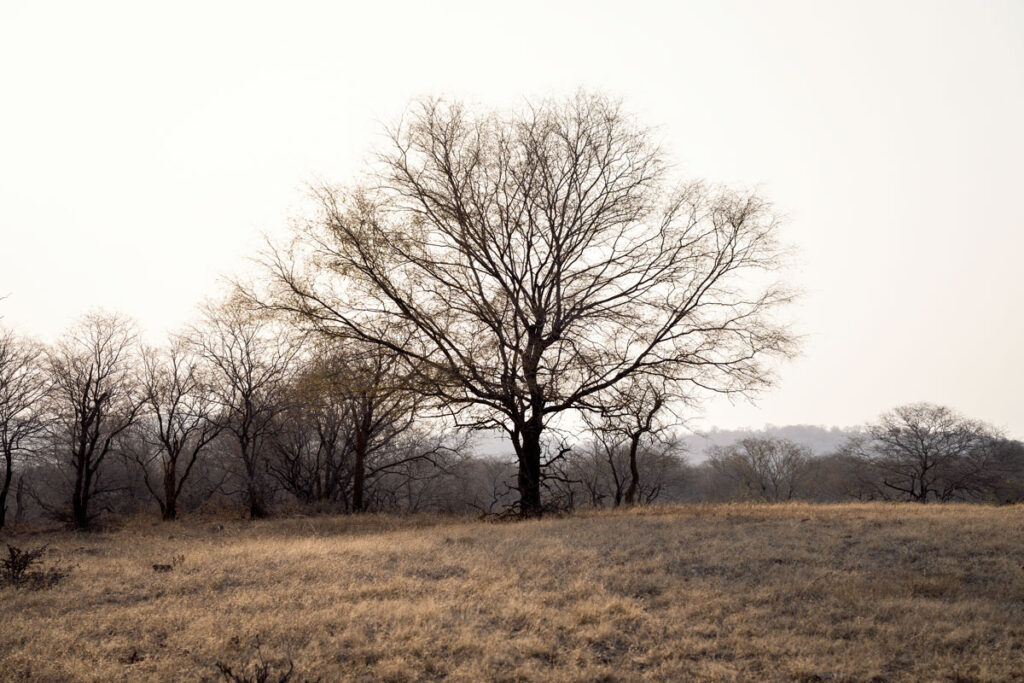
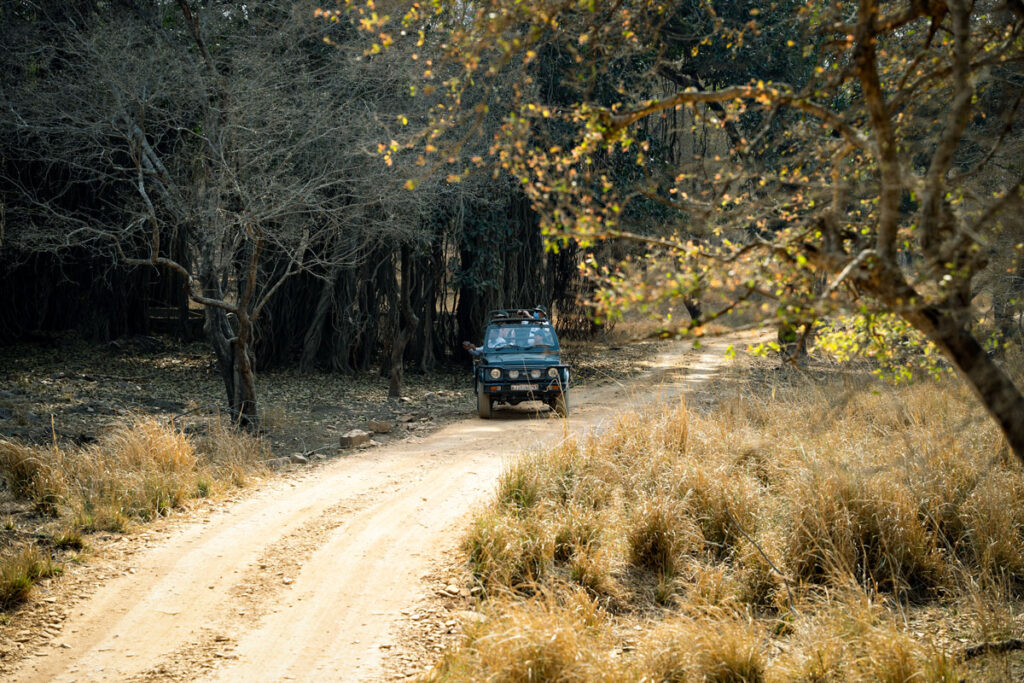
It is still dark over the forest. During the dry season, most of the trees are bare. Only a few green bushes, sparsely leafed saplings, and the fiery red Malabar lacquer trees break up the monotony of the ever-present gray-brown.

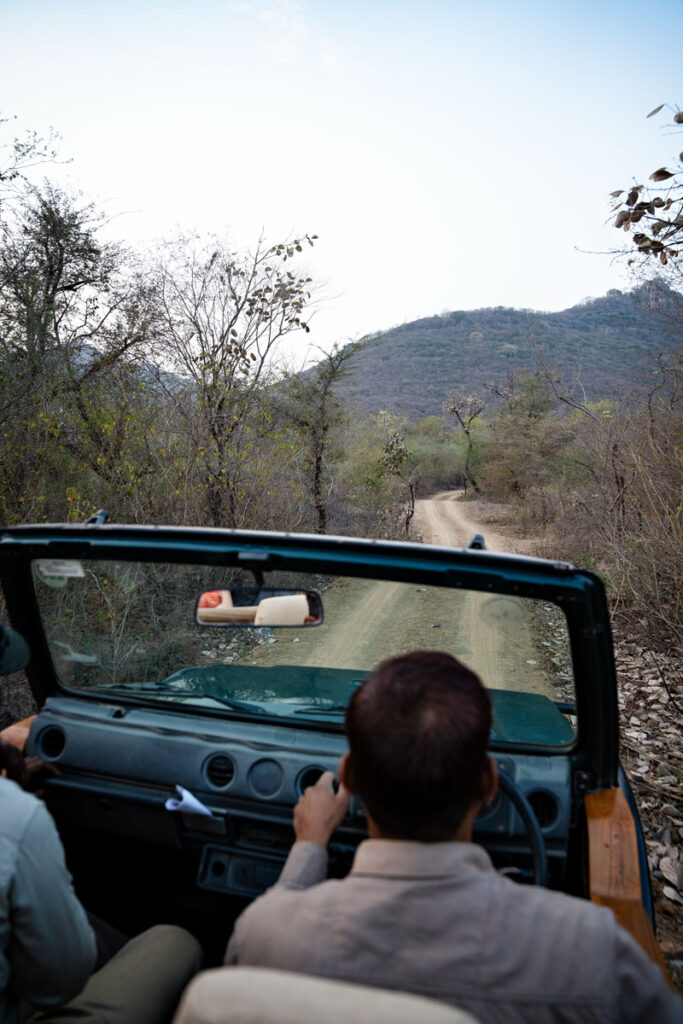
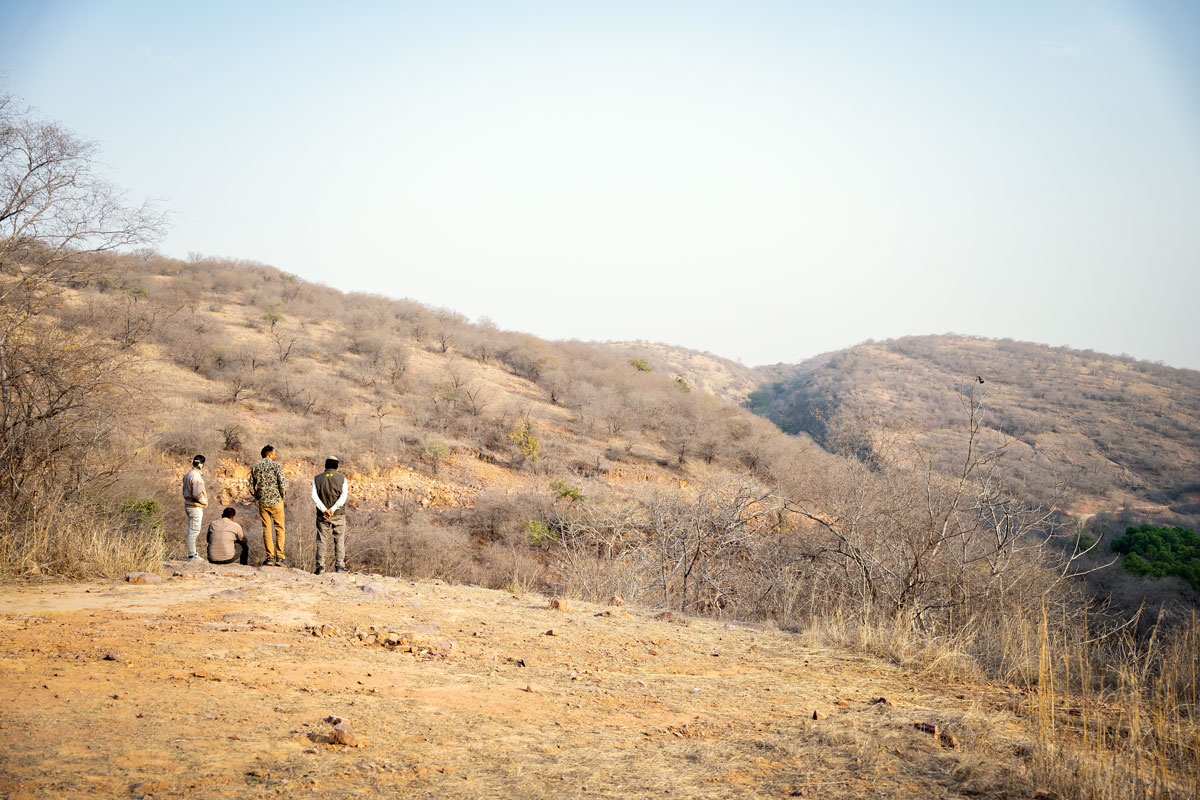
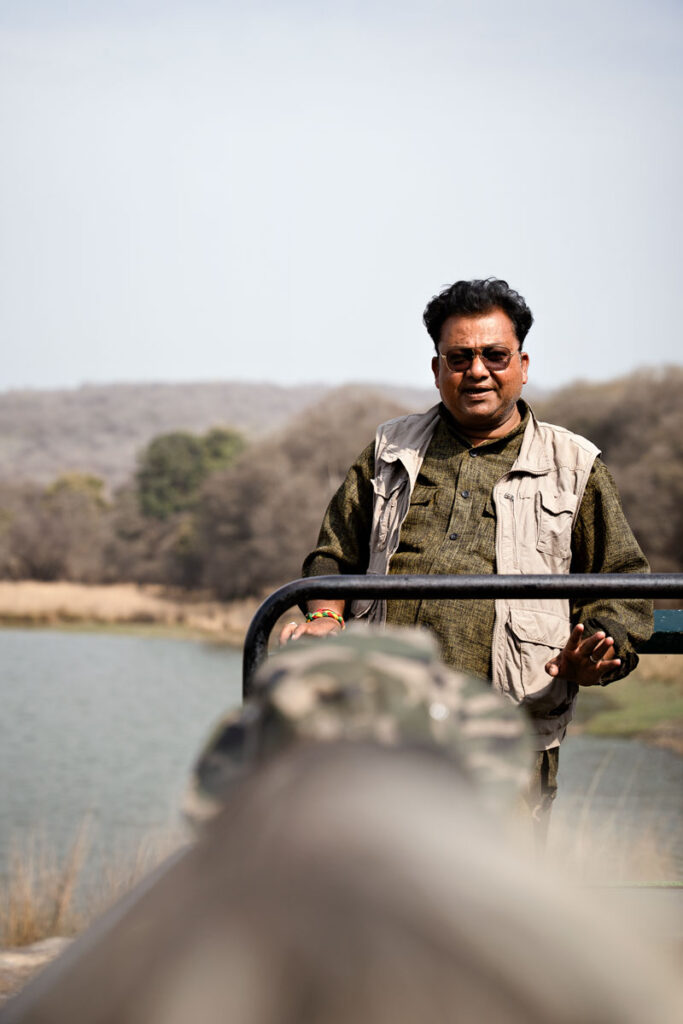
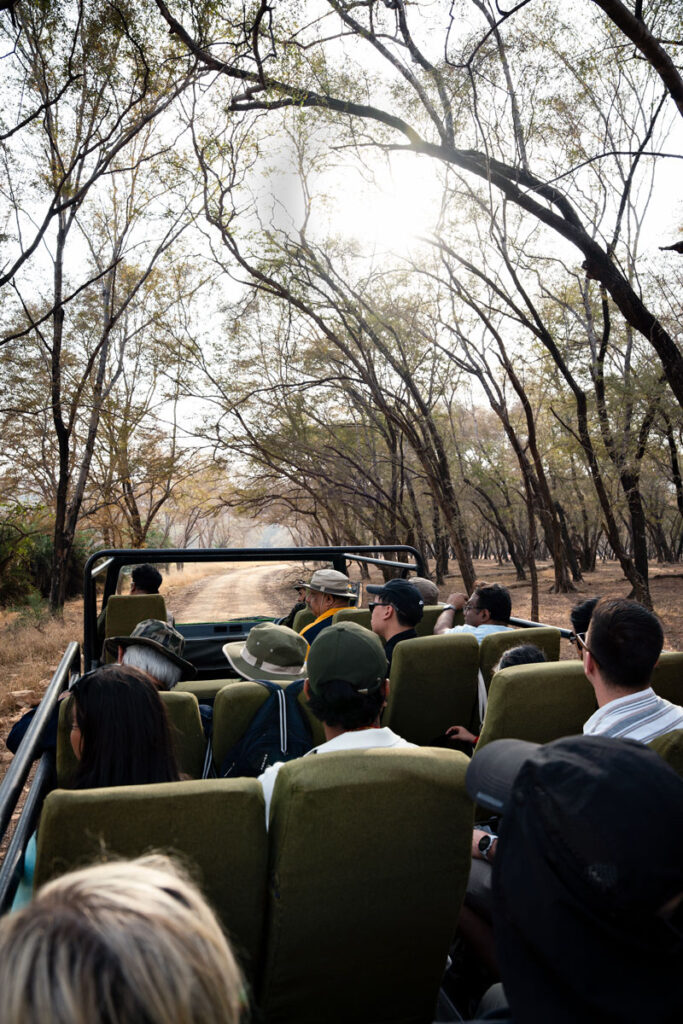
Our safari jeep rumbles over the rocky ground. We’ve been driving through the thicket of Ranthambore National Park for an hour now, searching for exotic animals. Above all, though, we’re searching for tigers. Here, under the protection of the national park, they have found an important refuge and are also the region’s biggest attraction. Hotels, restaurants, taxi drivers, park staff, craft businesses, and many others make their living from tourists’ longing to encounter a real tiger in the wild.

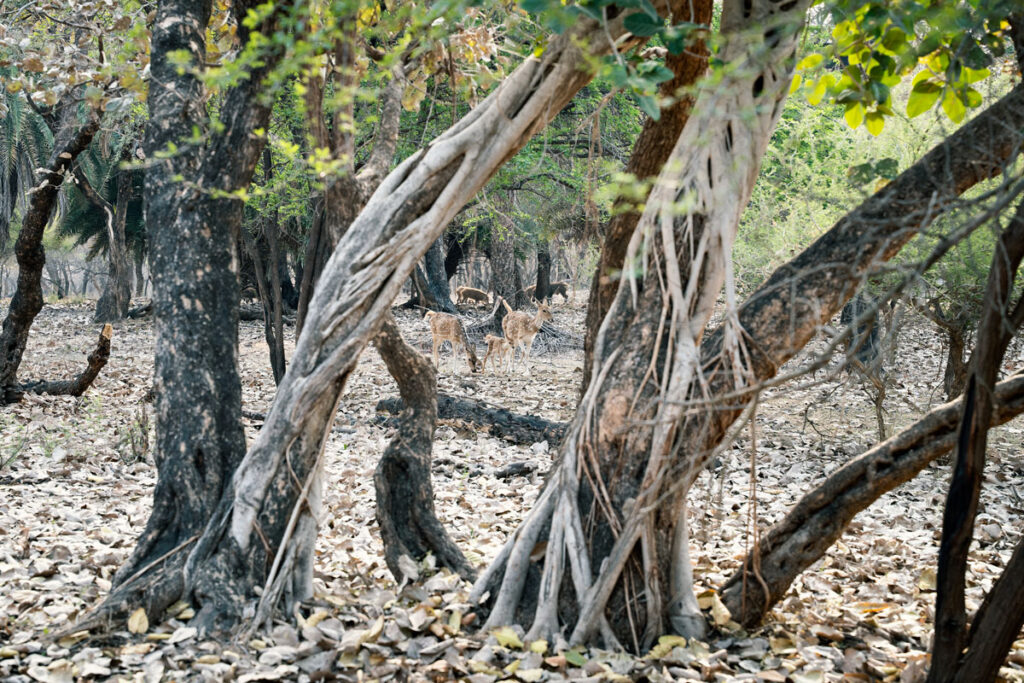
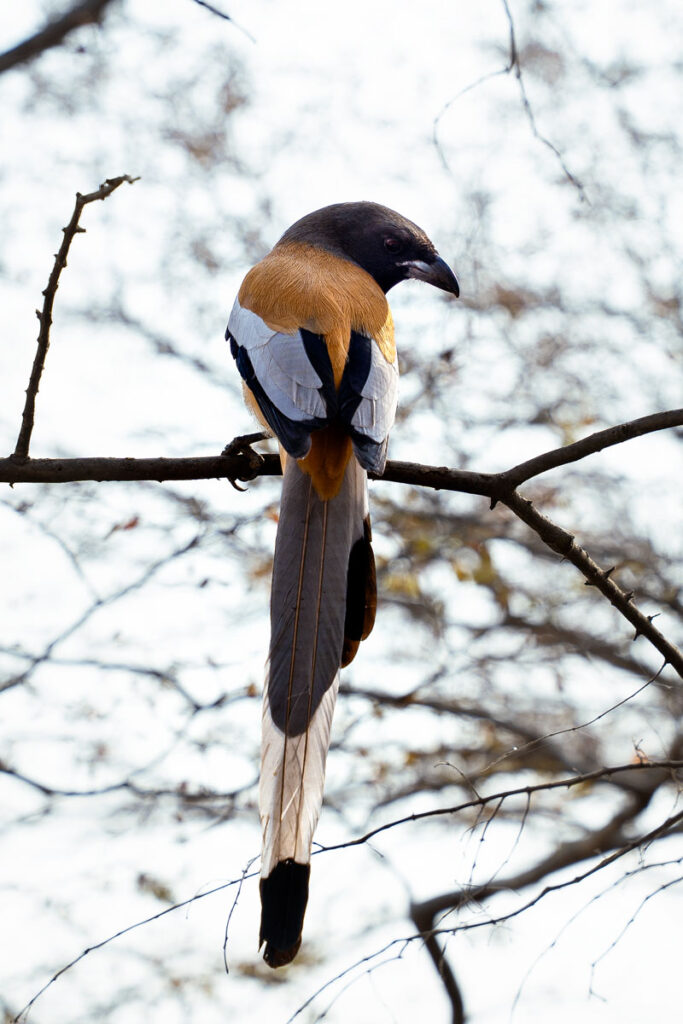
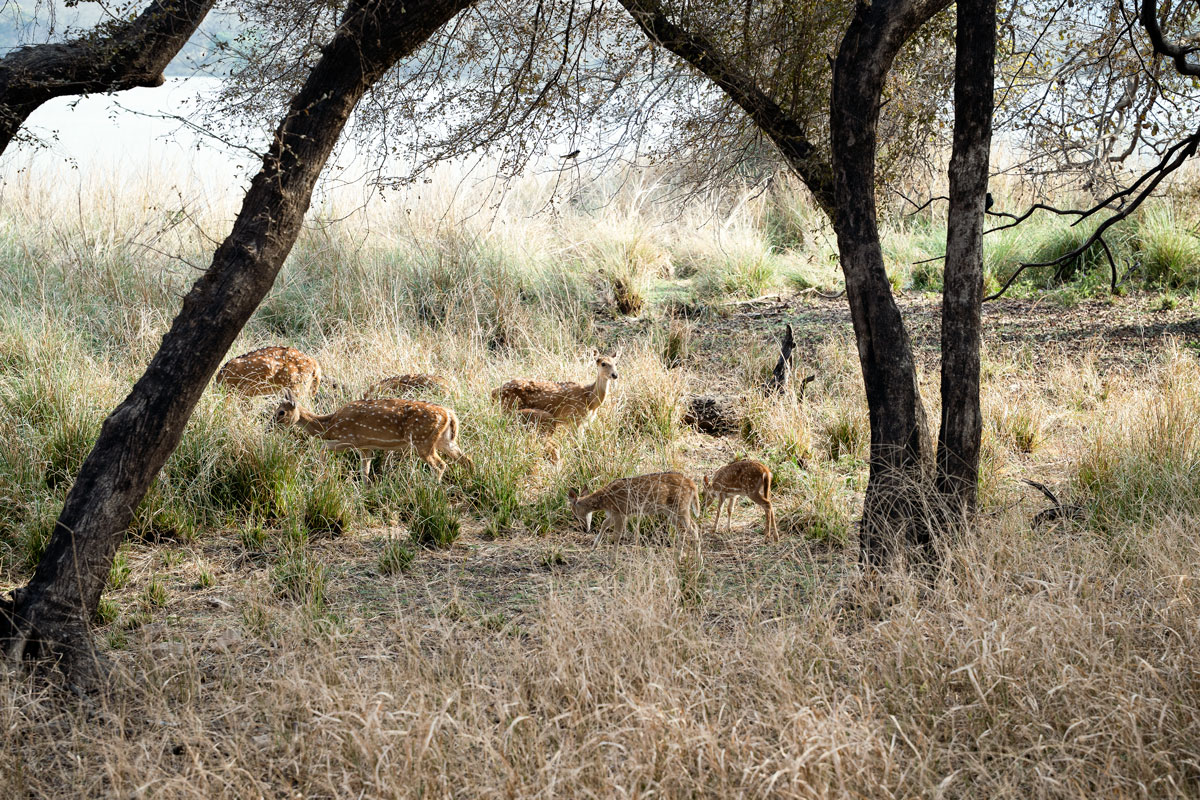
After another hour, the sun has risen above the horizon. But aside from a few colorful songbirds, some deer, and wild boars, we haven’t spotted any animals so far. Maybe we’ll have better luck on our second safari this afternoon.

Ranthambhore-Nationalpark

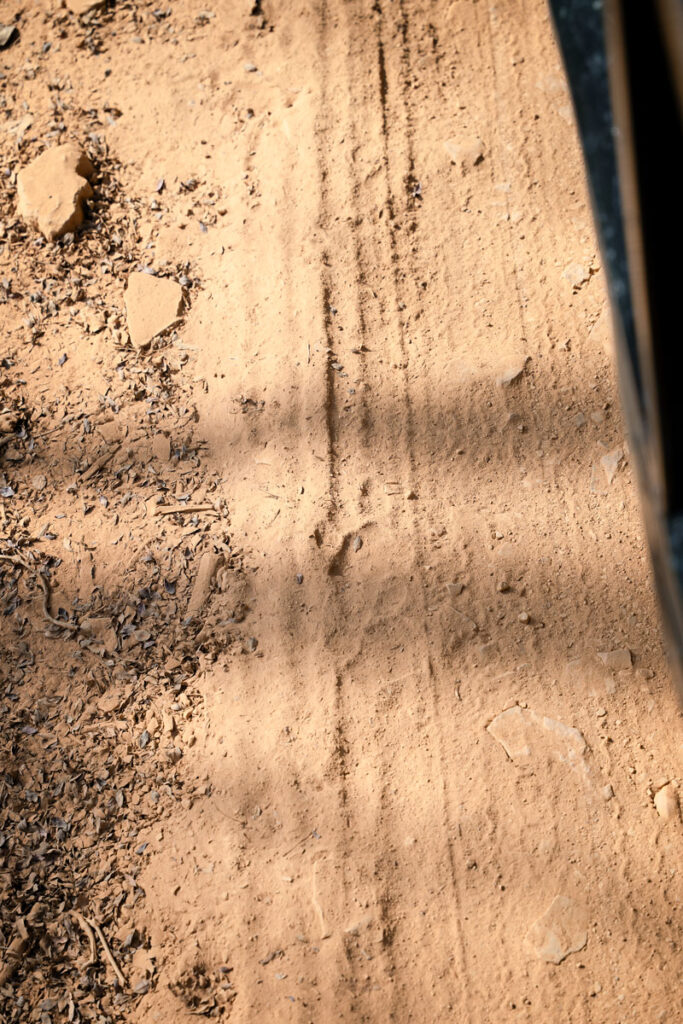
So in the afternoon, we set off on another tour – this time in a different park zone and by bus instead of a jeep. The terrain is more open, less mountainous, and less rocky than it was in the morning. There are ponds and small lakes, and indeed, different wildlife as well. We spot crocodiles, monkeys, deer, and storks. In the sand, we even discover a fresh tiger paw print. We’re certain: This time it’s going to work!

Suddenly, there’s a commotion. All the jeeps and buses race toward an open grassy area. A few minutes ago, a guide heard a bird’s warning call. We’re told that the birds living here emit a specific signal when a predator approaches. We wait in silence for half an hour or longer for the tiger. But everything remains quiet in the tall grass.

On the way back – we’ve almost left the park – there’s a panther sighting. Immediately, all the vehicles spring into action. SUVs get wedged together, and tourists jostle for the best spots on the buses. Cameras are frantically raised into the air. Incomprehensible murmurs and excited chatter ripple through the crowd. Traffic comes to a standstill; dozens of vehicles line the roadside. The panther, however, seems to have long since gone on its way, because no one on our bus gets a glimpse of it.

Ranthambhore-Nationalpark

Before continuing our journey, we want to explore local craft traditions and artistic creations one last time. We usually steer clear of souvenir shops and tourist traps of all kinds, but we’ve been captivated by the souvenirs available for sale everywhere here.

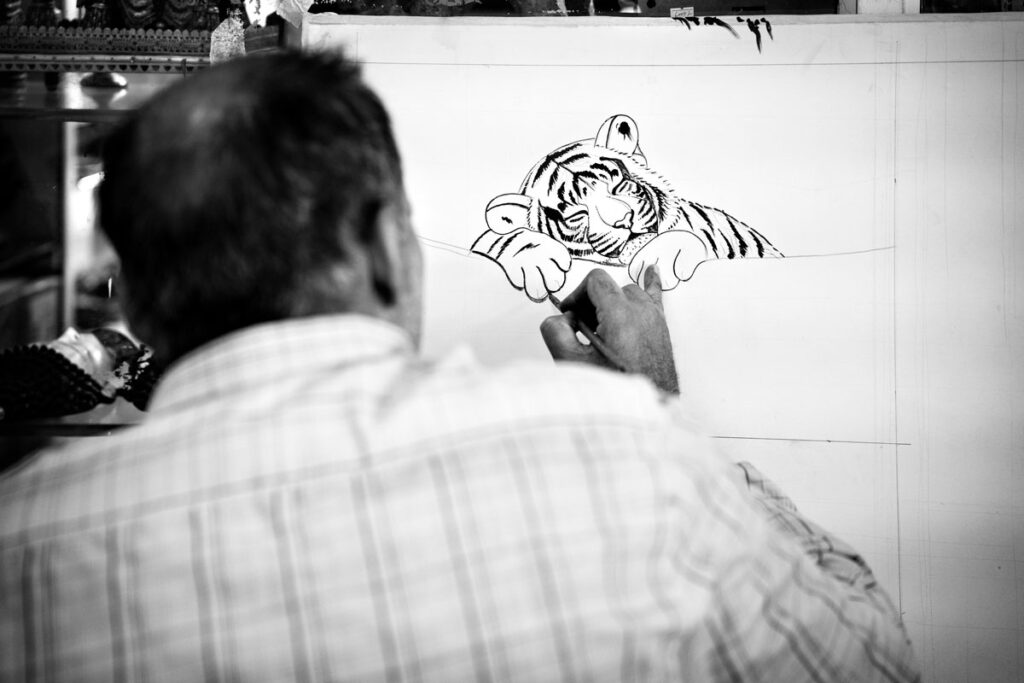
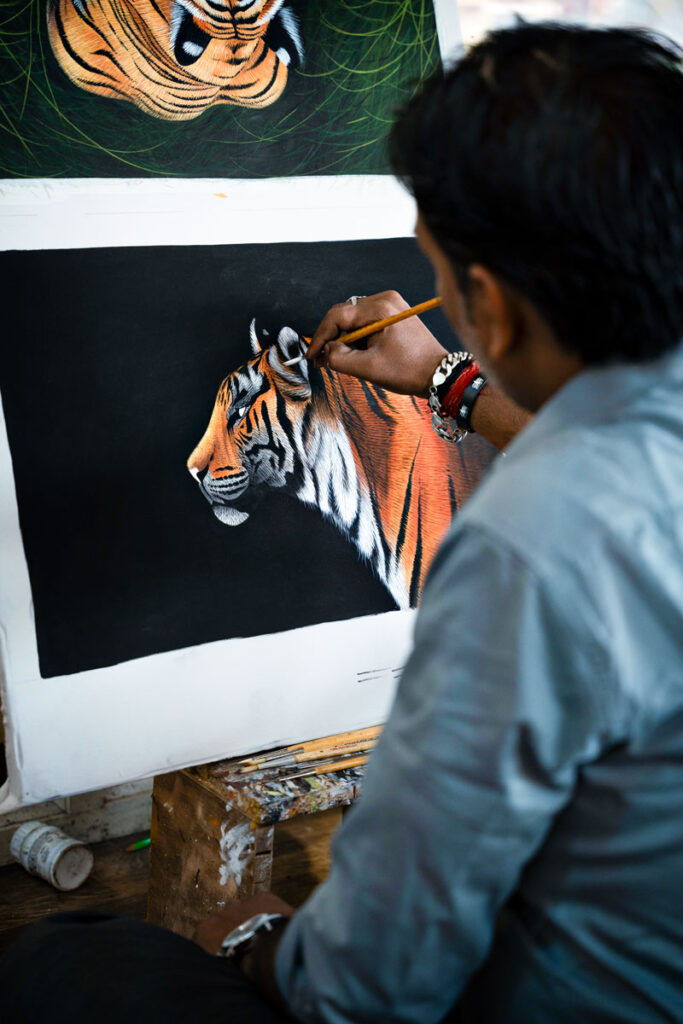
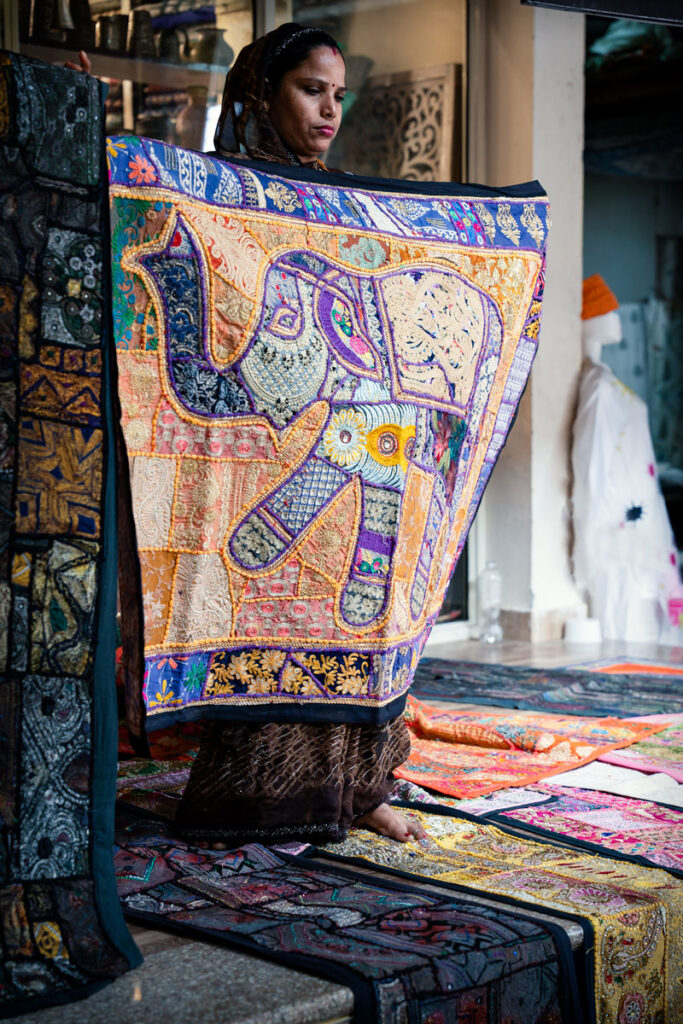
Tribal Women Craft Industries is a kind of cooperative of women who are able to earn additional income through sewing. Using recycled fabrics, they create wonderful rugs and throws, combining modern patterns with traditional colors and motifs. A handful of painters are also employed here. With a steady hand and an excellent eye for detail, they create – what else? – paintings of tigers in all sizes and variations.

It’s a wonderful place to watch the artists at work and to support the local people as directly as possible by purchasing their products, rather than taking home questionable souvenirs from Chinese mass production.

Tribal Women Craft Industries - Women Craft Ranthambhore

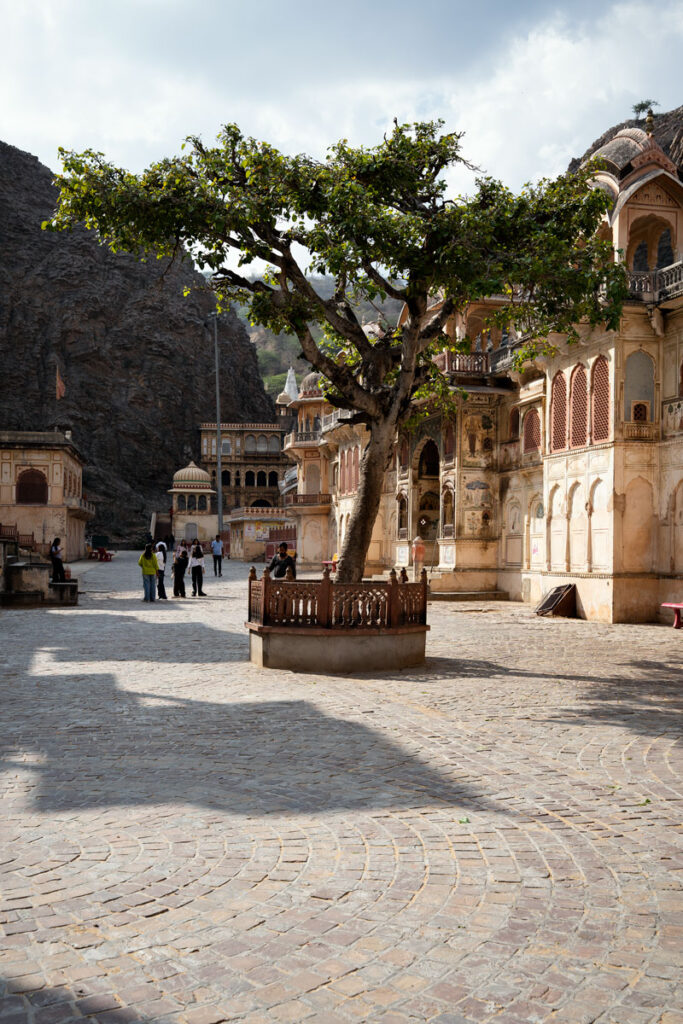
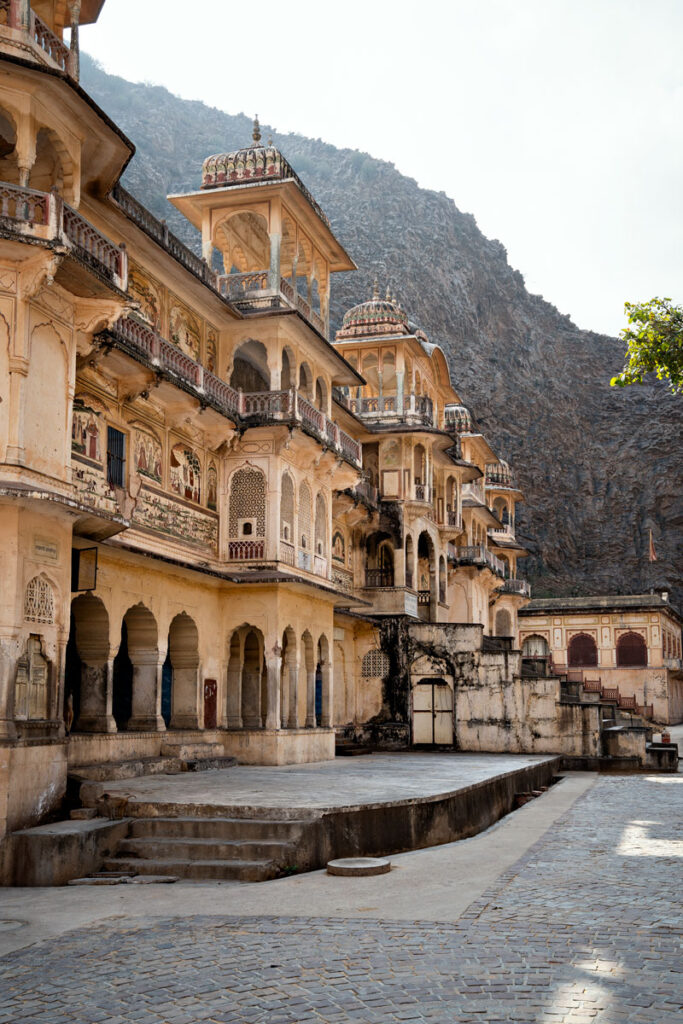
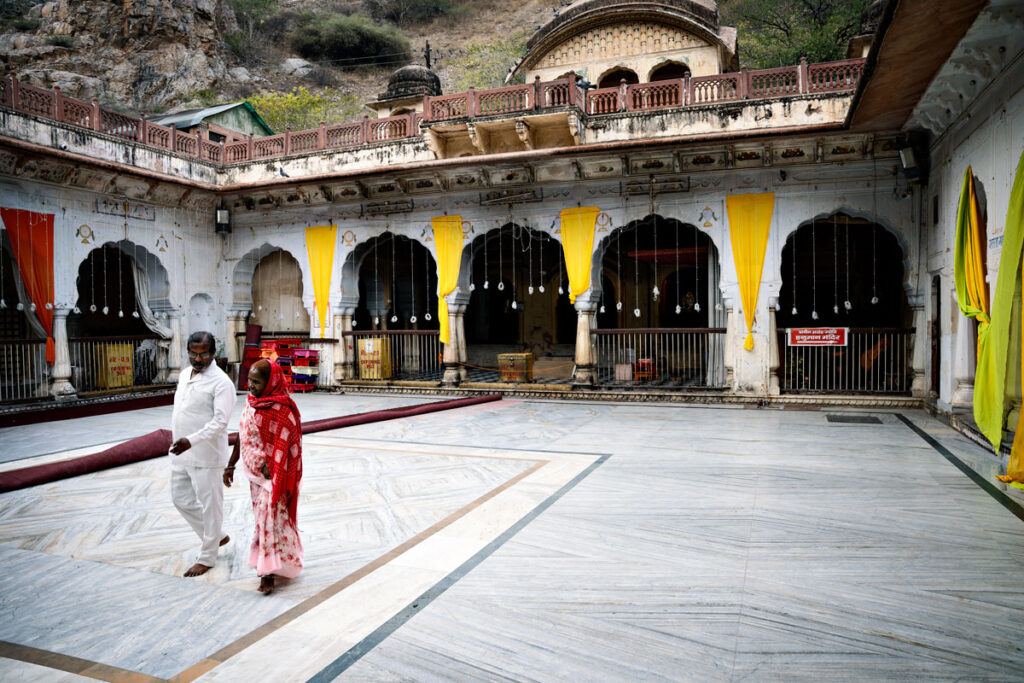
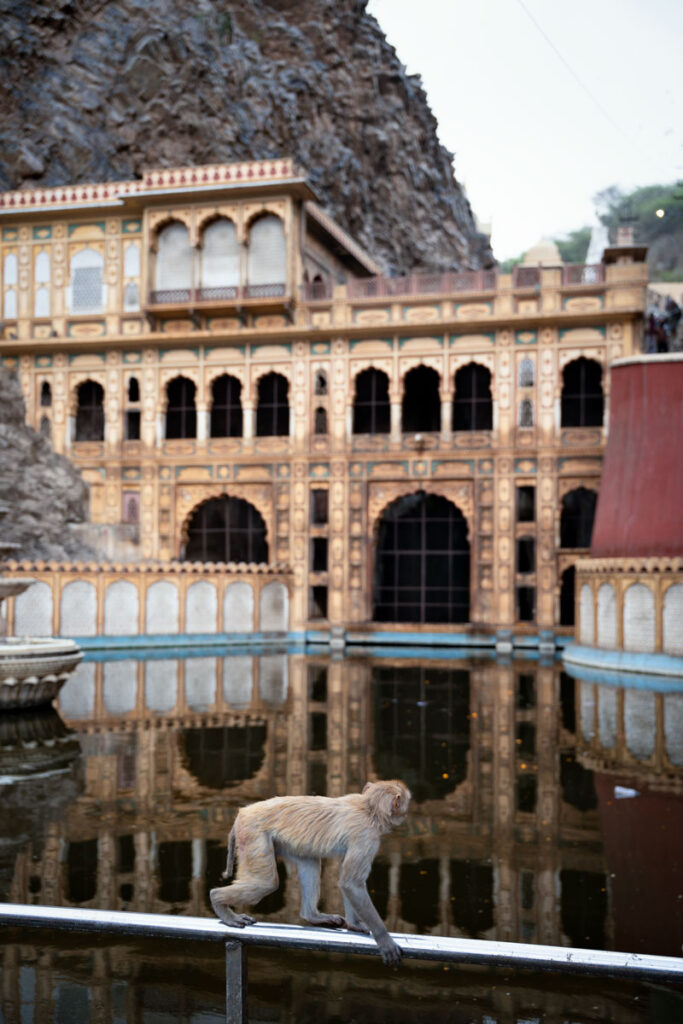
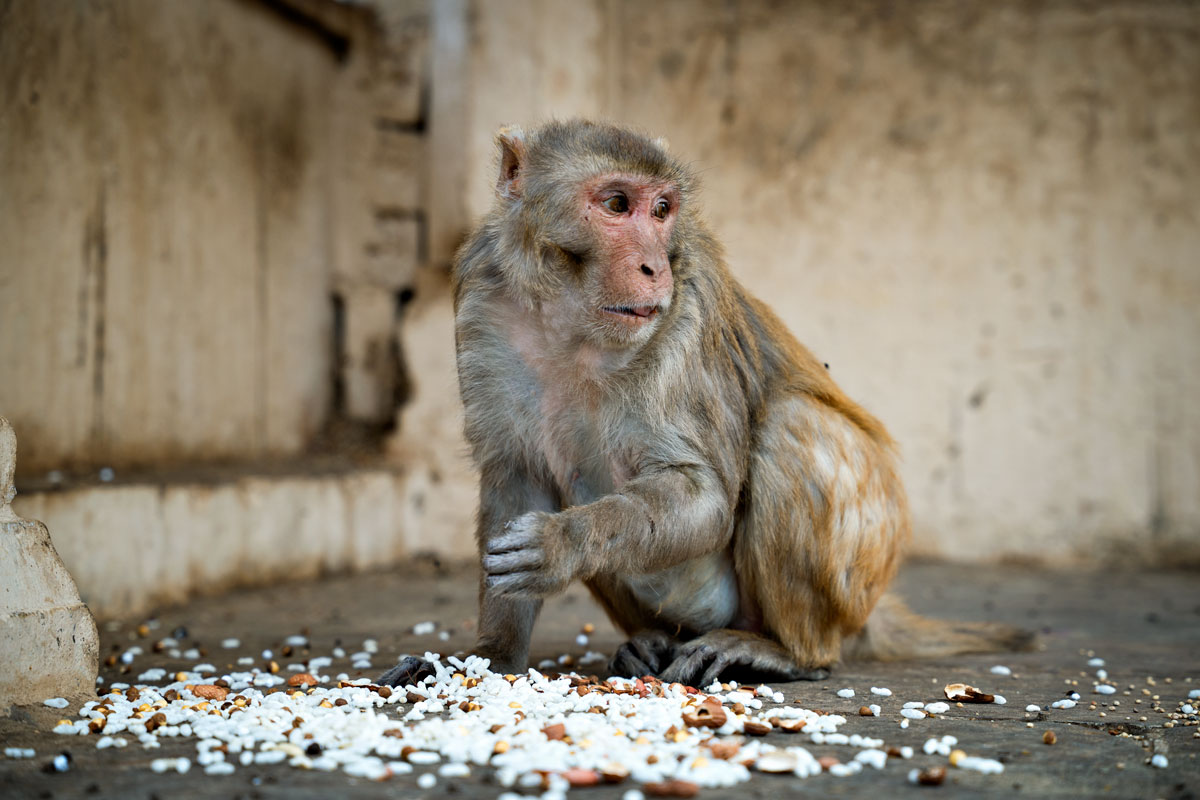
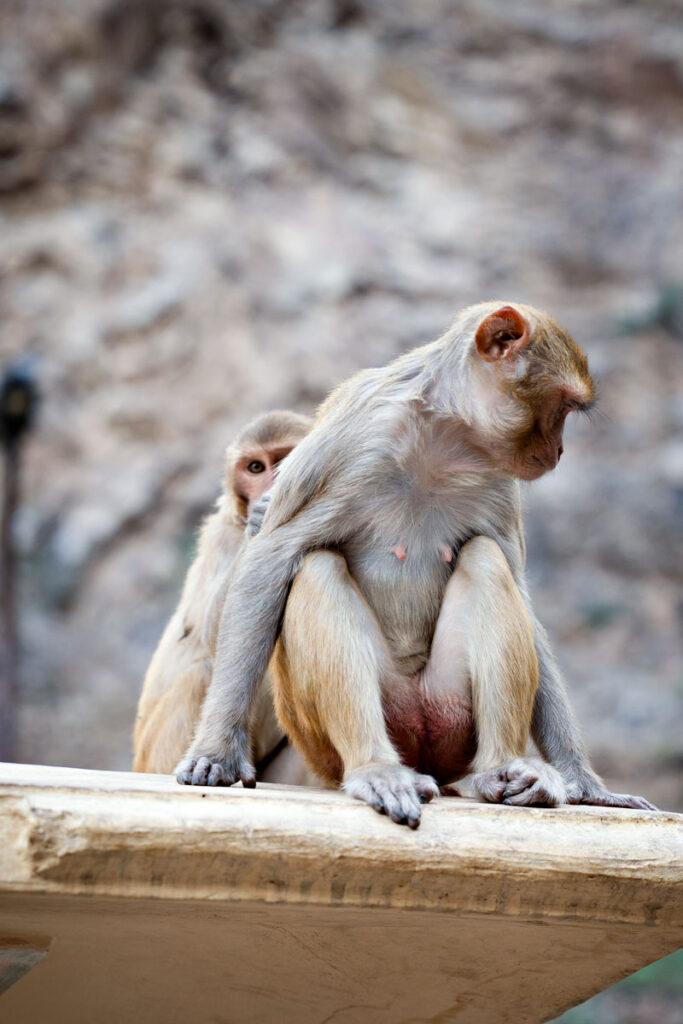
On the western outskirts of the city of Jaipur lies the Galta Ji Temple, also known as the Monkey Temple. Not because monkeys are revered here as sacred animals, but because dozens, if not hundreds, of these animals inhabit the ancient temple complex.

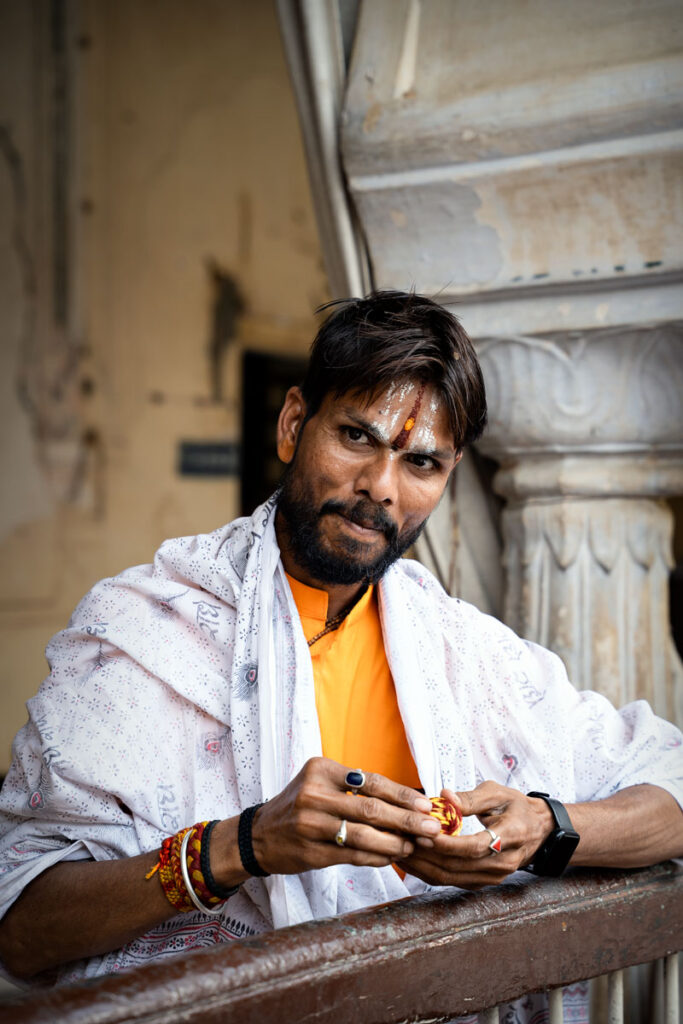
We enter one of the temple buildings. An old man points to an entrance to the basement. Down there is a gloomy corridor, which we follow – along with an Indian couple – through winding passages until we reach its end. Finally, we arrive at a small, dimly lit chamber. A Brahmin is sitting there. His bare upper body is adorned with colorful sacred symbols. His beard is braided, his hair shaggy. He insists on blessing us, and we give him about as many coins as the couple before us did. But he had apparently expected more from us white-faced people; he grimaces in displeasure.

Back outside, we follow a staircase, soiled with monkey and pigeon droppings, up to a spring. A half-naked woman is performing a ritual ablution there. Rats scurry across the ground, and monkeys balance on the walls. In a gloomy shack, another Brahmin sits, surrounded by rats and other vermin. Since, according to Hindu belief, every animal could be a reincarnated relative, friend, or acquaintance, animals are tolerated almost everywhere.

Galta Ji Temple
Galta Ji Temple
Galta Ji Temple
Galta Ji Temple
Galta Ji Temple
Galta Ji Temple
Galta Ji Temple
Galta Ji Temple
Galta Ji Temple
Galta Ji Temple
Galta Ji Temple

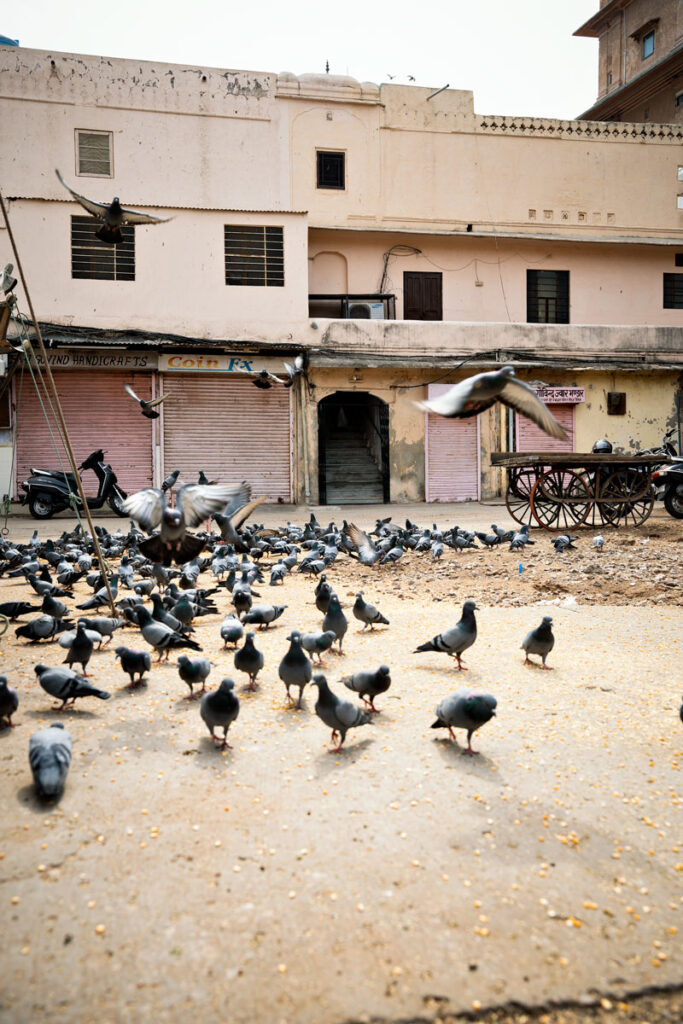
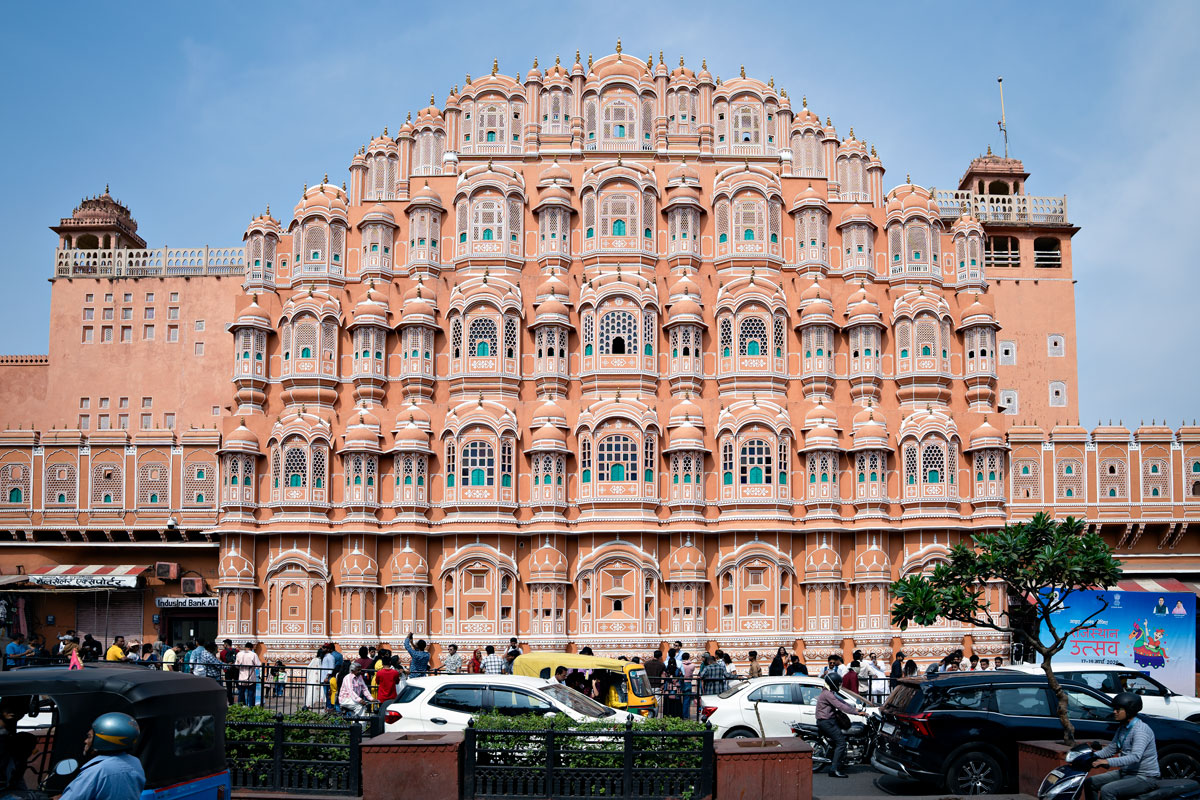
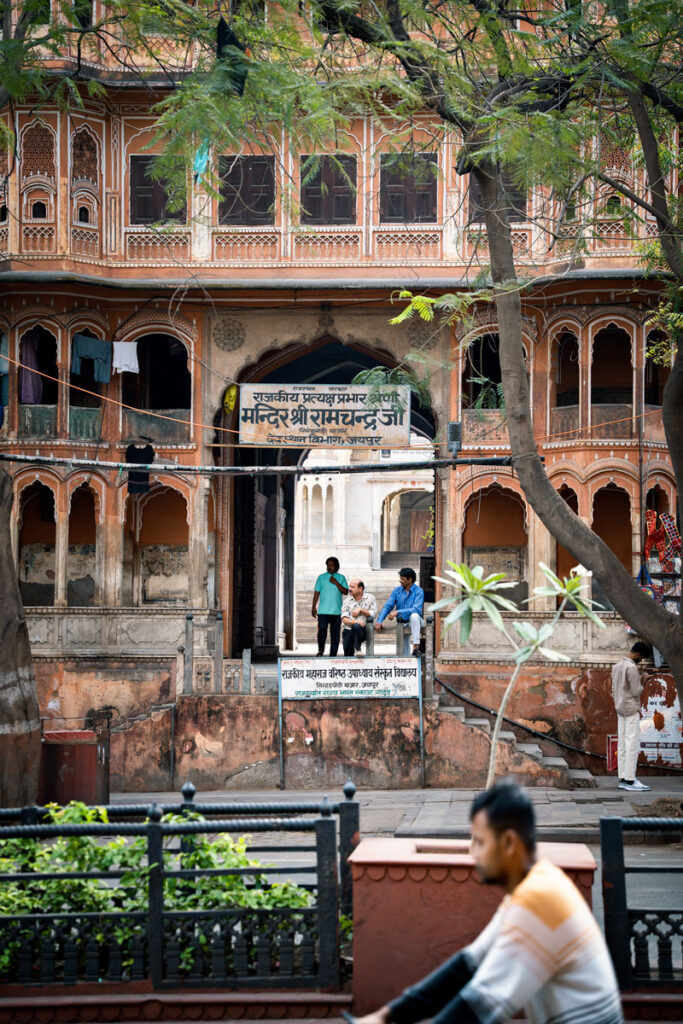
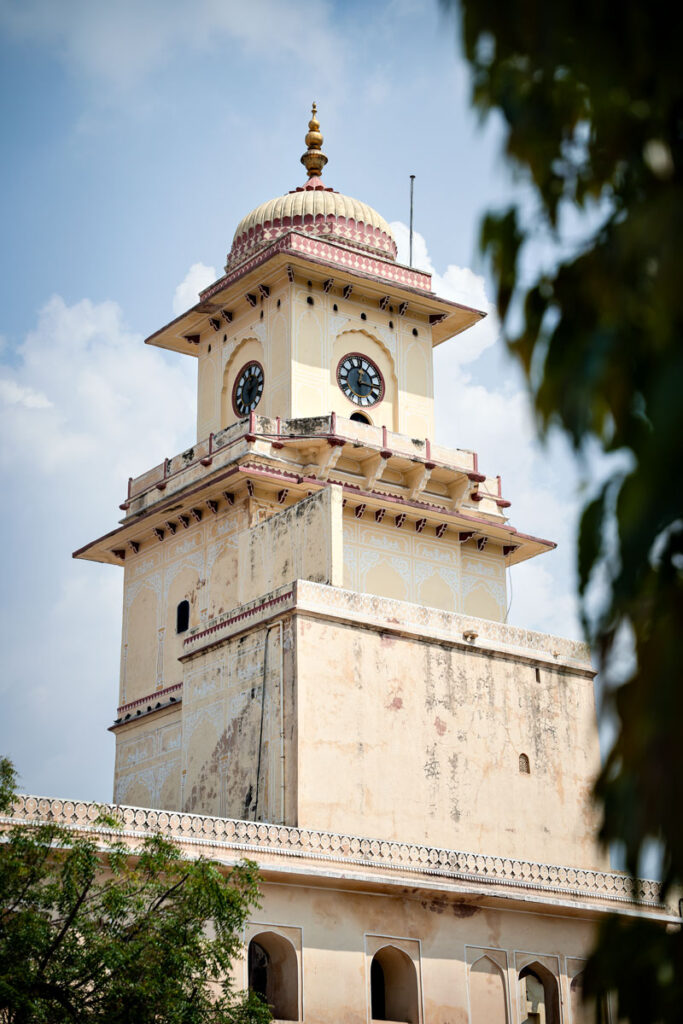
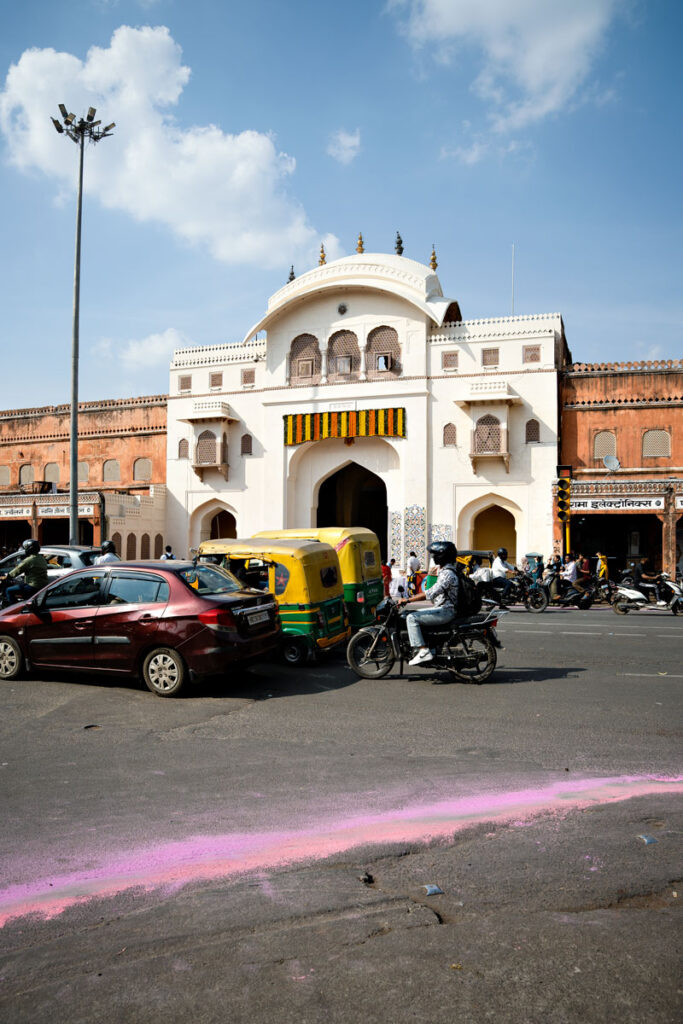
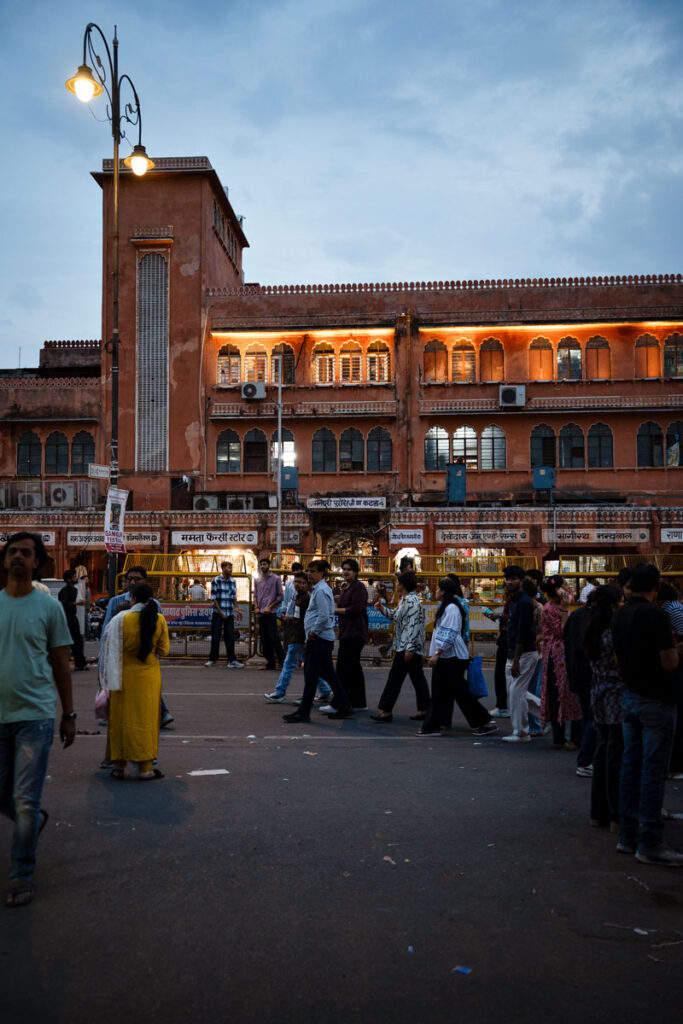
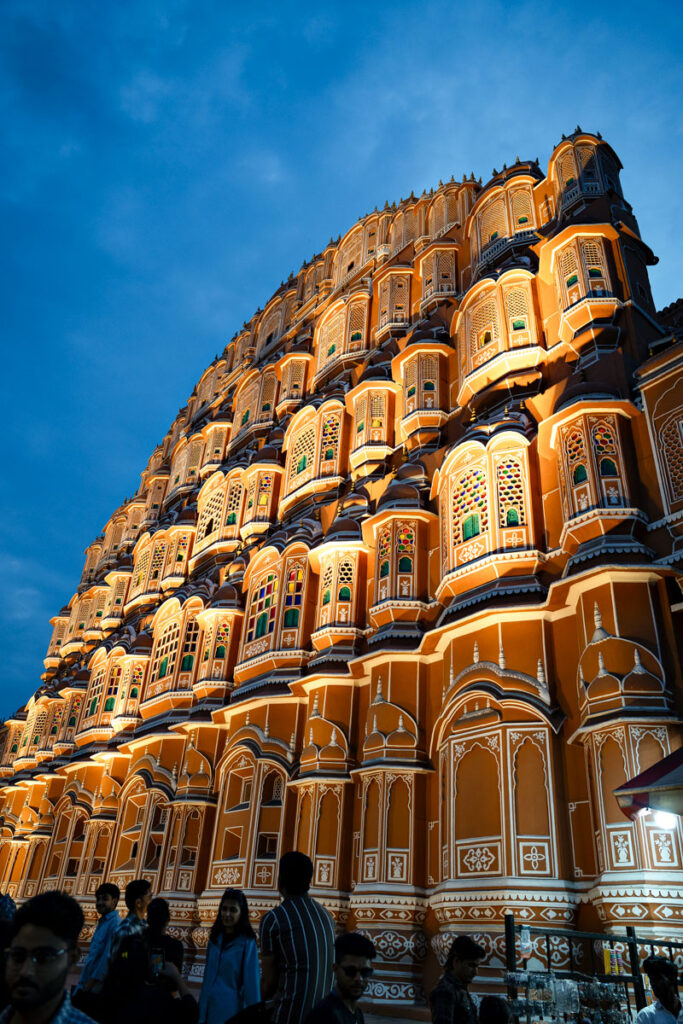
The Pink City, capital of the state of Rajasthan and cultural center of the region – that is Jaipur. Between the old royal palace, a collection of astronomical instruments, and the impressive architecture of the Palace of the Winds lies a network of streets where the chaos of India reigns. Too many cars and rickshaws in too little space. The sidewalks are overflowing with passersby and food vendors. Cows lie amid mountains of trash; rats rule the sewers; monkeys dominate the city’s rooftops. Beggars stand alongside students, merchants, and tourists. Everything flows; everything is in motion. Here there is no peace, no standstill, no turning back.

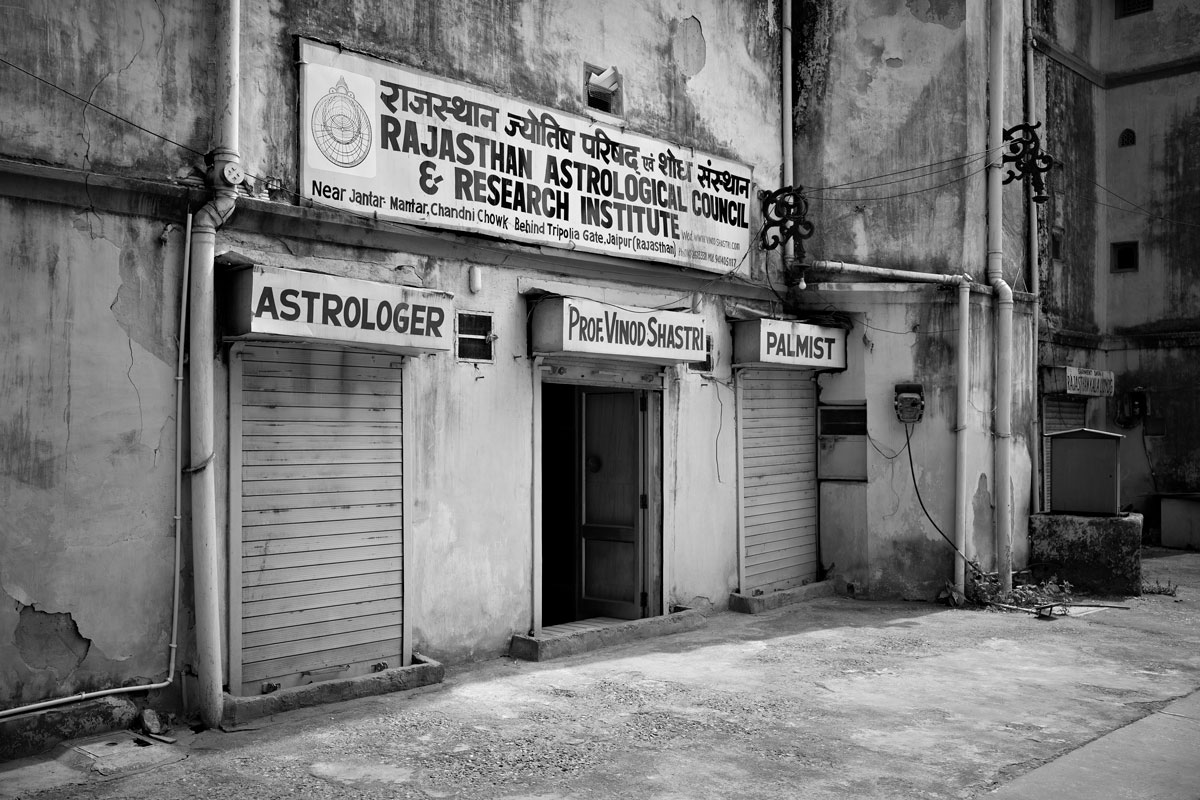
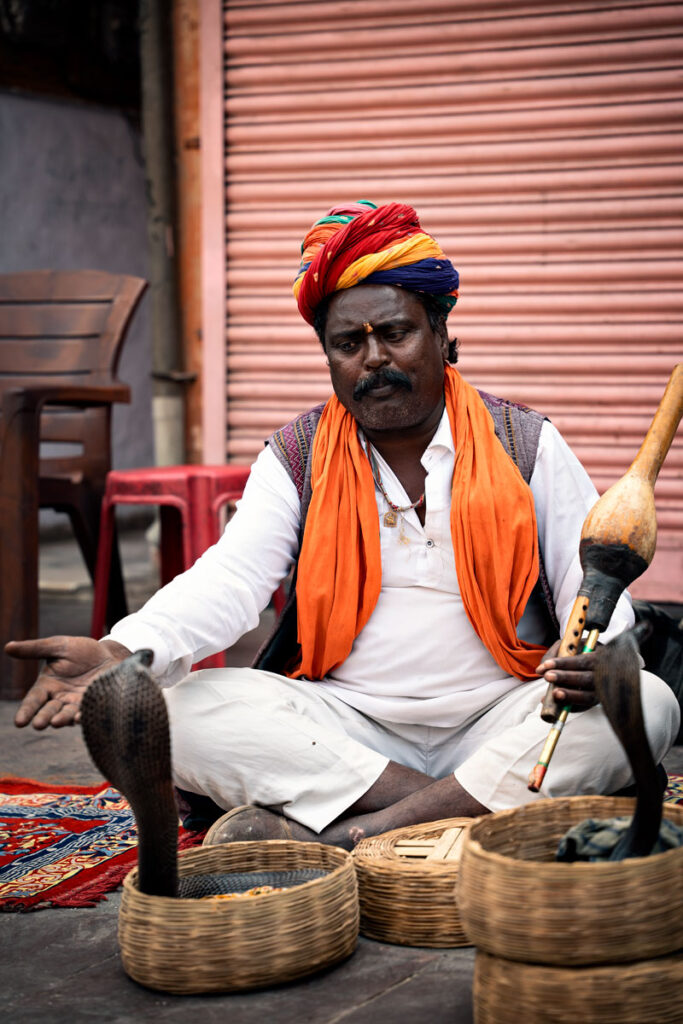
Snake charmers seem to coax tame cobras out of baskets with the atonal sounds of their flutes. Fortune-tellers can read people’s futures and destinies from the lines on their hands. Hindu priests speak to the gods. Next to the palaces of ancient kings, slums rise from the desert dust. The city, once painted pink and orange for the Prince of Wales’s visit, is a vibrant, mystical place full of energy and deafening intensity.

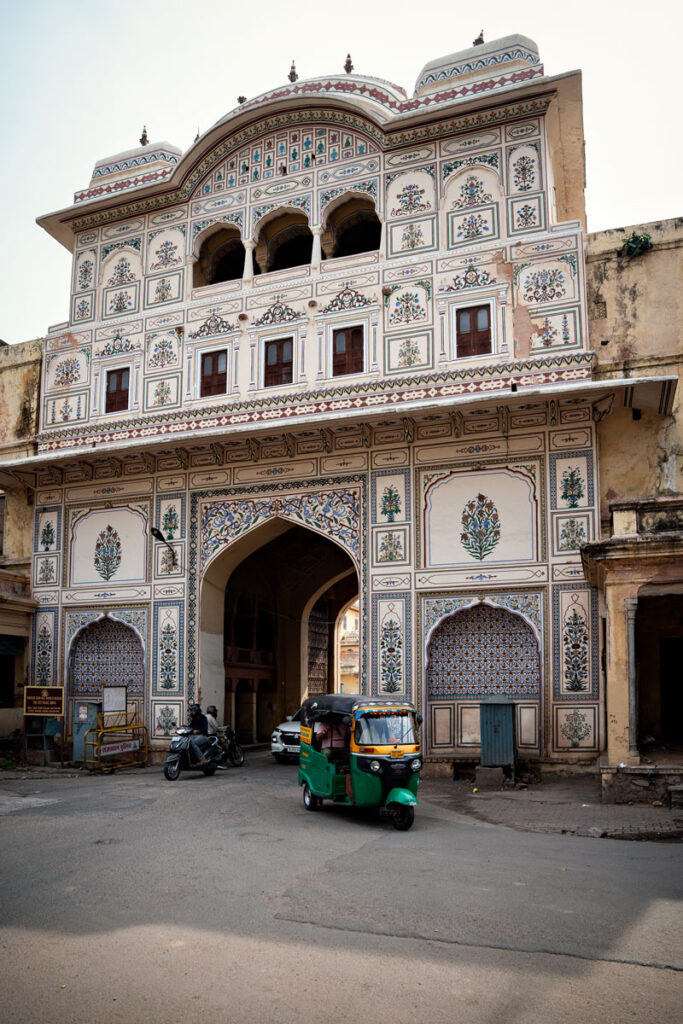
Sireh Deori in Jaipur
Pigeons in Jaipur
Palace of Wind - Hawa Mahal
Cow on the Streets of Jaipur
Heavy Loaded Woman in Jaipur
Astrologer in Jaipur
Snake Charmer in Jaipur
People in Jaipur

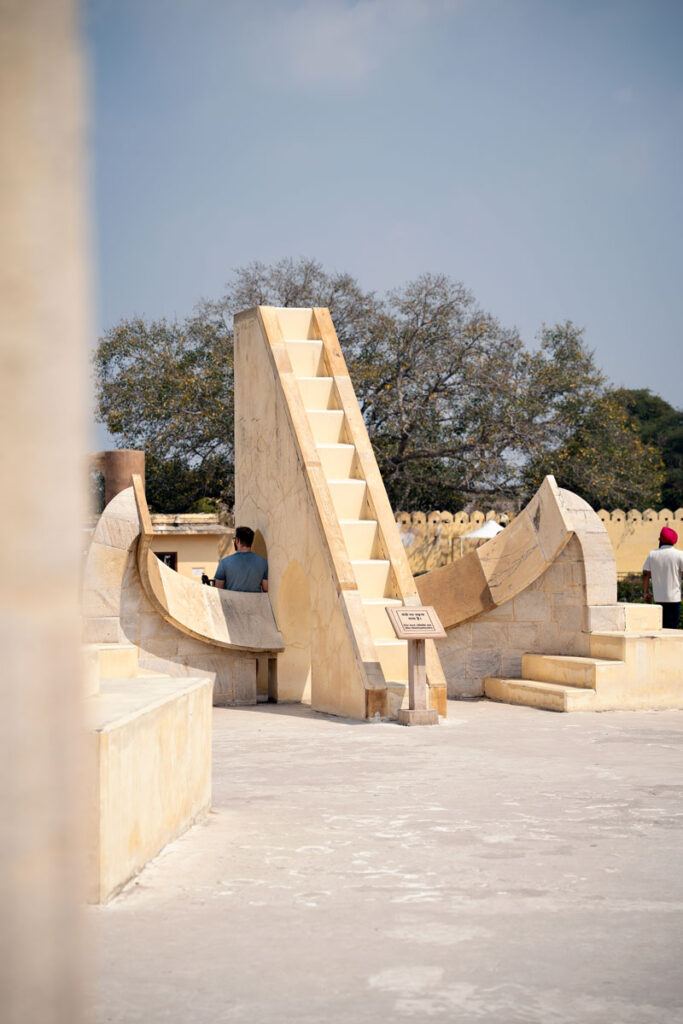
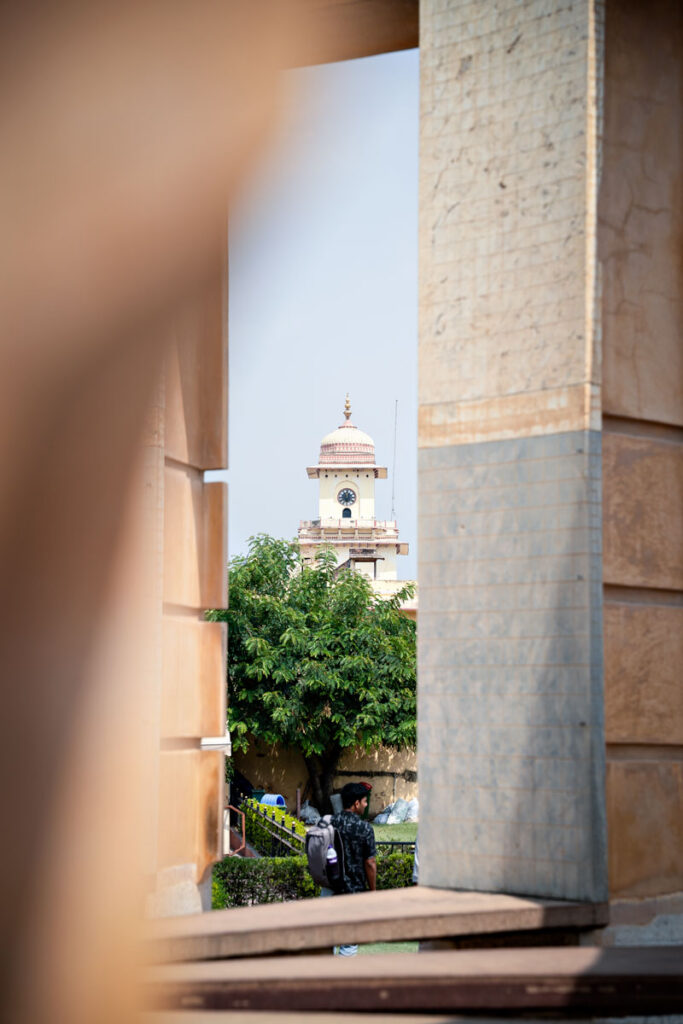
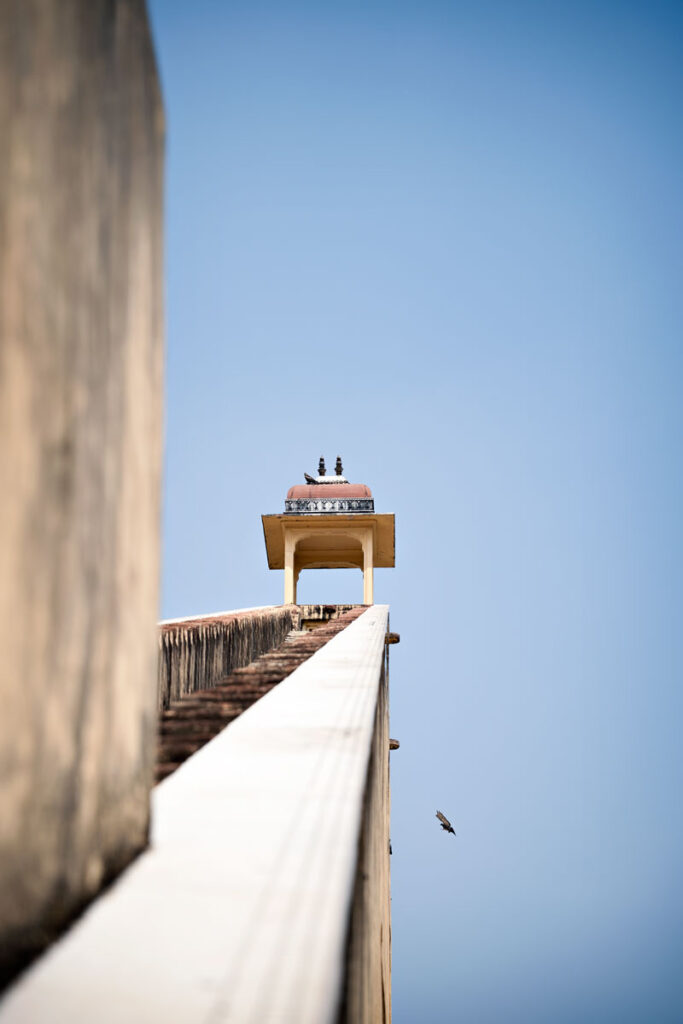
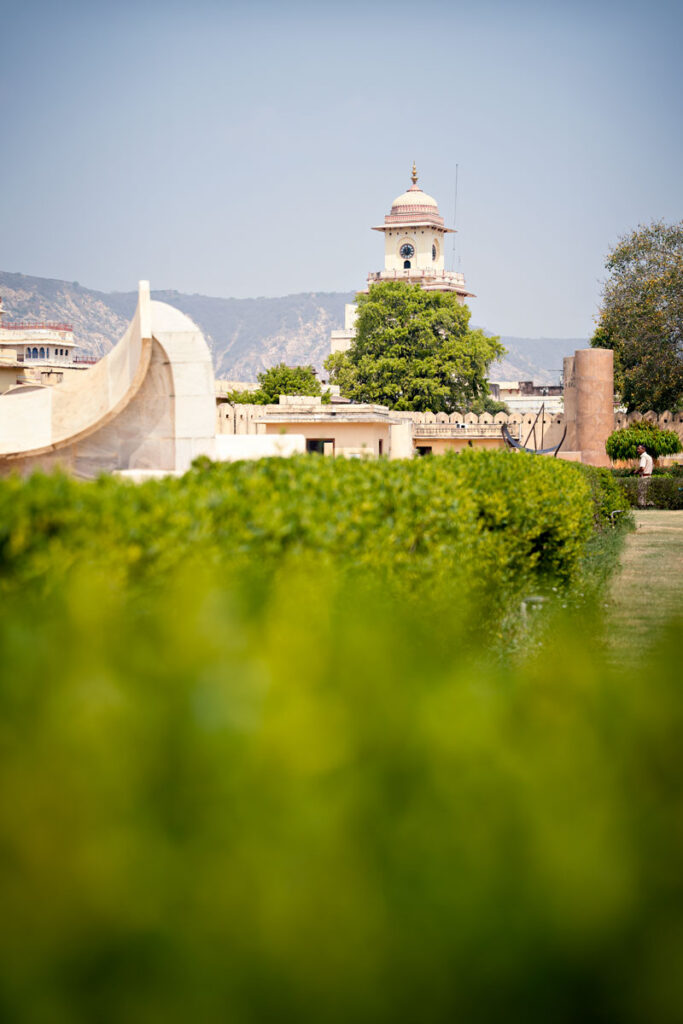
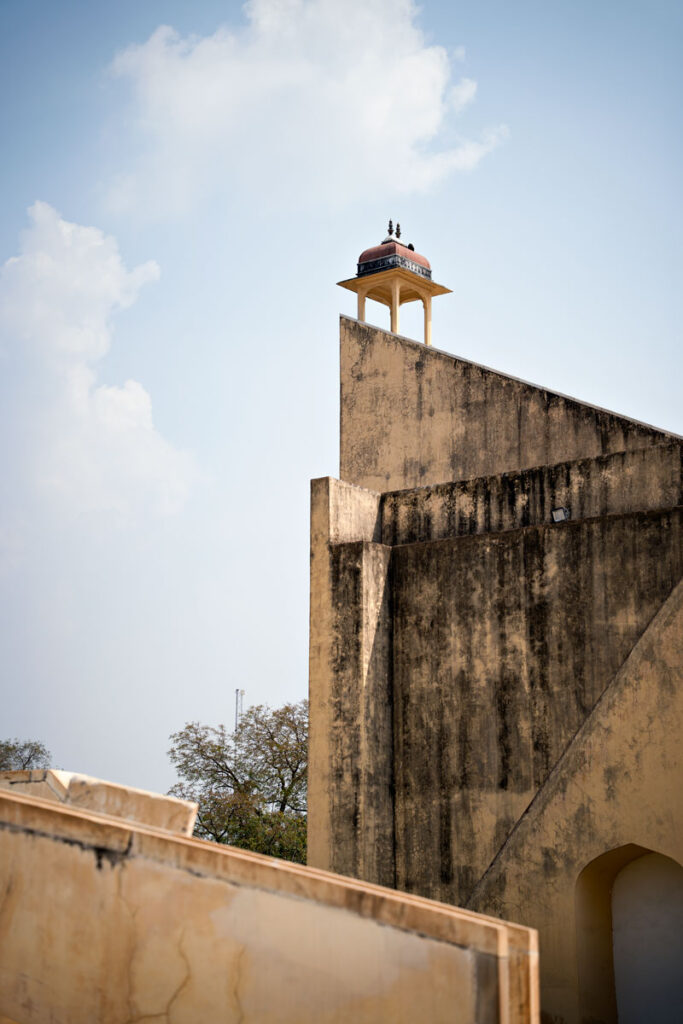
The bigger, the better. The more impressive, the more precise. In the early 18th century, Maharaja Jai Singh II was convinced that astronomical instruments had to be one thing above all else: large. The larger the structures, the more accurately angles, orbits, and star positions could be determined. While Europeans were tinkering with telescopes, precision mechanics, and perfectly polished lenses at the same time, Jaipur focused on monumental stone architecture.

Thus, we marvel at a gigantic sundial whose shadow is so wide that the time can only be determined roughly. Other instruments, too, strike us as surprisingly clunky and too imprecise for the purpose they were actually intended to serve.

Jantar Mantar in Jaipur

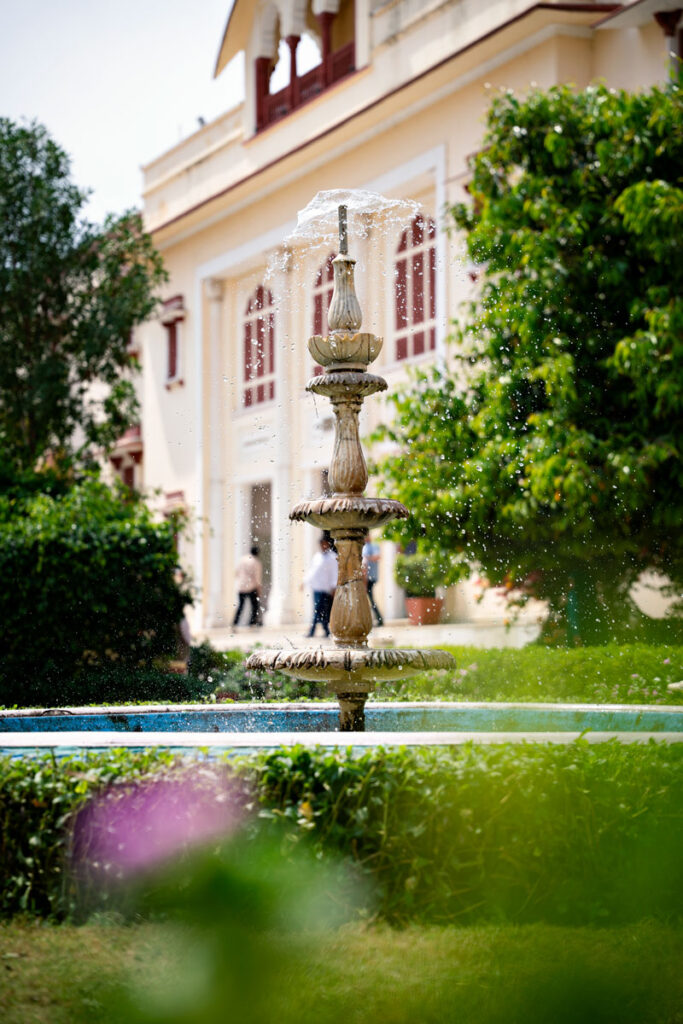
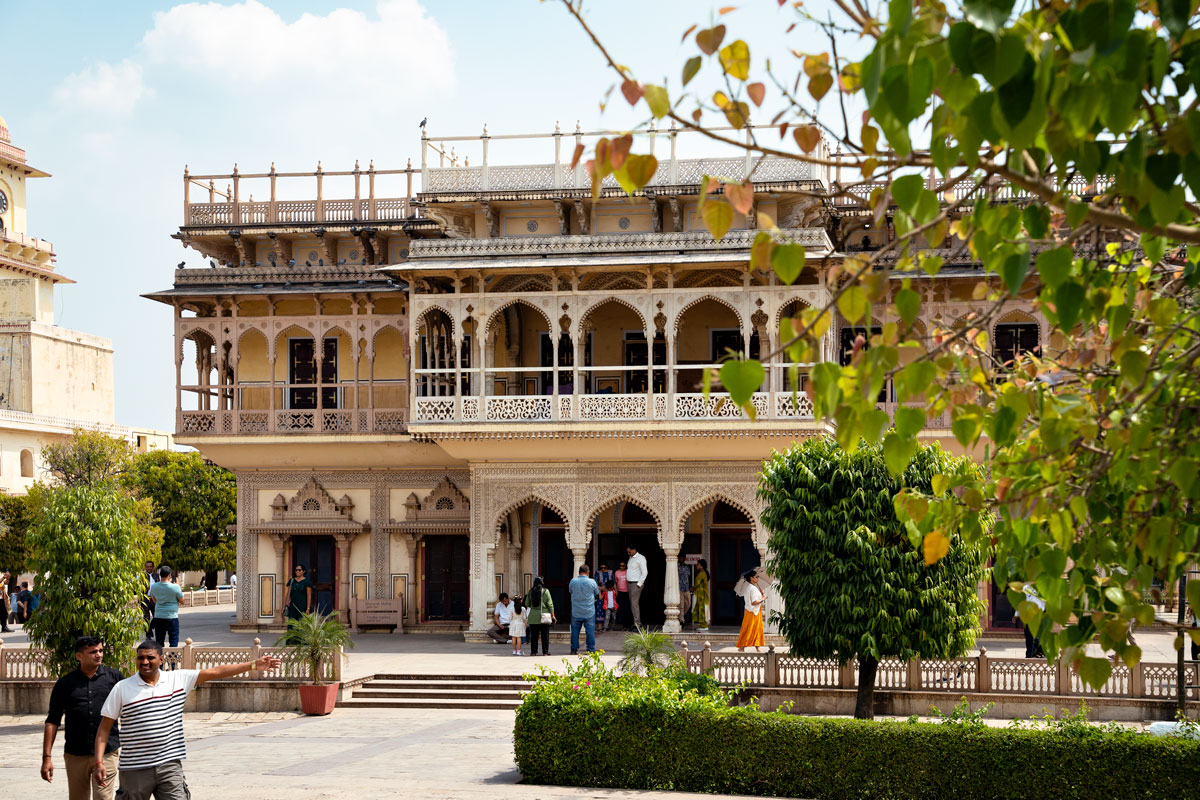
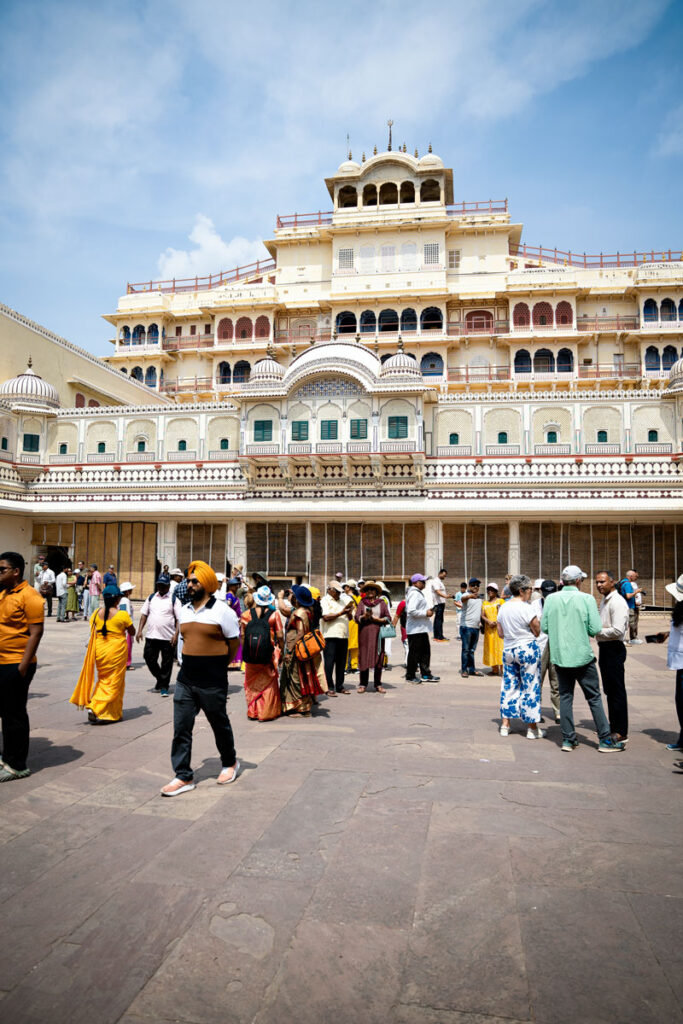
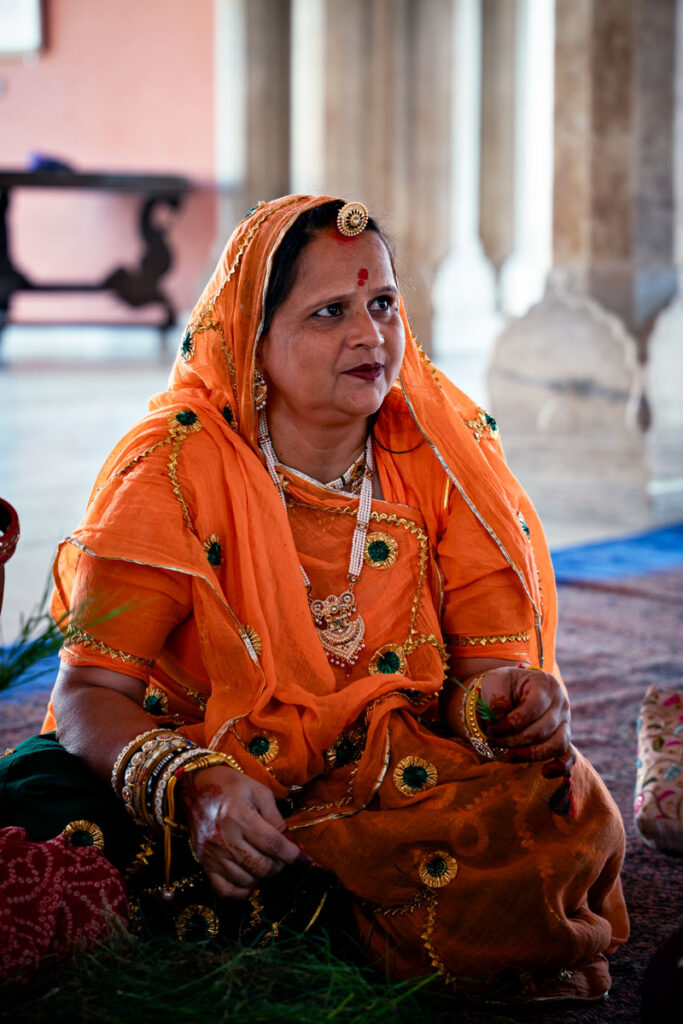
The city palace is full of tourists. Perhaps today is a particularly busy day, since the grand Gangaur procession is just around the corner. People from all over Rajasthan have come to witness the spectacle. But it’s only noon. A fountain splashes in the palace courtyard. Two guards have settled into the shade of the imposing entrance gate. Puppeteers are performing short scenes, and a group of older women are weaving colorful fabrics.

A boy asks us to take a photo of him and his friend. His father also wants a picture with his wife. He tells us he’s a soldier, and they’re on a short trip to the beautiful city of Jaipur. He’s polite and a bit shy. Time and again, we find the Indians to be open and friendly people. They are enterprising, always ready to earn a few extra rupees. At the same time, they know that with nearly 1.5 billion fellow citizens, they have to be loud just to be heard at all.

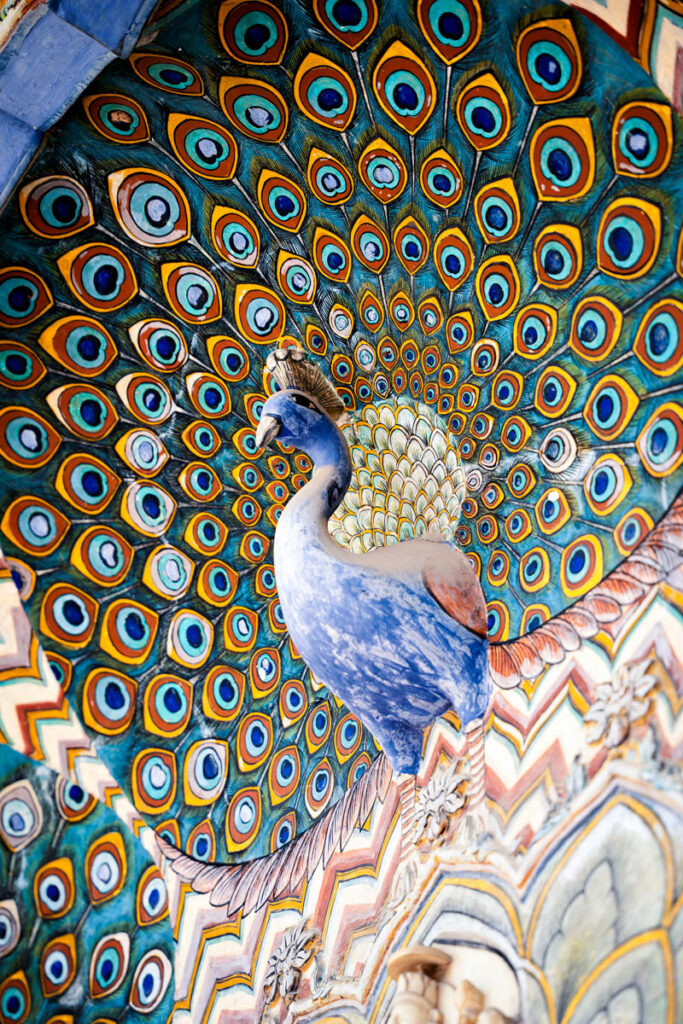
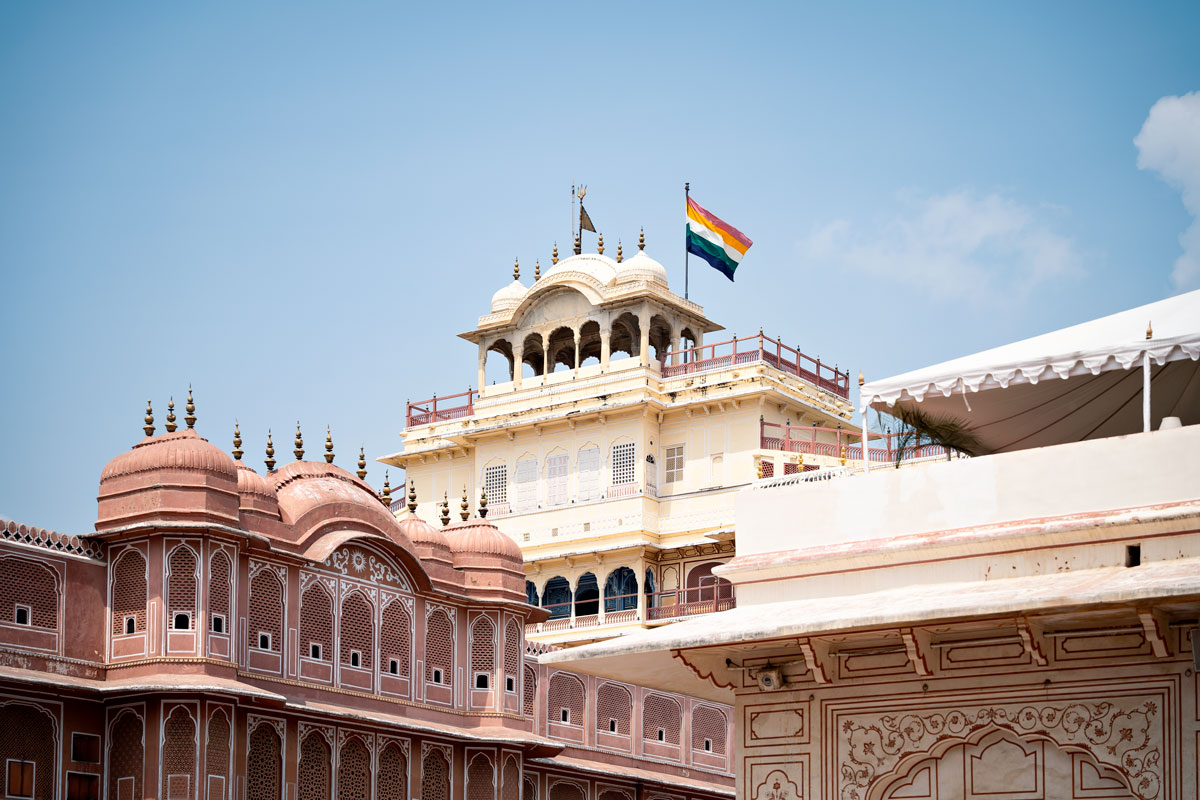
The City Palace in Jaipur

A large stage has already been set up at Tripolia Gate. Lines have been drawn on the asphalt with colored powder, marking where the barriers will soon be erected. The first sound checks are underway, and the last flower garlands are being hung. We take a walk around the block, buy some water and a small snack, as the day slowly turns into late afternoon.

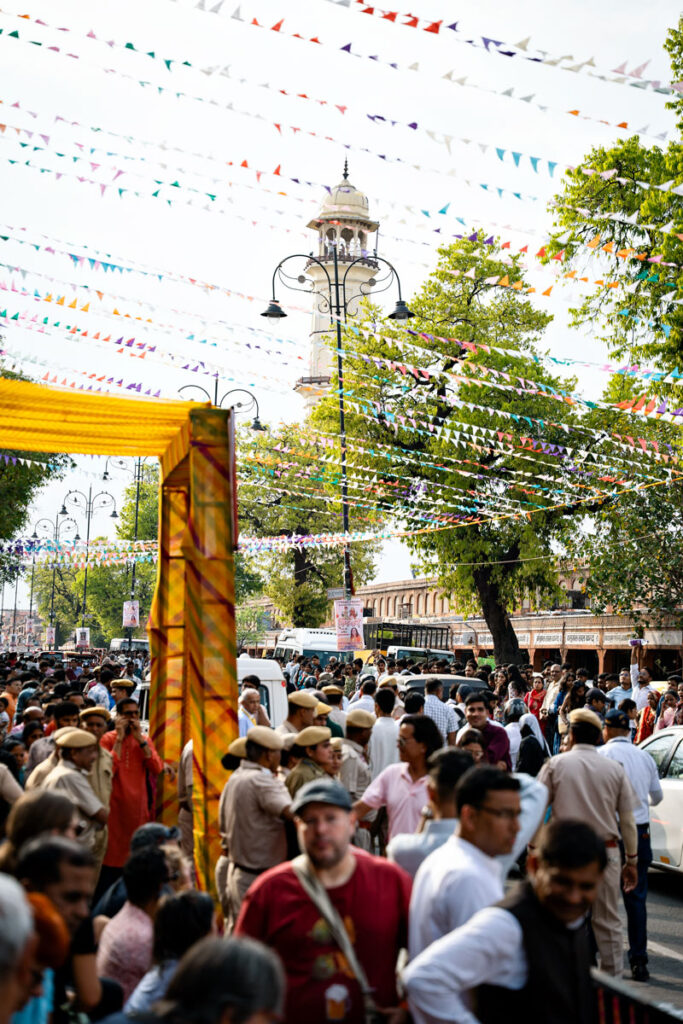
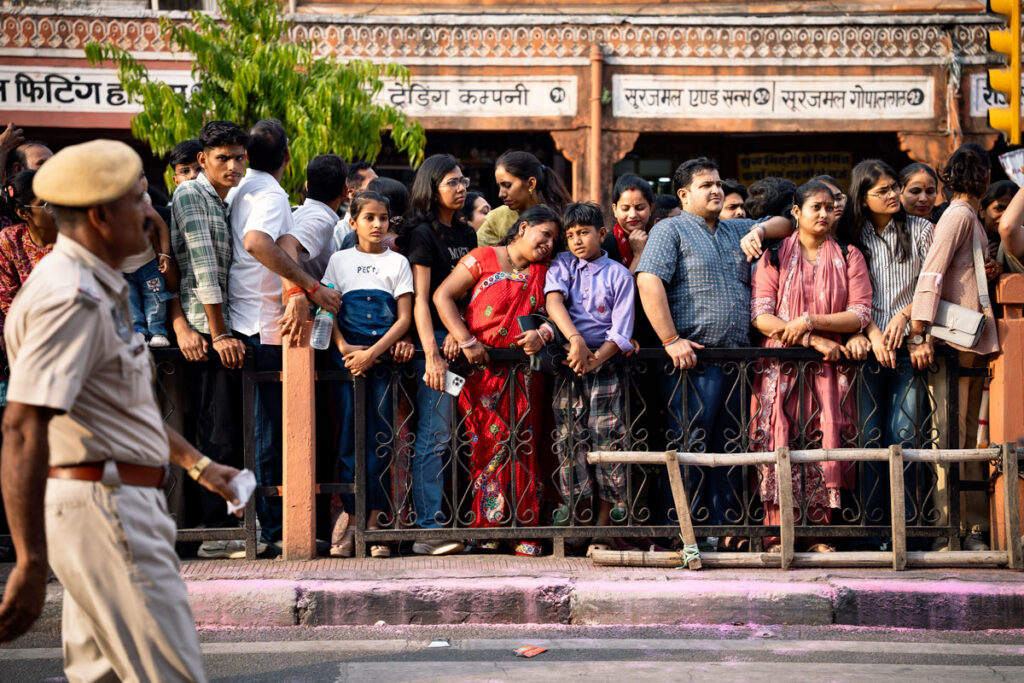
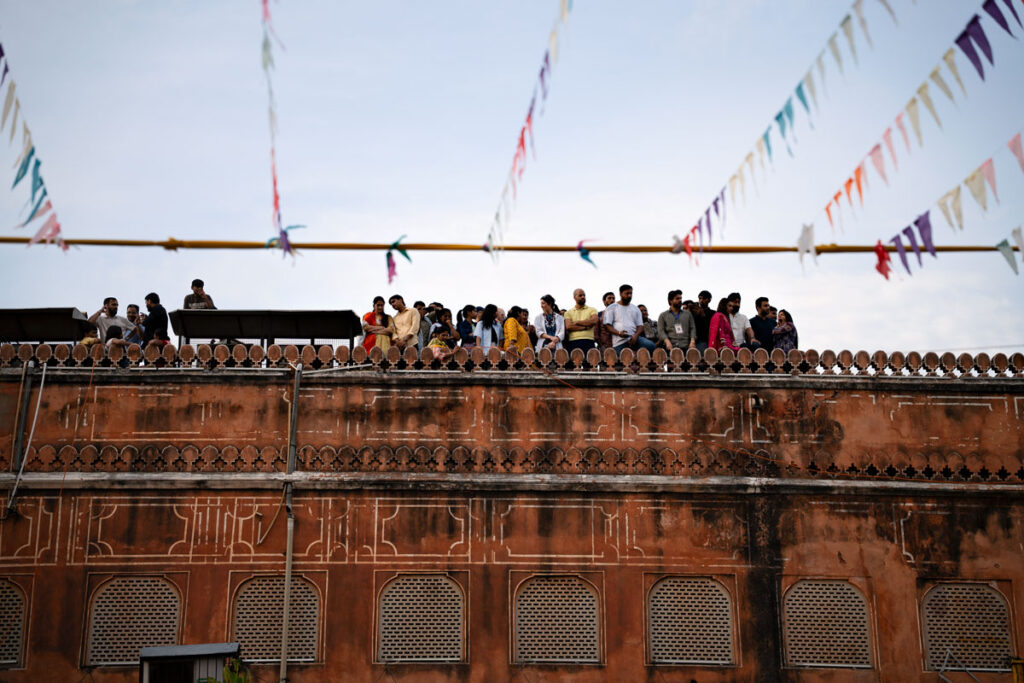
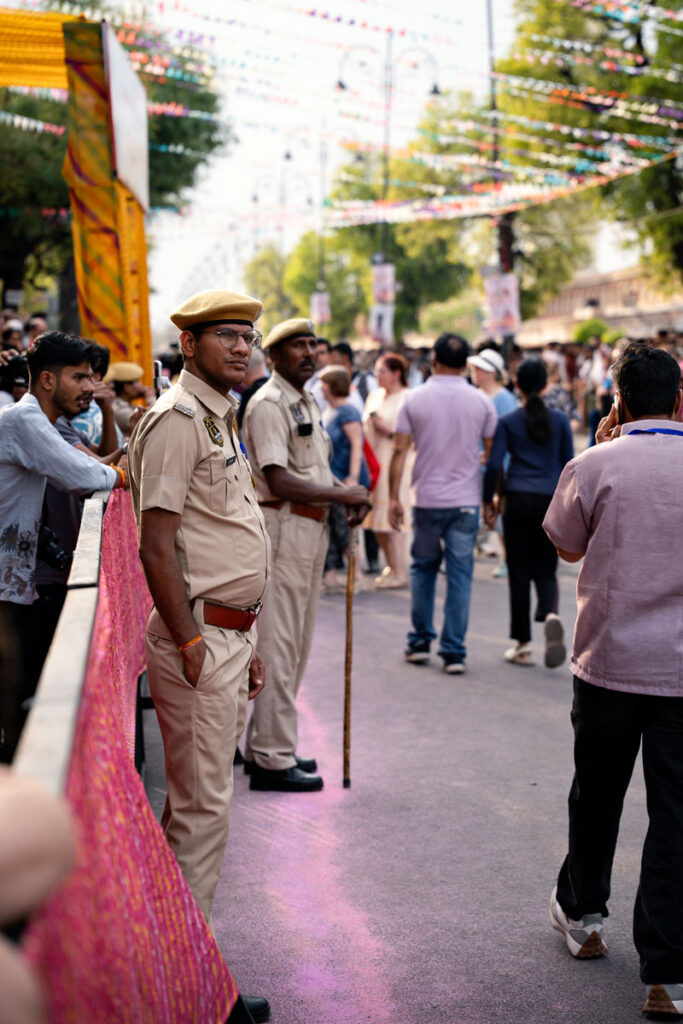
Then events come thick and fast. The rooftops have filled with hundreds of spectators. Traffic has been rerouted, and crowds are thronging along the street. Camera crews are searching for the best shooting angle. Police officers with stern expressions pace back and forth, holding the crowd back and swinging their bamboo batons through the air. A sense of joyful anticipation hangs in the air.

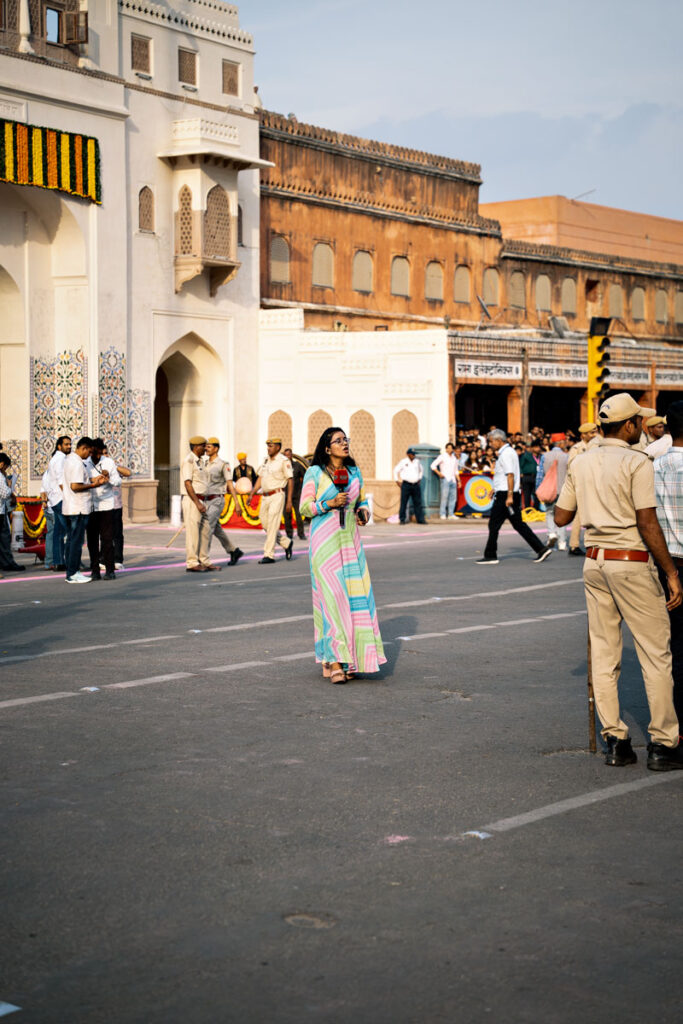
Gangaur Festival 2026 in Jaipur

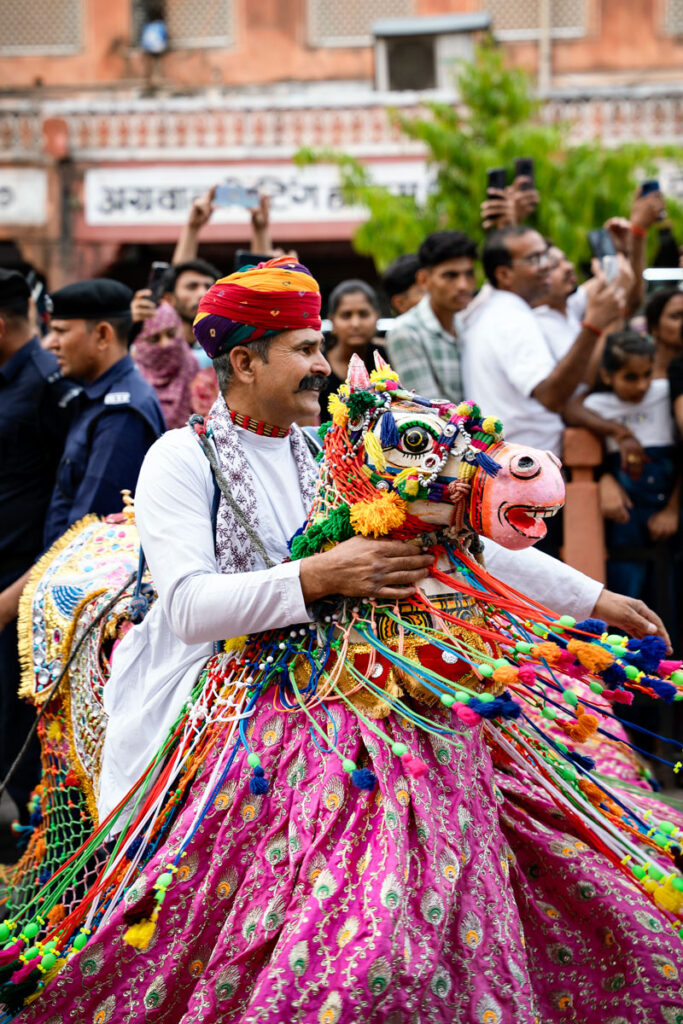
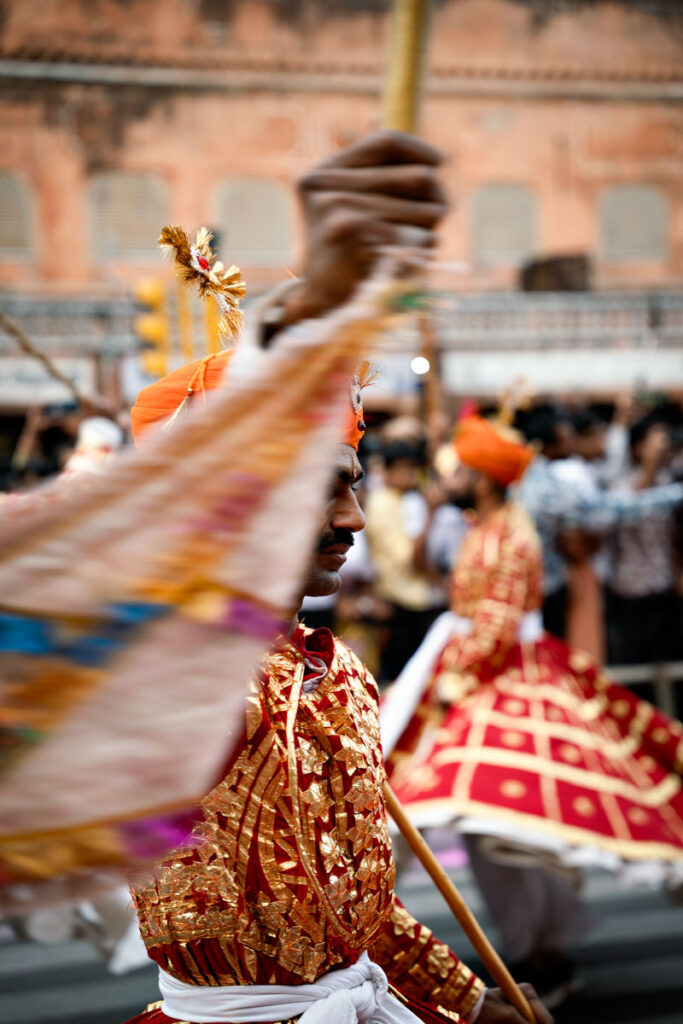
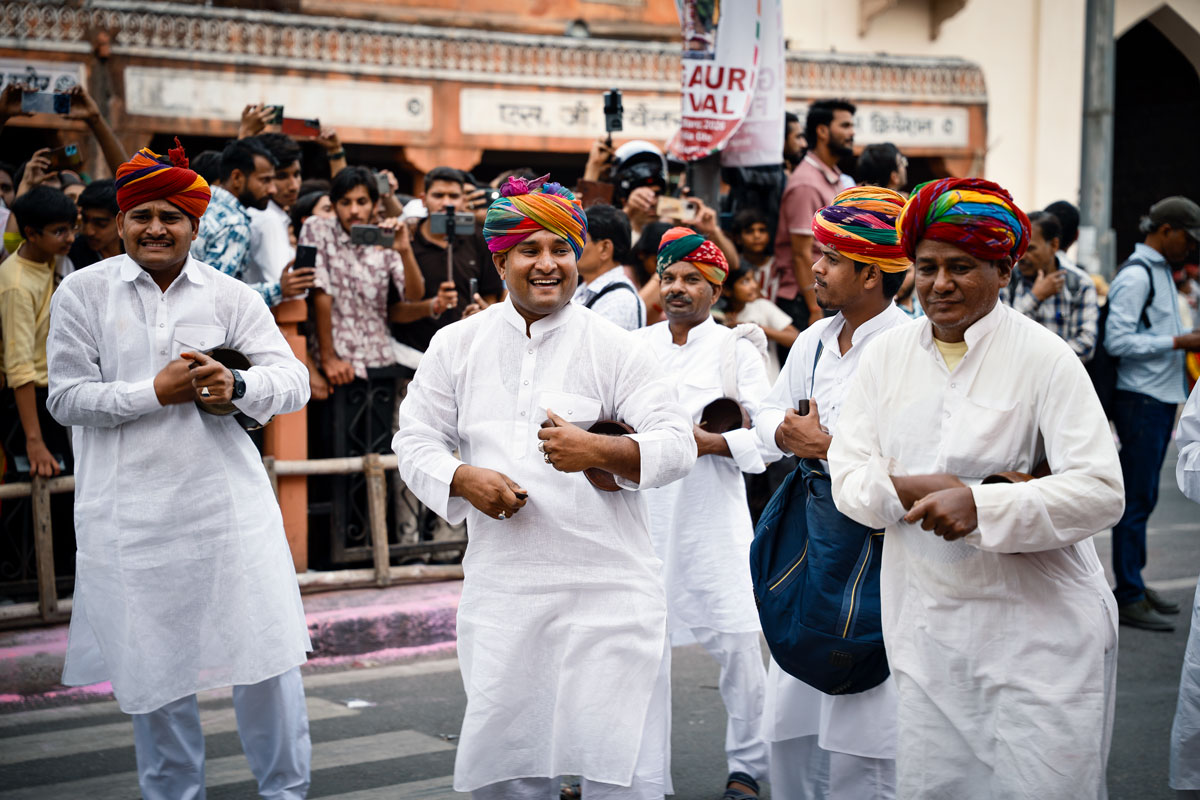
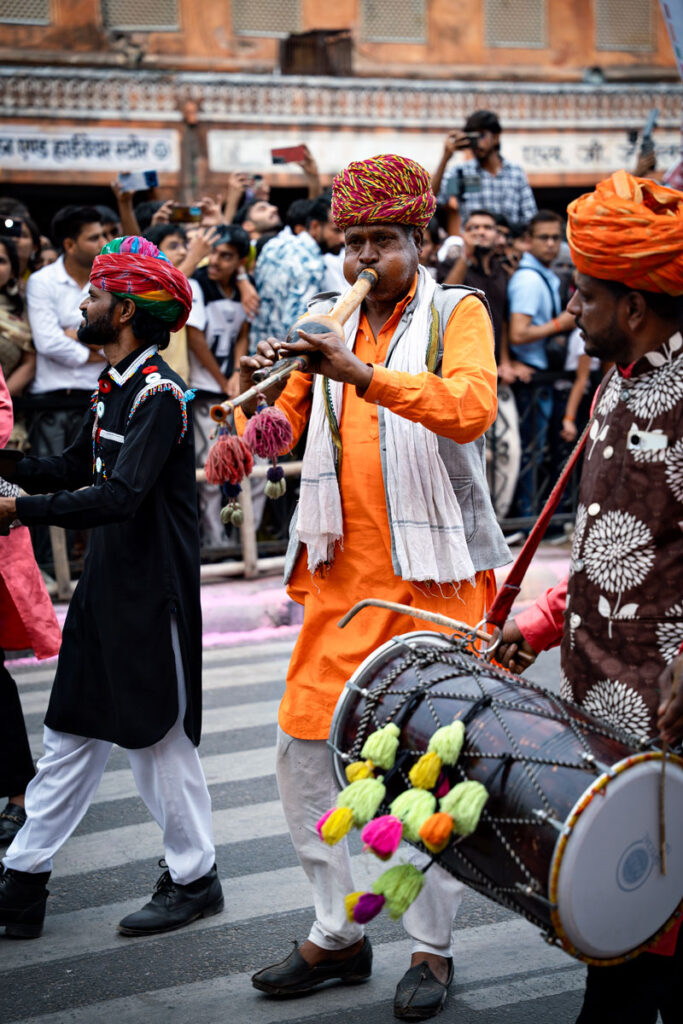
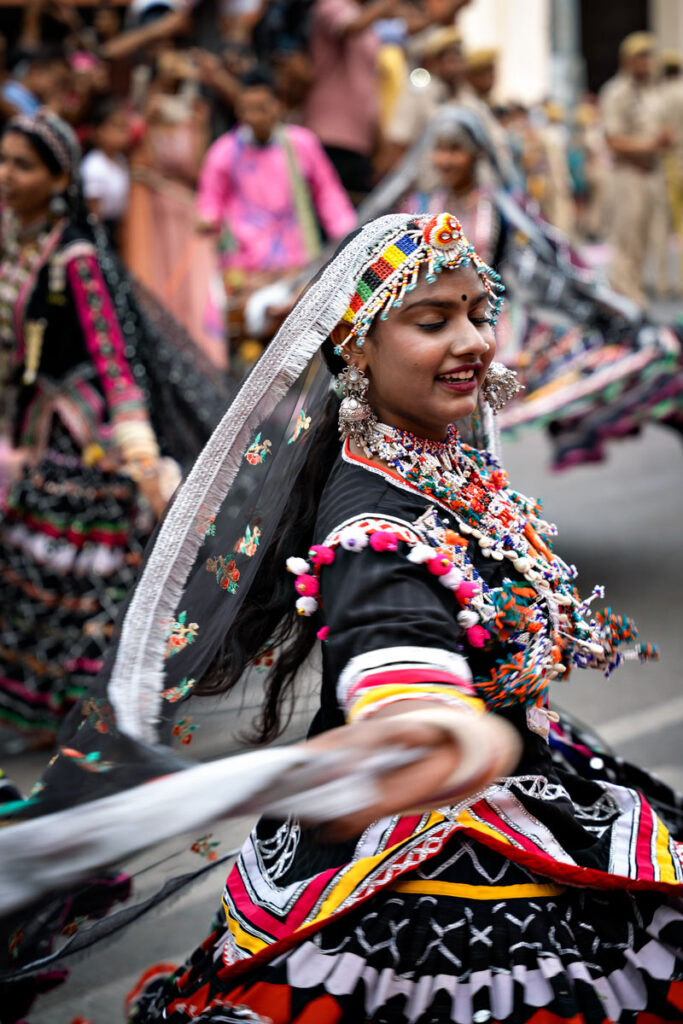
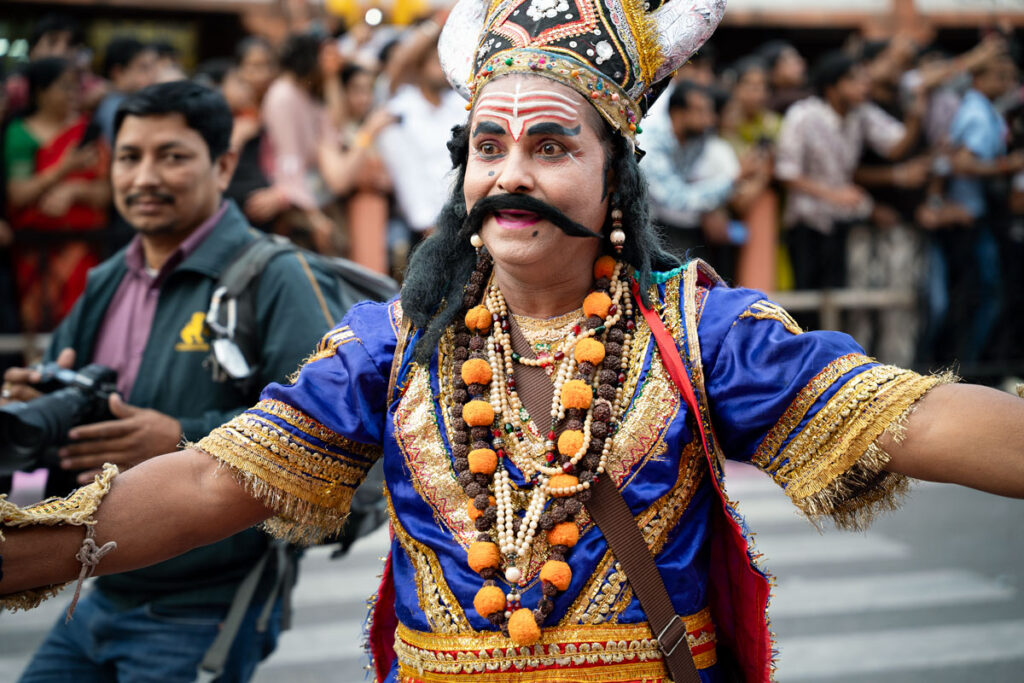
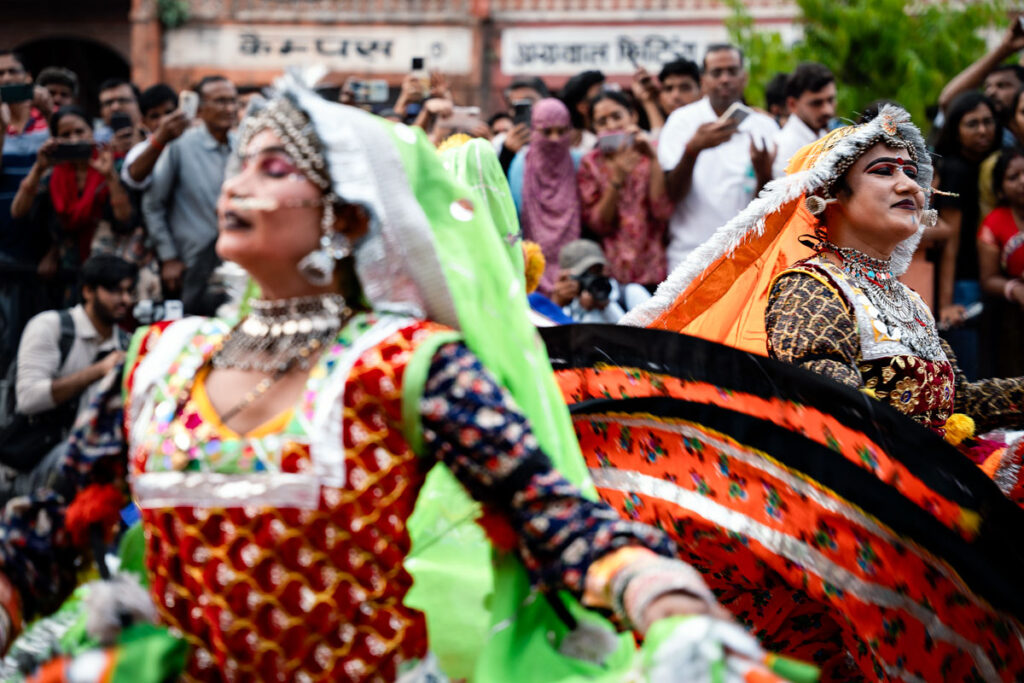
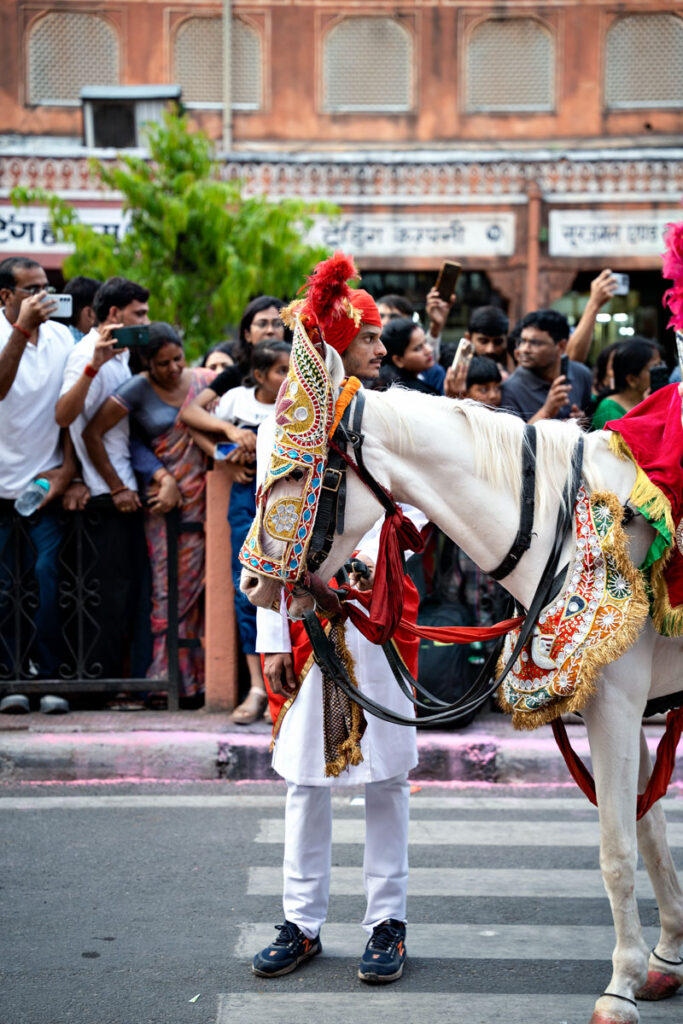
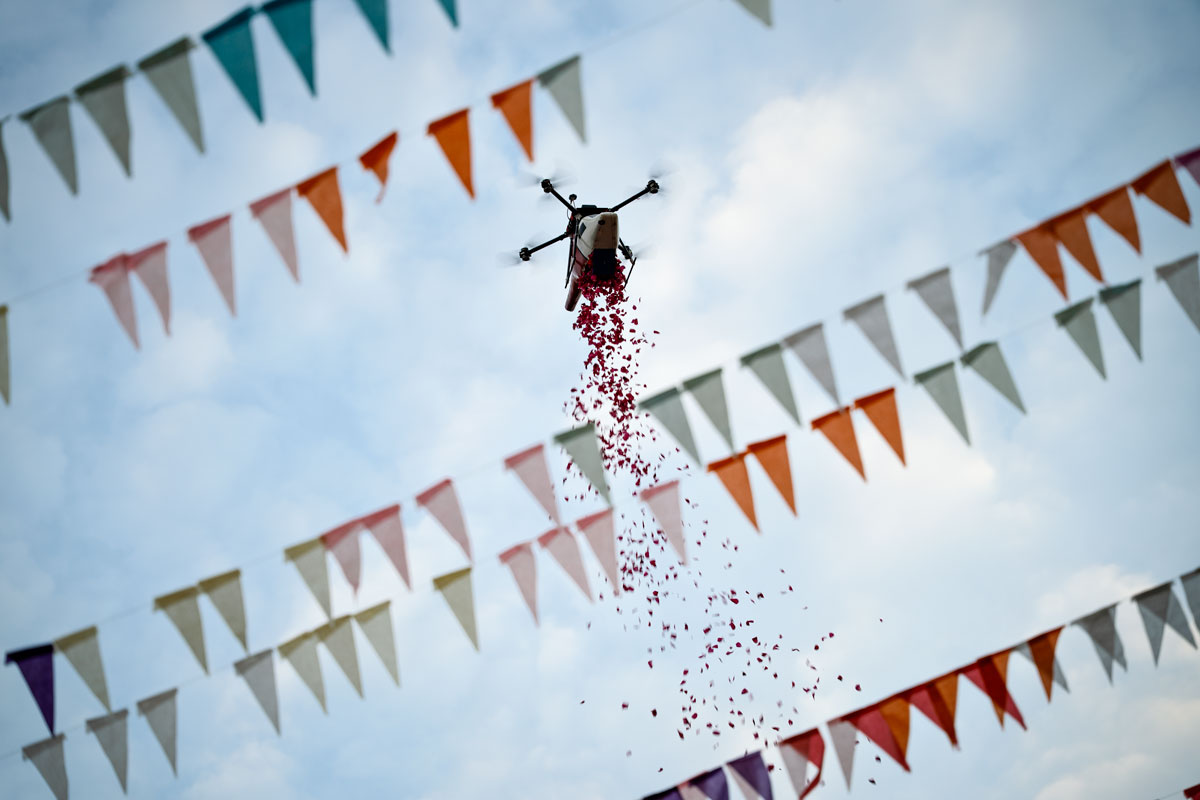
Drones take to the sky. A reporter speaks into her microphone, her voice breaking. The people on the rooftops – who have the best view and see everything first – begin to applaud. Drumbeats and music begin. Cheers ripple through the crowd. Shouts. Smartphones held aloft. The colorful procession begins to move. Men in long robes. Women in bright dresses. Golden ornaments, magnificent turbans, and ornate insignia.

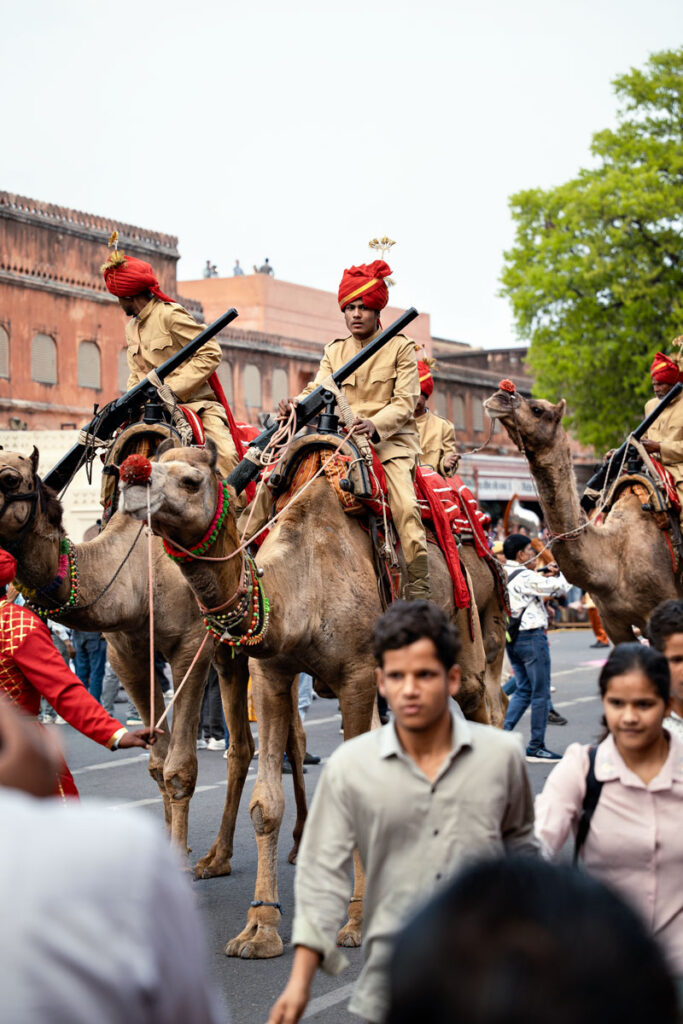
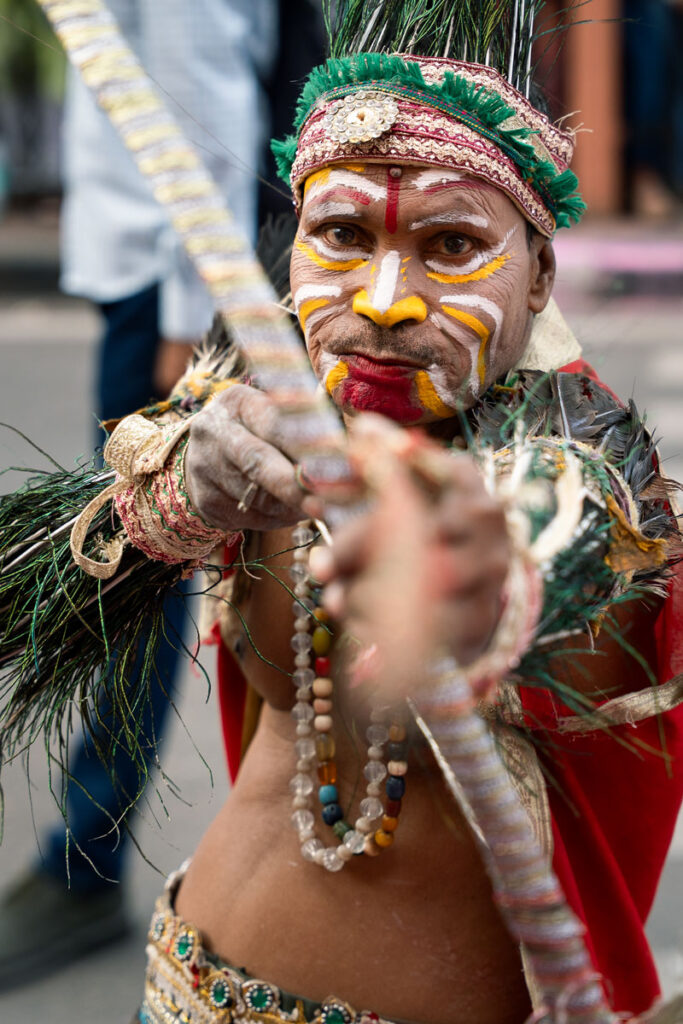
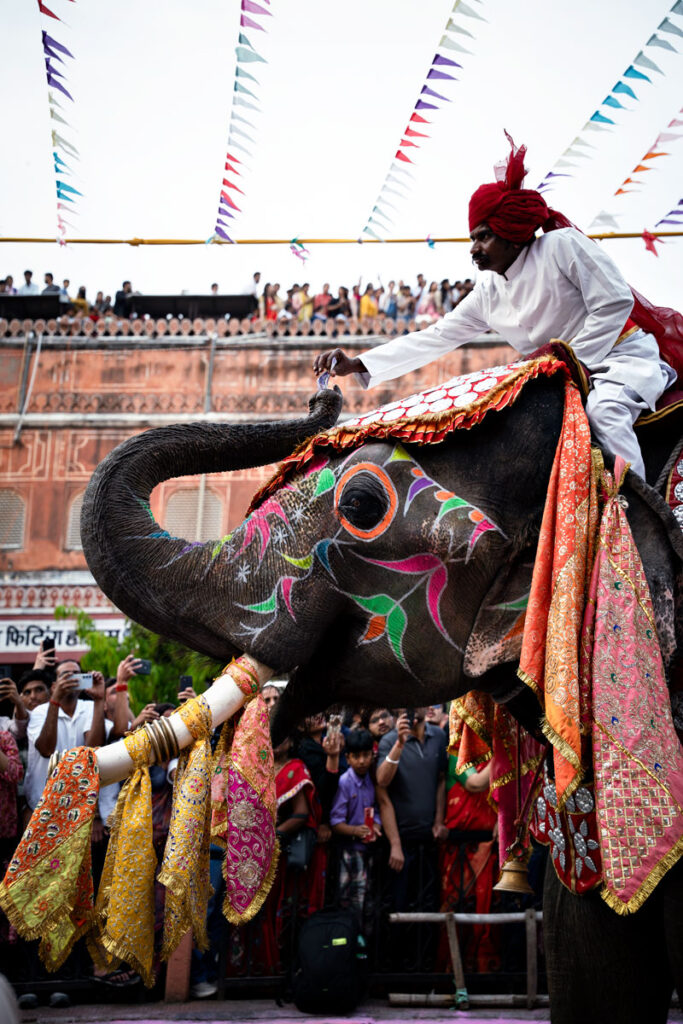
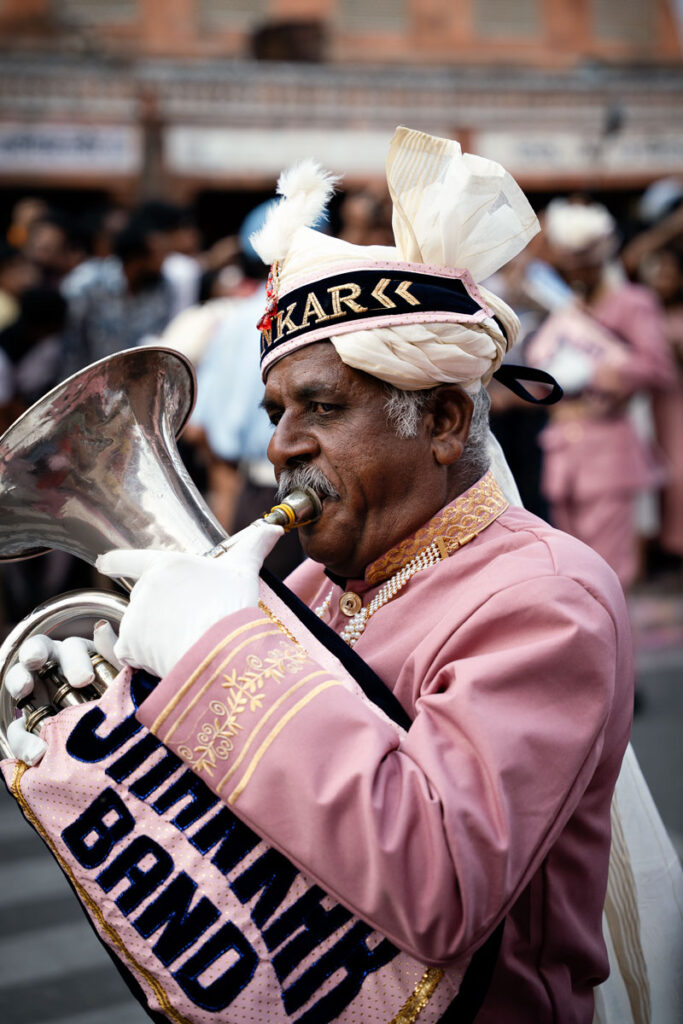
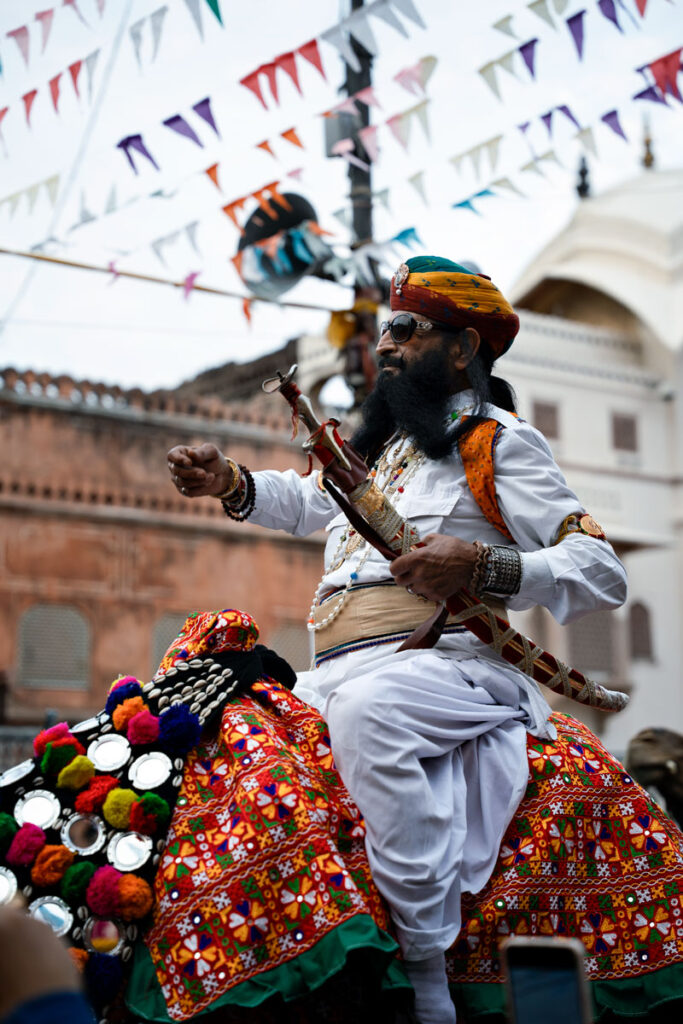
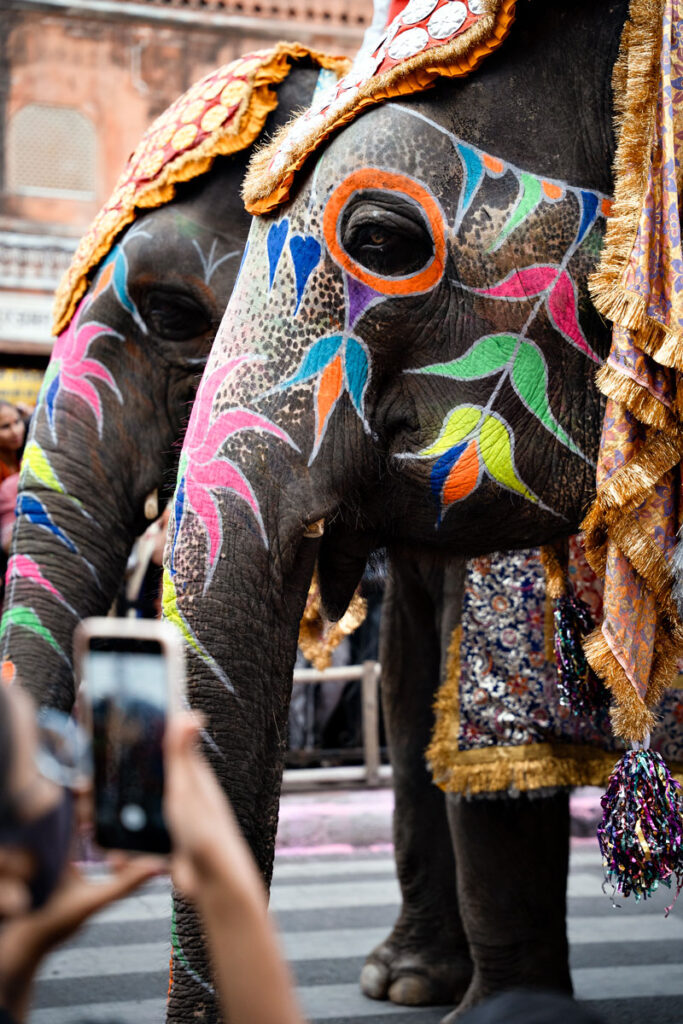
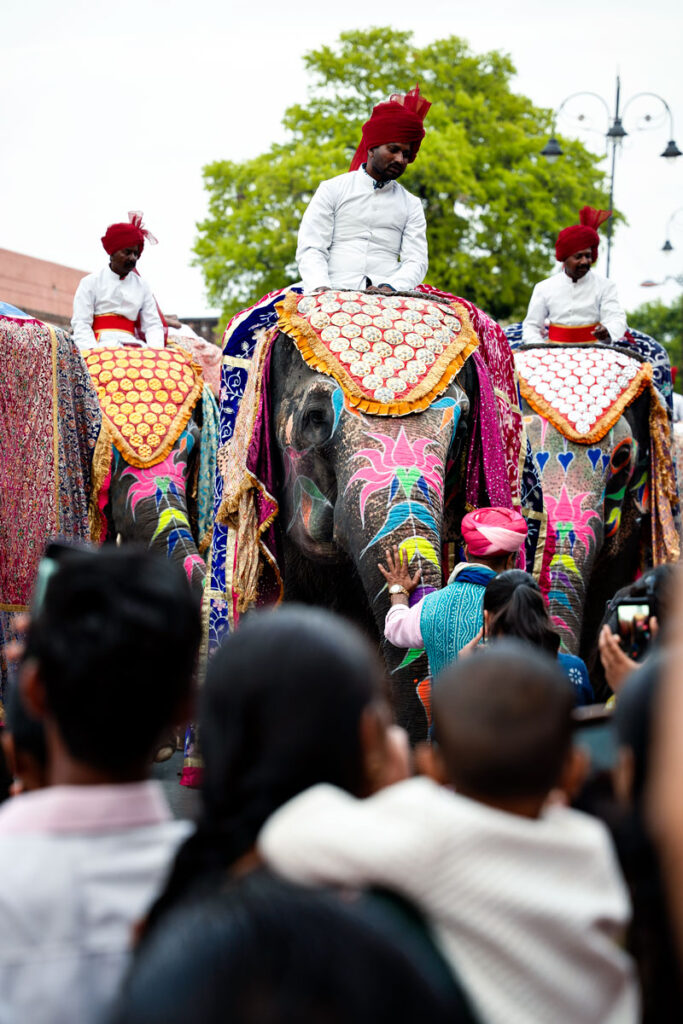
Skirts swirl as they dance. Men painted blue like Shiva. Marching bands and camel riders armed with muskets. Standard-bearers, flutists, and hunters. Our camera’s shutter button won’t stop clicking; our arms have long since gone numb. The elephants are now marching out of the city gate. With their long trunks, they accept bills held out to them by spectators. Deities float above the street on pedestals. A timeless moment. The parade seems to go on forever, relentlessly making its way through the crowd. Flags and pennants flutter. Sabers are drawn. White horses pull magnificently decorated carriages.

And then, after two or three hours that flew by like minutes, the drones above us shower us with rose petals. It’s the end of an incredible show.

Gangaur Festival 2026 in Jaipur

Suddenly, the crowd disperses. The police officers herd us and everyone else away. The first cars and scooters are already rolling in. The sound of honking horns, loud shouts, and the lingering notes of the marching bands blend into a dense cacophony. Our ears are still ringing. Our steps are unsteady. We’re intoxicated by the sights and sounds.

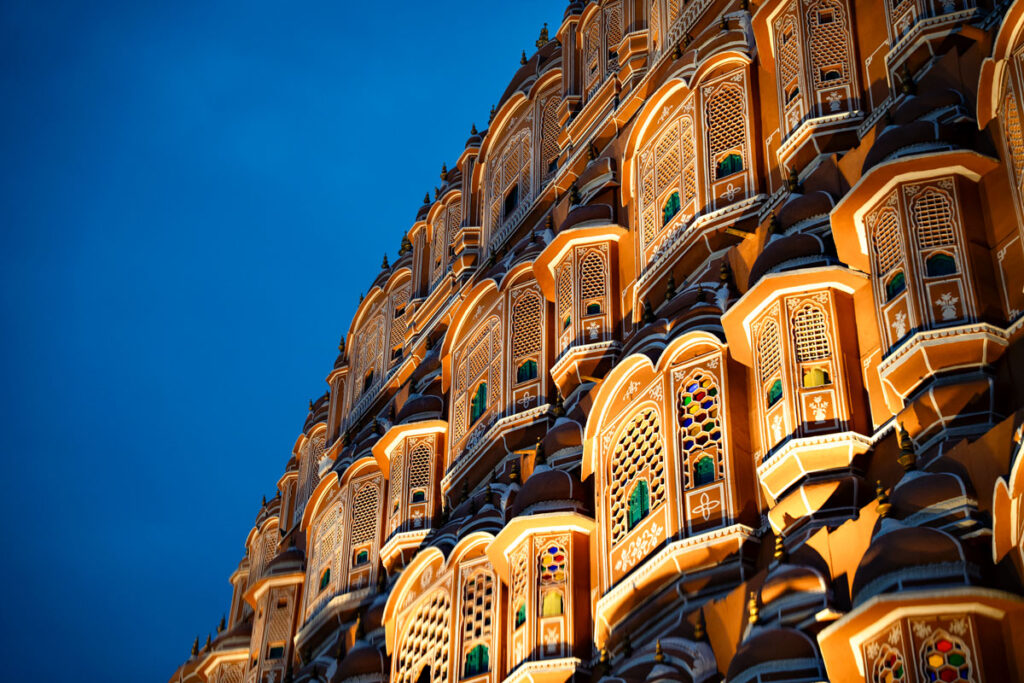
The blue hour settles over Jaipur. The monkeys on the rooftops seem to be laughing at us. Plump and tired, they sit on gables and ledges, looking down at us. Trash blows through the streets, and the Palace of the Winds glows like a lump of gold in this beautiful evening light.

Evening in Jaipur
Palace of Wind - Hawa Mahal
Evening in Jaipur

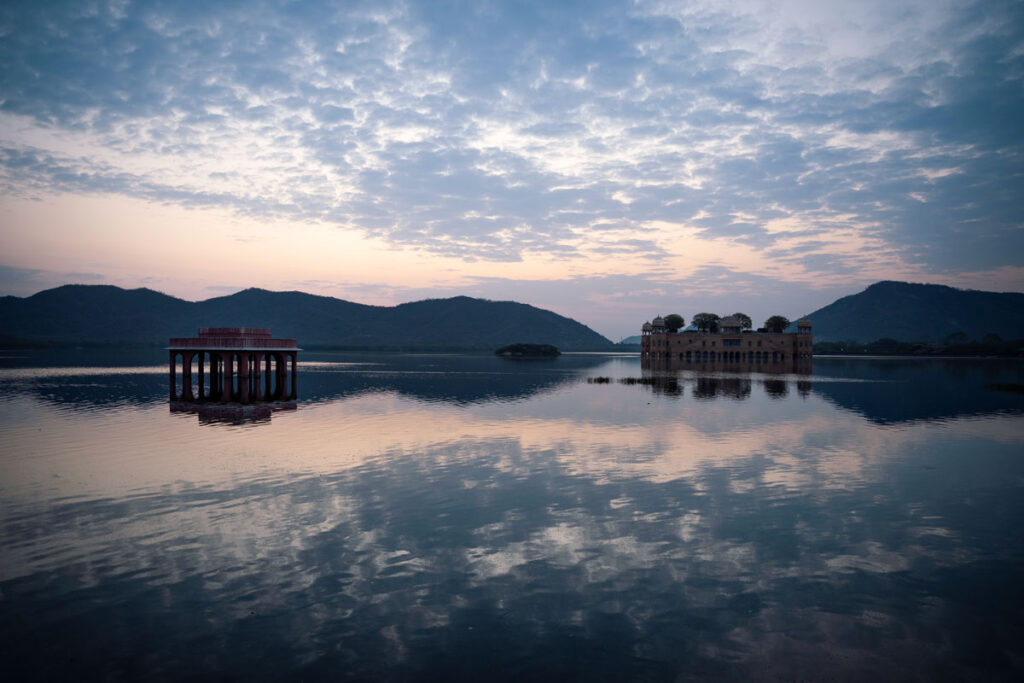
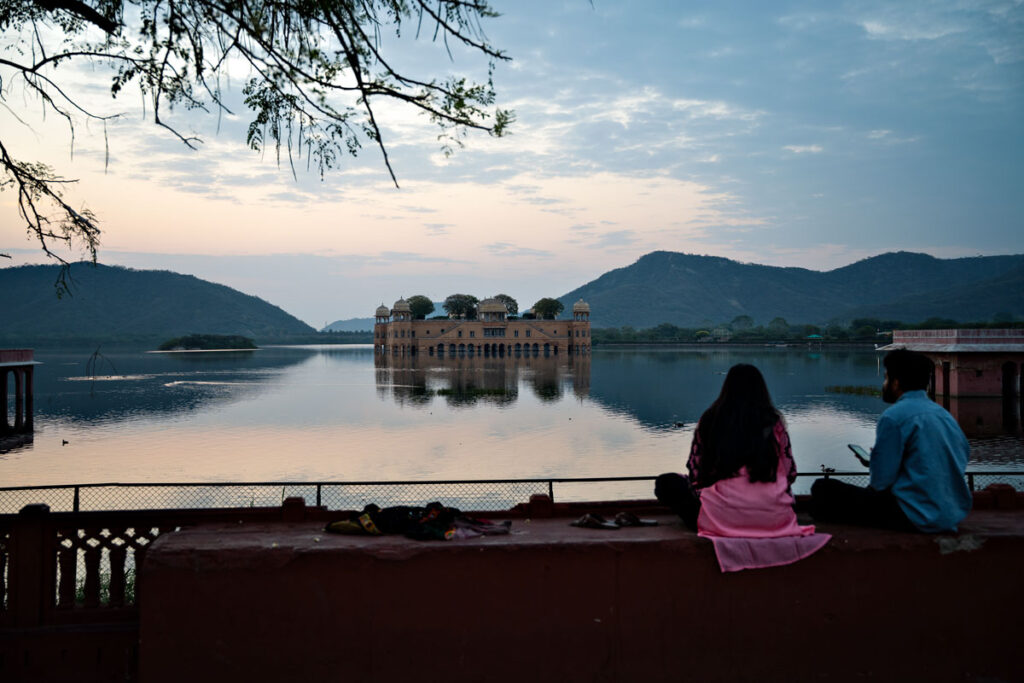
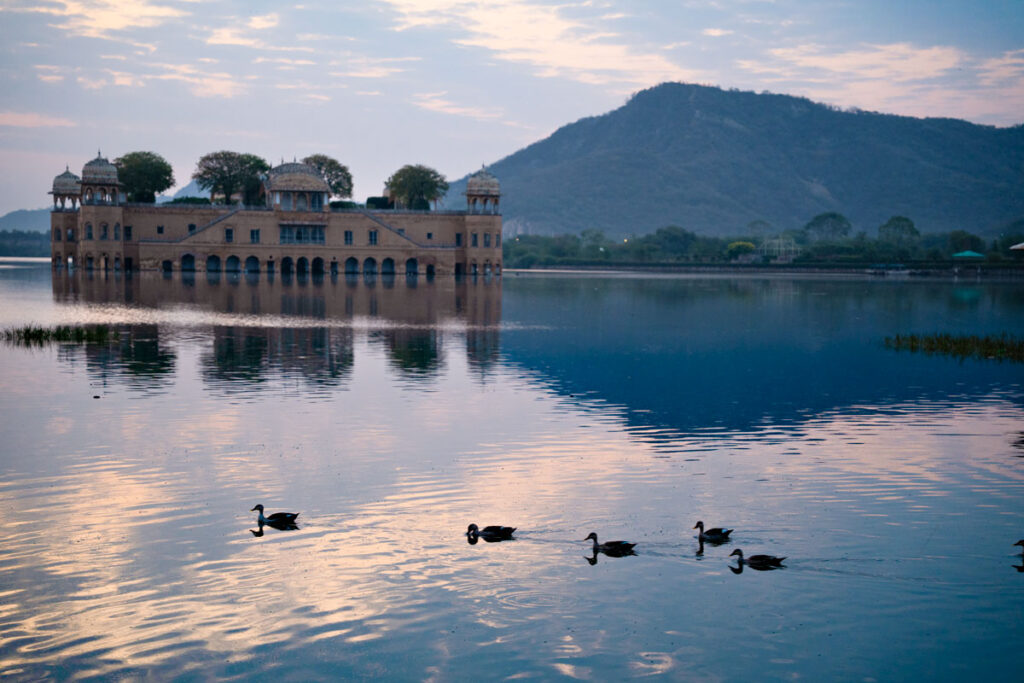
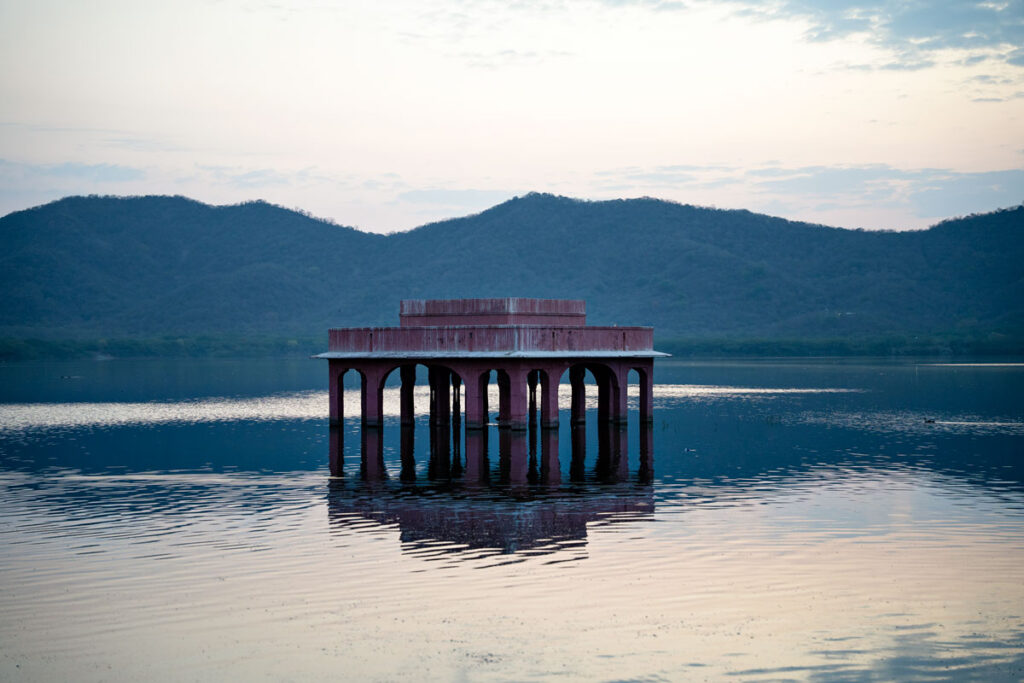
The next morning is gray and uneventful. Man Sagar Lake lies as flat as a mirror between the city and the hills. Rising from the lake is the former hunting lodge Jal Mahal, once built for duck hunting and now one of Jaipur’s most famous photo spots. But this time, the Pink City doesn’t bless us with a pink sunrise; the light remains flat and shadowless.

Behind us, trash bags flutter across the street. A flock of geese flies by, and the first stray dogs have long since woken up. For us, the time has now come to leave Jaipur and soon begin our journey home.

Jal Mahal
Jal Mahal
Jal Mahal
Jal Mahal
Jal Mahal

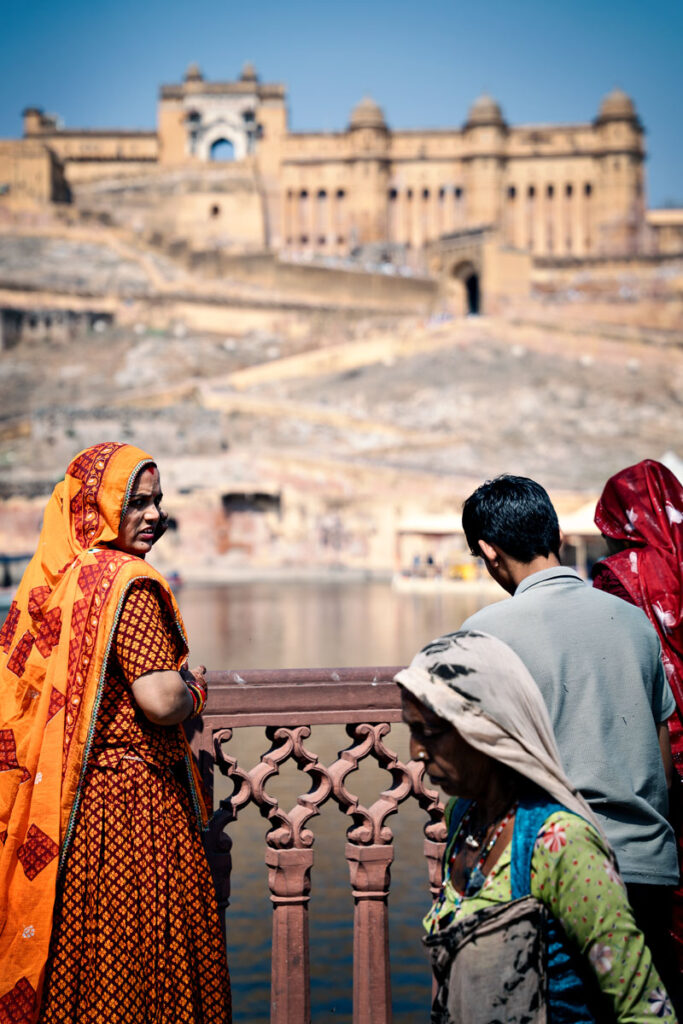
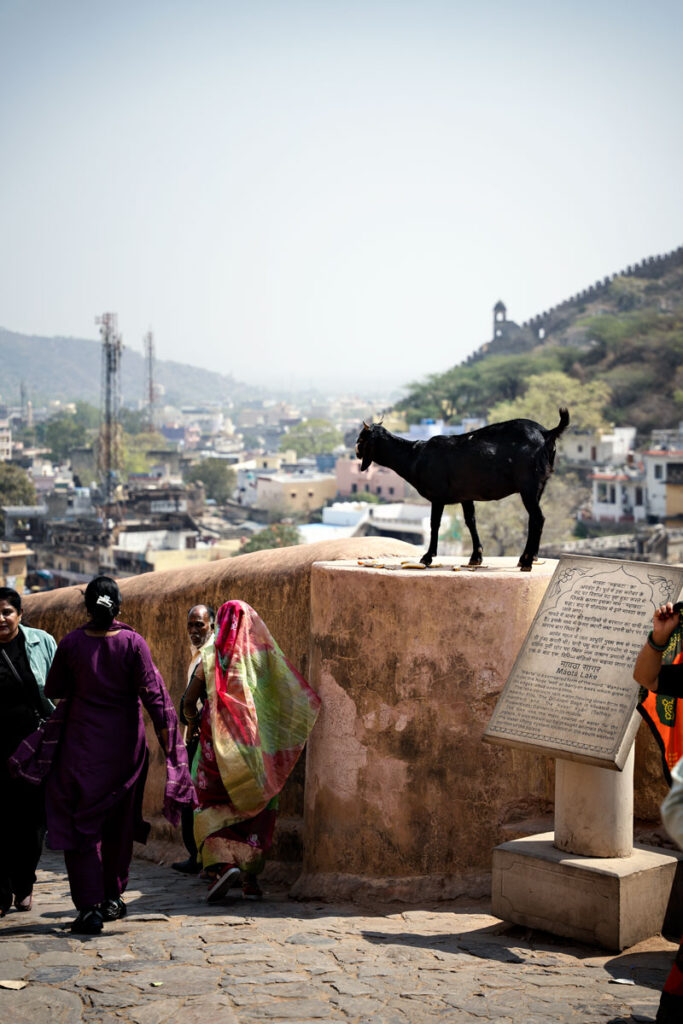
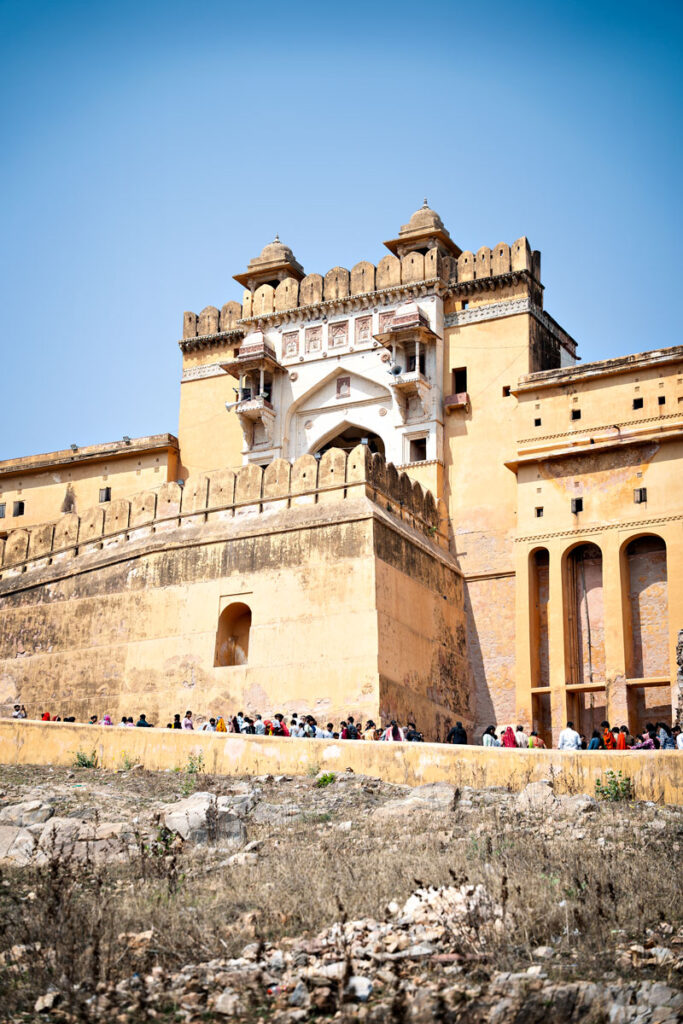
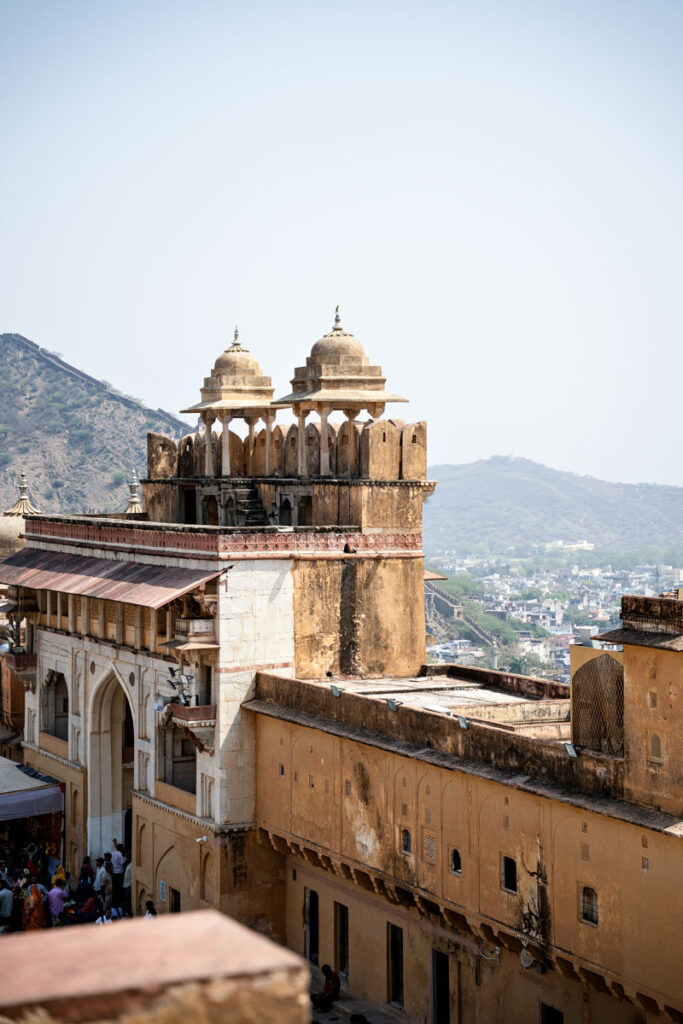
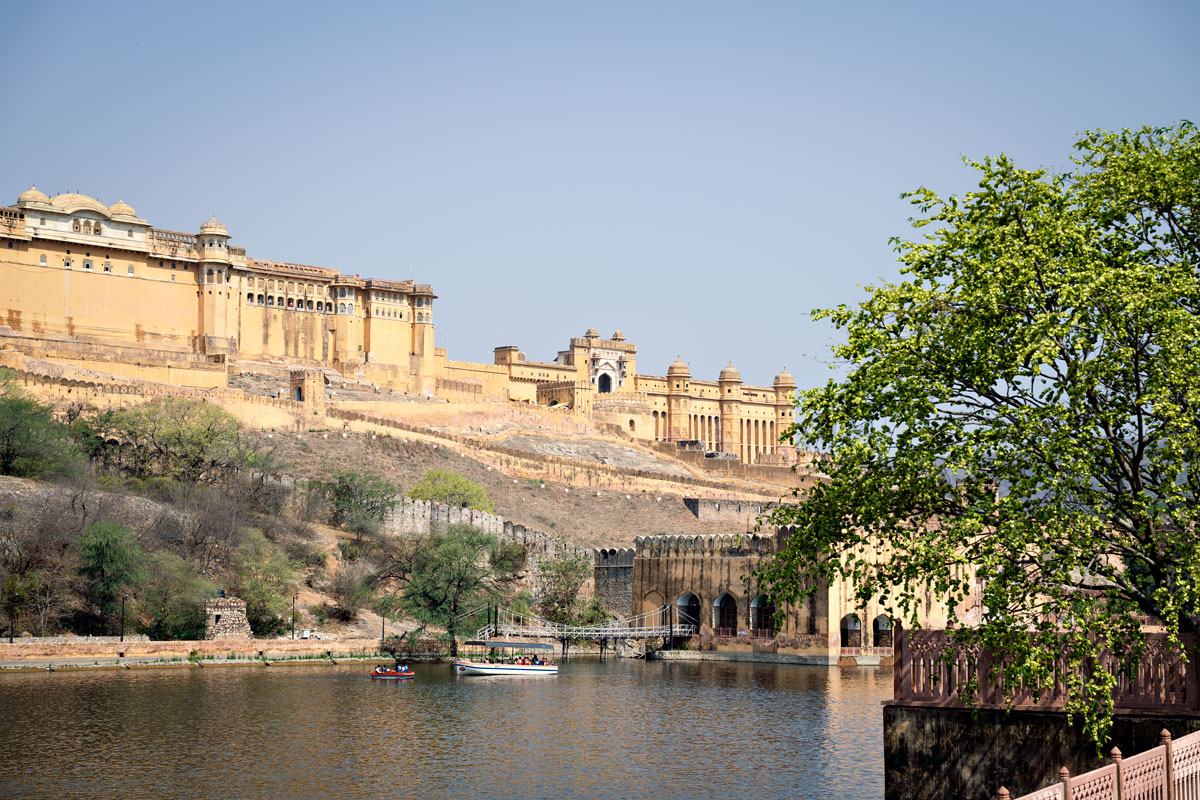
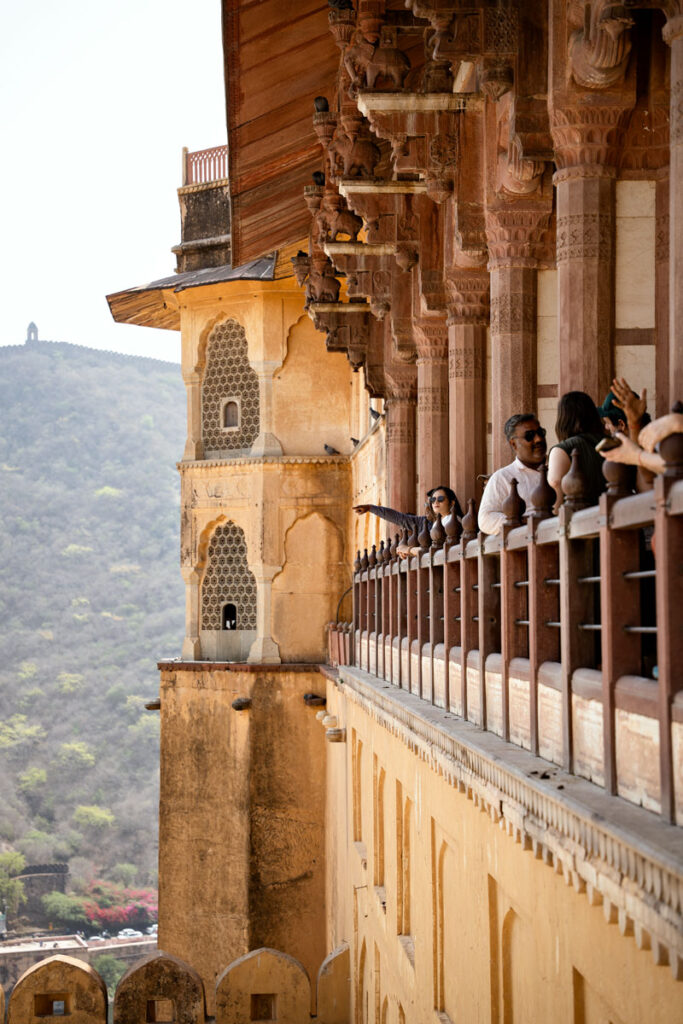
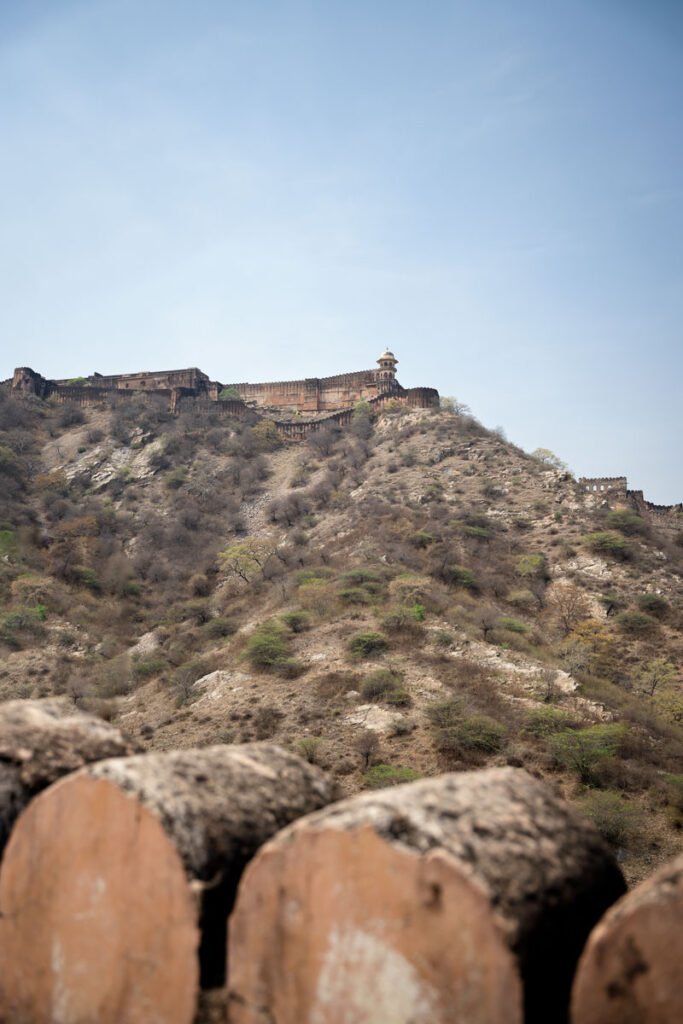
Like a giant dragon, the Amber Palace towers atop a rocky ridge. Its thick outer walls look like an impenetrable skin. A steep path winds its way up to the main gate. Beyond it lies a labyrinth of gardens, lookout points, barracks, shaded walkways, and courtyards. The view is phenomenal.

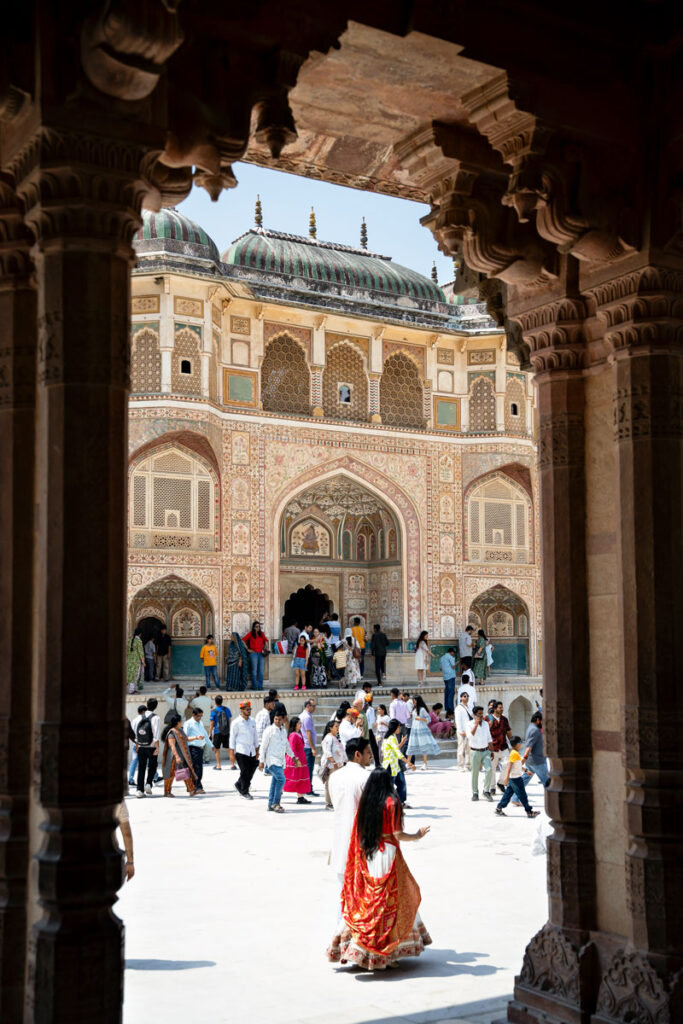
We lose our way in the palace’s maze. Groups of tourists hang around, looking tired. A French tour group has taken over the courtyard. Women in colorful saris pose for selfies. Eventually, we find ourselves on a defensive wall. A security guard beckons us over. He wants to show us something and leads us to a makeshift, cordoned-off staircase. He demands money for the climb. We refuse. He’s probably blocked off the entrance himself to squeeze a few bills out of tourists for this so-called extra service.

Every now and then we encounter genuine hospitality. Too often, however, as white tourists, we’re nothing more than walking wallets just waiting to be lightened.

Amber Palace in Jaipur

The afternoon hangs heavy and humid over us. We glide north along the highway toward Delhi. On the way, however, we’ll spend one more night in Alwar. Storm clouds are gathering in the distance. Tiredness is setting in. So we pull off quickly and stop at a new rest stop – one that’s still under construction – to have a coffee.

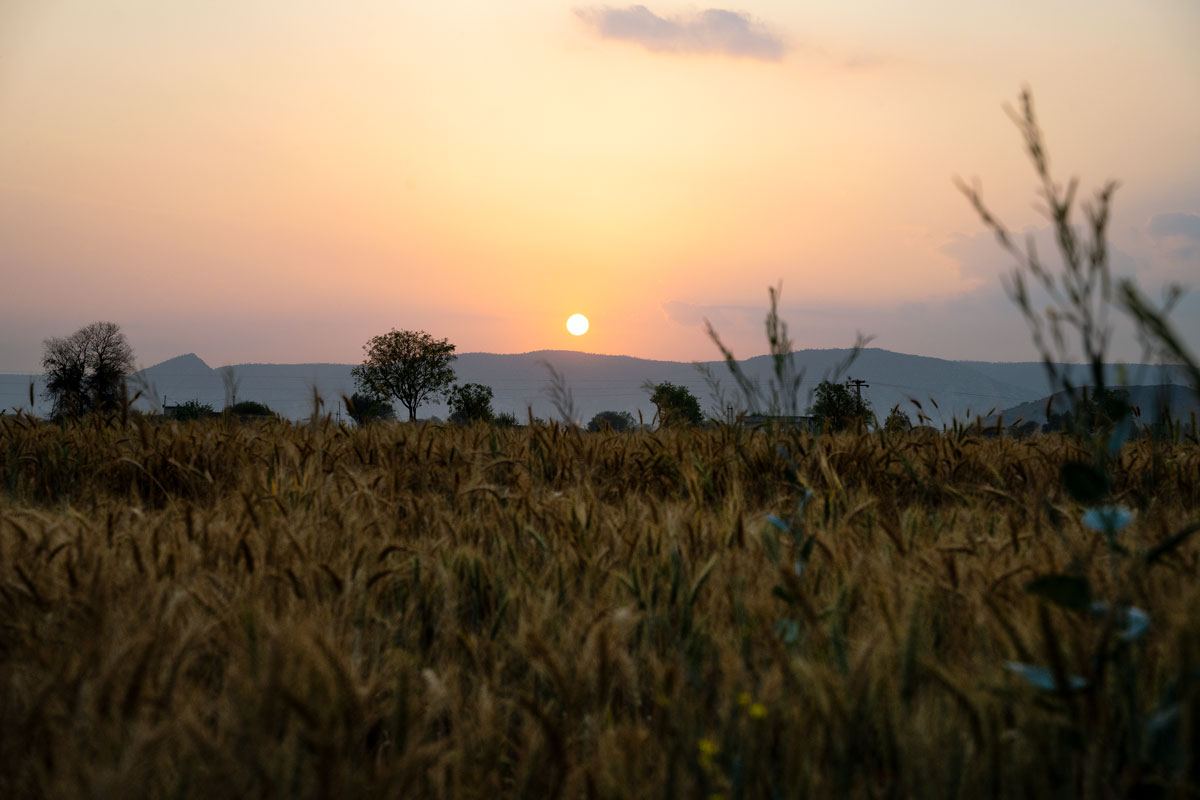
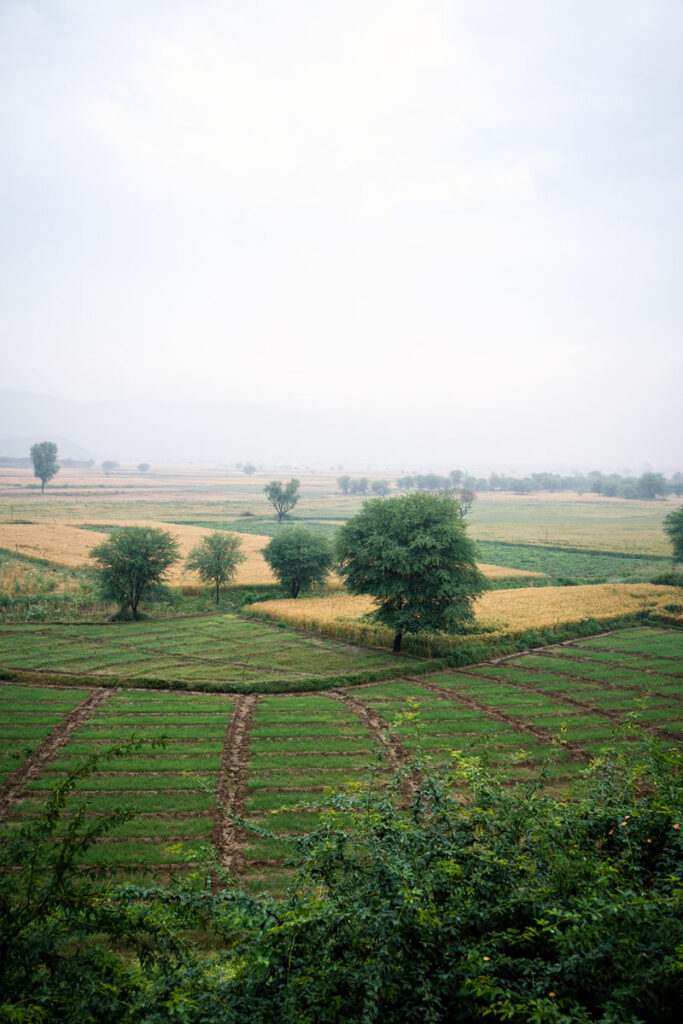
We reach Alwar in the early evening. Flat land surrounds the unassuming town, which at first glance seems anything but charming. But compared to the dusty plains we’ve crossed in recent days, the landscape seems almost Central European. Golden barley fields, almost ready for harvest, stretch into the distance. Scattered deciduous trees stand in the fields. On the horizon, a gentle chain of hills frames the panorama. Golden sunlight bathes our skin. Later, at night, a warm rain falls.

Fields around Alwar

The first rain since we’ve been in India. Late in the morning, the drizzle finally slows down, so we can set off.
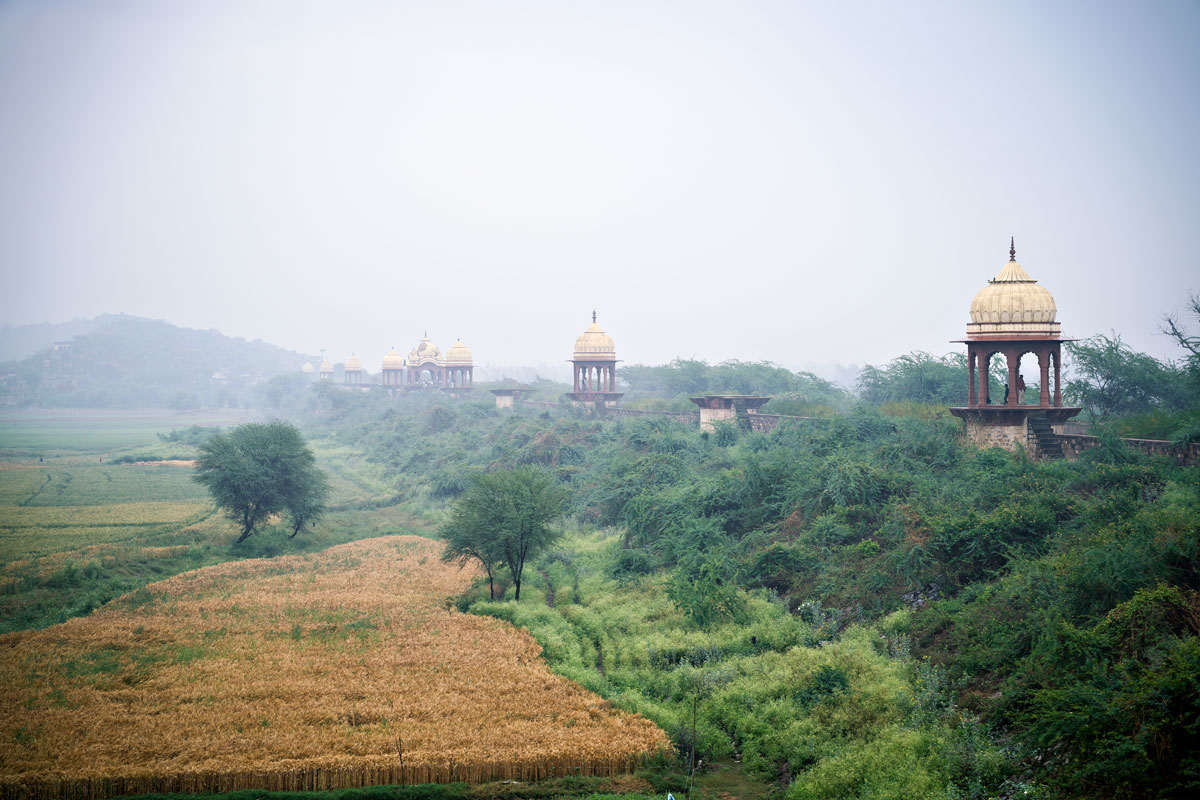
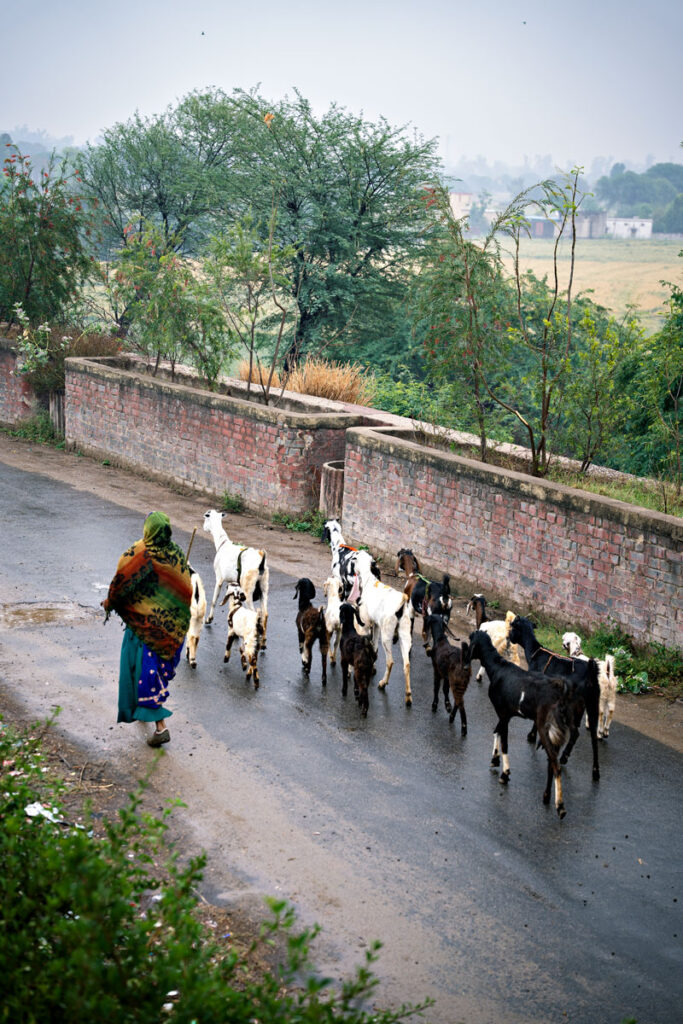
It’s foggy and quiet at Jaisamand Lake. Teenagers are hanging around in the crumbling ruins of an Oriental-style villa. Where the map shows there should actually be a lake, grain and trees are growing. But photos show that there is indeed water here at other times of the year. A dam with small pagodas runs around the dry lake bed. We seek shelter from the returning rain under one of them. Just then, an old farmer’s wife walks past us with a dozen goats.

Jaisamand Lake
Jaisamand Lake
Jaisamand Lake
Jaisamand Lake

Finally, the sun breaks through the clouds. The ground is damp and covered with the droppings of all kinds of animals. Two weary police officers peer sternly from beneath the brims of their caps. Moosi Maharani Ki Chhatri is a sad place on this rain-soaked morning. The monument was erected for a king’s wife or concubine who, after his death, allegedly immolated herself out of love – at least according to the modern interpretation of the story. Today, the site looks dilapidated.

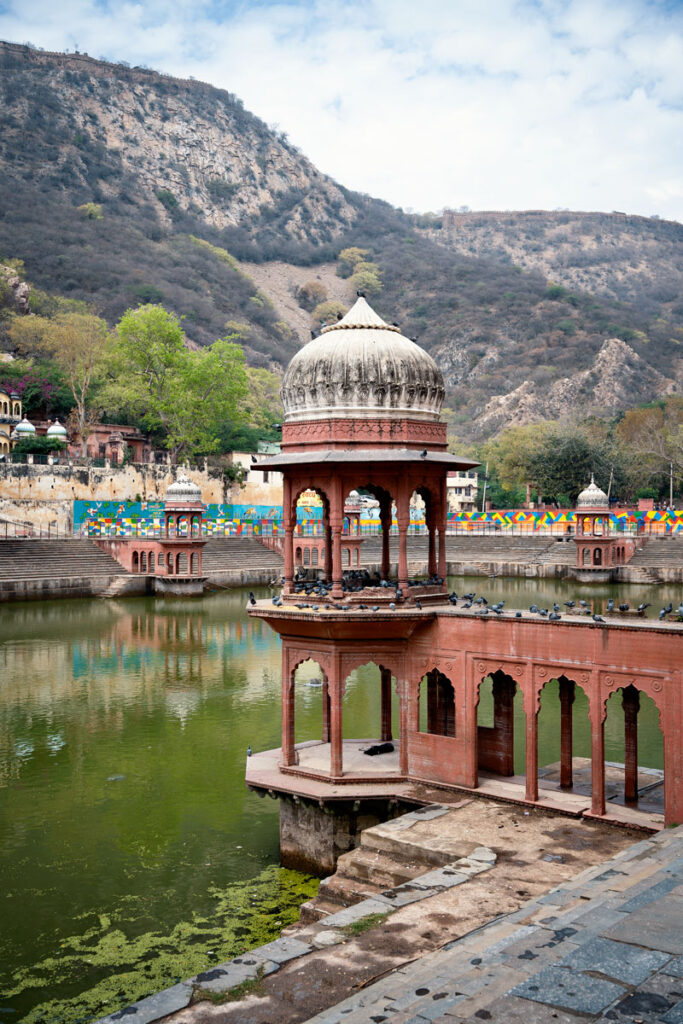
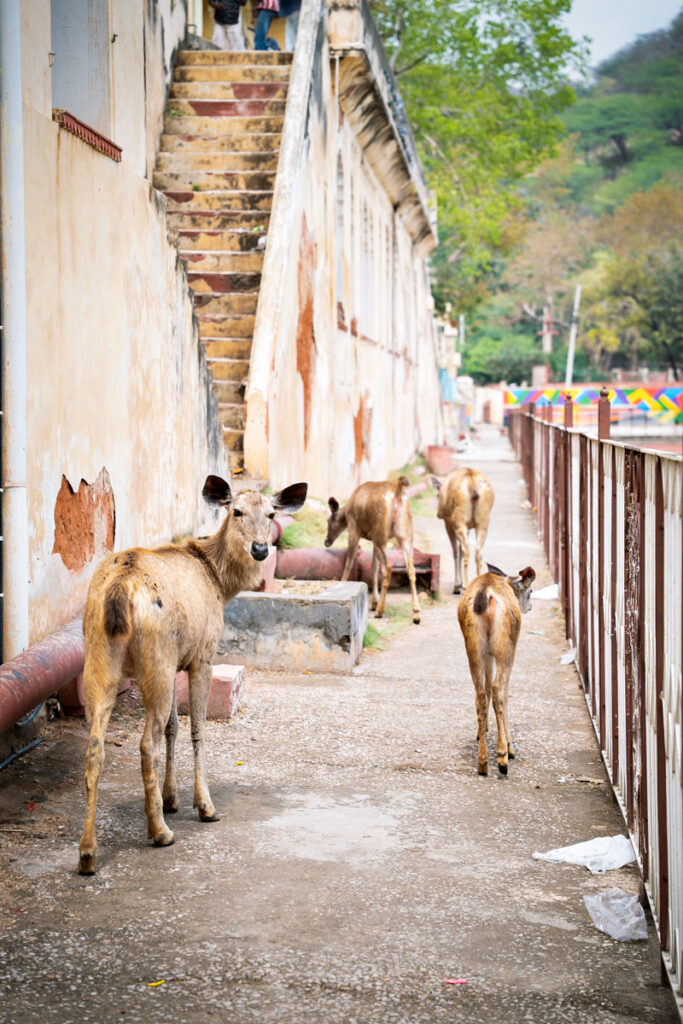
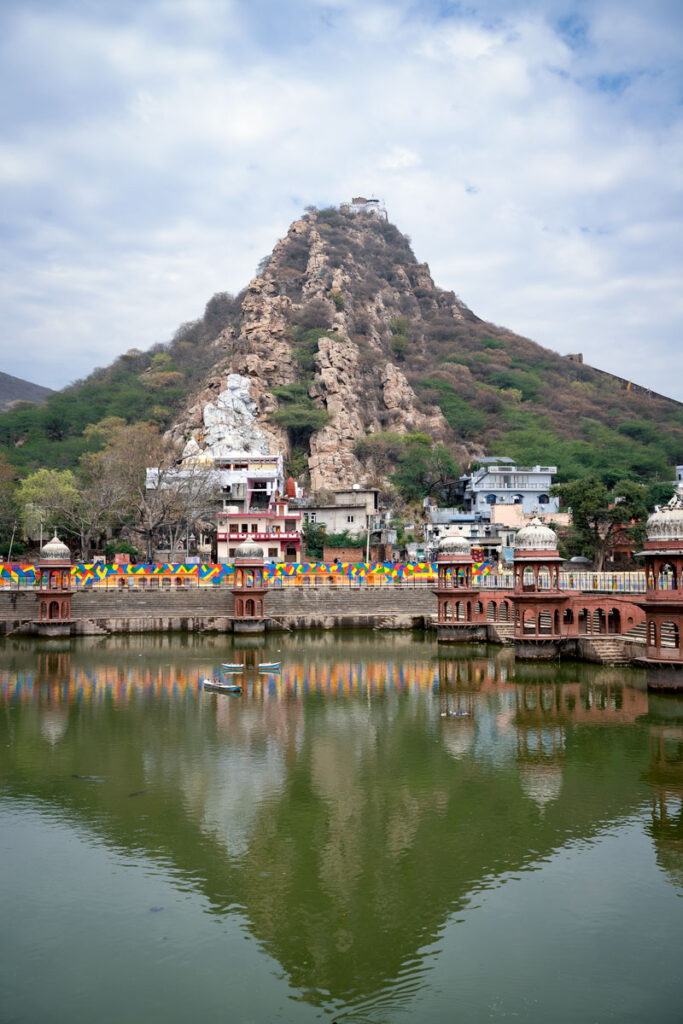
A huge water basin, along whose banks stray dogs and deer roam. An old man tosses breadcrumbs into the water for the fish. The surface is green with algae, and bottles and plastic trash float on it. There is a lack of tourists and a thriving economy that would bring money into Alwar’s city coffers.

Moosi Maharani Ki Chhatri

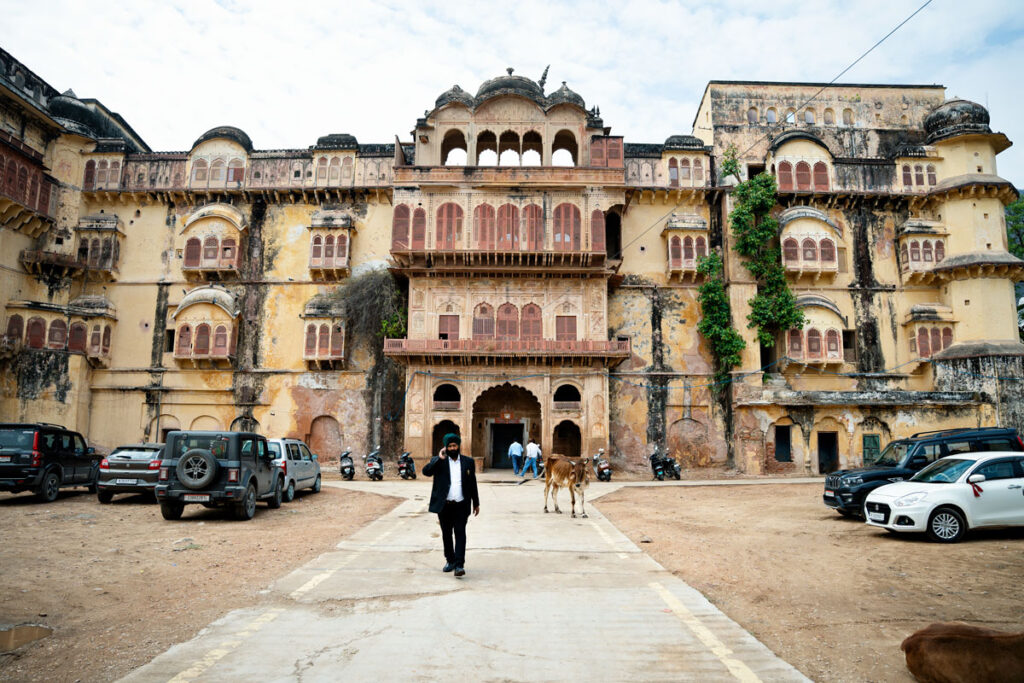
The Alwar court is housed in a dilapidated building – the former city palace. Numerous stalls are crammed into the forecourt. Men and women in formal attire stand on the rain-soaked ground. In front of them, they have set up laser printers and laptops on wobbly tables, with thick law books lying beside them. They are lawyers and court clerks who come here to prepare their cases and meet with their clients.

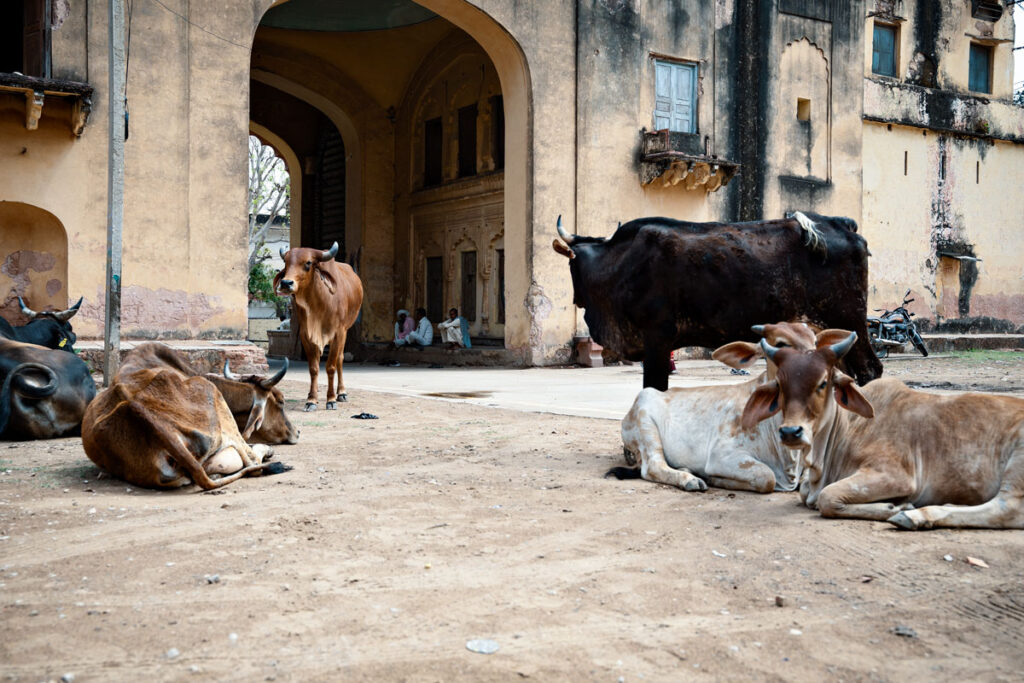
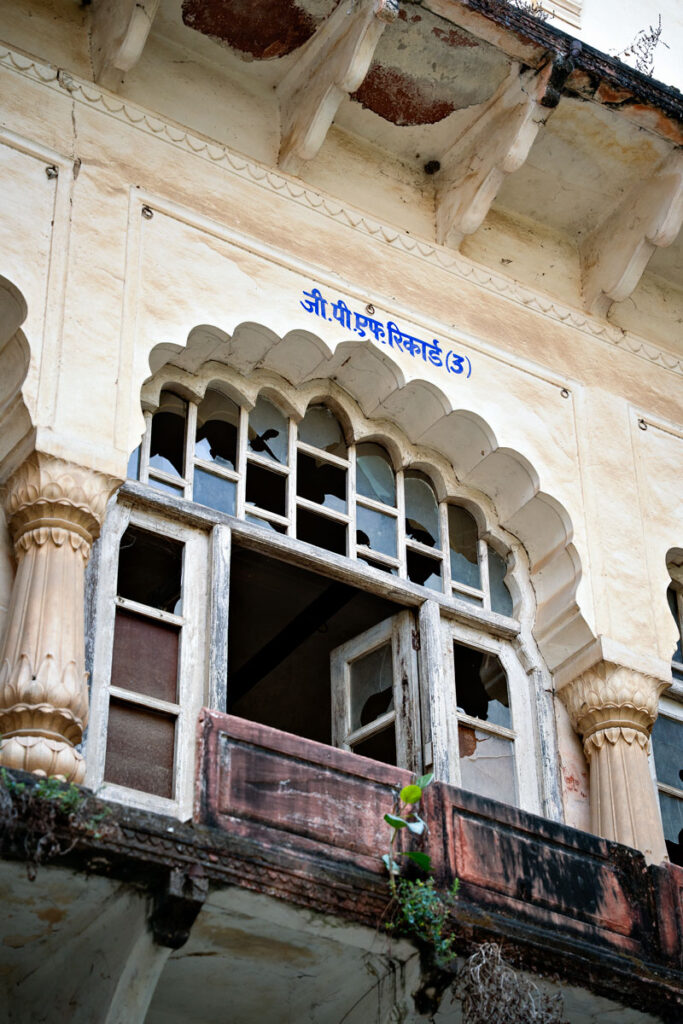
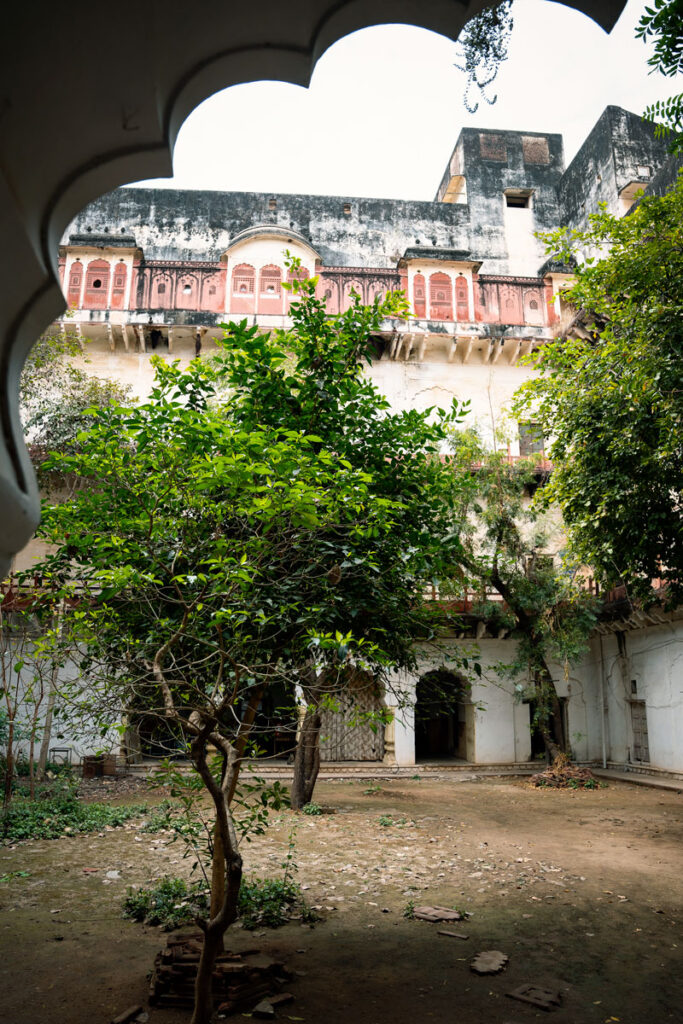
Behind them rises the enormous City Palace with its winding corridors and shady courtyards. Its facade is overgrown with vines. Most of the windows are boarded up, and a herd of cows is camped out in front of the main entrance. At first, we think we’re entering an abandoned place. The paths are overgrown with weeds, and broken furniture and trash are scattered everywhere. Then we notice the smartly dressed men sitting on old chairs. Once, we even venture into a dark, cobweb-covered room full of broken school desks. In the farthest corner, under the glow of a bare light bulb, a man is sitting in front of a laptop and greets us shyly. We ask him what kind of place this is. He tells us that, in addition to the court, the Ministry of Land Use is also headquartered here. We can’t help but stare at him in disbelief, our eyes wide.

Rani Ka Mahal, Alwar

The car glides along the highway. The traffic is getting heavier. As we reach the outskirts of Delhi, chaos engulfs us once again: loud honking, rickshaws immediately taking advantage of every opening. An army of scooters and people. The smell of exhaust fumes and curry hits our noses again, and a deep sense of exhaustion washes over us. One last night before we board the plane and leave India.
What we take with us are powerful emotions. Bitterness at so much poverty. Sadness that so many people live in undignified conditions. Anger that there is no justice, no equality. Incomprehension in the face of these contrasts. A sense of unease that sits deep in the pit of our stomachs. At the same time, however, there is also an irrepressible curiosity for more – for everything we haven’t seen. For this absurd life, which here is a constant balancing act between the greatest contrasts: death and rebirth, pure joy and deep despair, hope and resignation, colorful and gray, mysticism and sobriety.
In the balmy evening breeze, garlands of flowers dangle from the gates of a victory monument. As the sun sets, the call of a muezzin mingles with the evening chants of a Hindu temple. A stray dog looks for a place to spend the night. Street children dart across the highway and disappear into the darkness. No future awaits them – and yet they might still be lucky. There are many gods in this country. And no matter which one you believe in: in India, anything seems possible. Here, no one can tell the difference between dreams and reality.

Info about our trip