Chiang Mai
Chiang Mai is the gateway to a different Thailand. Far from the idyllic beaches of the south, away from the historic parks of Ayutthaya and Sukhothai, the skyscrapers of Bangkok, and the dusty plains of Isaan. Chiang Mai is the Rose of the North, surrounded by mountains and rich in the culture and traditions of numerous ethnic groups. Travel nomads and long-term backpackers have long since discovered the region – as a peaceful counterpoint to Thailand’s tourist hotspots and party destinations.
Here, life seems to move a little slower. Amid ancient temples, cozy cafés, and the green mountain landscapes of the north, it’s easy to understand why many travelers stay not just for a few days, but for weeks, months, or even years.
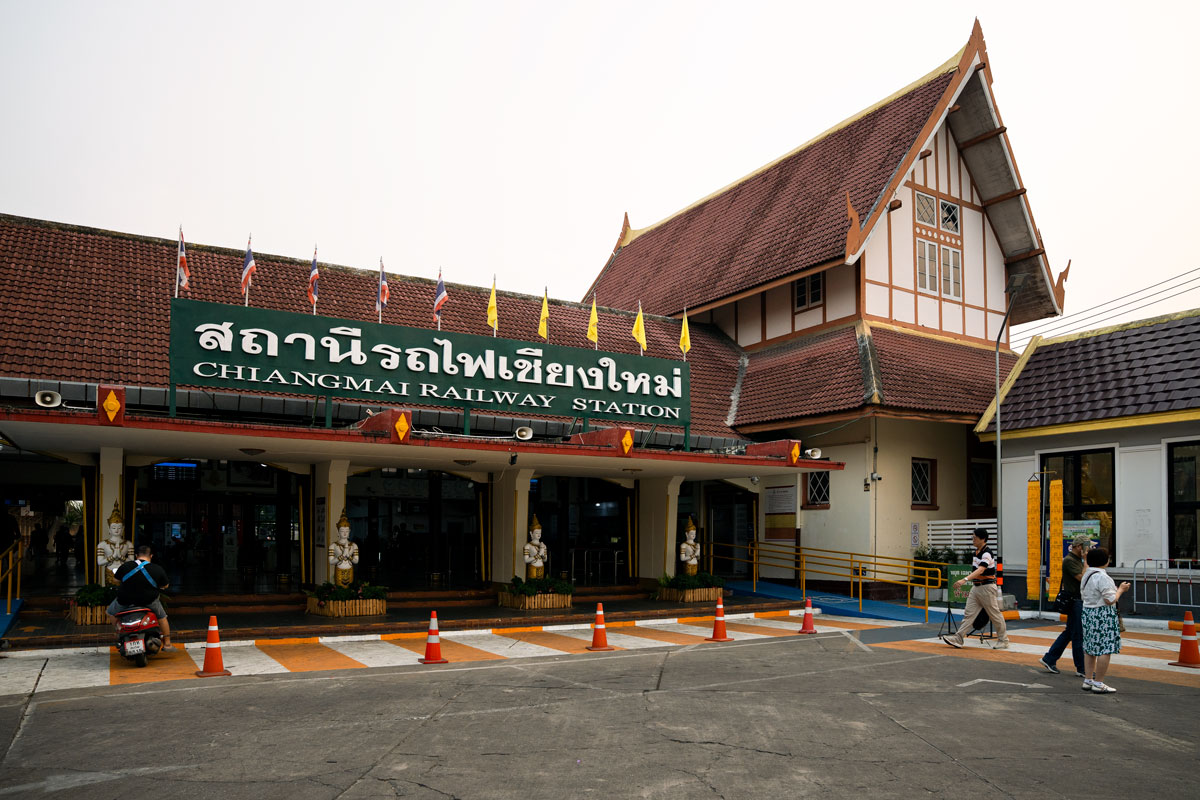
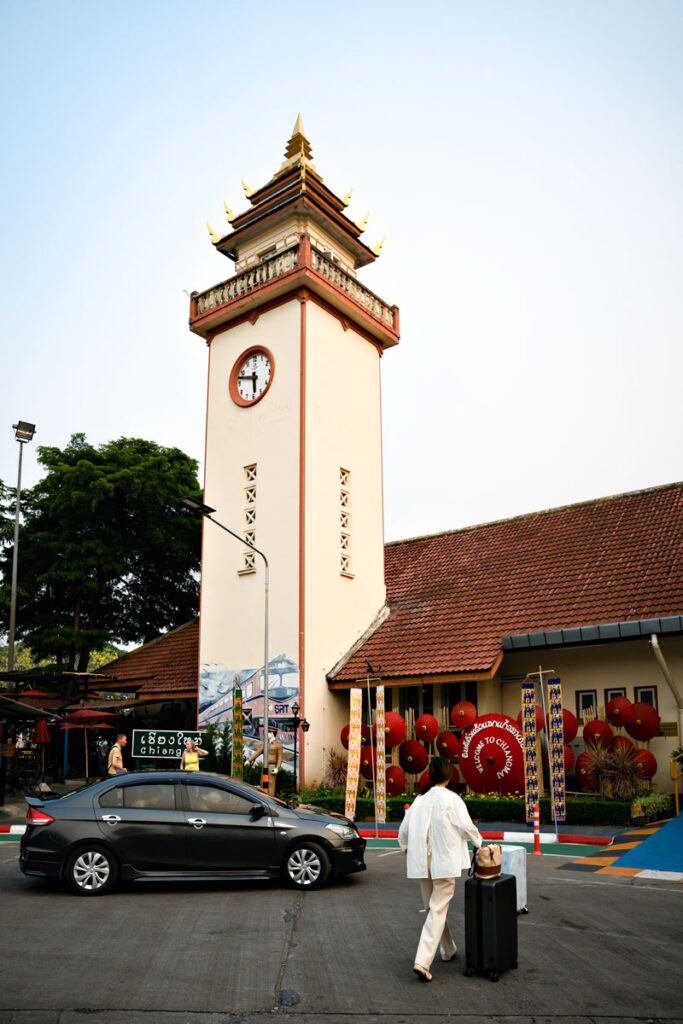
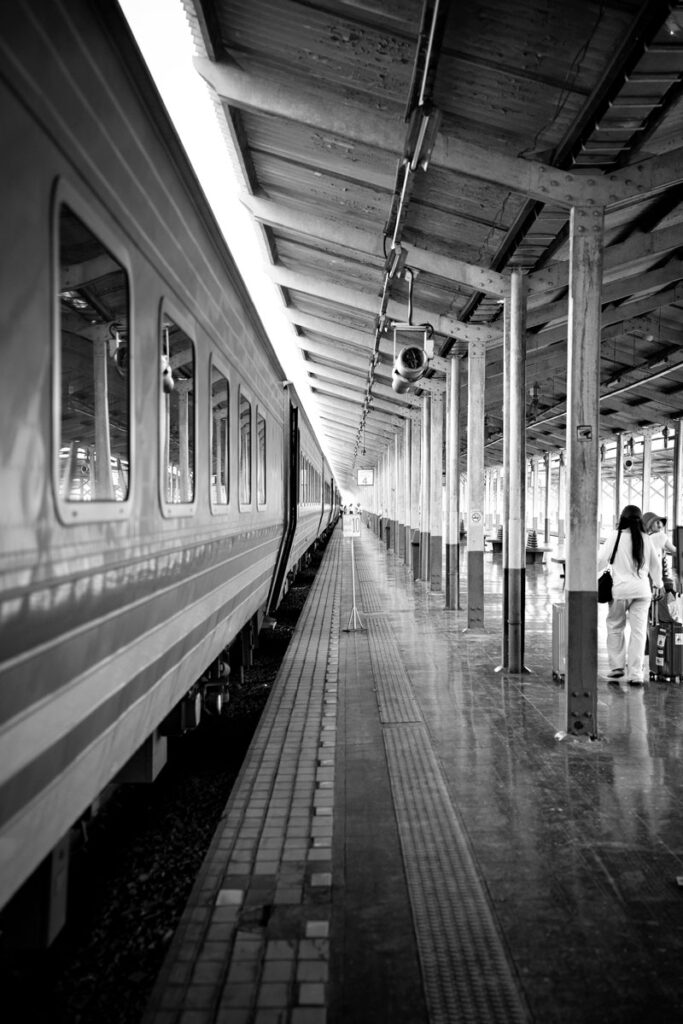
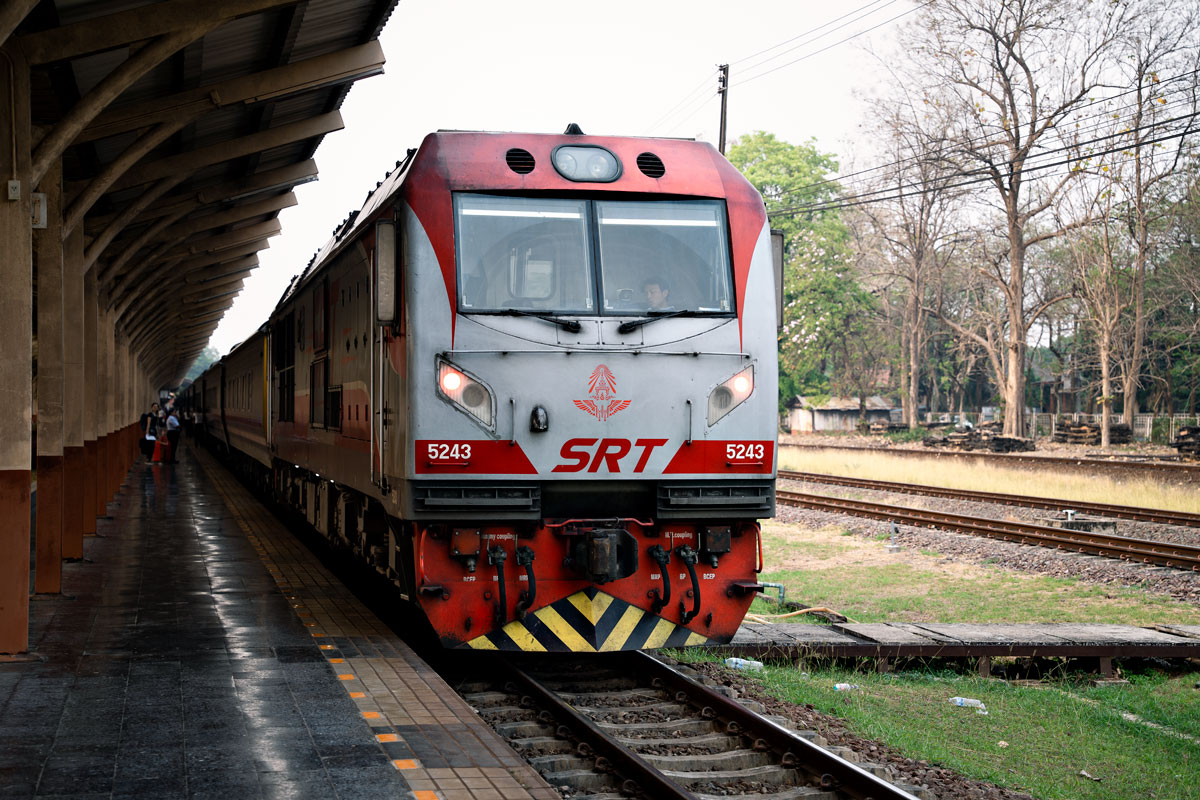
The train is an excellent choice for getting to Chiang Mai – or for leaving from there. The night train to Bangkok, in particular, connects the two cities in a comfortable and relaxing way. Chiang Mai’s main train station is compact and almost tranquil, and the train ride itself is surprisingly comfortable. Thais, tourists, and expats travel side by side. The atmosphere is peaceful, and we quickly strike up conversations with other passengers. Later, we watch the sunset pass by the window as villages, rice fields, and small provincial capitals glide leisurely past us.
A bike tour is an excellent way to explore Chiang Mai: the distances are short, there are no hills, and the traffic is fairly light.
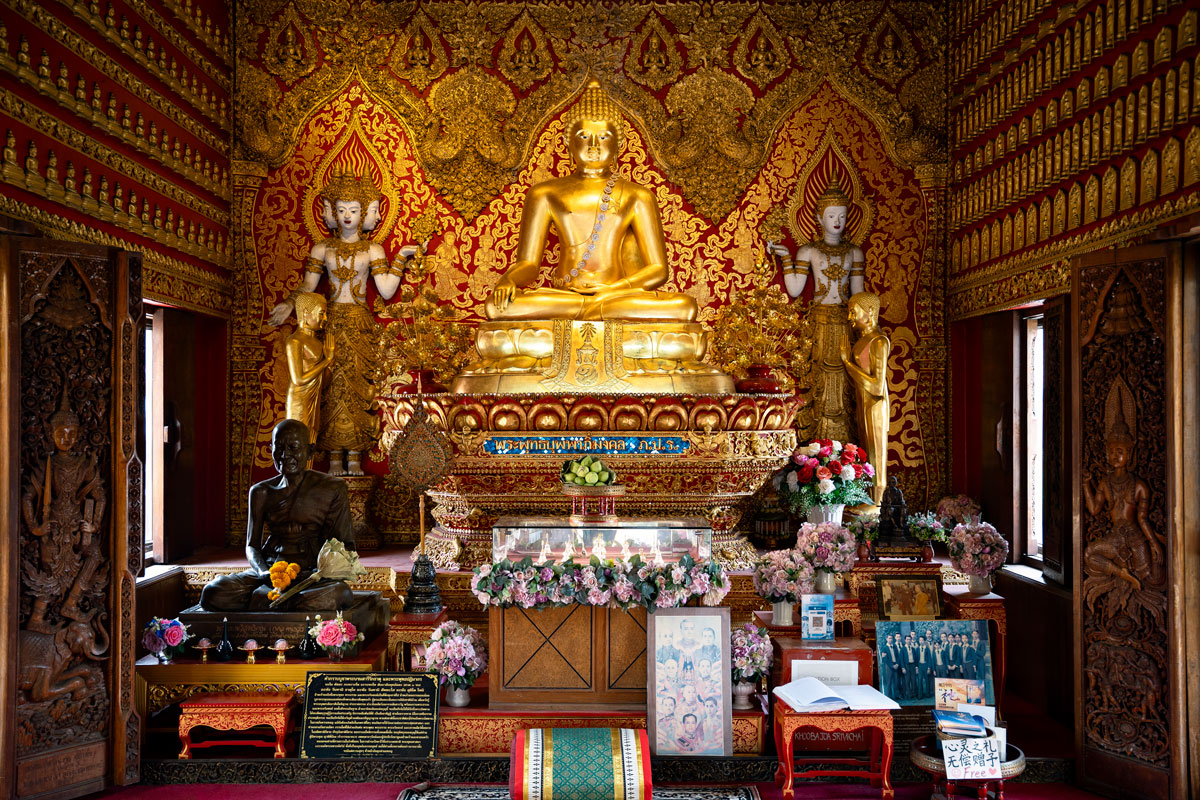
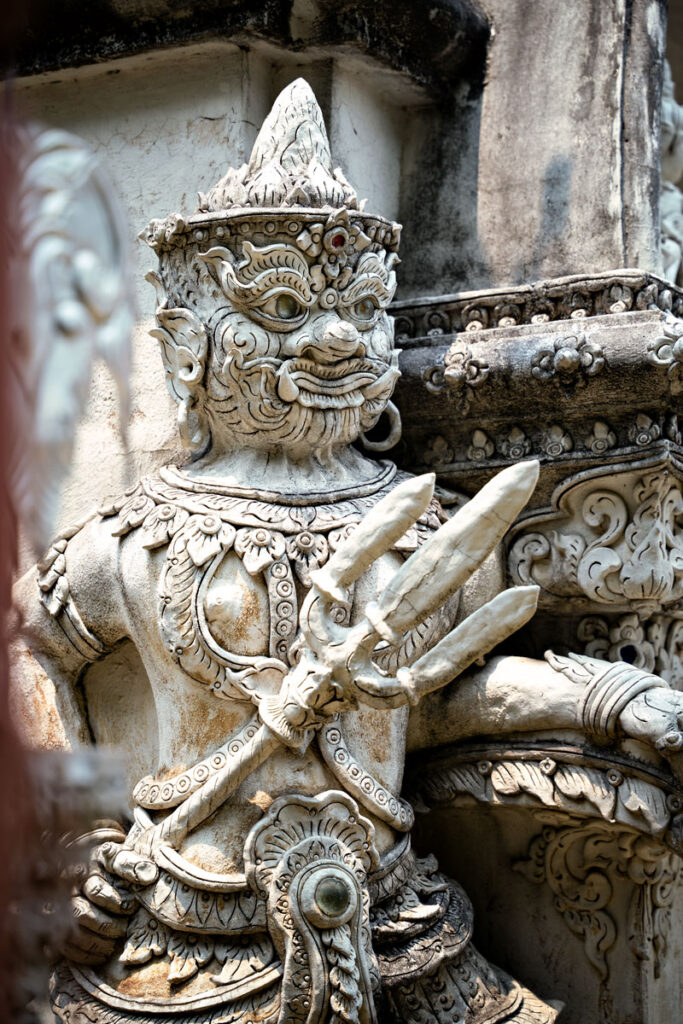
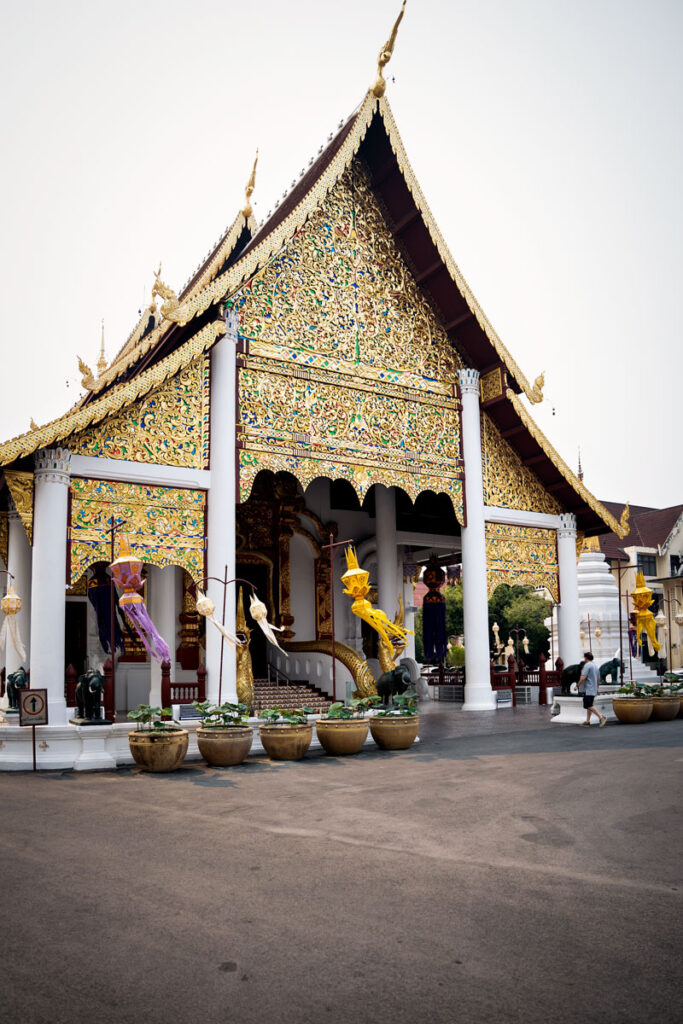
Just outside the historic old town lies Wat Buppharam, whose origins date back to the late 15th century. Unlike many temples in the rest of Thailand, this one shows clearly recognizable influences of Burmese architecture. Richly decorated wood carvings and colorful murals tell stories from the life of Buddha and incorporate motifs from Hindu mythology. We stop again and again to admire the countless small details.
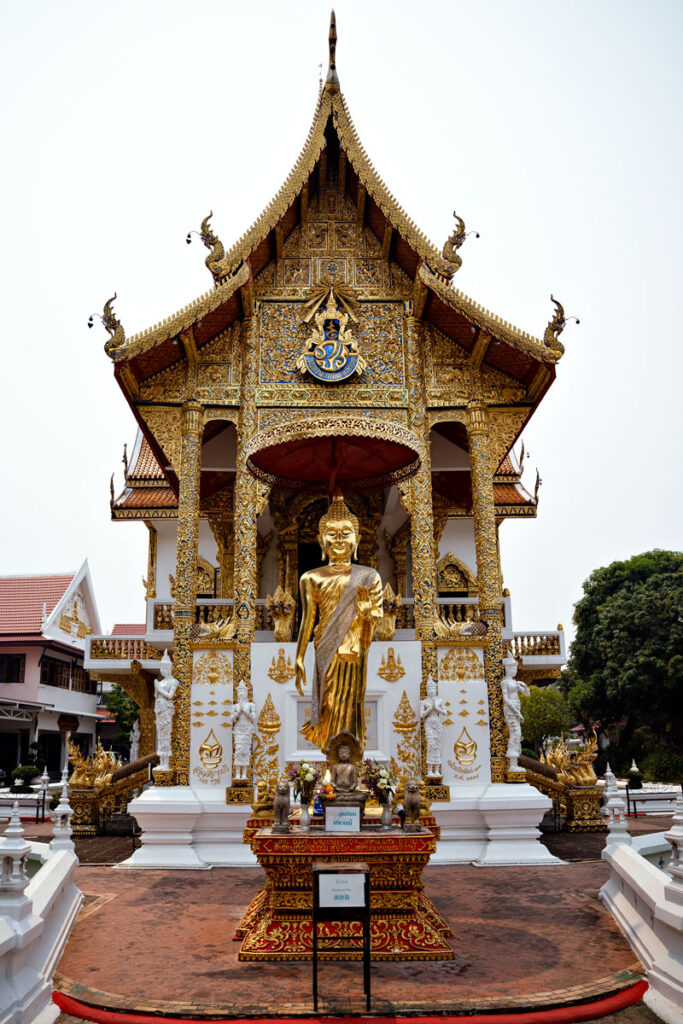
Just a few meters away is another temple worth seeing, though it is significantly smaller: Wat Mahawan. It was built in the 17th century during the Burmese rule over Chiang Mai. Here, the influences of Burmese architecture are even more evident and blend with the traditional forms of Lanna culture to create a style all its own.
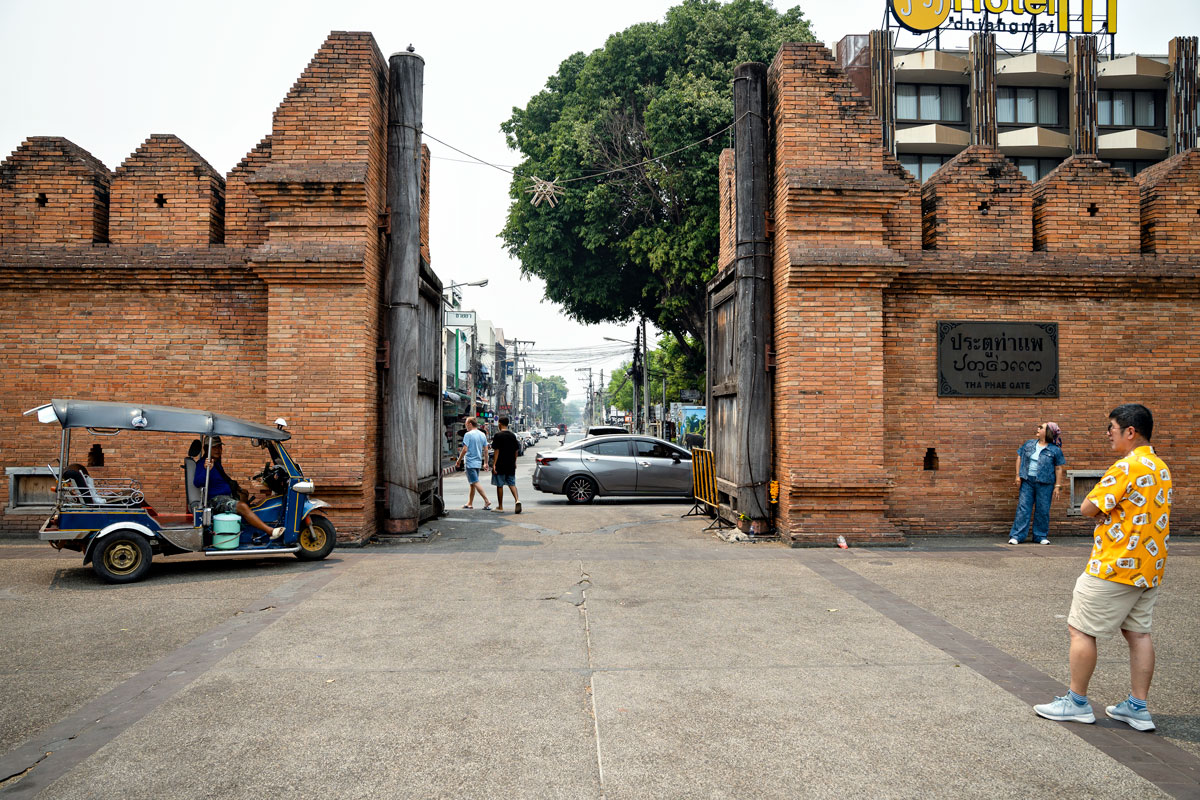
Behind the temple stands Tha Phae Gate, the eastern city gate of the historic old town. It is one of Chiang Mai’s most popular meeting places and shapes the cityscape like almost no other site. The massive city walls and moats once served to protect the Lanna Kingdom from the recurring conflicts with neighboring Burma. Between the city gate and the Ping River lay the bustling commercial district, where merchants loaded their goods onto cargo boats and gathered from all parts of the region.
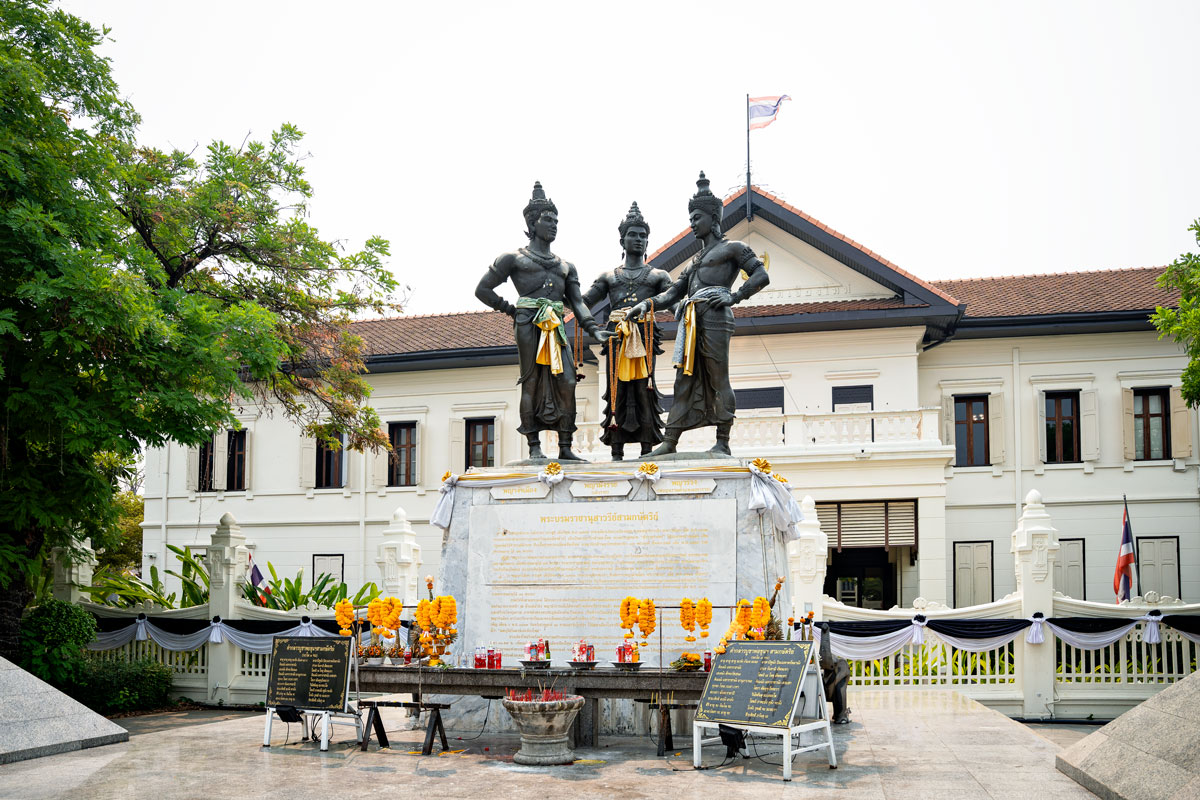
Deep in the heart of Chiang Mai’s Old Town stands the Monument to the Three Kings. Behind it is the city’s Culture and Arts Center. In the center stands the statue of King Mangrai, the founder of the Lanna Kingdom and the city of Chiang Mai. To his right stands King Ramkhamhaeng of Sukhothai, who is traditionally regarded as the creator of the Thai alphabet. The statue on the left depicts King Ngam Muang, the ruler of the Kingdom of Phayao.
According to tradition, the three kings were bound by a close friendship and an alliance. Together, they deliberated on the location of the new capital and supported Mangrai in founding Chiang Mai in 1296. To this day, the monument stands as a symbol of this historic bond between the three kingdoms.
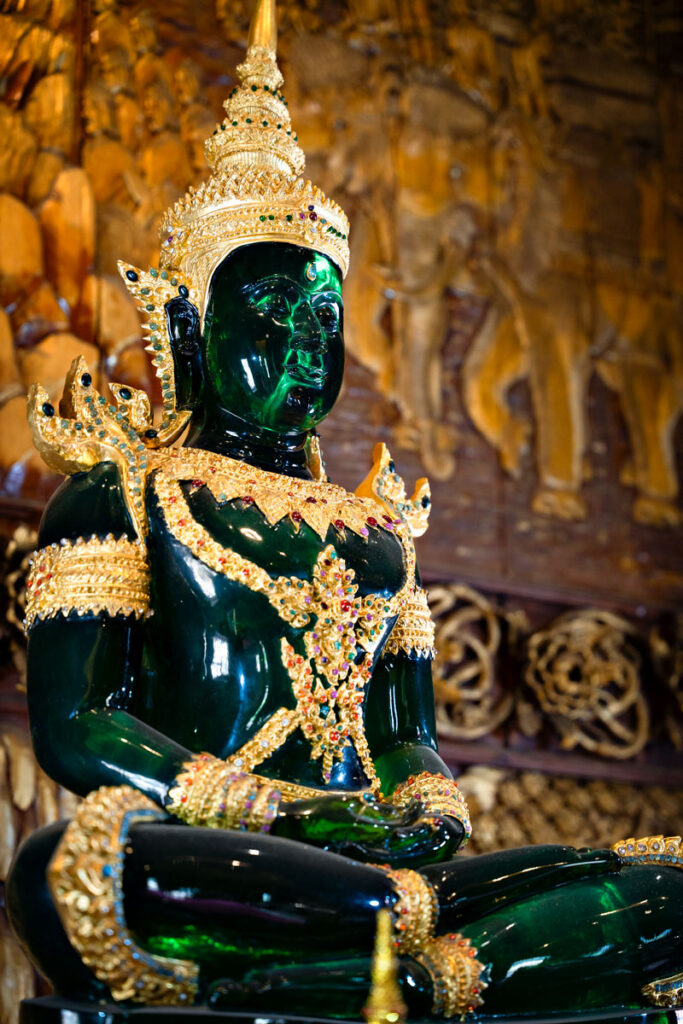
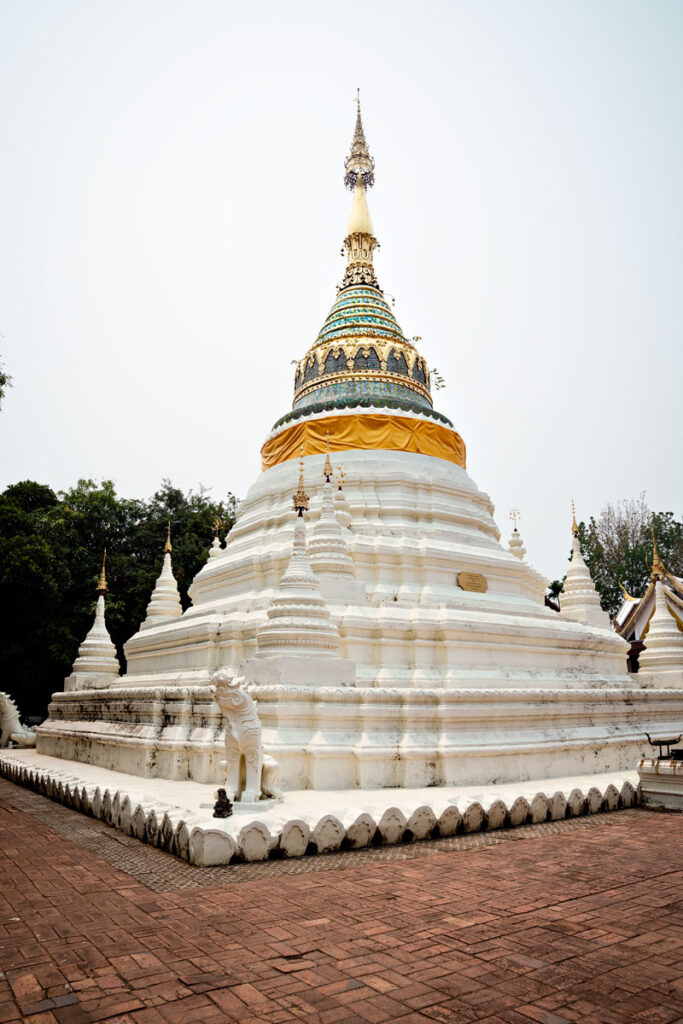
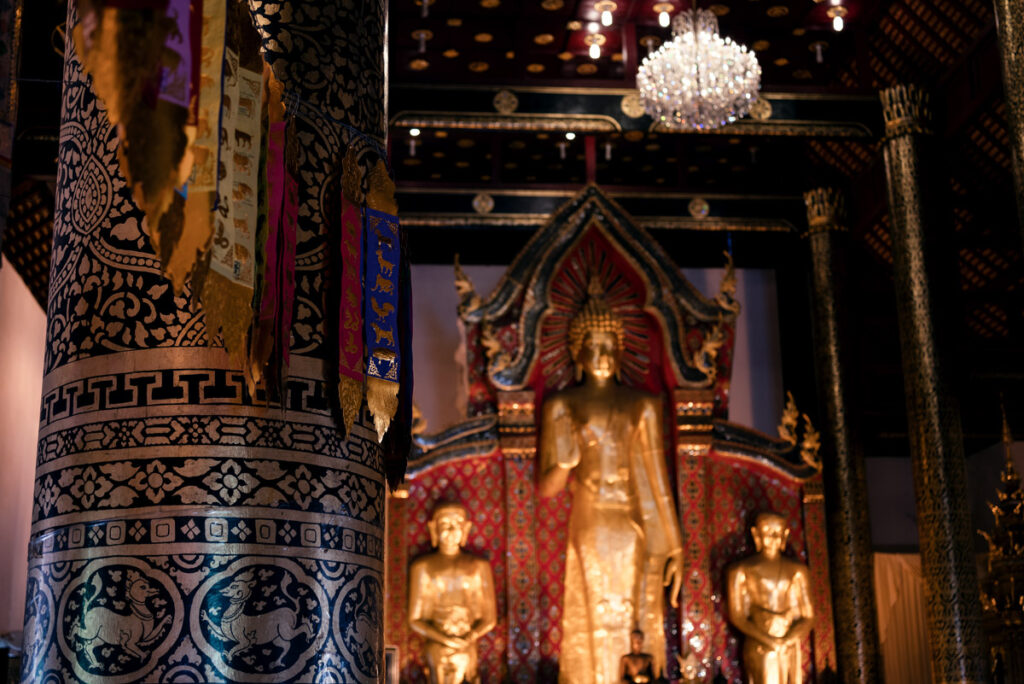
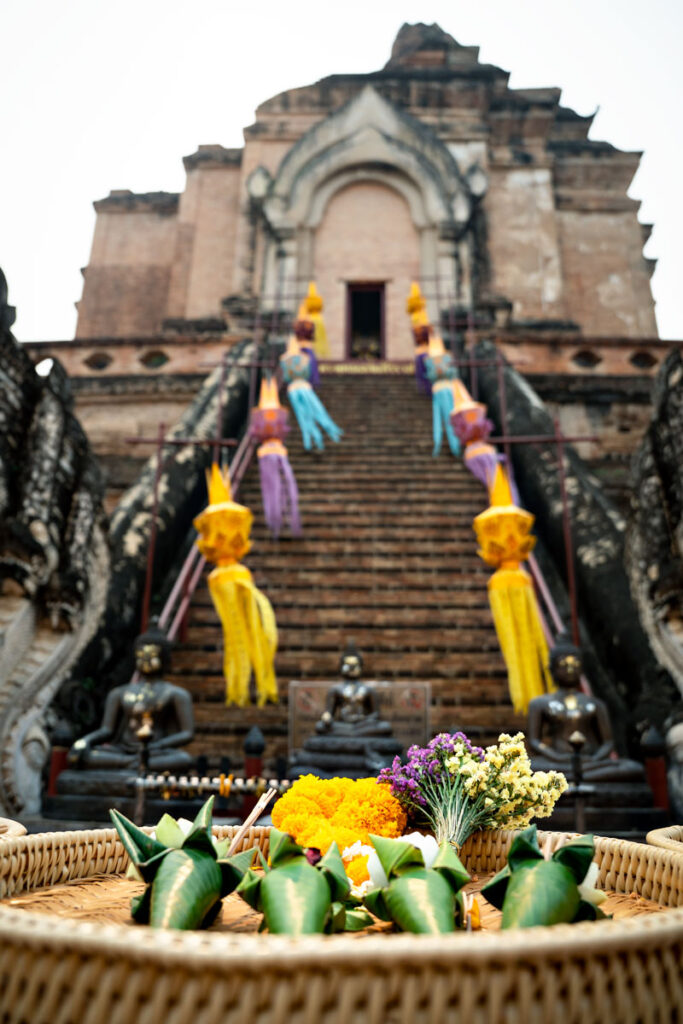
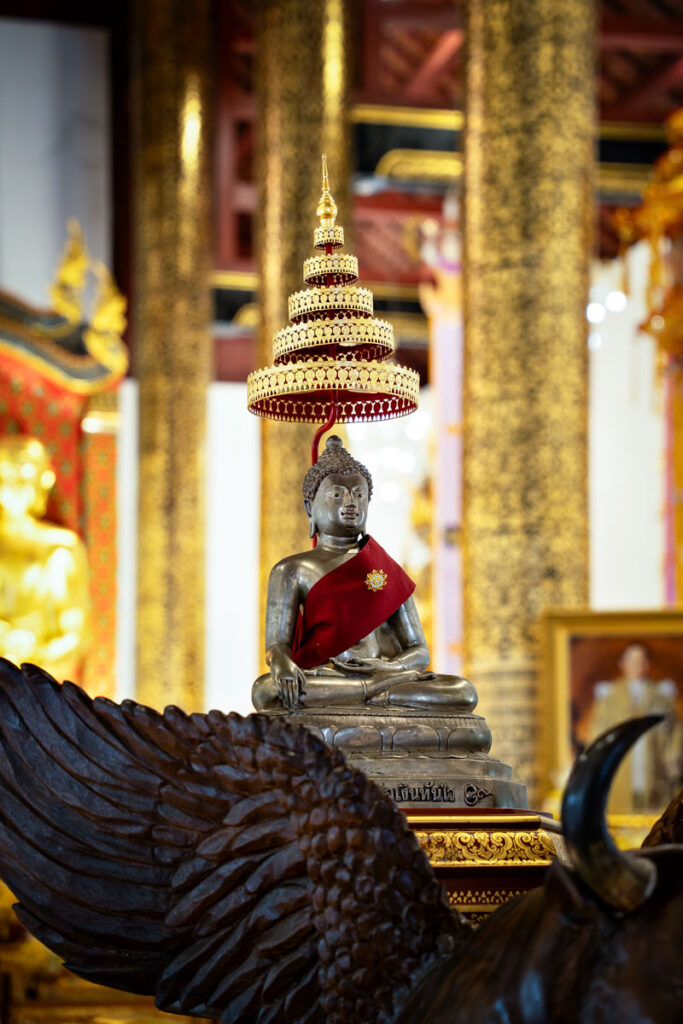
Where three separate temple complexes once stood, the imposing Wat Chedi Luang now rises. Until the devastating earthquake of 1545, the famous Emerald Buddha was housed here, before it left the Lanna Kingdom and, via Luang Prabang and other stops, eventually reached Bangkok, where it is still venerated today at Wat Phra Kaew.
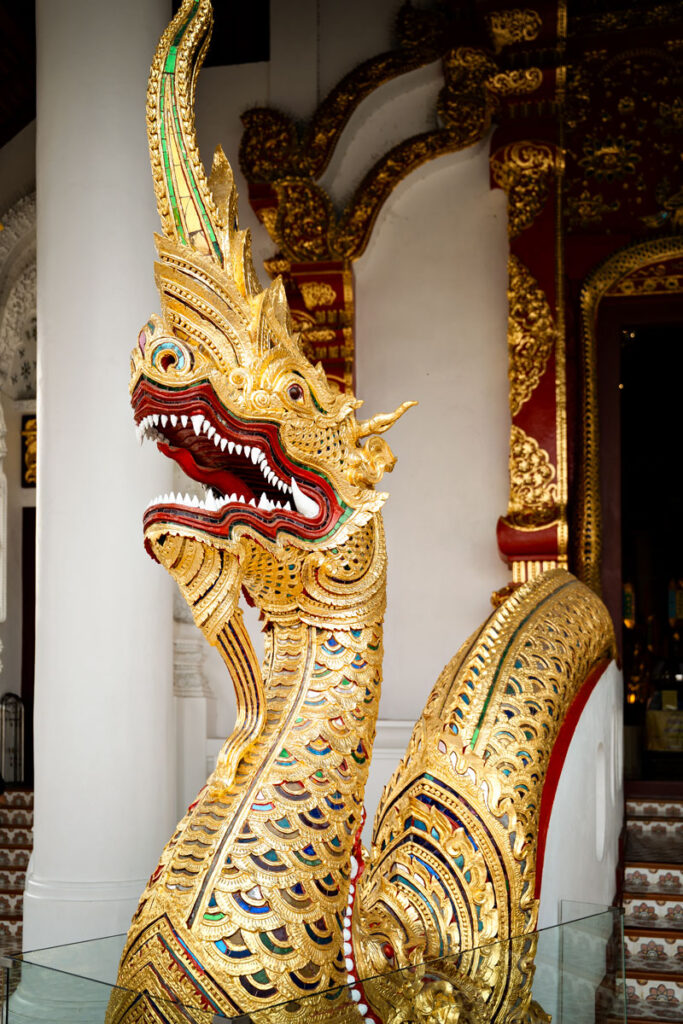
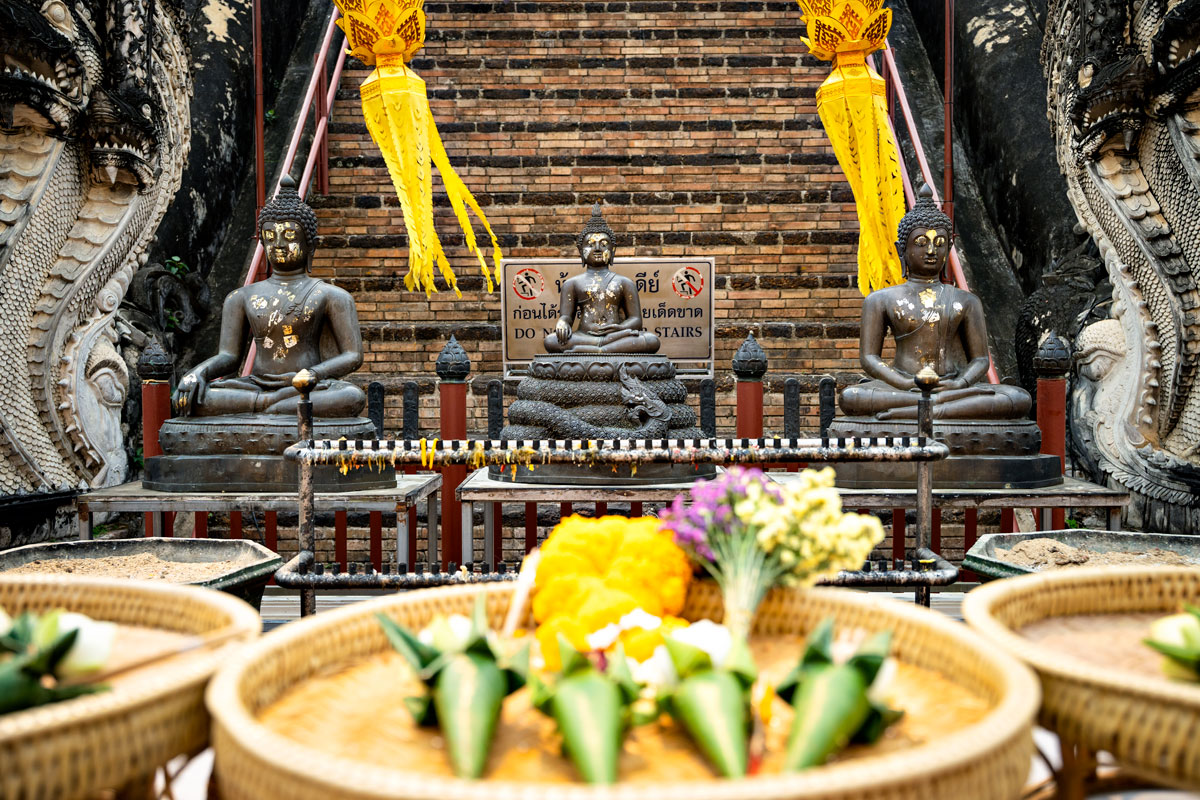
The massive chedi still bears clear traces of the earthquake. Nevertheless, the complex impresses with its monumental size and its richly decorated elephant sculptures and nagas. Visitors from all over Thailand make pilgrimages here to pray or offer gifts. The temple seems to have no shortage of donations – everything appears exceptionally well-maintained and exudes an almost solemn splendor.
A trip to Chiang Mai is not complete without an excursion into nature and the Doi Inthanon National Park. Everything that backpackers like is on offer: rafting, climbing, jungle tours, elephant washing. Nature belongs to humans – it is their playground.
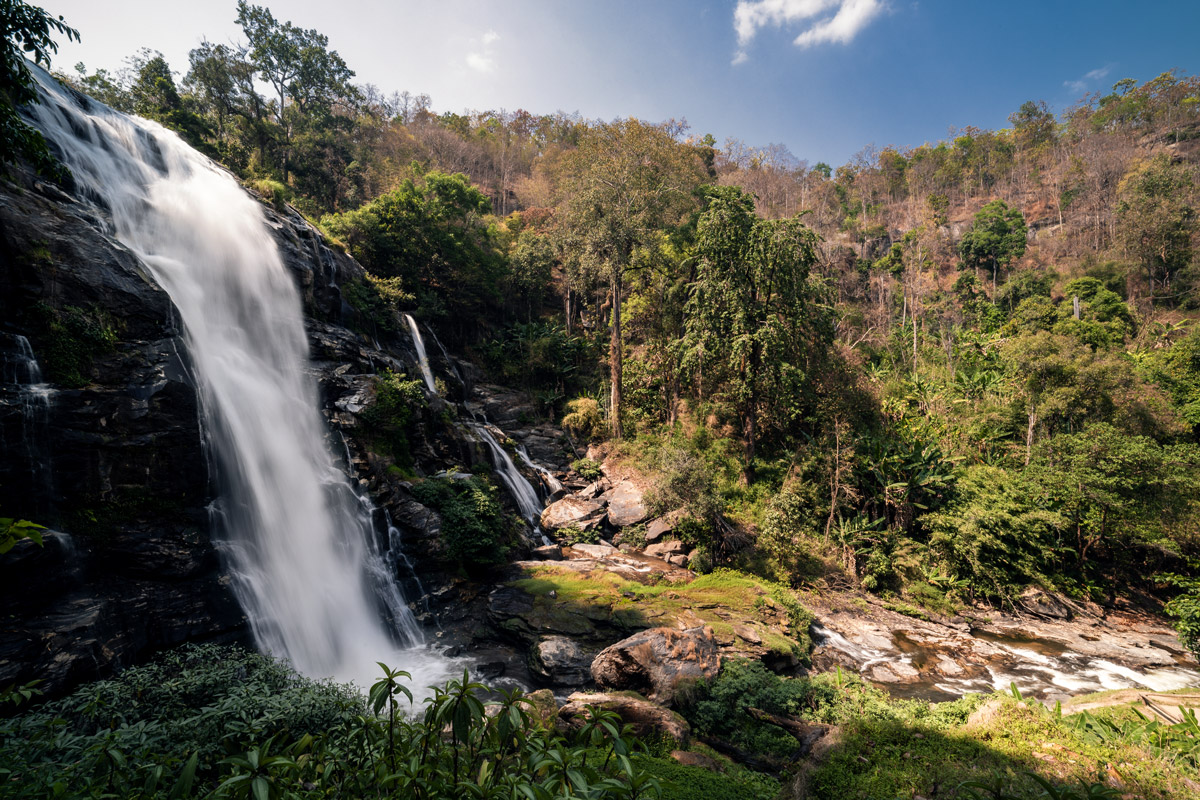
The road winds its way past waterfalls up to the summit of Mount Doi Inthanon. Even when it is over 30° Celsius in the city, a cool breeze blows up here and sometimes the summit sinks into a sea of clouds. The Thai army built the royal couple their own chedi on the summit of Thailand’s highest mountain to celebrate their 60th birthdays.
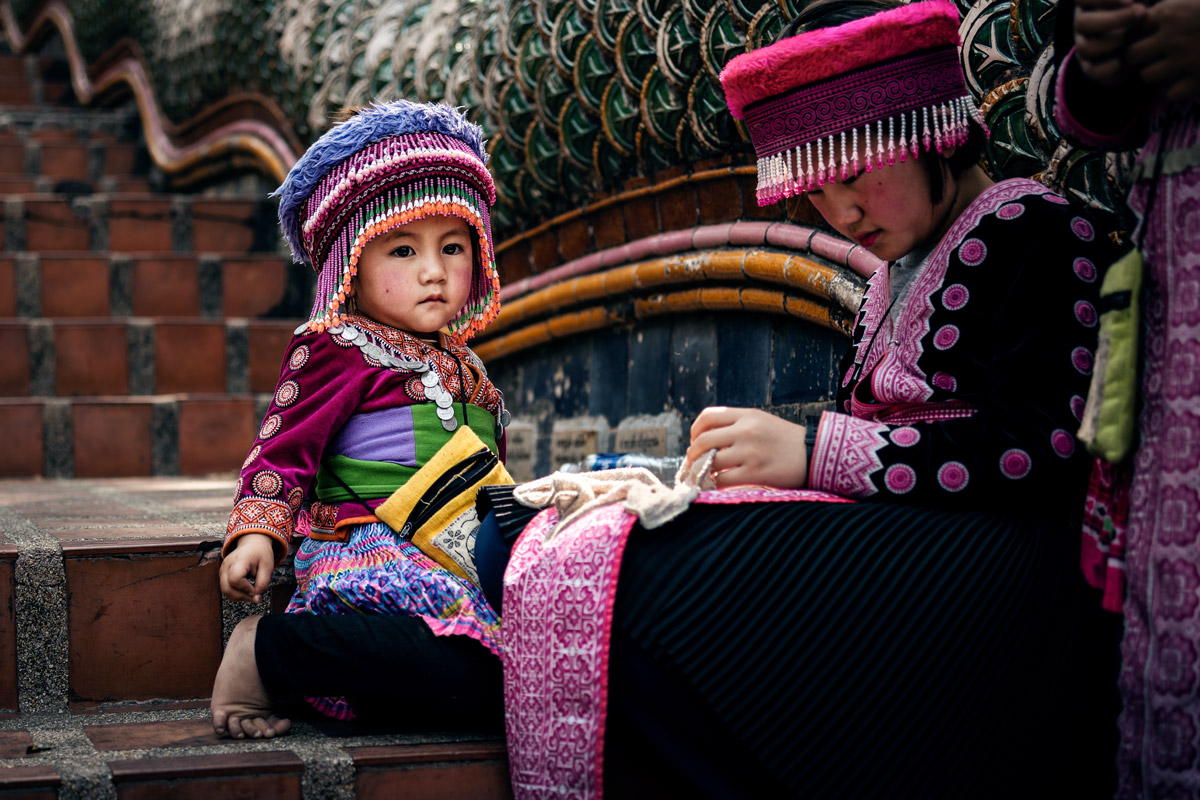
Hill tribes such as the Hmong and Karen populate the north of Thailand, as well as regions in neighboring countries. They stand at the tourist sites, dressed in traditional costumes. Women and their children smile into the camera for a few banknotes and sell handmade souvenirs.
Chris' Tip
If you opt for a day tour, make sure that you choose a reputable and sustainable provider. Some tour operators simply pack too much into a day trip and often include controversial activities such as elephant rides or visits to ethnic minorities who are presented like zoo animals. If you want to get involved in the conservation and protection of Thai elephants, visit the Save Elephant Foundation, which we also support.
Chiang Mai seems different from the cities of central and southern Thailand. Is it the lingering echo of Lanna culture? Architecture that has adapted to the cooler climate of the north? The geographical proximity to Myanmar and Laos, or the influence of the numerous ethnic mountain tribes? We don’t know.
In the evening, we sit on the banks of the Ping River. The colorful lights of the restaurants are reflected in the water. One more cold beer, then we head to the bustling Night Bazaar with its street food stalls, bars, and the Hard Rock Café. Perhaps that is precisely the secret of this city: Chiang Mai offers a little bit of everything – culture and nature, tranquility and nightlife, tradition and modernity – but never too much of any one thing.
Info about our trip
If you want to see some of Thailand, you can hardly miss Chiang Mai. We’ve visited the city several times by now, and yet we’re still divided in our opinions. Vany loves the laid-back atmosphere and the mix of culture, cafés, and nature. For Chris, on the other hand, Chiang Mai now has a few too many urban problems and a bit too little of the authentic charm of northern Thailand. Especially since the COVID-19 pandemic, the city has become a popular destination for expats, long-term travelers, and digital nomads. Prices have risen, and Western influences are much more prominent today than they were a few years ago.
But Chiang Mai Province has far more to offer than its capital city of the same name. Hiking, rock climbing, whitewater rafting, cooking classes, visits to responsibly run elephant conservation projects, or excursions to Doi Inthanon National Park ensure plenty of variety. If you want to get to know the region beyond just the surface, you should plan at least a week for this diverse province.
Chiang Mai is generally a fairly inexpensive city, as it offers many services and tourist infrastructure. However, as you probably won’t be staying in your hotel room all day and there is a great natural environment with numerous leisure activities, you will certainly spend money on one or two excursions. Of course, this can quickly add up, but it is highly recommended. However, please always make sure that you choose a reputable and sustainable tour operator.
You can find cheap and authentic food at the night market. If you want to spend a nice evening by the river in a good restaurant, we recommend the various restaurants and bars directly on the Iron Bridge on the west bank (corner of Charoen Prathet Road / Loi Kroh Road) in the east of the city. We went to Chef’s Together here, for example.
Every time we visited Chiang Mai, we stayed at different hotels and guesthouses, none of which really impressed us and none of which we can recommend. But on our last trip, we finally hit the jackpot with a hotel in a great location: Yaang Come Village Hotel Chiang Mai. It’s not in the Old City, but it’s within walking distance of the river and the night market. It includes a pool, a good breakfast, and parking!
As a very touristy city, we don’t want to say that there won’t be pickpockets out and about, especially in the evening and at night in the busy areas. So keep an eye on your valuables.
Thai society is very open-hearted and fond of children. It was not uncommon to see a bunch of Thais (mainly women) standing around our boy. The way Thais treat children is different to what we are used to in Europe. We would never go up to a stranger’s child and want to take it in our arms. This happens all the time in Thailand – people don’t even ask beforehand. You should also be prepared for Thais to take photos of your children – often without being asked. They will quickly whip out their smartphone and take a selfie with the blond, little farang (foreigner). Think about how you want to deal with this – from our Western perspective – cross-border behavior. You won’t always be able to prevent it. Be respectful and smile and let your counterpart know that you would like a little more distance. At the same time, you are even more welcome everywhere with children and we were often given preferential treatment (e.g. in queues).
However, don’t expect extra changing rooms anywhere – the sanitary facilities are often in an inadequate condition anyway. So take wet wipes and disinfectant gel with you. You can buy basic baby supplies in any 7/11 or supermarket. Diapers are not cheap and are often only available in large packs. It’s best to leave the baby carriage/stroller at home. The sidewalks are usually too bad and there are too many pedestrians and cars, especially in Bangkok, so you won’t have much fun with it. The most flexible option is a baby carrier.
You can explore the city itself on foot or hire a bike. Excursions in the surrounding area are best done with a rental car or car with a guide. Of course, you can also hire a scooter, but the road to Doi Inthanon is particularly long and the weather can be very uncomfortable above a certain altitude, depending on the time of year.
There are also numerous packed day tours that take you from one tourist attraction to the next. There are many black sheep here and the bottom line is that there is simply not enough time to enjoy all the sights on such tours. Nevertheless, these tours can be a good way to experience as much as possible in the shortest possible time.

- We haven’t read it ourselves yet, but it sounds promising: Enchanted Land: Foreign Writings About Chiang Mai in the Early 20th Century by Graham Jeffcoat
- A very good introduction to Thailand’s history in general can be found in Thailand’s Political History: From the 13th Century to Recent Times by B. J. Terwiel