
Macau
A night in Las Vegas: Betting everything on red at the roulette table and hitting the jackpot. Losing yourself in the night, succumbing to the colorful lights, the live shows, and the gambling. Crossing lines, pulling up in big cars, and living only in the here and now. That is the capitalist fantasy of omnipotence that Las Vegas embodies. But this dream can also come true in China – in gigantic casino resorts, some of which are modeled after their American counterparts down to the last detail. Even if it all seems a bit more civilized – at least on the surface – Macau comes surprisingly close to the real Las Vegas.
Even those who aren’t fans of poker, blackjack, or slot machines are sure to find something to enjoy here. Macau is far more than just a gambling metropolis: Portugal shaped the city for over four centuries until it was returned to China in 1999.
China meets Portugal, history meets a lack of history, tradition meets perverted hyper-capitalism – and all of this in a very small space. So, are you ready for Macau?
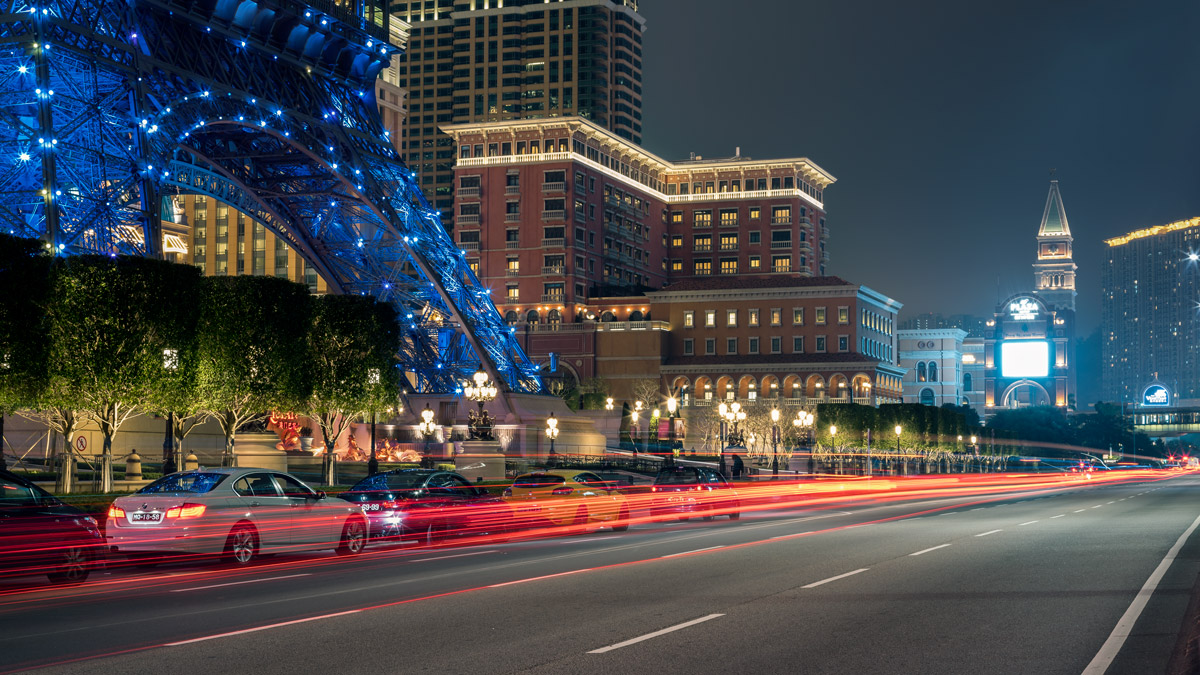
Macau is divided into two worlds that could hardly be more different: the historic old town on the Macau Peninsula and the modern Cotai Strip – a district created through land reclamation between the former islands of Taipa and Coloane.
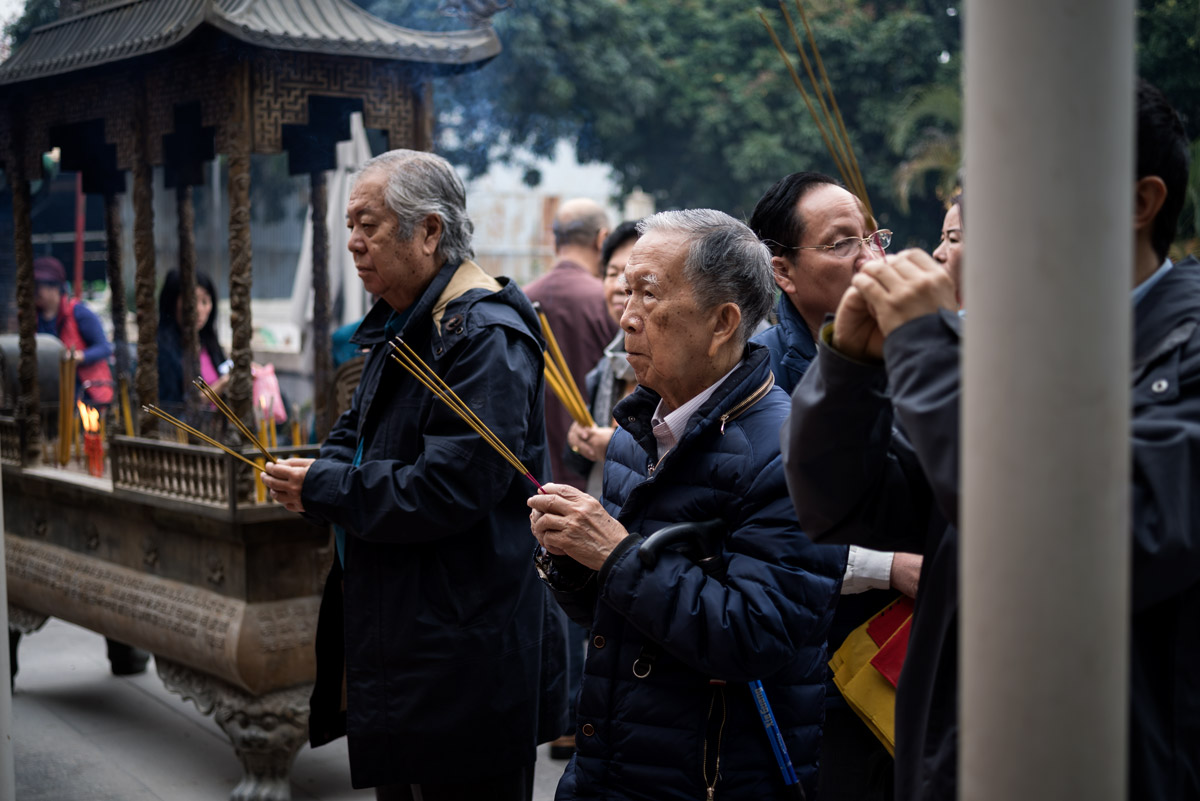
In the historic part of the city, we stroll through a maze of narrow alleys. From the ruins of the iconic St. Paul’s Church, we walk past goldfish shops, small temples, bars, and the Portuguese fort, picturesquely perched on a hill. Everywhere, the neon signs of budget hotels flash. And then, as the buildings around us thin out a bit, we see them – the casinos. During the day, they look like sleeping giants. Colorful facades, daring architecture. Impressive, but nowhere near as overwhelming as their nighttime spectacle.
Without further ado, we drive up to the observation deck of the Macau Tower. From here, we overlook both worlds: the historic peninsula and the modern Cotai Strip. Here, a maze of alleys and squares that has grown over centuries; there, a carefully planned grid of wide streets, artificial canals, and monumental hotel and casino complexes.
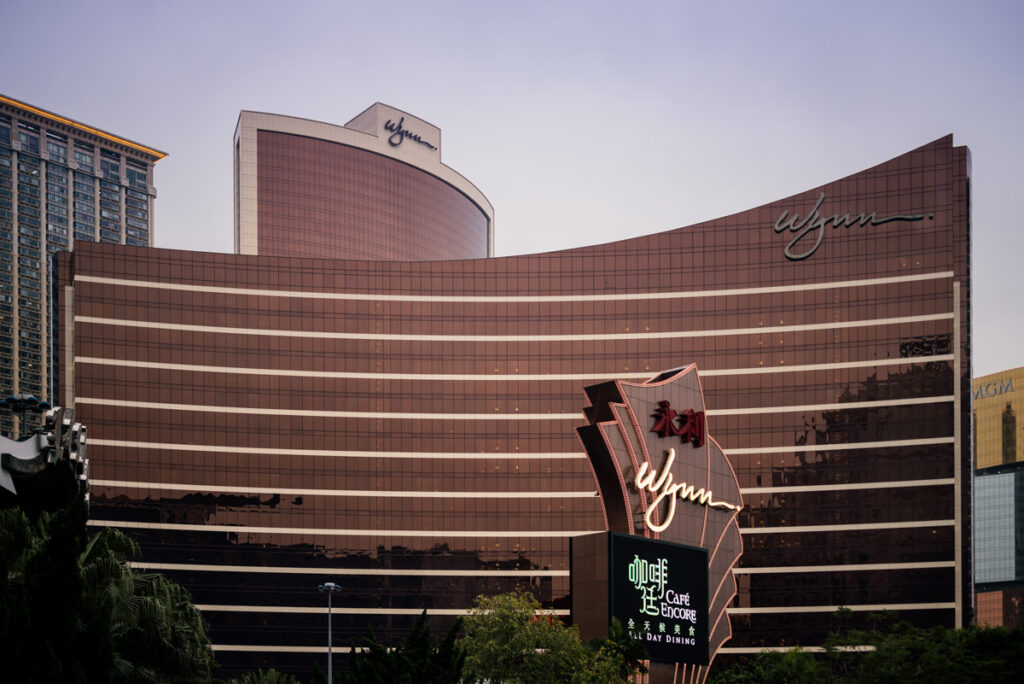
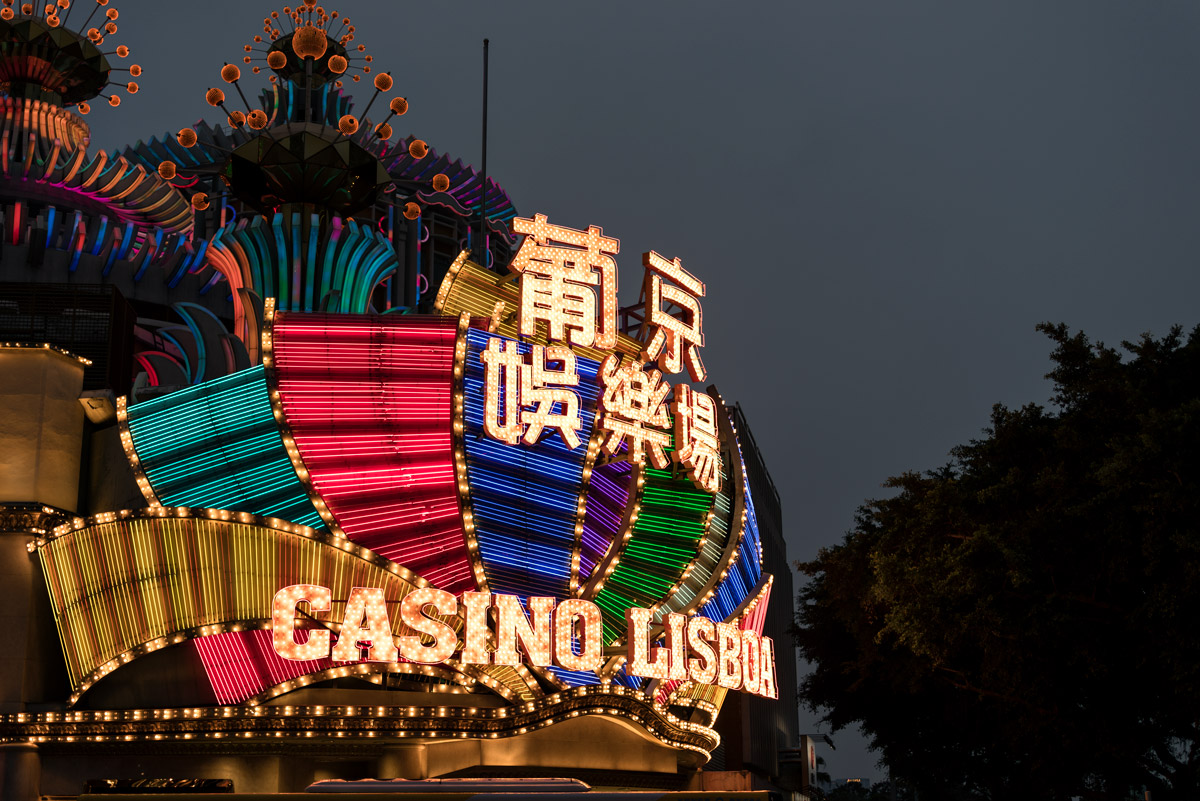
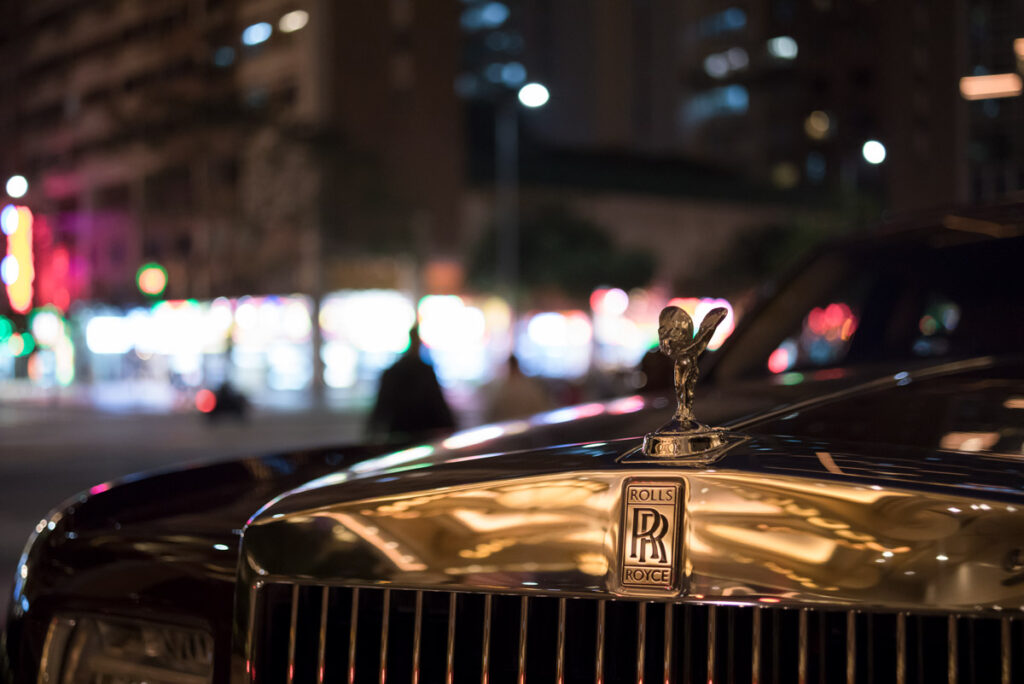
There is no darkness over Macau. The night is just a faint glow of blackness, a shadow over the alleys. Macau is brightly lit, and everyone is out and about. The old Casino Lisboa, one of the city’s first casinos, sparkles in the colors of a hundred rainbows. Laser beams sweep across the sky. Priceless luxury cars are parked in front of the grand mansions. Crystal chandeliers as big as trucks hang beneath mosaic ceilings adorned with nautical motifs.
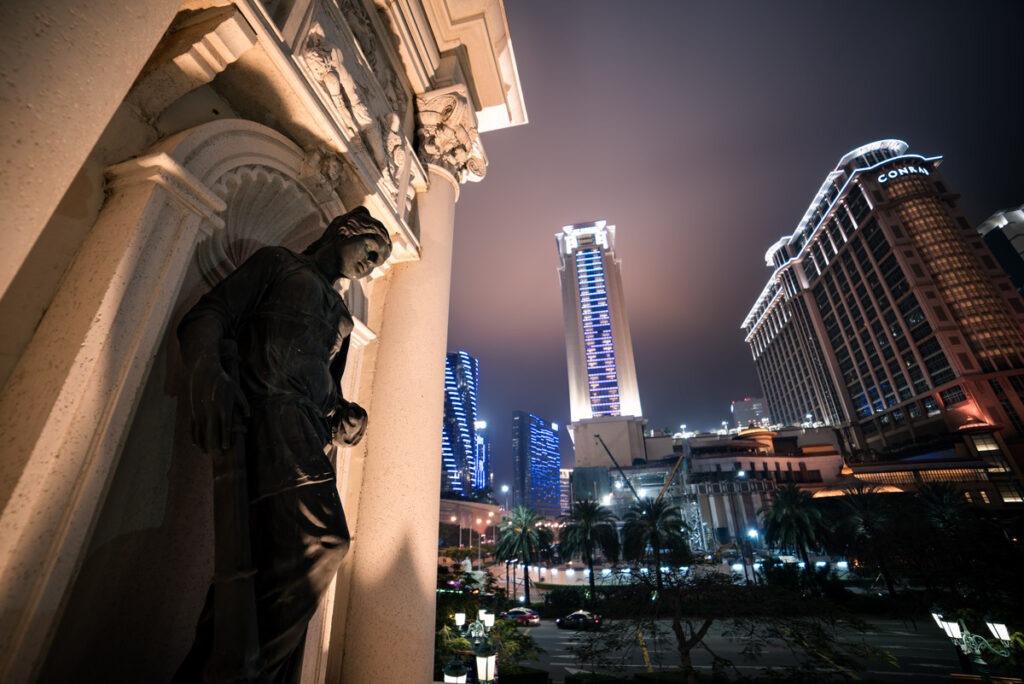
Two bridges span the black water to Cotai. The Venetian brings a replica of Venice to China; right next door, a blue-illuminated Eiffel Tower rises up. The casino halls are packed with people and yet seem almost deserted. Tired men sit silently and motionless in front of the slot machines. There are thousands of gaming options – even the largest crowd would get lost in this gigantic space within seconds.
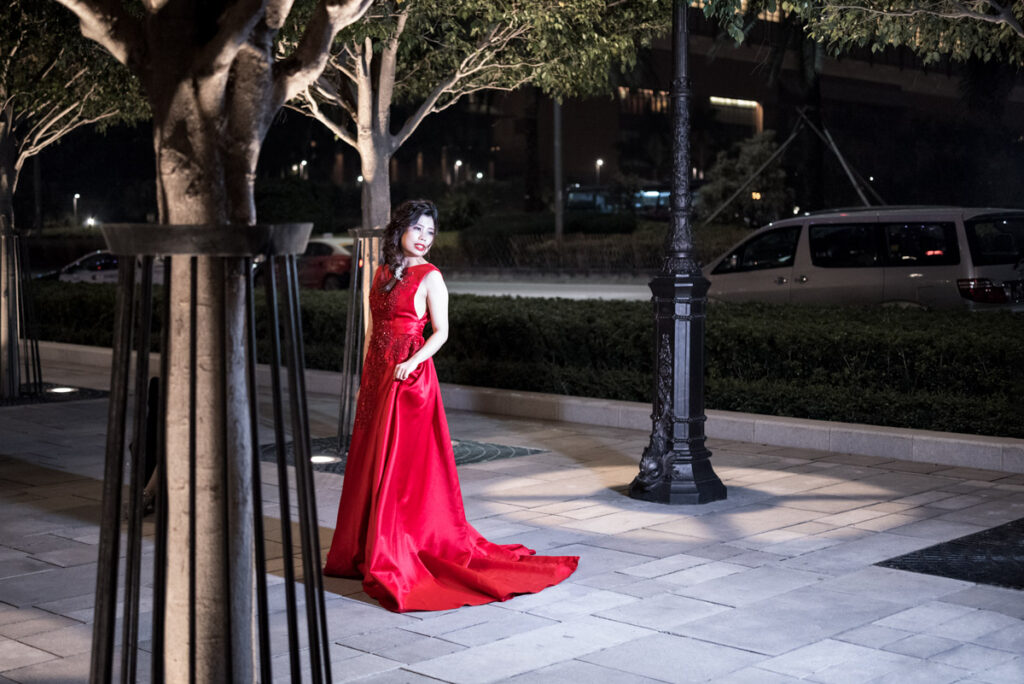
Music blares from the Hard Rock Café. A woman in a red evening gown sensually closes her eyes for a photo. Where does one begin here, where does it end? Everything seems to be an illusion. Reality has long since abandoned this place.
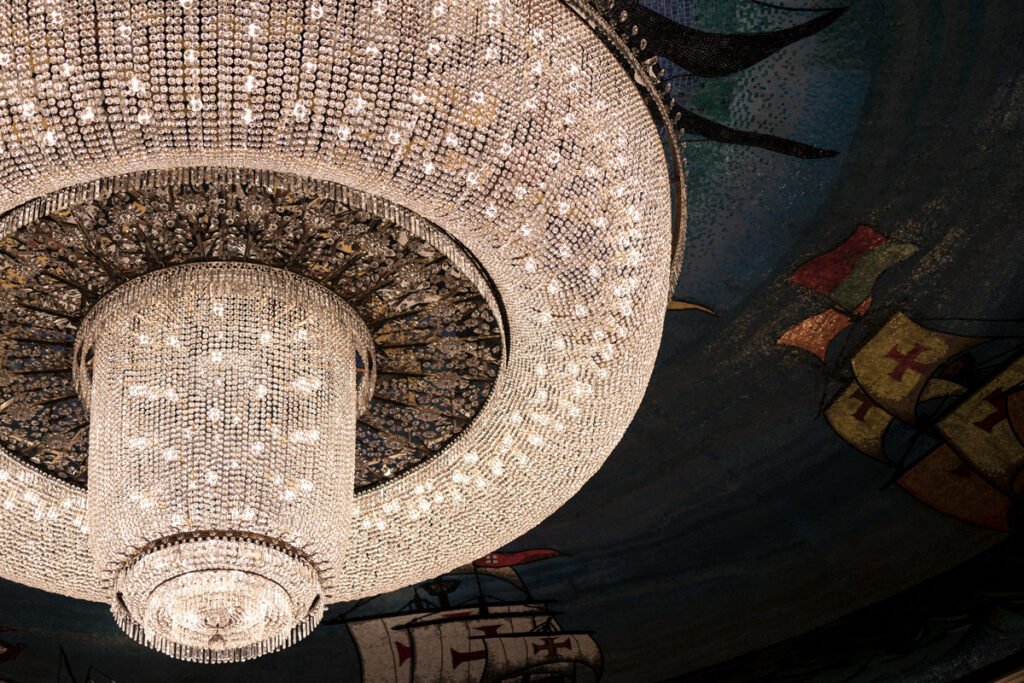
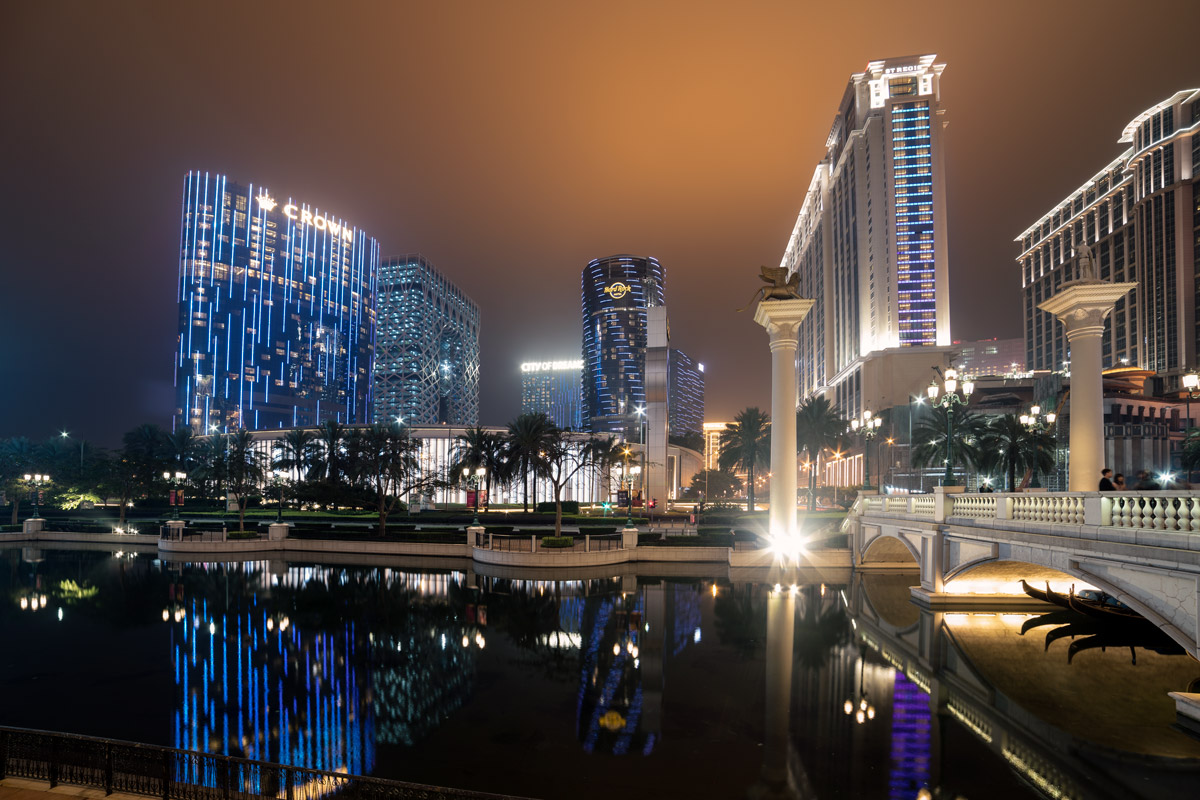
The next morning, the excitement has faded. The water in the canals in front of the Venetian lies as smooth as glass. The sky is covered by a layer of gray clouds, and the streets are strikingly quiet. Anyone who thinks Macau consists solely of casinos and gambling, however, is overlooking a significant part of this city. The charm of the Portuguese legacy is unmistakable, and the blend of Chinese and Portuguese cultures is fascinating. While the colonial heritage is most evident today in the cityscape, many casinos also incorporate Portuguese motifs into their architecture and decor. The bakeries still serve excellent pastéis de nata and offer an exciting fusion cuisine. Portuguese remains an official language alongside Chinese to this day, and numerous street signs are written in both languages.
This makes Macau – along with all the madness and debauchery of the nightlife – a great destination for a short trip. If you stroll through the streets and alleys with your eyes open, you’ll discover far more than just glittering facades and gaming tables. Hidden amid all the artificial glitz is a city whose history remains palpable to this day.
Info about our trip
Macau offers excellent opportunities for a varied short trip in a very small area – and at East Asian price levels. Plan on staying for two to three days. That will give you plenty of time to explore the historic old town on the Macau Peninsula and the modern Cotai Strip with its man-made casino complexes, and perhaps even take a stroll through the gaming halls in the evening. Don’t feel obligated to gamble – it’s perfectly normal to simply tour the massive casino complexes and soak up the extraordinary atmosphere. Many casinos also connect their hotels and resorts with free shuttle buses, which can be used even by visitors without a hotel reservation.
Macau can be easily combined with a stay in Hong Kong or integrated into a tour of southern China or Southeast Asia. The distances are short, and the transportation connections are excellent. Although Macau is part of China, the Special Administrative Region still has its own legal system, currency, and entry requirements – so be sure to check the current regulations before your trip.
Macau isn’t a cheap travel destination, but prices are roughly on par with those in Hong Kong. Luxurious hotels and upscale restaurants dominate the area around the major casino resorts. If you want to stay there – especially on weekends and holidays – you should expect to pay well over 150 euros per night. Smaller hotels and guesthouses in the historic old town are significantly cheaper.
When it comes to dining, you can choose between affordable street food stalls and small restaurants serving Chinese or Portuguese cuisine, as well as exclusive Michelin-starred restaurants in the casinos. This allows you to plan your daily budget very flexibly. Neither the casinos nor most of the attractions charge an admission fee, so you can experience a lot even on a smaller budget. Only those who want to try their luck at the gaming tables should set a firm limit beforehand – because in Macau, you can probably spend money faster than anywhere else in Asia.
Macau is a paradise for food lovers. There’s hardly anywhere else in Asia where Chinese and European cuisines blend as harmoniously as they do here. In addition to Cantonese specialties, you’ll find Portuguese restaurants everywhere, bakeries with fresh pastéis de nata, and what’s known as Macanese cuisine – an exciting blend of Portuguese, Chinese, and other influences from Portugal’s former colonies.
Culinary options are available for virtually every budget. From small street food stalls and traditional teahouses to luxurious Michelin-starred restaurants in the large casino hotels, there’s something for everyone. Our tip: Be sure to try the Portuguese egg tarts, and take a stroll through the narrow alleys of the old town, away from the large hotel complexes. That’s where you’ll often discover the city’s most authentic restaurants.
Macau offers a wide range of lodging options. You can find decent rooms starting at around 50 to 60 euros per night. If you want to treat yourself to a bit of luxury along with a hearty breakfast, the large casino hotels are the perfect choice. Depending on the season, you’ll often pay between 90 and 120 euros per night there and can expect a high standard of service. For a correspondingly higher price, the luxury and extras are virtually limitless. We secured an attractive early-bird discount at the time and stayed at the Sofitel Macau with a view of the Chinese mainland – a place we can wholeheartedly recommend.
Regardless of your choice of hotel, distances in Macau are pleasantly short. A walk from the north to the south of the Macau Peninsula covers just about five kilometers. The exact location of your accommodation therefore plays only a minor role. Nevertheless, our recommendation is: Stay on the Macau Peninsula. From there, you can easily reach the historic old town on foot and quickly get to Taipa and Cotai at any time using the casinos’ free shuttle buses.
Macau is one of the safest travel destinations in Asia. Violent crime against tourists is extremely rare, and even at night you can walk around most parts of the city without any worries. The heavy police presence around the casinos further contributes to a sense of safety. As in any major city, however, you should still keep an eye on your valuables and protect yourself from pickpockets in crowded areas.
Special caution is advised when it comes to gambling. The atmosphere in the casinos is exhilarating and designed to encourage you to spend as much time and money there as possible. If you want to gamble, it’s best to set a fixed budget in advance and treat the money as an entertainment expense – not as an investment. Then nothing will stand in the way of a carefree stay in Macau.
In general, there’s no reason not to travel to Macau with children, as long as the focus is on culture, history, and the city’s unique charm. However, it goes without saying that visiting the casinos with children isn’t necessarily appropriate. Also, don’t expect a wide selection of activities specifically for your kids. While there are a handful of indoor playgrounds and family-friendly attractions, nature, hiking trails, and beaches are very limited – especially in the far south on Coloane. For younger children, there are certainly more varied travel destinations. Older children and teenagers, on the other hand, may well enjoy the unusual blend of Chinese tradition, Portuguese heritage, and the glitzy modern world.
You can easily explore Macau’s historic district on the peninsula on foot. Most of the sights are close together and are perfect for discovering on a stroll. The free shuttle buses operated by the major casinos will take you to Cotai in just a few minutes – a convenient service that even visitors without hotel reservations can use. If you’d like to head further south to Coloane, public buses and taxis are available. Because of the short distances, getting around Macau is generally very easy and straightforward.
- You’ll find the best historical – and at the same time scholarly – overview in Macau History and Society by Zhidong Hao – unfortunately, it’s not always available everywhere.
- Another scholarly standard – and also difficult to find – is: Macau: A Cultural Janus by Christina Miu Bing Cheng.
