
Portugal
It would be presumptuous to call Portugal an “insider tip.” And yet this Mediterranean country on the Atlantic Ocean doesn’t make it into the top ten most popular vacation destinations for Germans. It lags significantly behind Spain and Italy, even though destinations like the Algarve, Lisbon, and Porto have long been staples of the tourist scene.
At the very least since the COVID-19 pandemic and the boom in the camper and van life scene, Portugal has been experiencing an enormous tourism boom. Suddenly, many people became interested in undeveloped plots of land somewhere in the Portuguese countryside. Portugal’s beaches were overrun by surfers, and Lisbon became a trendy hub for digital nomads from all over the world.
And indeed, Portugal seems to be a little paradise. The sea is rarely more than a hundred kilometers away, the climate around Lisbon is every bit as good as Mallorca’s, and anyone who wants to get to know the country beyond its beaches will discover diverse landscapes, historic cities, and a rich culture.
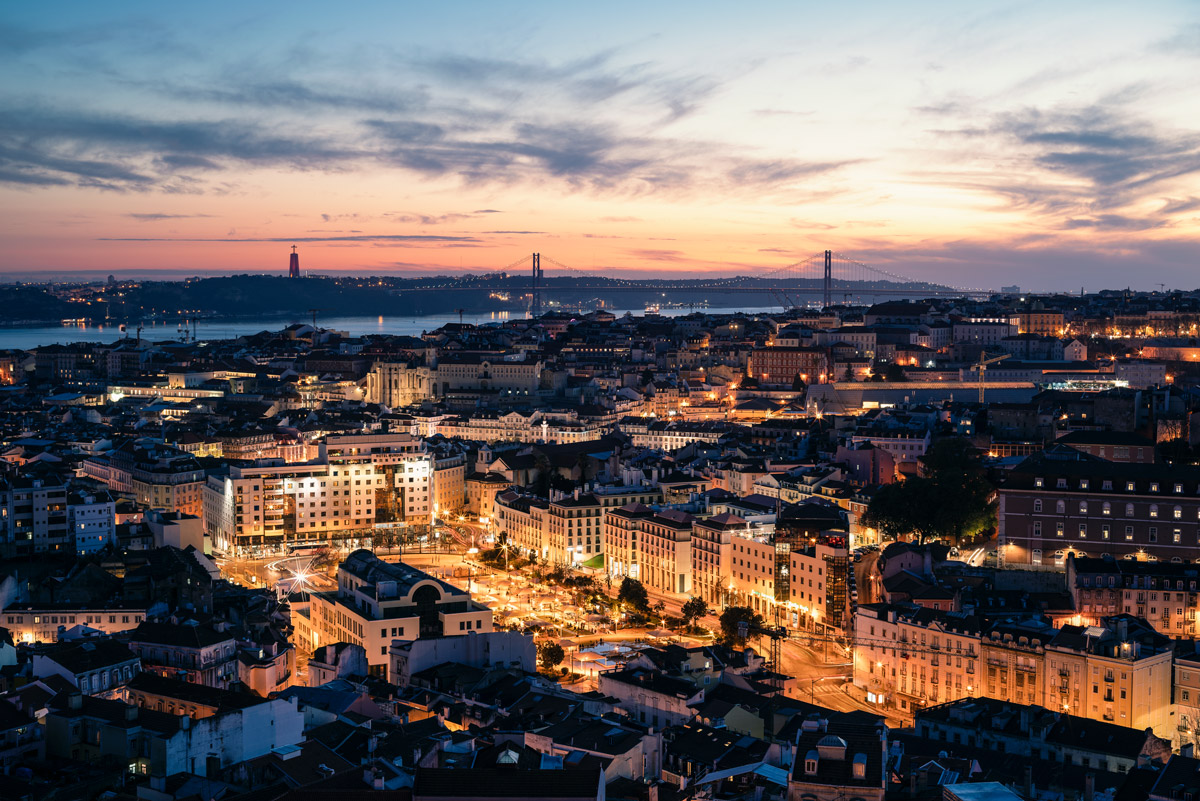
The sky over Lisbon is bright blue, and the temperatures are pleasantly mild, even in February. We start the day at a small bakery with freshly baked pastéis de nata and hot coffee, watching the hustle and bustle outside. Refreshed, we’re ready to explore this city.
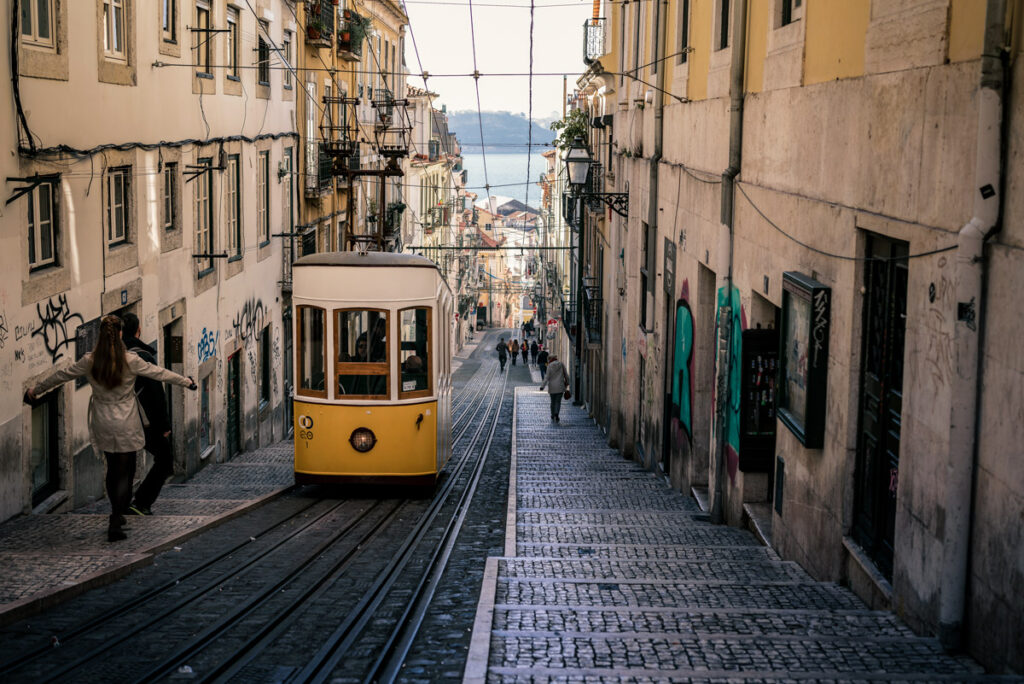
Lisbon is a colorful mix of styles and neighborhoods. The city is hilly and crisscrossed by a dense network of alleys, streets, and stairways, making it easy to lose your bearings. In 1755, the Portuguese capital was almost completely destroyed by one of Europe’s most devastating natural disasters. A severe earthquake caused houses to collapse, a tsunami swept over the city’s shores, and finally, massive fires raged through the rubble.
The disaster shook not only Lisbon but the entire Portuguese kingdom. Although Portugal’s colonial and commercial power had already been in decline since the 17th century, the earthquake struck the country during an already difficult period and consumed enormous financial resources. The reconstruction of the capital took decades and also marked the end of an era in which Portugal had been one of the world’s leading maritime powers.
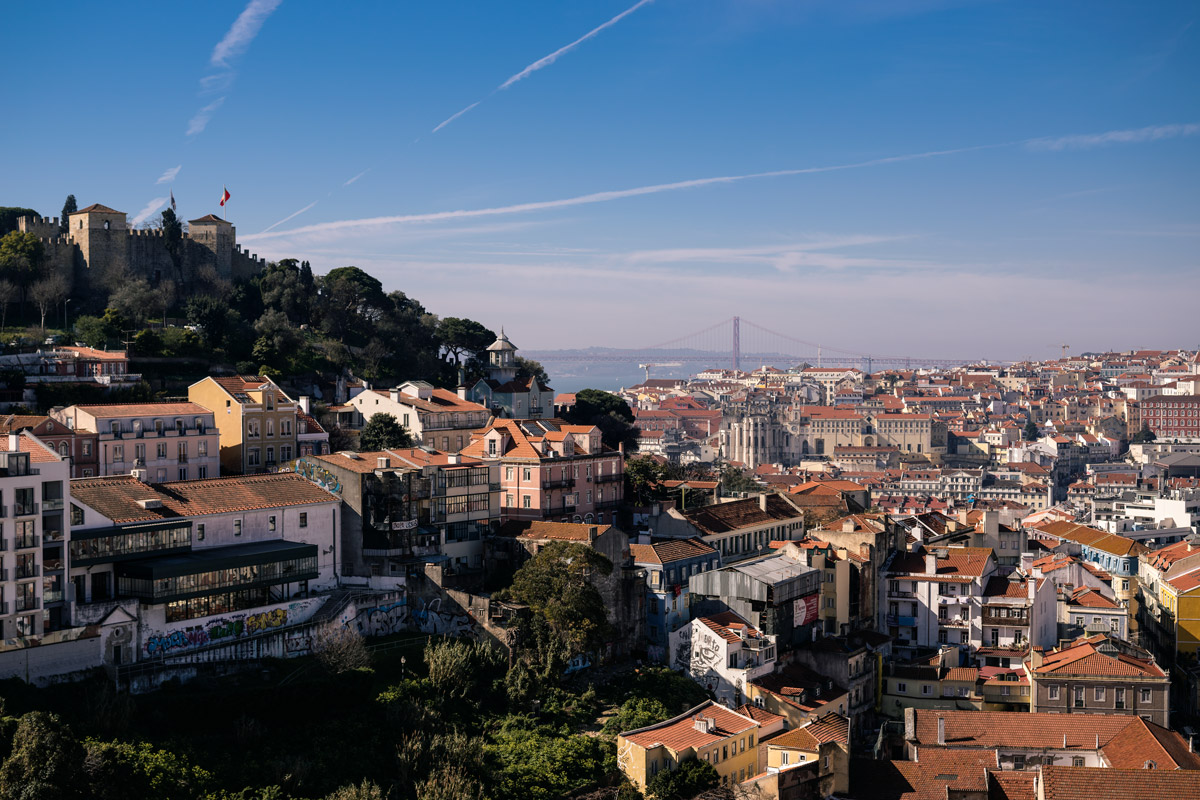

We walk up to the Castelo de São Jorge and spend a few hours exploring the castle and its spacious gardens. The view over Lisbon’s Old Town from the fortress’s walls and towers is unparalleled. A huge cruise ship has just docked at the harbor, and hundreds of day-trippers are streaming through the streets. The ship’s loudspeaker announcements echo all the way up to the castle.
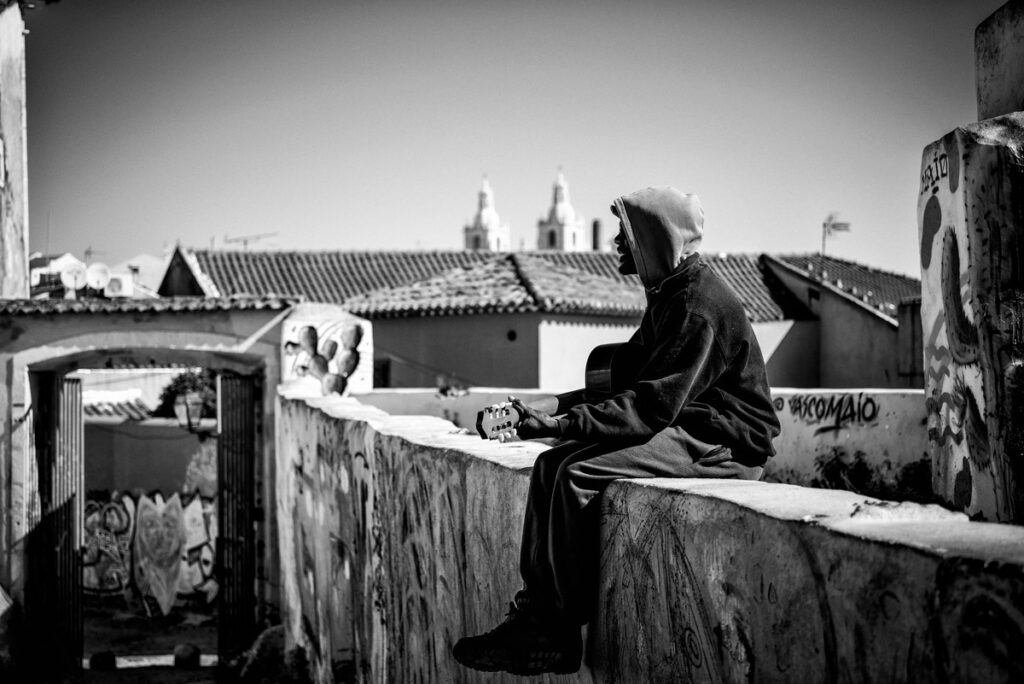
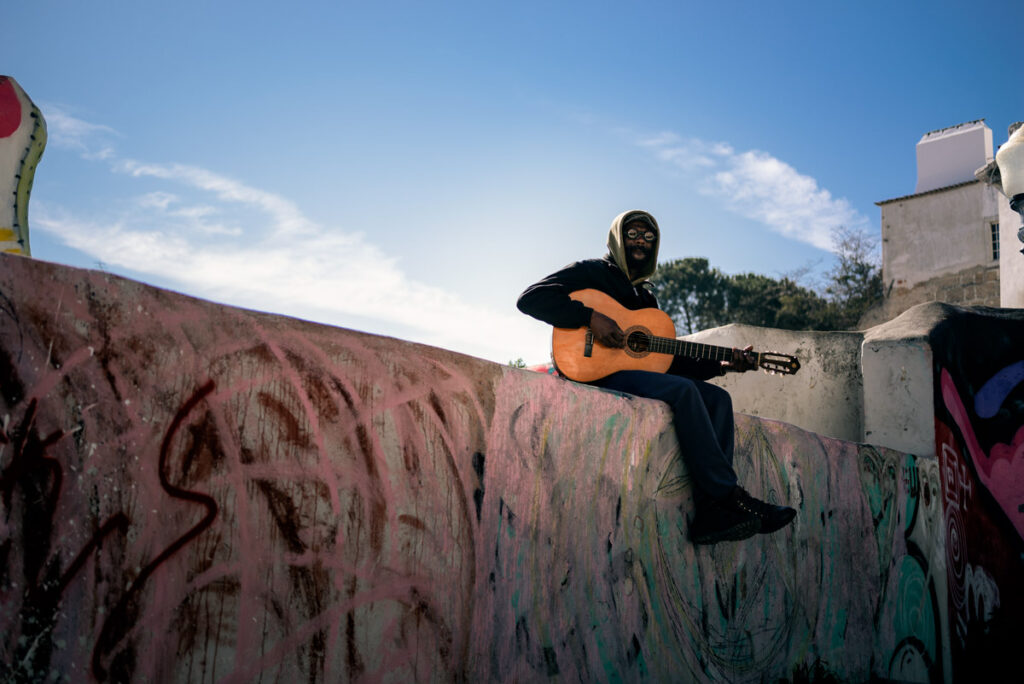
We let ourselves be carried along by the sounds of the street musicians playing on nearly every corner. Prayer candles burn in the churches, and the places of worship are well attended – Portugal remains a predominantly Catholic country to this day. On the concrete steps of an open-air theater, we drink Portuguese Vinho Verde and have a light snack. In the late afternoon, we stroll down to the historic Praça do Comércio, the city’s former commercial hub. Where merchants, captains, and customs officials once bustled among port facilities, trading posts, and warehouses, street performers and young people now use the spacious square for their performances – or simply to enjoy the evening.
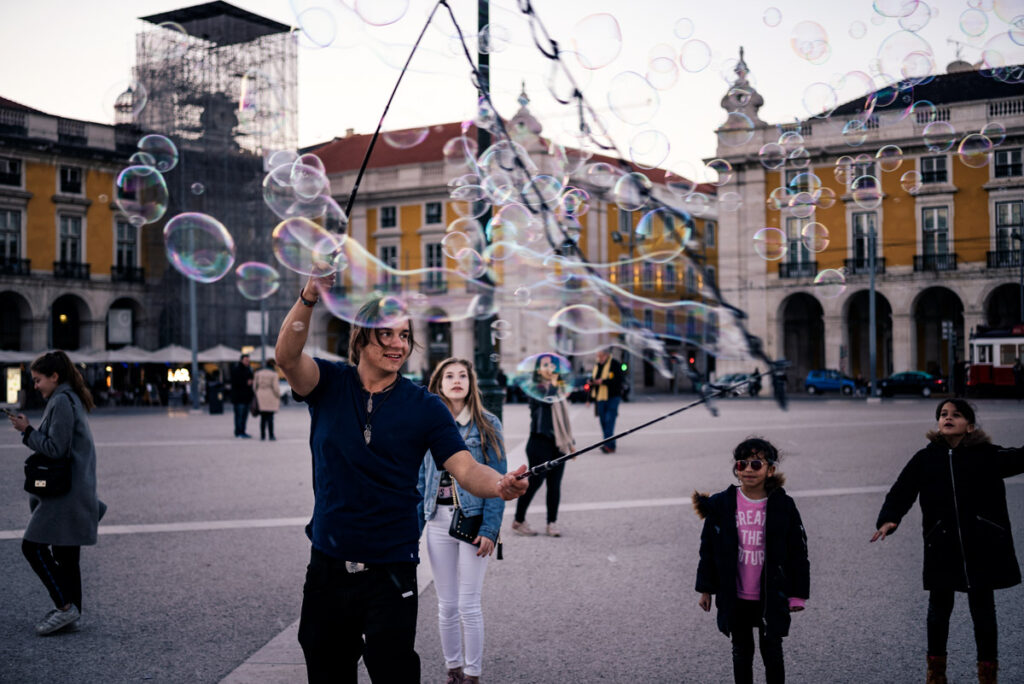
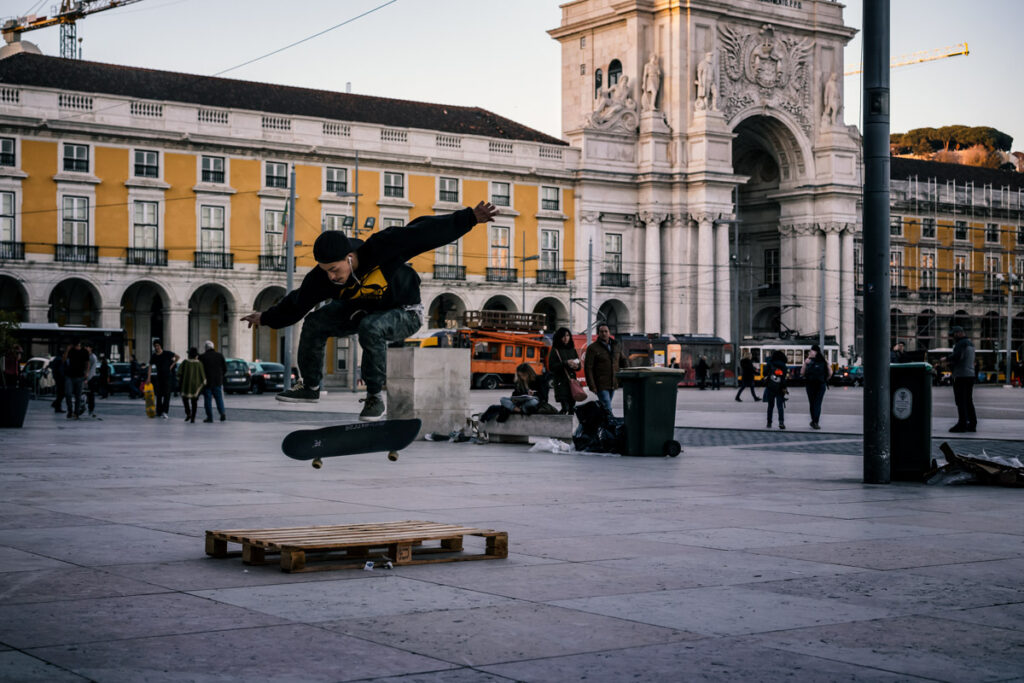

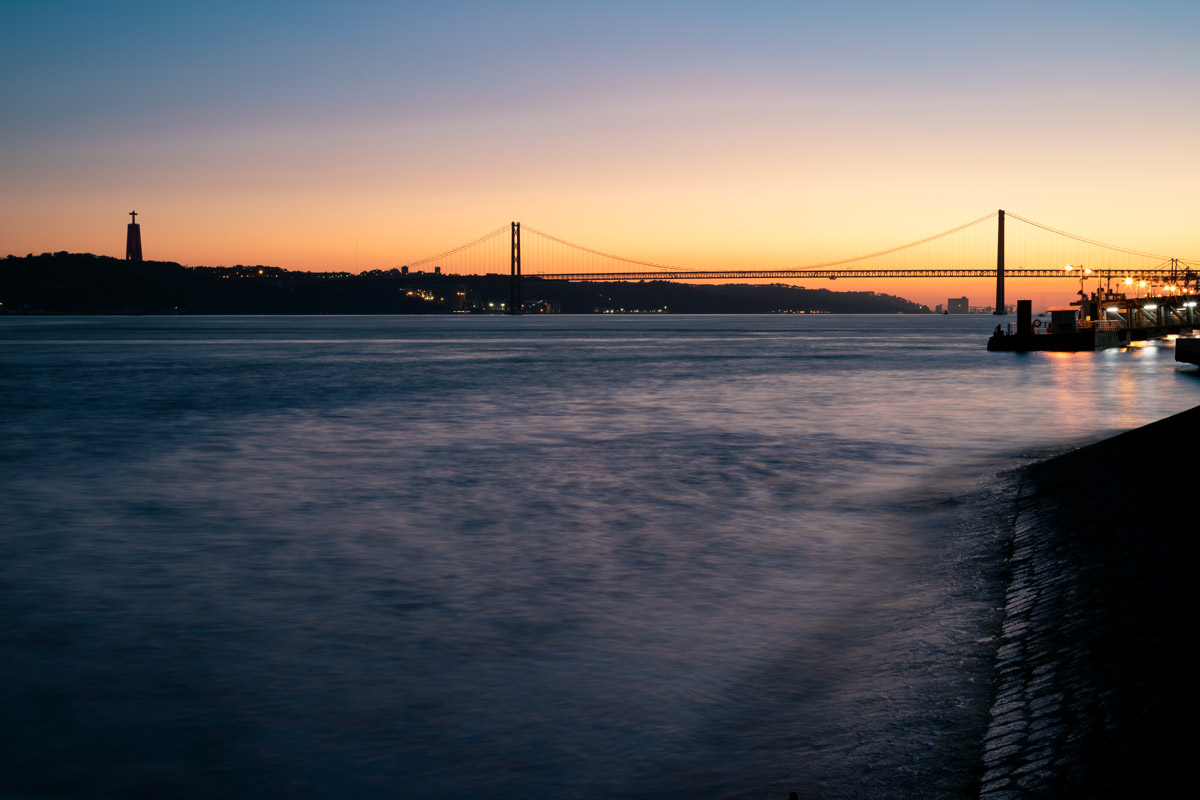
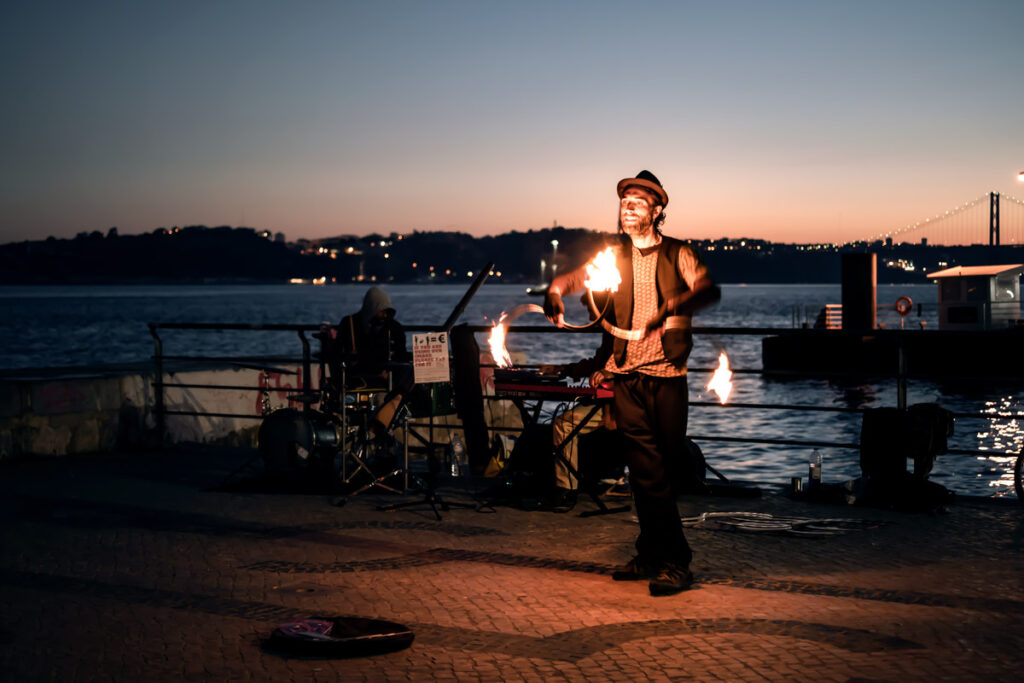
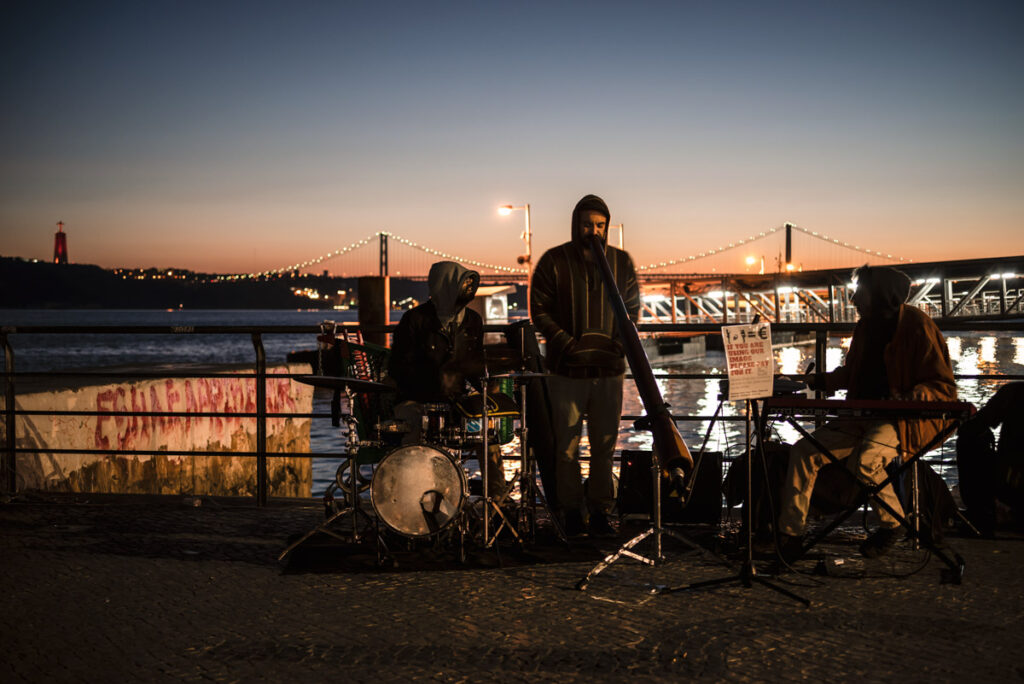
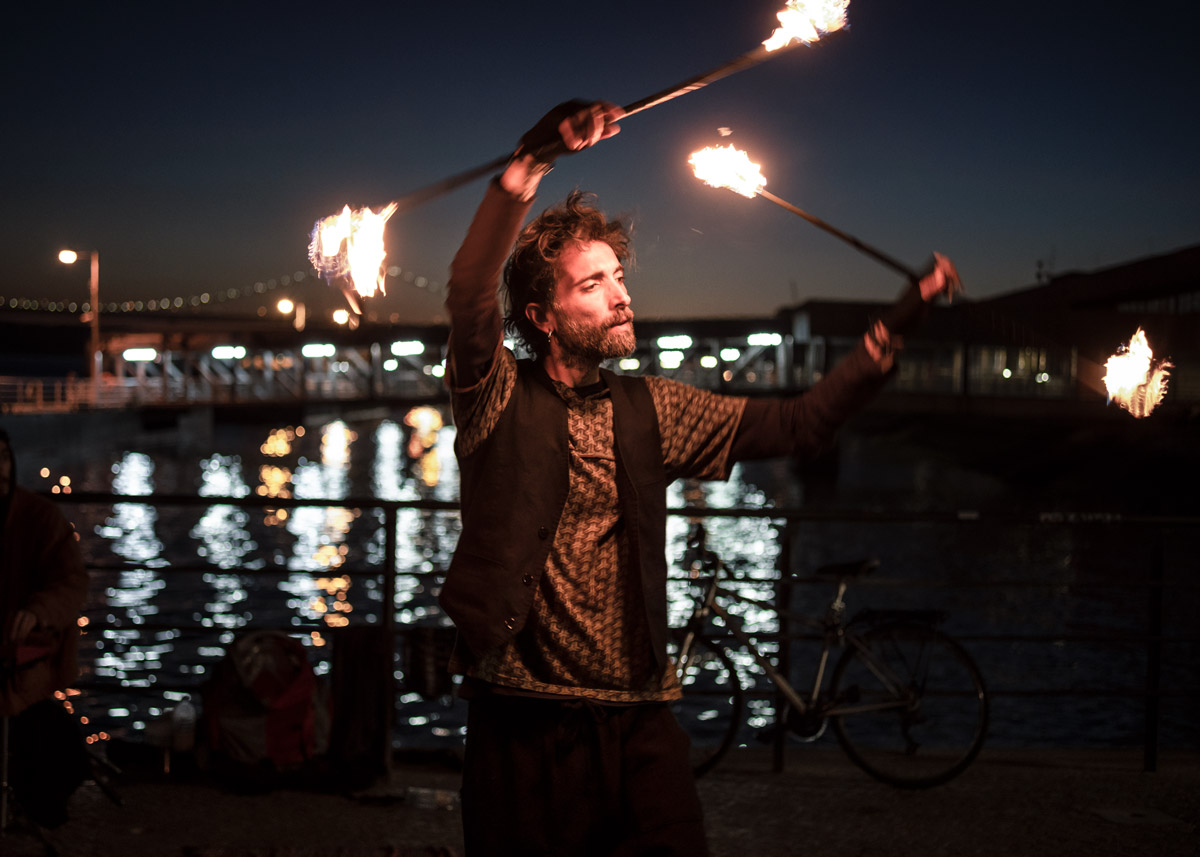
The April 25 Bridge spans the Tagus River. It was named after the 1974 Carnation Revolution, which heralded the end of decades of dictatorship. The water laps against the harbor wall, and the evening sky spreads its dark-blue canopy over the city. A band has set up its simple musical equipment – experimental ethno-beat jazz. A fire dancer uses the background music for his show. He throws burning torches high into the air and skillfully catches them again. Flames swirl through the night; beads of sweat glisten on his forehead. A small crowd has gathered around the band and the fire performer. They applaud and film.
The cruise ship in the harbor announces that departure is imminent. We find a cozy spot by the water and wait until the ponderous giant of the seas slowly begins to move and finally disappears as a tiny speck on the Atlantic.
And so our trip to Portugal, the westernmost country on the European mainland, comes to an end. Just to start the day with fresh pastéis de nata and end it with a chilled glass of Vinho Verde is worth the trip to this beautiful country. Lisbon, once the capital of a global empire and a seafaring nation with colonies in the Americas, Asia, and Africa, remains one of the most beautiful cities on the Atlantic coast to this day.
Even though prices have risen significantly in recent years and more and more young people are traveling across the country in campers and vans in search of the perfect spot by the sea, there are still countless wonderful places – especially inland – waiting to be discovered.
Info about our trip
So far, we haven’t seen all that much of Portugal, but even the little we’ve had the chance to experience has been enough to make us want to see more. Portugal offers an astonishing variety of sights in a relatively small area. If you leave the tourist hotspots in the Algarve or around Lisbon and Porto behind, you’ll find magnificent landscapes inland, featuring cork oak forests, rivers, vineyards, and charming small towns. In many places here, international mass tourism is still significantly less prevalent than in other regions of Southern Europe. So you can look forward to more relaxed travel experiences without having to share them with thousands of other visitors right away.
Portugal is, of course, ideal for a classic beach vacation. But the country has much more to offer: whether it’s a city break, a road trip along the Atlantic coast, or a tour in your own camper – the possibilities are endless. Depending on your itinerary, you can easily explore a large part of Portugal in two – or better yet, three – weeks.
For a long time, Portugal was one of the most affordable travel destinations in Western Europe. That’s no longer entirely true. Especially in the tourist regions around Lisbon, Porto, and the Algarve, accommodation prices have risen significantly in recent years. Outside the peak travel season and in the center of the country, however, it’s still possible to travel relatively inexpensively.
For a good dinner at a restaurant, you should budget about 15 to 30 euros per person, depending on your preferences. Pastéis de Nata, coffee, or a glass of Vinho Verde, on the other hand, are pleasantly affordable and are among the little pleasures you can easily treat yourself to even on a tighter budget.
Accommodations are usually the biggest expense. While simple guesthouses and vacation rentals in the countryside are often still affordable, hotels in popular coastal regions and major cities frequently charge well over 100 euros per night, especially during the summer months. However, travelers who are flexible and take advantage of the off-season can save quite a bit.
Portuguese cuisine is down-to-earth, authentic, and surprisingly diverse. Fresh fish and seafood play just as big a role as meat dishes, stews, grilled vegetables, and excellent cheese. Portugal is also famous for its pastéis de nata – small puff pastry tarts filled with vanilla cream – which are delicious with an espresso at any time of day. Chris, in particular, couldn’t get enough of this little treat and would have loved to eat them every morning and afternoon.
We especially liked that many restaurants focus on fresh, regional ingredients and often cook in a surprisingly uncomplicated way. A glass of Vinho Verde or another Portuguese wine perfectly rounds out the meal. Anyone who enjoys good food will rarely be disappointed in Portugal – and usually at a much better value than in many other countries in Western Europe.
Hotels in Lisbon, Porto, or other popular coastal towns aren’t exactly cheap. You can often find nice and affordable Airbnbs. Alternatively, you can travel in your own camper and stay at campgrounds, which are quite a bit cheaper. By the way: Wild camping is strictly prohibited throughout Portugal. Especially in coastal regions and national parks, you should definitely avoid it and, if necessary, use officially designated sites – or ask the owner for permission if camping on private property.
Portugal is one of the safest travel destinations in Europe. We, too, felt safe at all hours of the day and night during our trip. As in any major city, however—especially in Lisbon or Porto – you should keep a close eye on your valuables, as pickpocketing is a recurring problem in tourist areas and on public transportation.
If you’re traveling by car or RV, you should also avoid leaving valuables in plain sight inside the vehicle. Other than that, there’s little standing in the way of a relaxing trip. We didn’t encounter any major safety issues or regions we would avoid.
Portugal offers a wide variety of options for families within a relatively small area – from beach vacations to city breaks to nature adventures – all backed by excellent infrastructure. What more could you ask for? Thanks to the short distances, road trips with young children are easy to plan without having to spend hours in the car. Only in the historic old towns, with their steep alleys and many stairs, is a baby carrier often more practical than a stroller.
You can easily reach Portugal from Germany in just a few hours by plane. Alternatively, you can drive there in your own car or RV via France and Spain. Depending on your starting point, you should plan on about two days of travel. The roads are generally in very good condition. Only in a few rural areas are there unpaved roads. Off-road driving, however, is very limited, as many trails are privately owned, run through nature reserves, or have been closed to public traffic.
Also note that Portugal has a toll system. France and Spain also charge tolls on most highways, so traveling in your own vehicle can be quite costly. Rental cars in Portugal, on the other hand, are often surprisingly affordable. Therefore, check in advance whether the long drive in your own car is financially worthwhile – especially if you’re not planning a camping trip.
- As always, brief and to the point – this time from Reclam: In Geschichte Portugals: Kreutzer, Winfried – eine Reise durch die Epochen: Überblick, Analyse und Erläuterungen, Winfried Kreutzer devotes a good 200 pages to this beautiful country on the Atlantic coast.
- If you are interested in Portugal’s colonial history as a maritime power and are not put off by academic writing (or by the English language), then I highly recommend these two volumes by Professor Emeritus A. R. Disney: A History of Portugal and the Portuguese Empire: From Beginnings to 1807: From Beginnings to 1807, Volume I: Portugal and A History of Portugal and the Portuguese Empire, Volume Two: From Beginnings to 1807: The Portuguese Empire (Volume 2).
- We highly recommend reading the works of José Saramago, Portugal’s only Nobel Prize winner in Literature – for example, his book Die Stadt der Blinden.
