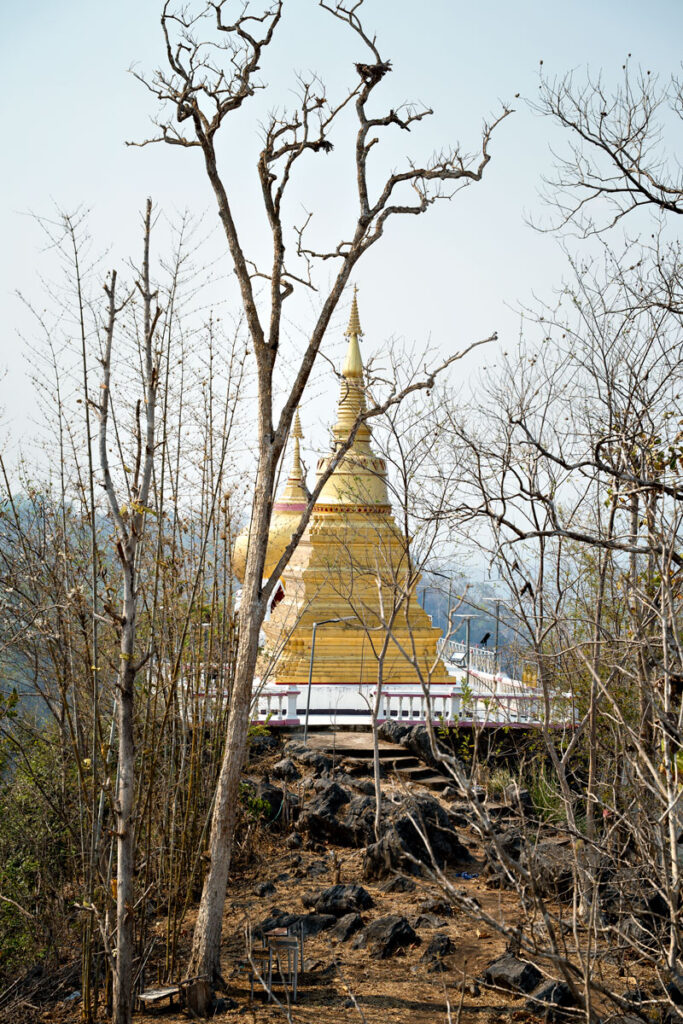
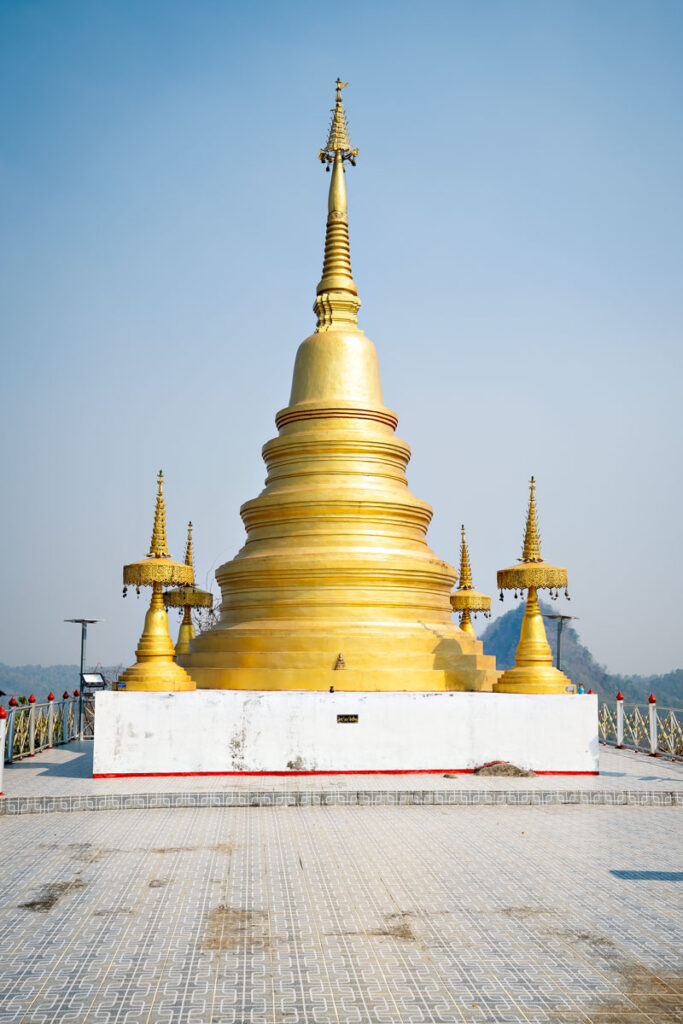
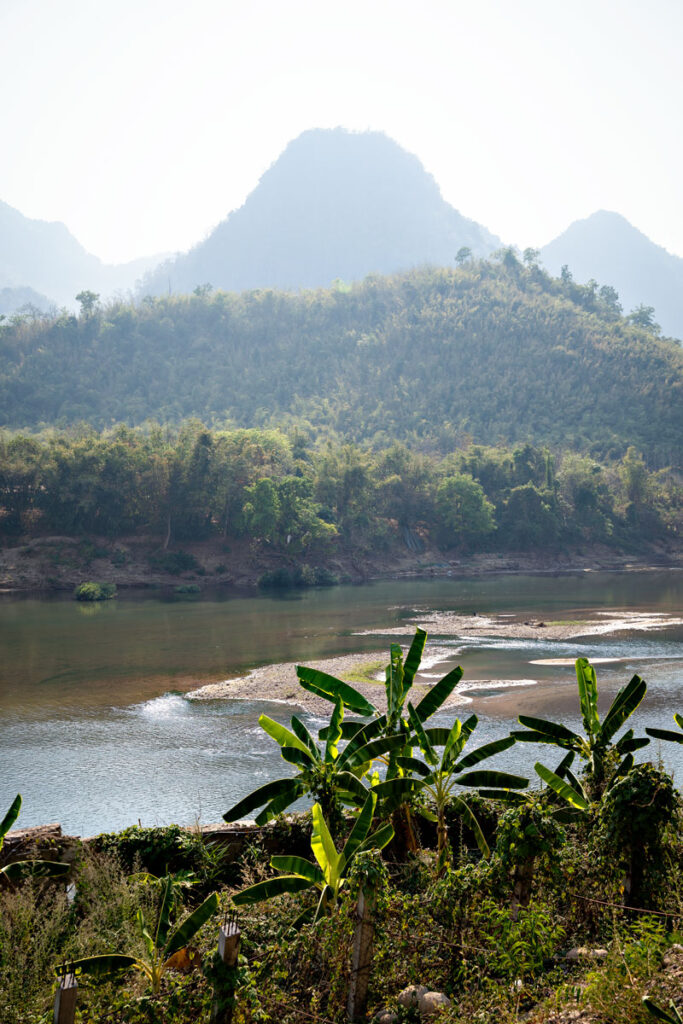
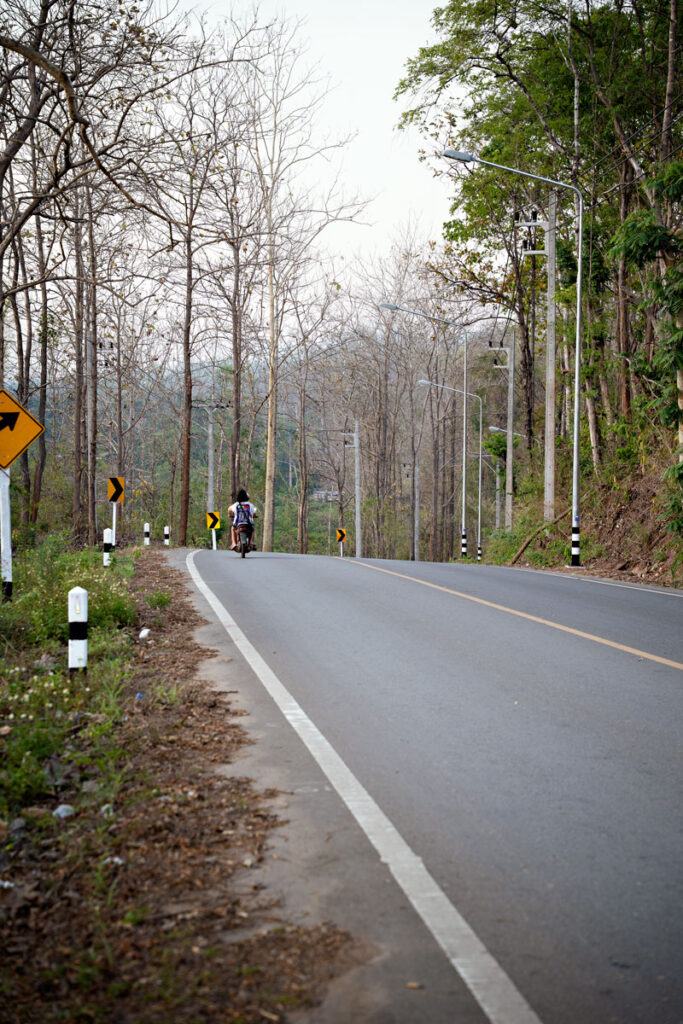
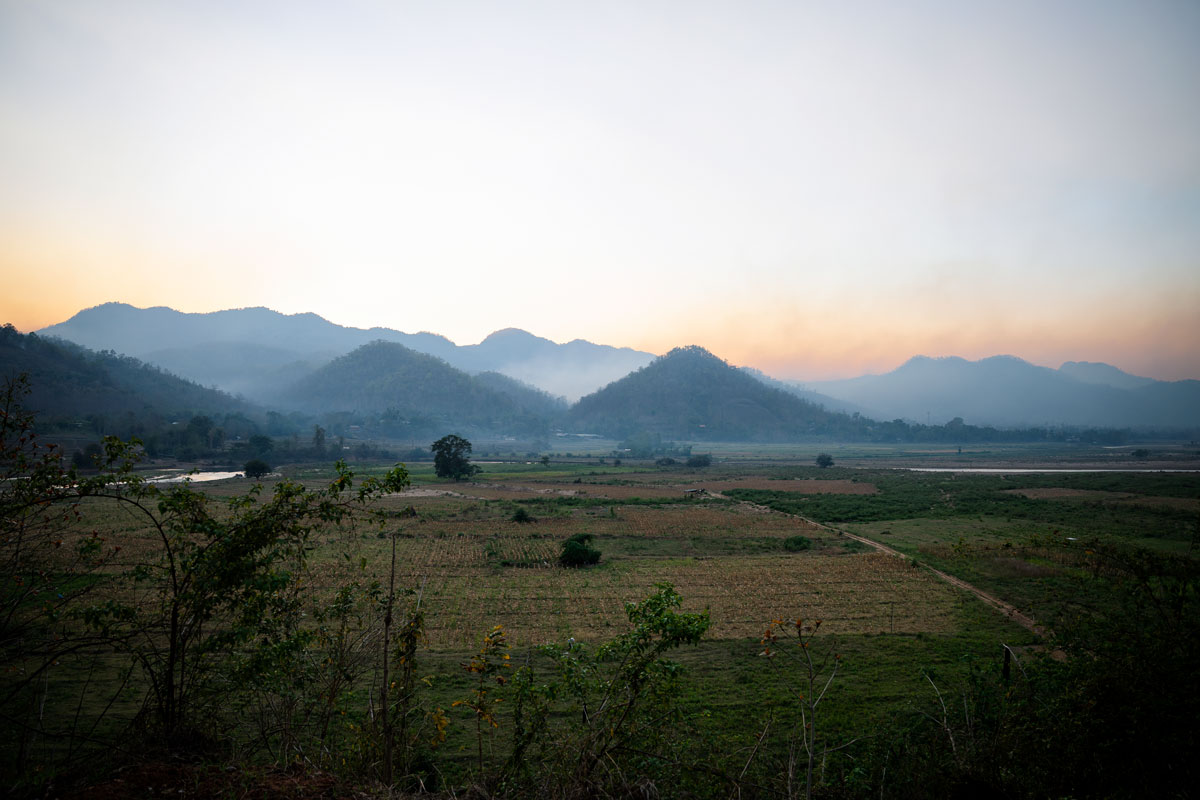
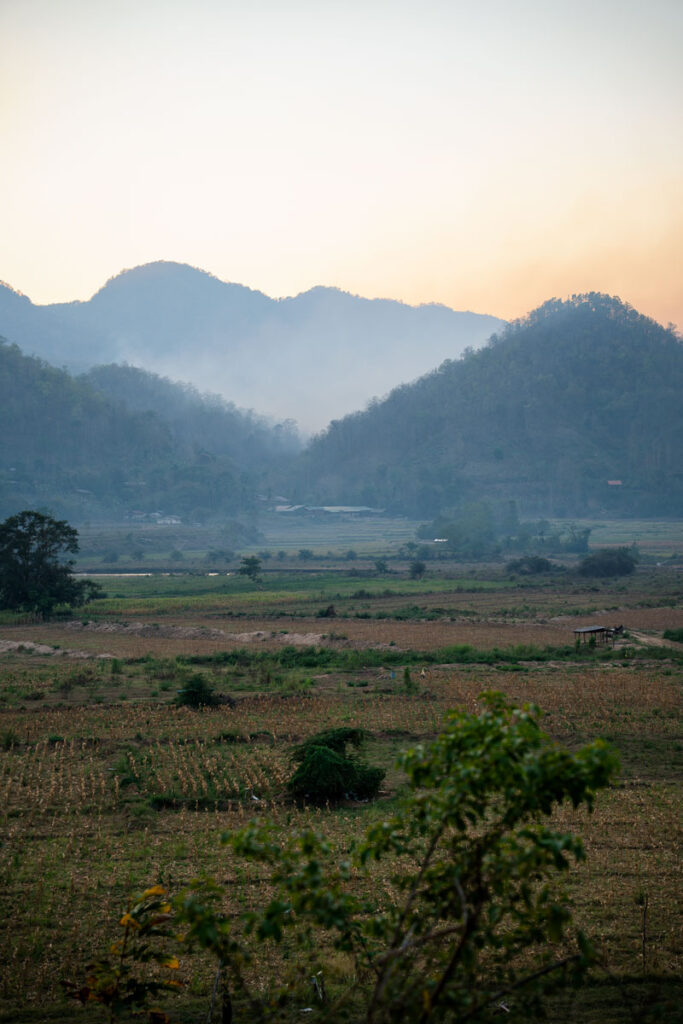
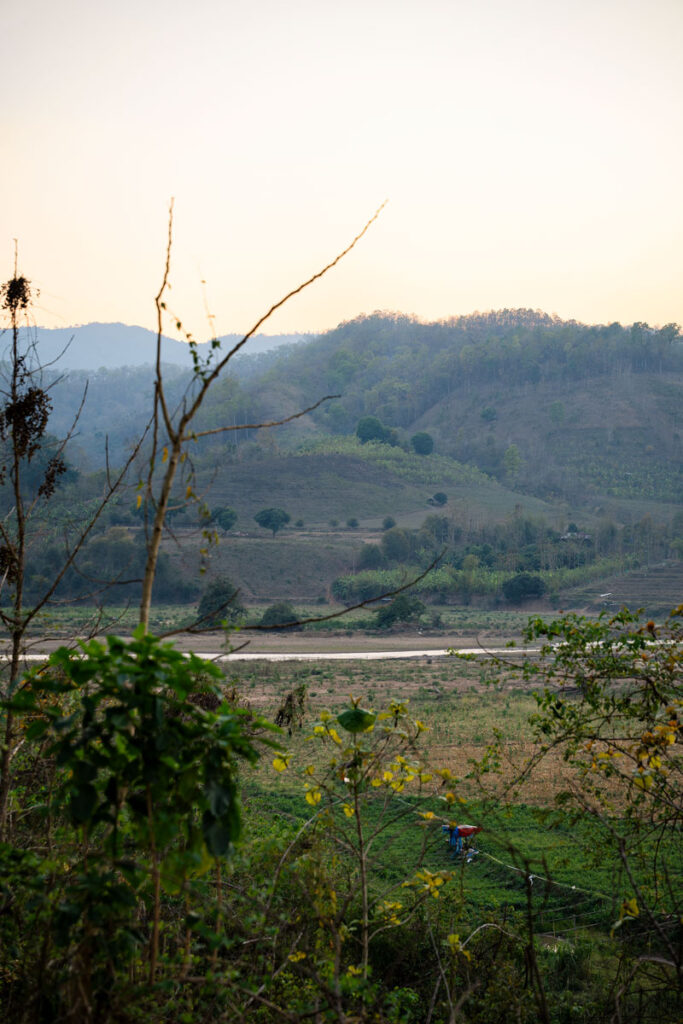
During the rainy season, the rolling hills of this green province are immersed in a sea of clouds. In the hot season, in March and April, a yellow haze wafts through the air. Burning forests and rice fields – mostly set alight in a controlled manner by farmers – lay like a veil over the land. The road winds in tight curves along the mountain slopes and the Moei River, hugging the border with Myanmar. Dotted along the way are small wooden huts and papaya trees. Here and there, golden stupas glisten on the peaks of the highest mountains.
There are caves that reach deep into the earth’s interior, forming a labyrinth of passages. There is the border town of Mae Sot, once a bustling crossing point between Thailand and Myanmar, but today – since the civil war in Myanmar – merely a shadow of its former self. And there is Tak, the small provincial capital, which we fell in love with from the very first moment.
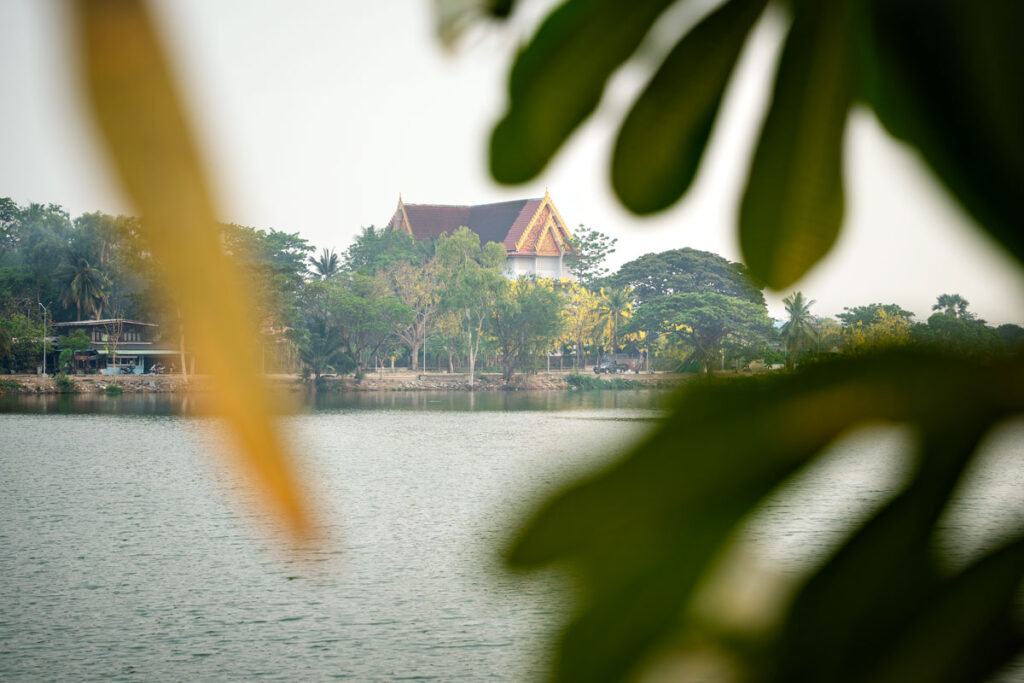
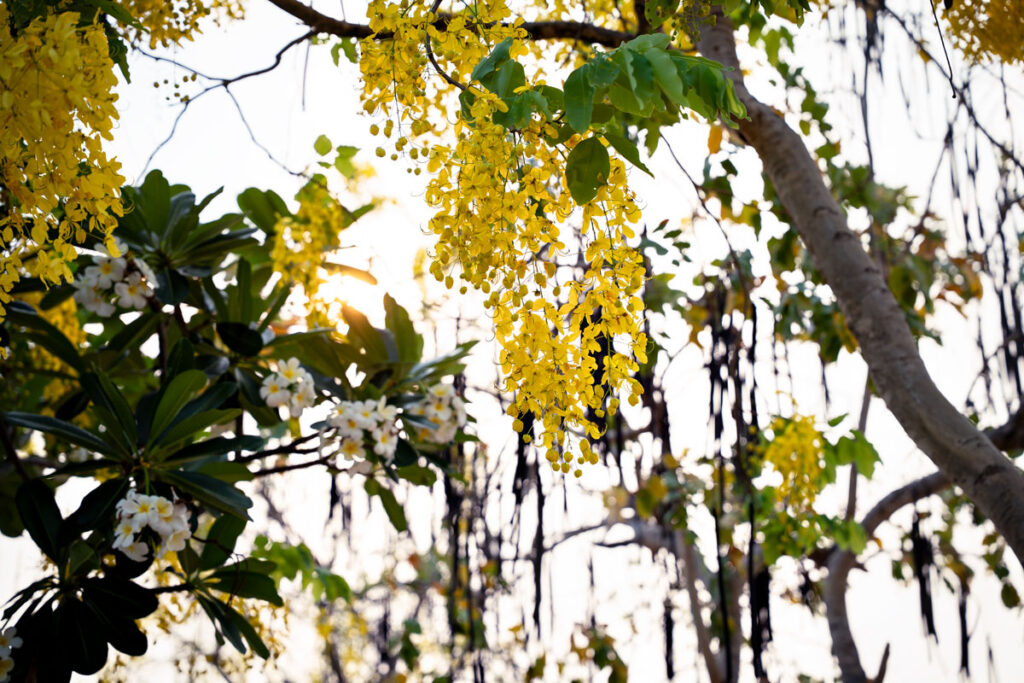
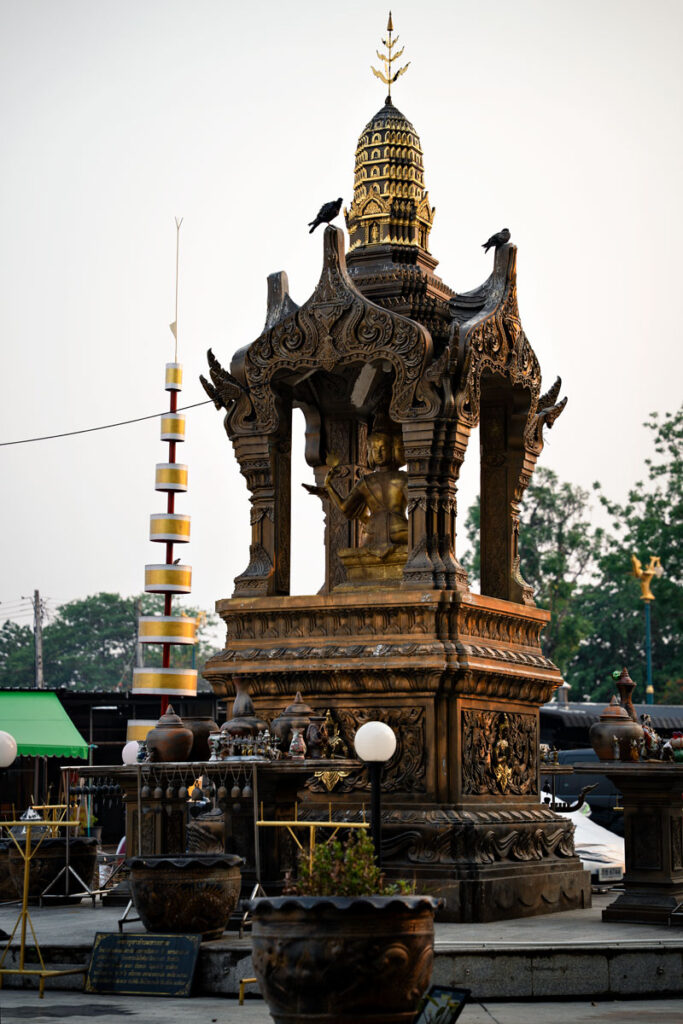
A small lake, a grand temple. Goldenrain and frangipani blossoms shimmer in the golden light of the late afternoon. There isn’t much going on along the main street. The shops and restaurants in a small shopping village are closed – they’re only open on weekends. We stroll along the shore of the Mani Banphot Swamp. Fish bones and the seed pods of the laburnum trees lie on the ground. A fisherman by the water casts a curious glance our way.
A little later, we look for a nice spot in the city center to have dinner in the light of the setting sun. At the night market, the air is filled with the scent of fried rice, grilled meat, fresh fruit, and freshly squeezed juices. A few teenagers hop off their scooters and hang out in front of a small shop. Children paint with colorful watercolors, elderly women contort themselves into yoga poses, and monks stroll across the street.
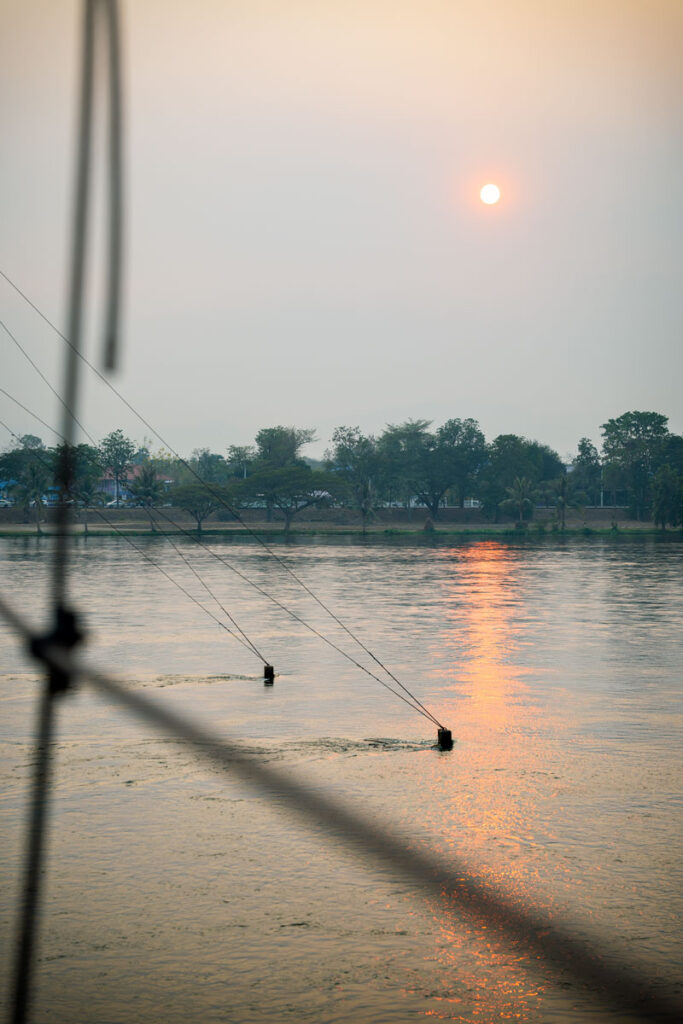
We drink a cold beer, eat a simple but delicious meal, and watch as the sun slowly sinks behind the river. The air is warm, the atmosphere peaceful. This evening couldn’t be more perfect.
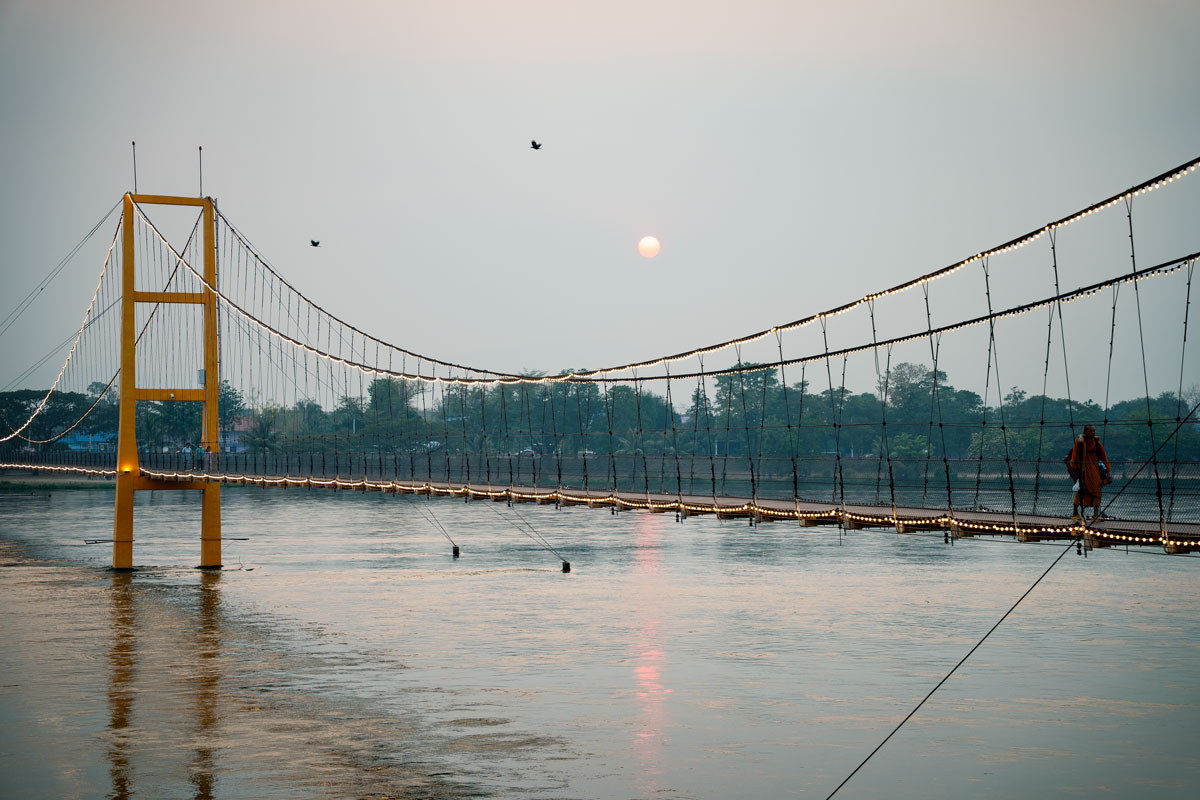
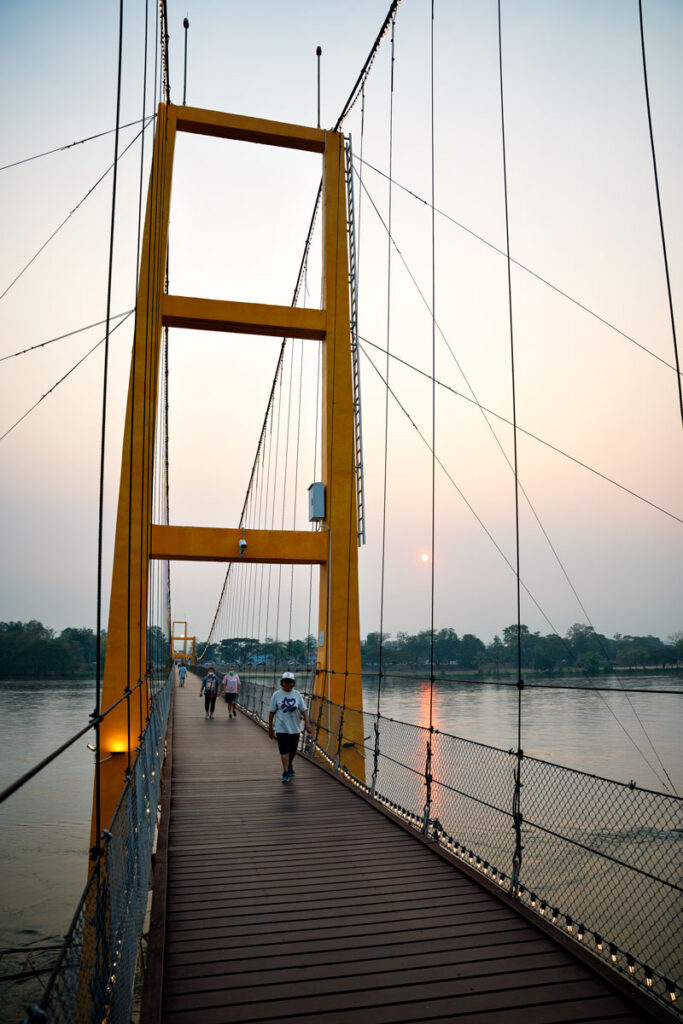
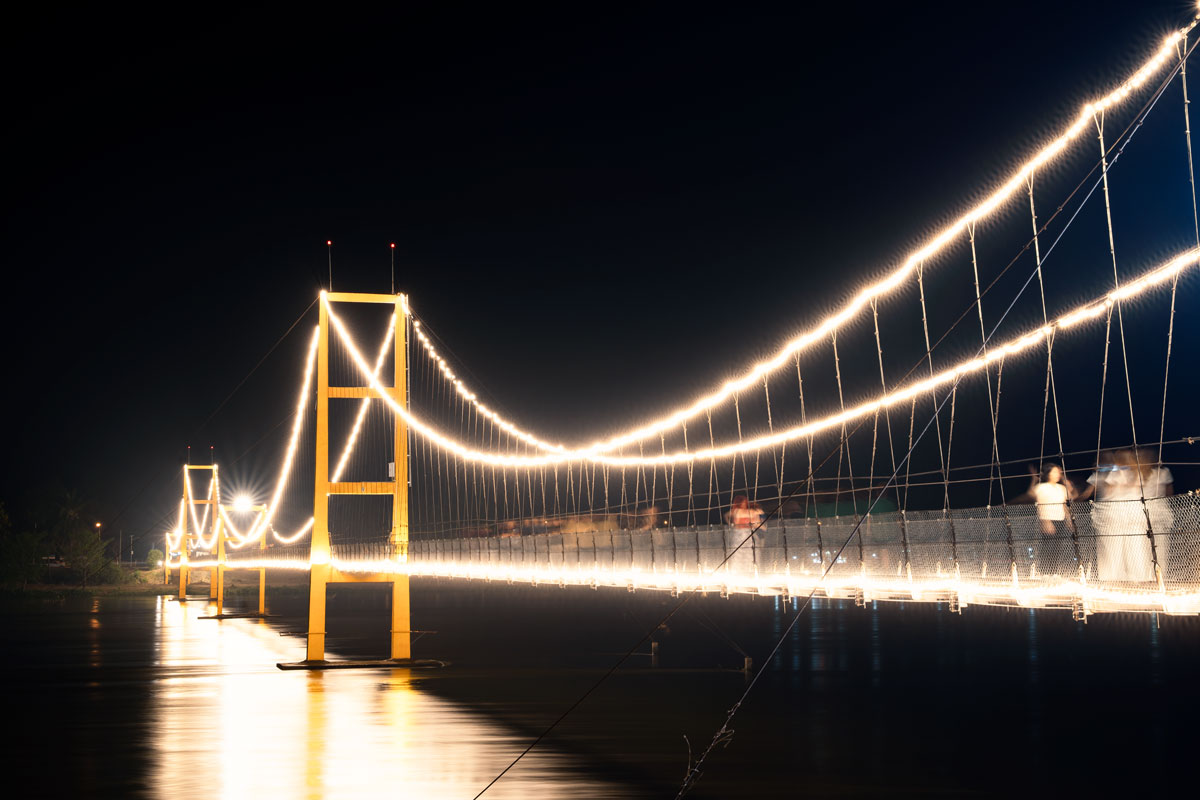
A pedestrian suspension bridge spans the Ping River. On the other side lies a tranquil residential neighborhood. There’s a small city beach, a few nice cafés, and some lovingly maintained houses. Joggers come toward us; the bridge sways gently beneath their footsteps. A quiet sunset, soft voices carried by a gentle breeze. Below us, the water flows by; above us, night spreads out. The darkness envelops us. For a Thai evening in April, it’s pleasantly mild.
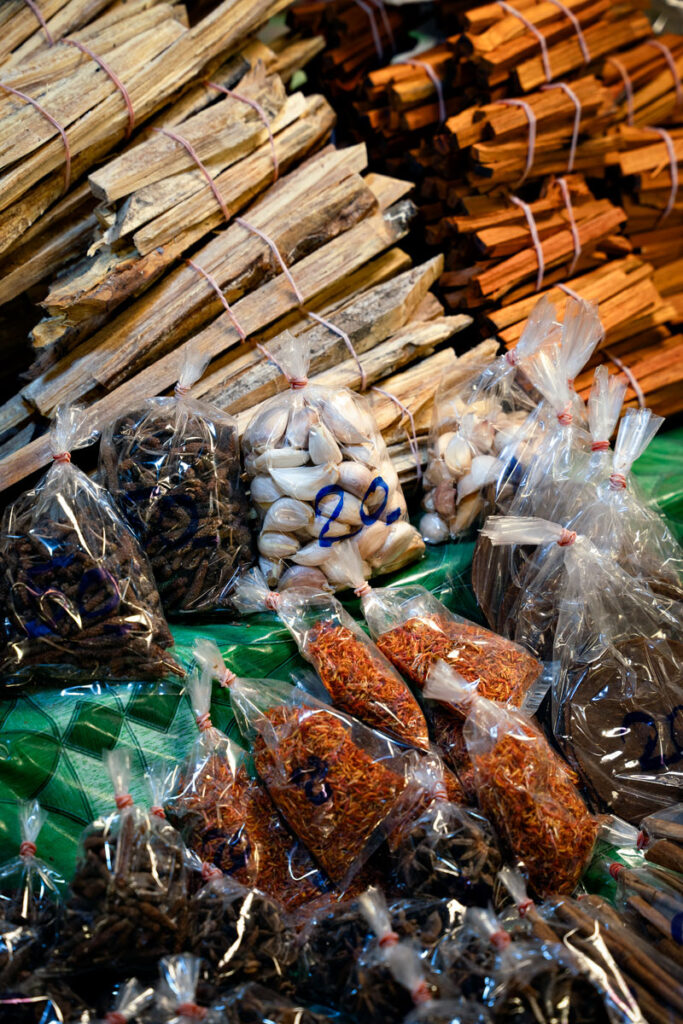
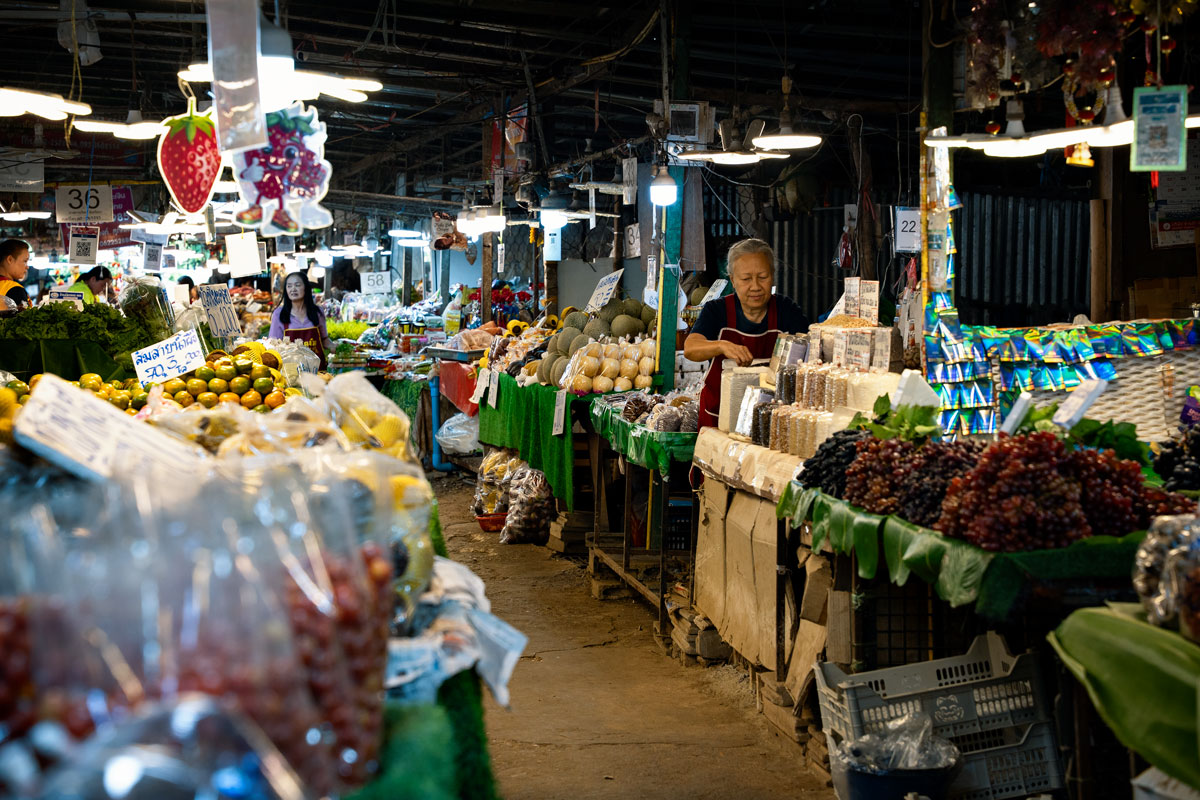
We leave Tak and head west into a mountainous landscape. The road we follow winds through tight curves and steep climbs through Lan Sang National Park. Every so often, we come across large markets along the roadside. Here, farmers and members of the ethnic minorities living in this region sell their produce: fresh fruits and vegetables, jams and homemade sweets, spices, tea, and coffee.
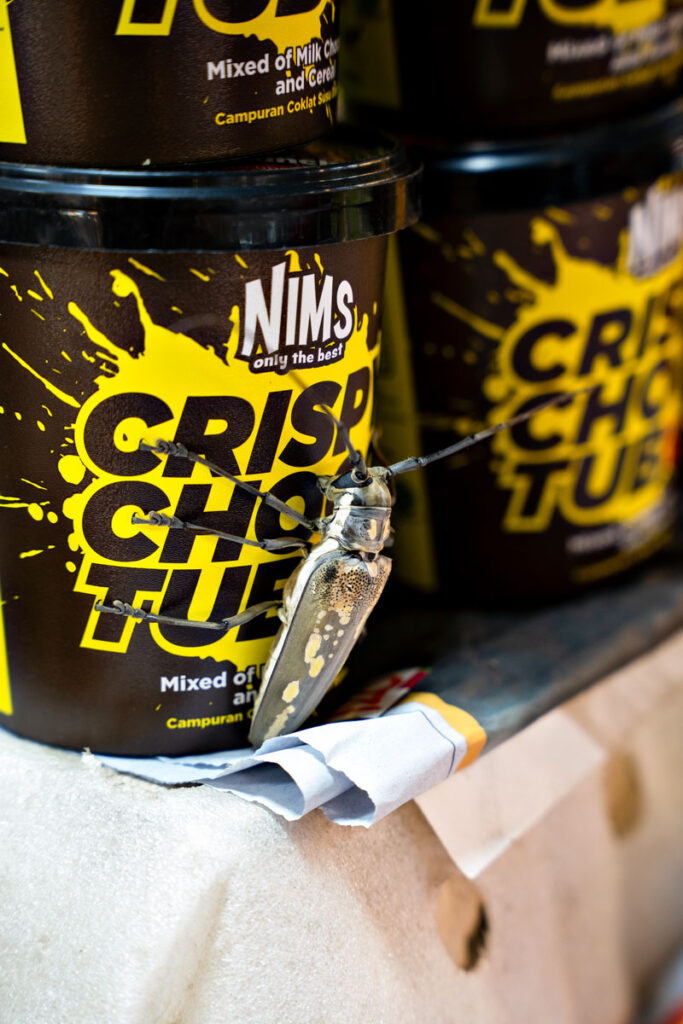
Strolling through the crowded, narrow aisles is a delight and an experience for all the senses. There are smells, odors, and fragrances. We’re allowed to sample and taste, touch and feel everything. So many kinds of fruits and vegetables that we can’t even name. For a brief moment, it seems as though Thailand wants to bestow all its colors, smells, and flavors on us at once.
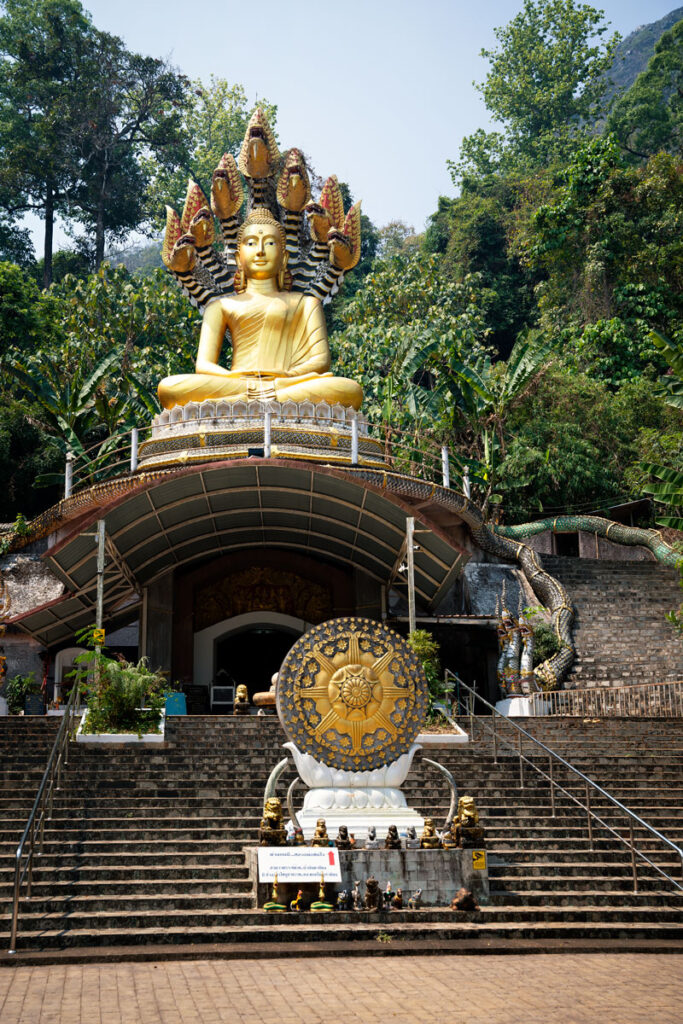
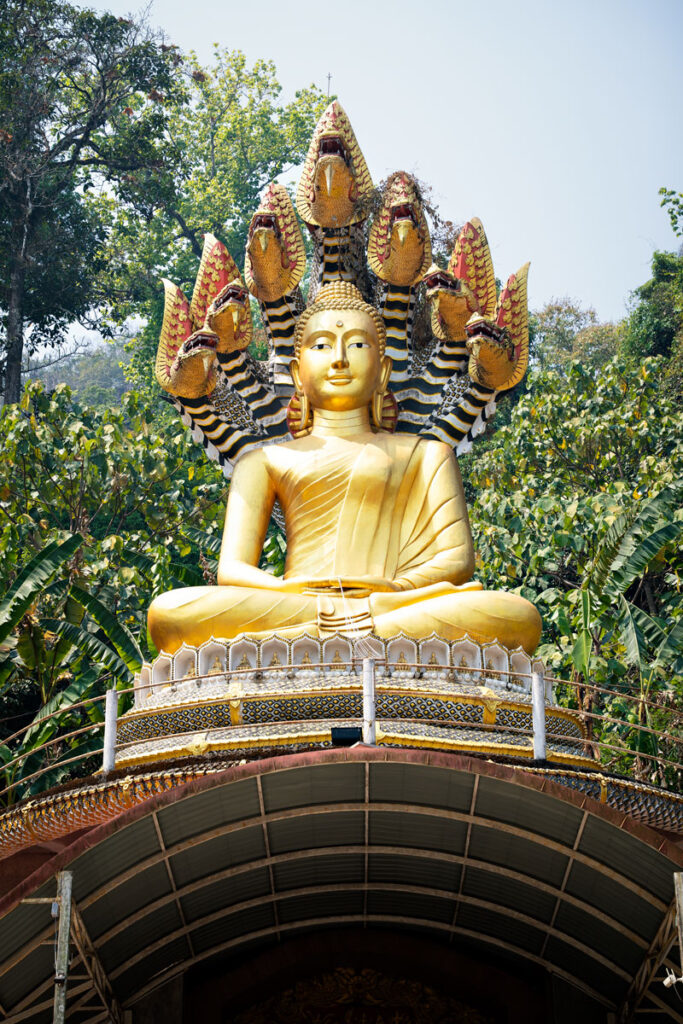
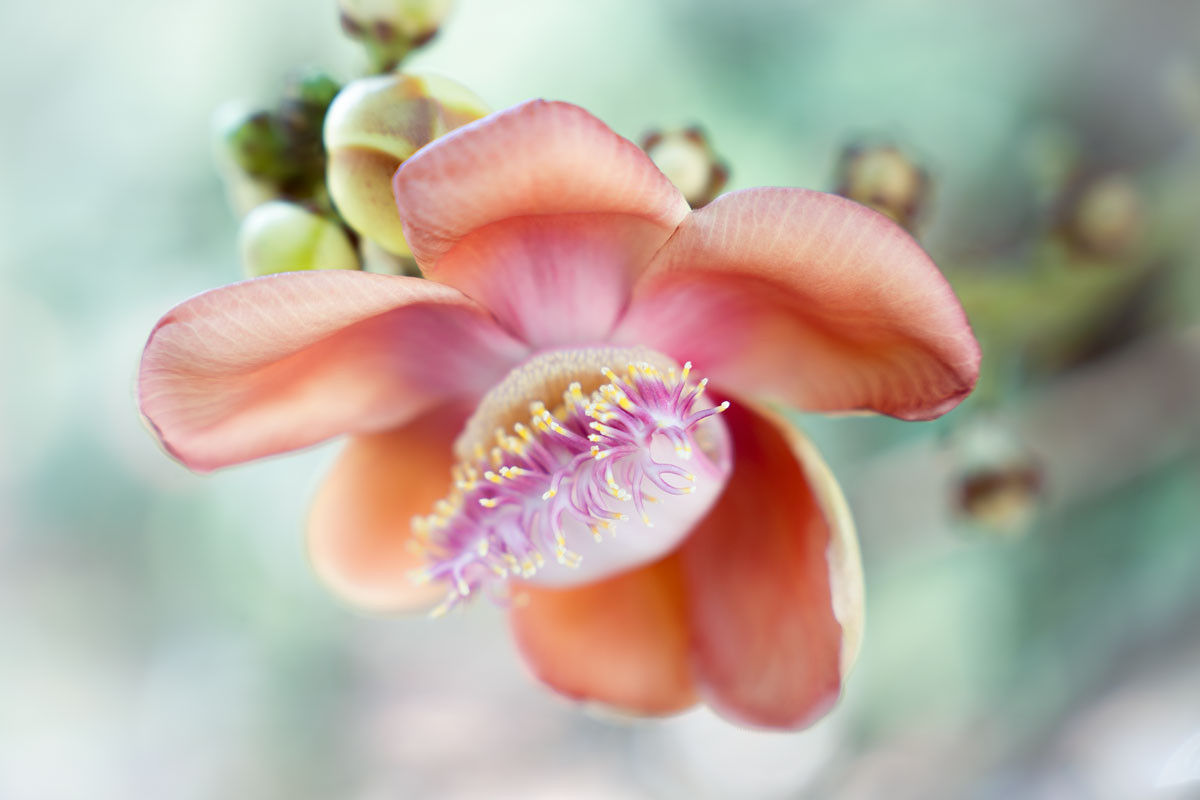
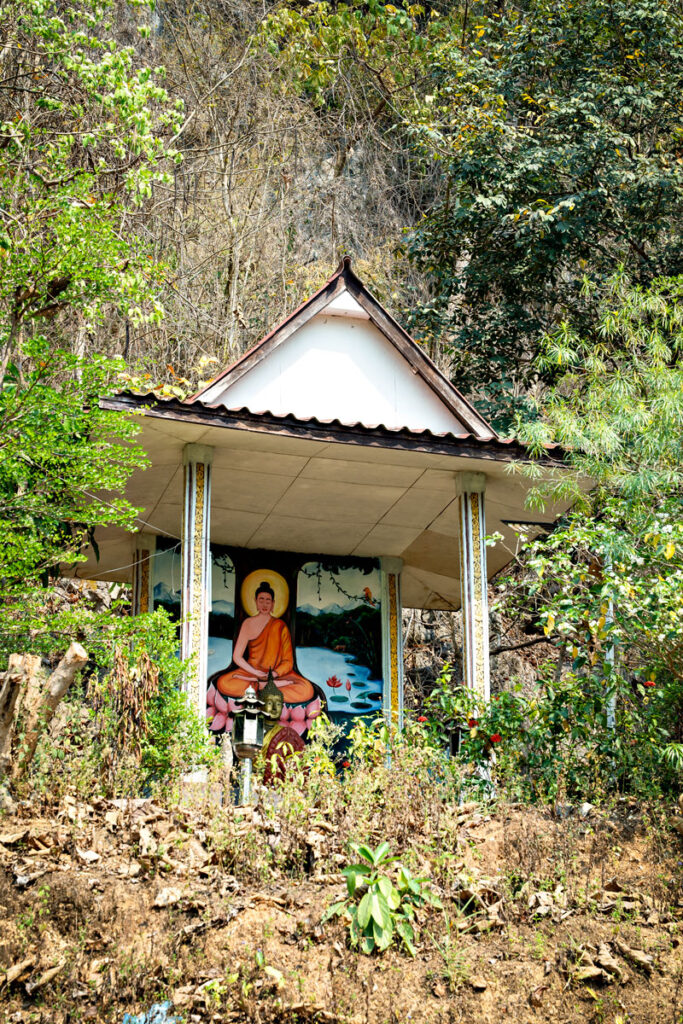
A quiet temple stands by the roadside. Buddha sits in the lotus position, lost in deep meditation, protected by the sacred Naga. He welcomes the faithful who come here to pray, meditate, or leave an offering. A narrow, overgrown path leads into the jungle and up a nearby hill. Wild orchids thrive among the trees, and vines hang down from massive trunks. Time and again, cars turn off the highway and drop off individuals or small families at the temple. A brief blessing, a bill in the donation box – and a safe journey ahead is assured.
The road passes through the suburbs of Mae Sots and then continues northward. Just a few kilometers south of here, the Tenasserim Mountains merge into the Dawna Range – a wild mountainous region teeming with exotic animals and partly untouched landscapes. Our road winds along forested ridges, leading through dense forests, over tight curves, and down steep descents. It draws ever closer to the border with Myanmar until it finally runs directly alongside the Moei River, which marks the end of Thailand here.
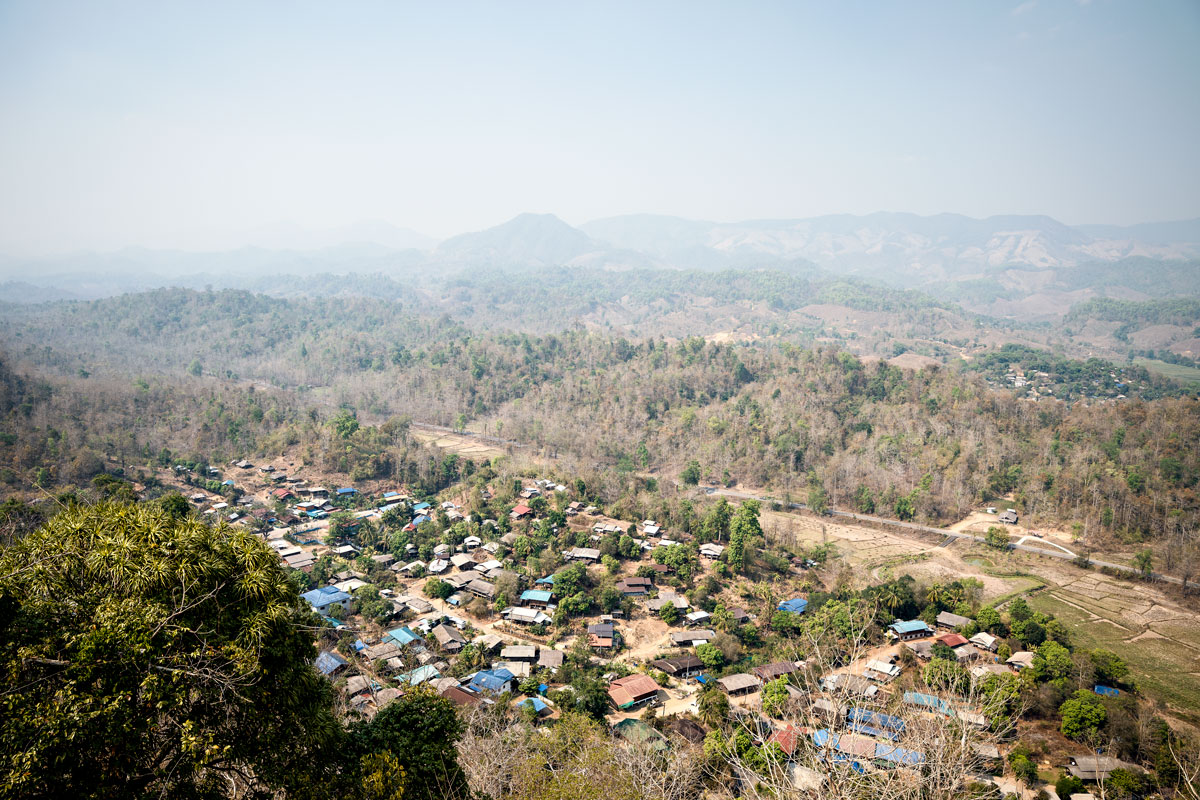
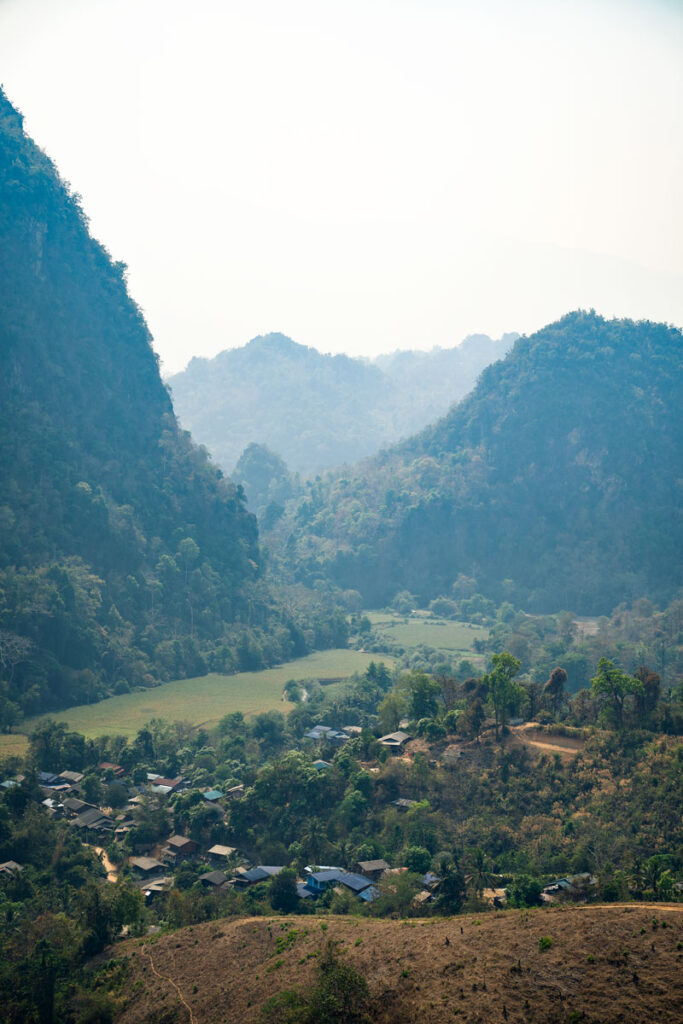
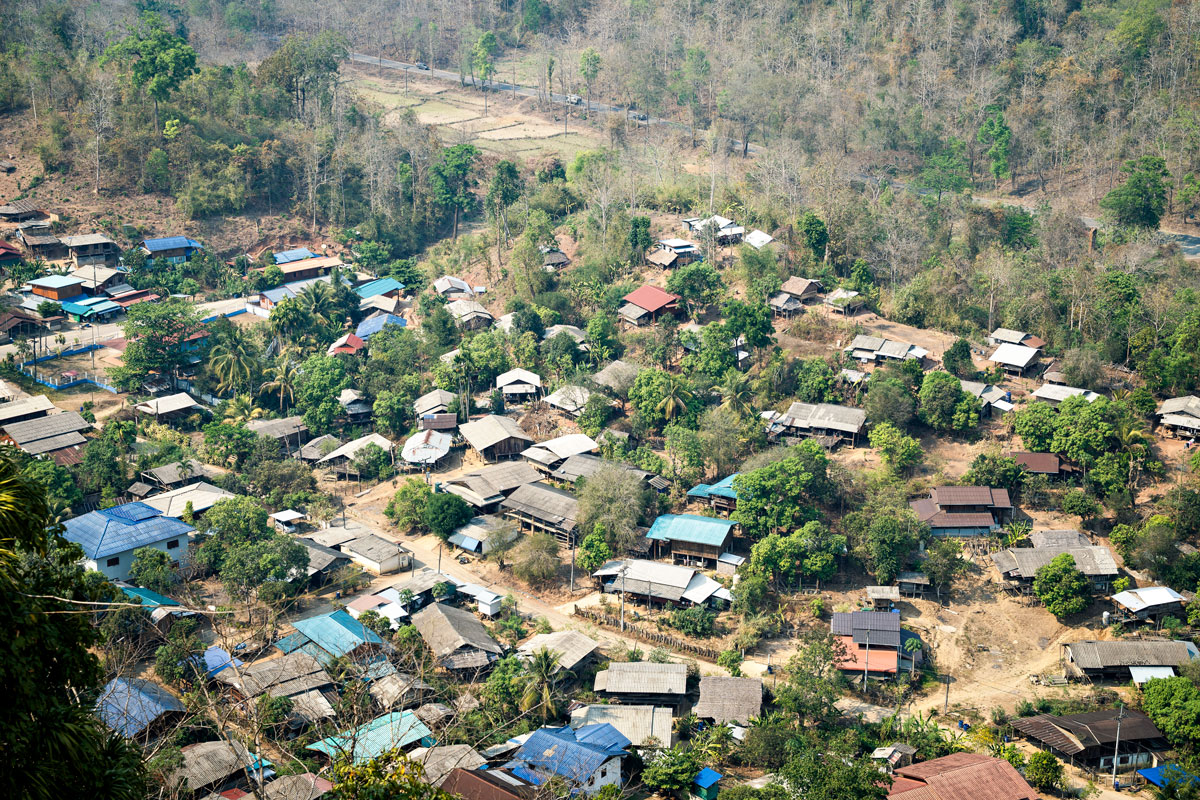
There are only a few settlements along this route: scattered mountain villages, interspersed with kilometers-long stretches through dense forest. At some point, we turn onto a dusty side road and follow it up to a small monastery. The midday sun beats down on us; the vegetation is sparse and parched in March. A steep staircase leads us to the top of a small hill. From up here, we see the blue metal roofs of the simple houses in the villages. We see the country road behind them. We see green palm trees, a small stream, a valley – and beyond it, we can make out Myanmar.
We stop again and again – whenever the road opens up to a view of the Myanmar side or ends right at the border. Sometimes to take pictures, sometimes just to let our eyes wander. A stay of several months in Myanmar has forged a bond between us and this magnificent country. Now that the sun is already approaching the horizon and the smoke from the burning fields – or perhaps it’s the fog over the Moei River; who can say for sure – is wafting through the valleys, we’d love nothing more than to swim across the river and immerse ourselves once more in this world that feels so close and yet so far away. On the Myanmar side, we see no people, no villages. Only endless landscapes.
But the tranquility is deceptive. In fact, a silent civil war is raging in Myanmar, almost forgotten by the world. Hundreds of thousands of people have been forced to leave their homes; many of them have fled to Thailand. Numerous Burmese now work in low-wage jobs, performing tasks that were previously often carried out by Cambodians, Laotians, or Thais. Others – especially members of ethnic minorities who have lived in this border region for generations – are holding out in refugee camps, waiting for peace. According to the UNHCR, there are nine refugee camps along this border alone, home to tens of thousands of people.
Just like the province of Kanchanaburi, located a little further south, Tak surprised us with its vast forests, river-carved valleys, and rolling hills. The few roads wind through picturesque landscapes and small villages. Ethnic minority villages are nestled in the mountains. During the cooler season, the clouds hang low, and wisps of fog shroud the stupa-topped peaks of the hills and mountains. It is a magical, untamed corner of the world.
Despite its beauty, Tak is one of Thailand’s least touristy provinces – with the exception of the once-important border town of Mae Sot. There are no beaches, no famous temples, and hardly any attractions that would draw tour buses. Tak reveals a different side of Thailand: unspoiled, far away from the perfectly staged postcard scenes of Koh Samui or Phuket. Tak is rugged. Tak is wild. Tak is secluded. Tak is simply beautiful.