
Transnistria
An Ukrainian bus rolls leisurely along the M16. It’s just under forty kilometers to the border town of Strasburg. There are only a few passengers on our bus, mostly retirees with deep wrinkles on their faces and weather-beaten skin. Life here seems to be shaped by simple farming and modest circumstances.
The border officials take a look at our passports, check our entry documents, and a short while later we cross the Dniester. We are now in Transnistria, a de facto state not recognized internationally, which officially belongs to Moldova but has been administered independently since the early 1990s and is closely tied to Russia both politically and economically.
For travelers, entering the region can be somewhat confusing. Transnistria issues its own entry documents, which are not valid outside the territory. Since we entered via Ukraine and thus did not pass through a Moldovan border post, we will later have to register our stay with the Moldovan authorities in Chișinău to avoid any difficulties upon departure.
But first of all, welcome to a region where the Soviet Union never seems to have completely disappeared. Statues of Lenin still stand in the squares, the hammer and sickle adorn public buildings, and in many places it seems as though time has stood still for the past three decades.

We check into our room at a simple Airbnb. Our accommodation is just as bizarre as Tiraspol and Transnistria itself: a cramped room full of knick-knacks, a pole-dancing pole, and a cave-like bathroom. We immediately set off for a walk through the capital, Tiraspol. We encounter an elderly woman wearing a headscarf. She leans on a crutch, her back is hunched, and she leads a white goat on a leash. In front of the concrete-gray apartment buildings, residents have planted small vegetable gardens. The sidewalks are cracked and overgrown with weeds. There are hardly any cars and very few people on the streets.
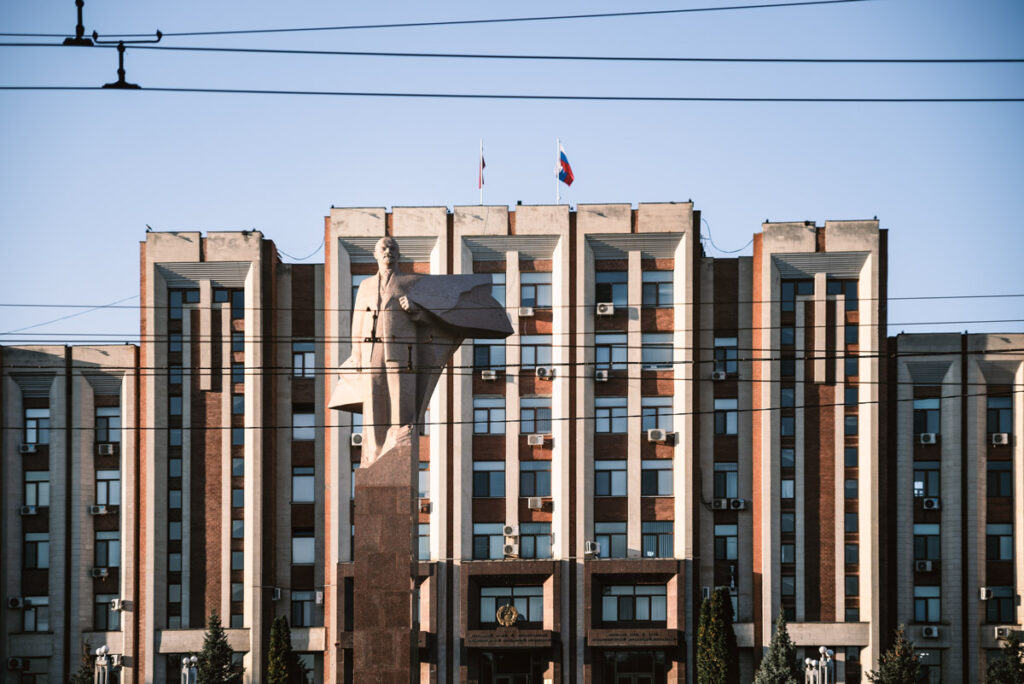
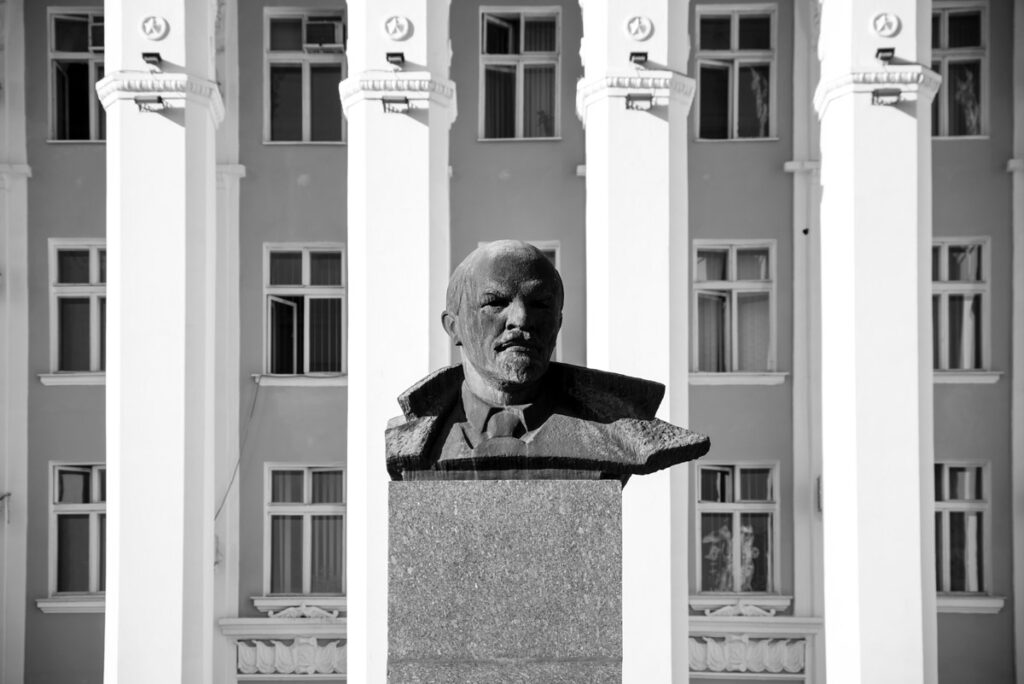
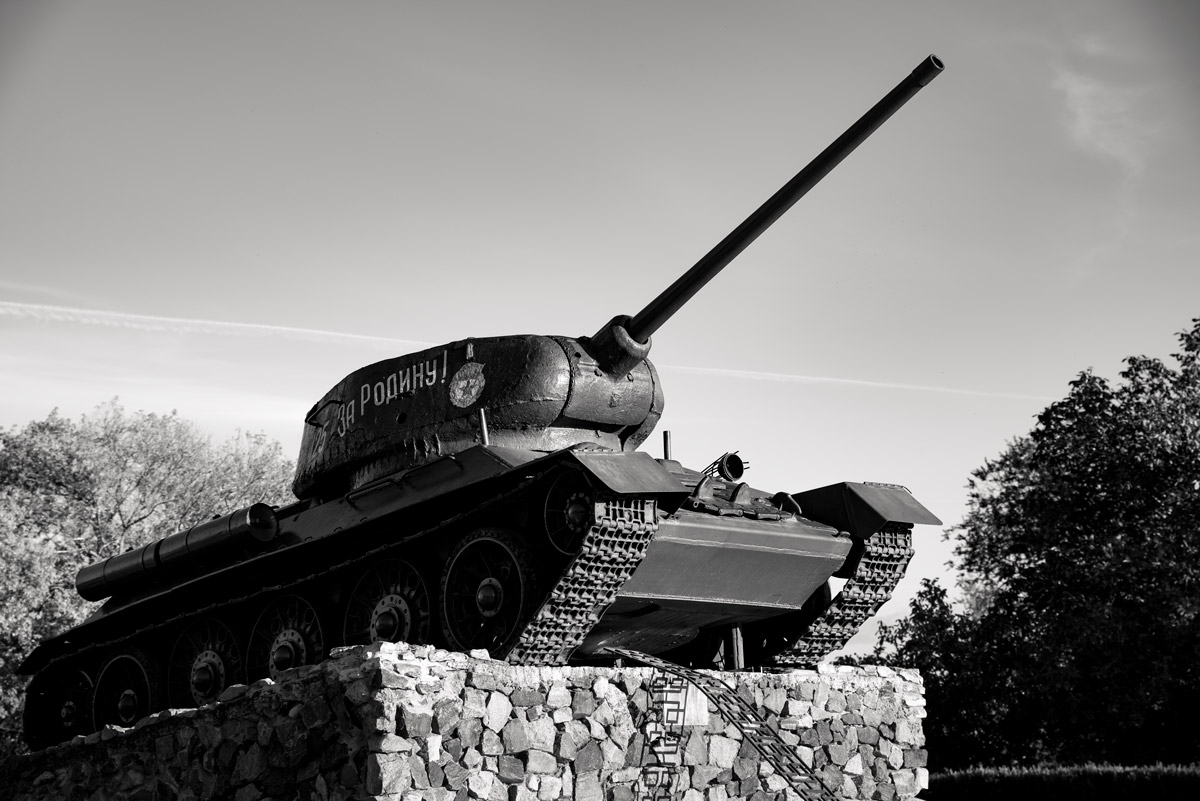
At the presidential palace, it becomes clear what Transnistria is and what it aspires to be. A large statue of Lenin stands in front of the building. Next to it is another bust of Lenin, and across from it, an old Soviet tank. Throughout the city, the flags of Transnistria – still bearing the hammer and sickle – and the Russian tricolor fly. Soviet Brutalism characterizes the architecture. In many places, the cityscape lacks maintenance, and the country lacks investment and economic prospects. The political leadership cultivates a strongly Soviet-influenced culture of remembrance and presents Transnistria as an independent alternative to the West. A country like a wedge on the edge of Europe, on the border between the past and the present.
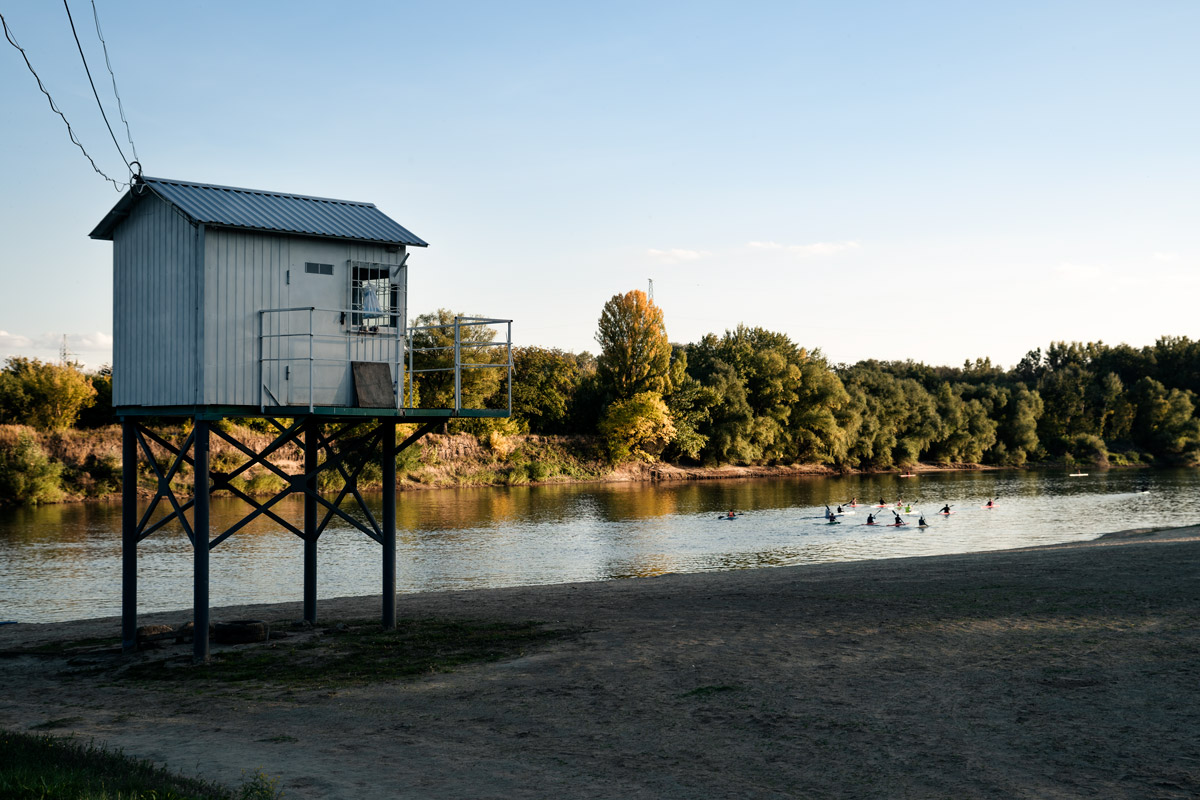
On the Dniester River, we find an urban idyll. A small stretch of beach and a golden autumn afternoon, still echoing with the warmth of a fading summer. A few canoes drift by. The paddlers wave to us and disappear shortly afterward around the next bend in the river. On the other side of the river lies the Căușeni district, which is largely administered by Moldova. Only a single village is claimed by the Transnistrian government. The borders are invisible and fluid. They roughly follow the river – but not always.
Soon we arrive at a skate park. A few teenagers are practicing their tricks. American youth culture, as it shaped nearly the entire world at the turn of the last millennium – even this remote corner of the earth.
Night falls and blows the echoes of summer away. It gets bitterly cold, and we put on our thick jackets as we wander through the streets of Tiraspol in search of a restaurant serving local cuisine. Soon after, we hear loud, bass-heavy dance music coming from a courtyard. We follow the sounds and soon find ourselves in a rustic restaurant. The dining room is taken over by a wedding party. The guests are wearing traditional clothing and dancing just as their parents and grandparents did at their own weddings. The atmosphere is exuberant, the alcohol is flowing, and we experience incredible warmth and joie de vivre.
Before we even have a chance to order, we’re served vodka, pickled cucumbers, and a hearty farmer’s sausage. A complimentary appetizer that instantly chases the cold from our bones yet draws us closer together. We’ve settled down under grapevines in a corner of the courtyard. This bizarre little country has captivated us. Our stay here is far too short – we’re practically just passing through. And yet we can only marvel at all the historical curiosities and the still-vibrant connection to their own roots and strong traditions.
Info about our trip
A trip to Transnistria is like stepping into another world. Soviet symbols adorn public squares and government buildings, while entire streets and residential neighborhoods seem as if time has stood still since the collapse of the Soviet Union. The internationally unrecognized de facto state has insisted on its independence since the early 1990s and underscores this claim with its own currency, government, flag, and border controls. Economically, Transnistria is closely tied to Russia, though it also has its own industrial and agricultural enterprises. At the same time, a large portion of its exports go to the European Union.
Visiting is relatively straightforward. Many travelers do not need a visa, and border formalities are usually quick. Whether you’re entering from Moldova or Ukraine, crossing the border should generally be hassle-free. Unfortunately, we only spent one night in Transnistria. That’s enough time for Tiraspol, but we would have liked more time to explore the rural regions and smaller towns. Anyone interested in history, politics, and the legacy of the Soviet Union should ideally plan for three to five days.
Transnistria is one of the most affordable travel destinations in Europe. Accommodations, meals at restaurants, taxi rides, and everyday shopping usually cost significantly less than in Germany. Even in the capital, Tiraspol, you can travel comfortably on a modest budget. Local restaurants are particularly affordable, offering traditional dishes and drinks for just a few euros. Since Transnistria is generally more of a destination for a few days than for a longer vacation, the total cost of a trip is usually very reasonable.
Transnistria’s cuisine is similar to that of Moldova and is heavily influenced by Russian, Ukrainian, and Eastern European traditions. The menu features mainly hearty dishes: soups, dumplings, grilled meat, potato side dishes, pickled vegetables, and hearty stews. These are often served with beer, wine, or vodka. Don’t expect culinary masterpieces, but rather honest, filling food at very fair prices. The atmosphere in many restaurants is particularly charming, often exuding a nostalgic charm that blends the Soviet era with Eastern European tradition.
Unfortunately, we can’t say much about accommodations, since we only spent one night in Tiraspol. In general, however, you shouldn’t expect Western European standards. The selection of accommodations is limited, and in many places the facilities seem a bit outdated. We would still strongly recommend a privately run guesthouse or an Airbnb. After all, it’s the people who make Transnistria so interesting. In a private home, you’ll find it easier to strike up a conversation with locals and often gain a more authentic insight into daily life in this unusual region.
Many travelers initially feel uncomfortable about visiting Transnistria. In fact, however, we never felt unsafe at any point during our stay. The streets seemed quiet, the people we met were friendly, and crime appears to be low. Of course, you should take the usual precautions and check the current political situation before your trip. As a tourist, however, you’ll usually notice very little of the political tensions in everyday life. Overall, we found Transnistria to be a surprisingly relaxed and safe travel destination.
Don’t expect much in the way of tourist infrastructure in Transnistria. Medical care, too, is unlikely to meet Western European standards in an emergency. However, since most travelers spend only a few days in the region, you should have no trouble bringing all the essentials for your children from home. In return, as is often the case in Eastern Europe, you can expect warm and welcoming encounters. Children are often a wonderful way to break the ice and make it easier to connect with locals, even when there is a language barrier.
The most common way to get around Transnistria is by shared taxis and minibuses. Since distances within the region are manageable, this is a fast and very affordable way to get from A to B. Alternatively, you can also enter the region in your own vehicle or a rental car. Note, however, that you generally need to purchase separate car insurance to enter Transnistria. Traffic is generally manageable and much more relaxed than in many Western European cities. Nevertheless, you should always expect to encounter slow-moving vehicles, horse- or donkey-drawn carts, and animals roaming freely on the roads.
- There are virtually no books about Transnistria. However, a great way to get started is the highly informative and beautifully produced photo book Hier spricht Radio PMR – Nachrichten aus Transnistrien: Ein Propaganda Buch by Marcell Nimführ.
