
Kuwait
Kuwait is one of the smaller monarchies in the Persian Gulf. Aside from Kuwait City, there are only a handful of other cities in the country; vast desert expanses stretch out between them. Sandwiched between Saudi Arabia, Iraq, Iran, and the sea, this wealthy oil-producing nation lies with its flanks exposed in the midst of a region that is often politically tense.
During the Second Gulf War, Iraq invaded Kuwait and mined large parts of the country. In the Iran-Kuwait War of 2026, Kuwait once again found itself involuntarily caught in the crossfire between the fronts. And yet, Kuwait is considered a relatively safe country today – though not necessarily a classic travel destination. There is hardly any tourist infrastructure; most foreign visitors are expats working in the oil sector.
For us, Kuwait was the first Arab country we ever visited. Although we were welcomed warmly everywhere, we found ourselves in a completely different and thoroughly exciting world.
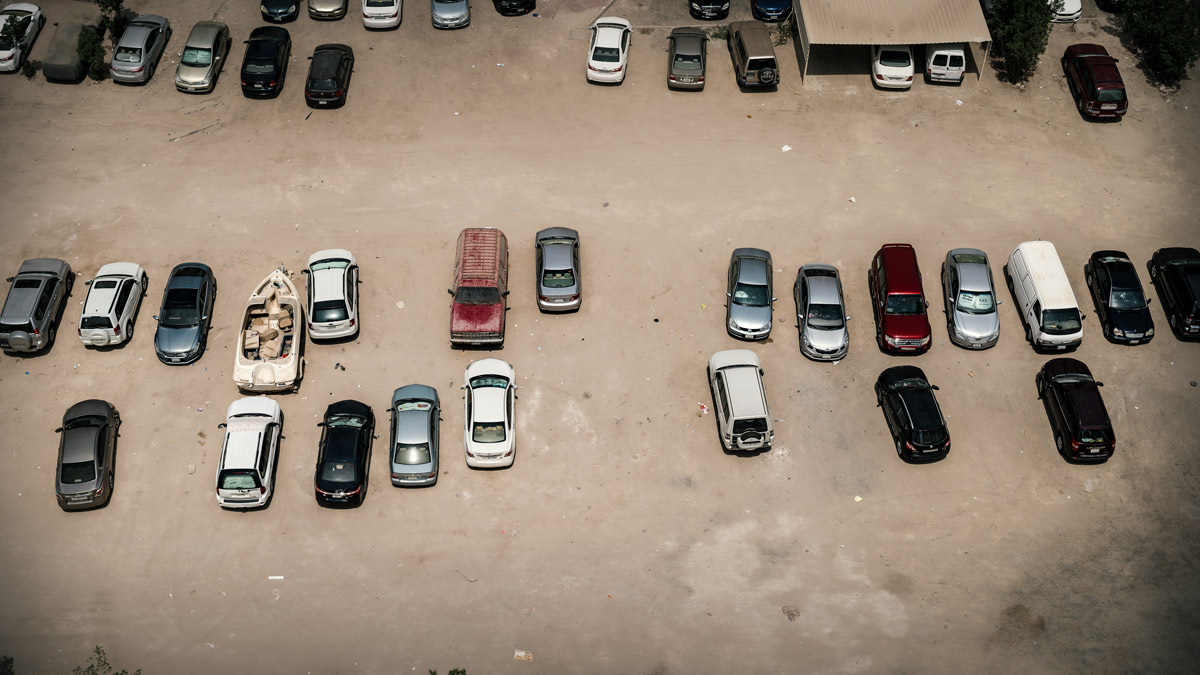
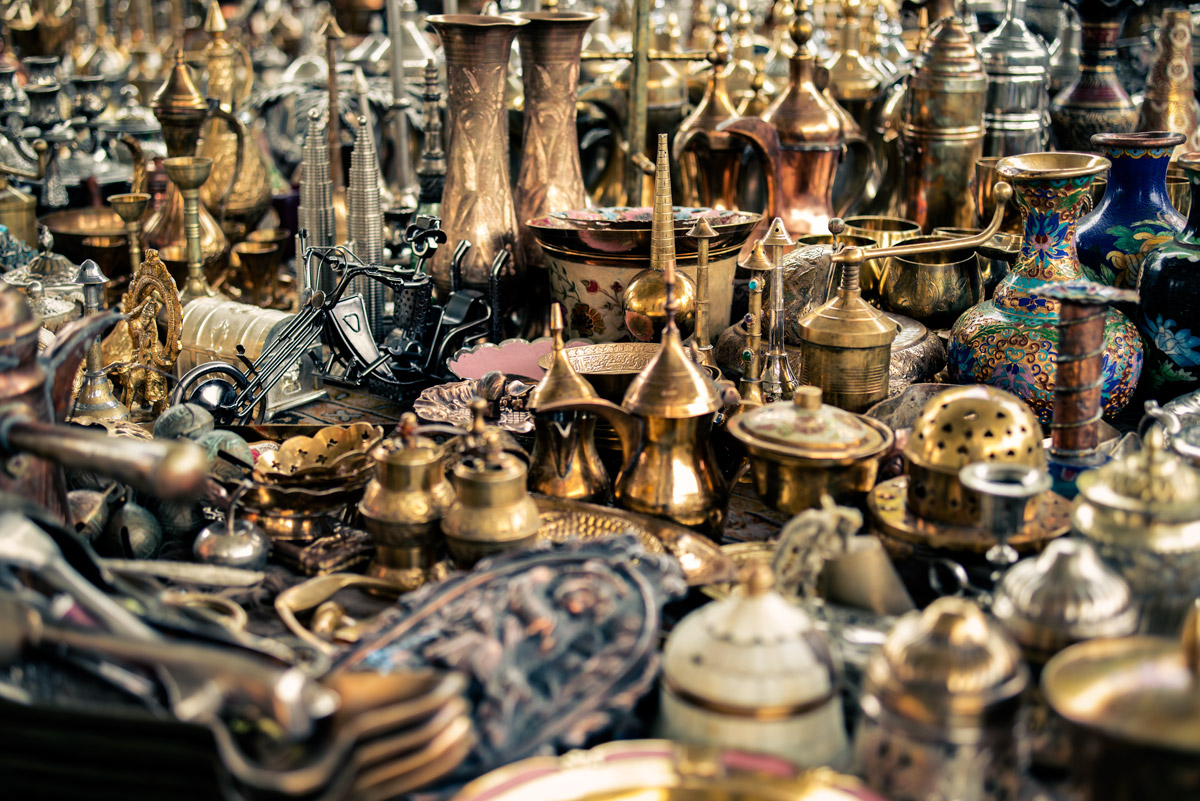
The morning market in Kuwait City offers a few little treasures – and quite a few curious finds. Piles of carpets tower almost to the ceiling of the hall, which offers us at least some shelter from the sun at 54 degrees in the shade. Next door, meter-long tables are lined with gold-plated and copper-colored metal goods laid out like offerings: teacups, teapots, figurines, knives, tins, coasters, coffee grinders, plates, carafes, swords, and daggers. A few steps further on, vacuum cleaners are piled high; at the next vendor, old speakers and stereo systems. And so it goes on and on – it seems that there is nothing here that isn’t to be found. Anyone looking for secondhand bargains or overpriced one-of-a-kind items will find what they’re looking for here.
After less than an hour of leisurely strolling through the market, we’re drenched in sweat and exhausted. We’re drinking water every minute, but our two-liter bottles have long since run empty. The air-conditioned interior of our car, into which we flee shortly afterward, feels like paradise – comfortably tempered at twenty degrees.
Our host Aladdin, a journalist who migrated from Egypt to Kuwait and now runs several Airbnbs, grins at us. “It’s a bit warm today, isn’t it?” Then we drive on to the next stop on our city tour.
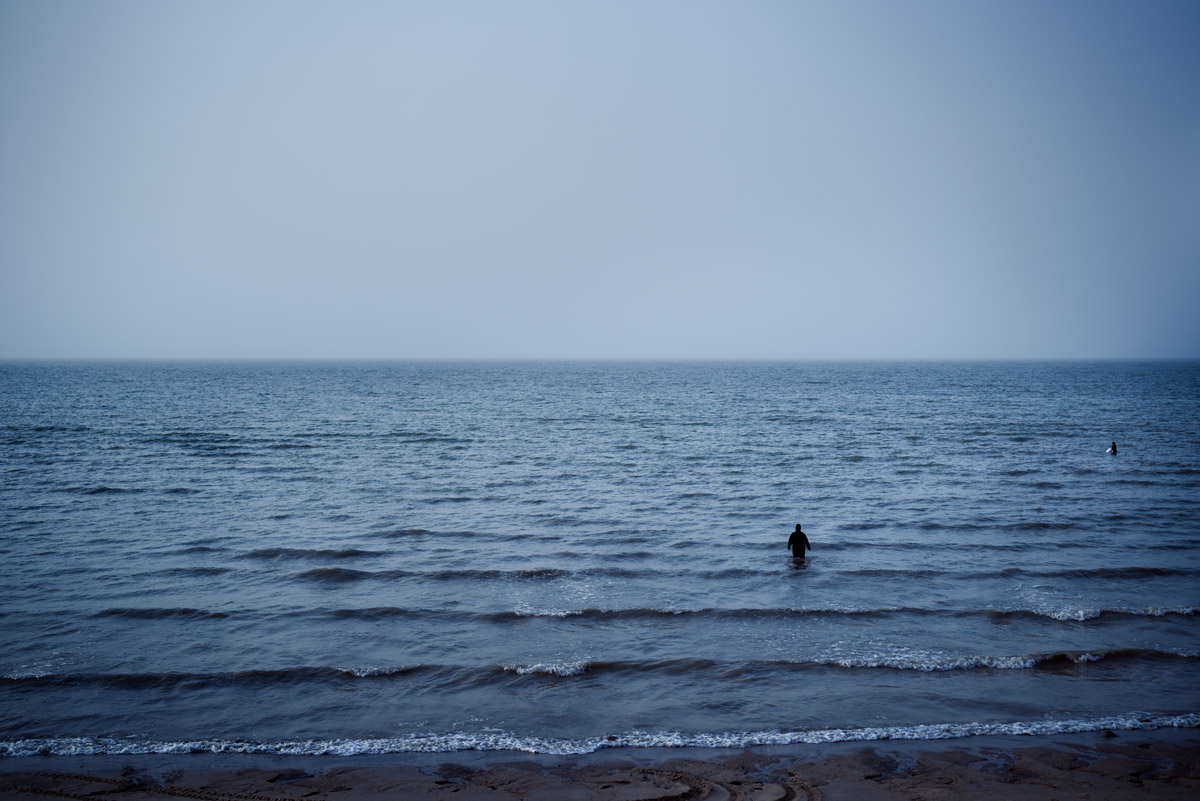
The beach is deserted – as is apparently the case everywhere. With temperatures well over fifty degrees Celsius, hardly anyone ventures outside. Even the shortest distances are covered by car. Apartments, offices, and shopping malls are air-conditioned; during the summer months, no one voluntarily leaves their cool refuge. Outdoor work is postponed until the early morning hours or the evening.
As a result, the wide streets of Kuwait City resemble a ghost town. Only the hum of thousands of air conditioners fills the air – like the furious buzz of a giant bee colony, a ceaseless background noise. It is therefore not surprising that Kuwait ranks among the countries with the highest per capita CO₂ emissions worldwide.
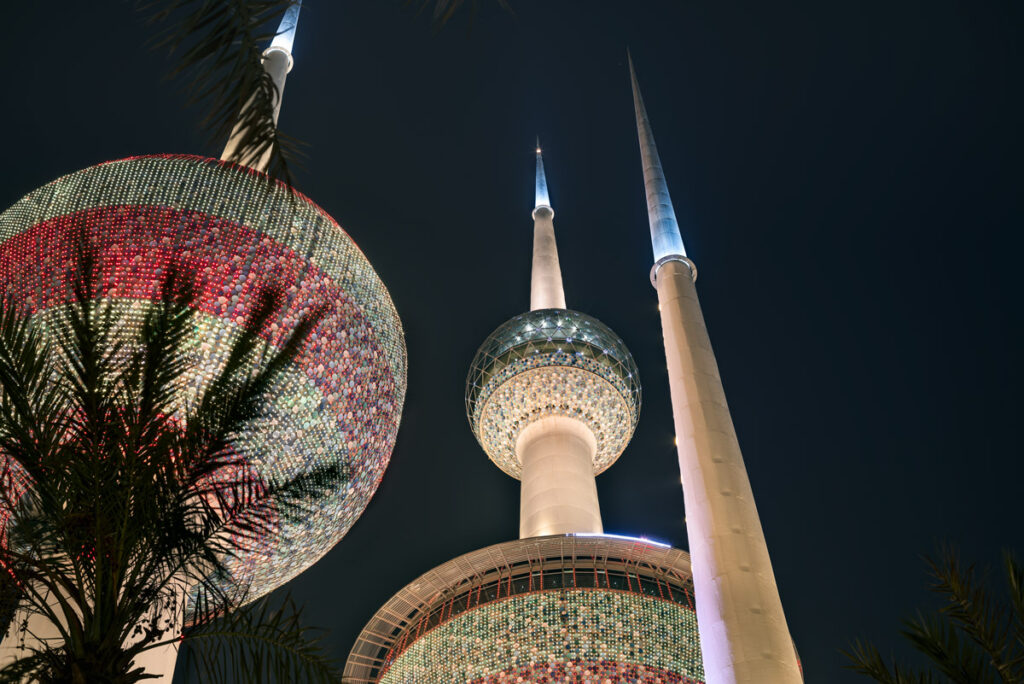
Not far away, the Kuwait Towers rise into the sky. The three water towers are arguably the country’s best-known – and perhaps only – landmark. On this August evening, the towers’ iconic spheres are illuminated in the colors of the Spanish flag. Two days earlier, a jihadist attacker had driven a delivery van into a crowd in Barcelona. Fourteen people were killed.
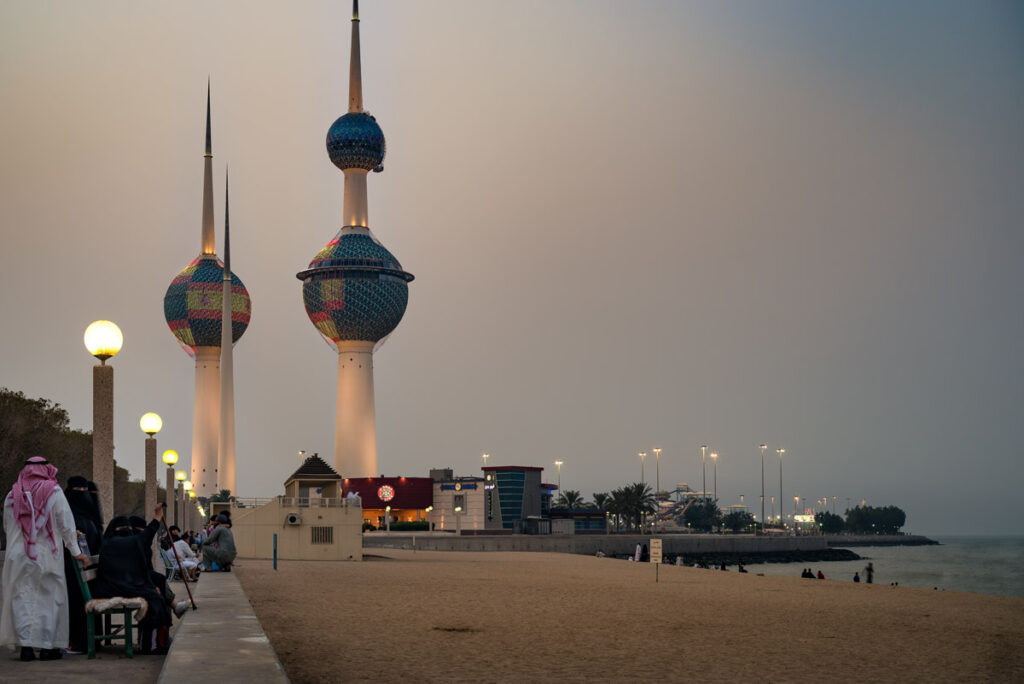
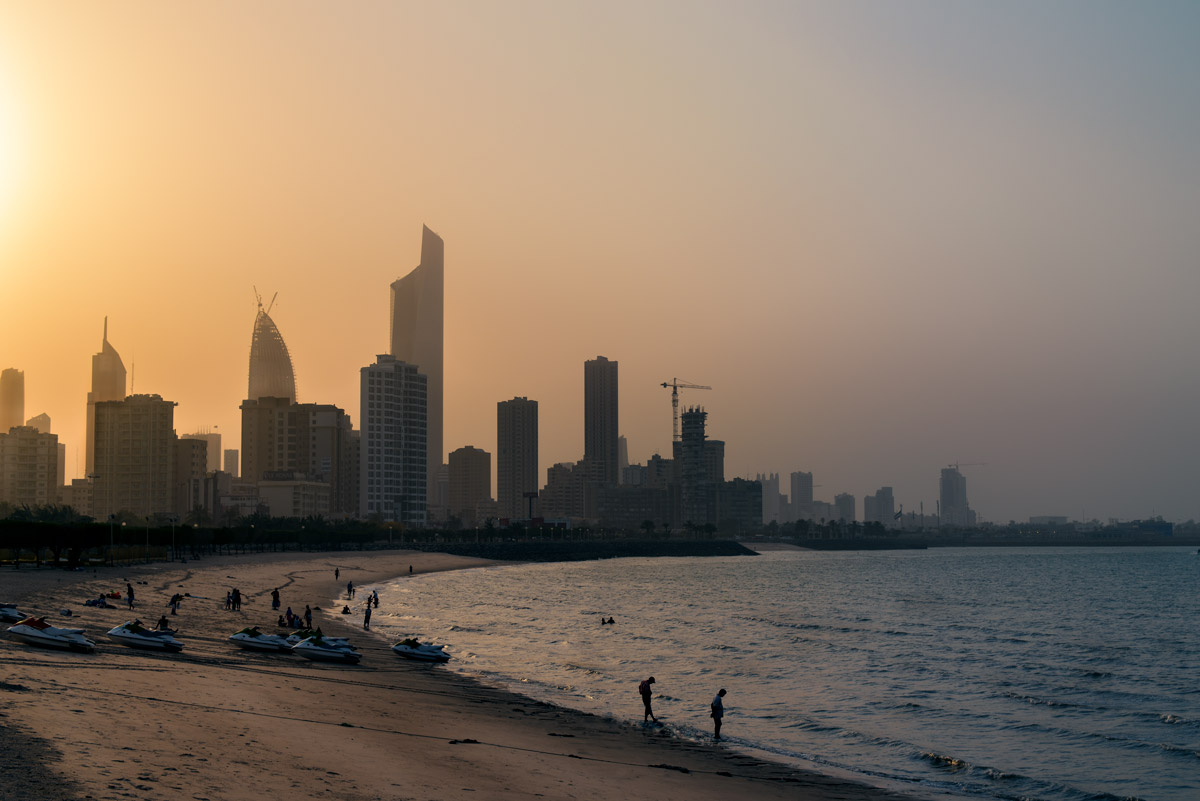
The setting sun casts a golden glow over the dusty evening sky above Kuwait City. To the east, over the sea, the blue night has already fallen. The skyline is lined with cranes; as in many Gulf states, constant change and the ceaseless pursuit of more and bigger things are the essence of life and the economy. Finally, with the last rays of the desert’s scorching sun, Kuwait City begins to glow with colorful lights.
The restaurants and shisha bars fill with men in white dishdashas. The fish market is now bustling as well. Old men sit on street corners, drinking tea and engaged in lively conversation. They follow our every step with sullen expressions and narrowed eyes. Women give us a wide berth, start whispering, and point at us when we film or take photos. We feel watched – and like outsiders.
We finally find a good dinner at a restaurant by the water. The temperatures have finally dropped below fifty degrees – almost pleasant, even though sweat is still dripping from every pore.
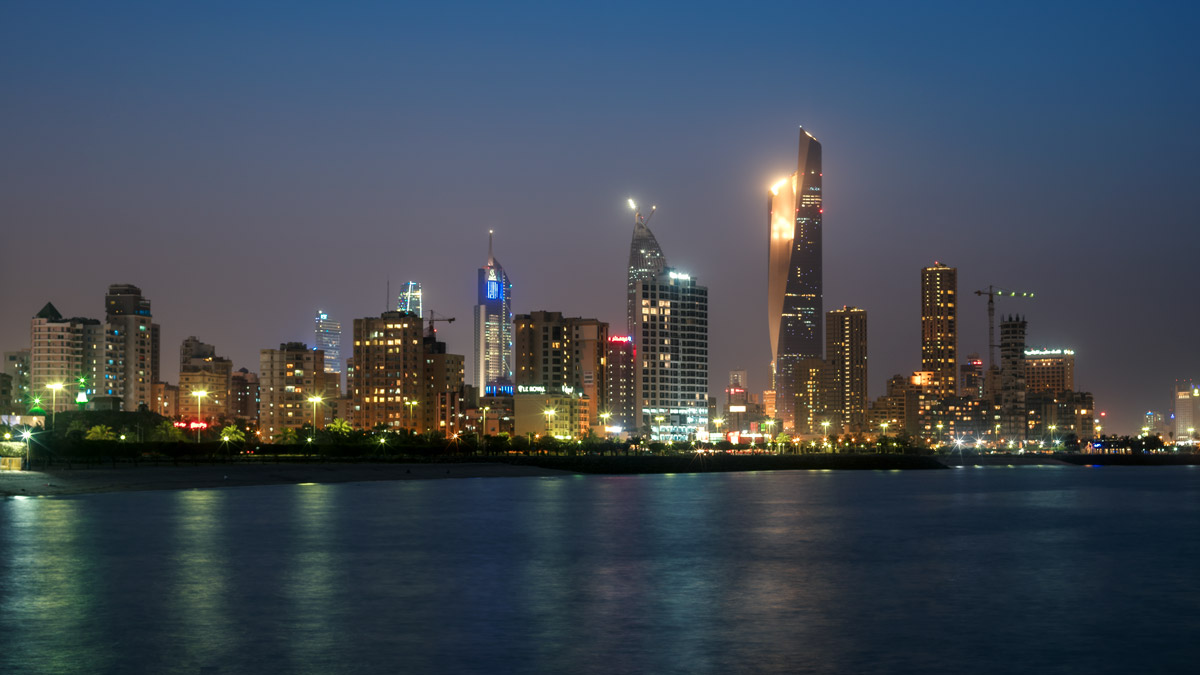
By now, we have visited nearly every country in the Arabian-Persian Gulf. Of these, we found Kuwait to be by far the least touristy; gaining access to the country and its people proved the most difficult here. Kuwait City exudes far less glamour than, say, Dubai or Doha. The skyscrapers seem shorter, the desert stretches farther, the streets emptier. A strange calm lies between the glass facades, as if the city were less a stage for visitors and more a workplace for those who live and work here.
Everywhere we go, veiled eyes follow us with their gaze; everywhere we encounter people with a mixture of curiosity, reserve, and caution. The typical foreigner here is not a tourist, but an expat – an engineer, technician, or manager at one of the major oil companies. Tourists like us are rarely seen. Perhaps that is precisely where the feeling of being an outsider lies: we are not part of the routine that repeats itself every day in this city.
Kuwait doesn’t seem staged like some of its neighbors in the Gulf. There are few or no spectacular megaprojects, no artificial islands, or perfectly choreographed theme parks. And perhaps it is precisely this lack of fanfare that makes Kuwait so hard to access – and at the same time so interesting.
Info about our trip
Kuwait isn’t a typical tourist destination – and probably doesn’t want to be one. Visitors won’t find the glitz and glamour of Dubai or Doha, no perfectly curated experiences, and hardly any tourist infrastructure. Instead, you’ll discover a country that exists primarily for itself – and that’s precisely what makes it so appealing.
You can see the capital, Kuwait City, in a single day. After that, options quickly dwindle: Sights are scarce, and organized tours are virtually nonexistent. If you want to delve deeper, you’ll need initiative, time – and the willingness to endure emptiness. A rental car is practically a must if you want to see more than just the capital.
And then there’s the heat: Kuwait is one of the hottest places on earth. In summer, temperatures exceeding fifty degrees Celsius are not the exception but the norm. Sightseeing then becomes an ordeal, every step outside a struggle.
Kuwait is not a country that presents itself to you. It demands patience, curiosity, and a certain degree of frustration tolerance. Those who bring exactly that will experience a slice of unvarnished everyday life in the Gulf here – raw, direct, and without a tourist filter.
Kuwait is a great stopover on the way to Asia. Flights via Kuwait City, for example with Kuwait Airways or Pegasus Airlines, are often relatively inexpensive. Getting there is therefore straightforward and often a good value.
Once there, you can also travel on a budget – if you choose to. Simple but decent accommodations can be found starting at around 30 to 50 euros per night; for 50 to 100 euros, you can find more comfortable and stylish options. Food is generally cheaper than in Europe, especially at local restaurants. Gasoline is also very inexpensive.
At the same time, Kuwait can also be expensive. In large shopping malls, international hotel chains, and upscale restaurants, it’s easy to spend significantly more.
The cuisine in Kuwait is similar to that of other countries in the region. It is characterized by influences from India, Persia, and the Arab world. Typical dishes include rice dishes with chicken, lamb, or fish, served with flatbread, hummus, and spicy sauces. Fresh juices, dates, and sweet pastries are always part of the meal!
Culinary-wise, however, Kuwait City is dominated by international chains, malls, modern restaurants, and, above all, fast food. If you want to eat authentic food, you should seek out smaller, local eateries – these are often unassuming but much more exciting. Overall, food is usually cheaper than in Europe, though imported products and upscale dining can quickly become expensive. Alcohol is prohibited in Kuwait.
As is the case everywhere, Kuwait City offers accommodations in virtually every price range. We stayed in a shared Airbnb for very little money and ended up forming close, friendly bonds with our host and the other guests. Together, we explored the city and spent most of our time there with one another – an experience that left a lasting impression on our trip.
Well-located and comfortable hotels are generally available in the range of about 50 to 100 euros per night. As in many Gulf states, there’s virtually no upper limit.
Overall, Kuwait is considered a safe travel destination with a relatively low crime rate. Violent crimes are rare, and even as solo travelers, you can generally move about freely in Kuwait City. The police are present but tend to be discreet.
More important than traditional safety risks are cultural considerations: Kuwait is a conservative country. Modest attire, respectful behavior, and sensitivity in interacting with people – especially when taking photos – are recommended. Public displays of affection should be avoided.
Our overall experience in Kuwait and other Arab countries has been positive when it comes to traveling with children. People generally treat families with reserve and politeness, yet they are friendly and respectful toward children – without being intrusive or overbearing.
However, you shouldn’t expect a well-developed infrastructure for children. While there are a few scattered play areas in Kuwait City, public, child-friendly facilities are generally scarce. It is therefore advisable to bring everything you need – from healthy snacks and diapers to toys and games – with you.
The best way to get around Kuwait is by car. If you’re planning to take a trip outside the capital, pick up a rental car right at the airport. If you’re staying in Kuwait City, you can get from A to B easily and affordably by public bus or taxi.
- In 1991, toward the end of the Second Gulf War, legendary photographer Sebastião Salgado traveled to Kuwait to document the oil fields set ablaze by the retreating Iraqi army and the resulting catastrophe for people and the environment. His powerful, at times harrowing images can be viewed in the photo book Sebastião Salgado: Kuwait. A Desert on Fire.
- Farah Al-Nakib takes readers on a journey through time, tracing Kuwait’s development across the centuries – from its earliest settlements to the economic growth spurred by the oil boom and the resulting transformation of society and culture. Kuwait Transformed: A History of Oil and Urban Life is primarily available as an e-book.
