
Vatican
So here we are – in the smallest country in the world. We stumble out of the Ottaviano subway station and fight our way through the crowded pedestrian zone of the Art Nouveau district of Prati, west of the Tiber. Souvenir shops and stalls selling drinks and fast food already indicate the nearby pilgrimage site and center of Christianity. Shortly afterwards, we are standing in line for St. Peter’s Basilica. The estimated waiting time is several hours.
Of course, we should have been here early in the morning. Of course, we could have booked tickets online. Of course, we should have come another year – because 2025 is a Holy Year with particularly high visitor numbers. But it is what it is, and with our little boy in tow, we decide against waiting. Instead, we walk towards the Vatican Museums.
There, too, the same picture presents itself: an endless queue. Just as we are about to give up and turn back, a woman waves us over. With a small child, we are allowed to go straight to the entrance – no waiting, no queuing. A divine sign? Shortly afterwards, we find ourselves inside the Vatican.
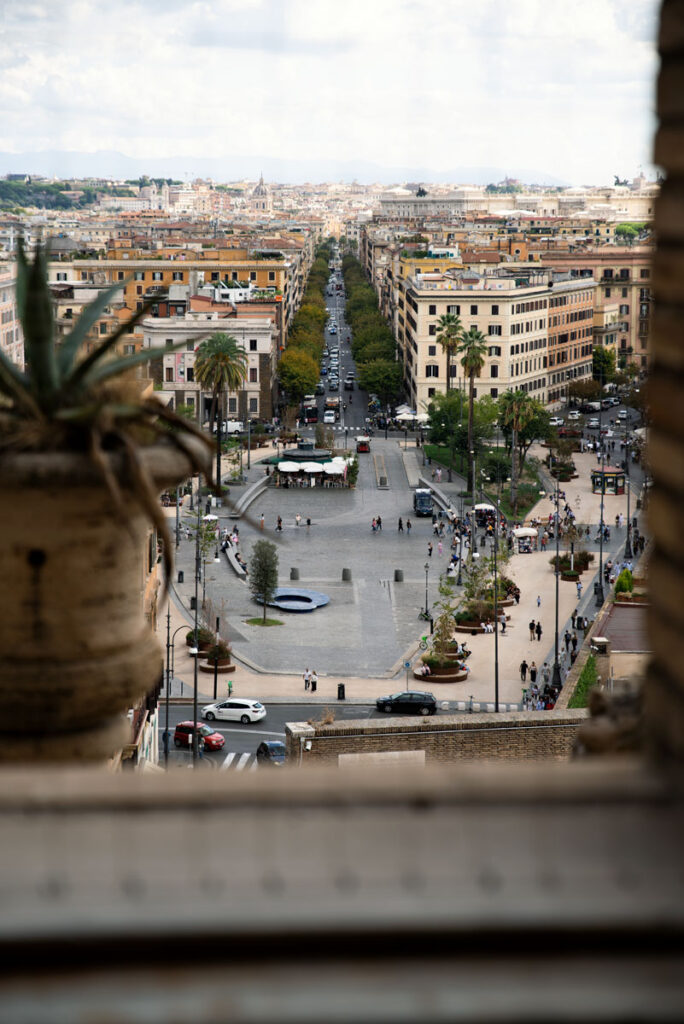
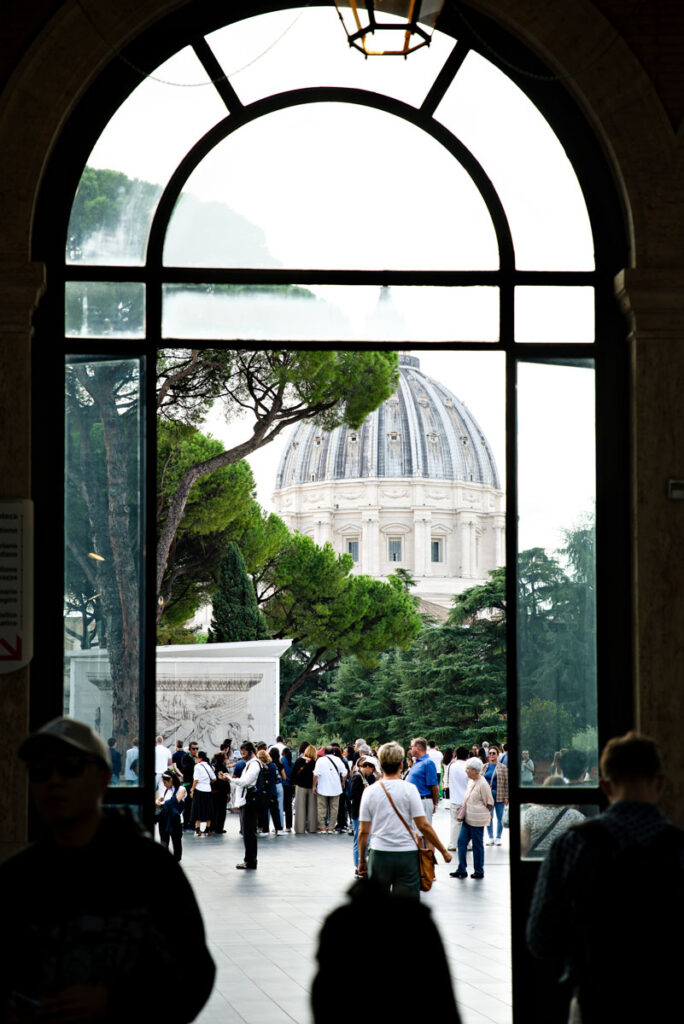
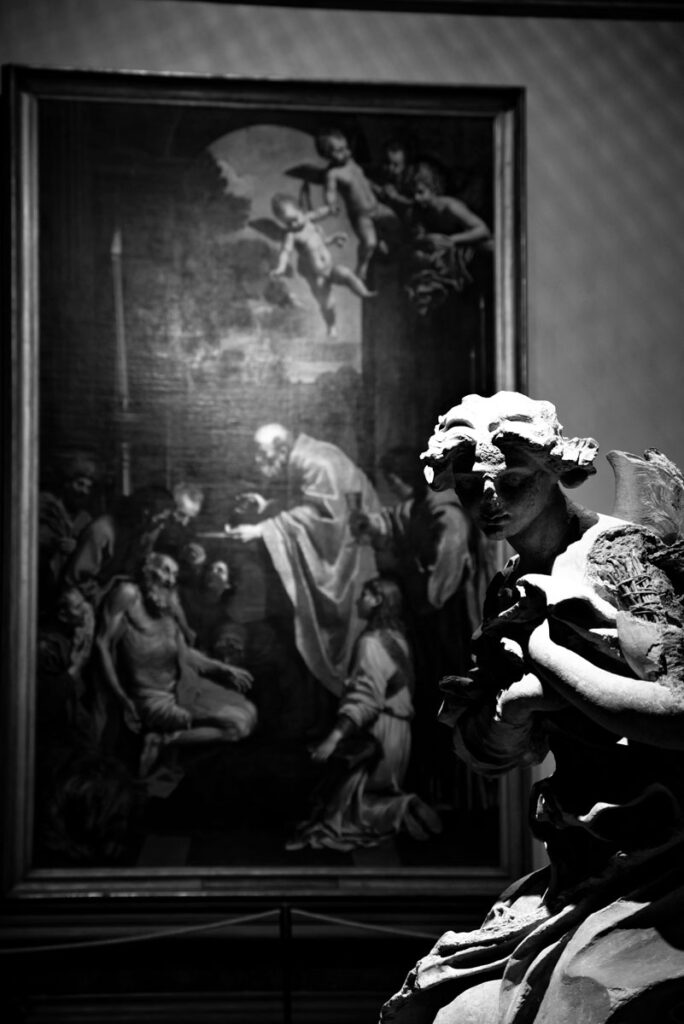
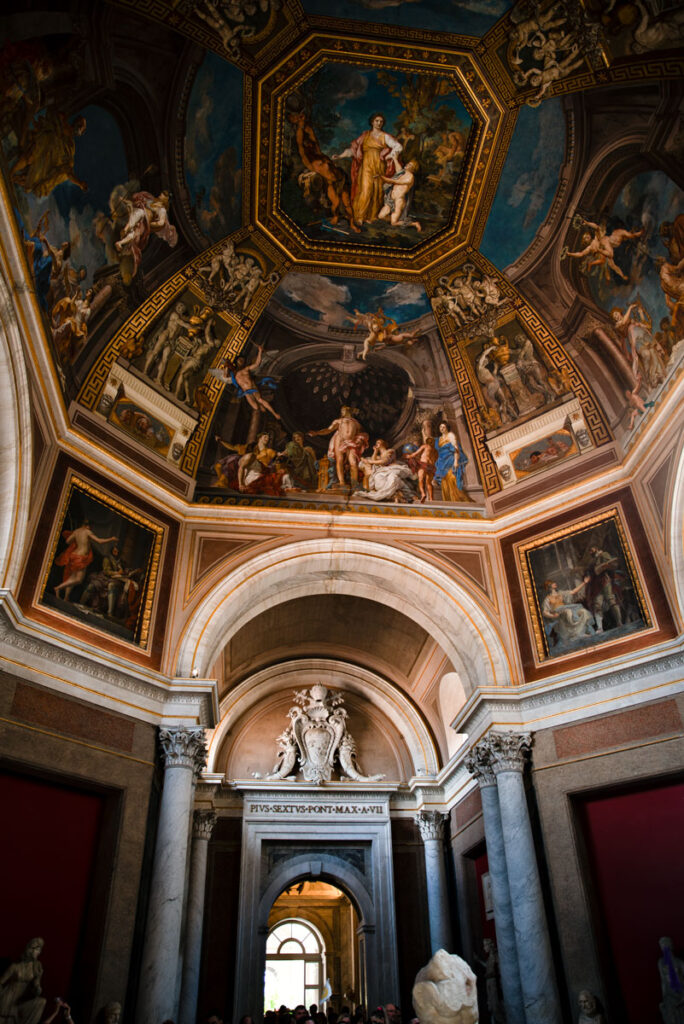
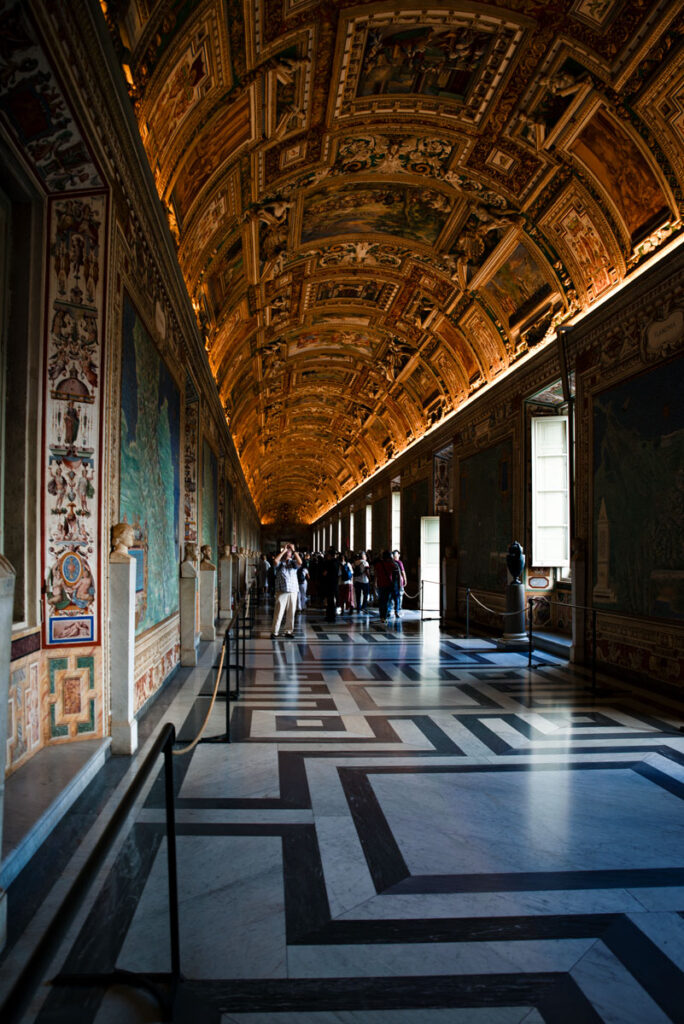
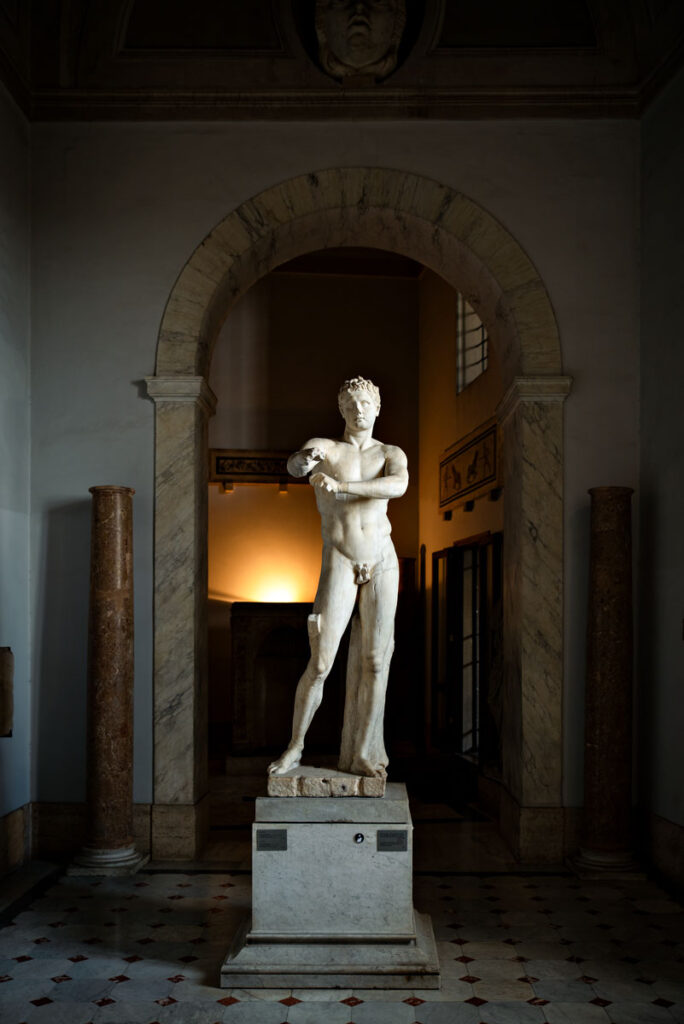
In an endless line of people, we push our way – or are pushed – through the narrow corridors. The ceilings, the walls, the floors: everything gleams with splendor and pomp. The art gallery displays paintings of inestimable value, both monetary and cultural. Frescoes adorn the domes of the halls, the finest marble embellishes archways and columns. Alabaster statues, heavy velvet curtains. Busts and art objects, antique collectibles, ancient writings and even older knowledge – gathered, stolen, preserved, gifted, collected, commissioned.
It is hard to imagine where all these treasures came from and how they found their way here. How many years of life went into painting the murals on the walls and ceilings. The greatest artists of their time immortalized themselves in the Sistine Chapel. Michelangelo worked on the 16-square-meter fresco “The Creation of Adam” alone for several years. The ceiling of the chapel covers a total area of around 520 square meters.
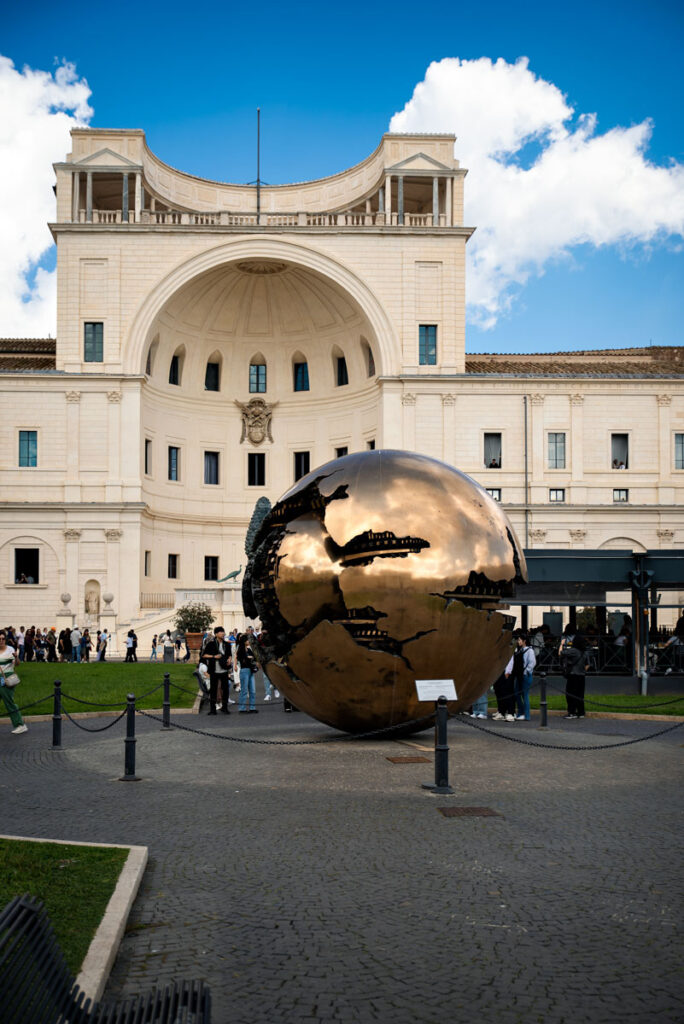
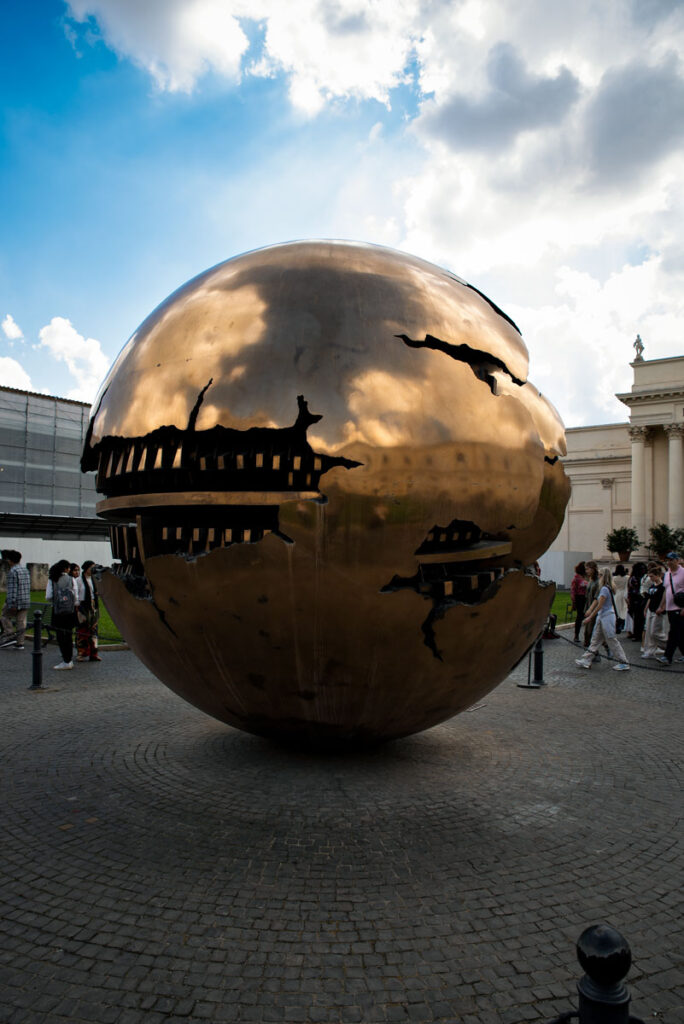
We follow the signs and directional arrows through the labyrinth of corridors, getting lost and walking down the same paths several times without really arriving anywhere. Suddenly, we find ourselves in a large courtyard with a golden sphere in the middle. The artwork is titled “Sfera con sfera” and was created by Arnaldo Pomodoro. It depicts a sphere within a sphere.
This sculpture can be found in various locations around the world: at Trinity College in Dublin, at the Hakone Open-Air Museum in Japan, and at United Nations Plaza in New York. The artist wanted to make a break visible – between inner and outer life, between perfection and imperfection, between unity and incompleteness. But here, in the central courtyard of the Vatican Museums, this sphere seems almost like a humorous wink. Wasn’t it the sphere that once sparked a dispute that led humanity out of the age of pure faith and religious certainties and into the Age of Enlightenment? The sphere as the trigger for a turning point in history, as the starting point for humanism and science.
Amazed on the one hand, exhausted on the other, we leave the Vatican. A trip to the smallest state in the world is also a journey into the heart and soul of our European, Christian-influenced culture—a ride through centuries of history. It is like a journey into the interior of a neutron star that has absorbed everything within itself. It is impossible to comprehend and understand what we have seen. We can only stand in awe before it.
Info about our trip
A visit to the Vatican in the west of Rome, Italy’s capital, is certainly a very special travel experience. For devout Christians, a visit is a must, but art and history lovers will also get their money’s worth here. Otherwise, it is of course also an experience for laymen to stroll through the Vatican Museums or St. Peter’s Basilica and soak up all the impressions. In our opinion, a visit with (small) children is less recommended. Unless you use your children to get past the long queues 😉
So if you’re in Rome anyway, be sure to set aside a free day for the Vatican. One day is enough to see St. Peter’s Basilica and the museums. Buy your tickets in advance and arrive early. Expect to wait several hours during the holidays.
Visiting the Vatican is not necessarily expensive; a ticket for the Vatican Museums costs €20, with children paying half price. Only book tickets via the official platform. Access to the Sistine Chapel is included in the ticket, and you can only reach the chapel via the Vatican Museums.
St. Peter’s Basilica has a separate entrance with its own queue (although there is also direct access from the Sistine Chapel for participants in a group tour) and is generally free of charge. However, you can purchase fast-lane tickets, tickets for group tours, or tickets for the dome of the basilica. Please use the official booking page for this as well.
A glance at Google Maps reveals that there is not a single restaurant or café in the entire Vatican. That’s almost true, because you will find cafés and small restaurants inside the Vatican Museums. Of course, you can also bring your own food and drink.
What applies to restaurants also applies to accommodation. Although the Hotel Residenza San Paolo VI claims to be located in the heart of the Vatican (and the location map is not entirely accurate), the Vatican’s border officially ends at its colonnades (the hotel is located across the street). Ultimately, however, it doesn’t matter where you stay in Rome to visit the Vatican. This is because it is easily accessible via the “Ottaviano” metro station.
We didn’t want to drive our car to a hotel in the city, so we stayed at Agriturismo Montecaminetto, which is more or less well connected to Rome by bus and train.
Wherever there are crowds of people, thefts are bound to occur. And since the Vatican itself has hardly any inhabitants, this fact leads to the curious situation that the tiny state has the highest crime rate in the world. Just keep an eye on your valuables and nothing should happen.
The Vatican is probably a rather boring destination for children. Dusty exhibits, art, and dense crowds. And lots of history surrounding it all. Plus long waiting times and crowded restrooms. We put our little boy in his carrier and luckily he slept through most of our two-hour stay at the Vatican Museums.
No question about it: in the smallest country on earth, the best way to get around is on foot 😉
There are countless books about the Vatican with different focuses. These include biographies of various popes, thrillers about obscure secrets in the tiny state, collections of curiosities, beautifully designed art and photo books, and historical classifications.
- As is almost always the case, we recommend the C.H.Beck Wissen series for a brief, objective overview: Der Vatikan: Geschichte, Verfassung, Politik by Jörg Ernesti
- Annett Klingner presents a somewhat different kind of travel guide with 55 1/2 Orte im Vatikan, die man gesehen haben muss
- For those who are more interested in the popes in the Vatican, we recommend Pontifex: Die Geschichte der Päpste by Volker Reinhardt