Maldives

Babymoon. Honeymoon. Island paradise. Dream beaches. Dream vacation.

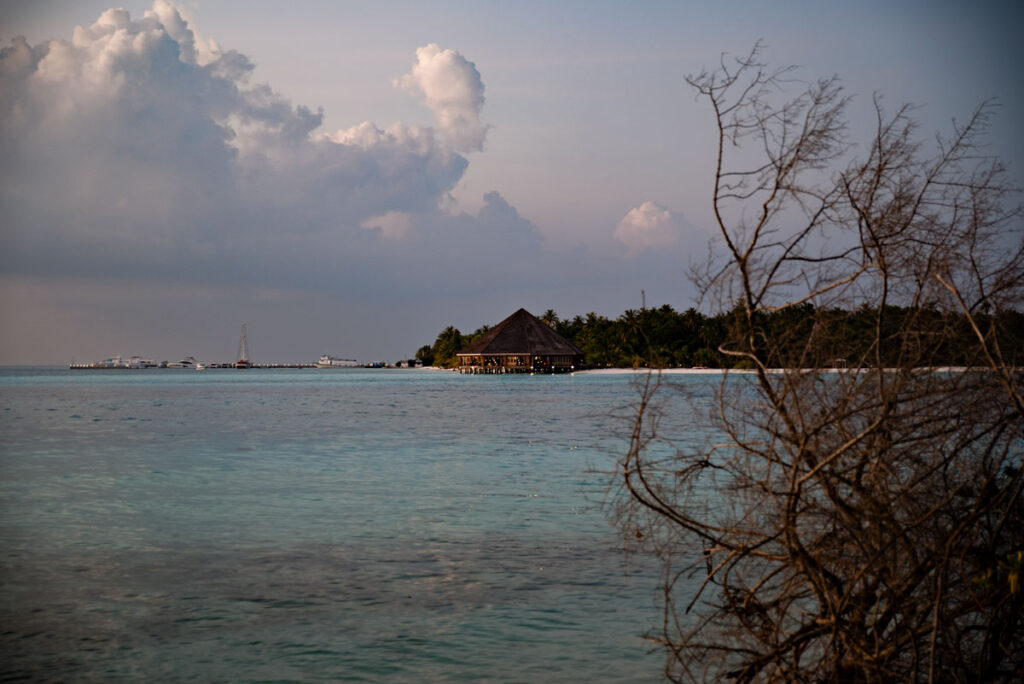
The Maldives is an island nation: it stretches over 800 kilometers from the northernmost to the southernmost island – only slightly less than the maximum length of Germany. Between all these islands and atolls lies water. Sprinkles in the Indian Ocean. Land worn down by the waves, threatened by rising sea levels. A state without a future. At the same time, a state that is expanding, filling in artificial land and building on credit. As if there were a tomorrow to believe in.

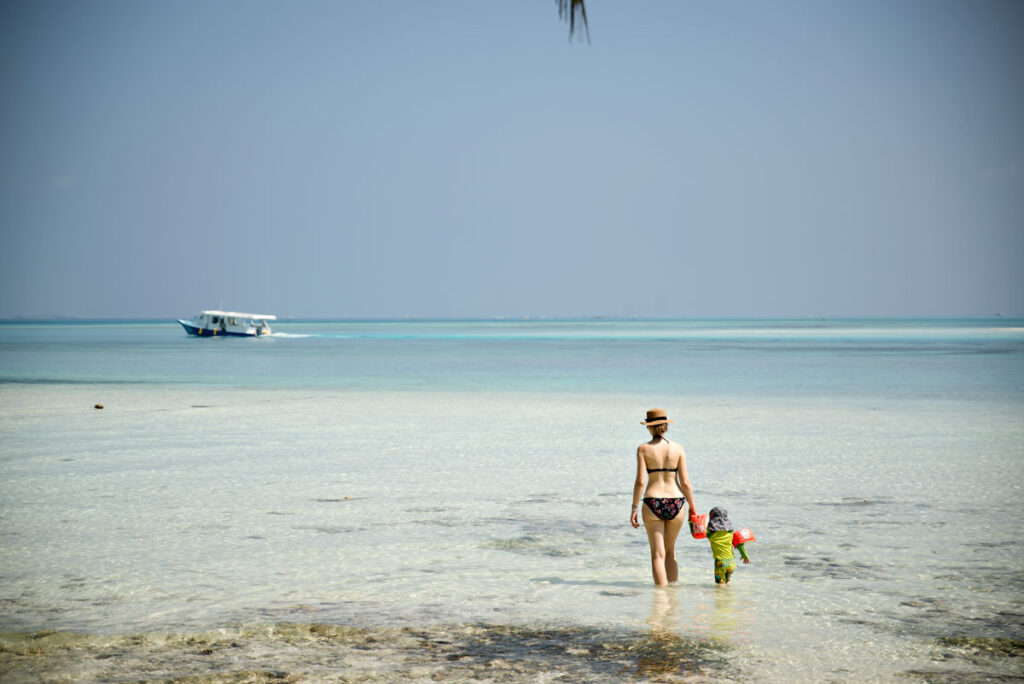
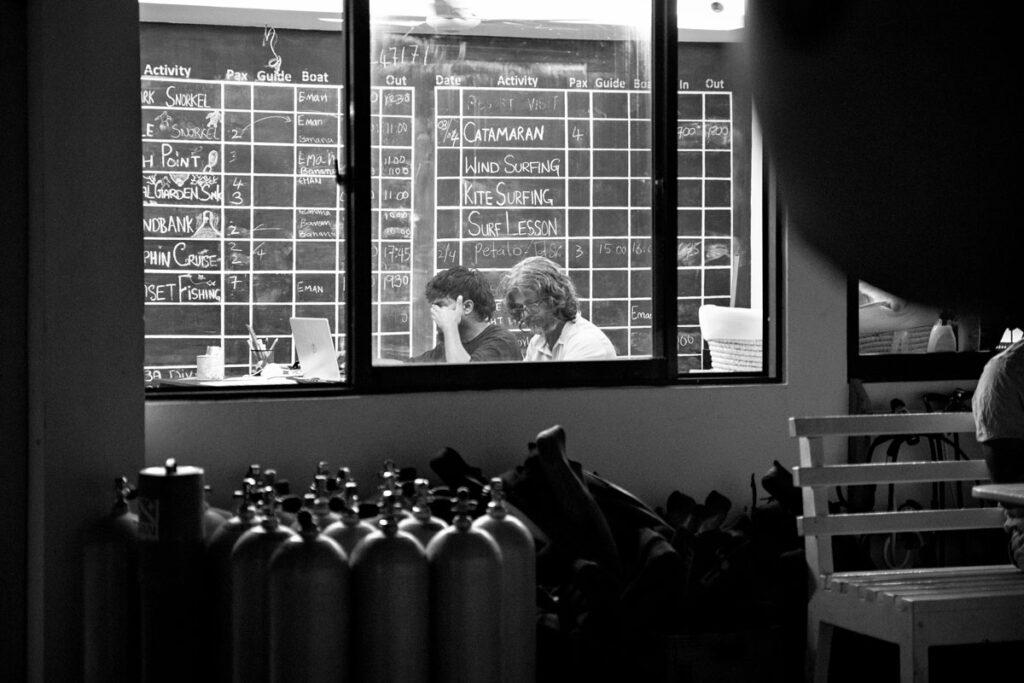
A vacation in the Maldives throws you back to the bare minimum of existence: water, sand, and palm trees. At the same time, luxury hotels and tourism companies sell this empty wasteland as the fulfillment of being. The emptiness is quickly filled with off-the-shelf excursions into a dying water world. Water becomes a compulsive ritual: swimming in the sea, swimming in the pool. Bathtub. Diving and snorkeling. Water skiing and jet skiing. Falling off the banana boat. Admiring the ichthyofauna in the morning, grilled seafood on the beach in the evening.

Fishmarket in Malé

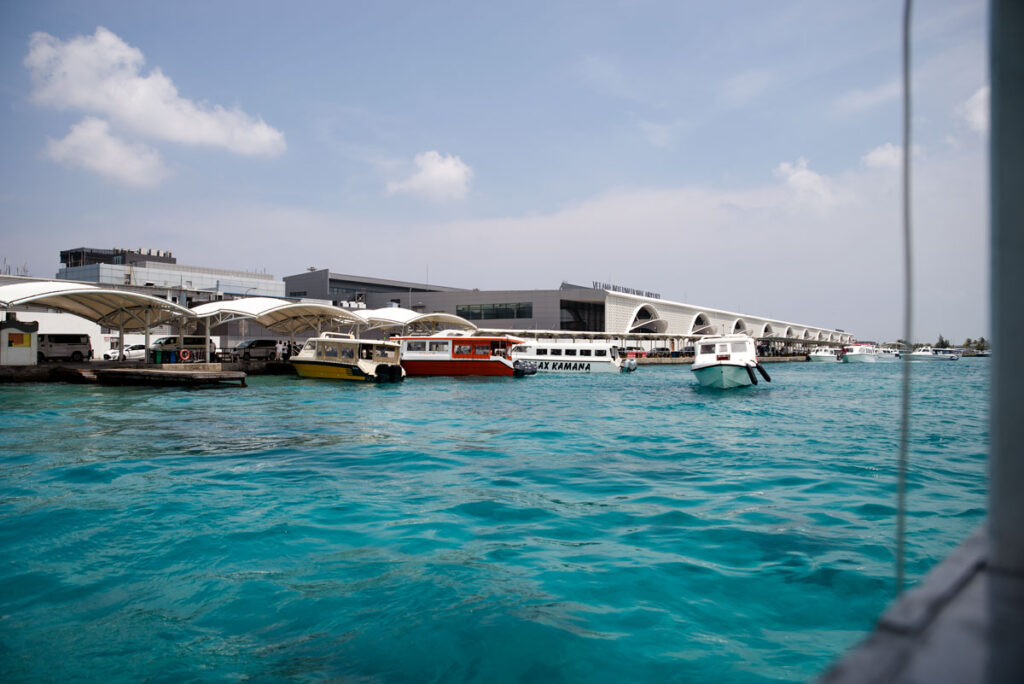
The airport is chaotic. Hotel employees holding signs with their guests’ names wait in the arrivals hall. The streams of arriving tourists quickly separate: some head for the seaplane taxis, others for the harbor. And here, too, class society rears its head: private boat, public speedboat, or slow ferry? Everywhere you look, women wearing large sunglasses drag their oversized suitcases behind them while their husbands search for the right path or the right person. There are only a few families here. The Maldives is a vacation destination for lovers and couples.

Our trip on the public ferry to Dhiffushi in the north of the Malé Atoll takes over three hours. With us on the boat: a backpacker, two couples, a group of friends from Romania, and about fifteen migrant workers – all men.

Airport Taxi in Malé
Ferry to Maldives Islands

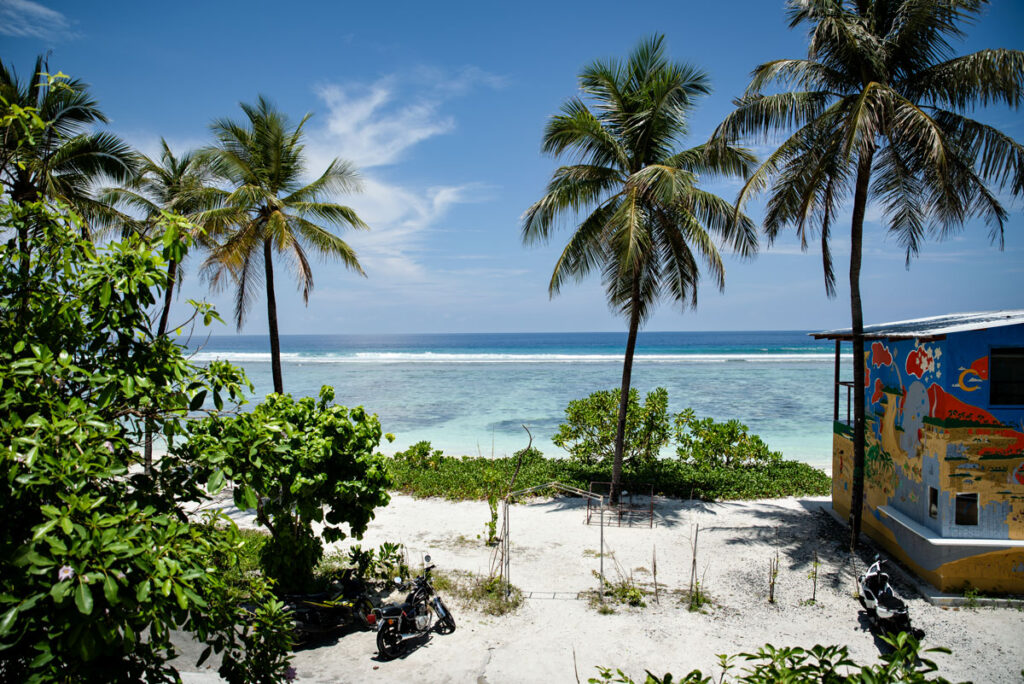
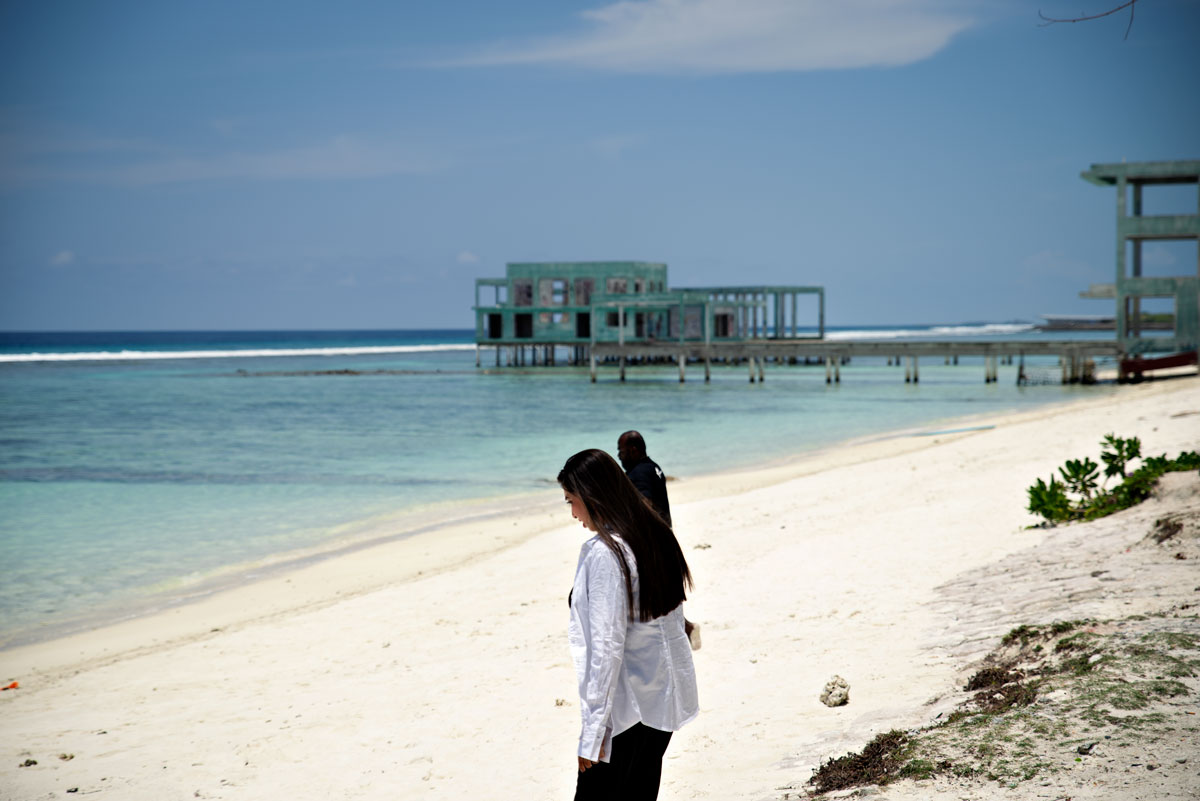
On Dhiffushi, there is hardly anyone who lives more than a hundred meters away from the nearest beach. What kind of life is it when your everyday existence is confined to a mere 22 hectares? A life where there are no highways to the nearest town or to another country? Instead, there are boats sailing across the seemingly endless ocean. A world in blue and white, with only the occasional splash of green in between.

We didn’t come to Dhiffushi for the beaches. Every private hotel island has much nicer beaches to offer. We came for the locals who still live here. Because of the more or less “real” life that can be found here and there in the small alleys. Also because Dhiffushi is easily accessible from Malé and a night in a hotel can be found for a low three-digit amount.

So we spend little time in the water and instead set off every day with our camera to find the heart of the real Maldives.

Dhiffushi Island
Dhiffushi Island
Dhiffushi Island

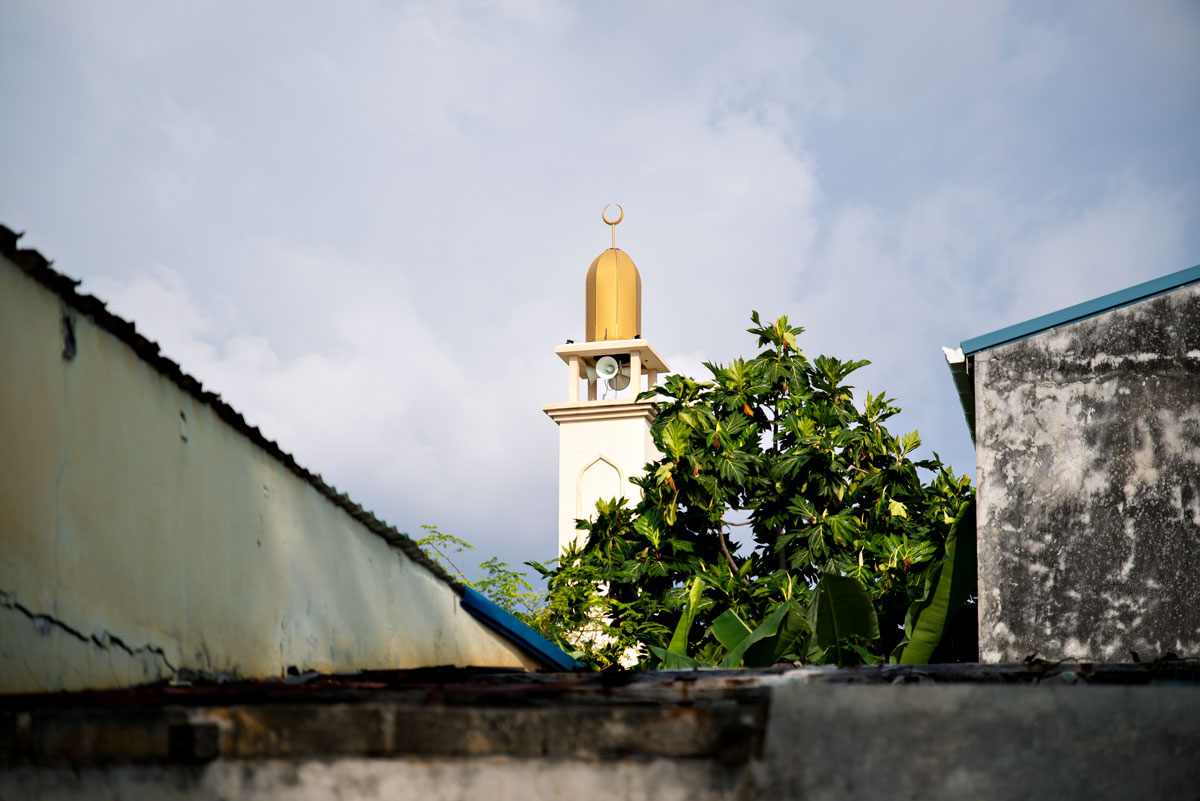
Amidst all the hotels, restaurants, and tour operators, we find island life in the dusty alleys of the old village center. Simple houses surround the mosque. Their doors are always open, and the sounds of everyday family life emanate from them: clattering cookware, children’s voices, and television announcers.

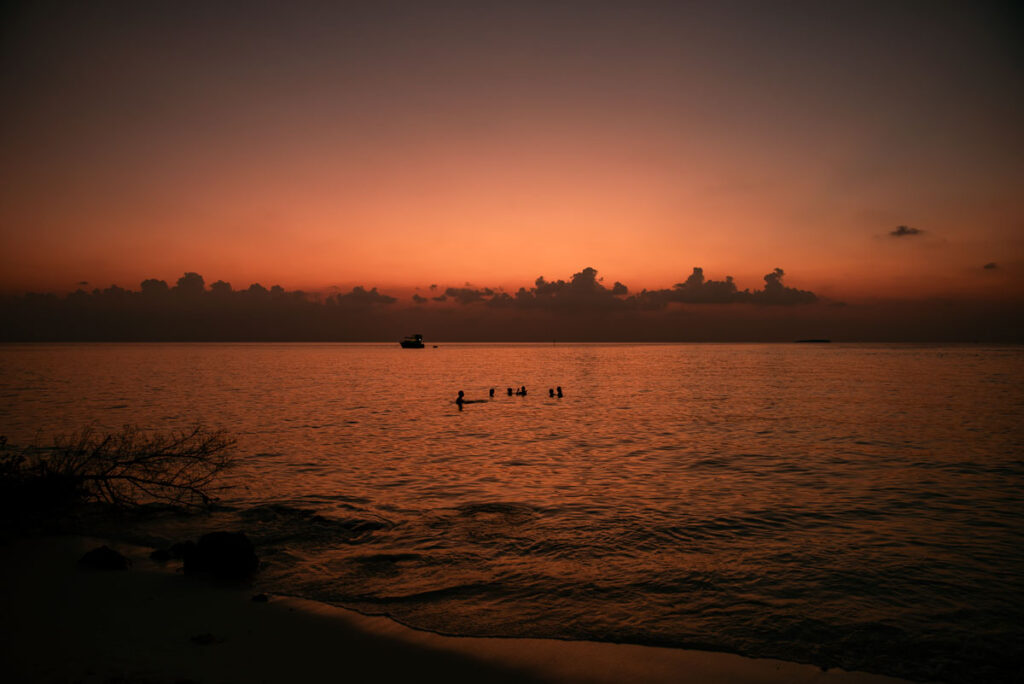
Otherwise, there is not much going on: a few men are working on new hotel buildings, children are playing in the streets, and five times a day the men gather in the mosque. The distances are short, and the sound of the sea is the never-ending background music for the islanders. Every morning there is a sunrise, every evening a sunset. The sky is painted in every color imaginable – sometimes pastel, sometimes bright.

We don’t encounter any other tourists in the village center. They are lying on the beach or sitting in their hotel bar.

Dhiffushi Island
Dhiffushi Island
Dhiffushi Island
Dhiffushi Island
Dhiffushi Island
Dhiffushi Island

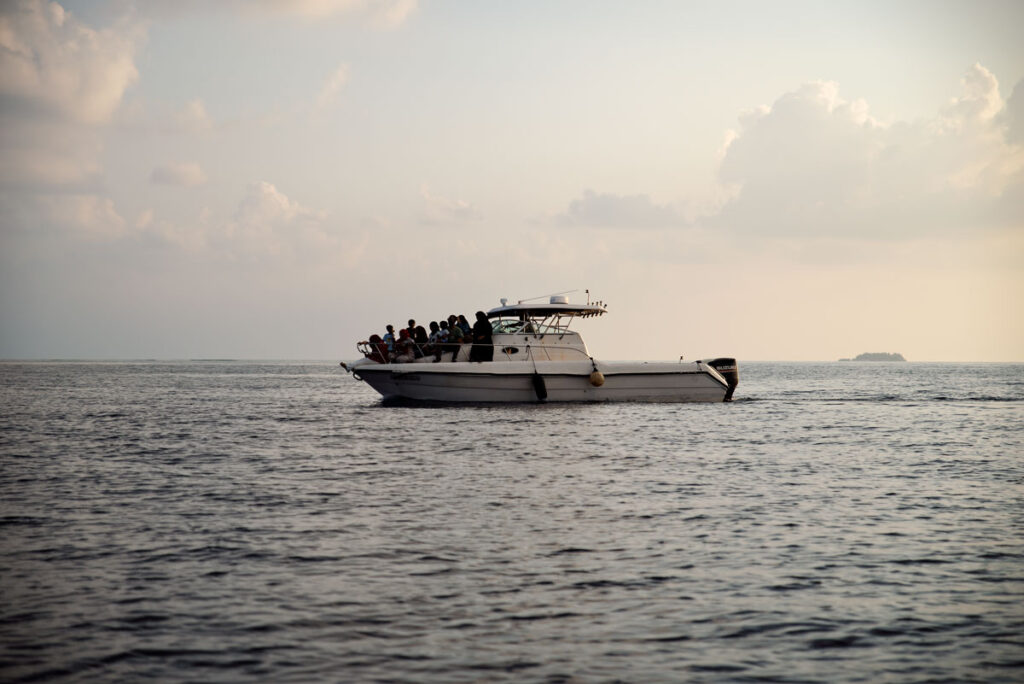
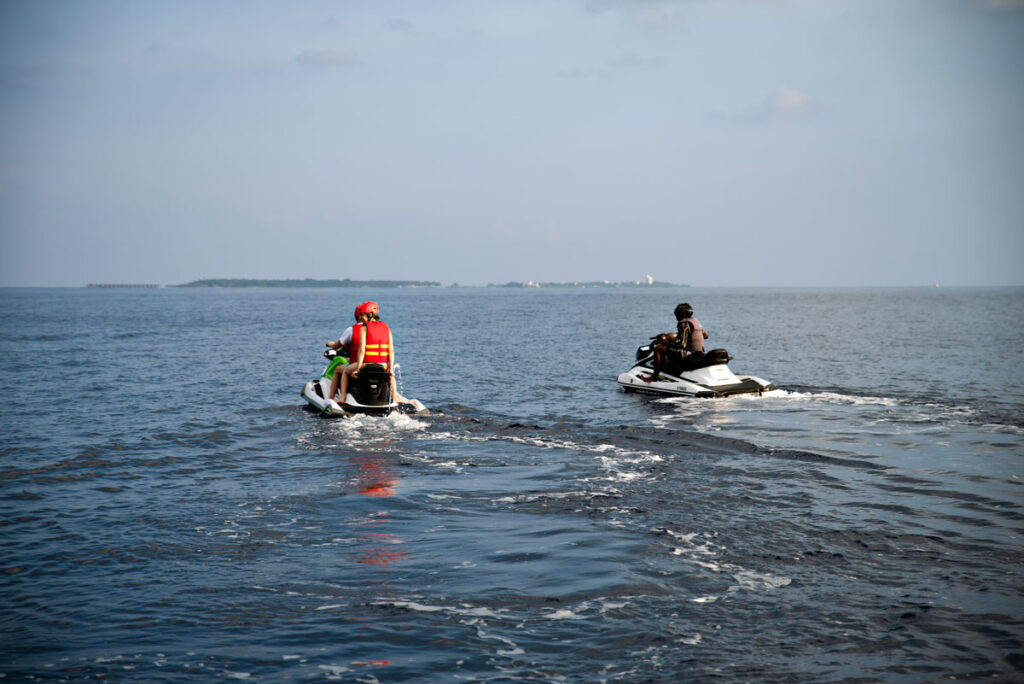
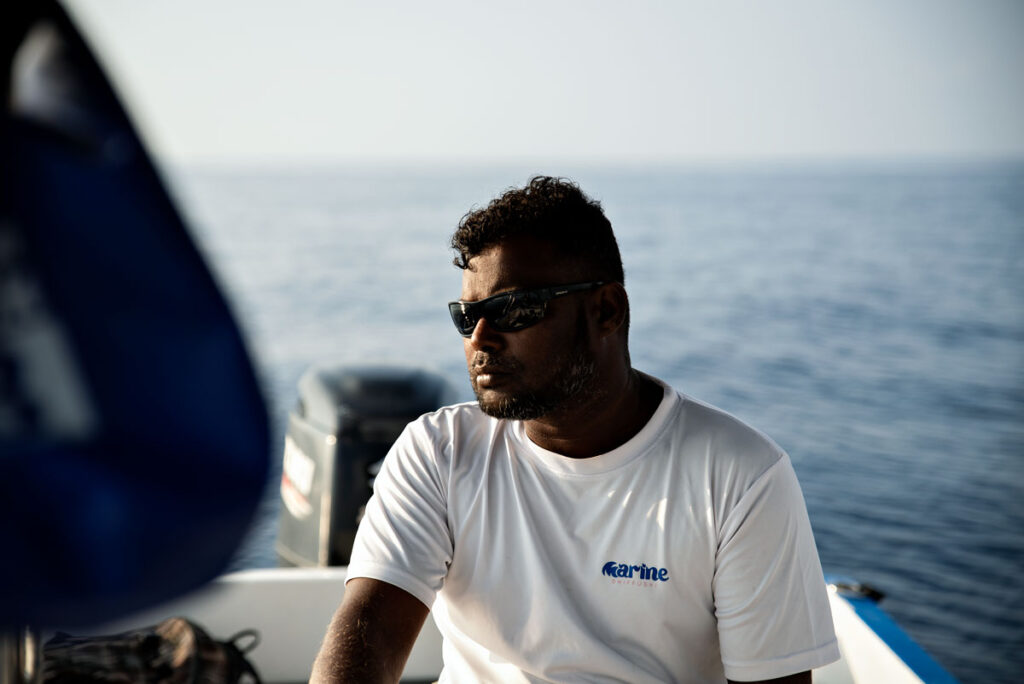
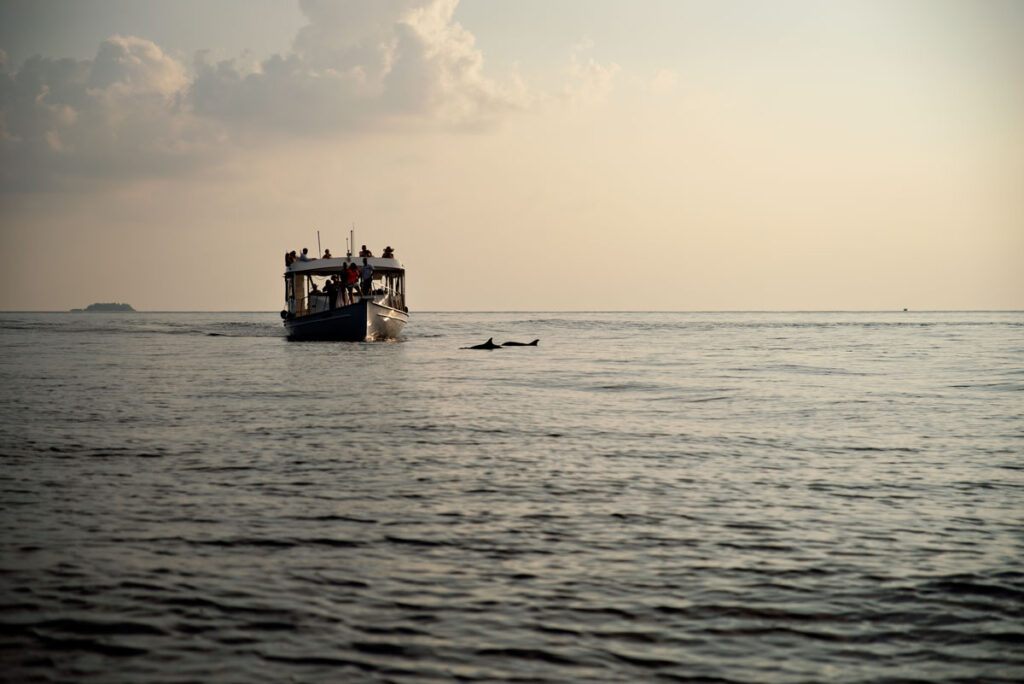
We take the speedboat a few kilometers out to the open sea, but at least one of the surrounding islands always remains in sight. After a while, our captain turns off the engine, lets the boat drift, and scans the water’s surface. Suddenly, a radio message comes in. He starts the engine and races off in a certain direction. More boats and ships appear, two jet skis, then even more ships. They are all loaded with tourists who stand spellbound at the railings. A murmur from one of the boats – out of the corner of our eyes, we see a black shadow disappear into the water. Silence. The sea splashes, all engines are turned off. A few hundred meters further on, they appear: dolphins. First two, then another, then suddenly a whole school. Once again, the engines are started and the chase begins. Again and again, the dolphins dive down, only to reappear a few hundred meters further on. Again and again, we chase after them, and the game continues like this several times.

Nature hangs by a thread. Can you protect and preserve something by staring at it and chasing it? What would it mean for the future of the people and the economy of this small country if the sea and its wildlife were declared a strictly protected refuge? What would the Maldives be without thousands of snorkelers, divers, surfers, and dolphin watchers?

Dolphine Cruise
Dolphine Cruise
Dolphine Cruise
Dolphine Cruise
Dolphine Cruise
Dolphine Cruise
Dolphine Cruise
Dolphine Cruise

The Maldivians also seem to be an endangered species. Most of the people we meet who work here come from Bangladesh, India, or Sri Lanka. They work for the few genuine islanders, most of whom live in the capital Malé or abroad. By selling or leasing their land, or running a hotel or restaurant, they have achieved modest wealth, enabling them to live the life of businessmen – or to indulge in endless idleness with friends on the beach.

Fishmarket in Malé
Dhiffushi Island
Malé Beach
Dhiffushi Island

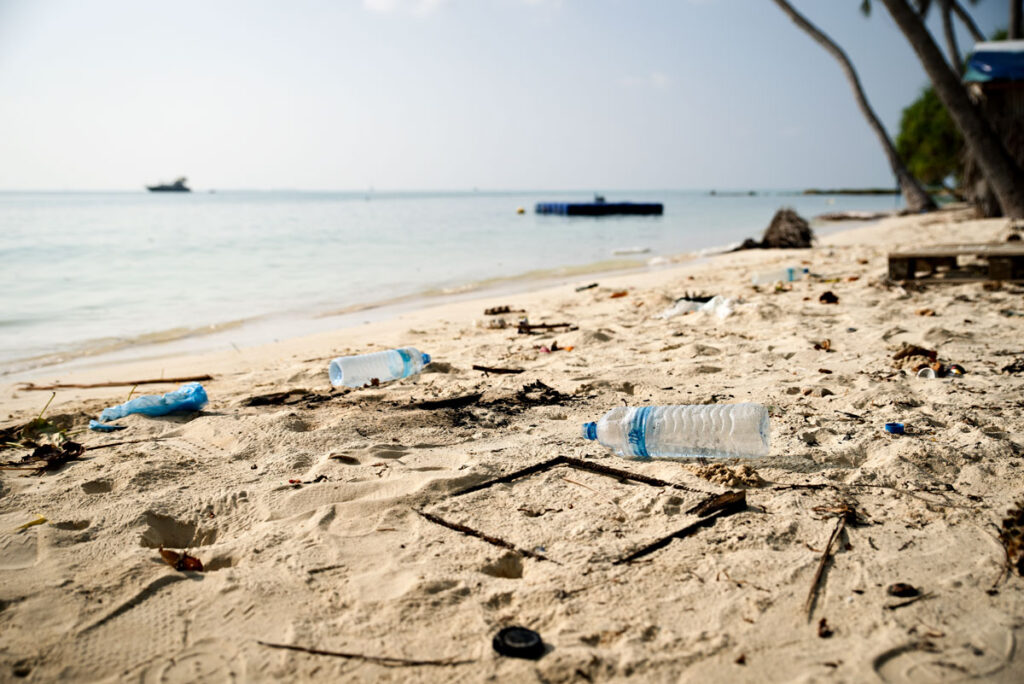
Unlike private hotel islands, real island life also comes with trash. Traditionally, organic waste was thrown into the sea. Even today, people still throw their trash into the water, but the type of waste has changed. Whereas buildings used to be made of wood, today concrete wheelbarrows are washed up on the beach. Drinking water is only available in plastic bottles, and anyway, what isn’t wrapped in plastic and shrink-wrapped these days? Even if the garbage ends up in bins, where does it go? Dhiffushi is a tiny island, and Malé is not much bigger. If the garbage is collected by ships, the wind blows plastic into the sea. The beaches are polluted, and much of the garbage ends up in the Indian Ocean.

Dhiffushi Island
Dhiffushi Island

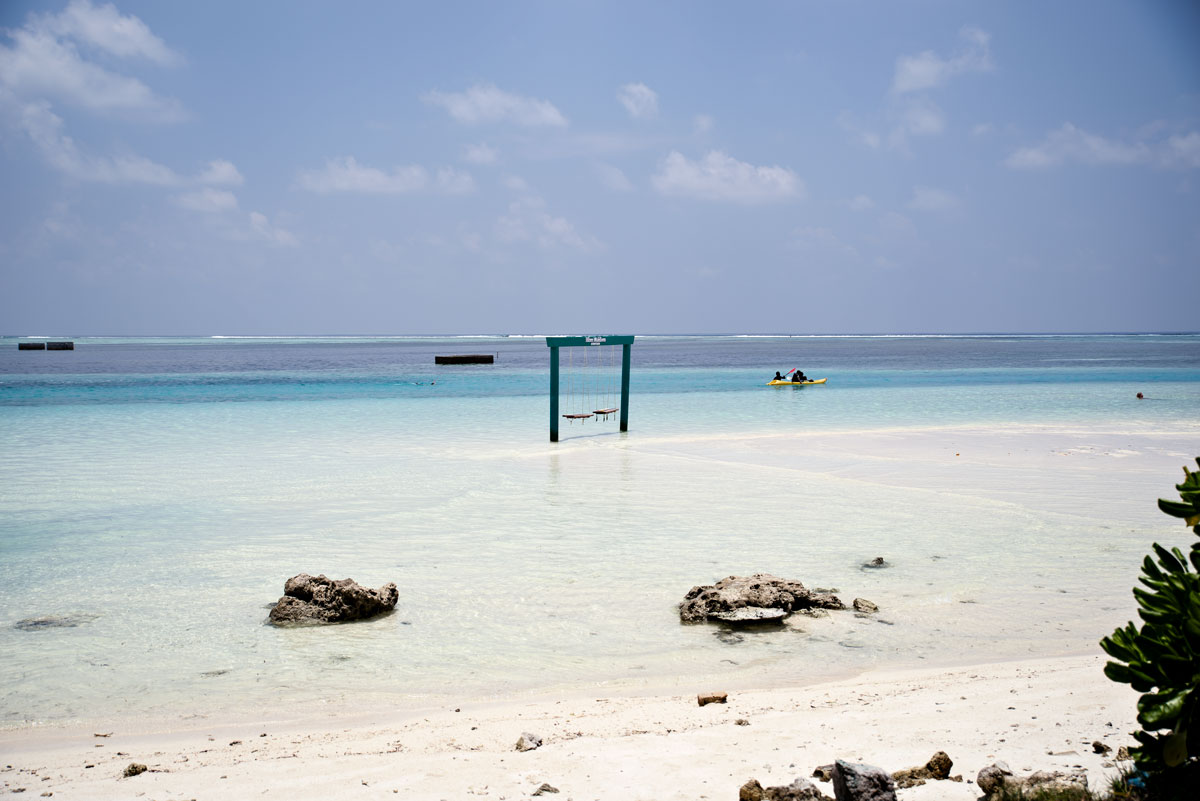
Less than 300 meters away from us lies the private Meeru Resort Island. Anyone who is not a guest at this island hotel complex or who has not paid for at least a day trip there is not allowed to set foot on the gleaming white sandy beaches. That’s how it is in the Maldives: there are the normal, public islands that anyone can visit. Then there are the hotel islands, some of which are artificially constructed. There are rooms and bungalows in various price ranges. There are honeymoon suites, sunrise and sunset villas, indoor and outdoor pools. There are first-class soccer fields and sports clubs, entertainment programs, and dozens of restaurants. A golden cage for sharing the same old Instagram stories. White dresses, tanned skin, wide-brimmed sun hats. The truth is, it’s all untrue. How much of the money spent here actually reaches the population of the Maldives?

Dhiffushi Island
Dhiffushi Island
Dhiffushi Island

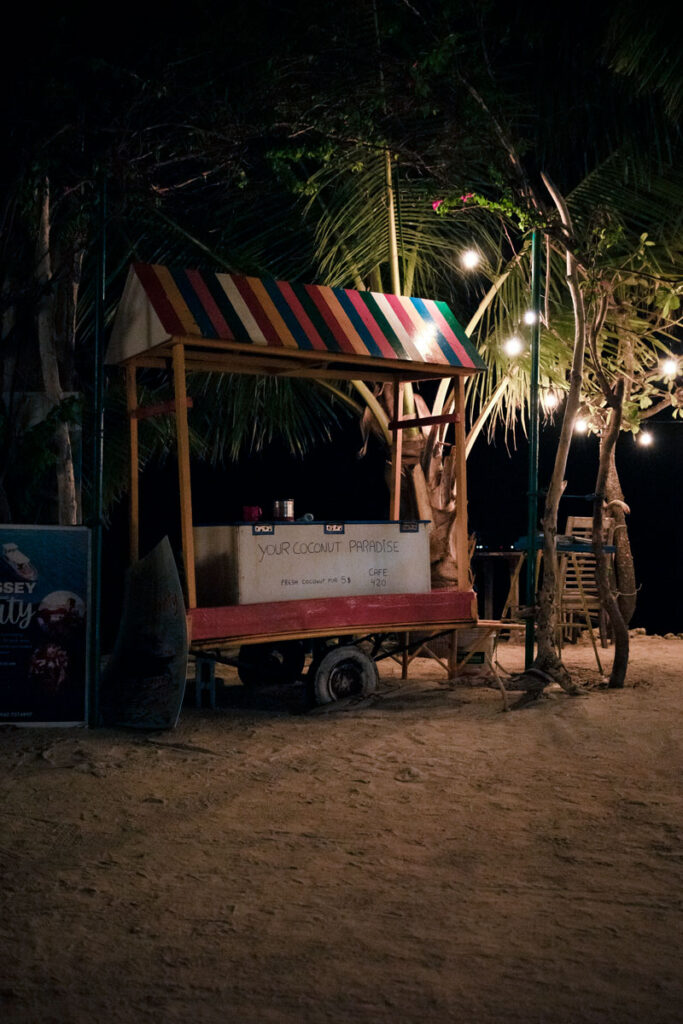
Night falls. Dhiffushi is not a party island – yet the bass of house music pounds from the speakers of a jet ski rental shop. The evening belongs to the islanders. All the tourists are sitting in their hotel restaurants. We encounter only a few foreigners in the local bars and cafés that also serve food. Men gather in front of the mosque for the last prayer of the day. Families sit in the backyards of their small houses for a meal together. The barber is busy, and the baker across the street sells the last loaf of bread before closing his bakery.

And at some point, silence descends. The veil of night weighs heavily over the Indian Ocean. We are surrounded by water. There is no escaping the heaviness of the night – trapped on an island in the endless sea. The waves rush, incessantly accompanying every breath. The wind comes and goes, as do the light, the birdsong and the seasons. But the waves rush on for a lifetime and beyond.

Dhiffushi Island
Dhiffushi Island
Dhiffushi Island
Dhiffushi Island
Dhiffushi Island

The time has come to say goodbye to Dhiffushi. This morning, a speedboat takes us back to the capital Malé in less than forty minutes. Compared to the sleepy island paradise, Malé is a smelly, angry concrete jungle. Although the streets are too narrow, scooters and cars squeeze their way through them. The houses rise high above, blocking out the sunlight for pedestrians. Exhaust fumes, traffic jams, and honking horns – the nightmare of a big city is projected here in a tiny space. Why is it so difficult to design a city that is less than one-hundredth the size of Berlin in a sustainable and courageous way? Combustion engines instead of e-mobility. The dominance of private transport instead of smart mobility solutions. Concrete land and artificially created islands instead of sand and shell limestone. This is the past, not the dream of a beautiful future.

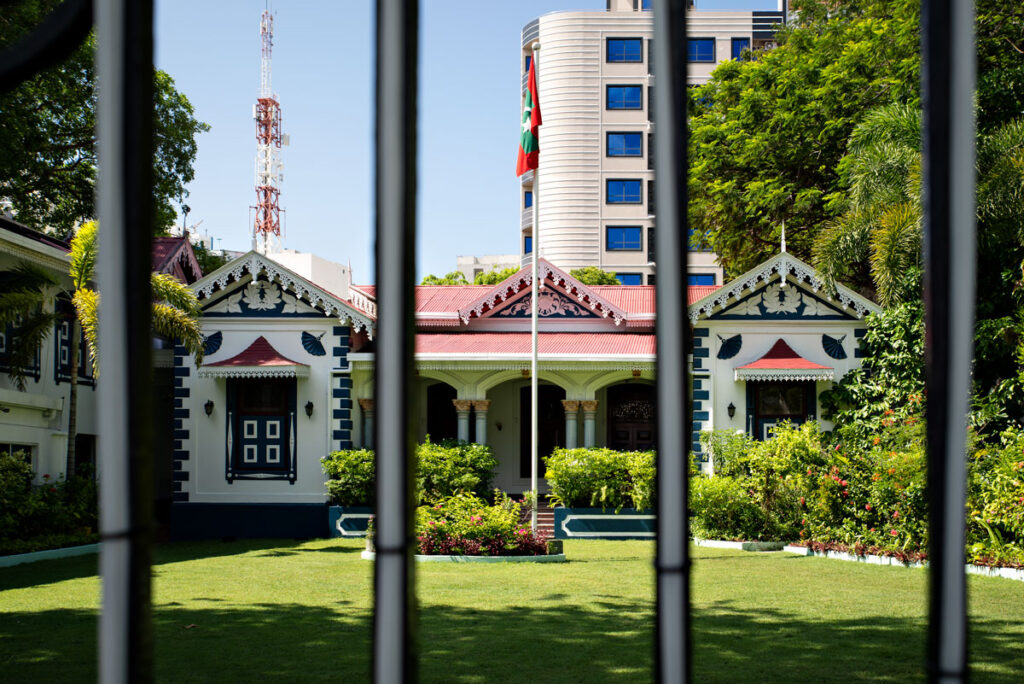
Muliaage (Palace)
Muliaage (Palace)
Republic Square in Malé
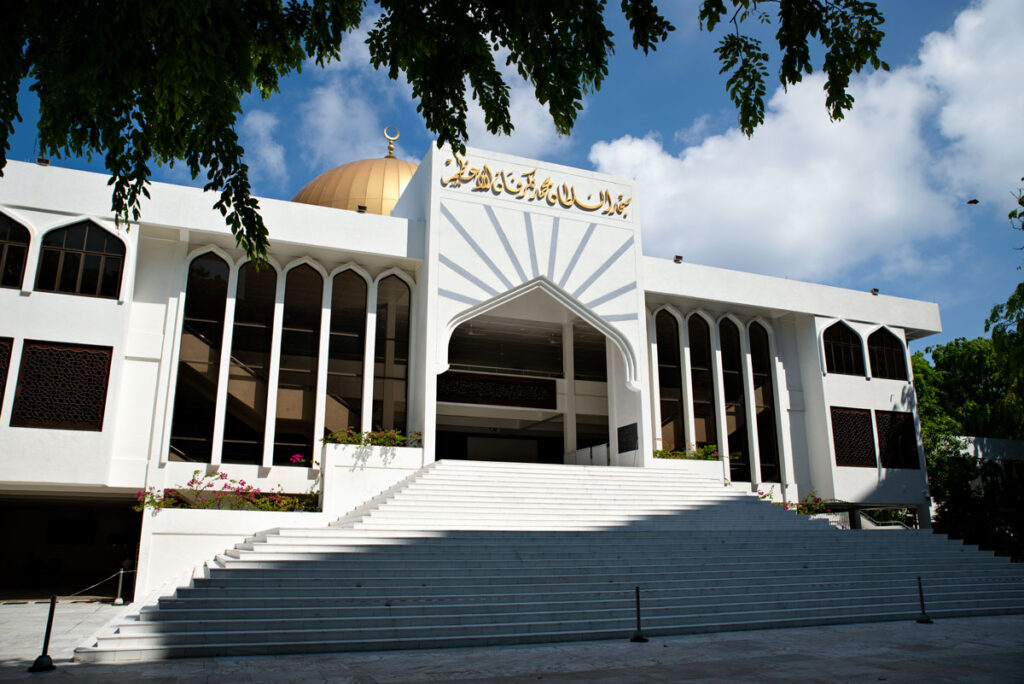
Masjid Al-Sultan Muhammad Thakurufaanu Al-Auzam

The artificial beach at the King Salman Mosque in eastern Malé is THE meeting place for city dwellers. Across the street, there are a variety of takeaway restaurants and cafés selling food and drinks packed in disposable wrappings. Wave breakers ensure that the small, artificially created bay with its beach becomes a calm swimming pool.

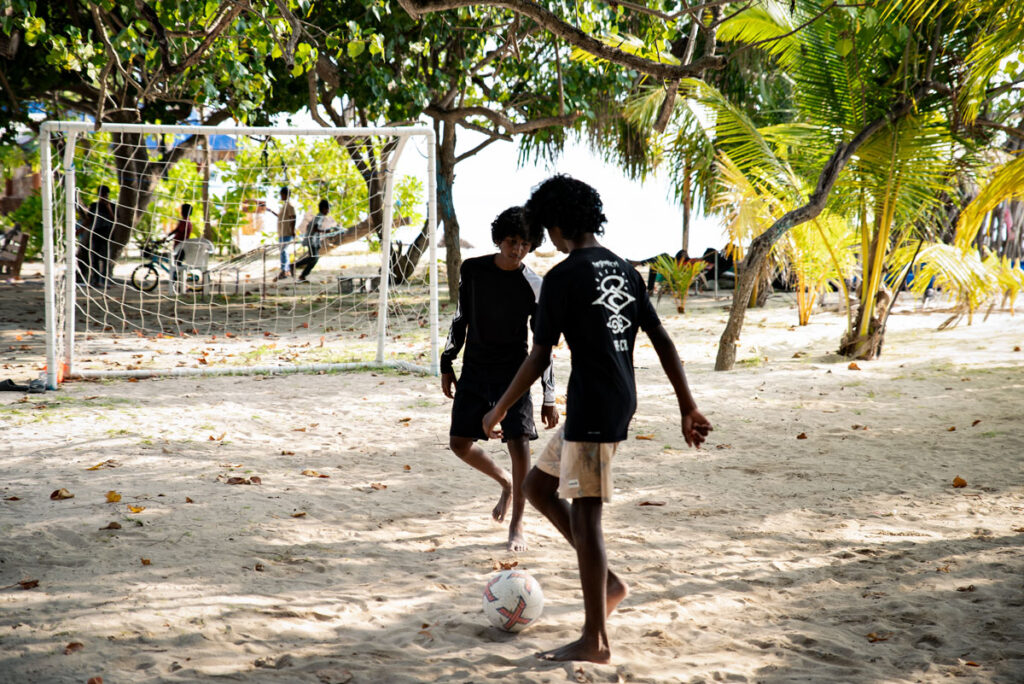
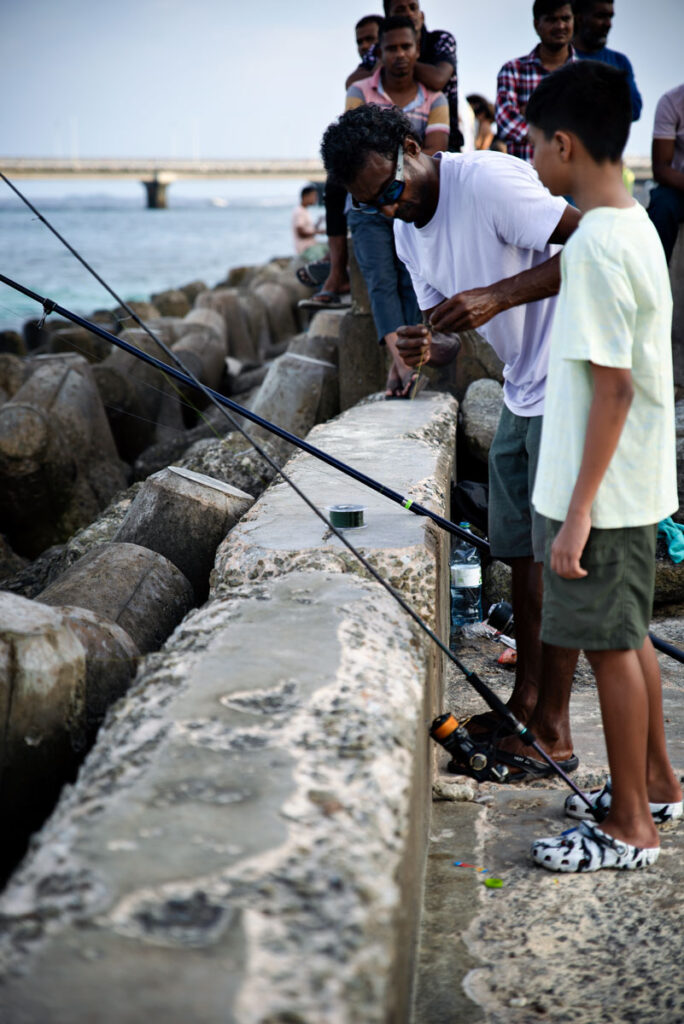
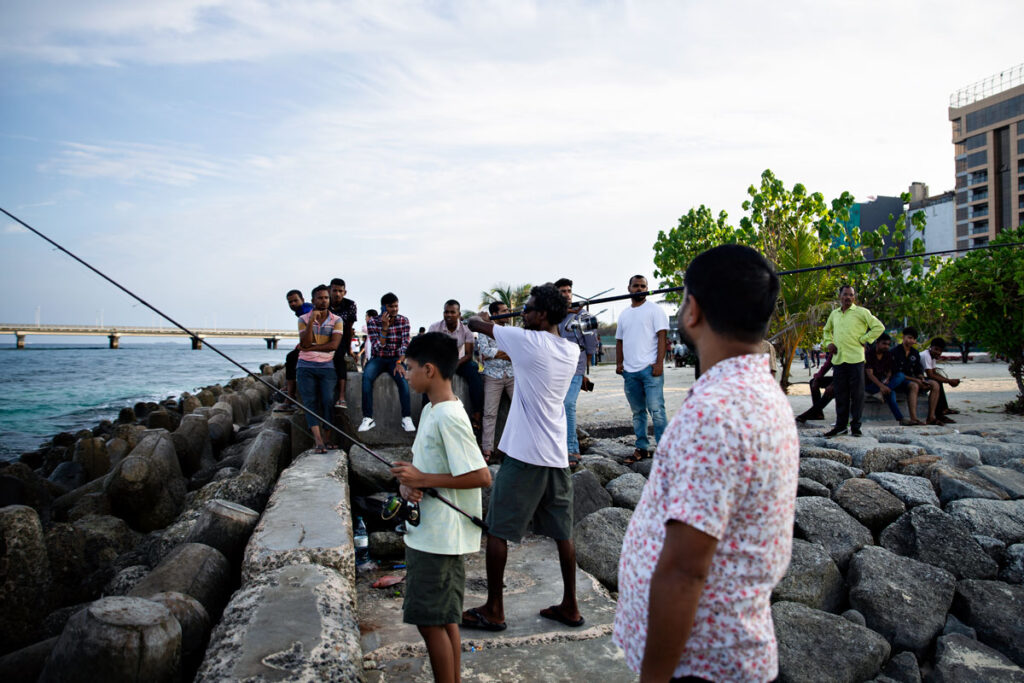
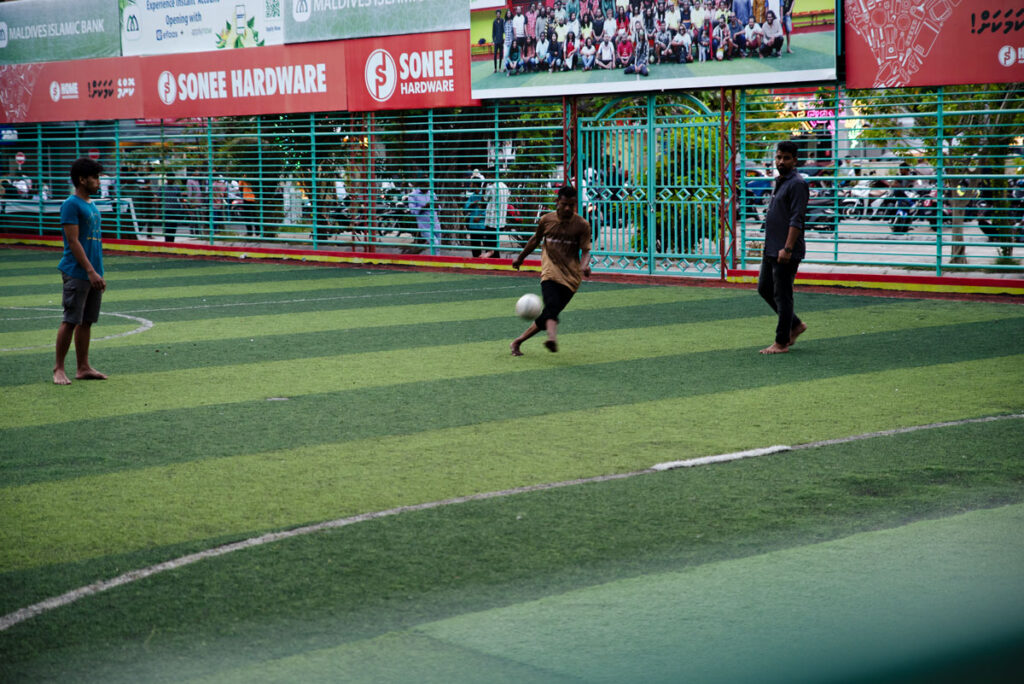
Pictures from an exhibition: A father fishing with his son, surrounded by curious men. A soccer field in the setting sun, a handful of barefoot men kicking a ball around. Park benches and a stone wall, men sitting and staring at their smartphones. A large square full of people, shouting and calling out. Men stand there in large groups. A plastic bottle in the sand, the next wave comes and takes it away. There are only a few women and children here. The Maldives is clearly a country of immigration for young, male migrant workers.

King Salman Mosque in Malé
Malé Beach
Malé Beach
King Salman Mosque in Malé
Malé Beach
Malé Beach

Across town to the other end. If the traffic weren’t so heavy and there weren’t all those scooters on the sidewalks, it would be a short walk. But as it is, it’s an hour-long, sensory-numbing march through the traffic chaos of the tiny capital. The north side of the island is one big landing stage for boats and ships. Locals and tourists with suitcases, bags, and luggage crowd together for hundreds of meters. The ferry engines hum loudly, the air smells of exhaust fumes, and tastes bitter.

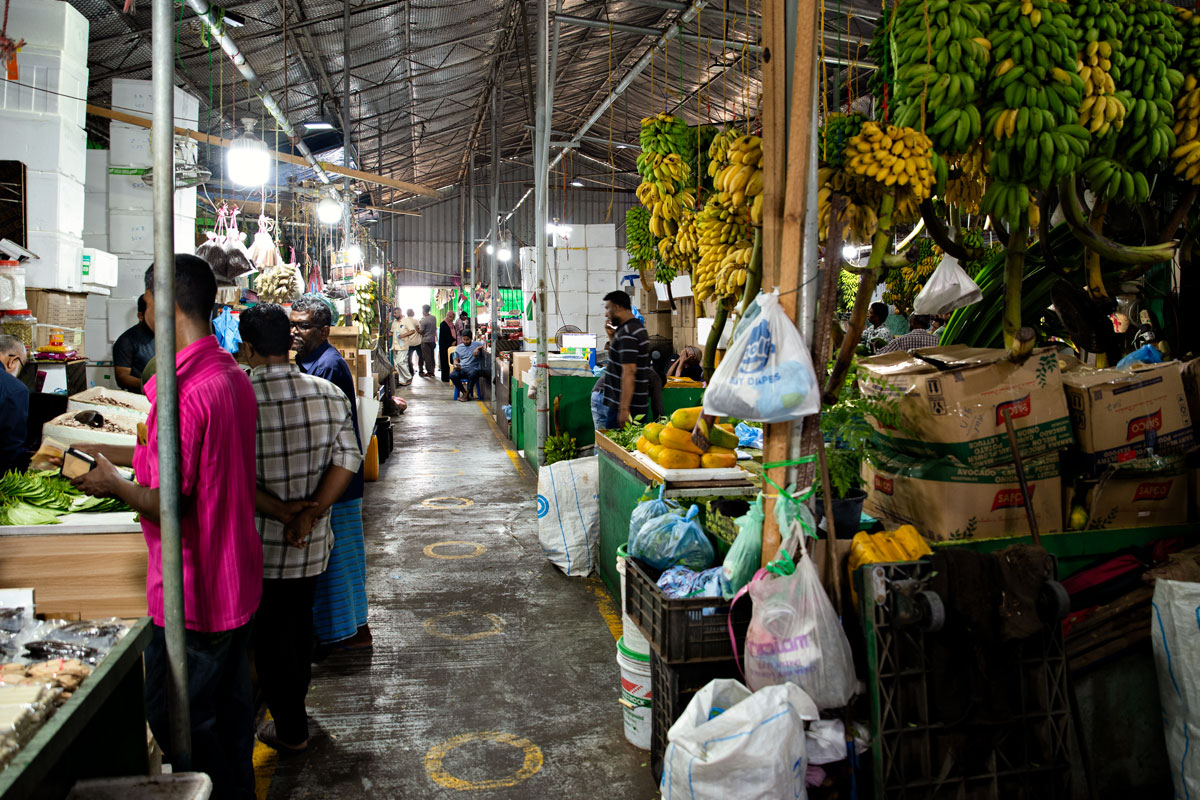
A little further on, we come to a market hall. Naturally, almost all fruit and vegetables are imported to the Maldives. The selection of fresh food is limited, and apart from markets, there are few other sources of supply. The islands don’t really have conventional supermarkets

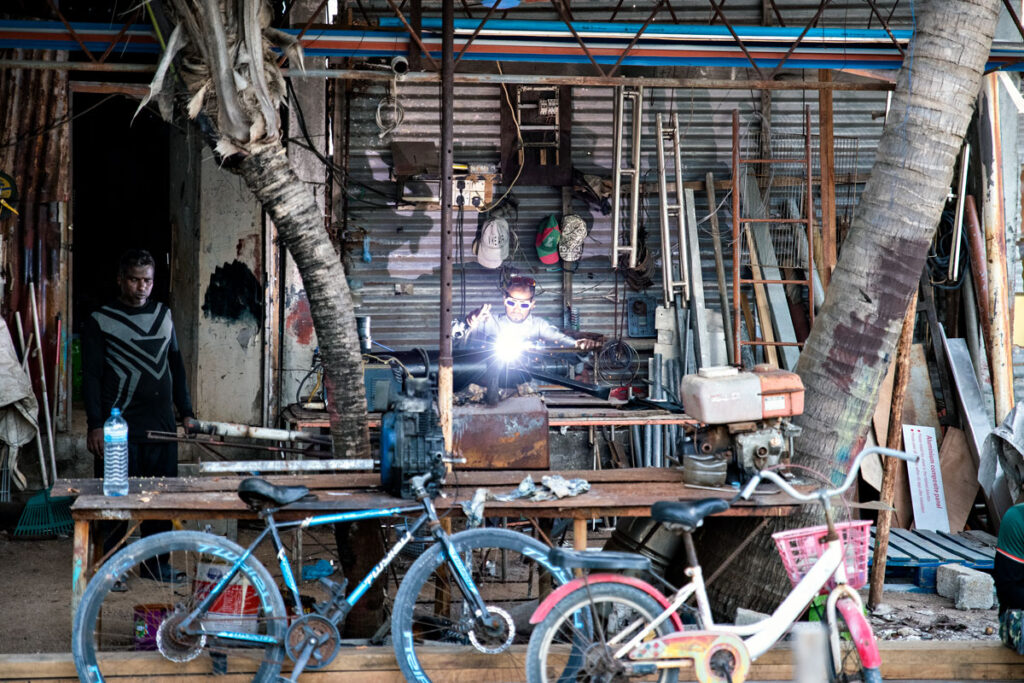
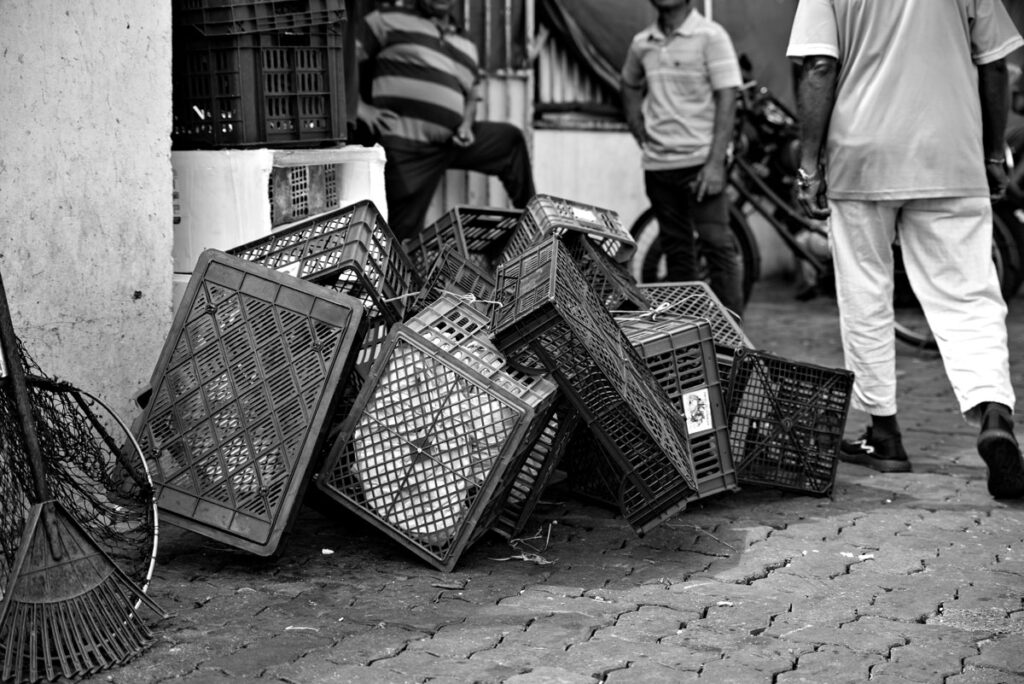
Garage in Malé
Fishmarket in Malé
Fruit Market in Malé
Fishmarket in Malé

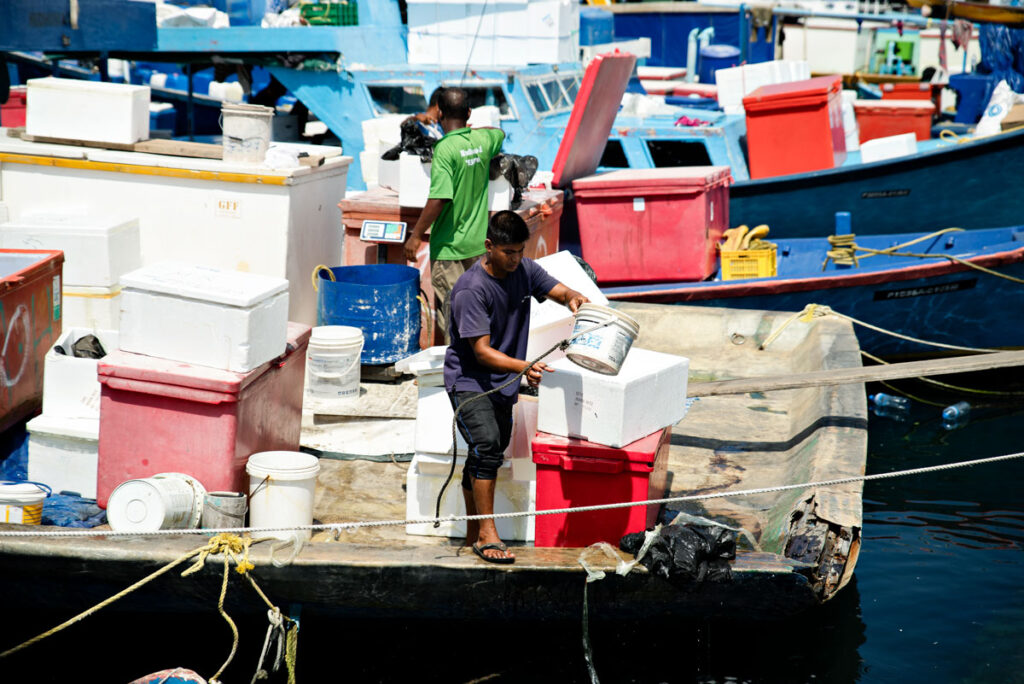
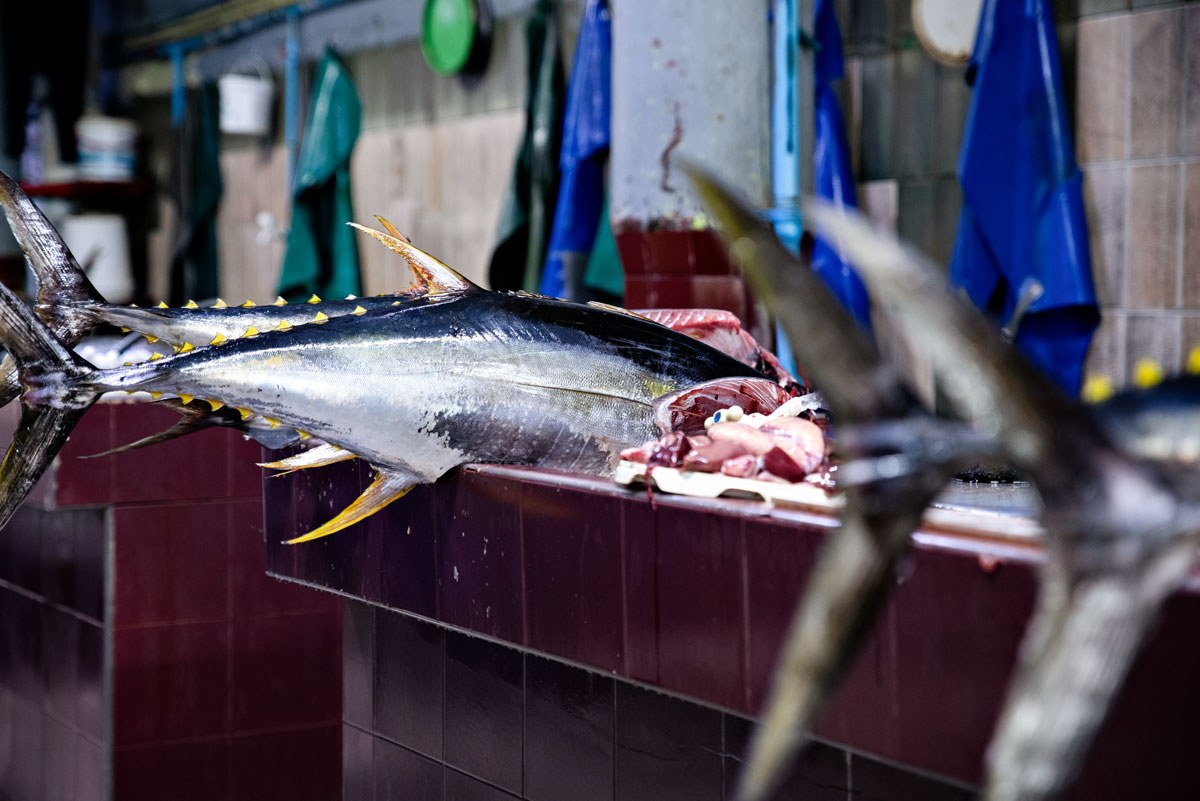
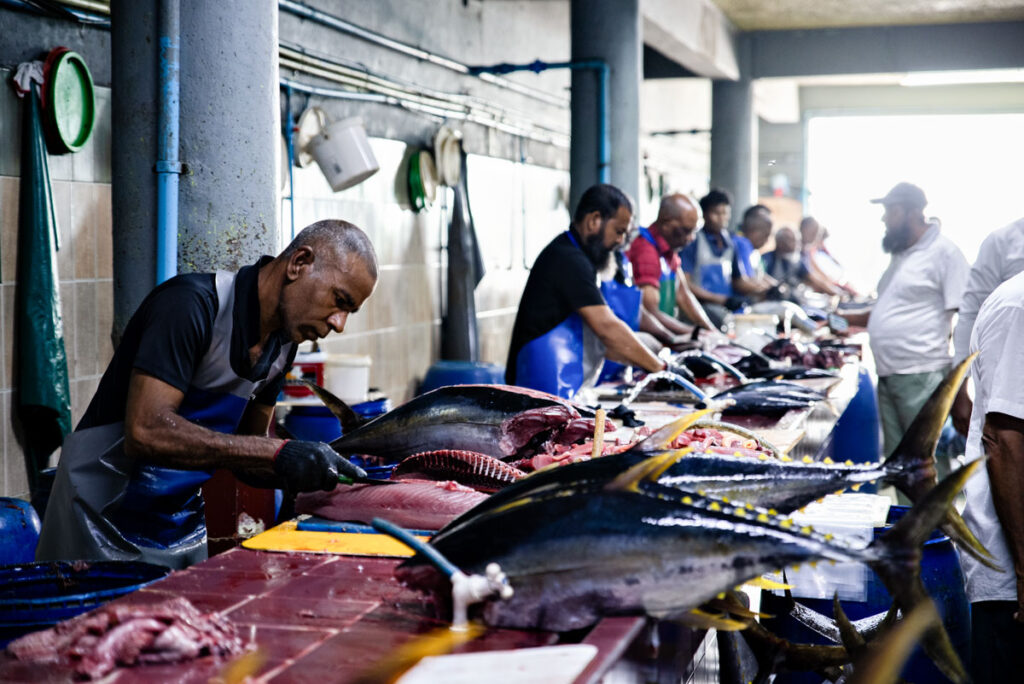
Fishing trawlers anchor in front of the food market. Workers are busy loading, gutting, transferring, checking, and packing fish. Across the street is Malé’s fish market – a popular stop on any sightseeing tour.

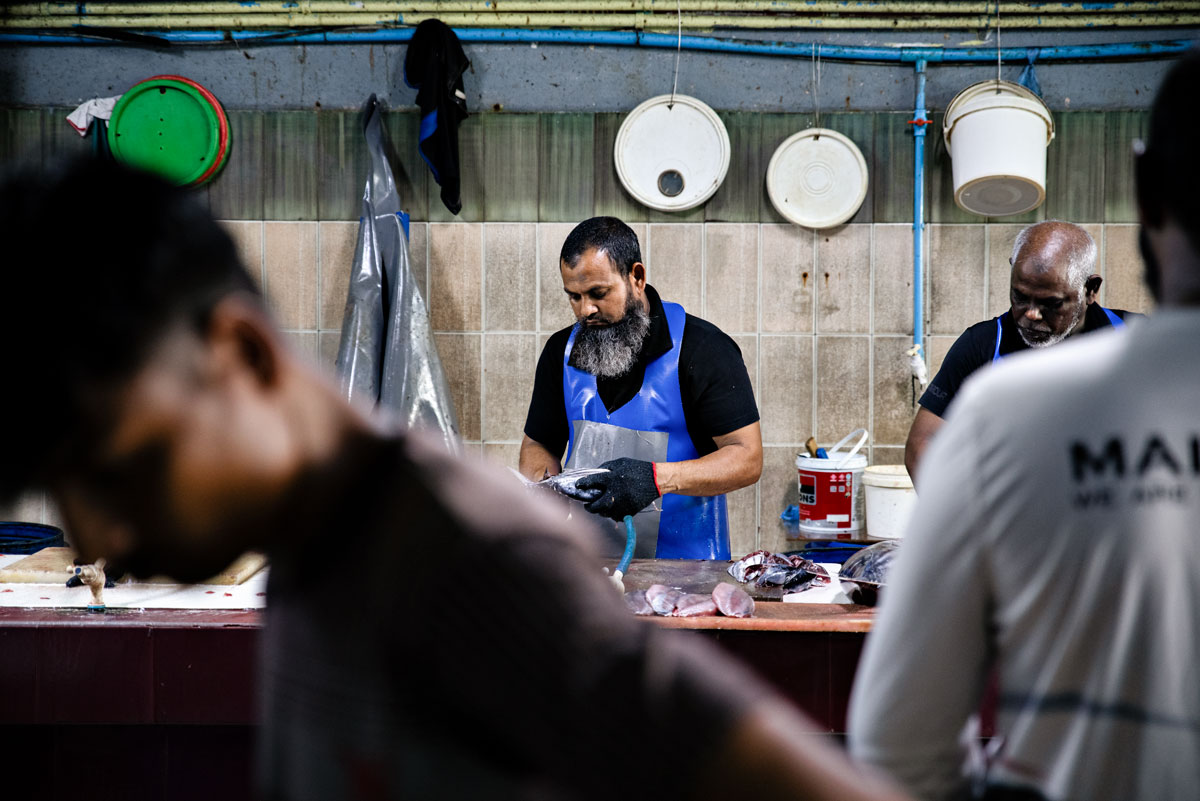
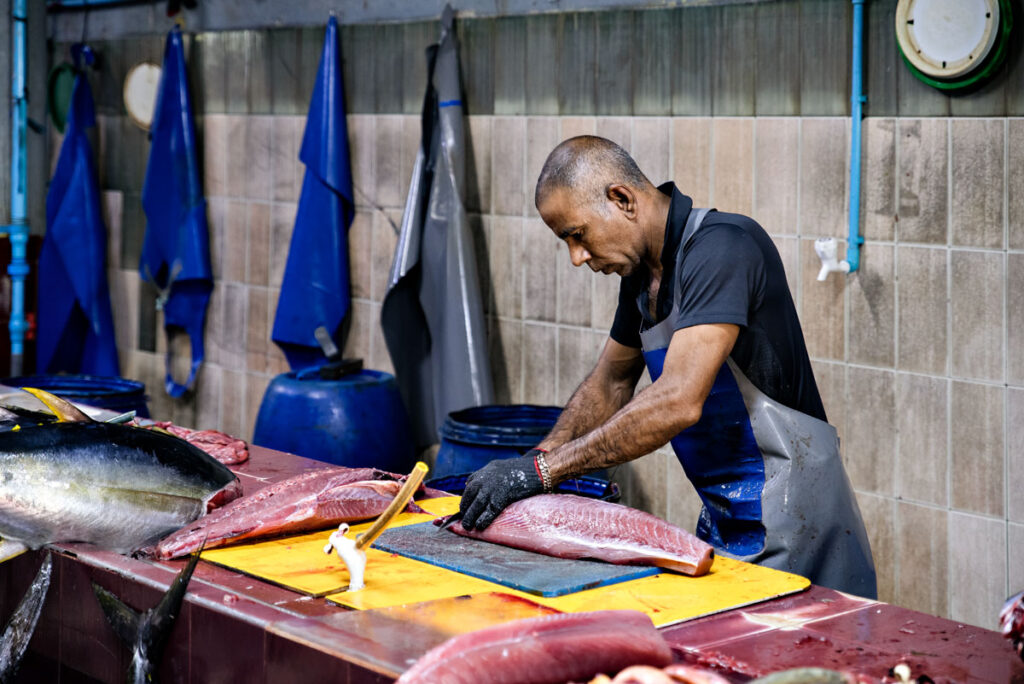
The smell in the small hall is pungent. A dozen fish filleters stand at a long table, skillfully cutting up mainly tuna. Blood runs across the floor, and fish bones and entrails pile up in a barrel. No one buys a few hundred grams of fillet here; usually, whole baskets of fish are sold.

Fishmarket in Malé
Fishmarket in Malé
Fishmarket in Malé
Fishmarket in Malé
Fishmarket in Malé

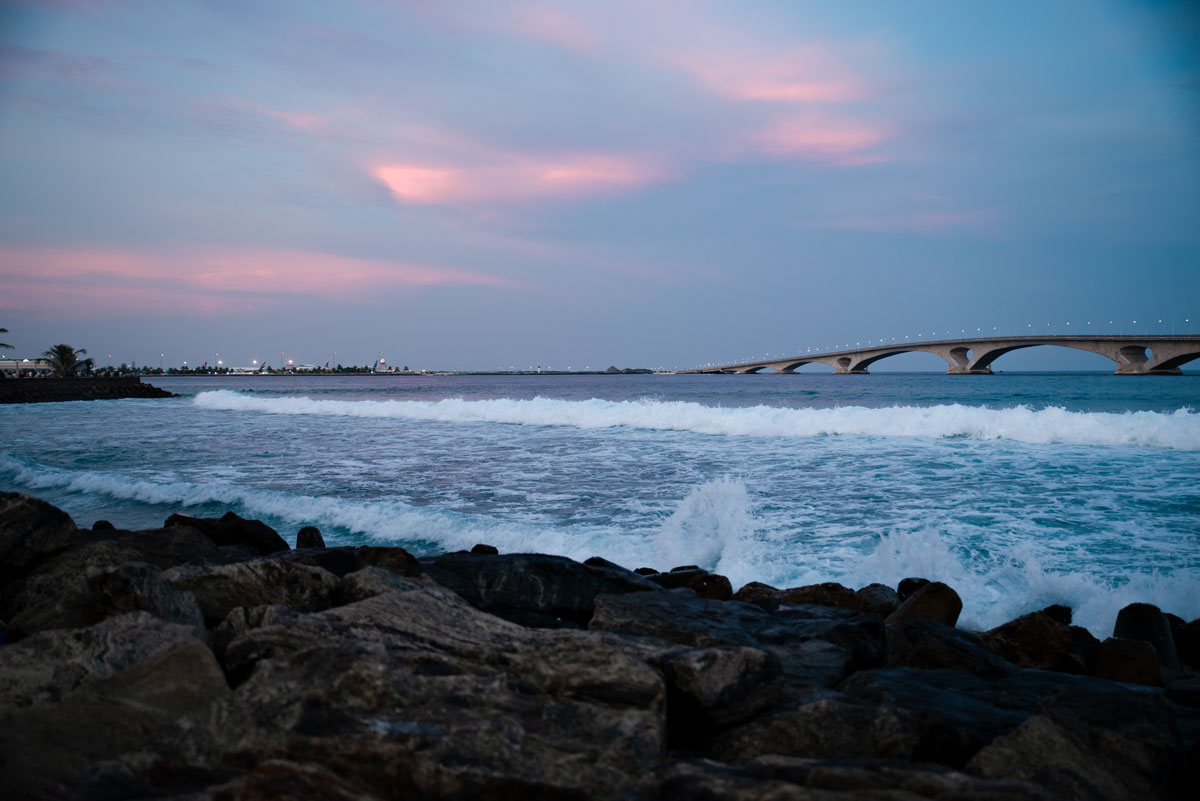
What becomes scarce becomes expensive. This is also true of land in the Maldives. On the one hand, it is fully built up and covered with concrete. On the other hand, it is threatened by rising sea levels. The construction of a tiny artificial lagoon off Malé began. The result was the new Malé, called Hulhumalé. A bridge connects the new with the old. Office space and chic residential buildings. Empty beaches, a promenade, and quiet restaurants. Everything seems a bit deserted, not yet finished, ready for more. Is the boom still to come, or is it already over?

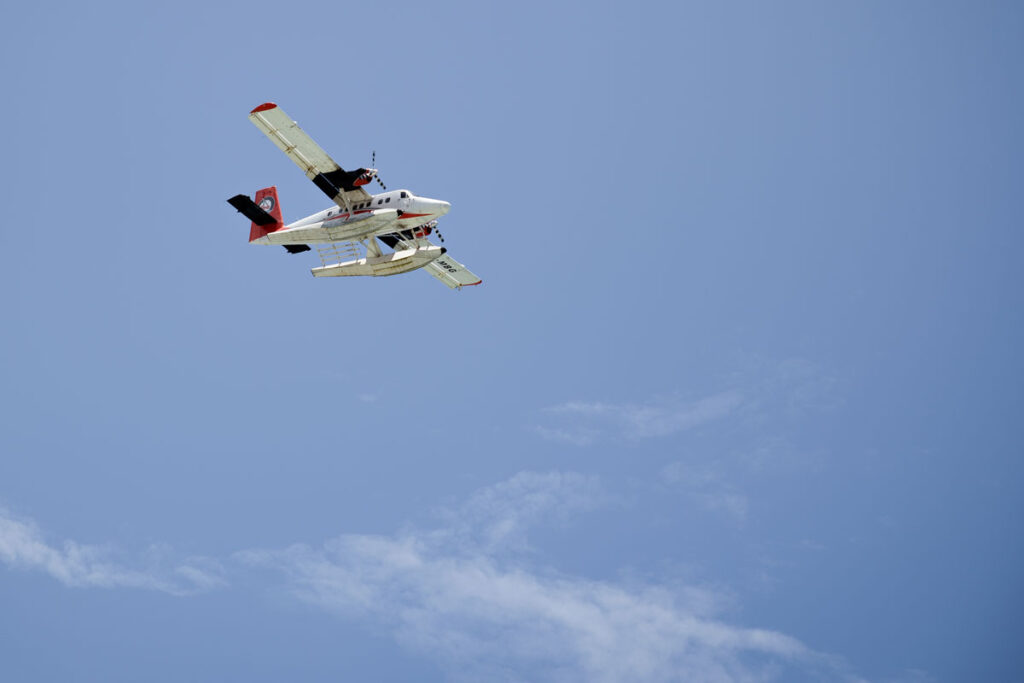
Buses shuttle between here and Malé, with the airport in between. Seaplanes buzz overhead as they prepare to land. Each minute is like a never-ending string of pearls.

Hulhumalé Beach
Hulhumalé Beach
Hulhumalé Beach

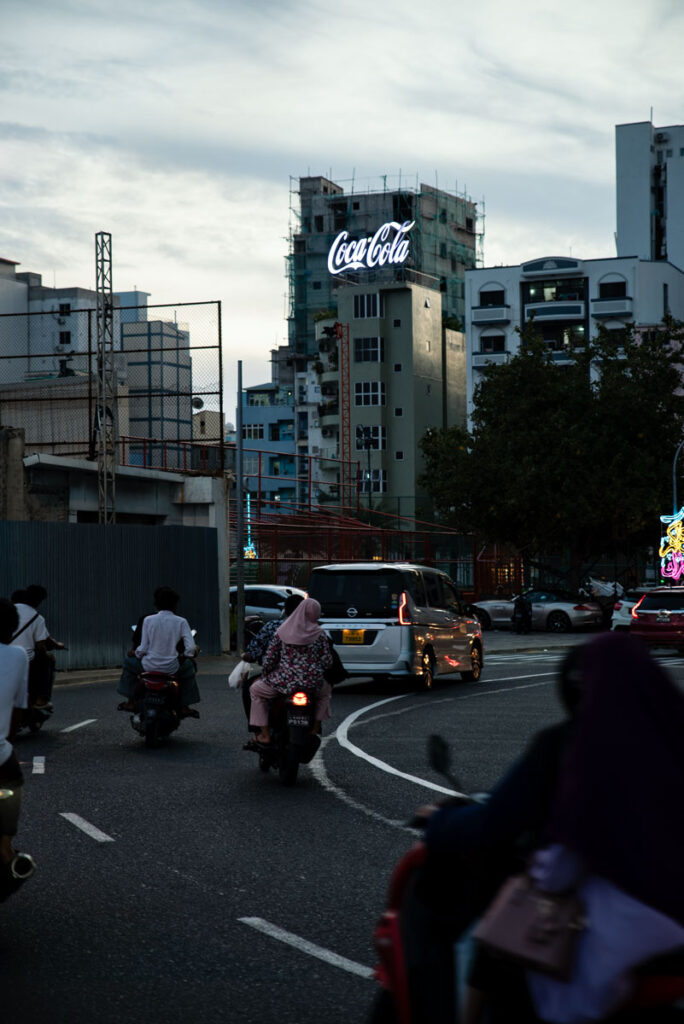
The sun sinks into the Indian Ocean and darkness descends on Malé. Above one of the main streets, the Coca-Cola logo looms high above the rooftops of this supposed island paradise. We stand on the roof of a high-rise building and look down on this city and this country. What is paradise really all about? When you look at the local islands away from the private hotel islands, it quickly becomes clear that any paradise can only be an illusion or a concept of longing. Palm trees and sunsets are not enough to hide the “real” challenges. The Maldives must succeed in finding answers to these challenges in order to preserve itself and have a future in the rising sea.

Streets of Malé
CocaCola in Malé
Sinamale Bridge

And then it was time to go. A taxi took us to the airport. The driver told us the same story we had heard from many other islanders. The men were working, while their families were at home on one of the numerous islands. Tourists would bring money, but they would also bring problems. Everything was changing – who could say whether things would ultimately be better or worse? But the government was trying. On our next visit to the Maldives, we should come and visit him on his home island; he wanted to take us fishing. There, on his distant island, would be true paradise.

That’s more or less how the story of the Maldives goes.

Info about our trip