
Ireland
Ireland, you didn’t make it easy for us. Your lush green meadows turned to mud when we tried to hike through them. A cold wind blew along the coast; dampness and wetness crept into the houses and deep into our bones. We’d already been told that you were capricious and didn’t want to please everyone at any cost. But then, in ten days, you showed us the full range of your bad weather. You thwarted our plans, threw everything into disarray, and sent us home with mixed feelings. As poor students with little gear and even less money, we had little to counter your nasty moods.
Still, you also gave us a few rays of sunshine. And many, many wonderful encounters with people who love you exactly as you are. That gave us courage. Courage to try again someday and hope that you’ll welcome us a little more warmly then.
But even if not: You are Ireland. You are the Atlantic. You are the rock of an island. You are the coastal grass. And you are the whiskey that seems to stem from all of this.
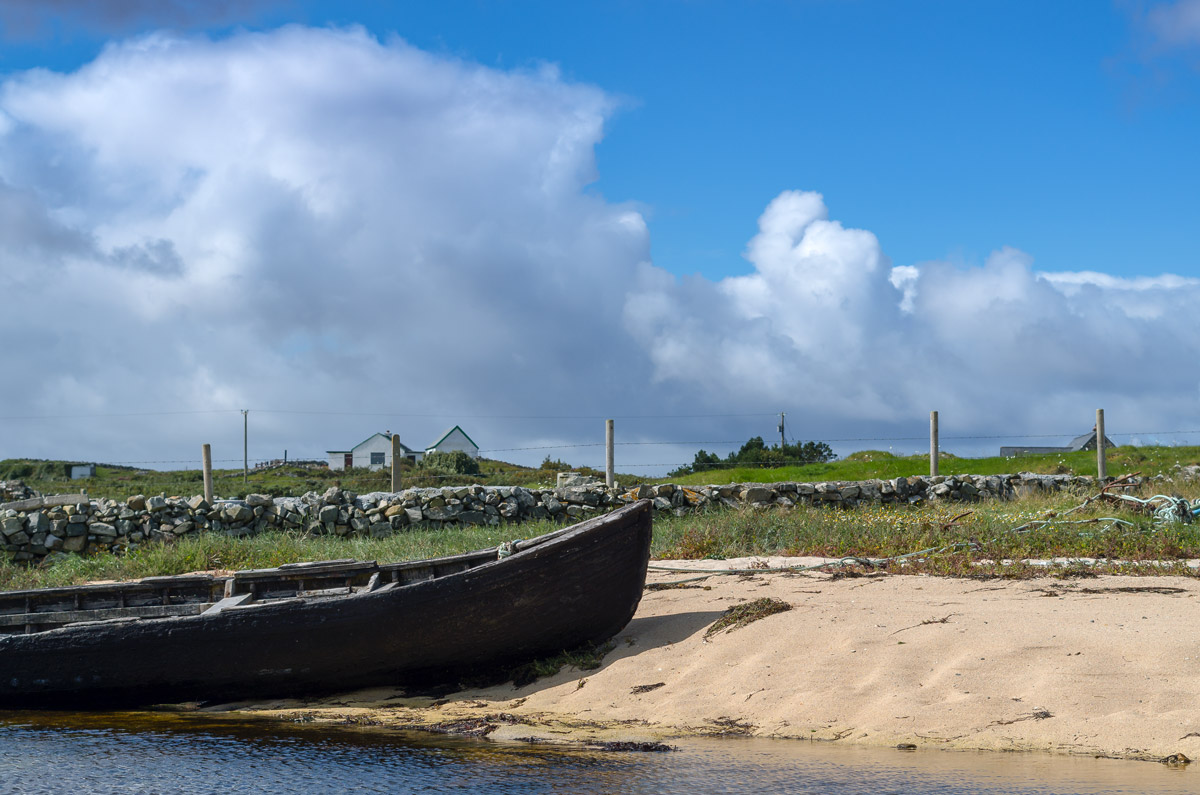
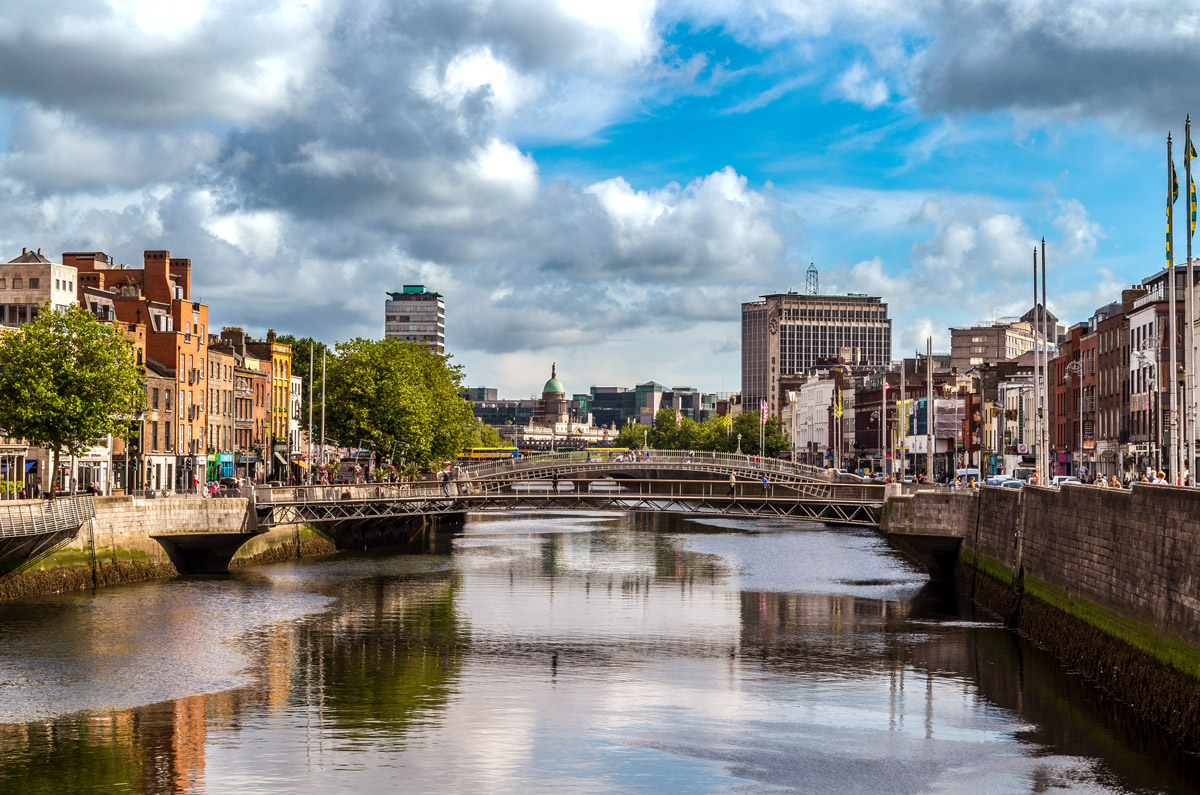
In Dublin, traditional Irish pub culture, modern banking, startup vibes, student life, overtourism, and a thousand years of history blend together into an incredibly colorful mix. We begin our tour of the city at Trinity College Dublin with its impressive library. We continue through the lively Temple Bar district, down the pedestrian zone, and finally to Dublin Castle. We sit under the roof of a pavilion in City Park in the rain and eat cheese sandwiches from the supermarket.
At the harbor, we stroll between two rain showers past red brick facades, tall glass fronts, and coworking spaces. The names of major internet companies are displayed on signs next to the entrance doors.
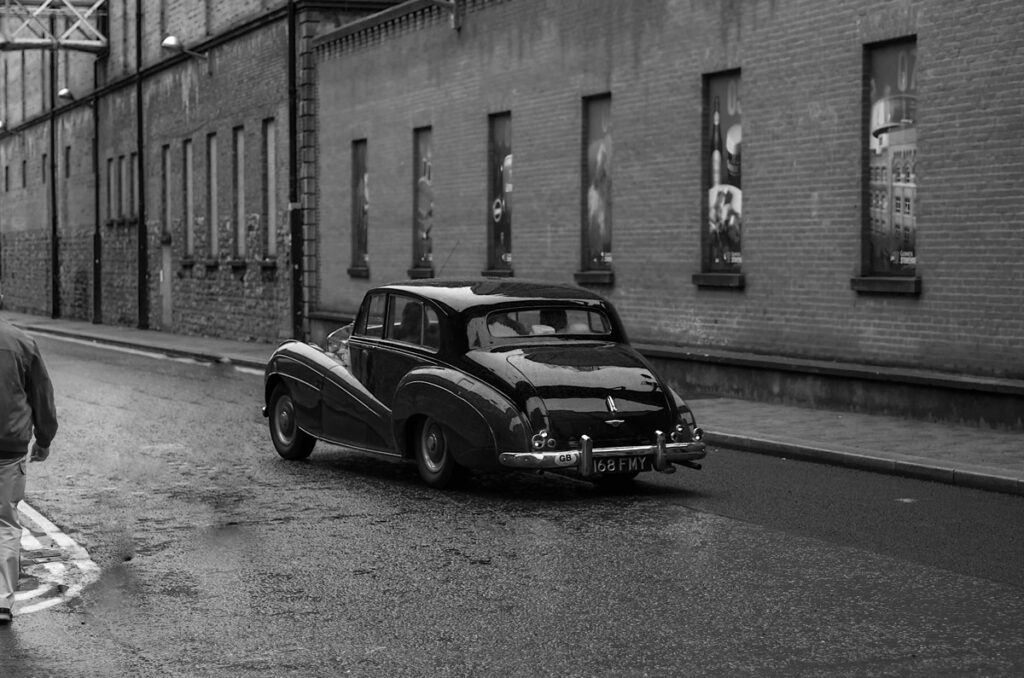
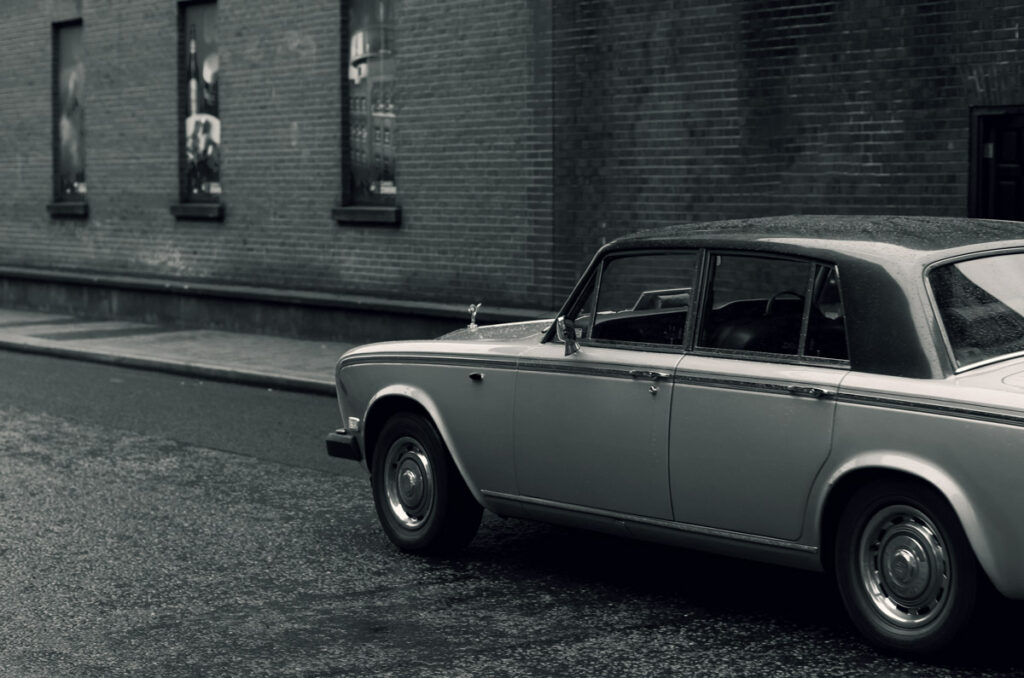
The Guinness Brewery is located in an old industrial district. The Rolls-Royce fan club roars past us in lovingly restored Phantom and Silver Cloud models. Large gas pipes and steel frameworks tower above us. The air is thick with the smell of rain and alcohol, and for a moment we feel as if we’ve been transported back a hundred years in time.
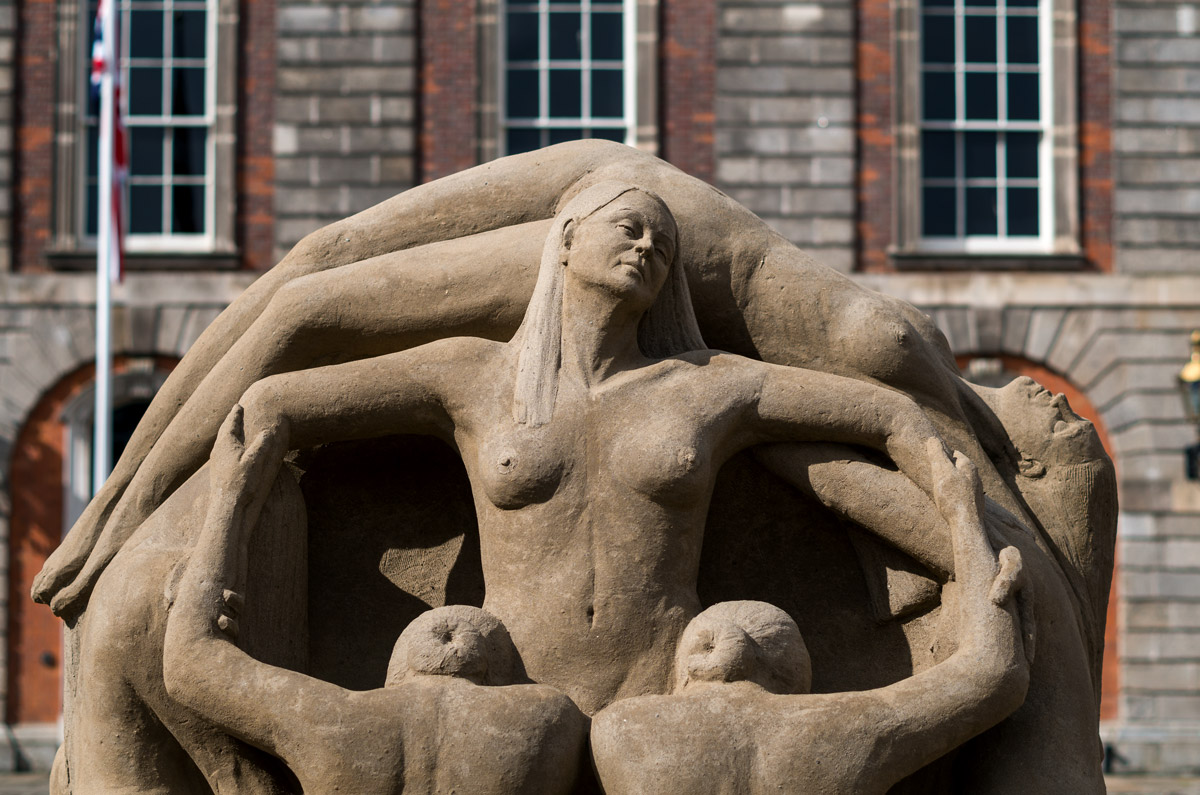
Now that we’ve left your beautiful capital behind, we’re leaving you too, Ireland. And yet we’re staying on your lush green island. We swap euros for pounds, Guinness for ale and cider. By train, we cross a border that once led to so much violence and continues to have repercussions to this day. A divided island, a divided nation – and yet, in the end, the same people. Belfast, Giant’s Causeway, Derry/Londonderry. And then back to you, back to Ireland.
At the other end of your island, almost directly across from Dublin, lies the medieval port city of Galway. A tranquil little town full of pubs and music, shaped by the sea, the steep cliffs, and a barren yet beautiful landscape. We’re staying with a family of musicians and, in the evenings, we tap our feet to the beat of Irish songs in the pubs while savoring a dark Guinness.
The next day, we rent bicycles and explore the area. Gray clouds drift overhead. During a brief shower, we take refuge in the city museum. We stroll along the harbor and eat a modest (and inexpensive) meal from the supermarket on a park bench by a canal.
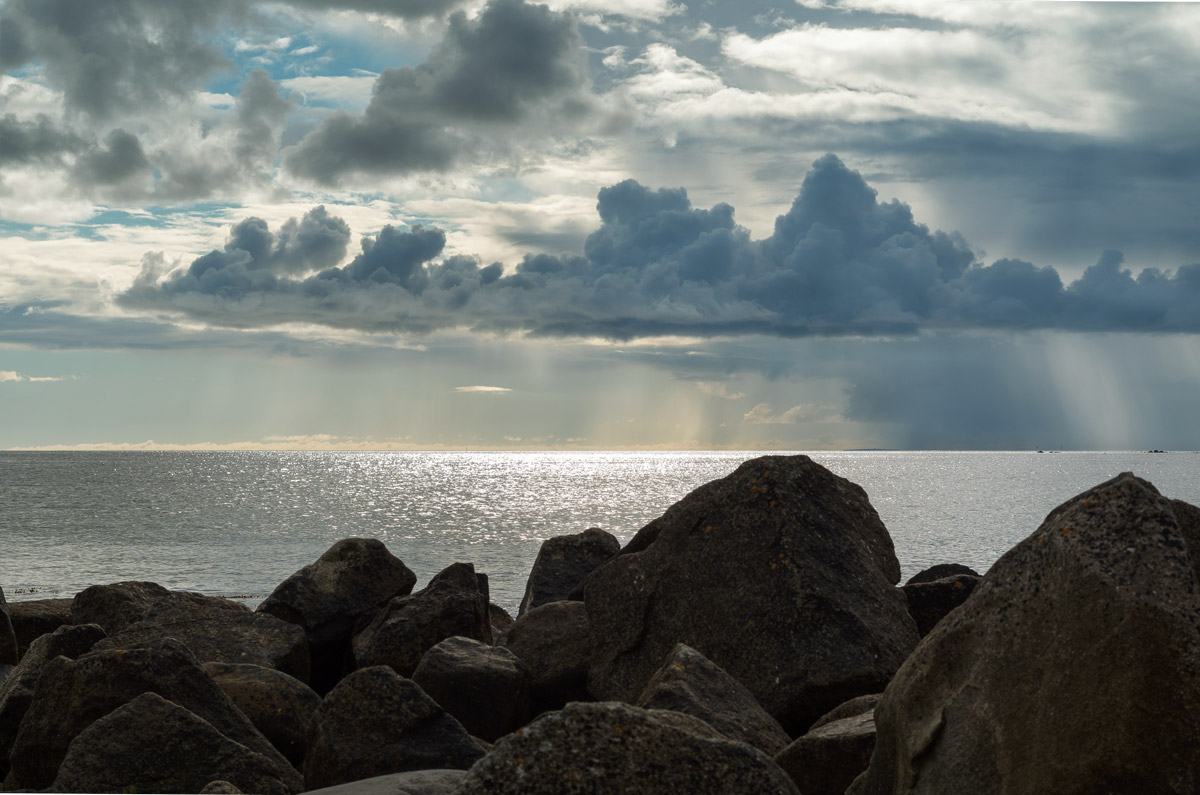
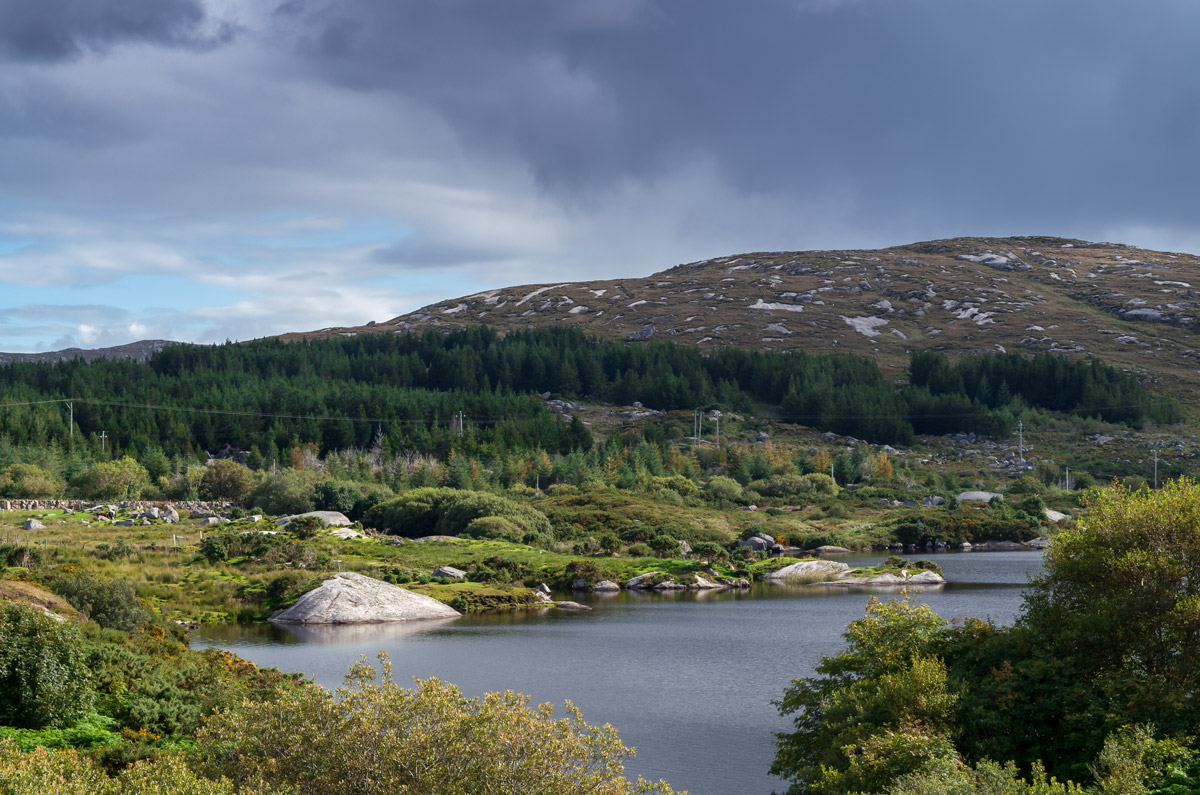
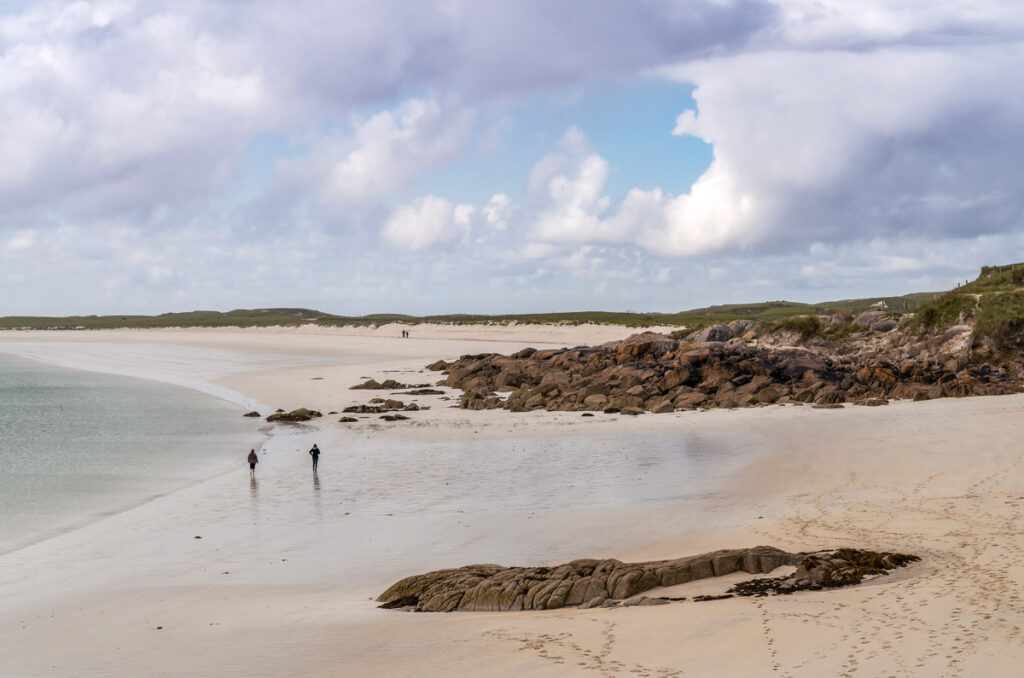
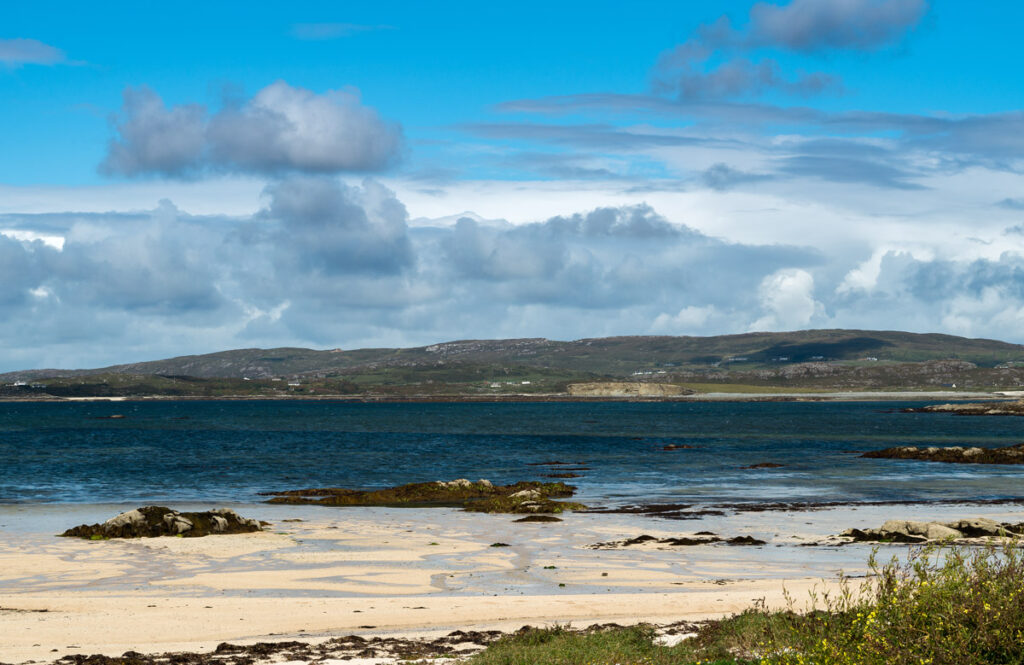
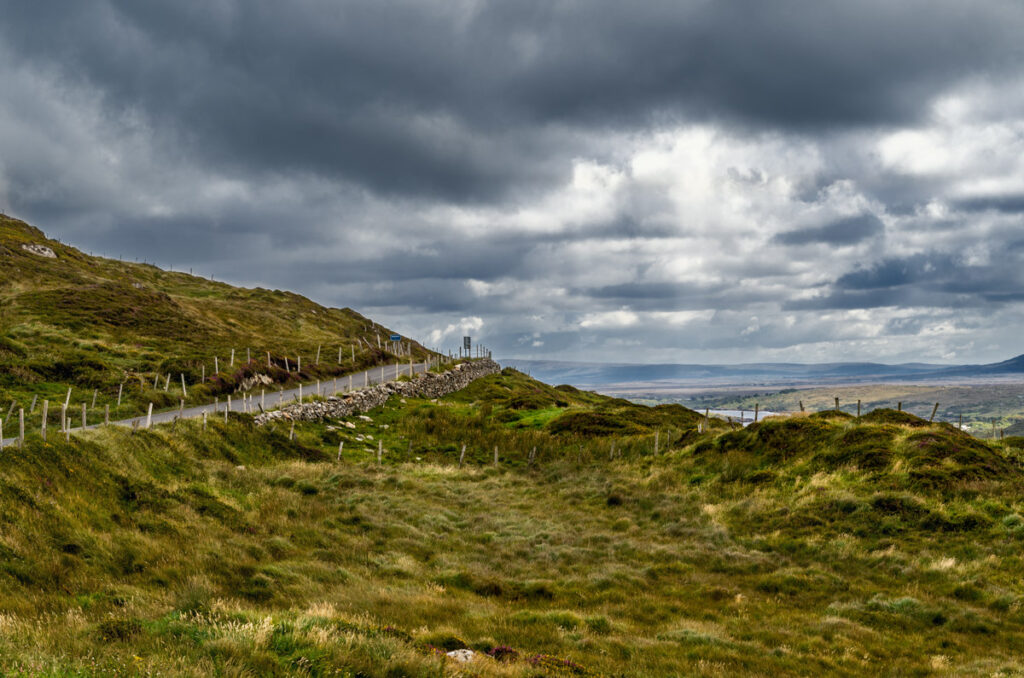
Just when our spirits are pretty low – we’ve had enough of the constant rain and the surprisingly cool August weather – you suddenly lead us to a magical place: Connemara. A vast, rugged moorland landscape opens up before us. You have secluded lakes, bushes, scattered conifers, and even white sandy beaches in store for us.
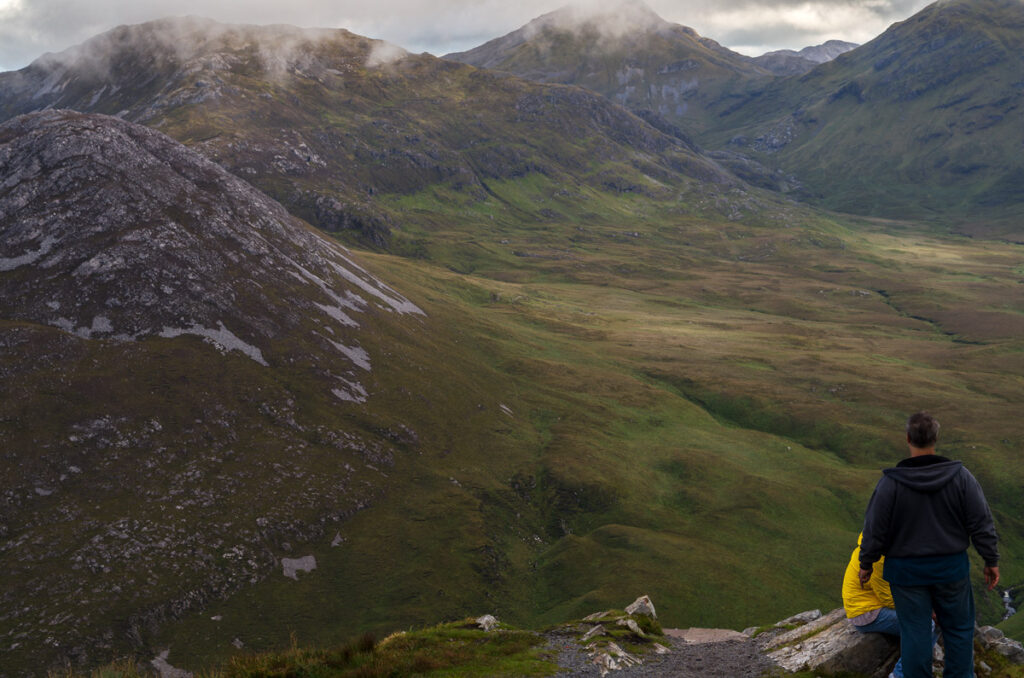
But the deeper we venture into Connemara National Park, the more the sky closes in. Just as we begin the ascent to Diamond Hill, a fine drizzle falls upon us. Thick fog rolls over our heads. Vany returns to our tour group, while Chris sets off alone on the climb. At breakneck speed – for time is limited – he hurries up the steep path. At first, the climb takes his breath away; once at the top, it’s the view: long, sweeping valleys, pale-green steep slopes, and bare, rocky mountain peaks. A landscape straight out of a movie.
This brief, wind-swept moment, between raindrops and breathlessness, reveals your true beauty, Ireland.
We want to rent a car to drive to the Cliffs of Moher. But the minimum age requirement is 25 – we’re still too young. Another minor setback, another plan that falls through. Disappointed, we take the bus back to Dublin to spend our last few days there. A packed hostel, homemade pasta with tomato sauce, and the same old mix of rain and brief moments of sunshine.
When the weather is good, we wander through the bustling alleys and streets. When the next rain shower hits, we head to a museum – they’re usually free.
Ireland, you didn’t make it easy for us sun-drenched Southeast Asian backpackers. Maybe it takes more patience than we had back then. Maybe it takes the right outdoor gear. Maybe it takes more money to spend rainy days in the pubs. Maybe it takes more travel experience to make the best of adversity.
You were one of our first trips together. But despite all the hardships, you didn’t dampen our wanderlust. On the contrary: more than ten years later, the longing for your damp meadows, your rugged coasts, and the low-hanging rain clouds is stirring within us once again. We will return – you can count on that.
Info about our trip
Ireland challenged us like no other country. The weather turned out to be much worse than forecast. We had actually planned to hike and camp along the north coast. But after spending a night on flooded campsites, we abandoned that plan and spontaneously turned our trip into a round-trip tour by bus and train.
In his naivety as a sun-kissed traveler from Asia, Chris hadn’t even packed a rain jacket. At the same time, our budget was so tight that we had to rely on basic accommodations in the outskirts and meals from the supermarket. All of this took a toll on our mood and clouded our view of the country, even though we were already aware back then that we had brought some of this misery upon ourselves.
In short: Today, we are firmly convinced that Ireland is a wonderful travel destination. We will most likely return in the coming years – then with a slightly larger budget, better gear, and more realistic expectations regarding the weather. Because even in August, temperatures around ten degrees, combined with wind and rain, are not uncommon. And weather changes by the hour are as much a part of Ireland as whiskey, castles, and lush green meadows.
Ireland is an expensive travel destination. In Dublin in particular, accommodations, dining out, and rental cars can quickly strain your budget. If you want to travel on a budget, stick to hostels, campgrounds, supermarkets, and the well-developed bus and train networks.
Our advice: It’s better to calculate a little more generously. The changeable weather often means you’ll need to find accommodation on the spot, stop for an extra coffee, or spend a rainy day in a pub rather than in a tent. Having a financial buffer significantly increases your comfort while traveling in Ireland.
Traditionally, meals feature plenty of potatoes, vegetables, lamb, beef, and fish. Among the best-known dishes are Irish stew (a lamb or beef stew), shepherd’s pie, fish and chips, and the famous Full Irish Breakfast with bacon, sausages, beans, eggs, and other sides. Fresh soda bread is also a staple of every meal in many places.
Along the coast, you should definitely try the fish and seafood. Irish oysters, mussels, and smoked salmon are particularly well-known. If you enjoy a beer, you can’t go past a pint of Guinness. In addition, numerous local ales and ciders are very popular. Of course, a good Irish whiskey is also one of the country’s culinary classics.
However, prices in Ireland are on the high side. Dining out is significantly more expensive than in Germany, especially in Dublin and other tourist regions. Those looking to stick to a budget often turn to supermarkets, pubs with daily specials, or self-catering.
Hotels in Dublin aren’t exactly cheap. For a nice room, you’ll usually have to budget 150 to 200 euros per night, and sometimes even more during peak season. Outside the capital, however, you’ll find plenty of more affordable lodging options. Family-run guesthouses and bed-and-breakfasts, in particular, often offer good value for money, cozy rooms, and a hearty breakfast.
Camping is a comparatively affordable alternative. Officially, wild camping is very restricted or not allowed in many places, but it is occasionally tolerated outside of sensitive areas. Since large parts of Ireland consist of pastureland and privately owned land, you should under no circumstances just set up camp in the nearest meadow. Ideally, ask the landowner for permission. The Irish are known for being exceptionally friendly and helpful – if you ask politely, your chances of finding a spot for the night are often good.
Overall, Ireland is considered a safe travel destination with a low crime rate. In cities, as in any major European city, isolated incidents of pickpocketing or alcohol-related altercations may occur in certain neighborhoods, particularly around pub and nightlife districts in the evening.
However, this poses hardly any restrictions for travelers. With normal caution and common sense, the country can be explored easily and without worry.
We traveled through Ireland back then without children, but as a modern European country, there shouldn’t be any major issues when traveling with kids. The healthcare system is well-developed, as are the tourist infrastructure and access to everyday necessities.
Many regions are also very nature- and family-friendly, with plenty of space to play, short distances, and numerous outdoor activities. The only thing is that the high cost of living is likely to be much more noticeable when traveling with children, especially when it comes to lodging and meals.
You can get around Ireland easily and affordably by bus and train. When we were in Galway, we weren’t able to rent a car because we were under 25. In Dublin, there are some rental companies that rent cars to people as young as 21 or even 18, but usually only with significant surcharges for young drivers. The road network is generally well-developed, though not quite up to German standards. Especially in rural areas, narrow, single-lane country roads are common, which require some driving experience. Traveling by car is easily possible via ferries from England, France, or the Netherlands.
- If you’d like to delve into the history of Ireland from the Middle Ages to the present day, including the Northern Ireland conflict, you can do so in just over a hundred pages with Benedikt Stuchtey’s C.H.Beck Wissensreihe zur Geschichte Irlands …
- … or in greater depth, in a book twice as long, by Michael Maurer’s Geschichte Irlands: eine Reise durch die Epochen: Überblick, Analyse und Erläuterungen of the Reclam-Universal Bibliothek
- The definitive Irish book of the century is undoubtedly James Joyce’s Ulysses – difficult to read, hardly accessible, but incredibly atmospheric
